Saved Bookmarks
This section includes 7 InterviewSolutions, each offering curated multiple-choice questions to sharpen your Current Affairs knowledge and support exam preparation. Choose a topic below to get started.
| 1. |
An organic compound A(C_3 H_6 O) is resistant to oxidation but forms compound B(C_3 H_8 O) on reduction which reacts with HBr to form the bromide (C). C forms a Grignard reagent which reacts with A to give D (C_6 H_(14) O). Give the structures of A, B, C and D and explain the reactions involved. |
Answer» Solution :The compound A can be either an ALDEHYDE or a KETONE. SINCE it resists oxidation it must be a ketone.i.e., acetone `(CH_3 COCH_3)`. The REACTIONS involved are: 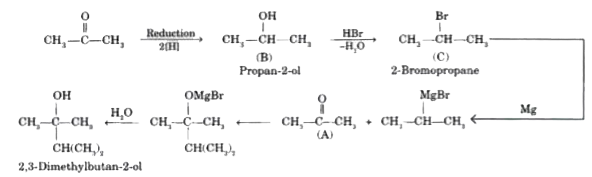
|
|
| 2. |
An organic compound A(C_4 H_7 C_(13)) yields (B) when treated with aq. KOH. (B) upon treatment with C_2 H_5 OH in presence of acid gave (C) which upon reducing with LiAIH_4 gave (D) and (E). (B) upon treatment with NH_3 followed by heating with P_4 O_(10) and subsequent hydrolysis gives back (B). Sodium salt of (B) on Kolbe's electrolysis gave 2, 3-dimethylbutane at anode. The IUPAC name of compound (A) is |
|
Answer» 1,1,2-trichlorobutane |
|
| 3. |
An organic compound 'A' with the molecular formula C_4H_10Oon oxidation with acidified K_2 Cr_2O_7 gives compound 'B' with the formula C_3H_6O . Again 'B' on oxidation with acidified K_2 Cr_2O_7gives 'C' with the molecular formula C_2H_4O_.IUPAC name of 'A' is |
|
Answer» 1-Butanol |
|
| 4. |
An organic compound (A) with molecular formula, C_(8)H_(8)O forms an orange-red precipitate with 2, 4-DNP reagent and gives yellow precipitate on heating with iodine in the presence of sodium hydroxide. It neither reduces tollens' reagent, nor does it decolourise bromine water or Baeyer's reagent. on drasic oxidation with chromic acid, it gives a carboxylic acid (B) having molecular formula, C_(7)H_(6)O_(2). Identify the compounds (A) and (B) and explain the reaction involved. |
|
Answer» Solution :Step-1. To determine the structures of compounds (A) and (B). (i) Since compound (A), M.F. `C_(8)H_(8)O` forms a 2,4-DNP, it must be either an aldehyde or a ketone. (ii) Since, it does not reduce tollens' reagent or Fehling's solution, (A) is must be a ketone. (iii) Since (A) on treatment with `I_(2)//NaOH`, gives yellow ppt. (iodoform), therefore, it must be a methyl ketone. (iv) D.B.E. for `C_(8)H_(8)O=(8(4-2)+8(1-2)+1(2-2))/(2)+1=5` One of the five sites of UNSATURATION must be due to the keto group, the remaining four may be due to the presence of a benzene ring. the presence of benzene ring is supported by the OBSERVATION that it neither decolourizes bromine water nor Baeyer's reagent. (v) Since drastic oxidatio of A with chromic acid gives compound (B) with M.F. `C_(7)H_(6)O_(2)`, therefore, (B) must be benzoic acid. further, the formation of benzoic acid suggests that compound (A) is a mono-substituted benzene DERIVATIVE. (vi) Thus, compound (A) has a monosubstituted benzene ring, i.e., a `C_(6)H_(5)` ring `CH_(3)CO` group. both these group account for the complete M.F. `(C_(6)H_(5)+COCH_(3)=C_(8)H_(8)O)` of compound (A), therefore, compound (A) is acetophenone or methyl phenyl ketone or 1-phenylethanone. 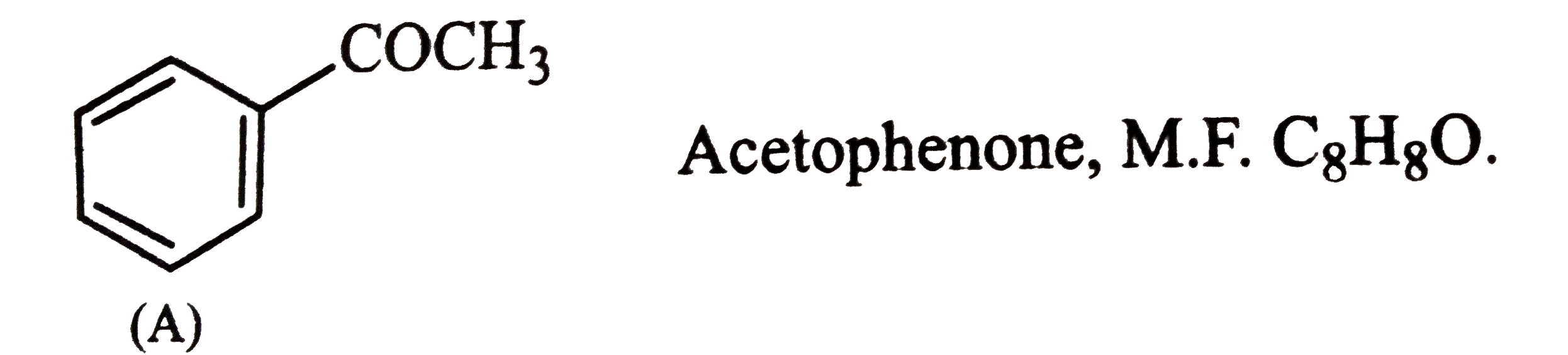 Step.2: To explain all the reactions involved in the question. 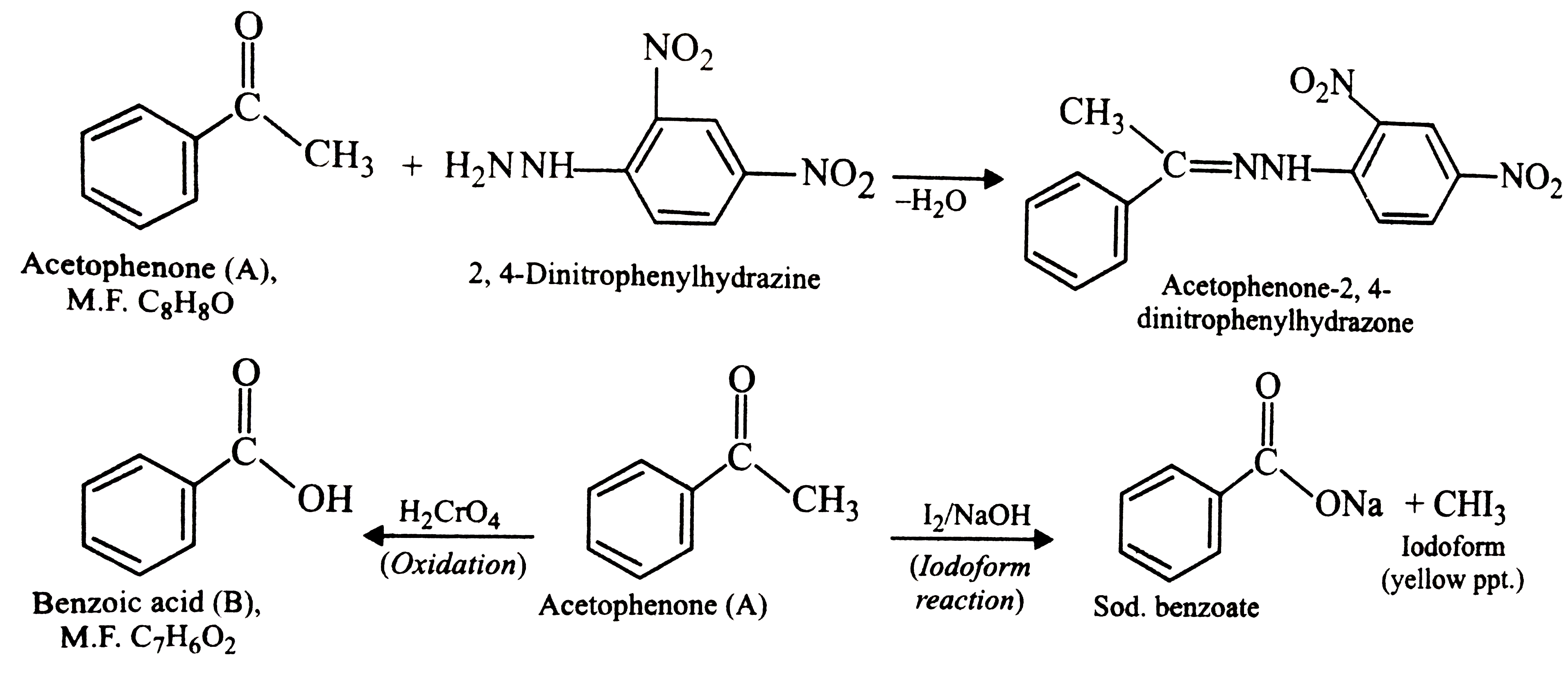
|
|
| 5. |
An organic compound 'A' with molecular formula C_(7)H_(7)NOreacts with Bbr_(2)//aqKOH to give compound 'B' , which upon reaction with NaNO_(2)abd HCl at 0@Cgives 'C'.Compund 'C' on heating with CH_(3)CH_(2)OH gives a hydrocarbon 'D' compound 'B' on further reaction with Br_(2) water givs white precipitate of compound 'E' . Identify the compound A, B,C, D and E, also justify your answer by giving relevant chemical equations. |
Answer» SOLUTION : COMPOUND A, B, C, D and E are identified as under : 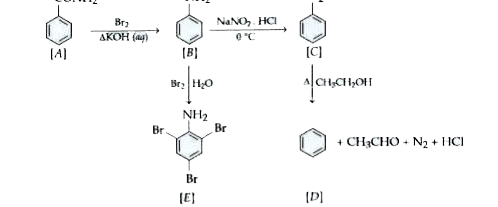
|
|
| 6. |
An organic compound (A) with molecular formula C_(8)H_(8)O forms an orange-red precipitate with 2,4-DNP reagent and gives yellow precipitate on heating with iodine in the presence of sodium hydroxide. It neither reduces Tollens’ or Fehlings’ reagent, nor does it decolourise bromine water or Baeyer’s reagent. On drastic oxidation with chromic acid, it gives a carboxylic acid (B) having molecular formula C_(7)H_(6)O_(2). Identify the compounds (A) and (B) and explain the reactions involved. |
Answer» SOLUTION :A. is ACETOPHENONE 
|
|
| 7. |
An organic compound (A) with molecular formula C_(6)H_(6)O gives a characteristic colour with aqueous FeCl_(3) solution. When (A) is treated with CO_(2) and NaoH at 410 K under pressure, it gives compound (B) which upon acidification gives compound (C). compound (C) reacts with acetyl chloride to give (D) which is a popular pain killer. deduce the structure of (A), (B), (C) and (D) and explain all the reaction involved. |
|
Answer» Solution :(i) Since copound (A) with M.F. `C_(6)H_(6)O` gives CHARACTERISTIC colour with `FeCl_(3)`, therefore (A) must be PHENOL. (ii) Since COMPOUND (A), i.e., phenol reacts with `CO_(2)` and NaOH under pressure (i.e., Kolbe's reaction) to to give compound (B) which on acidification gives compound (C), therefore, (B) must be sodium salicylate and (C) must be salicylic acid. (iii) Since (C) reacts with acetyl CHLORIDE to form a popular paiin killer (D), therefore, (D) must be aspirin. (iv) All the abbveo reactions MAY be explained as follows: 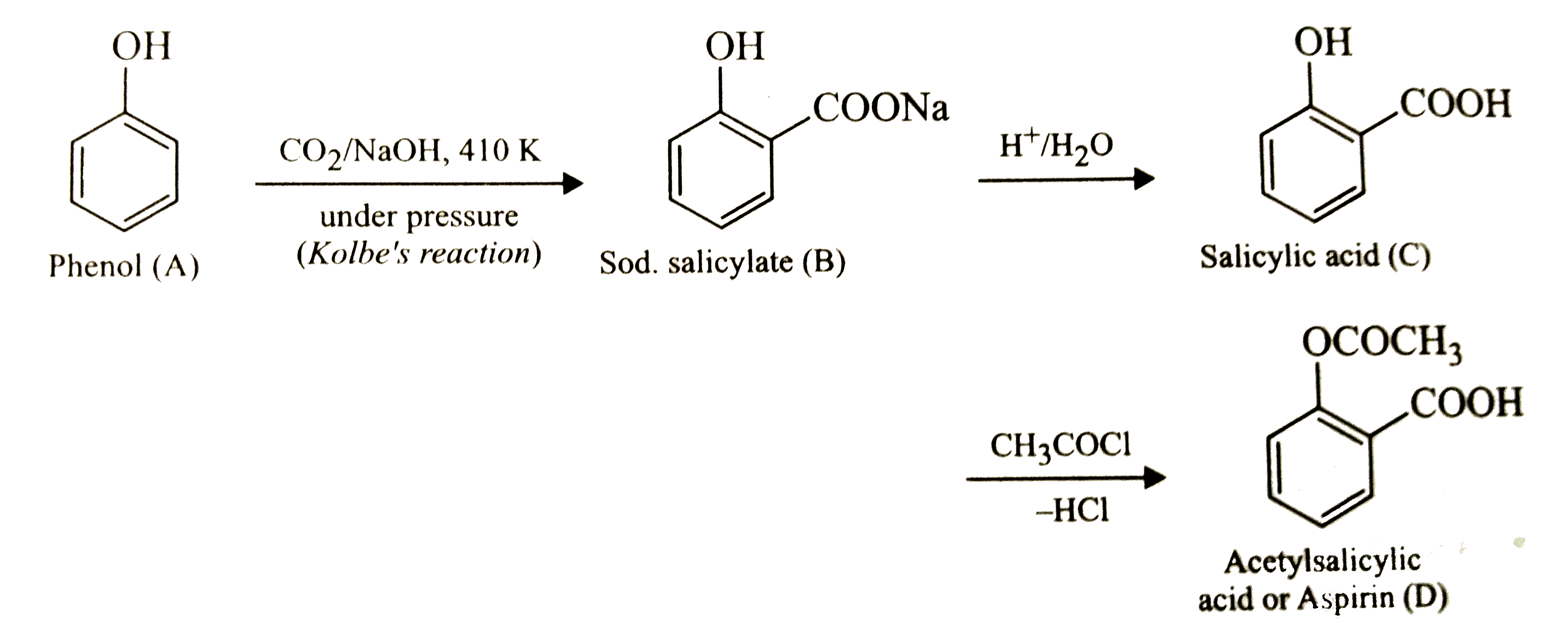
|
|
| 8. |
An organic compound (A) with molecular formula C_(6)H_(7)N gives (B) with HNO_(2)//HCl at 273 K. The aqueous solution of (B) on heating gives compound (C) which gives violet colour with neutral FeCl3. Identify the compounds A, B and C and write the equations. |
| Answer» SOLUTION :(A) `C_(6)H_(5)NH_(2) -` aniline, (B) `C_(6)H_(5)N_(2)CL` - benzene diazonium CHLORIDE, (C) Phenol | |
| 9. |
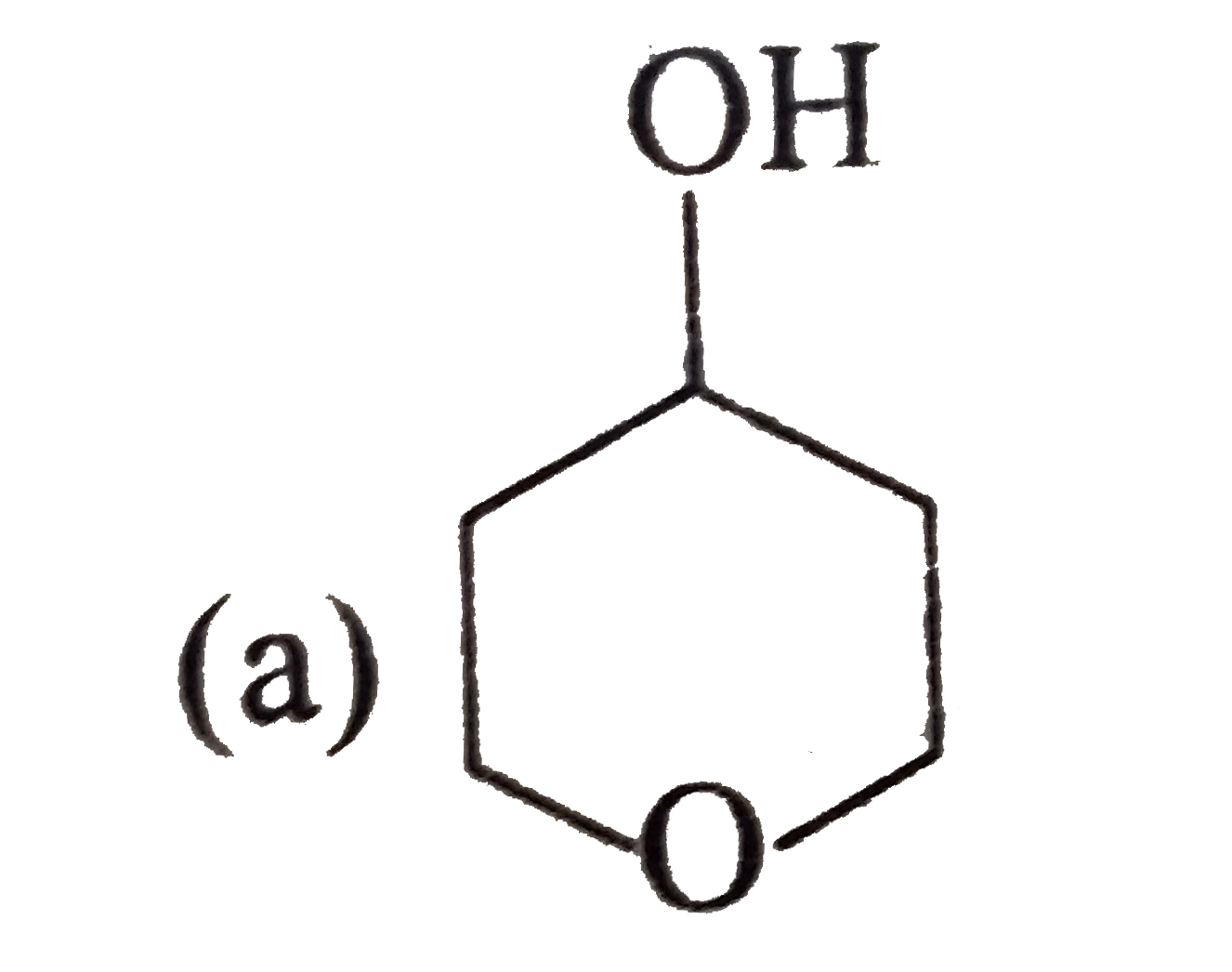
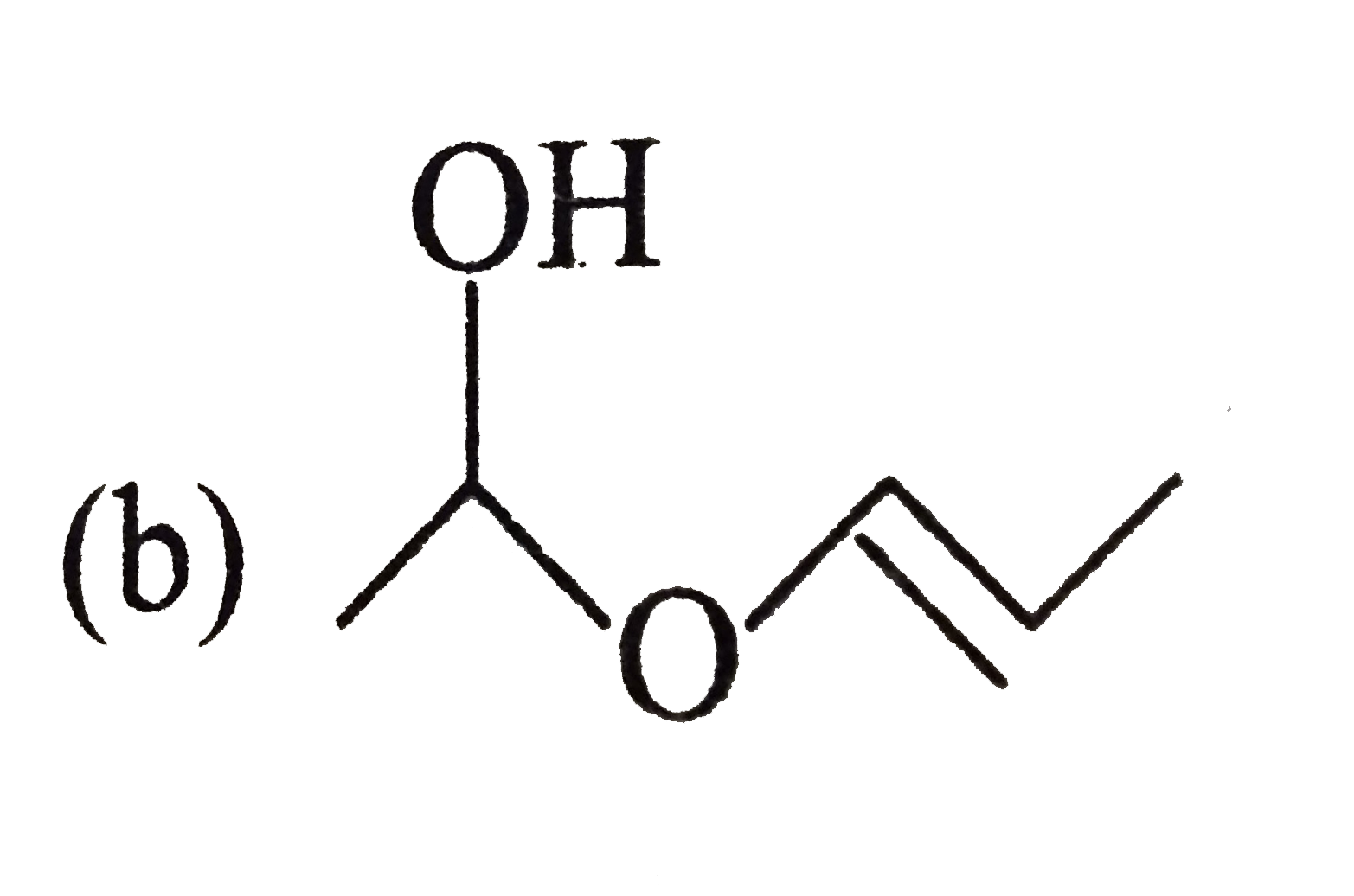
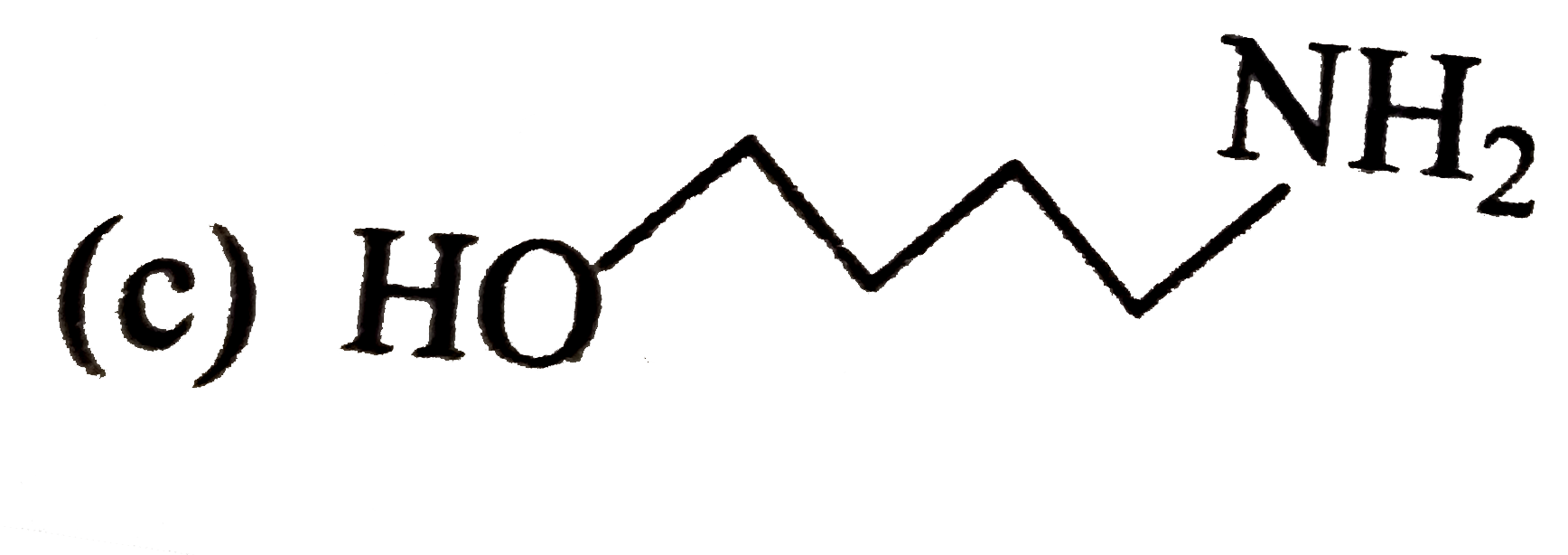
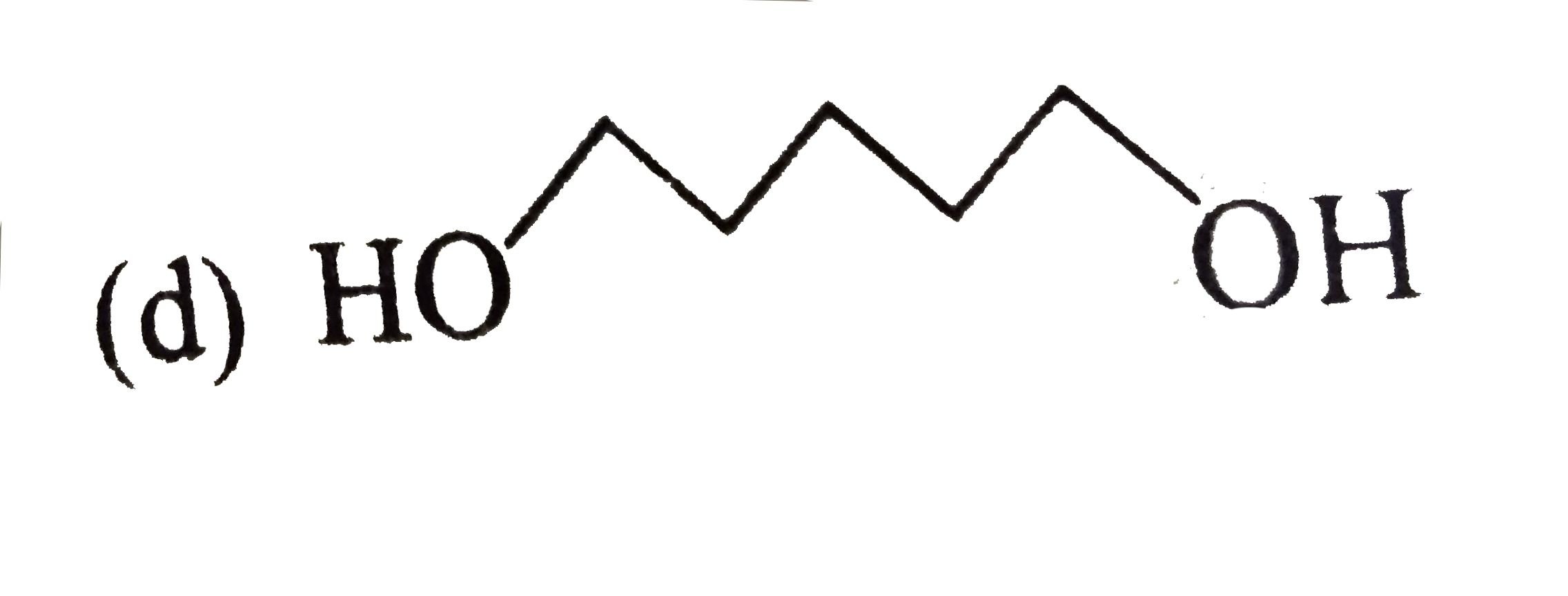
An organic Compound (A) with molecular formula C_(6)H_(12)O_(2)was hydrolysed with dil. H_(2)SO_(4) to give an alkene as major product and alcohol as minor product. The structure (A) is: |
|
Answer»

|
|
| 10. |
An organic compound A with molecular formula C_4H_9 Br on treatment with alcoholic KOH gave two isomeric compounds B and C with the formula C_(4)H_(8) On ozonolysis, B gave only one product CH_3CHO while C gave two different products. Find the sum of carbon atoms in compound A, B and C. |
|
Answer» `underset("2-Bromobutane (A)")(CH_(3)-underset(Br)underset(|)CH-CH_(2)-CH_(3) overset("alc. KOH") to``overset(CH_(3)CH=CHCH_(3))overset(2-"Butene (B)")underset("1 product")underset(2CH_(3)CHO)(darr)(ozonolysis)` + `overset(CH_(3)CH_(2)CH=CH_(2))overset("1-Butene")underset(2-"products")underset(CH_(3)CH_(2)CHO + HCHO)(darr) ("ozonolysis")` Thus, compound A, B & C contains total 12 carbon atoms. |
|
| 11. |
An organic compound 'A' with molecular formula C_3H_9N neigher give nitrogen nor yellow oily liquid with HNO_2. Then A is |
|
Answer» `CH_3CH_2-CH_2-NH_2` |
|
| 12. |
An organic compound (A) with molecular formula C_(3)H_(6)O undergoes iodoform reaction. Two molecules of compound (A) react with dry HCl to give compound (B) (C_(6)H_(10)O). Compound (B) reacts with one more molecule of compound (A) to give compound (C) (C_(9)H_(14)O). Identify (A), (B) and ( C). Explain the reactions. |
|
Answer» Solution :(i) Compound (A) with molecular formula `C_(3)H_(6)O` that undergoes IODOFORM reaction is `CH_(3)COCH_(3)` (A) (acetone). (ii) TWO MOLECULES of (A) react with dry HCL to give compound (B).  (iii) Compound (B) reacts with (A) to give compound ( C). 
|
|
| 13. |
An organic compound A which has characteristic odour, on treatment with NaOH forms two compounds B and C. compound B has the molecular formula C_(7)H_(8)O which on oxidation gives back compound A. Compoud C is the sodium salt of an acid which when heated with soda lime yields an aromatic hydrocarbon D. Deduce the structure of A,B,C and D. |
Answer» SOLUTION :STRUCTURES of A,B,C and D are DEDUCED as under: 
|
|
| 14. |
An organic compound (A) which has characteristic odour. On treatment with NaOH it forms two compounds (B ) and (C ) . Compound (B ) has molecular formula C_(7) H_(8) O whichon oxidation gives back (A). The compound (C ) is a sodium salt of an acid. When ( C ) is treated with soda lime it yields an aromatic hydrocarbon ( D ). Deduce the structure of (A), (B) ,(C ) and (D ).Write the sequence of reactions involved. |
Answer» Solution :The compound (A) having CHARACTERISTIC odour is benzaldehyde, `C_(6) H_(5) CHO`. The reactions can be EXPLAINED as under `:`  THUS, `A = C_(6) H_(5) CHO`,B =` C_(6) H_(5) CH_(2) OH` C `= C_(6) H_(5) COONa`,`D = C_(6) H_(6)` |
|
| 15. |
An organic compound A upon reacting with NH_(3) gives B. On heating, B gives C. C in presence of KOH reacts with Br_(2) to give CH_(3)CH_(2)NH_(2).A is |
|
Answer» `CH_(3)CH_(2)COOH` |
|
| 16. |
An orgainc compound A upon reacting with NH_(3) gives B On heating B give C.C in presence KOH reacts with Br_(2) to yield CH_(3)CH_(2)NH_(2) A is . |
|
Answer» `CH_(3)-UNDERSET(CH_(3))underset("|")"CH"-COOH` |
|
| 17. |
An organic compound A upon reacting with NH_(3) gives B. on heating, B gives C. C in presence of KOH reacts with Br_(2) to give CH_(3)CH_(2)NH_(2). A is |
|
Answer» `CH_(3)CH_(2)COOH` |
|
| 18. |
An organic compound A upon reacting with NH_3 gives B. On heating B gives C. C in presence of KOH reacts with Br_2 to given CH_3CH_2NH_2 . A is : |
|
Answer» `CH_3COOH` Reaction (III) is a Hoffmann bromamide reaction . Now formation of `CH_3CH_2NH_2` is possible only from a COMPOUND `CH_3CH_2CONH_2-NH_4^(+)(B)` . Thus (A) should be `CH_3CH_2COOH` 
|
|
| 19. |
An organic compound A upon reacting with NH_(3) gives, B on heating, B gives C. C in presence of KOH reacts with Br_(2) to give CH_(3)CH_(2)NH_(2). A is |
|
Answer» `CH_(3)CH_(2)COOH` |
|
| 20. |
An organic compound (A) underset(Cl)underset(|)CH_2 - CH_2 - underset(Cl)underset(CH_2)on reduction with red P_4 and Hl gives propane (A) on hydrolysis by an alkali followed by oxidation gives B(C_3 H_4 O_4) , which on heating gives (C). Both (B) and (C) gice effervescencence with sodium hydrogen carbonate. (B) on reacting with alcohol gives (D) , C_7 H_(12) O_8 a well known syntheticreagent. Now answer the following questions. Compound (A) underset((ii) H^+)overset((i) KCN//C_2H_2OH)toproduct (G). The product (G) is |
|
Answer» Malonic ACID 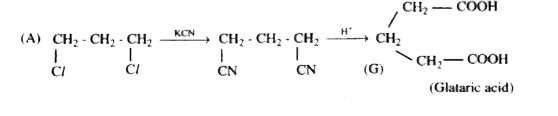
|
|
| 21. |
An organic compound A reacts with sodium metal and forms B. On heating with conc.H_2SO_4,A gives diethyl ether. So A and B are: |
|
Answer» `C_3H_7OH and CH_3ONa` |
|
| 22. |
An organic compound A reacts with sodium metal and forms B. On heating with conc. H_(2)SO_(4) at 140^(@)C A gives diethyl ether. A and B are respectively |
|
Answer» `C_(2)H_(5)OH` and `C_(2)H_(5)ONa` `2C_(2)H_(5)OH underset(-H_(2)O)overset(H_(2)SO_(4))to underset("Diethyl ether")(C_(2)H_(5)OC_(2)H_(5))` |
|
| 23. |
An organic compound A reacts with sodium metal and forms B. On heating with conc. H_(2)SO_(4), A gives diethyl ether. So A and B are |
|
Answer» `C_2H_5OH and C_2H_5ONa ` |
|
| 24. |
An organic compound A reacts with PCl_5 to give B. The compound B with sodium metal gives n-butane. Thus A and B are : |
|
Answer» `C_2H_5OH` and `C_2H_5Cl` |
|
| 25. |
An organic compound A reacts with metalic sodium in ether medium to form ethane. A also reacts with magnesium in ether medium to give B, which on hydrolysis gives methane. Identify A and B. Write down the chemical equation involved. |
Answer» SOLUTION :
|
|
| 26. |
An organic compound (A) reacts with H_(2) to give (B) and (C) suC Cessively. On ozonolysis of (A), tow aldehyes (D) C_(2)H_(4)O and (E) C_(2)H_(2)O_(2) and formed. On ozonolysis of (B) only propanal is formed. What are (A) to (E) ? |
|
Answer» `D=H_(3)C-CHOE=UNDERSET(CHO)underset(|)(CHO)` |
|
| 27. |
An organic compound (A) reacts with ethanol to give (B) and (C). On acid hydrolysis (C ) yields (B) and (D). oxidation of (D) gives (B). (B) is an acid and forms a salt with Ca(OH)_(2) which on dry distillation gives (E ), C_(3)H_(6)O. Give the structures of (A) to (E ) with proper reasoning. |
Answer» SOLUTION :`UNDERSET("ACETIC anhydride")underset((A))((CH_(3)CO)_(2)O)+C_(2)H_(5)Ohtounderset("Acetic acid")underset((B))(CH_(3)COOH)+underset("ETHYL acetate")underset((C))(CH_(3)COOC_(2)H_(5))` 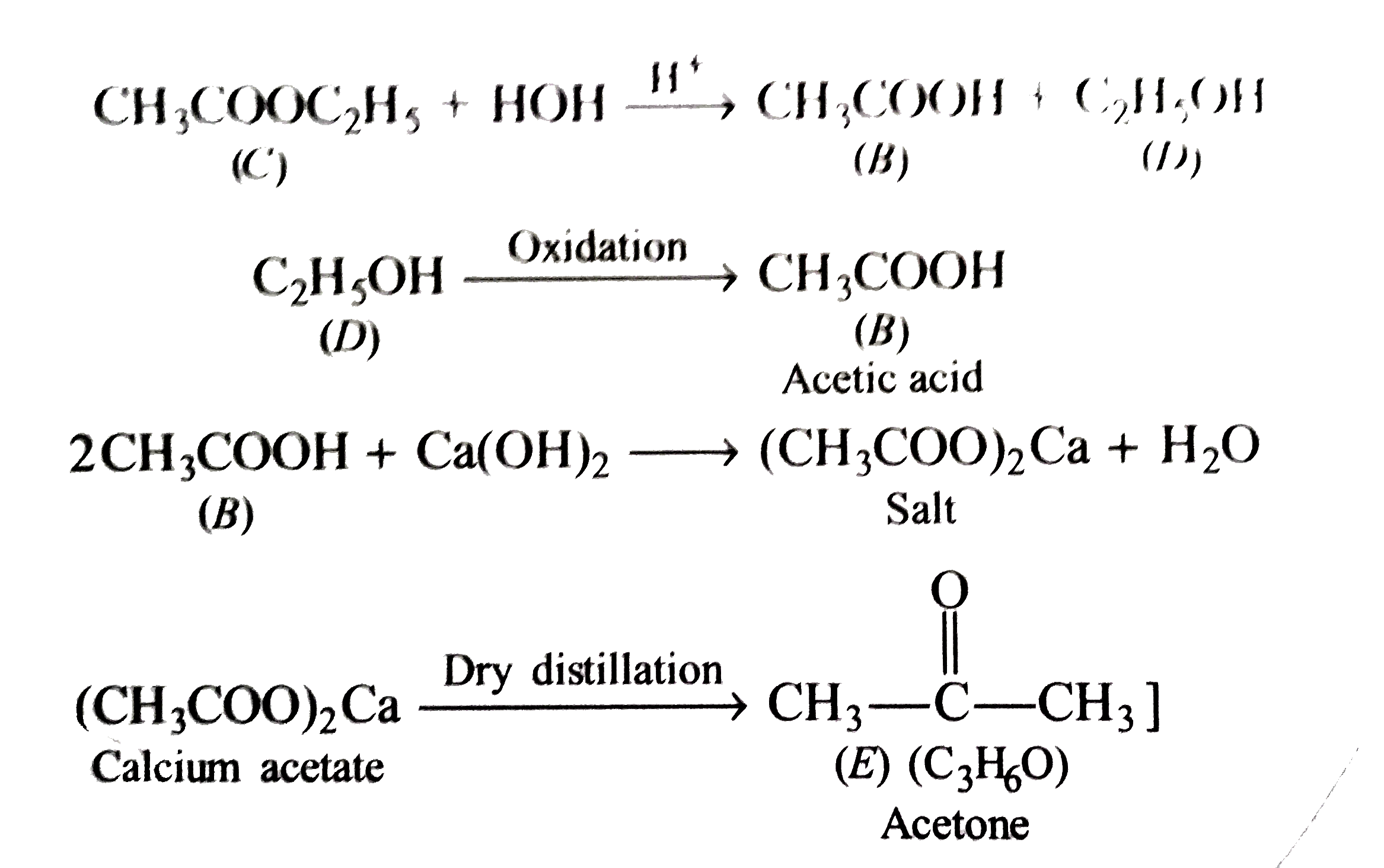
|
|
| 28. |
An organic compound A reacts with CH_(3)MgI to form an addition product which on hydrolysis forms the compound B. compound B gives blue coloured salt in victor-meyer's test. The compound A and B respectively are |
|
Answer» ACETALDEHYDE, tertiary butyl ALCOHOL |
|
| 29. |
An organic compound (A) produces (CH_3)_2C=CH-CH_3 on dehydration. The compound A is |
|
Answer» `(CH_3)_3C CH_2-OH` |
|
| 30. |
An organic compound 'A' on treatment with NH_(3) gives 'B', which on heating given 'C','C' when treated with Br_(2) in the presence of KOH produces ethylamine. Compound 'A' is |
|
Answer» `CH_(3)-underset(CH_(3))underset(|)(CHCOOH)` `underset("Hoffmann bromamide REACTION")overset(KOH+Br_(2))rarrCH_(3)-underset(("Ethylamine"))(CH_(2))-NH_(2)` |
|
| 31. |
An organic compound (A) on treatment with CHCl_(3) and KOH gives two compounds B and C. Both B and C give the same product (D) when distilled with zinc dust. Oxidation of D gives E having molecular formula C_(7)H_(6)O. The sodium salt of E on heating with soda-lime gives F which may also be obtained by distilling A with zinc dust. Identify A to F. |
|
Answer» Solution :(i) Since compound (A) on treatment with `CHCl_(3)` and KOH (i.E., Reimer-Tiemann reaction), gives two products B and C, THEREFORE, A must be phenol and B and C must be o-hydroxybenzaldehyde and p-hydroxybenzaldehyde respectively or vive-versa. (ii) Since both B and C on distillation with Zn dust give the same compound (D), therefore, D must be BENZALDEHYDE. (III) since oxidation of D gives E with M.F. `C_(7)H_(6)O_(2)`, therefore, E must be benzoic acid. (iv) Since sodium salt of E, i.e., benzoic acid upon heating with soda-lime gives compound (F), therefore, The CHEMICAL equations for the above reactions are given below. 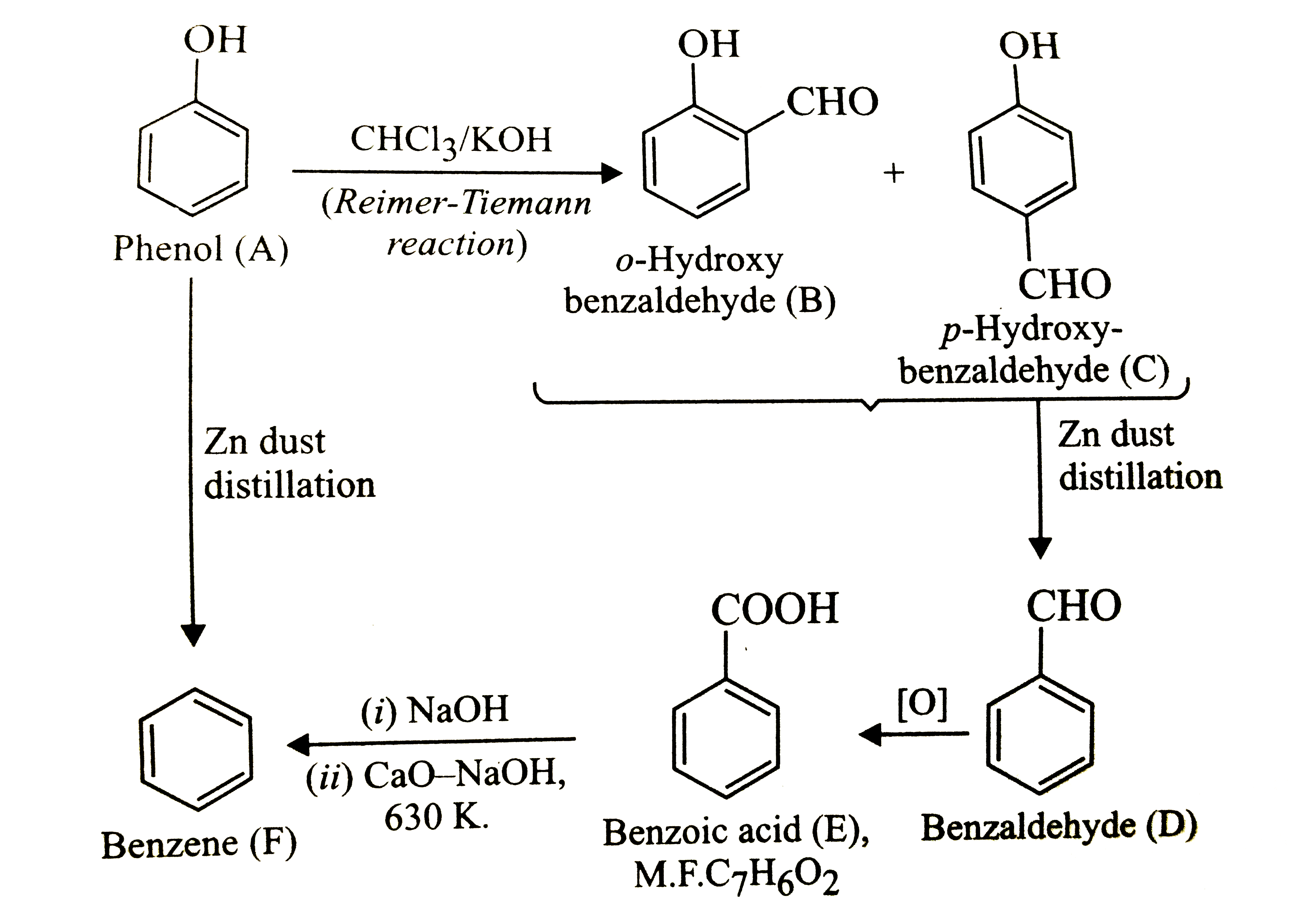
|
|
| 32. |
An organic compound (A) on treatement with ethyl alcohol gives a carboxylic acid (B) and compound (C). Hydrolysis of (C) under acidified conditions gives (B) and (D). Oxidation of (D) with KMnO_(4) also gives (B). (B) on heating with Ca(OH)_(2) gives (E) having molecular formula C_(3)H_(8)O. (E) does not give tollens' test and does not reduce Fehling's solution but forms 2,4-dinitrophenylhydrazone. Identify (A), (B), (C), (D) and (E). |
|
Answer» Solution :(i) Since compound (E) with molecular formula `C_(3)H_(6)O` does not reduce Tollens' reagent and Fehling's solution but forms 2,4-dinitrophenylhydrazone, it must be a ketone. But the only possible ktone having the molecular formula `C_(3)H_(6)O` is acetone or propanone. THUS, compound (E) is acetone or (propanone) `CH_(3)COCH_(3)`. (ii) Since acetone (E) is obtained y heating compound (B) with `Ca(OH)_(2)`, therfore, (B) must be acetic acid (ethanoic acid), `CH_(3)COOH`. (iii) Since (D) on oxidation with `KMnO_(4)` gives acetic acid (B), therefore, (D) must be ethyl alcohol (ETHANOL), `CH_(3)CH_(2)OH`. (iv). Since acetic acid (B) and ethyl alcohol (D) are obtaied by treatment of compound (A) with ethyl alcohol, therefore, (C) must be ethyl acetate (ethyl ethanoate), `CH_(3)COOC_(2)H_(5)`. (v). Since ethyl acetate (C) and acetic acid (B) are obtained by treatment of compound (A) with ethyl alcohol, therefore, compound (A) must be acetic anhydride (ethanoic anhydride), `(CH_(3)COO)_(2)O`. (vi) All the reaction involved in this problem can now be explained as follows: 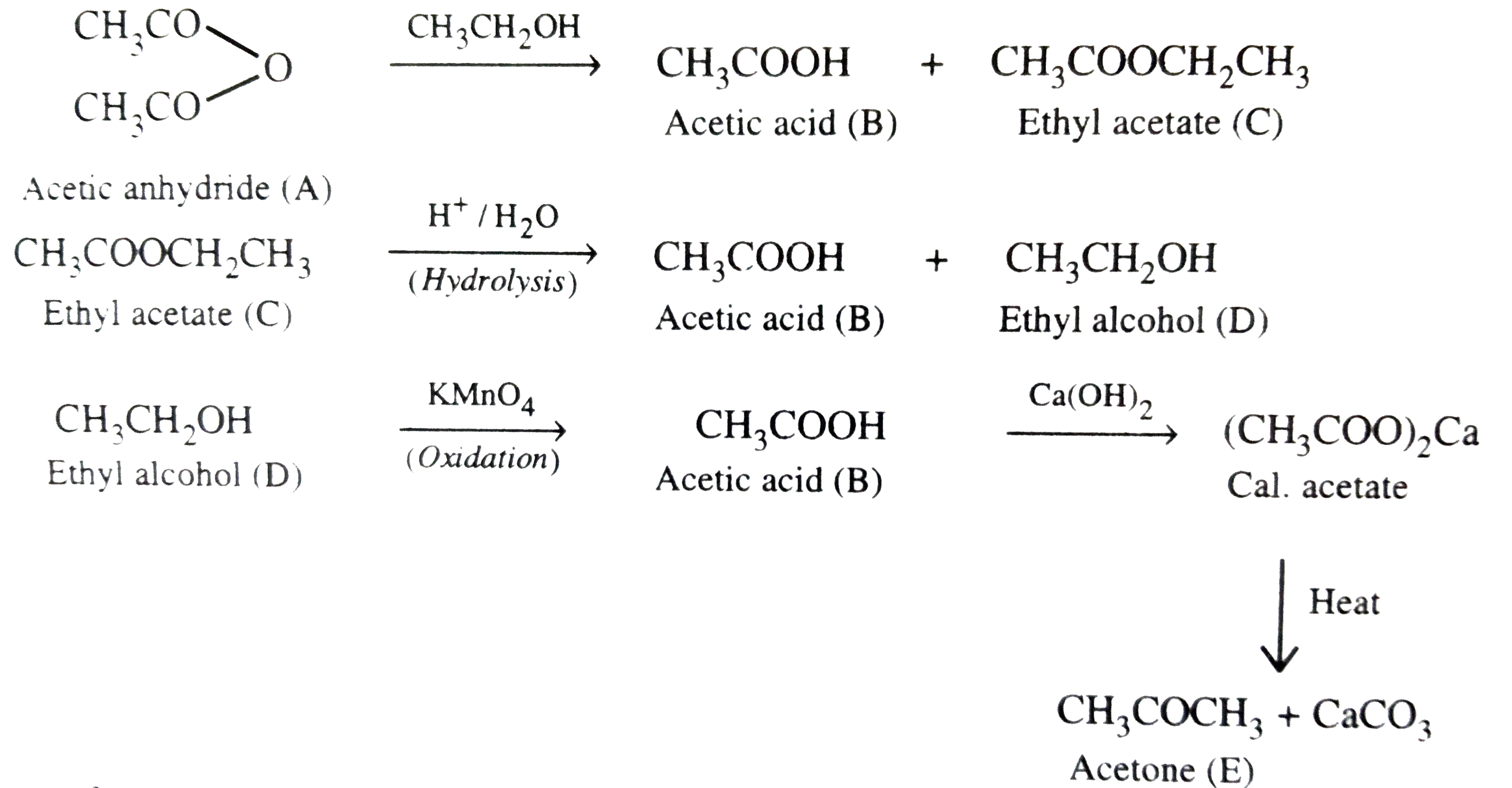 . .
|
|
| 33. |
An organic compound (A) on treatment with acetic acid in the presence of sulphuric acid produces an ester (B). (A) on mild oxidation gives (C ). (C) with 50% KOH followed by acidification with dilute HCl generates (A) and (D). (D) with PCl_(5) followed by reaction with ammonia gives (E). (E) on dehydration produces hydrocyanic acid. Identify the compounds. A, B, C, D, and E. |
Answer» SOLUTION :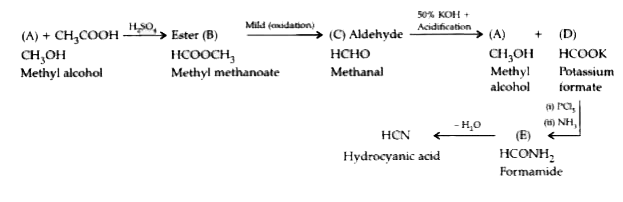
|
|
| 34. |
An organic compound 'A' on reduction gives compound 'B' which on reaction with trichloromethane and caustic potah forms 'C'. The compound 'C' on catalytic reduction gives N-methylbenzenamine, the compound 'A' is |
|
Answer» NITROBENZENE |
|
| 35. |
An organic compound 'A' on reduction gives compound 'B' which on reaction with trichloromethane and caustic potash forms 'C'. Compound 'C' on catalytic reduction given N-methyl benzenamine. Identify A,B and C write the reaction involved. |
Answer» SOLUTION : (i) A - `C_6H_5NO_2` - Nitro benzene B - `C_6H_5NH_2` - ANILINE C - `C_6H_5NC` - PHENYL Carbylamine. |
|
| 36. |
An organic compound .A. on reduction gives compound .B., which on reaction with trichloro methane and caustic potash forms .C.. The compound .C. on catalytic reduction gives N-methyl benzenamine, the compound .A. is, |
|
Answer» nitrobenzene 
|
|
| 37. |
An organiccompound( A ) onreductiongivescompound(B)on treatment with CHCI_(3) andalcoholic KOHgives (C ) oncatalyticreductiongivesN- Methyl aniline.Thecompound(A) is |
|
Answer» METHYLAMINE 
|
|
| 38. |
An organic compound (A) on reduction gives a compound (B) which on reaction with CHCl_(3) and NaOH form (C). The compound (C) on catalytic reduction gives N-methylaniline. The compound (A) is |
|
Answer»

|
|
| 39. |
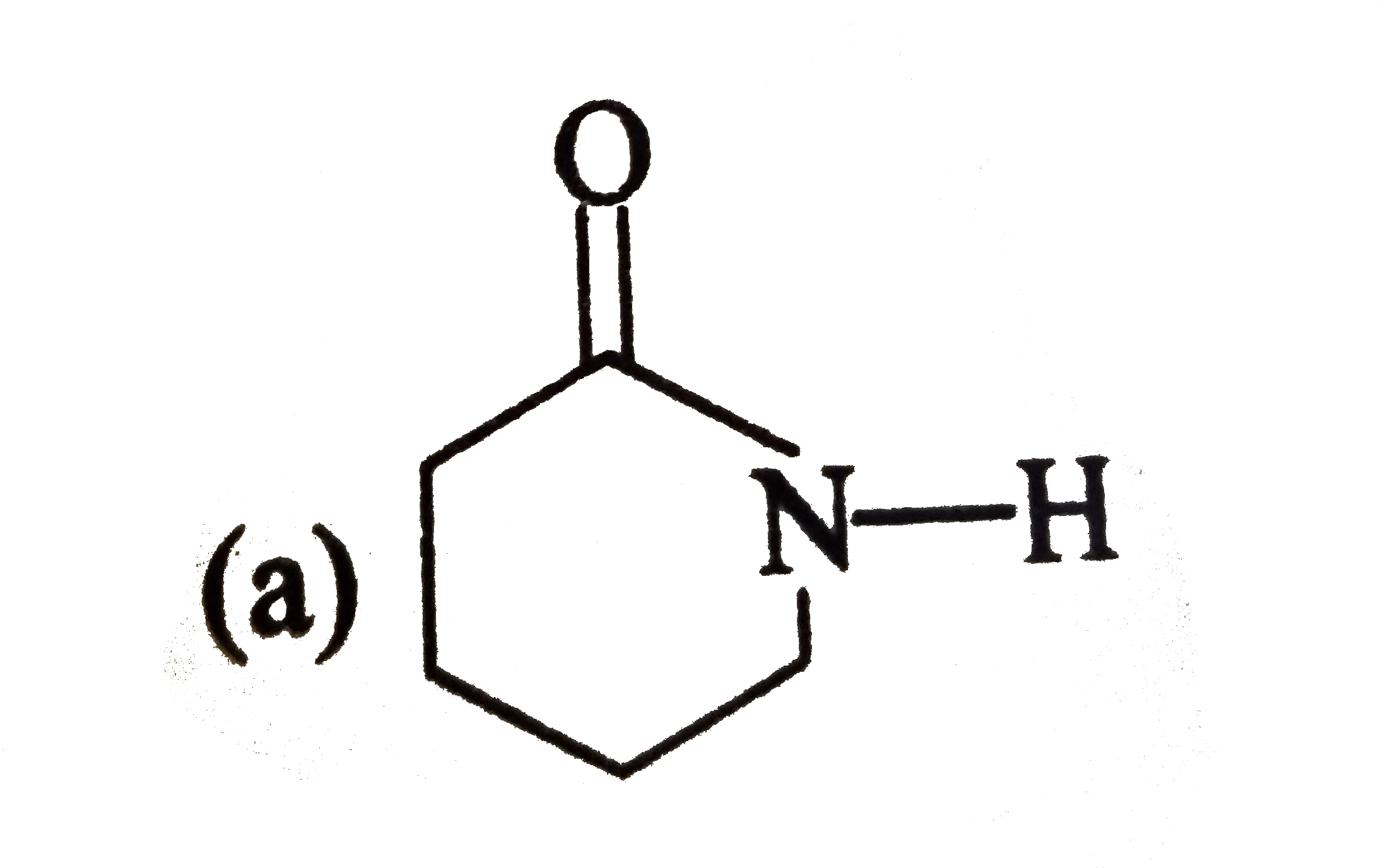
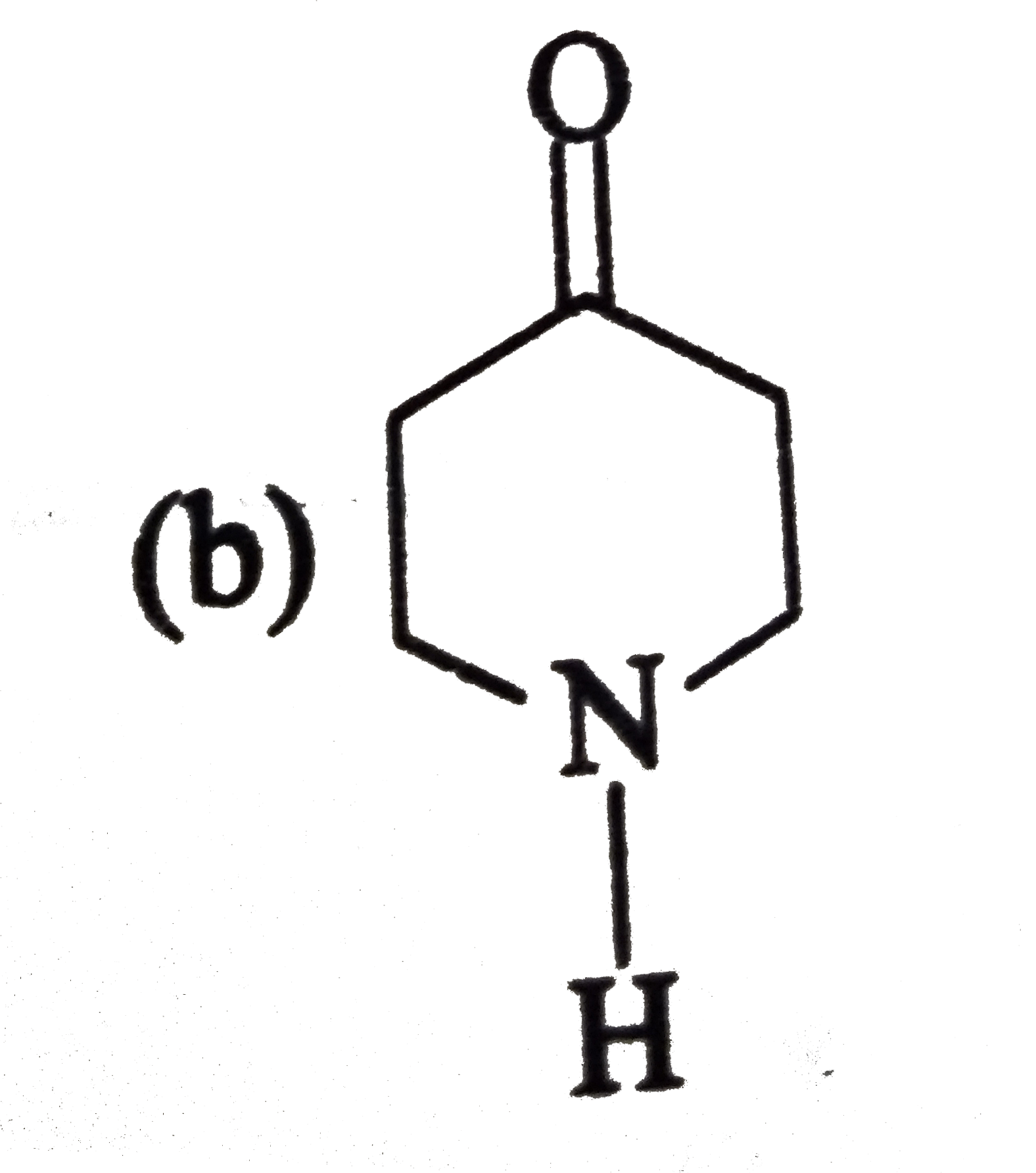
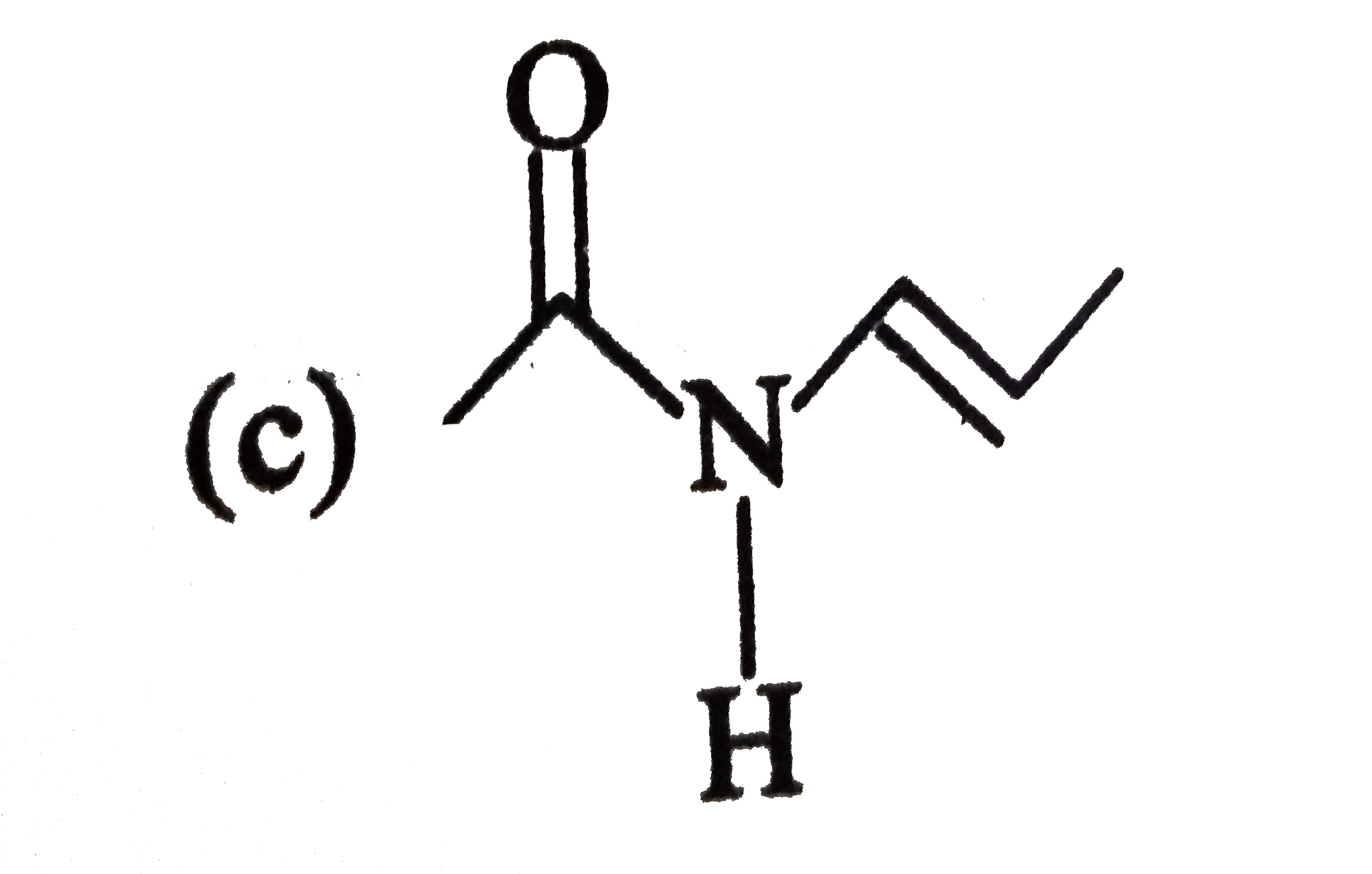
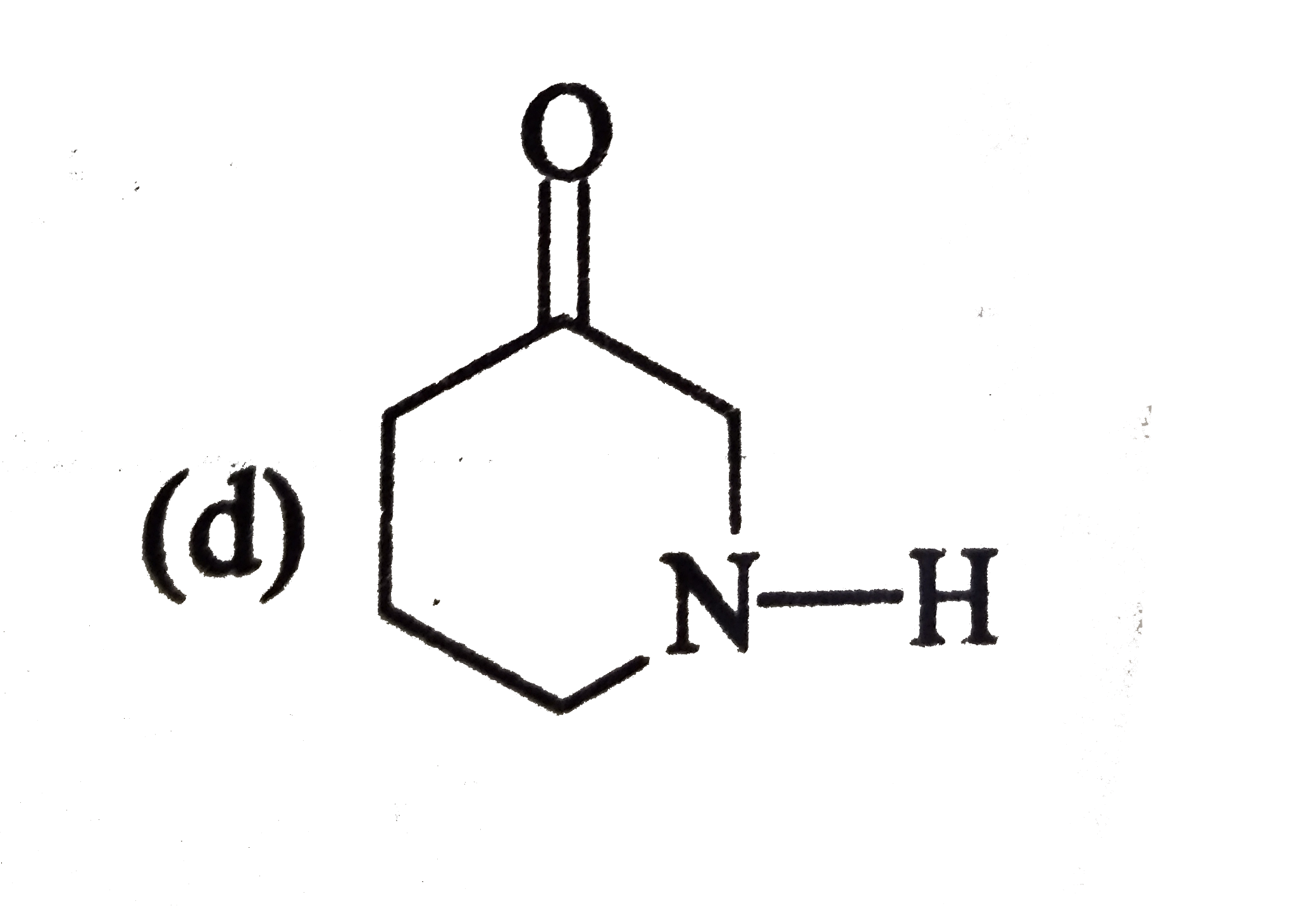
An organic compound A on acid hydolysis produces B, an amino acid. B on treatement with HNO_(2) gives C. C on heating with conc. H_(2)SO_(4) produces a lactone D. A can also be synthesised by the reaction of cyclopentanone with H_(2)N - OH followed by treatement of conc. H_(2)SO_(4) D overset(LiAlH_(4))underset(H_(2)O)rarr " Product": |
|
Answer»
|
|
| 40. |
An organic compound (A) on analysis was found to contain C = 16.271%, H = 0.677%, andCl = 72.203%. It reducedFethyng'ssolution and on oxidation gave a monocarboxylic acid (B), having C = 14.679%, H = 0.612%, and Cl = 65.137%. On distillation with sda lime. (B) gave a sweet-smellingliquid(C), containng89.12% chlorine . (C) can alos be obtained by heating (A) with alkali. What structural fornuatewould you assign to (A),(B), and (C)? Explain the above reactions:. |
Answer» SOLUTION : 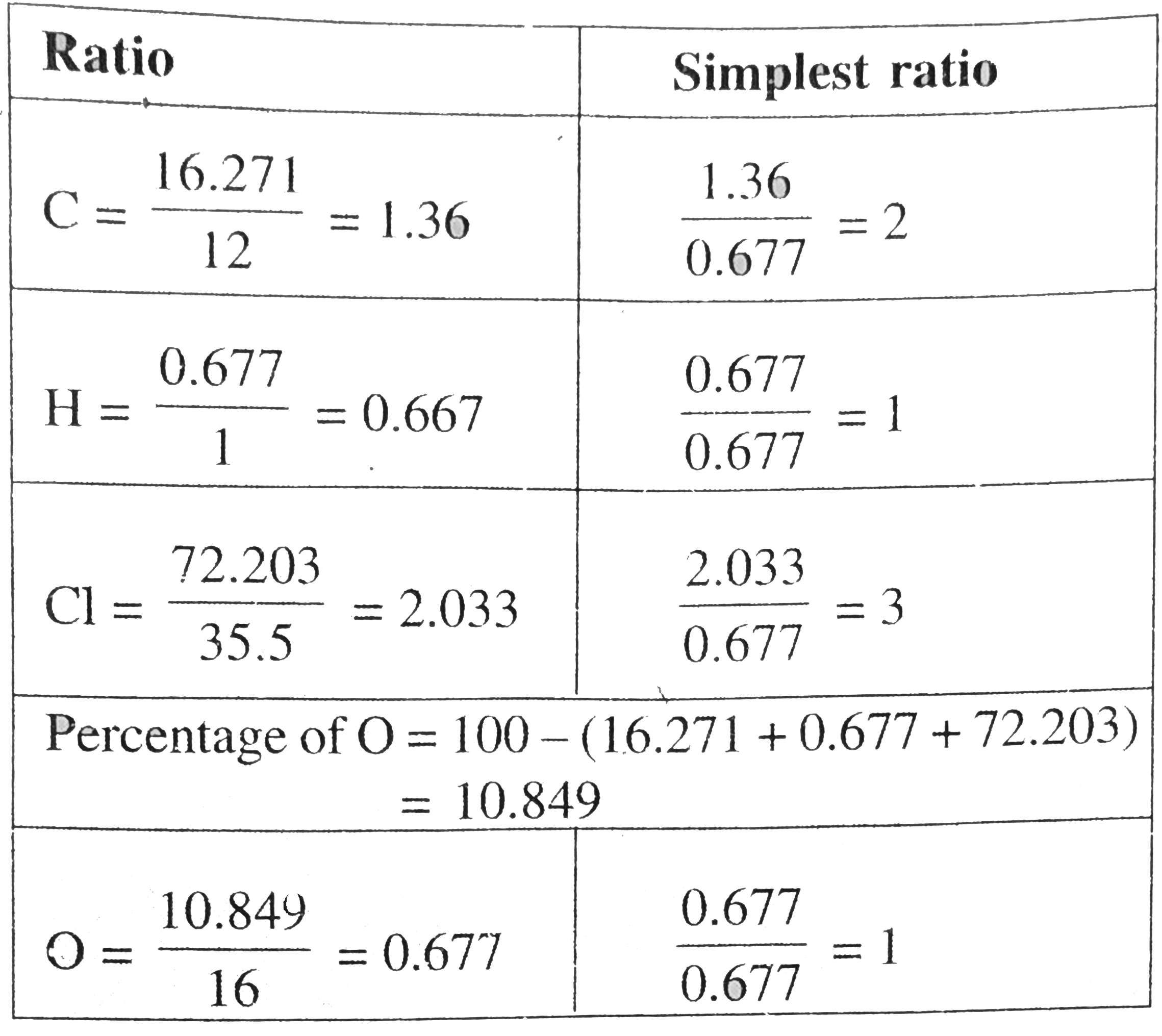 Molecular formula of `(B) = C_(2)HCl_(3)O_(2)` Comnpound `(A0` SHOWS positive Tollens test so it CONTAINS `(-CHO)` group. Sturcture of `(A)=(overset(C_2HOCl_3)(-CHO))/(underline(Cl_3C-CHO))` `(A)` is chlorol. 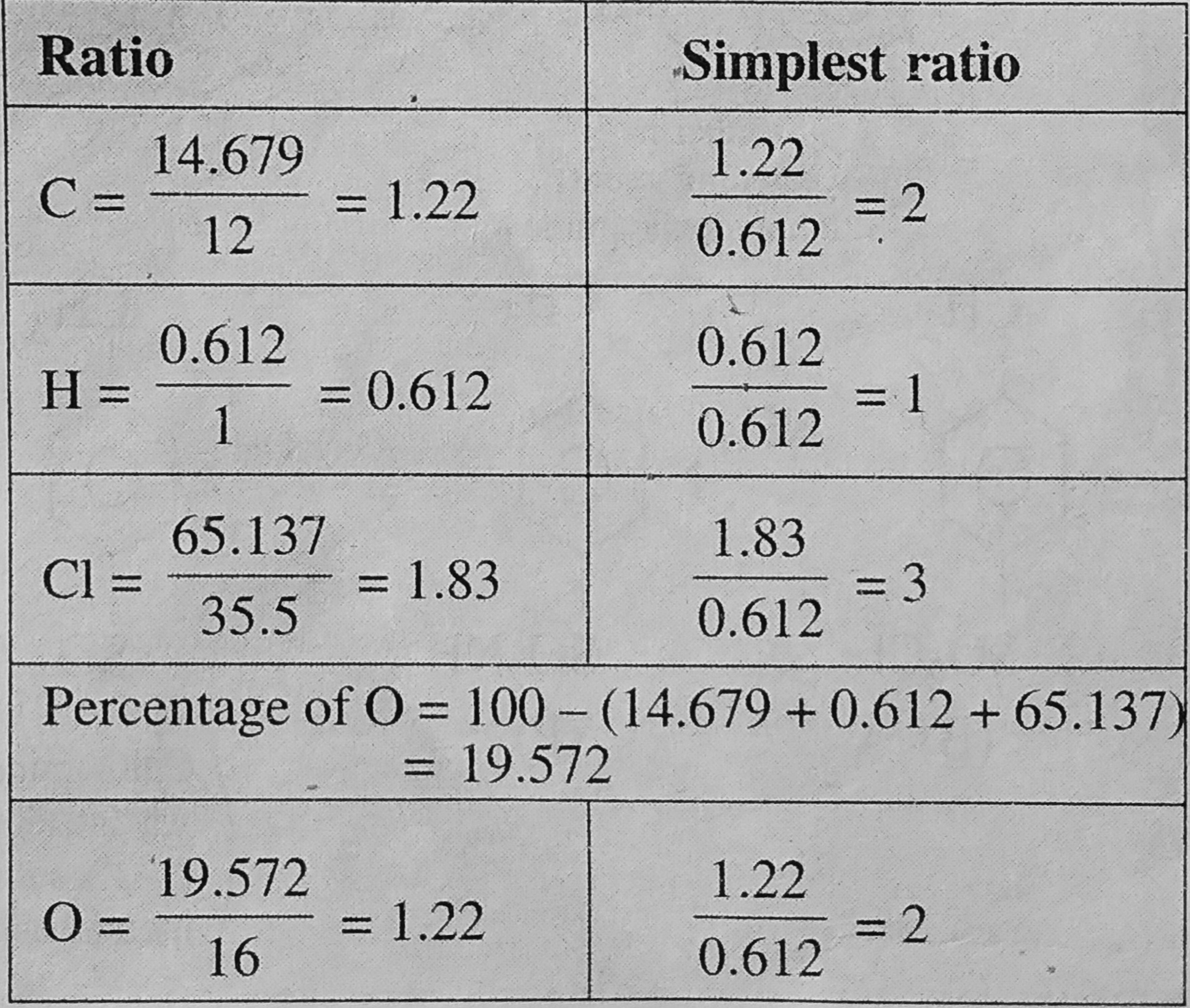 PERCENTAGE of `Cl` in `CHCl_(3)` (molecular mass of `CHCl_(3) = 12 + 2 + 35.5xx3 = 119.5`) `= (106.5)/(119.5) xx 100 = 89.12%` 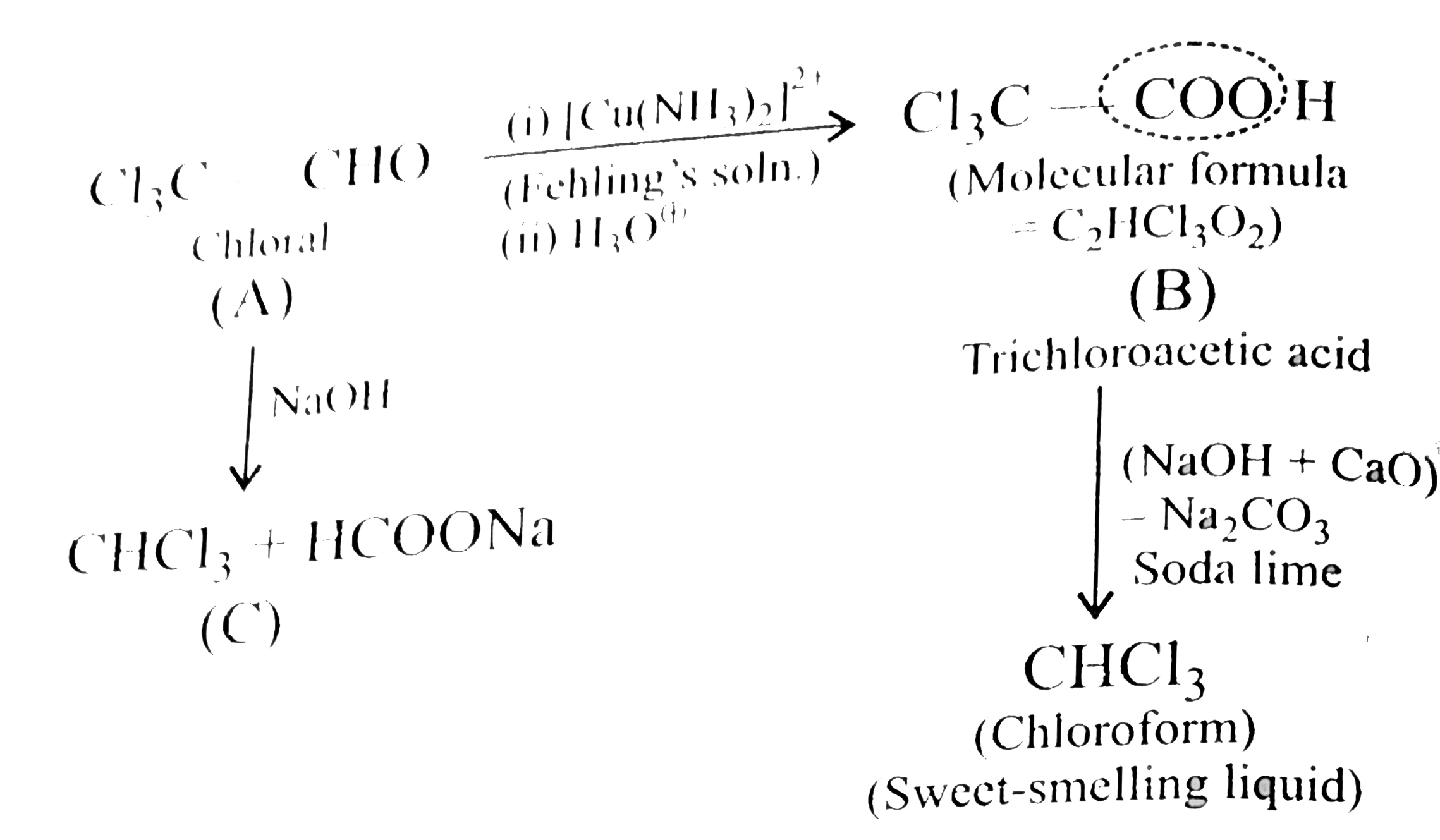
|
|
| 41. |
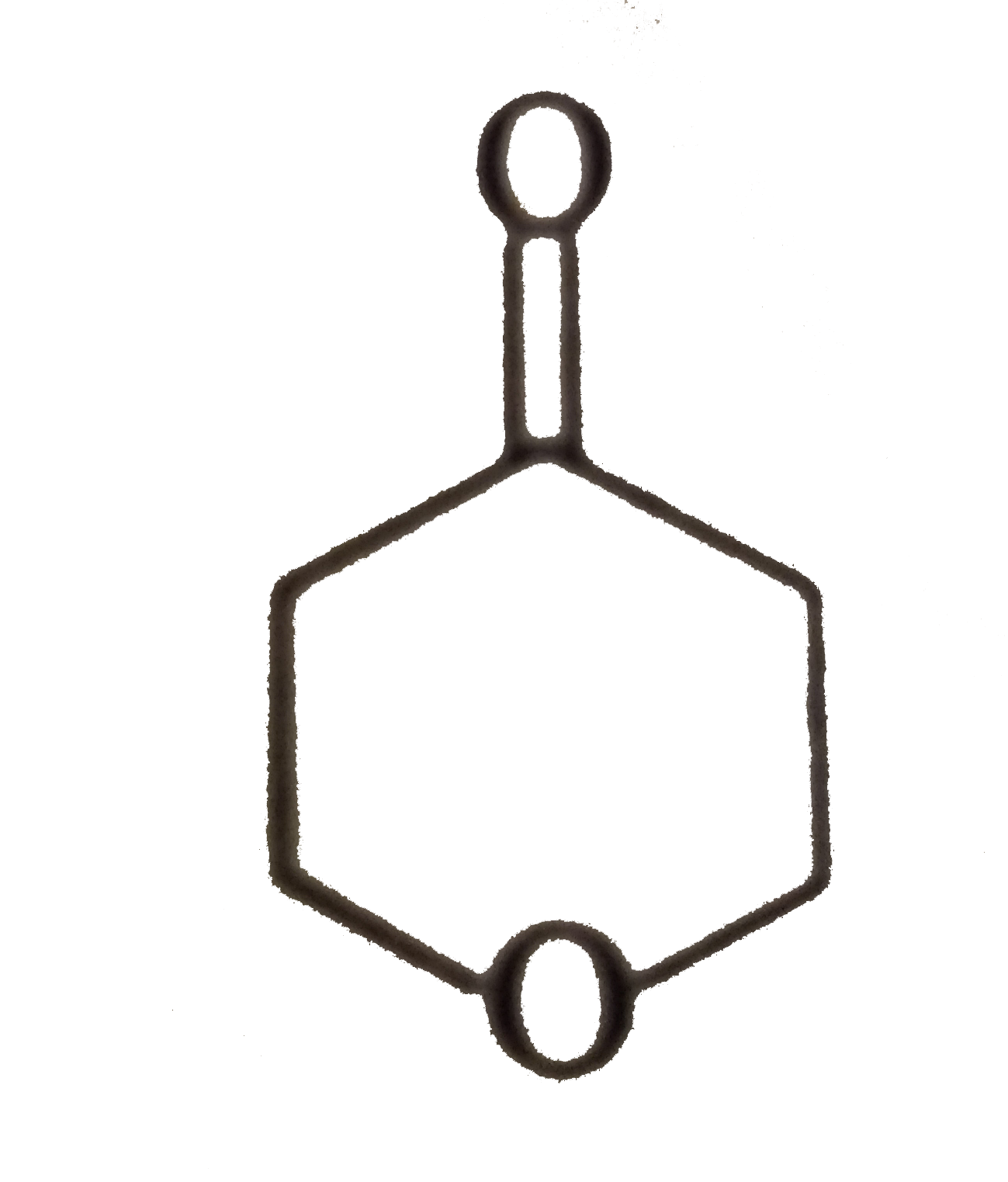
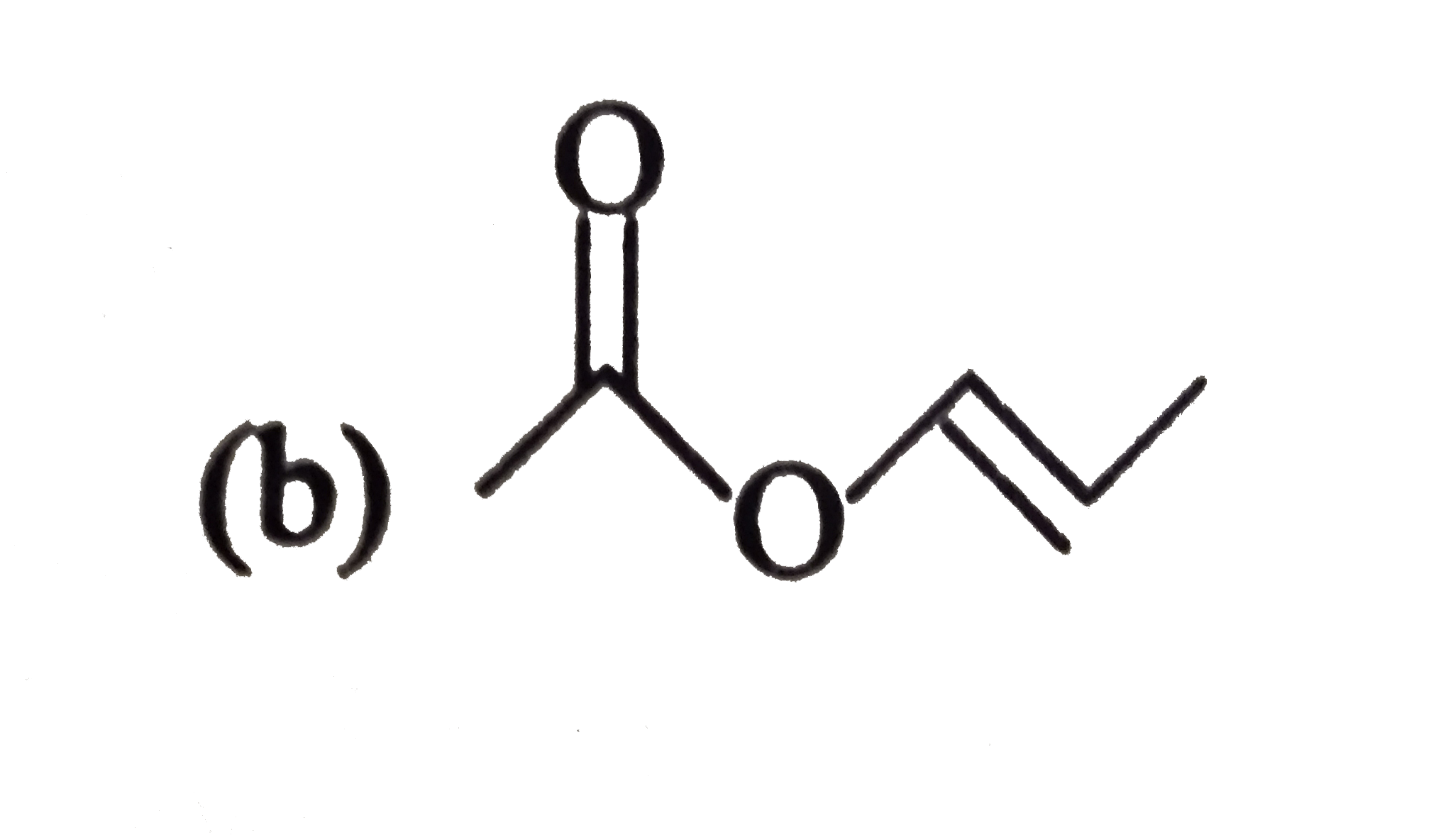
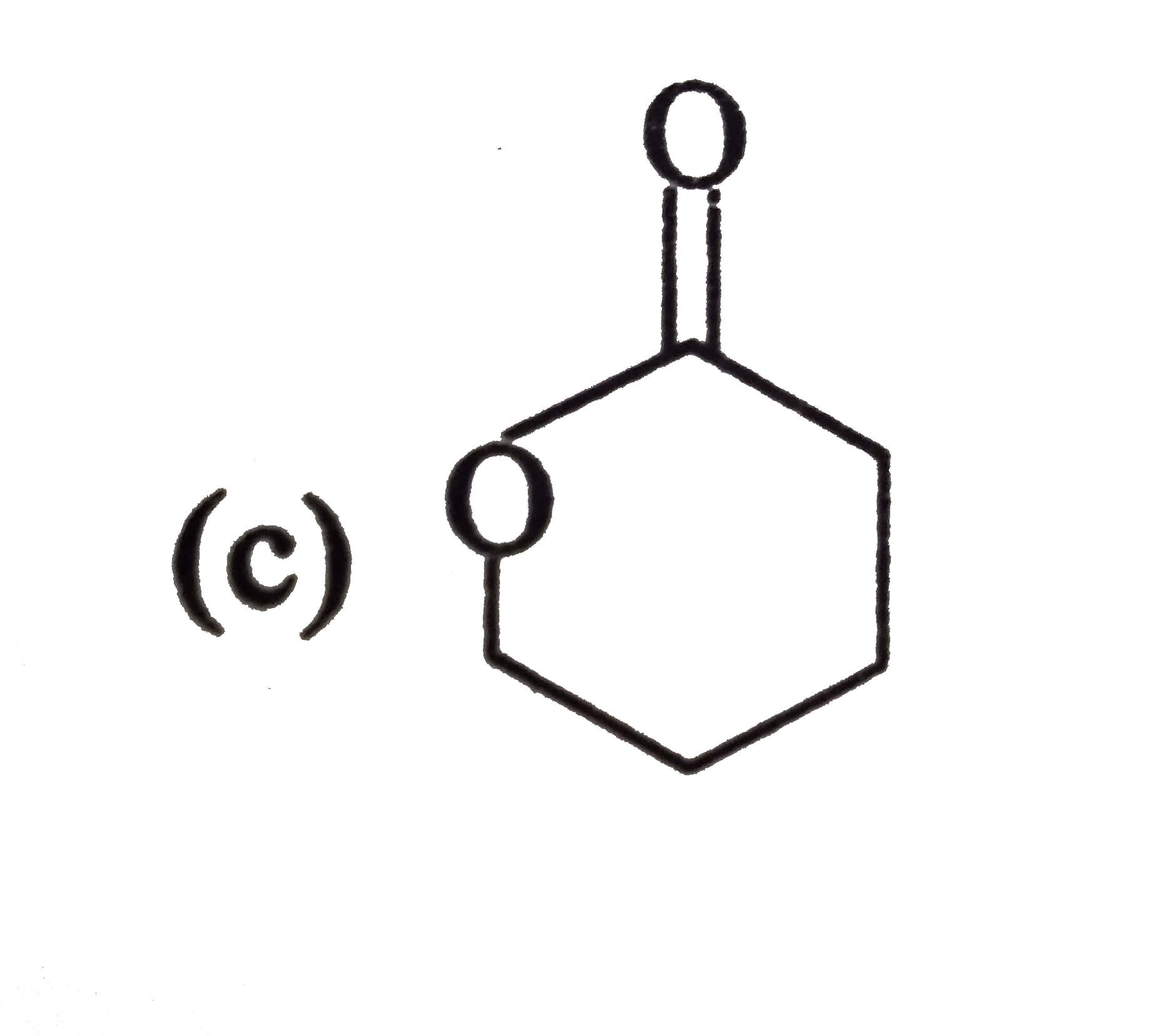
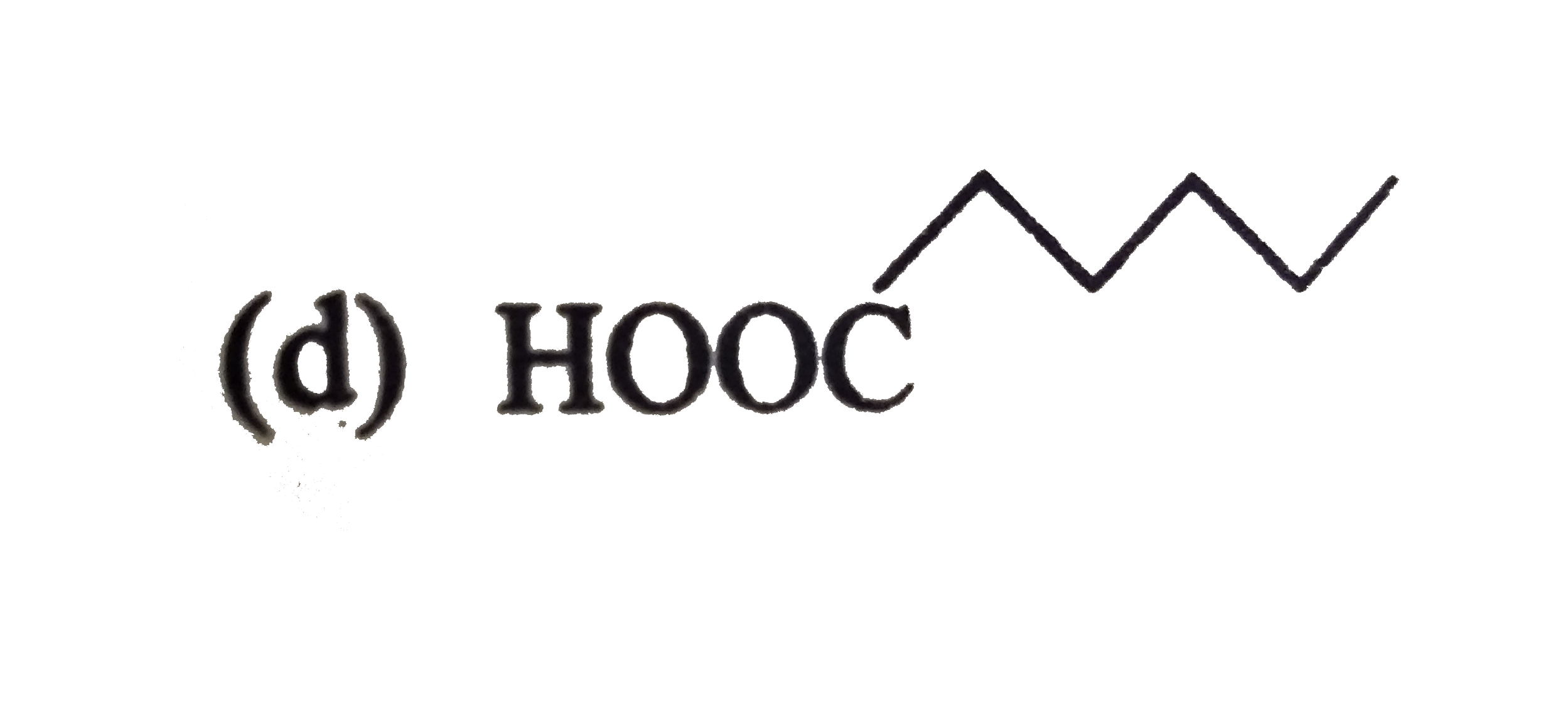
An organic compound A on acid hydolysis produces B, an amino acid. B on treatement with HNO_(2) gives C. C on heating with conc. H_(2)SO_(4) produces a lactone D. A can also be synthesised by the reaction of cyclopentanone with H_(2)N - OH followed by treatement of conc. H_(2)SO_(4) Find out structure of D : |
|
Answer»
|
|
| 42. |
An organic compound A on acid hydolysis produces B, an amino acid. B on treatement with HNO_(2) gives C. C on heating with conc. H_(2)SO_(4) produces a lactone D. A can also be synthesised by the reaction of cyclopentanone with H_(2)N - OH followed by treatement of conc. H_(2)SO_(4) What is the structure of compound A? |
|
Answer»
|
|
| 43. |
An organic compound (A) of molecular weight 140.5 has 68.32%C, 6.4%H and 25.26% Cl. Hydrolysis of (A) with dilute acid gives compound (B), C_(8)H_(10)O. Compound (B) can be oxidised under mild condition to compound (C ), C_(8)H_(8)O. Compound (C ) forms a phenyl hydrazone (D ) iwth PhNHNH_(2) and gives a positive iodoform test. Give the structures of compounds (A) to (D) |
Answer» SOLUTION :
|
|
| 44. |
An organic compound (A) of molecular weight 135 on boiling with NaOH evolves a gas which gives white dense fumes on bringing a rod dipped in HCl near it. The alkaline solution thus obtained on acidification gives the precipitate of a compound (B) having molecular weight 136. Treatment of (A) with HNO_2 also yeilds (B), whereas its treatment with Br_2//KOH gives (C). compound (C) reacts with cold HNO_2 to give(D), which gives red colour with ceric ammonium nitrate. On the other hand(E) an isomer of (A) on boiling with dil HCl gives an acid (F), having molecular weight 136. On oxidation followed by heating, (F) gives an anhydride (G) which condenses with benzene in presence of AlCl_3 to give anthraquinone. Structural formula of compound (C) is |
|
Answer»
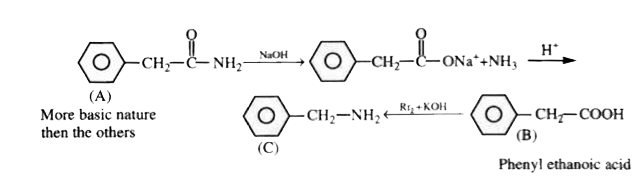
|
|
| 45. |
An organic compound (A) of molecular weight 135 on boiling with NaOH evolves a gas which gives white dense fumes on bringing a rod dipped in HCl near it. The alkaline solution thus obtained on acidification gives the precipitate of a compound (B) having molecular weight 136. Treatment of (A) with HNO_2 also yeilds (B), whereas its treatment with Br_2//KOH gives (C). compound (C) reacts with cold HNO_2 to give(D), which gives red colour with ceric ammonium nitrate. On the other hand(E) an isomer of (A) on boiling with dil HCl gives an acid (F), having molecular weight 136. On oxidation followed by heating, (F) gives an anhydride (G) which condenses with benzene in presence of AlCl_3 to give anthraquinone. IUPAC name of compound (B) is |
|
Answer» p-methylbenzoic ACID 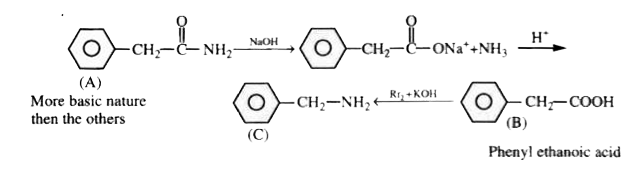
|
|
| 46. |
An organic compound (A) of molecular weight 135 on boiling with NaOH evolves a gas which gives white dense fumes on bringing a rod dipped in HCl near it. The alkaline solution thus obtained on acidification gives the precipitate of a compound (B) having molecular weight 136. Treatment of (A) with HNO_2 also yeilds (B), whereas its treatment with Br_2//KOH gives (C). compound (C) reacts with cold HNO_2 to give(D), which gives red colour with ceric ammonium nitrate. On the other hand(E) an isomer of (A) on boiling with dil HCl gives an acid (F), having molecular weight 136. On oxidation followed by heating, (F) gives an anhydride (G) which condenses with benzene in presence of AlCl_3 to give anthraquinone. Structrual formula of compound (A) is |
|
Answer»
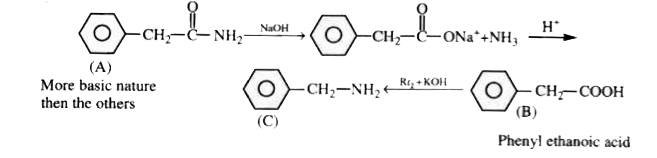
|
|
| 47. |
An organic compound (A) of molecular formula CH_4O on mild oxidation gives (B) of formula CH_2Othat reduces tollen's reagent. (B) on reaction with methyl magnesium bromide followed by acid hydrolysis will give (C) of molecular formula C_2H_6O which liberates H_2gas with metallic sodium. Identify A, B, C and explain the reactions involved. |
|
Answer» Solution :(i) (A) is identified from the molecular formula as methanol `(CH_3OH)`. (II) `CH_3OH`- methanol on mild oxidation will give formaldehyde as (B). Aldehydes REDUCE Tollen.s REAGENT to silver mirror. So, (B) is HCHO (METHANAL) `underset("Methanol(A)")(CH_3OH) overset((O))to underset("Methanol(B)")(HCHO)` Formaldehyde REACTS with `CH_3MgBr`. followed by acid hydrolysis produces primary alcohol and (C) is identified from the formula as `CH_3 - CH_2OH` -Ethanol. Ethanol liberates `H_2` gas with metallic sodium. 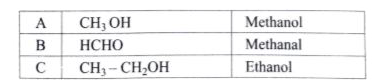
|
|
| 48. |
An organic compound (A) of molecular formula C_(7)H_(8)O on oxidation with alkaline KMnO_(4) gives (B) of formula C_(7)H_(6)O. (B) onreactionwith Cl_(2) in the presence of catalyst FeCl_(3) gives ( C ) of formula C_(7)H_(5)OCl. . (B) on reaction with Cl_(2) in the absence of catalyst gives C_(7)H_(5)OCl. Identify A, B, C, D and explain the reaction involved. |
Answer» SOLUTION :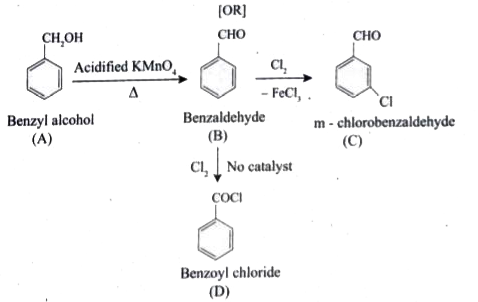
|
|
| 49. |
An organic compound (A) of molecular formula C_7H_8Oon oxidation with alkaline KMnO_4gives (B) of formula C_7H_6O . (B) on reaction with Cl_2in the presence of catalyst FeCl_3gives (C) of formula C_2H_5OCI . (B) on reaction with Cl_2, in the absence of catalyst gives C_7H_5OCl . Identify A,B,C,D and explain the reaction involved. |
Answer» SOLUTION :
|
|
| 50. |
An organic compound (A) of molecular formula C_7H_8 reacts with Cl_2 , in the presence of hv light gives (B) of formula C_7H_6Cl_2 . (B) on hydrolysis at 373 k gives (C) of formula C_7H_6O . (C )on treatment with 50% NaOH gives (D) and (E). Identify A,B,C,D,E and explain the reactions involved. |
Answer» Solution : (i) From the MOLECULAR formula (A) is identified as Toluene. Toluene reactswith `Cl^2` in the PRESENCE of light gives BENZAL chloride as (B) 
|
|