Saved Bookmarks
This section includes 7 InterviewSolutions, each offering curated multiple-choice questions to sharpen your Current Affairs knowledge and support exam preparation. Choose a topic below to get started.
| 1. |
Anhydrous AlCl_(3) is covalent but AlCl_(3).6H_(2)O is ionic because : |
|
Answer» `AlCl_(3)` has dimeric structure |
|
| 2. |
Anhydrous AlCl_3 is covalent compound. Select the correct statement regarding AlCl_3 based on the given information. Given, theenergy to ionise AlCl_3 is 5215 kJ mol^-1 , Delta_Hydrationfor Al^(3+)is-4670 kJ mol^-1 and Delta_Hydrationfor Cl^- is-381 kJ mol^-1 |
|
Answer» It will remain covalent |
|
| 3. |
Anhydrous AlCl_(3) cannot be obtained from which of the following reactions. |
|
Answer» Heating `AlCl_(3).6H_(2)O` Thus `AlCl_(3)` can not be obtained by this method |
|
| 4. |
Anhydrous AlCl_(3) cannot be prepared by heating hydrated salt. Why? |
|
Answer» Solution :Gets HYDROLSED FORMING `Al_(2)O_(3)` `2AlCl_(3).6H_(2)Ooverset(DELTA)toAl_(2)O_(3)+6HCluarr+3H_(2)O` |
|
| 5. |
Anhydrone is: |
|
Answer» `HClO_4` |
|
| 7. |
Anhydride of pyrophosphoric acid is |
| Answer» Answer :2 | |
| 8. |
Anhydride of orthophosphoric acid is |
| Answer» Answer :2 | |
| 10. |
Anhydride of nitric acid is_____and anhydride of phosphoric acid is________. |
| Answer» SOLUTION :`N_2O_5 and P_2O_5` | |
| 11. |
Angular momentum of an electron in the n^(th) orbit of hydrogen atom is given by |
|
Answer» `(NH)/(2PI)` |
|
| 12. |
Angular momentum of an electron in an orbital is given by: |
|
Answer» `NH/(2PI)` |
|
| 14. |
Anelement has a body-centred cubic (bec) structure with cell edge of 288 pm. The density of the element is 7.2 g//cm^3. How many atoms are present in 208 g of the element ? |
|
Answer» Solution :According to the given data, Number of ATOMS in one unit cell, Z= 2 (for bcc unit cell) EDGE length, a= 288 pm = `288 XX 10^(-10)` CM Density of element, d= `7.2 g cm^(-3)` Substituting the values in the relation, `d = (Z xx M)/(N_A xx a^3)` `7.2 g cm^(-3) = (2xx M)/((6.022 xx 10^(23) mol^(-1)) xx (288 xx 10^(-10) cm)^3)` or M=51.8 g `mol^(-1)` By mole concept, 51.8 g of the element contains atoms = `6.022 xx 10^(23)` `:.` 208 g of the element contains atoms = `(6.022 xx 10^(23))/(51.8) xx 208` = `2.418 xx 10^(24)` |
|
| 17. |
and B are : |
|
Answer» `CH_(3)-underset(underset(18)OH)underset(|)OVERSET(CH_(3))overset(|)C-underset(OH)underset(|)CH_(2),CH_(3)-underset(OH)underset(|)overset(CH_(3))overset(|)C-underset(OCH_(3))underset(|)CH_(2)` |
|
| 18. |
Analyze the generalized rate data: RX + M^(ɵ) rarr Product |{:("Experiment",[RX] "Substrate",[M^(ɵ)] "Attaking species","Rate"),(I,0.10 M,0.10 M,1.2 xx 10^(-4)),(II,0.20 M,0.10 M,2.4 xx 10^(-4)),(III,0.10 M,0.20 M,2.4 xx 10^(-4)),(IV,0.20 M,0.20 M,4.8 xx 10^(-4)):}| For the reaction under conisderation, 3^(@) alkyl has been found to be the most favourable alkyl group. Which of the following attacking species (M^(ɵ)) will give the best yield in the reaction ? |
|
Answer» `(CH_(3))_(2)CH-O^(ɵ)` The reaction under conisderation, `3^(@)RX` is favourable. So reaction Would be `E_(2)` not `S_(N)2`. `3^(@)RX gt 2^(@)RX gt 1^(@)RX RARR Favours E_(2)` `1^(@)RX gt 2^(@)RX gt 3^(@)RX rArr Favours S_(N)2`. Hence `E_(2)` is favoured by strong bulkyl bronsted base. Acidic order: `H_(2)O gt C_(2)H_(5)OH gt (CH_(3))_(2)CH-OH gt (CH_(3))_(3) C-OH`. Baisc order: `overset(ɵ)(OH) lt C_(2)H_(5)O^(ɵ) lt (CH_(3))_(2) CH-O^(ɵ) lt (CH_(3))_(3)C-O^(ɵ)` Therefore, stronger base `(CH_(3))_(3)C-O^(ɵ)` will GIVE the best yield of the reaction. Hence the answer is (b). Note: If the rreaction proceeds via `S_(N)2` mechanism, then `(M^(ɵ))` acts as nucleophilie. Since all of the species have same nuclepohile centre, so stronger the base stronger will be the nucleophile. `:.` Baisc order and nucleophile order should be: `(CH_(3))_(3)C-O^(ɵ) gt (CH_(3))_(2)CH - O^(ɵ) gt C_(2)H_(5)O^(ɵ) gt overset(ɵ)(OH)` So `(CH_(3))_(3)C-O^(ɵ)` should act as a stronger nucleophile. But the actual order of nucleophile is different. `:.`Nucleophile order: `C_(2)H_(5)O^(ɵ) gt (CH_(3))_(2)CH-O^(ɵ)gt(CH_(3))_(3)C-O^(ɵ) gt overset(ɵ)(OH)` This isbecause of its bulkiness, `(CH_(3))_(3)C-O^(ɵ)` is a poorer nucleophile because of steric hindrance, baiscity, and nucleophilicity may diverge. Thus, if `RX` would have been `1^(@)RX`, then `S_(N)2` reaction would have taken placed and attacking species `(C_(2)H_(5)O(ɵ))` would gove the best yield of the reaction. |
|
| 19. |
Analysis shows that nickel oxide has the formula Ni_(0.98)O_(1.00). What fractions of nickel exist as Ni^(2+) and Ni^(3+) ions ? |
|
Answer» Solution :Let number of O-atoms = 100 `therefore`Number of Ni atoms = 98 Let number of `Ni^(2+) = X` . `therefore` Number of nickel atoms as `Ni_("IONS")^(3+) = (98 - x)` Since compound is neutral we GET ` 3(98 - x) + 2x = 2 xx 100` `therefore 294 + x = 200` `therefore x = 94` Fraction of Ni present as `Ni^(2+) =94/98 xx 100` ` = 95.9 ~~ 96%` `therefore` Fraction of Ni present as `Ni^(3+) = (100 - 96)` = 4% |
|
| 20. |
Analysis shows that nickel oxide has the formula Nio_(0.98)O_(1.00). What fractions of nickel exist as Ni^(2+) and Ni^(3+) ions ? |
|
Answer» Solution :The formula of the oxide is `Ni_(0.98)O_(1.00)` LET the number of `O^(2-)` ions be 100. Then number of nickel ions = 98 Let the number of `Ni^(2+)` be = x Then number of `Ni^(3+)=98-x` Total charge on cations = Total charge on anions `(x)XX(+2)+(98-x)xx(+3)=100xx2` `"or"2x+294-3x=200 or x = 94` Percentage of `Ni^(2+)=(94)/(98)xx100=96` Percentage of `Ni^(3+)=100-96=4.` |
|
| 21. |
Analysis shows that nickel oxide has the formula Ni_(0.98)O. What fractions of the nickel exist as Ni^(2+) and Ni^(3+) ? |
|
Answer» |
|
| 22. |
Analysis shows that nickel oxide has the formula Ni_(0.96) O. What fractions of the nickel exist as Ni^(2+) and Ni^(3+). |
|
Answer» Solution :98 Ni atom are associated with 100 O atom. Out of 98 Ni ATOMS, suppose Ni present as `Ni^(2+) =x` Then Ni present as `Ni^(3+)= 98-x` Then Ni present as `Ni^(3+) = 98-x` Total change on x `Ni^(2+)` and `(98-x) Ni^(3+)` should be equal to total change on `100 O^(2-)` Hence. `2 xx x + 3 xx (98-x) = 100xx 2` Or, `2x + 294-3x = 200` `therefore x = 94` `therefore` Fraction of Ni present as `Ni^(2+) = 94/98 xx 10 = 96%` Fraction of `Ni^(3+)` present as `Ni^(3+) = 4/98 xx 100 = 4%` |
|
| 23. |
Analysis shows that nickel oxide has formula Ni_(0.98)O_(1.0). What fractions of the nickel exist as Ni^(2+) and Ni^(3+) ions ? |
|
Answer» SOLUTION :`Ni_(0.98)O_(1.0)` is a non-stoichiometric compound and contains mixture of `Ni^(2+)` and `Ni^(3+)` ions. Let x atoms of `Ni^(2+)` ions be present in the compound. This means that x `Ni^(2+)` ions have been REPLACED by `Ni^(3+)` ions. No. of `Ni^(2+)` ions in the compound = 0.98 - x For ELECTRICAL NEUTRALITY, Total positive charge on the compound = Total negative charge on the compound `:.` 2 (0.98 - x) + 3X = 2 or 1.96 +x=2 or x=0.04 0.04 % of `Ni^(3+)` ions = `(0.04)/(0.98)xx100=4%` % of `Ni^(2+)` ions = `(0.98-0.04)/(0.98)xx100=96%` |
|
| 24. |
Analysis shows that FeO has a non-stoichiometric composition with formula. Fe_0.95O. Give reason. |
| Answer» Solution :Shows METAL DEFICIENCY defect / It is a MIXTURE of `FE(2+) and Fe^(3+)`/Some `Fe^(2+)` ions are replaced by `Fe^(3+)` / Some of the FERROUS ions get oxidised to ferric ions. | |
| 25. |
Analysis shows that a metal oxide has the empirical formula M_(0.98)O_(1.00). Calculate the percent- age of M^(2+) and M^(3+) ions in this crystal. |
|
Answer» Solution :The formula `M_(0.98)O_(1.00)` suggests that, SAY out of 100 metal ions, TWO are missing. These two missing ions would have CARRIED a charge of +4 units. This charge is balanced by the presence of `4M^(3+)` ions. Thus, number of `M^(2+)" ions" = 98 - 4 = 94` Percentage of `M^(3+)" ions " = (4)/(98) xx 100 = 4.08` Percentage of `M^(2+)" ions "= (94)/(96) xx 100 = 95.92`. |
|
| 26. |
Analysis shows that a metal oxide has the empirical formula M_(0.96) O_(1.00). Calculate the percentage of M^(2+) and M^(3+) ions in the sample. |
|
Answer» Let x of `M^(3+)` ions be present in the compound. This means that x `M^(2+)` ions have been replaced by `M^(3+)` ions. `:.` No. of `M^(2+)` ions present in the oxide = 0.96-x For electrical neutrality, TOTAL POSITIVE charge on cations = Total charge on anions `:.` 2 (0.96-x)+3x=2 or 1.92+x=2 or x=0.08` `:.` PERCENTAGE of `M^(3+)` ions =`(0.08)/(0.96) xx 100 = 8.33` Percentage of `M^(2+)` ions = `(0.96-0.08)/(0.96)xx 100 = 91.67` |
|
| 27. |
Analysis shows that a binary compound of X (atomic mass =10) and Y (atomic mass =20) contains 50% X. What is the formula of the compound ? |
|
Answer» XY |
|
| 28. |
Analysis of many gaseous compounds of phosphorus shows that 1 litre of any gas at NTP never contains less than 1.384 g of phosphorus Again one litr eof phosphorus regarding approximate atomic mass. Molecular mass and atomicity of phosphorus from the above results? |
|
Answer» Solution :ONE gram mole of any gas OCCUPIES volume at NTP=22.4 litre. One gram mole of any gas does not CONTAIN less than `1.384xx22.4=31g` of phosphorus. So, according to Cannizzaro's concept, the approximate atomic mass of PHOSPHOROUS should be 31. Mass of one gram mole of phosphorus vapour `=5.536xx22.4=124` Atomicity of phosphorus `=("Mol.mass")/("At.mass")` `=(124)/(31)=4` |
|
| 29. |
Analysis of a gaseous compound C Cl_(x)F_(y), shows that it contains 11.79% C and 69.57% Cl. In another experiment, you find the 0.051 gm of compound fills a 224 ml flask at 0^(@)C wit a pressure of 19 mm Hg. The value of 'x' is : |
|
Answer» `(19)/(760) xx (224)/(1000) = (0.051)/(M) xx 0.0821 xx 273` `M = 204 gm//mol` `C Cl_(x)F_(y)` `{:("Element",% "composition","Mole","ATOMS",),(C,11.79,(11.79)/(12)= 0.98,1,),(Cl,69.57,(69.57)/(35.5)= 1.96,2,),(F,18.64,(18.64)/(19) = 0.98,1,):}` Emperical FORMULA `= CCl_(2)F` Emperical MASS `= 102` Molecular mass `= "Emperical mass " xx n` `204 ""= 102 xx n` `n = 2` Molecular formula `= C_(2)Cl_(4)F_(2)` `x = 4` |
|
| 30. |
Analyses the equilibrium HCIO_4+H_2O hArr H_3 O^(+)+CIO_4^- |
|
Answer» `H_3 O^+` is the conjugate BASE of `H_2O` |
|
| 31. |
Analyses the table given below: Which of the ores mentioned in the above table can be concentrated by magnetic separation method? Justify your answer. |
|
Answer» |
|
| 32. |
Analyse the following reactions : Select correct statement from the following about [X] and [Y] : |
|
Answer» Totalnumber of stereoisomer of X and Y are 3 and 6 respectively. 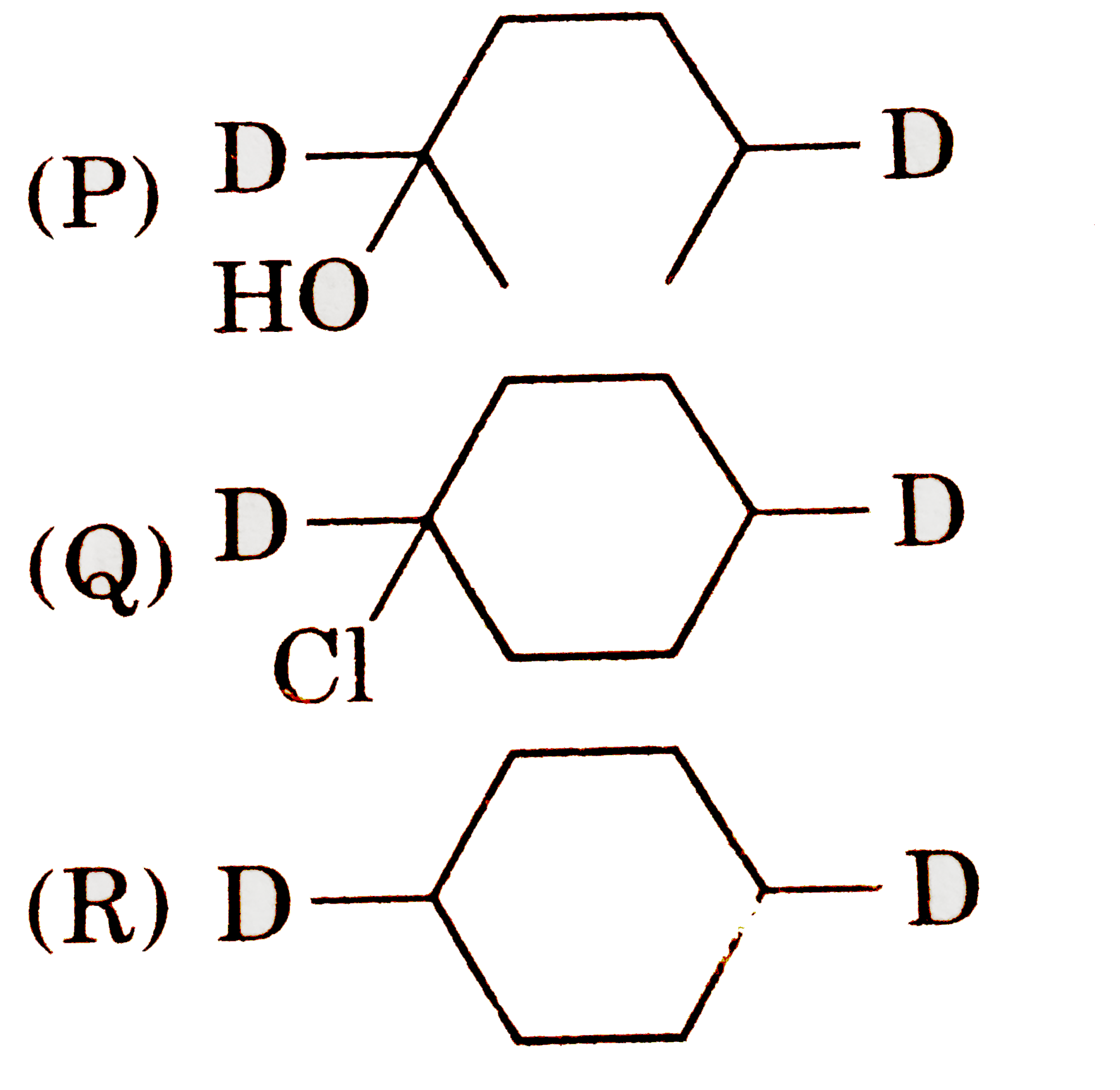
|
|
| 33. |
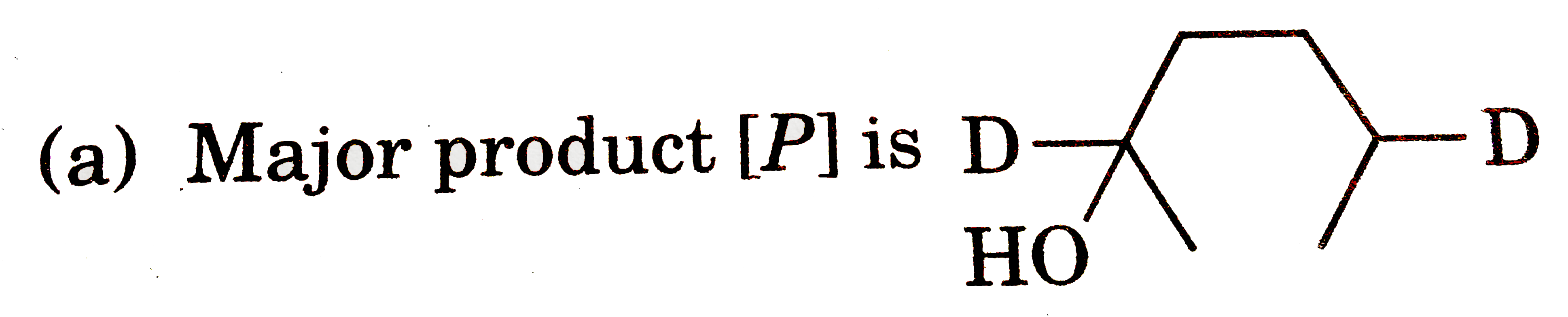
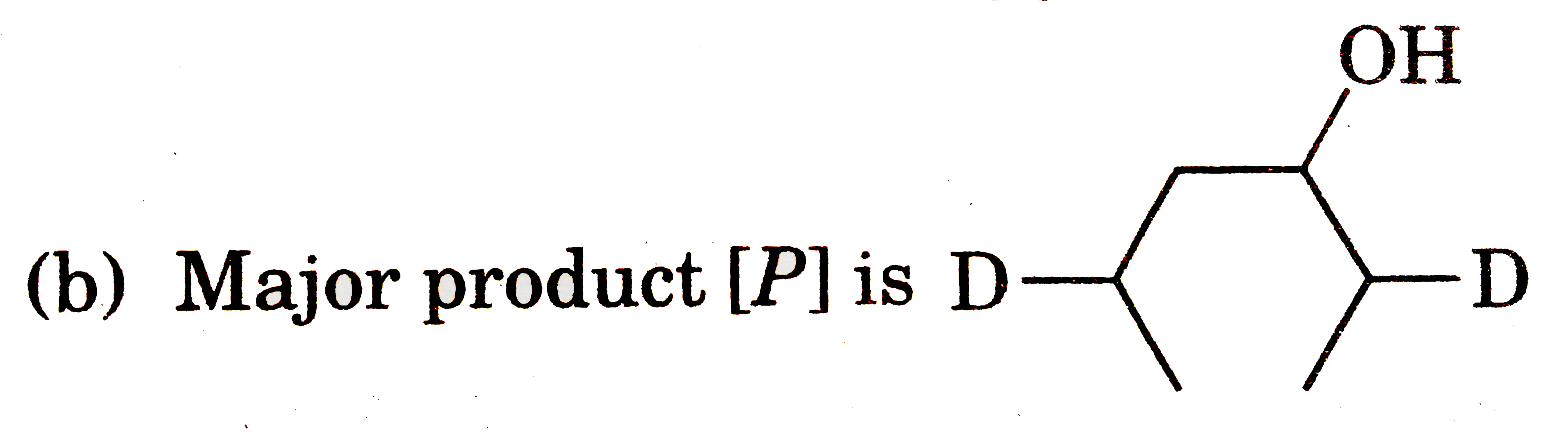
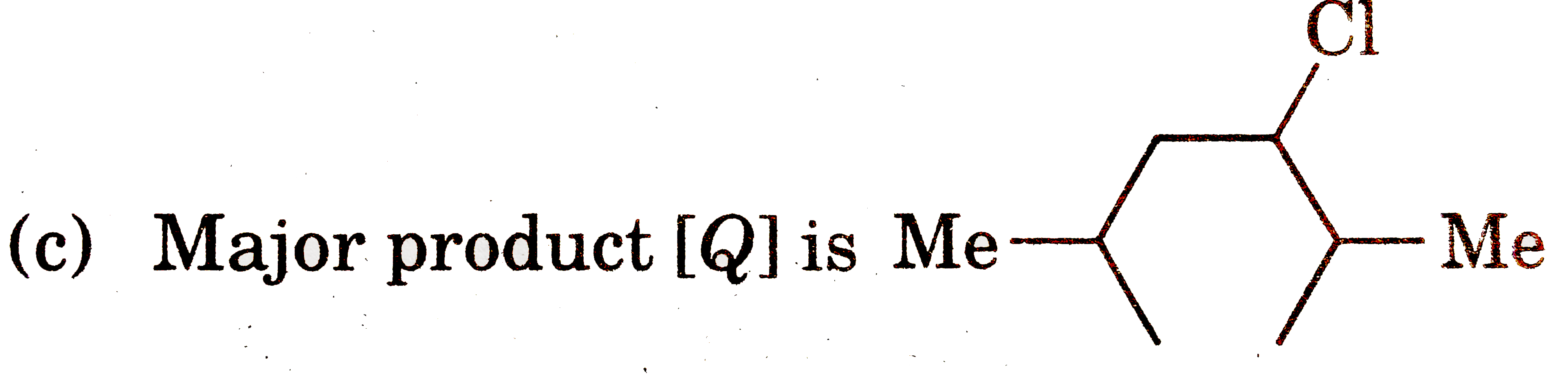
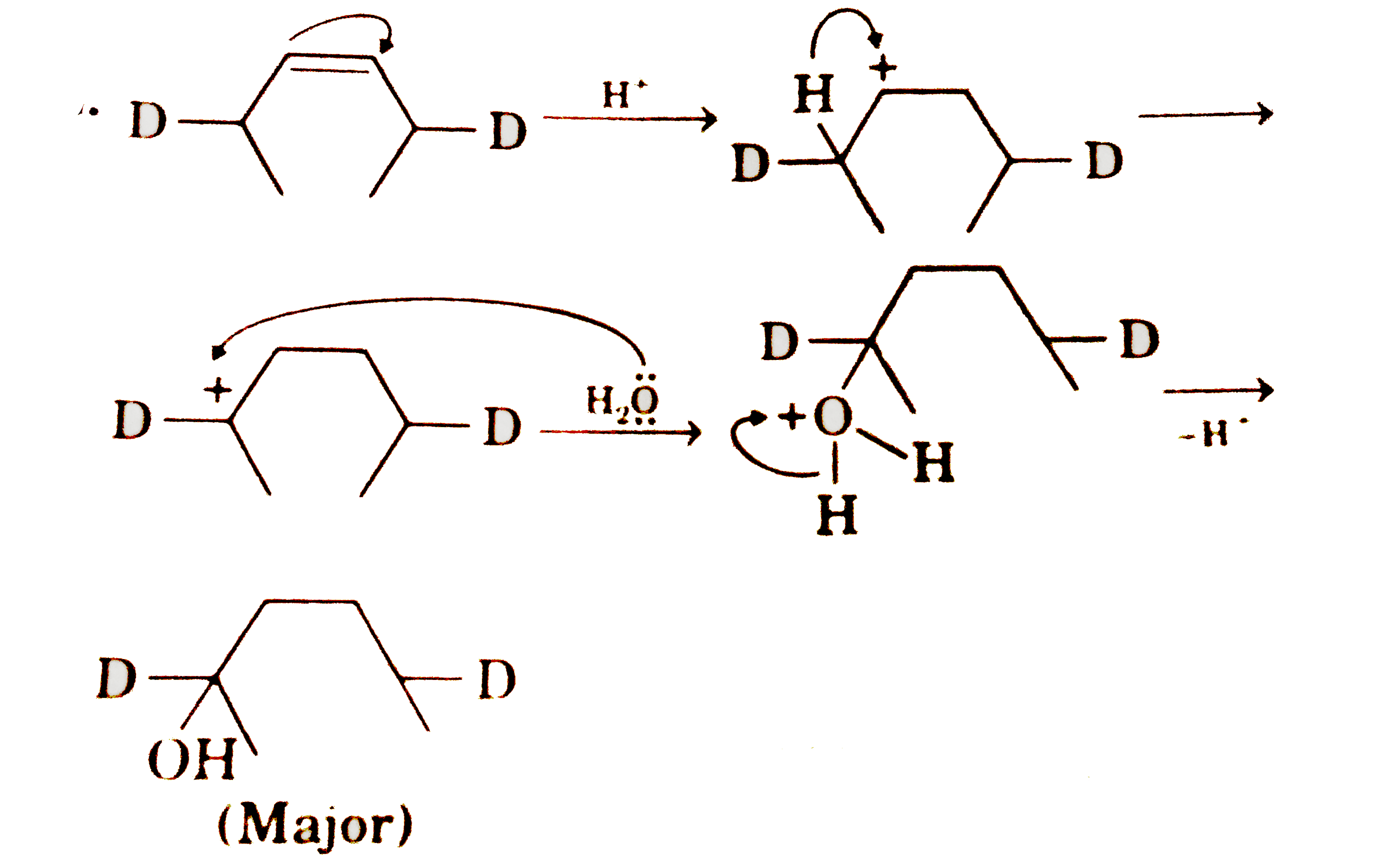
Analyse the following reactions : Select correct statement from the following about [P] and [Q] : |
|
Answer»
|
|
| 34. |
Analyse the following reactions : Select correct statement about [Z] : |
|
Answer» Two chiral centres are gonerated during REACTION. 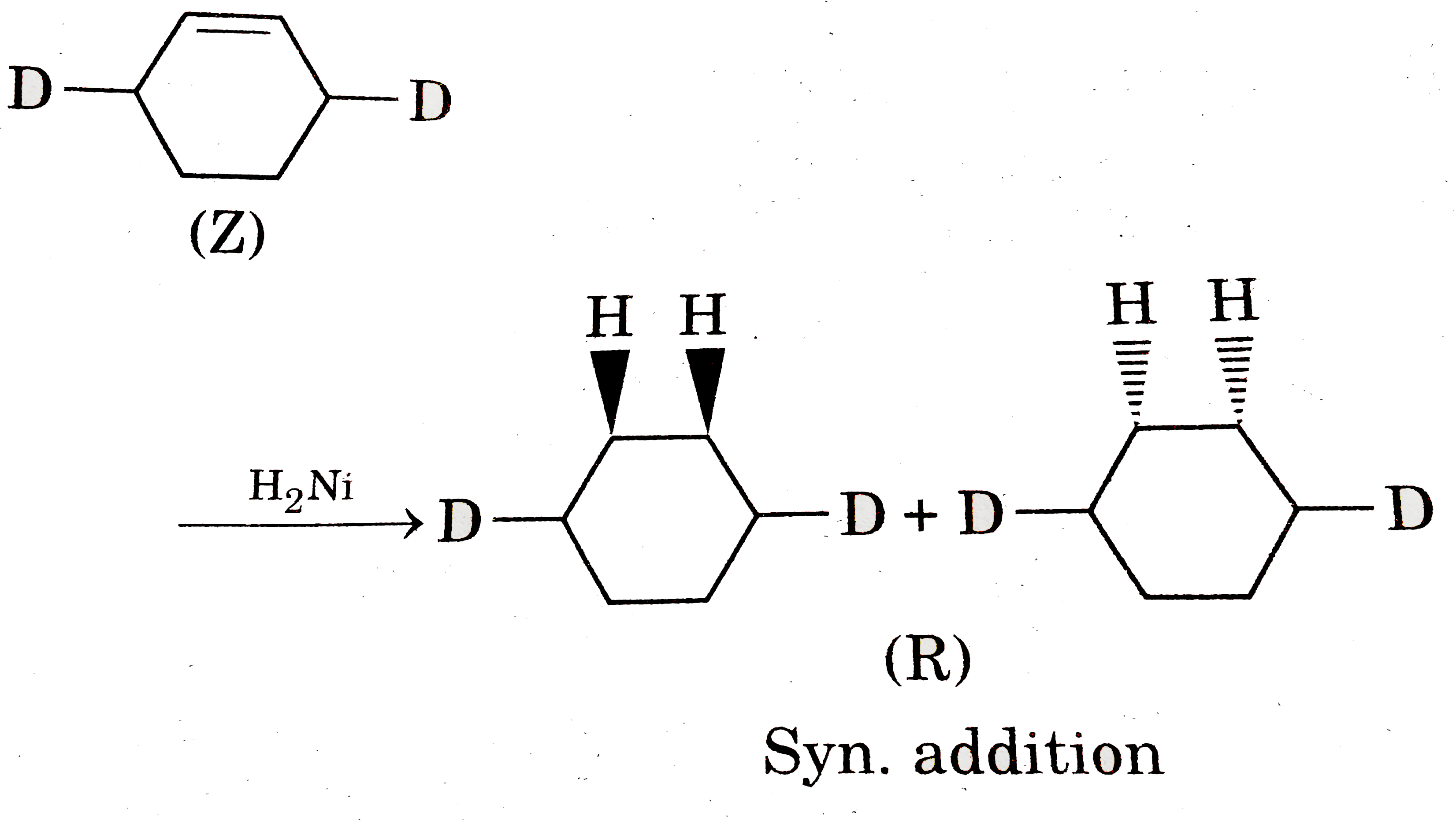
|
|
| 35. |
Analyse the bonds present in KHF_2 |
| Answer» SOLUTION :`KHF_(2)` is shown as `K^(+)andHF_(2)^(-)` .Hence it has electrovalent bond `HF_(2)^(-)` ion is obtained as an association of `F^(-)` and HF . The force of attraction is referred as ion dipole attraction .HF has a polar covalentbond HYDROGEN fluoride has molecular association due to INTERMOLECULAR hydrogen bonding . | |
| 36. |
Analyse any four challenges faced by Election Commission of India before the first General Election. |
|
Answer» Solution :Challenges FACED by the Election COMMISSION of India before first General elections :- 1.Delimitation of Electoral constituencies- free and fair elections 2. Absence of electoral rolls. Preparing the election rolls was a huge task as many citizens were eligible to vote. 3. Illiterate population- did not know details LIKE wife of and daughter of…15% voters illiterate out of 17 crore eligible voters because of which special method of voting was NEEDED. 4.Mistake in electoral rolls-Large population and voters to hold free and fair elections. Large number of staff and INFRASTRUCTURE for the first time ANY OTHER RELEVANT POINT |
|
| 37. |
Analgin |
|
Answer» |
|
| 38. |
.............anaesthetics are often used for major surgical procedures. |
| Answer» SOLUTION :Inhalational GENERAL | |
| 39. |
Anaerobic respiration of 1 mol of glucose produces. |
|
Answer» `4CO_2+4H_2O` |
|
| 40. |
Anaemia is caused by the deficiency of vitamin : |
|
Answer» `B_6` |
|
| 42. |
An X-ray beam (lambda = 70.9 pm) was scattered by a crystalline solid. The angle (2 theta) of the diffraction for a second order reflection is 14.66°. Calculate the distance between parallel planes of atoms of the crystalline solid. |
|
Answer» Solution :The Bragg.s equation is given as, n `lambda = 2D sin THETA` `n=` order of reflection `=2` `lambda =2` WAVE length of X-rays `=7.09 xx 10^(-11) `m `theta =` ANGLE of reflection `=7.33^(@)` `d=` DISTANCE between parallel planes Distance between parallel planes `=d= (lambda)/( sin theta) = (7.09 xx 10^(-11) )/ ( sin 7.33^(@) ) = 6.18 xx 10^(-10) m` |
|
| 43. |
An X-ray beam (lambda = 70.9 p m) was scattered by a crystalline solid. The angle (2theta) of the diffraction for a second order reflection is 14.66^(0). Calculate the distance between parallel planes of atoms of the crystalline solid. |
|
Answer» Solution :The Bragg’s equation is given as, `nlambda. = 2d SIN theta` N = order of reflection = 2 `lambda`= wave length of X-rays = `7.09 xx 10^(-11)m` `theta` = ANGLE of reflection = `7.33^(@)` d = distance between PARALLEL planes Distance between parallel planes (d) = `(lambda)/(sin theta)=(7.09xx10^(-11))/(sin 7.33^(@)) d= 6.18 xx10^(-10)m ` |
|
| 44. |
An unstable isotope of carbon has (N)/(P) ratio of 1.33 times greater than the stable element and is moving with a velocity 'v' of 6.203 m/s. What is the value of (h)/(2lambda)xx10^(+26) in SI units ? |
|
Answer» |
|
| 45. |
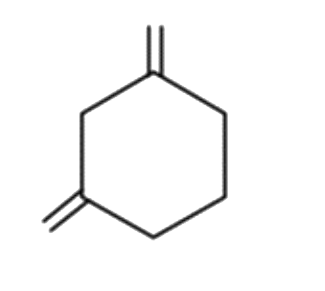
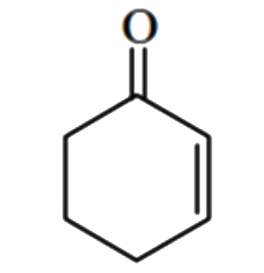
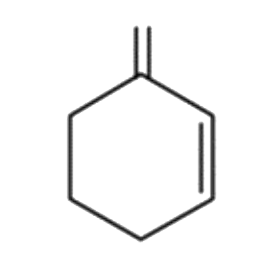
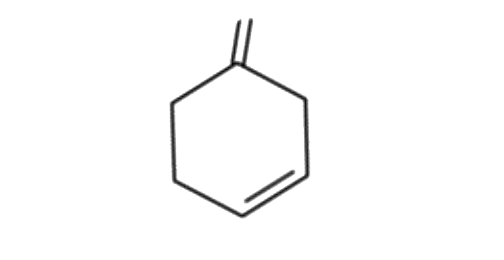
An unsaturated hydrocarbon X absorbstwohydrogenmolecules on catalytichydrogenation, andalso give followingreaction: X overset(O_(3))underset(Zn//H_(2)O)toAoverset([Ag(NH_(3))_(2)]^(+))to B - oxo -hexanedicbroxylicacid) X will be : |
|
Answer»
|
|
| 46. |
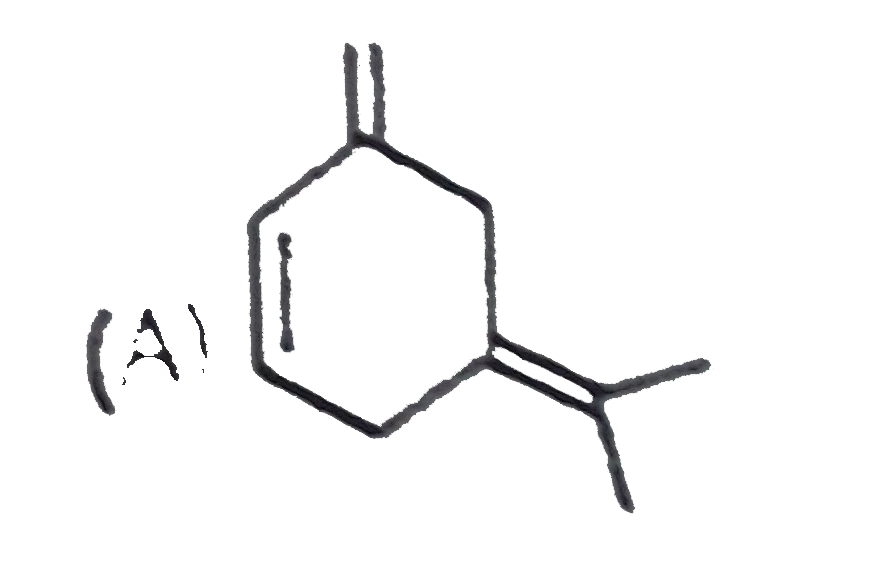
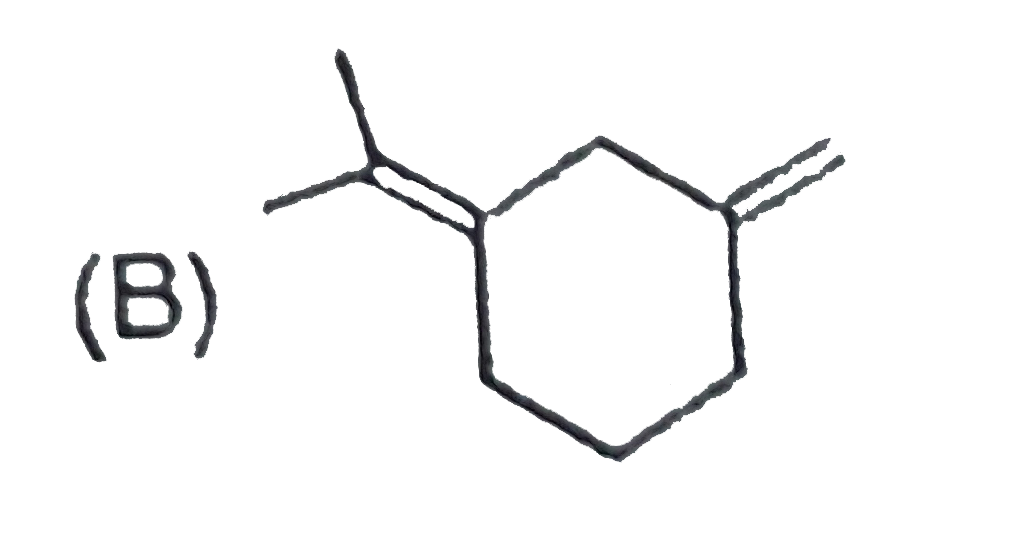
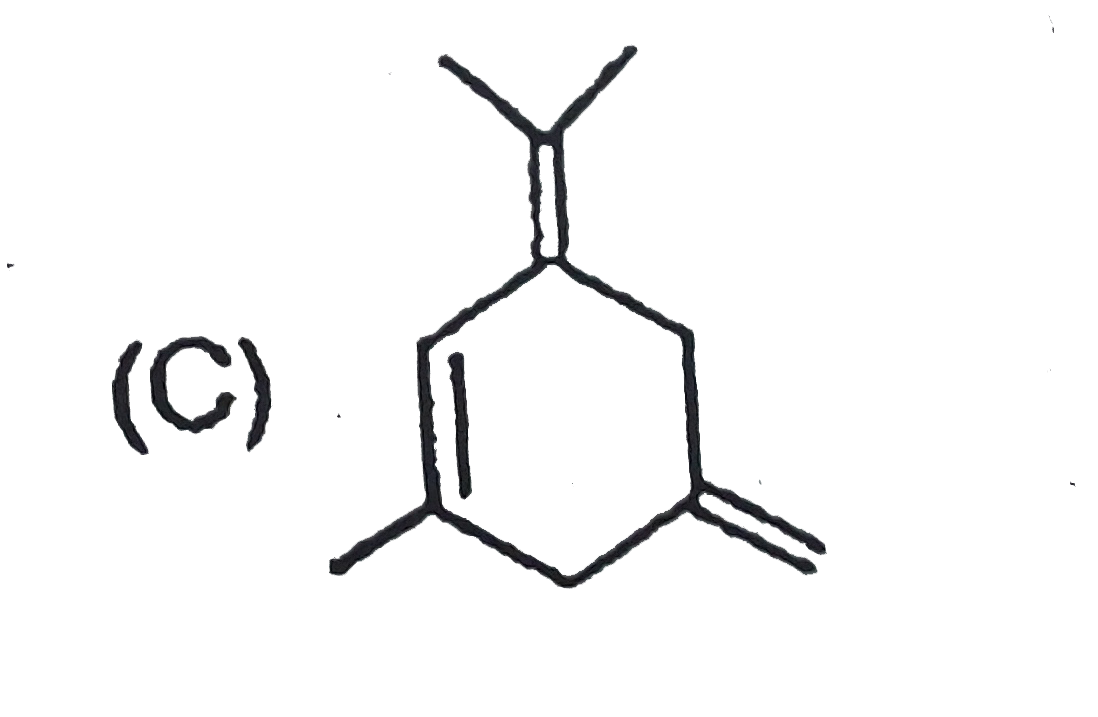
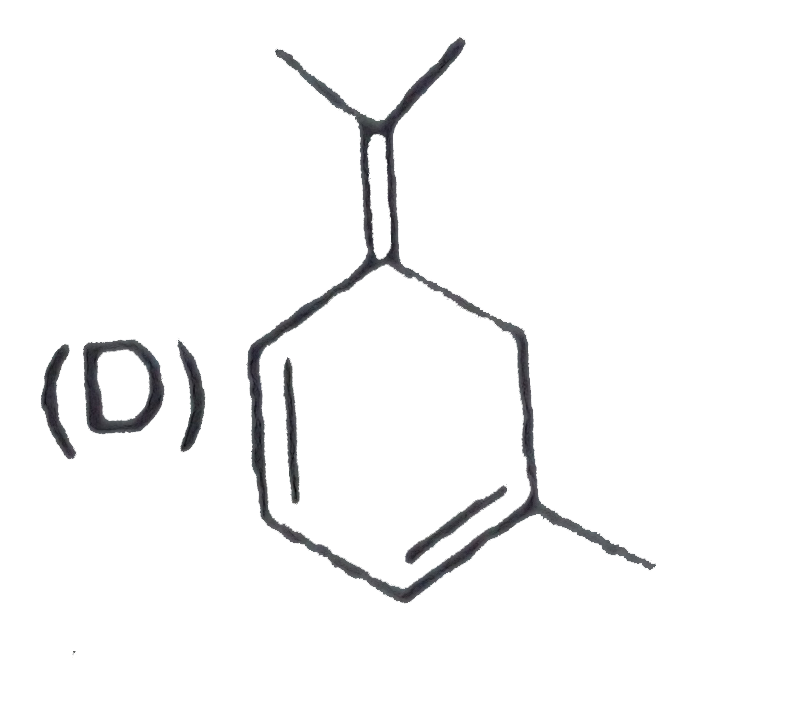
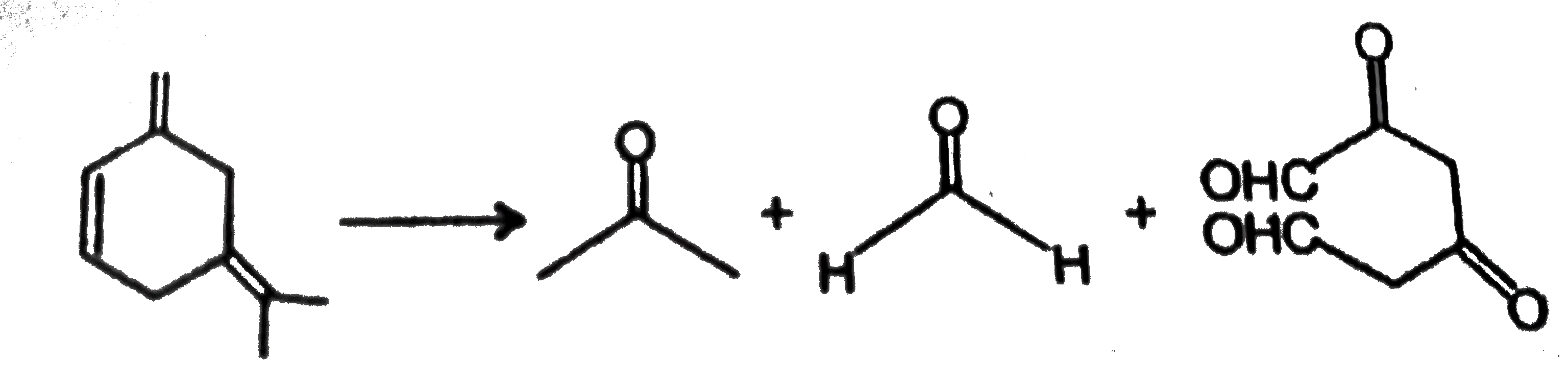
An unsaturated hydrocarbon on complete hydrogenation gives 1-isopropl-3-methylcyclohexane, after ozonolysis it gives one mole of formaldehyde, one mole of acetone and one mole of 2,4-Dixoxohexanedial.The possible structure of the hydrocarbon may be |
|
Answer»
|
|
| 47. |
An unripe mango placed in a concentrated salt solution to prepare pickle, shrivels because ……………. |
|
Answer» it GAINS WATER DUE to osmosis |
|
| 48. |
An unsaturated acid found in natural oils and fats is: |
|
Answer» PALMITIC ACID |
|
| 49. |
An unriped mango placed in a concentrated salt solution to prepare pickle shrivels because…… |
|
Answer» it GAINS water due to osmosis. |
|