Saved Bookmarks
This section includes 7 InterviewSolutions, each offering curated multiple-choice questions to sharpen your Current Affairs knowledge and support exam preparation. Choose a topic below to get started.
| 1. |
Cesium bromide crystallizes in cubic arrangement like CsCl. Given the ionic radii of Cs^(+) and Br^(–) are 1.88 Å and 1.82 Å respectively, determine the packing fraction. |
|
Answer» SOLUTION : Here Cs+ ion is at body centre and Br– at the corners, therefore the relationship is `2(r_(+)+r_(-))=sqrt(3a)`=2(1.88+1.82) Å, Packing fraction `(phi)=(4)/(3)PI((r_(+)^(3)+r_(-)^(3))/(a^(3)))` `=(4)/(3)pi((1.88^(3)+(1.82)^(3))/(4.27)^(3))=0.6807` |
|
| 2. |
Celloboiseis obtained by |
|
Answer» COMPLETE HYDROLYSIS of cellulose |
|
| 3. |
Certain unripe fruits like green apples and plums contain which acid? |
|
Answer» `H_2SO_4` |
|
| 4. |
Certain reactions regarding H_(2)SO_(4) are given H_(2)SO_(4)+NaOH to NaHSO_(4)+H_(2)O""H_(2)SO_(4) +2NaOH to Na_(2)SO_(4) +2H_(2)O C_(12)H_(22)O_(11)+H_(2)SO_(4) to 12C+11H_(2)O These reactions shows that |
|
Answer» it is a dibasic acid `NaOH+H_(2)SO_(4) to NaHSO_(4)+H_(2)O` `NaHSO_(4)+NaOH to Na_(2)SO_(4) +H_(2)O` It act as dehydrating agent with sucrose. It is CALLED CHARING of SUGAR. `C_(12)H_(22)OH+H_(2)SO_(4) to 12C+11H_(2)O` |
|
| 5. |
Celloboise contain |
|
Answer» 1-4-`BETA`-GLUCOSIDE BOND |
|
| 6. |
Certain quantity of current is passed through 2 voltameters connected in series and containing XSO_4 (aq) and Y_2SO_4 (aq) respectively. If the atomic masses of X and Y are in the ratio of 2 : 1 the ratio of the masses of Y liberated to that of X is |
|
Answer» `1:1` 2 `mol e^(-)` produce X=1 mol=1`xx` Mg 2 mol `e^(-)` produce Y=2`xxM//2=Mg` HENCE, RATIO of the MASSES of Y:X is M:M or 1:1 |
|
| 7. |
Certain organic compound on combustion produces three gaseous oxides A, B and C. A and C turned lime water milky, B turned anhydrous CuSO_(4) blue and C truned K_(2)Cr_(2)O_(7) solution green. The elements present in organic compounds are |
| Answer» Answer :B | |
| 8. |
Cellobiose on hydrolysis produces |
|
Answer» `ALPHA`-D-glucose |
|
| 9. |
Certain organic compound dissolves readily in H_2 SO_4 and also gives violet colour with FeCl_3 (aq). The compound is most likely |
| Answer» Answer :B | |
| 10. |
Certain moles of CO_(2) is dissolved in excess of NaOH. The resulting solution is divided into two equal parts. One part needs 30 ml of 2.5 N HCl and other part needs 40 ml of 2.5 N HCl using phenolphthalein and methyl orange indicator respectively. The mass of CO_(2) dissolved is |
|
Answer» `2.5 XX 10^(-2)` |
|
| 11. |
Cellbiose contain |
|
Answer» C-1-C-4 GLYCOSIDIC bond |
|
| 12. |
Certain nitrogeneous compound with molecular mass (180) shown an increase in its molecular mass to 348 after treatment with acetyl chloride. The number of possible -NH_(2) groups in the molecule is |
|
Answer» 5 `-NH_(2)+Cl-OVERSET(O)overset("||")(C)-CH_(3) underset(+CH_(3)CO)overset(-H)(rarr)-NH-overset(O)overset("||")(C)-CH_(3)` NET INCREASE in mol. mass on acylation of one `-NH_(2)` GROUP = Mol. mass of `CH_(3)CO` group. -At. mass of H `=43-1=42` Actual increase in mol. mass on acylation `=348-180=168` No. of group `CH_(3)-overset(O)overset("||")(C)-` added `=168//42=4` the compound has `4-NH_(2)` groups. |
|
| 13. |
Cell wall of bacteria is made of |
|
Answer» CELLULOSE |
|
| 14. |
Certain order of reaction rate constant is at 500K and 700K temperature are 0.02S^(-1) and 0.07S^(-1) respectively. Calculate Ea and K of this reaction. |
|
Answer» |
|
| 15. |
Certain groups like cyanides and nitrites possess two nucleophilic centres. What are they called ? |
| Answer» SOLUTION :AMBIDENT nodeophiles | |
| 16. |
Cell voltages and half-cell potentials are often compeared under standard conditions called the standard state at a specified temperature (298K). The standard state requires all reagents to be pure with all gases at unit fugacity, all ions at unit activity and all electrical connections between half-cells to be made with platinum. Suppose following are half cell reaction, with respective emf (s) are -0.25 V and -0.3V. Cell reaction I underset("1 atm")(Pt(H_(2))|HCl) Cell reaction II underset("1 atm")(Pt(H_(2))|H_(2)SO_(4)) Zinc gives H_2 with H_2SO_4 and HCI but not with HNO3 because: |
|
Answer» zinc acts as OXIDIZING agent when reacts with `HNO_3` |
|
| 17. |
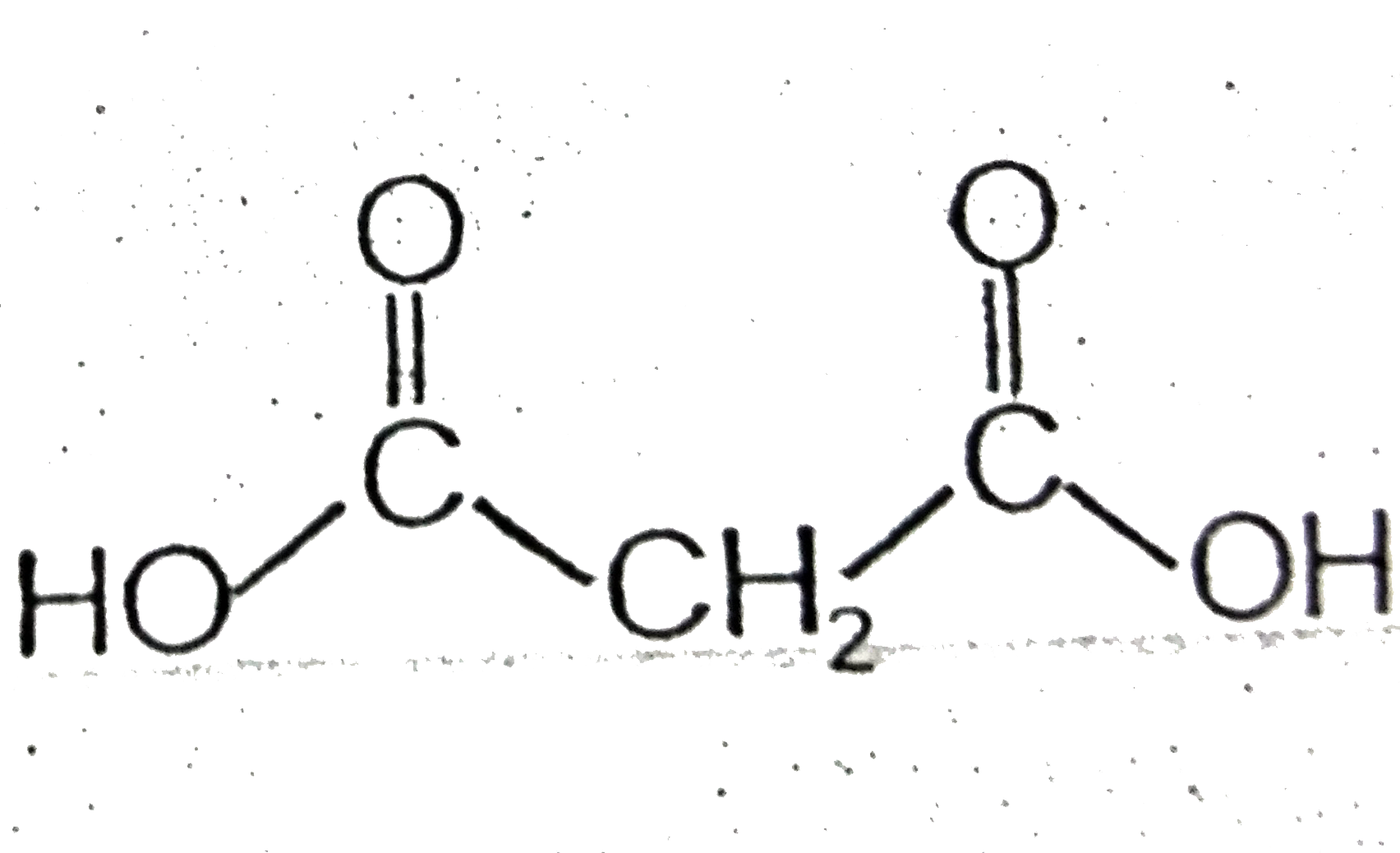
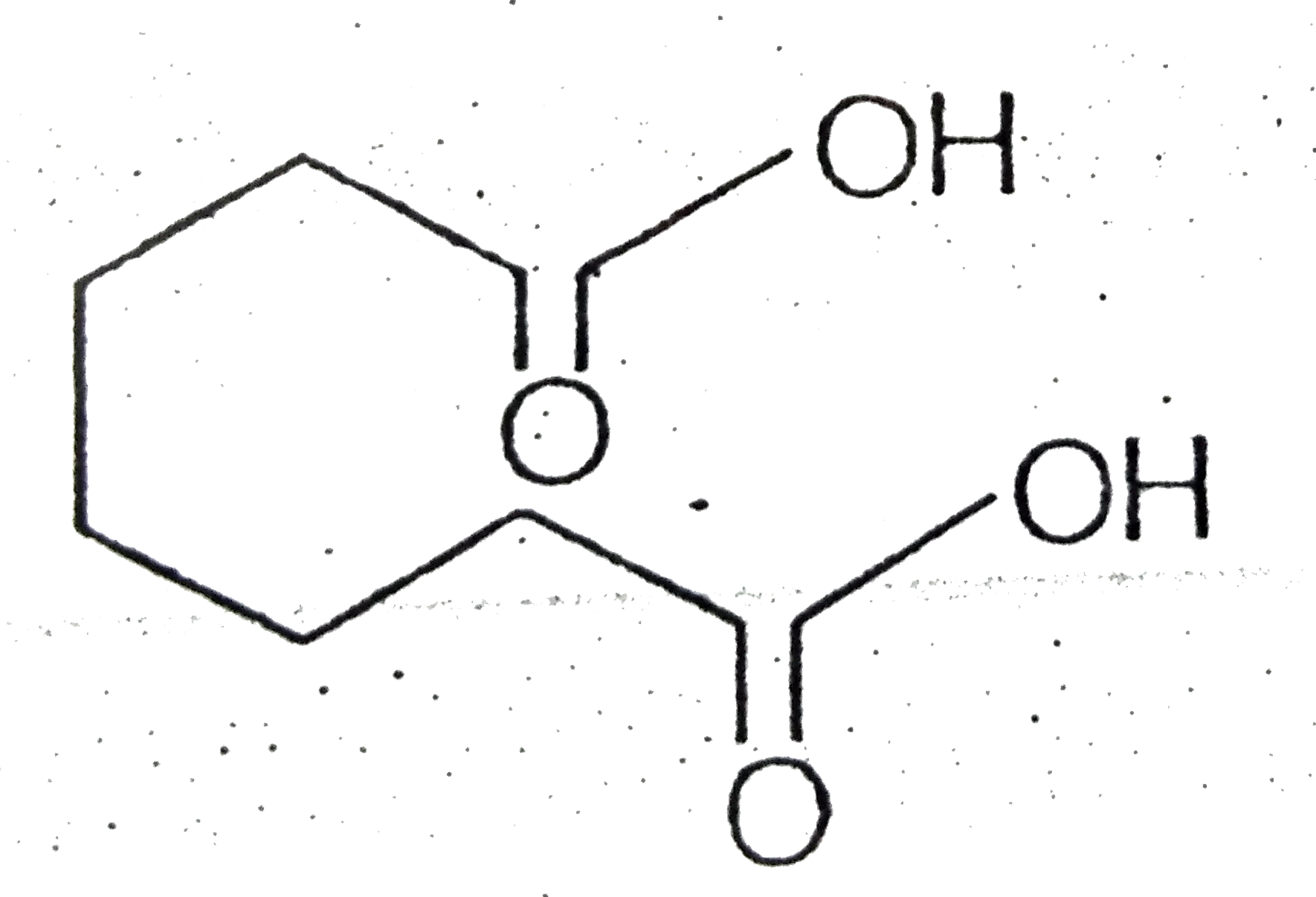
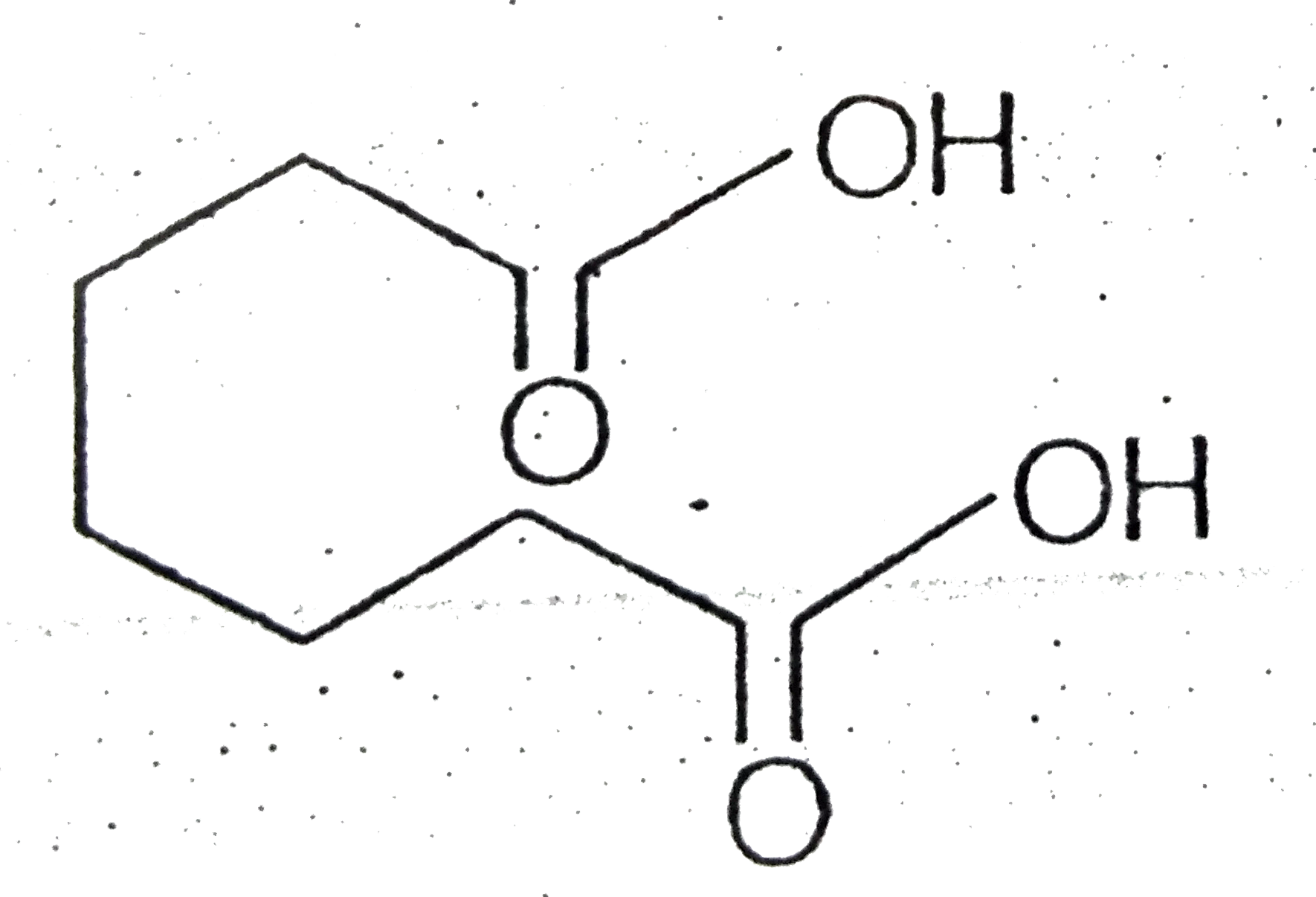
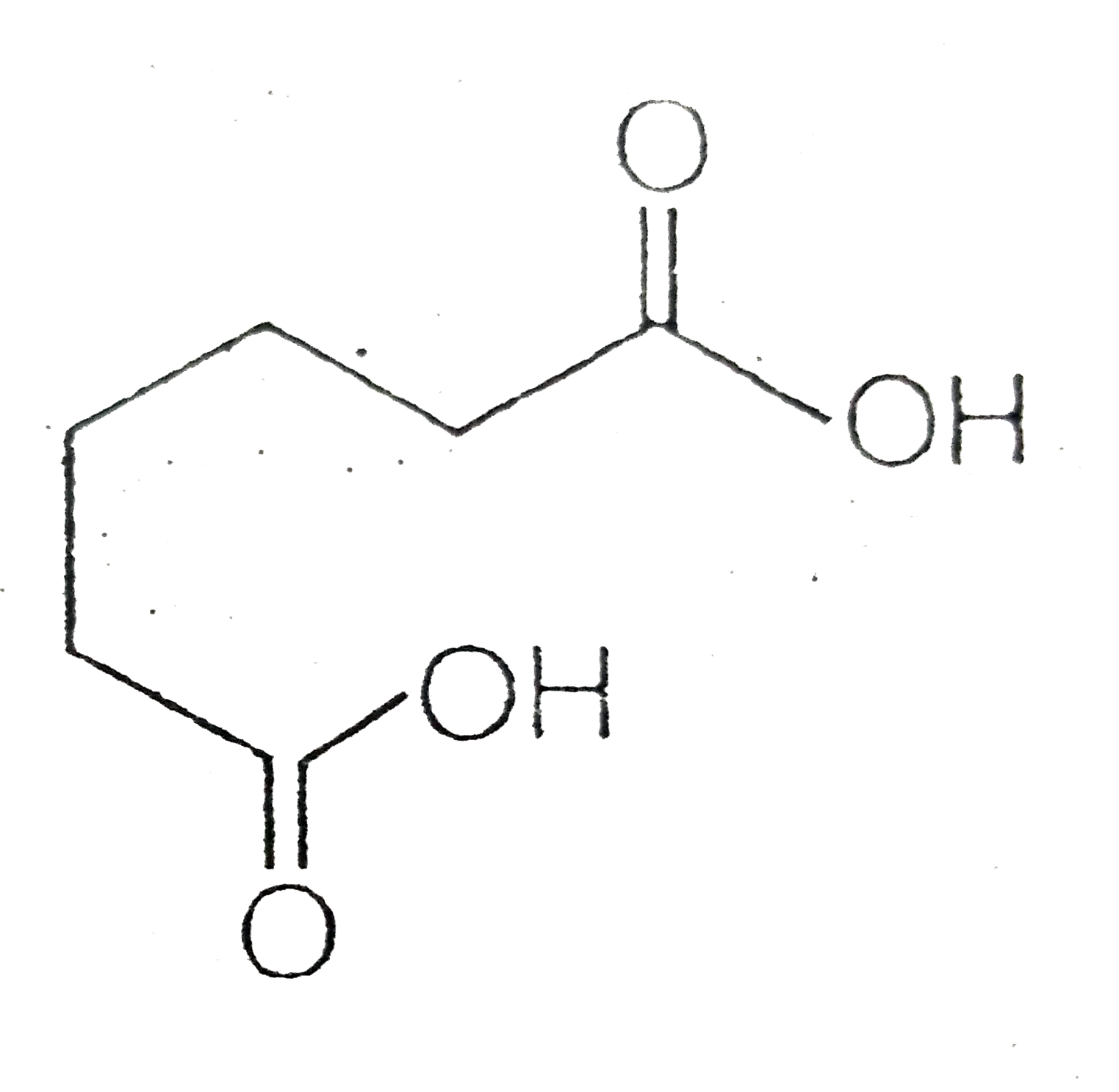
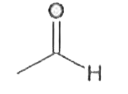
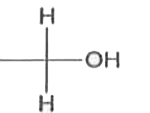
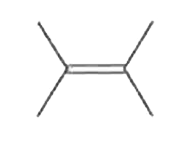
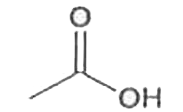
Certaindicarboxylic acids spontaneously eliminate water when heated forming cycioc anhydirides. But for the reaction to be successfully. The cyclic anhydrides product must normally have a ring size of fivee or six members. There are two important reasons, first, the second carboxyl group can serve as the acid catalyst (by intramolecular proton transfer), as well as the nucleophile. And second, the high temperature involved reduce the need for catalyst. Which of the following dicarboxylic acid would you expect to form cyclic anhydride? |
|
Answer»
|
|
| 18. |
Certain element has electronic configuration of [Xe] 4f^(14) 5d^(1) 6s^(2), then this element is…. |
|
Answer» TRANS urenic element |
|
| 19. |
Certain diseases are caused by enzyme defiencies. Explain giving one example. |
| Answer» SOLUTION :Phenylketoneura and ALBINISM. | |
| 20. |
Cell voltages and half-cell potentials are often compeared under standard conditions called the standard state at a specified temperature (298K). The standard state requires all reagents to be pure with all gases at unit fugacity, all ions at unit activity and all electrical connections between half-cells to be made with platinum. Suppose following are half cell reaction, with respective emf (s) are -0.25 V and -0.3V. Cell reaction I underset("1 atm")(Pt(H_(2))|HCl) Cell reaction II underset("1 atm")(Pt(H_(2))|H_(2)SO_(4)) pH value of cell reaction Il is |
|
Answer» 4.23 |
|
| 21. |
Certain chemical tests were perfoemd on the pain-relief drug ibuprofen. The results of these tests are given in the table below: Which one of the following functional groups do these results suggest that ibuprofen contains ? |
|
Answer»
|
|
| 22. |
Cell voltages and half-cell potentials are often compeared under standard conditions called the standard state at a specified temperature (298K). The standard state requires all reagents to be pure with all gases at unit fugacity, all ions at unit activity and all electrical connections between half-cells to be made with platinum. Suppose following are half cell reaction, with respective emf (s) are -0.25 V and -0.3V. Cell reaction I underset("1 atm")(Pt(H_(2))|HCl) Cell reaction II underset("1 atm")(Pt(H_(2))|H_(2)SO_(4)) pH value of cell reaction I is |
|
Answer» 4.23 |
|
| 23. |
Certain bimolecular reactions which follow the first order kinetics are called |
|
Answer» First ORDER REACTIONS |
|
| 24. |
Cell reaction is spontaneous when |
|
Answer» `E_(red)^(@)` is negative `E_(cell)^(@)` must be positivewhere `E_(cell)^(@)=E_(cathode)^(@)-E_(anode)^(@) rarr triangle G_(cell)^(@)=- (triangle G^(@) lt 0)` |
|
| 25. |
Certain bimolecular reaction which follow the first order kinetics are called… |
|
Answer» FIRST ORDER reactions |
|
| 26. |
Cerium (Z= 58) is an important nember of the lanthanoids . Which of the following statements about cerium is incorrect ? |
|
Answer» The `+4` oxidation state of CERIUM is not known in solutions |
|
| 27. |
Cell reaction : 2Fe_((S))+O_(2(g))+4H_((aq))^(+) to 2Fe_((aq))^(2+)+2H_(2)O_((l)),E^(@)=1.67V where [Fe^(2+)]=10^(-3)M,P(O_(2))=0.1 atm and pH=3, then what is cell potential at 25^(@)C ? |
|
Answer» 1.47 V |
|
| 28. |
Cerium (Z=58) belongs to |
|
Answer» s-block |
|
| 29. |
Cell reactiomn is spontaneous when |
|
Answer» `E_("red")^(@)` is POSITIVE |
|
| 30. |
Cerium (Z= 58) is an important member of the lanthanoids . Which of the following statements about cerium is incorrect ? |
|
Answer» The COMMON oxidation STATES of cerium are `+3` and `+4` |
|
| 31. |
Cerium (Z = 58) is an important member of the lanthanoids. Which of the following statement about cerium is incorrect ? |
|
Answer» The + 4 oxidation state of cerium is not known in solutions. |
|
| 32. |
Cell potential of Pt_((S))|H_(2)(g," 1 bar")|HCl_((aq))|AgCl_((S)) is 0.92 V. Concentration of HCl solution is 10^(-6) molal, then find out standard potential of (AgCl//AgCl^(-)) electrode. (at 298K temperature, ((2.303RT)/(F)=0.06V). |
|
Answer» 0.94 V CATHODE : `([overline(e)+AgCl_((S))toAg_((S))+CL^(-)]xx2)/(2AgCl+H_(2) to 2H^(+)+2Ag+2Cl^(-))` `E_(cell)=E_(cell)^(@)-(0.06)/(2)log[H^(+)]^(2)[Cl^(-)]` `0.92=[E_(AgCl|AgCl^(-))^(@)-E_(H^(+)|H^(2))^(@)]-0.03log(10^(-6))^(2)(10^(-6))^(2)` `0.92=[E_(AgCl|AgCl^(-))^(@)-0.03log10^(-24)]` `E_(AgCl|AgCl^(-))^(@)=0.92+0.03(-24)` `=0.20V` |
|
| 33. |
Cerium (Z = 58) is an important member of lanthanoids. Which of the following statement about cerium is incorrect 1) |
|
Answer» The common oxidation states of CERIUM is + 3 and + 4 |
|
| 34. |
Cell potential for the following reaction is 0.03305V, then find out x at 298 K temperature. Zn|Zn^(2+)(0.1M)||Cd^(2+)(xM)|Cd |
|
Answer» |
|
| 35. |
Cell membrane is chemically composed by |
|
Answer» phospholipids |
|
| 37. |
Cell equation : A+ 2B^(-) to A^(2+) + 2B , A^(2+) + 2e^(-) to AE^@ = +0.34V and log_(10)K = 15.6 at 300 K for cell reaction find E^@ for B^1 + e^- to B |
|
Answer» `0.80` |
|
| 38. |
Cerium shows +4 oxidation state, in which of the following configuration ? |
| Answer» Answer :A | |
| 39. |
Cerium can show the oxidation state of +4 because : |
|
Answer» It resmbles ALKALI metals |
|
| 40. |
Cell membrane contains |
|
Answer» Alternate LAYERS of phospholipid and coline |
|
| 41. |
Cell constant of a conductivity cell is ? |
|
Answer» Conductance/ SPECIFIC conductance |
|
| 42. |
Ceric ammonium sulphate and potassium permanganate are used as oxidising agents in acidic medium for oxidation of ferrous ammonium sulphate to ferric sulphate. The ratio of number of moles of cerric ammonium sulphate required per mole of ferrous ammonium sulphate to the number of moles of KMnO_(4) required per mole of ferrous ammonium sulphate, is |
|
Answer» `5.0` `5 Fe^(2+)+Mn O_(4)^(-)+8 H^(+) rarr 5 Fe^(3+)+ Mn^(2+) + 4H_(2)O` `:. ("MOLES of cerric ammonium sulphate")/("Moles of potassium permagnate")=1/(1//5)=5.0` |
|
| 43. |
Cell equation : A+2B^(-) rarr A^(2+)+2B, A^(2+)+2e^(-) rarr A" "E^(@)=+0.34V " and " log_(10)K=15.6 at 300 K for cell reactions find E^(@) " for " B^(+)+e^(-) rarr B |
|
Answer» `0.80` |
|
| 44. |
CeO_2 is present in: |
|
Answer» Crookes glass |
|
| 45. |
Celestine is an ore of: |
|
Answer» Ba |
|
| 46. |
CuSO_4 reacts with KCN solution forming a complex. Co-ordination number of copper in the complex is: |
|
Answer» 2 |
|
| 47. |
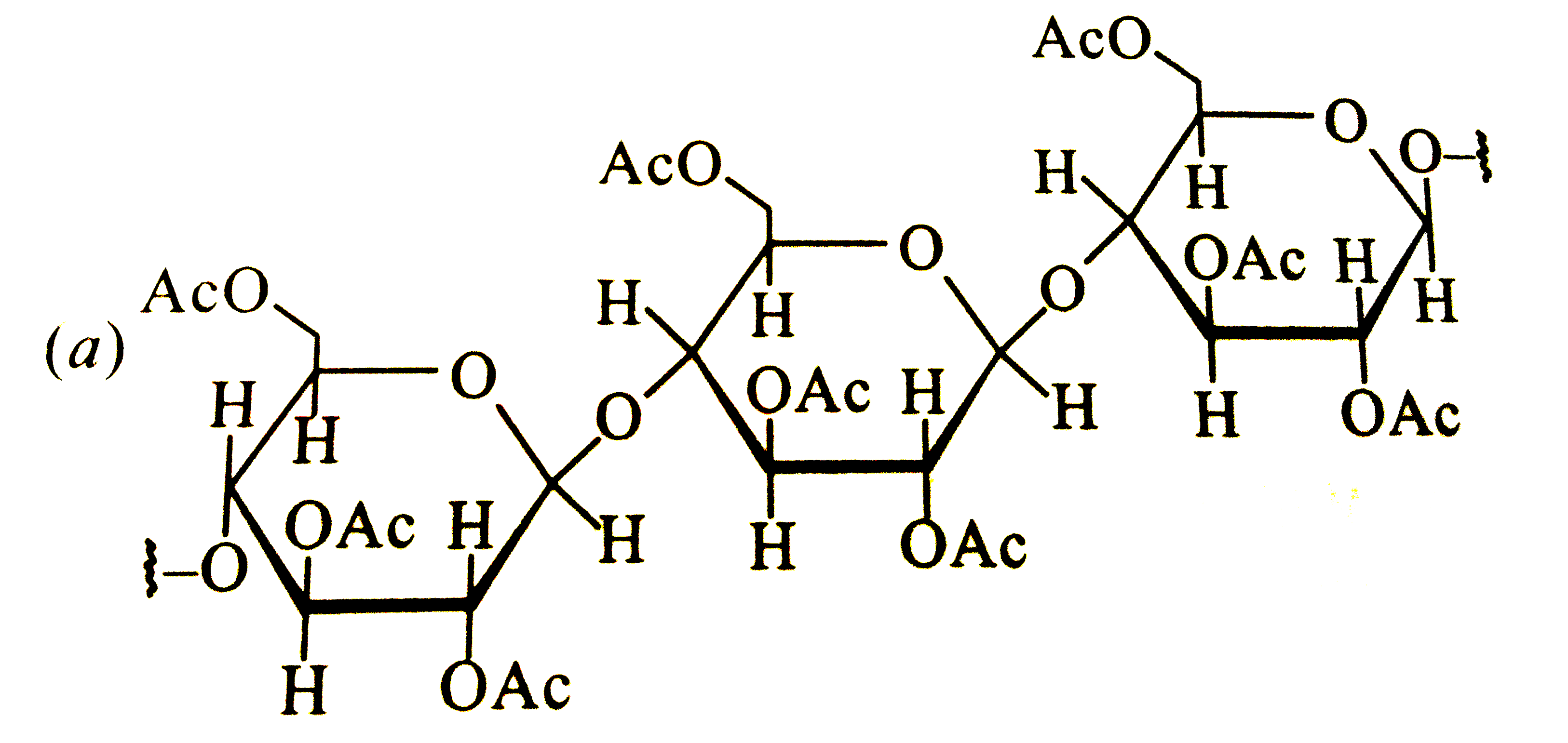
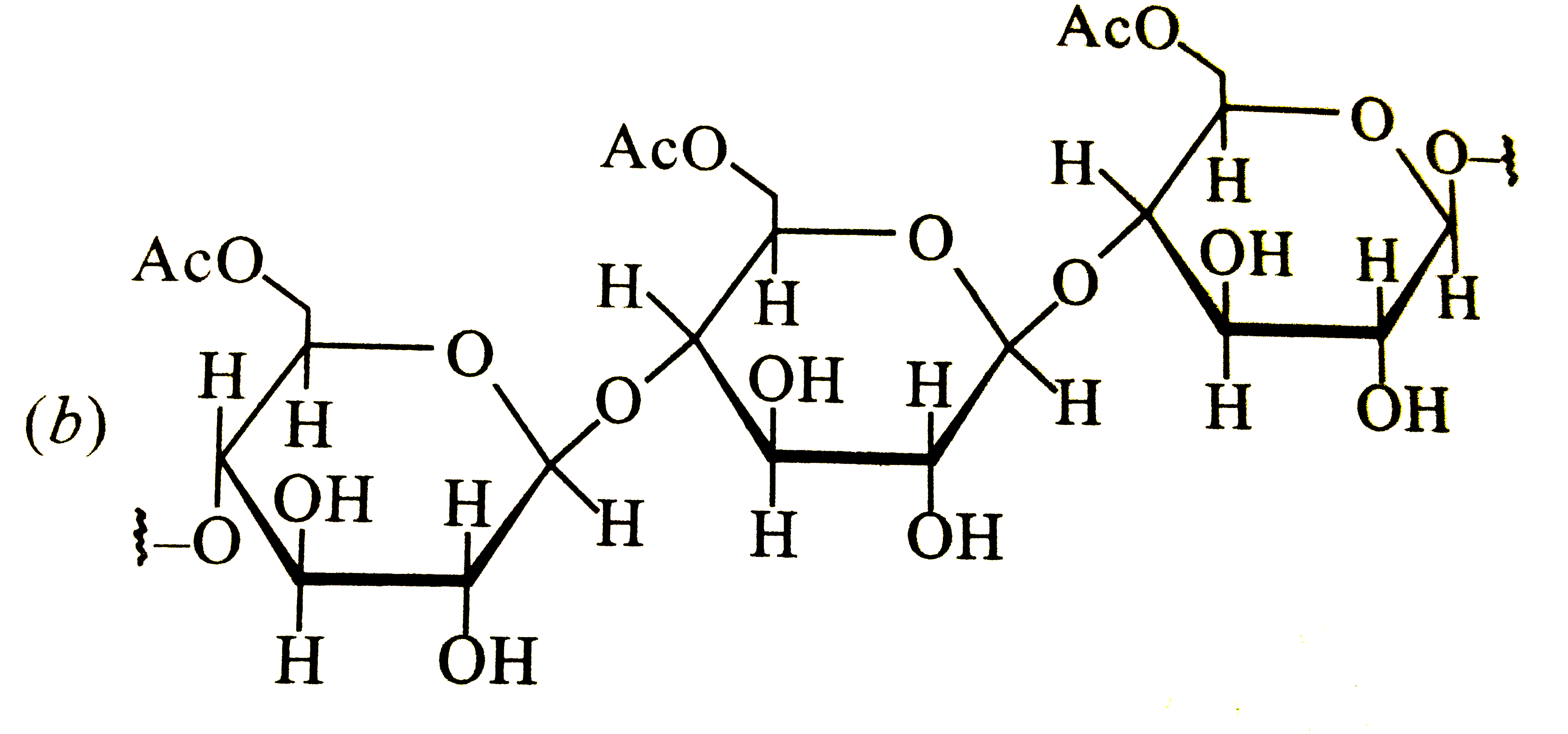
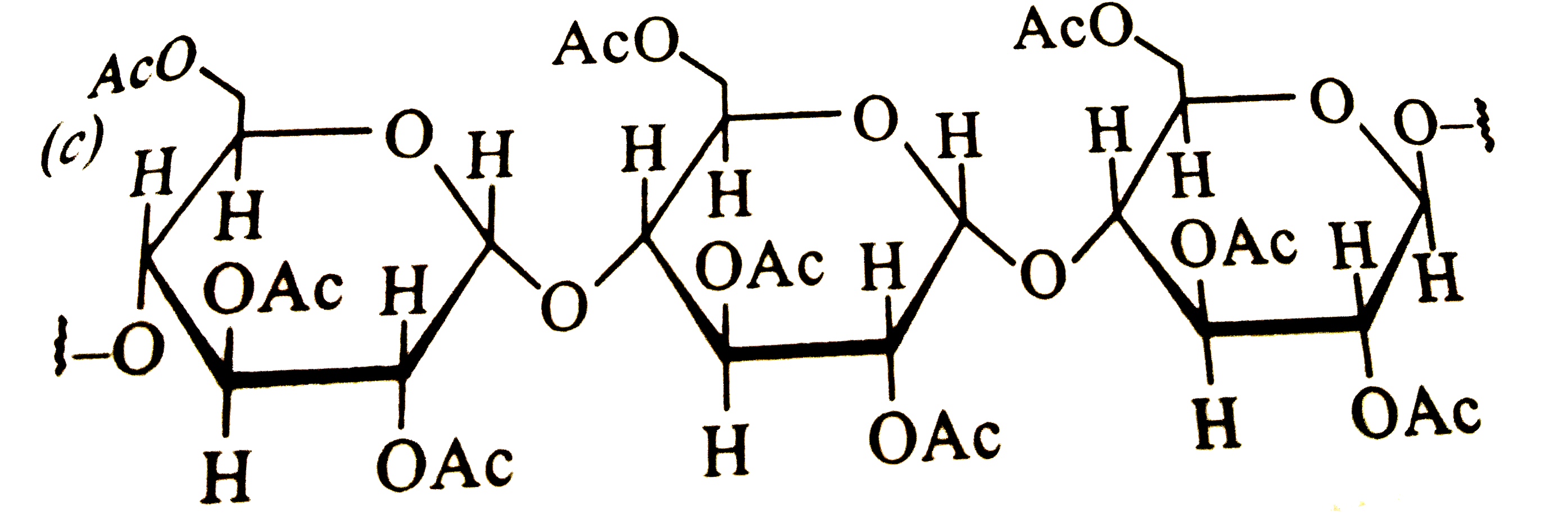
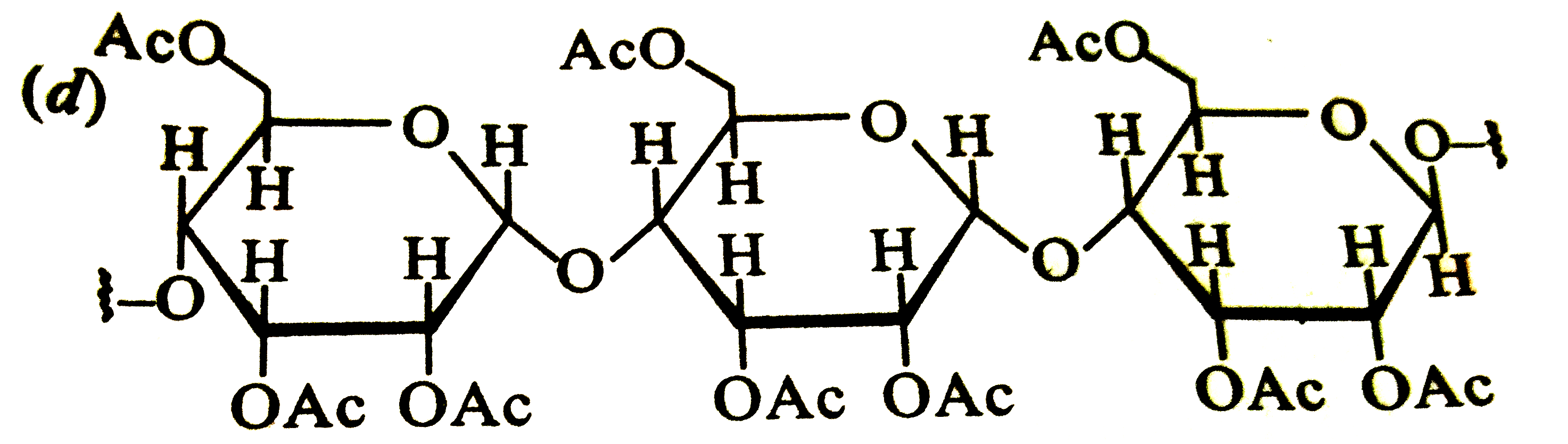
Cellulose upon acetylation with excess acetic anhydride/H_(2)SO_(4) (catalytic) gives cellulose triacetate whose structure is |
|
Answer»
|
|
| 48. |
Ce^(4+) is stable . This is because of |
|
Answer» half-filled d-orbitals `Ce_(58) = [Xe] 4 f^(1) 5d^(1) 6s^(2)` (predicted) or = `[Xe] 4f^(2) 5d^(0) 6s^(2) `(observed) `Ce^(4+) = [Xe] 4 f^(0) 5d^(0) 6s^(0)` Since , in +4 OXIDATION state , all (IE, 4f , 5d and 6s) orbitals are empty and Ce gains the stable configuration of nearest inert gas , `Ce^(4+)` is most stable . |
|