Saved Bookmarks
This section includes 7 InterviewSolutions, each offering curated multiple-choice questions to sharpen your Current Affairs knowledge and support exam preparation. Choose a topic below to get started.
| 1. |
Laughing gas is produced from zine react with |
|
Answer» DILUTE `HNO_(3)` |
|
| 2. |
Laughing gas is prepared by heating: |
|
Answer» `NH_4Cl` |
|
| 3. |
Laughing gas is obtained when a mixture of NH_(4)Cl and ............ Is heated while nitrogen gas is obtained when a mixture of NH_(4)Cl and ............. Is heated. |
| Answer» SOLUTION :`NaNO_(3), NaNO_(2)` | |
| 4. |
Laughing gas is prepared by heating : |
|
Answer» `NH_(4)NO_(3)` |
|
| 5. |
Lattice enthalpy of an ionic compound depends upon |
|
Answer» Charge on the ion only `XeF_(4)`(`sp^(3)d^(2)`hybridisation) has octahedral shape with 2 lone pairs. |
|
| 6. |
Lattice energy for an ionic compound is calculated by using |
|
Answer» Kirchoff's equation |
|
| 7. |
Latic acid on oxidation with fenton 'sreagent gives the main product |
|
Answer» OXALIC ACID |
|
| 8. |
Latex is acolloidal solution of rubber particles which are |
|
Answer» POSITIVELY CHARGED |
|
| 9. |
Latest techniquue for purification, isolation and separation of organic compounds: |
|
Answer» charomatography |
|
| 10. |
Latent heat of vaporisation of a liquid at 500K and 1 atm pressure is 10.0 kcal/mol. What will be the change in internal energy(triangleE) of 3 mole of liquid at same temperature: |
|
Answer» 13.0 KCAL |
|
| 11. |
Latent heat of vaporisation of a liquid at 500 K and 1 atm pressure is 10 kcal//mol. What will be the change in internal energy (DeltaU) of 3 mol of liquid at the same temperature ? |
|
Answer» 13.0 kcal `Delta H` = 30.0 kcal for three moles `"Liquid" hArr "Vapours"`. `Delta U = Delta H - Delta n_(G) RT` `= 30.0 - 3 XX 1.98 xx 10^(-3) xx 500` = 30 - 3 = 27.0 kcal |
|
| 12. |
latent heat of vaporisation of a liquid at 500 K and 1 atm pressure is 10 .0 kcal/ mol . What will be the change in internal energy (DeltaE) of 3 moles of liquid at same temperature ? |
|
Answer» 30 KCAL `DeltaE=27 kcal` |
|
| 13. |
Latent heat of fusion of ice is "1436.3 cal mol"^(-1). Calculate the molal depression constant of water. |
|
Answer» Solution :`K_(f)=(M_(1)RT_(0)^(2))/(1000Delta_("FUS")H)=("18 GMOL"^(-1)XX"2 cal K"^(-1)"mol"^(-1)xx(273 K)^(2))/("1000 g kg"^(-1)xx"1436.3 cal mol"^(-1))` `="1.87 K kg mol"^(-1)` |
|
| 14. |
Late discovery of F_2 is due to its: |
|
Answer» HIGH reactivity |
|
| 15. |
Lassigne's test is used to detect |
|
Answer» NITROGEN and halogens |
|
| 16. |
Last element of group-IV is found to be |
|
Answer» STRONG metallic |
|
| 17. |
Lassaigne's test is used in qualitative analysis to detect |
|
Answer» Nitrogen |
|
| 18. |
Lassaigne's test is used in qualitative analysis to detect : |
| Answer» Solution :N//A | |
| 19. |
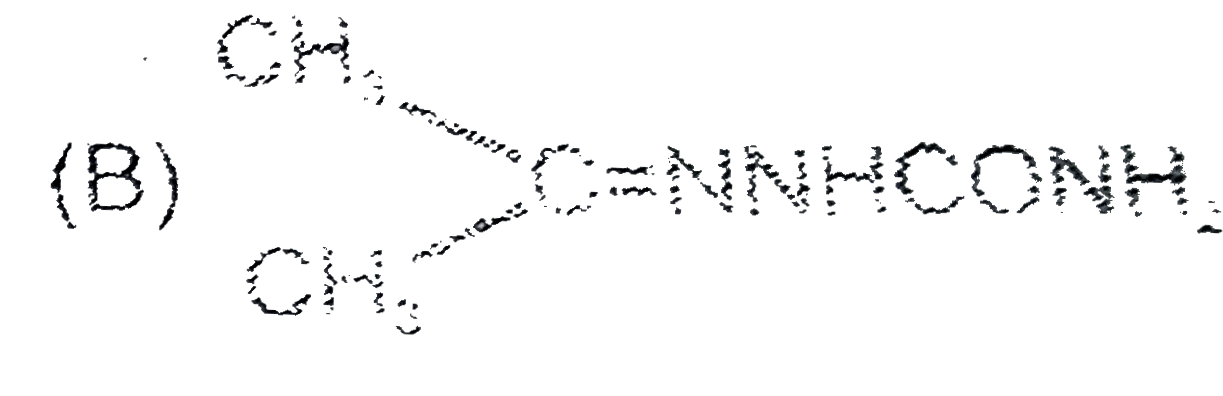
Lassaigne's test for the detection of nitrogen will fall in the case of |
|
Answer»
|
|
| 20. |
Lassaigne's test for the detection of nitrogen will fail in the case of : |
|
Answer» `NH_(2)CONH_(2)` |
|
| 21. |
Lassaigne's test for the detection of nitrogen will fail in case of : |
|
Answer» `NH_(2)CONH_(2)` |
|
| 22. |
Lassaigne's extract of m-nitrochlorobenzene is acidified with dil. HNO_(3) and then treated with AgNO_(3) solution, the white precipitate formed is due to : |
|
Answer» AgCl |
|
| 23. |
Lassaigne's solution gives violet colouration with sodium nitroprusside. It indicates the presence of : |
|
Answer» Nitrogen |
|
| 26. |
Largest in size out of Na^(+),Ne and F^(-) is: |
|
Answer» `NA^(+)` |
|
| 28. |
Larger no. oxidation states are exhibited by Actinides than those by Lanthanides. The main reason being. |
|
Answer» Lesser energy differene between 5f and 6D than 4f and 5D ORBITAL. |
|
| 29. |
Large number ofoxidation states are exhibited by the actinoids than those by the lanthanoids, the main reason being. |
|
Answer» more energy DIFFERENCE between 5d and 6D than between 4f and 5d ORBITALS |
|
| 30. |
Large molecules can be formed by the combination of a number of smaller molecules. These smaller molecules are called |
|
Answer» isomer |
|
| 31. |
Large energy released in an atomic bomb explosion is mainly due to |
|
Answer» PRODUCTS having a lesser mass than initial substance |
|
| 32. |
Lapis Lazuli is a blue coloured mineral used as valuable artificial.gemstone. It is: |
|
Answer» cryolite |
|
| 33. |
Large deposite of sulphur in nature are found in the form of: |
| Answer» Answer :D | |
| 34. |
Lanthenoid (Ln) is known for its +3 oxidation state. Which of the following statement is not applicable? |
|
Answer» Ionic volume (RADII) DECREASES as atomic number increases |
|
| 35. |
Lanthanoids are placed in |
|
Answer» `3^(rd)` GROUP and `7^(th)` period |
|
| 36. |
Lanthanoids are |
|
Answer» 14 ELEMENTS in the sixth period (ATOMIC no. 90 to 103) that are FILLING 4f sublevel |
|
| 37. |
Lanthanoids are- |
|
Answer» 14 elements in the sixth period (atomic no. 90 to 103)that are filling4f sublevel |
|
| 38. |
Lanthanoids and actinoids resembles in…. |
|
Answer» OXIDATION states |
|
| 39. |
Lanthanoids are : |
|
Answer» 14 elements in the seventh period (at. Nos. 90 to 103) that are filling 5f sublevel. |
|
| 40. |
Lanthanoids and actinoids are f-block elementsIt is difficult to separate lanthanoids in the pure state. Explain. |
| Answer» Solution :Lanthanoids have SIMILAR size DUE to lanthanoid contraction. They all have similar outer electronic arrangement. So these elements are ALMOST similar in their chemical properties and HENCE the separation of individual lanthanoid elements is DIFFICULT. | |
| 41. |
Lanthanoide contraction affects on |
|
Answer» basicity of LANTHANOIDE hydroxides |
|
| 42. |
Lanthanoids and actinides resemble in : |
|
Answer» ELECTRONIC configuration |
|
| 43. |
Lanthanoid contraction will not have any influence when we compare size of :- |
| Answer» ANSWER :B | |
| 44. |
Lanthanoid contraction implies |
|
Answer» DECREASE in density |
|
| 45. |
Lanthanoid contraction means : |
|
Answer» small atomic sizes of lanthanoid elements |
|
| 46. |
Lanthanides like Eu and Yb can form hydrodes like EuH_2 and YbH_2. These hydrides are |
|
Answer» IONIC HYDRIDES |
|
| 47. |
Lanthanidwes shows variable oxidation state, because they release electron from the following orbitals |
|
Answer» 4f |
|
| 48. |
Lanthanoid contraciton can be observed in |
|
Answer» At |
|
| 49. |
Lanthanides does not show +4 O. S. in which of the following configuration |
|
Answer» `f^(0)` |
|