

Saved Bookmarks
This section includes InterviewSolutions, each offering curated multiple-choice questions to sharpen your knowledge and support exam preparation. Choose a topic below to get started.
| 901. |
"The urgunents and evidences offered by the Fifth-Report cannot be accepted uncritically." Give arguments. |
|
Answer» Solution :(i) The Fifth Report was the report on the administration and activities of the East India Simpany in India. From the time the company established its rule in Bengal in the mid 1760s its activities were CLOSELY watched and debated in England (ii) There are many groups in England who were opposed to the monopoly that the East Indian Company had over trade with India and China, who wanted a revocation of the ROYAL Charter that gave the company this monopoly. (III) ALSO the private TRADERS wanted a share in India trade and the British Industrialists were keen to open up the Indian market for British manufacturers. Many political groups argued that the conquest of Bengal was benefiting only the East India Company but not the British National as a whole. ) (iv) Information about company misrule and maladministration was hotly debated in Britain and Caidents of the gteed and corruption of company officials were widely publicised in the Press. The British Parliament passed a series of Acts in the late 18th century to regulate the control company rule in India. The Acts forced the company to produce regular reports on the administration of India and appointed committees to enquire into the affairs of the company. The Fifth Report was one such report produced by a Select Committee. |
|
| 902. |
Read the following excerpt carefully and answer the questions that follow: The Accessible Emperor In the account of his experiences, Monserrate, who was a member of the first Jesuit mission, says: It is hard to exaggerate how accessible he (Akbar) makes himself to all who wish audience of him. For he creates an opportunity almost every day for any of the common people or of the nobles to see him and to converse with him, and he endeavours to show himself pleasant spoken and affable ather than severe towards all who come to speak with him. It is very remarkable how great an effect this caurtesy and affability has in attaching him to the minds of his subjeets. How did Monserrate accord hiss experience about the Akbar? |
| Answer» Solution : Monserrate, who was a member of the first Mission explains how Akbar makes himself UPM andua Accessible to all who wished audience of him. For he createao the an opportunity almost everyday for any of COMMON people or of NOBLES to SEE him and to with him. | |
| 903. |
Women could not claim a share in the paternal estate but allowed to retain her wealth. Explain. |
|
Answer» Solution :(i) .STRIDHANA. stands for woman.s WEALTH. (ii) WOMEN were not ALLOWED to claim any share in paternal property but retained gifts which they received on the occasion of their marriage as .Stridhana.. This could be INHERITED by their children but husband cannot claim it. |
|
| 904. |
Examine how concerns of defence and health gave shape to Calcutta. |
|
Answer» Solution :(i) Sirajudaula, the Nawab of Bengal in 1756, sacked the small fort from Britisher. In this fort the British traders had built to house their goods. Consequently, when Sirajudaula was defeated in the Battle of Plassey, the British built a new fort, Fort WILLIAM which could not be easily attacked. (II) Around this a vast open space was left. This open space was called the Maidan or garermath. This was done for security reasons, because there would be no obstructions to a straight time of fire from the Fort against an advancing enemy army. SOON the British began to move out of the Fort. They built RESIDENCES along the periphery of the Maidan. (iii) This indicates that how the English Settlement in Calcutta began to take shape. The vast open space around the Fort William became the significant town planning measure in Calcutta (now Kolkata). Lord Wellesley was more concerned about the conditions that existed in the cities. Cities were overcrowded, and had no sanitation facilities. (iv) He issued an administrative order in 1803 on the need for town planning and set up various committees for this purpose open places in the city would make the city healthier. As a result of this, many bazaars, ghats, burial ground and tanneries were cleared or removed. After Wellesley.s departure, the Lottery Committee carried on with the WORK of town planning in Calcutta |
|
| 905. |
Why was there immense bloodshed after March 1947? |
|
Answer» Solution :(i) The collapse of government institutions. A British administrator, Penderel MOON noted how the police failed to take action against the communal FRENZY in Amritsar in March 1947. (ii) In various places, the British officals did not know how to handle the situation. They were not willing to take proper decisions and hesitate to INTERVENE. (iii)British officials advised the panic striken people to contact Indian leaders like jinnah and Nehru.Leaders were INVOLVED in the negotiations regarding independence. Civil servants in affected areas were involved in saving their lives and property and British were busy in preparing to quit India. (iv)PROBLEM were compounded as the communal bias of the soldiers and policemen in many places helped their co-religionists to attack members of other communities. |
|
| 906. |
Read the following excerpt carefully and answer the questions that follow: The Accessible Emperor In the account of his experiences, Monserrate, who was a member of the first Jesuit mission, says: It is hard to exaggerate how accessible he (Akbar) makes himself to all who wish audience of him. For he creates an opportunity almost every day for any of the common people or of the nobles to see him and to converse with him, and he endeavours to show himself pleasant spoken and affable ather than severe towards all who come to speak with him. It is very remarkable how great an effect this caurtesy and affability has in attaching him to the minds of his subjeets. Who were Jesuits ? How did they establish their network in India? |
| Answer» Solution :Jesuists were the MISSIONARIES of the Society of Jesus. They came to India in 15 and 16 century and they were the PART of the process of TRADE and empire BUILDING. | |
| 907. |
Describe the characteristics of public building built in the new classical style with special reference to Town Hall of Bombay. |
| Answer» Solution :(i) British used two architectural style for the construction of buildings. These were neoclassical and neo-Gothic style. The Town Hall in Bombay was constructed by using neoclassical style. (ii) This style of architecture is characterised by the construction of geometrical structures fronted lofty pillars. (iii) The British considered that this style reflects the grandeur of Imperial Rome, could be used to EXPRESS the glory of Imperial INDIA. (IV) During the 1860 they constructed another group of COMMERCIAL building the Elephinstone circle. This building was INSPIRED by Italian models. | |
| 908. |
Read the following excerpt carefully and answer the questions that follow: The Accessible Emperor In the account of his experiences, Monserrate, who was a member of the first Jesuit mission, says: It is hard to exaggerate how accessible he (Akbar) makes himself to all who wish audience of him. For he creates an opportunity almost every day for any of the common people or of the nobles to see him and to converse with him, and he endeavours to show himself pleasant spoken and affable ather than severe towards all who come to speak with him. It is very remarkable how great an effect this caurtesy and affability has in attaching him to the minds of his subjeets. How had Akbar's courtesy brought affability for his subjects? Explain. |
|
Answer» SOLUTION : Akbar's characteristics brought affability for his subjects which includes: (i) Relaxation in the taxes which MADE him POPULAR in the audiehces (ii) He was religiously very humble and SECULAR. (III) He was very keen to meet the public and listen their voices. |
|
| 909. |
How did the nature of the colonial city changed further in the mid-nineteenth century? |
| Answer» Solution :(i) The nature of the colonial City changed in the mid-nineteenth century. After the Revolt of 1857 British attitudes in India were shaped by a CONSTANT fear of rebellion. They felt that towns needed to be better defended, and white people had to live in more secure and segregated enclaves. (ii) Away from the threat of the "natives". Pastureland and agricultural fields around the older towns were cleared, and new urban spaces called .CIVIL Lines. were set up. White people began to live in the Civil lines. (iii) Cantonments-places where Indian troops under European COMMAND were STATIONED - were also developed as safe enclaves. These areas were separate from the Indian towns but still attached to it. (iv) With broad streets, bungalows set amidst large gardens, barracks, parade ground and church: they were meant as a safe haven for Europeans as well as a MODEL of ordered urban life in contrast to the densely builtup Indian towns. | |
| 910. |
India's constitution was drawn up under very difficult circumstances. Elaborate the statement. |
|
Answer» Solution :(i) There existed serious problems of poverty, unemployment, illiteracy, IGNORANCE, lack of basic amenities, etc. (ii) In such a situation accommodating and balancing India.s diversity was really a difficult task. (iii) This change in the states of India from subject to rulers, needed wise DECISIONS by citizens regarding governance. (iv) The colonial rule was over but it had deeply affected India.s political social and economic life. (v) India was born through a partition of undivided India on the basic of religious difference. (vi) This was a traumatic expriencefor PEOPLE of both India andPakistan. Millions of people were killedduringpartition. (vii) At the timeof partition , there wereprincelystates in India as well . The British left to them whether wanted to join India orPakistan, ornot to joinany of them . (VIII) When the constitution of India was beingframed for SUCHA diversified India, the future of the nation did not look as secure under the existing circumstanceas it is today. |
|
| 911. |
Describe briefly what was found in burials at the Harappan sites. |
|
Answer» Solution :The following things have been found in burials at the Harappan sites: (i) Jewellery has been traced in burials of both men and women. (ii) During the excavations at the CEMETERY in Harappa in the mid 1980s, an ornament consisting of three shell rings, a JASPER bead and hundreds of micro-beads were found near the skull of a male. (iii) Some graveshad pottery andornaments which indicated a belief that these could be used in the afterlife. (iv) The deads were buried with copper mirrors. (v) Throughout the length and breadth of Harappan settlement the ARCHAEOLOGISTS have found querns, pottery, needles, flesh-rubbers, REMAINS of dogs etc. |
|
| 912. |
Write any two striking features about the location of Vijayanagara empire. |
|
Answer» Solution :(i) Vijayanagara is situated in the natural basin FORMED by the river Tungabhadra. The River Tungabhadra flows narrowly TOWARDS NORTH - east direction. (ii) The surrounding landscape is characterised by stunning granite hills that seem to a girdle AROUND the CITY. |
|
| 913. |
The Mahabharata is a story of kinship, marriages and patriliny." Examine the staternent. |
|
Answer» Solution : Mahabharata is a story of kinship, marriages and patriliny: (i) The Mahabharata is a story about kinship describing a feud over land and power between the Kauravas and the Pandavas. (ii) Pandavas became victorious due to their virtues. (iii) Kinsmen claimed the throne, and, in very exceptional CIRCUMSTANCES, women such as Prabhavati Gupta cxercised power. (iv) Lhder patriliny, sons could claim the authority of their FATHERS . (v) Men acquired wealth through means led by the Manusmriti like inheritance WORK etc. (vi) Women acquired wealth through STRIDHAN( by father, BROTHER, husband). (vii) While sons were important for the continuity of the patriliny, daughters had no claims to the resources of the household. (viii) Various systems followed for the marriage were endogamy, exogamy, polygamy and polyandry. (ix) Members of the same gotra could not marry. (x) One of the most challenging episode in the Mahabharata is Draupadi's mar riage with the Pandavas an instance of Polyandry. |
|
| 914. |
How did village panchayat use the funds available to it ? |
|
Answer» Solution :(i) Village panchayat run their adminis- tration from the FINANCIAL pool ortreasury.This treasury was CONTRIBUTED byeveryindividual and was called common financial poolof panchayat. (ii)It was used for the cost of entertaining revenue officials who used to travel from village to village from time to time. (iii)Fromthis fund the SALARY was PAID to muqaddamand chowkidar. It was also used to meet theexpense for community welfare activities. Thisfundso raised was also used for community works LIKE construction of bund or diggingcanal, etc. |
|
| 915. |
Identily the relationship of the Alvars and Nayanars of Tamil Nadu with the State from the eighth to the eighteenth century. |
|
Answer» Solution :(i) Alvars were devotees of Vishnu and Nayanars were devotees of Shiva. (ii) Chola RULERS supported Brahmanical and Bhakti traditions. Royal patronage was granted to Nayanars. (iii) They tried to claim the divine suPport and with this motive they built magnificent Shiva temples Gangaikandaholapuram. (iv) In these temples, bronze made sculptures of Lord Shiva were kept and known as Nataraj. (v) Chola ruler Prantaka I consccrated metal images at Chidambaram. Thanjavur andof SAINTS of Shaivism-Appar, Sambandar and Sundarar. (vi) Krishna I, a Rashtrakuta ruler, who built Kailash temple at Ellora, ALSO granted for the construction of MANY temples. These rulers not hymns of Shiva but also made a great contribution in the compilation of Tevaram. (vii) The chola rulers often attempted to claim divine only popularised the support and proclaim their own power and status by building splendid temples and metral sculpture to recreate the visions of these popular saints. (VIII) The vellala peasants revered both Nayanars and Alvars. |
|
| 916. |
which one among the following is not true with regard to Rin veda Samhita? |
|
Answer» There is about 300 non-indo European words in Rin veda |
|
| 917. |
What were Chaityas? |
| Answer» Solution :People regarded some places as holy and such sites were included with SPECIAL tress or ROCKS or sites of natural beauty beyond THOUGHT. Sites with small holy centres were attached to them and SOMETIMES EXPLAINED as Chaityas . | |
| 918. |
On the map of India, mark and locate the following 16-17th century cities of Southern India. 1. Bijapur 2. Warangal 3. Thanjavur 4. Quilon 5. Golconda 6. Kanchipuram 7. Vijayanagara 8. Bidar 9. Chandragiri 10. Madurai 11. Mysore 12. Kolar 13. Tirunelveli |
Answer» SOLUTION :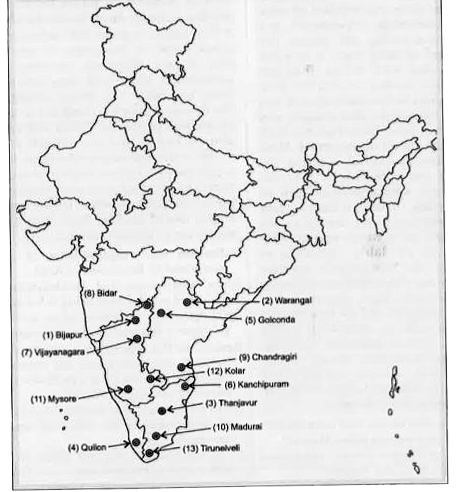
|
|
| 919. |
What was meant by the term jins-i-kamil ? |
|
Answer» Solution :(i) The TERM like jins-i-kamil in SOURCES meant perfect crops -case like cotton and sugarcane (ii)Mughal state encouraged PEASANTS to CULTIVATE such crops to collect more revenue |
|
| 920. |
"The burials in Harappan sites reveal the economic and social differences amongst the pecple living within a particular culture." Give two evidences in support of your answer. |
|
Answer» Solution : The evidences thar reveal the social and ECONOMIC differences in Harappan sites are: (i) Buials: From the site, it is found that few deads were LAID down in ordinary pits whereas few OTHERS were laid down in proper lined and hollowed out spaces with brick coverings. (II) In some graves, pottery and ornaments were also found indicating the BELIEF that these could be used in the afterlife. |
|
| 921. |
Examine the causes that made Al-Baruni visit India. |
|
Answer» Solution :The CAUSES that made Al-Baruni visit India are: (i) In 1017, Sultan Mahmud invaded Khwarizm and took Al-Baruni with other scholars as hostage to Ghazni. (ii) Al-Baruni developed a liking for India and interest in Indian culture and literature. When PUNJAB became a part of the Ghaznavid Empire. (iii) Al-Baruni was highly educated of his times. (iv) He was well versed in Syrian, Arabic, Hebrews, and Persian. (v) He wanted to learn more of mathematics, astronomy and medicine. (vi) Al-Baruni spent years learning Sanskrit and STUDYING religious and philosophical text. (VII) He visited India, contacted local people and LEARNT Indian philosophy too. |
|
| 922. |
Why did the Santhals rebel against Zamindars and Colonial Power ? Give two reasons. |
|
Answer» SOLUTION : (i) Santhals were settled in Danim-i-koh area. (ii) Moneylenders charged the high rate of interest and took over their land when they were unable to PAY the maney. (iii) The state was levying heavy taxes on them. The Zamindars also had BEGUN to increase their hold over their Damin area. (iv) So, the Santhals revolted against the exploitations of the zamindars, moneylenders and the state. |
|
| 923. |
Read the following paragraph answer the questions that follow: carefully and Draupadi's Questions Draupadi is supposcd to have asked Yudhishthira whether he had lost himself before staking her. Two contrary opinions were expressed in response to this question. One, that even if Yudhishthita had lost him self earlier, his wife temained under his control, so he could stake her Two, that an unfree man (as Yudhishthira was when he had lost himself) could not stake another person. The matter remained unresolved, ultimately Dhritarashtra restored to the Pandavas and Draupadi there personal freedom. How did Draupadi's question unsettle everyone in the assembly ? |
| Answer» SOLUTION :DRAUPADI's QUESTION certainlyunsettled had LOST himself before STOKING her. | |
| 924. |
Read the passage carefully and answer the questions given as follows: Capturing Elephants for the Army The Arthashastra lays down minute details of administrative and militry organisation. Guards of elephant forests, assisted by those who rear elephants , those who enchainthe legs of elephants, those who guard the boundaries, those who live in forests, as well as by those who nurse elephants , shall, with the help in tethering wild ones, trace the whereabouts of herds of elephants by following the course of urine and dung left by elephants.(iii) How does Arthashastra help in the reconstruction of the history? |
|
Answer» Solution :Arthashastra is an important source forreconstruction of Mauryan HISTORY. (a) It tells us the king of that PERIOD (MAURYANS ) set the high ideals-welfare of their subjects. (B) The Arthashastra lays down minute details of administrative and military organisation and various duties of the RULER. |
|
| 925. |
"The village panchayat during the Mughal period regulated rural society." Explain the statement. |
|
Answer» Solution :(i) The village Panchayat was an ASSEMBLY of clders of important.people of the village. They had hereditary landed properties. (ii) The panchayat represented various castes and communities in the village but it was dominated by the Brahmanas and the Kshatriyas. (iii) The menial cum agricultural worker was unlikely to be represented. (iv) The Panchayat was headed by a headman KNOWN as muqaddam or mandal. (v) The headman was chosen by consensus by the village elders. This was ratified by the zamindar. (vi) The headmen held office as long as they enjoyed the confidence of the village elders, failing which they could be dismissed by them. (vii) The chief function of the headman was to upervise the PREPARATION of village accounts, assisted by the accountant or patwar. viii) The mandals often misused their positions, for under assessing the revenue from their own lands and passing the burden to the SMALLER cultivator. (ix) The funds came from contributions made by the individuals to a common pool (x) This money was used for looking after the state revenue officials who visited the village, community welfa activities during natural calamities like loods construction of a bund or digging a canal etc. (xi) The panchayat ensured that caste boundaries among the various communities of the village were upheld to prevent any offence against their caste. In eastern India, all marriages were held in the presence of the mandal (xii) Panchayats also had the authority to impose fines. They could give severe punishment like expulsion from the community, thus forcing a person forced to leave the village and losing his right to practice his profession. (xiv) Each caste or jati in the village had its own jati panchayat with considerable power. (xv) In Rajasthan jati, panchayats took care of civil disputes, land marriages, rinual PRECEDENCE in village functions regarding members of different |
|
| 926. |
Why did Sanchi stupa survive while Amravati did not ? |
Answer» Solution :(i) In 1854, WALTER Elliot, the commissioner of Guntur visited Amravati , discovered the remains of the western gateway , come on a final decision that the structure at Amravati was one of the largest and most important Buddhist Stupas ever built. 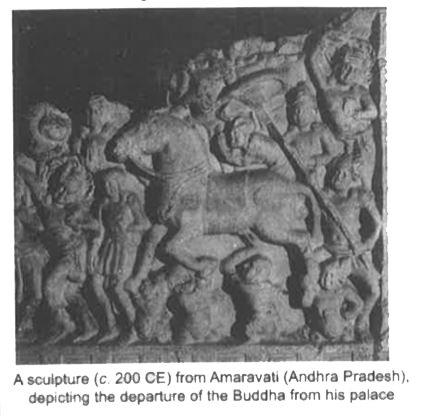 (ii) Perhaps Amravati was discovered before scholars understood the value of the finds and realised how critical it was to preserve things where they had been found instead of removing them from the site. (iii) Sanchi was .discovered. in 1818 , three of its four gateway were still standing , the fourth was LYING on the spot where it had fallen and the MOUND was in good condition . (iv) It was suggested that the gateway be taken to either Paris or London. 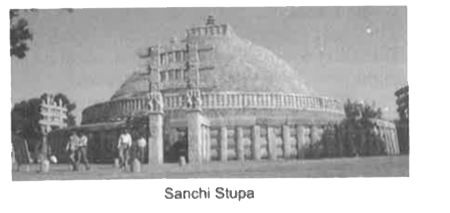 (v) A number of factors HELPED to keep Sanchi as it stands, WHEREAS the mahachaitya at Amaravati is now just an insignificant little mound , totally denuded of its former glory. |
|
| 927. |
Differentiate between black and white towns. Mention any two points of difference. |
| Answer» Solution : (i) BLACK TOWNS were the centres of cholera and anarchy whereas White Towns stood for cleanliness and hygiene. (ii) White towns symbolised settled city life while in black TOWN Indian LIVED in an unorganised way. | |
| 928. |
Read the passage carefully and answer the questions given as follows: Capturing Elephants for the Army The Arthashastra lays down minute details of administrative and militry organisation. Guards of elephant forests, assisted by those who rear elephants , those who enchainthe legs of elephants, those who guard the boundaries, those who live in forests, as well as by those who nurse elephants , shall, with the help in tethering wild ones, trace the whereabouts of herds of elephants by following the course of urine and dung left by elephants. (i) CApturing of elephants was so important. Why? |
| Answer» Solution :CAPTURING of ELEPHANTS was important because they were the important part or wing of the MILITARY activities as WELL as for transportation. | |
| 929. |
Describe the ways in which nobles were honoured in the Mughal court. What did they in turn do? |
|
Answer» Solution :The corps of officers were the important pillars of the Mughal state. Grand titles were adopted by the Mughal emperor and GIVEN to the nobles too. (i) The position of a man in the court hierarchy could be traced through the titles he held. Jai Singh and Jaswant Singh were given the little Mirza Raja (ii) Titles could also be paid for — Mir Khan gave Aurangzeb one lakh rupee for the letter .Alit. to be added to his name. (iii) Expensive gifts LIKE valuable ornaments and the `Sarapa. that consisted of Tunic, Turban and SASH were given by emperors to the nobles. (iv) The Padma Murassa or the lotus blossom encrusted with jewels was given only in exceptional positions. In turn the nobles never approached the KINGS empty handed. They generally gave him money. (v) Presents played an important symbolic role in diplomatic relations. They were regarded as a sign of honour and respect. |
|
| 930. |
Read the passage carefully and answer the questions given as follows: Capturing Elephants for the Army The Arthashastra lays down minute details of administrative and militry organisation. Guards of elephant forests, assisted by those who rear elephants , those who enchainthe legs of elephants, those who guard the boundaries, those who live in forests, as well as by those who nurse elephants , shall, with the help in tethering wild ones, trace the whereabouts of herds of elephants by following the course of urine and dung left by elephants. (ii) Who was Kautilya? What did he compose? |
| Answer» SOLUTION :KAUTILYA was a scholar and believed tobe the composed the ARTHASHASTRA. | |
| 931. |
What do you think was the Signifcance of the rituals associated with Mahanavami Dibba ? |
|
Answer» Solution :A (i) The Mahanavami Dibba was a massive PLACE FORMED in the capital city of Vijayanagara empire, Hampi. It had a base of about `11000 SQ.` feet, having a height of FORTY feet. (ii) The base of the platform was covered with relief carvings, which added to the beauty of Mahanavami Dibba. Here, the Hindu festival Mahanavami or Navaratri were celebrated EITH great enthusiasm in the months of September-October. (iii) This festival was celebrated for nine days. It was the time when the Rayas (rulers) of Vijayanagara expressed their power and prestige. B. On this occasion, following rituals and ceremonies were held: (i) The sacrifice of buffaloes and other animals were made. Prayers were offered to the state gods and goddess. State horse was worshipped. (ii) Not only this, dances, wrestling and other entertaining items such as procession of caparisoned horses, elephants, and soldiers on their horses were also performed. (iii) On this occasion, the Nayakas and subordinate kings offered precious gifts to the Raja. On the last day, the Raja inspected his army and accepted gifts and tributes. |
|
| 932. |
Describe the various efforts made by the scholars to study Vijayanagara after Mackenzie's time. |
|
Answer» Solution :(i) The initial surveys and information was PIECED together from travellers. account and inscriptions. Archaeological Survey of India and Archaeology and Museums department of Karnataka have preserved the SITE throughout the `20^(th)` century. (ii) In `1976`, Hampi was declared as a site of national importance. In `1986`, UNESCO declared it as a WORLD heritage site. A dozens of scholars, for about `20` years, all over the world worked to COMPILE and preserve this information. (iii) The first step in this regard for preparing a survey map or preparing an outline map of the AREA was an integral part of this project. The entire area is divided into a set of `25` squares. Each square is marked by an alphabet. Each square is then further sub-divided into a set of even smaller square parts. (iv) It is a very painstaking effort. It led to the study of thousands of structures from devotional places (Places of worship) and residence. The available information about them was noted down. It then further led to the recovery of traces of bazars, roads and paths, etc. The location of the finds have been determined through pillar bases and platforms. |
|
| 933. |
Read the passage given below and answer the question that follow: Why kinfolk quarrelled This is an excerpt from the Adi Parvan (literally, the first section) of the Sanskrit Mahabharata, describing why conflicts arose amongst the Kauravas and Pandavas: The Kauravas were the ... sons of Dhritarashtra, and the Pandavas ... were their cousins. Since Dhritarashtra was blind, his younger brother Pandu ascended the throne of Hastinapura ... However, after the premature death of Pandu, Dhritarashtra became king, as the royal princes were still very young. As the princes grew up together, the citizens of Hastinapura began to express their preference for the Pandavas, for they were more capable and virtuous than the Kauravas. This made Duryodhana, the eldest of the Kauravas, jealous. He approached his father and said, "You yourself did not receive the throne, although it fell to you, because of your defect. If the Pandava receives the patrimony from Pandu, his son will surely inherit it in turn, and so will his son, and his. We ourselves with our sons shall be excluded from the royal succession and become of slight regard in the eyes of the world, lord of the earth!" What does this excerpt trying to depict? |
| Answer» SOLUTION :This excerpt has been TAKEN from Adi PARVAN, the FIRST section of Sanskrit Mahabharata. It is depicting the struggle between TWO warring cousins-The Kauravas and the Pandvas. | |
| 934. |
The nature of colonial city changed in India after the revolt of 1857, substantiate the statement. |
| Answer» SOLUTION :(i) The nature of the colonial City changed in the mid-nineteenth century. After the Revolt of 1857 British attitudes in India were shaped by a constant fear of rebellion. They FELT that towns needed to be better defended, and white people had to live in more secure and segregated enclaves. (II) Away from the threat of the "natives". Pastureland and agricultural fields around the older towns were cleared, and new urban spaces called .Civil Lines. were set up. White people began to live in the Civil lines. (iii) Cantonments-places where Indian troops under European command were stationed - were also developed as safe enclaves. These areas were separate from the Indian towns but still attached to it. (iv) With broad streets, bungalows set amidst large gardens, barracks, PARADE ground and church: they were meant as a safe haven for Europeans as well as a model of ordered urban life in CONTRAST to the densely builtup Indian towns. | |
| 935. |
Give two effects of the network of railways on cities. |
| Answer» Solution :(i) Railways helped link the port cities LIKE Madras, Calcutta and Bombay to the countryside. (ii) It ENABLED TRANSPORT of raw materials and cheap labour from the interiors as factories were SET up in these cities. | |
| 936. |
Which one of the following is the theme of The Communist Manifesto' written by Marx and Eangels ? |
|
Answer» Tools of PRODUCTION |
|
| 937. |
Read the passage given below and answer the questions that follow : How tanks were built About a tank constructed by Krishnadeva Raya, Paes wrote : The king mad a tank….. At the mouth of two hills so that all the water which comes from either one side or the other collects there, and, besides this, water comes to it from more than three leagues (approximately 15 kilometres) by pipes which run along the lower parts of the range outside. This water is brought from a lake which itself overflows into a little river. The tank has three large pillars handsomely carved with figures, these connect above with certain pipes by which they get water when they have to irrigate their gardens and rice-fields. In order to make this tank the said king broke down a hill..... In the tank I saw so many people at work that there must have been fifteen or twenty thousand men, looking like ants.... (i) How did the water get collected in the tank ? (ii) What were the other sources of water for Vijayanagara ? (iii) Name the king associated with the construction of the tank . Why did he do so ? |
|
Answer» Solution :(i) (a) Water which ran on either side of the two HILLS collected in the tank as the tank was constructed in the mouth of the two hills, (b) from pipes that ran aling the lower parts of the range. (c ) From the three pillars which were connected to certain pipes. (ii) (a) Stored rain water, (b) Reservoirs were BUILT on embankments on streams, (c ) CANALS- Hiriya canal that drew water from a dam across Tungabhadra. (iii) (a) King - KRISHNADEVA Raya, (b) To meet the water requirements of Vijayanagara royal centre, to irrigate fields, etc. |
|
| 938. |
Explain how the constitution of India protects the rights of the central government and the states. |
|
Answer» Solution :The respective rights of the central government and the states was one of the most vigorously debated topics in the constituent assembly. (i) Method adopted by the constituent assembly to ensure a strong centre were by clearly specifying legislative power of each, providing for three lists of subjects and a complex system of fiscal federalism. (ii) The draft constitution provided for three list of subjects : Union, states and concurrent. The Union list has 97 subjects of MATERIAL importance like foreign AFFAIRS, atomic energy, banking, etc. The subjects in the union list can only be legislated upon by the central government. (iii) The state list consists of 66 subjects like police, agriculture, local, government etc. The state government can pass laws on the subjects mentioned in the state list. In certain circumstances the centre can also pass laws on subject of the state list. (iv) The concurrent list consist of 47 subjects like education, economic planning -which came under the preview of both. But in case of conflict the union law will prevail. (v) Subjects not under any of these list are known asresiduary powers and under the control of the centre. The union also has control over MINERALS and key industries. (vi) Besides, Article 356 gave the centre powers to take over a state administration on the recommendation of the governor. (vii) The constitution also divided financial powers between the centre and states. (viii) Certain taxes e.g. custom duties and company taxes were to be retained by centre. Proceeds from taxes like income TAX and excise duties are shared with the states and in STILL other cases for example, estate duties is assigned wholly to the states. |
|
| 939. |
Read the given sources and answer the question which follows:"Tomorrow we shall break the salt tax law" On 5 April 1930, Mahatma Gandhi spoke at Dandi: When I left Sabarmati with my companions for this seaside hamlet of Dandi, I was not certain in my mind that we would be allowed to reach this place. Even while I was at Sabarmati there was a rumour that I might be arrested. I had thought that the Government might perhaps let my party come as far as Dandi, but not me certainly.If someone says that this betrays imperfect faith on my part, I shall not deny the charge. That I have reached here is in no small measure due to the power of peace and non-violence: that power is universally felt. The Government may, if it wishes, congratulate itself on acting as it has done, for it could have arrested every one of us. In saying that it did not have the courage to arrest this army of peace, we praise it. It felt ashamed to arrest such an army. He is a civilised man who feels ashamed to do anything which his neighbours would disapprove. The Government deserves to be congratulated on not arresting us, even if it desisted only from fear of world opinion. Tomorrow we shall break the salt tax law. Whether the Government will tolerate that is a different question. It may not tolerate it, but it deserves congratulations on the patience and forbearance it has displayed in regard to this party.... What if I and all the eminent leaders in Gujarat and in the rest of the country are arrested? This movement is based on the faith that when a whole nation is roused and on the march no leader is necessary. (WMG, Vol. 49) On what principle was the salt movement based? What did Gandhi's making of salt signify? |
| Answer» Solution : Salt movement was based on the principle of faith. One day the ENTIRE nation will rise against the injustice, and there will be no necessity of a leader. Gandhi.s MAKING of salt contrary to the salt laws symbolised refusal of INDIAN PEOPLE to live under BRITISH made laws and under the British. | |
| 940. |
On the given political outline map of India, locate and label the following Harappan sites. (i) Harappa (ii) Lothal (iii) Mohenjodaro (iv) Nageshwar (v) Banawali (vi) Rakhigarhi (vii) Kalibangan (viii) Kot Diji |
Answer» SOLUTION :
|
|
| 941. |
Read the given sources and answer the question which follows:"Tomorrow we shall break the salt tax law" On 5 April 1930, Mahatma Gandhi spoke at Dandi: When I left Sabarmati with my companions for this seaside hamlet of Dandi, I was not certain in my mind that we would be allowed to reach this place. Even while I was at Sabarmati there was a rumour that I might be arrested. I had thought that the Government might perhaps let my party come as far as Dandi, but not me certainly.If someone says that this betrays imperfect faith on my part, I shall not deny the charge. That I have reached here is in no small measure due to the power of peace and non-violence: that power is universally felt. The Government may, if it wishes, congratulate itself on acting as it has done, for it could have arrested every one of us. In saying that it did not have the courage to arrest this army of peace, we praise it. It felt ashamed to arrest such an army. He is a civilised man who feels ashamed to do anything which his neighbours would disapprove. The Government deserves to be congratulated on not arresting us, even if it desisted only from fear of world opinion. Tomorrow we shall break the salt tax law. Whether the Government will tolerate that is a different question. It may not tolerate it, but it deserves congratulations on the patience and forbearance it has displayed in regard to this party.... What if I and all the eminent leaders in Gujarat and in the rest of the country are arrested? This movement is based on the faith that when a whole nation is roused and on the march no leader is necessary. (WMG, Vol. 49) Describe the mental condition of Gandhiji in brief before the Dandi March. What he proved wrong? |
| Answer» Solution : Gandhi JI had a DOUBT in his mind. He felt uncertain if he would be allowed to REACH Dandi or not. There was also a rumour that he might be arrested when, he would have reached Dandi while breaking the SALT law. | |
| 942. |
Describe the significance of the Indian National Congress session of 1929? Discuss any two points: |
|
Answer» Solution :(i) It was HELD in LAHORE where Congress passed a Resolution for the COMPLETE INDEPENDENCE of India. (ii) It was ALSO decided to launch the Civil Disobedience Movement. |
|
| 943. |
Read the given sources and answer the question which follows:"Tomorrow we shall break the salt tax law" On 5 April 1930, Mahatma Gandhi spoke at Dandi: When I left Sabarmati with my companions for this seaside hamlet of Dandi, I was not certain in my mind that we would be allowed to reach this place. Even while I was at Sabarmati there was a rumour that I might be arrested. I had thought that the Government might perhaps let my party come as far as Dandi, but not me certainly.If someone says that this betrays imperfect faith on my part, I shall not deny the charge. That I have reached here is in no small measure due to the power of peace and non-violence: that power is universally felt. The Government may, if it wishes, congratulate itself on acting as it has done, for it could have arrested every one of us. In saying that it did not have the courage to arrest this army of peace, we praise it. It felt ashamed to arrest such an army. He is a civilised man who feels ashamed to do anything which his neighbours would disapprove. The Government deserves to be congratulated on not arresting us, even if it desisted only from fear of world opinion. Tomorrow we shall break the salt tax law. Whether the Government will tolerate that is a different question. It may not tolerate it, but it deserves congratulations on the patience and forbearance it has displayed in regard to this party.... What if I and all the eminent leaders in Gujarat and in the rest of the country are arrested? This movement is based on the faith that when a whole nation is roused and on the march no leader is necessary. (WMG, Vol. 49) How did Gandhiji break the salt law? How did Gandhiji observe the colonial state? |
| Answer» Solution : On APRIL 5, 1930, Gandhiji reached Dandi, on the seacoast. Here, he MADE a fistful of salt from the SEA water and BROKE the salt law. He observed the colonial state as civilised, as one who would not do ANYTHING wrong. | |
| 944. |
Name any traveller who came to India during the medieval period (11th to 17th century). |
|
Answer» SOLUTION :(i) Al-Biruni (11TH century) from UZBEKISTAN. (ii) Ibn-Battuta (14th century) from North Western Africa, MOROCCO. (iii) Francois Bernier (17TH century) from France. |
|
| 945. |
Explain Akbar's taxation policy . |
|
Answer» Solution :(i) AKBAR MADE many REFORMS in the revenue system. (ii)He adopted different systems of assessement of the land tax. Akbar first adopted Sher Shah.ssystem of assessment. (iii)In this system cultivated area was first meansured and a CENTRAL schedulewas drawn often on the the basis ofthe productivity of land cropwiseto the peasants so he reverted to the system of annual assessment . |
|
| 946. |
Temples in the Vijayanagara kingdom were a major economic force. Elaborate. |
|
Answer» Solution :(i) Rulers built and encouraged temple building as a WAY to link with the divine. Land grants were made to temples called Devadanas. (ii) Temples played an important part in the economic life of the people. It was often the biggest single landowner and CONSUMER in an area. (iii) Temples maintained irrigation works, played an important part in rural development by reclamation of WASTE land, extension of cultivation and FINDING employment for villagers by development projects. (iv) They were also engaged in rural credit. They gave loans to individuals or to VILLAGES. Interest on loans ranged from `12%` to `13%`. If the loan could not be repaid, the temple took over his land. All this added to the wealth of the temple. |
|
| 947. |
Outline the distinctive features of the Virupaksha temple and the Vitthala temple in the Royal Centre of Vijaynagar Empire. |
|
Answer» Solution :Features of Virupaksha and Vitthala temples Virupaksha temple: (i) It is built over CENTURIES, may be during ninth or tenth centuries as suggested in the INSCRIPTION. (ii) Itis dedicated to Lord Virupaksha, dhe guardian deity of kingdom. (iii) It is decorated with CARVED pillars. (iv) There are many big halls which are USED for matriages, soclal programmes and other social occasions. (v) RULERS indicated close links with God using title "Hindu Suratrana" (vi) Kings visits to temples along with Amaranayakas were important occassion. Vitthala Temple (i) The Prinicipal deity of this important shrine is Vitthala, a form of Lord Vishnu. (ii) Temple has several halls and a unique shrine designed as chariot. (iii) A feature of temple complexes is the chariot streets that extended from temple Gopuram in a straight line. (iv) These streets were paved with stone slabs and lined with pillared pavilions in which merchants set their shops |
|
| 948. |
Examine why Bernier described the Mughal towns as the Camp Towns'. |
|
Answer» Solution :(i) Bernier described Mughal cities as "camp towns". (ii) He meant towns that owed their existence on the IMPERIAL camps. on imperial camps. (iii) These towns depended for their SURVIVAL on imperial camps. (iv) He believed that these CAME into existence when the imperial court moved in and RAPIDLY declined when it moved out. (v) He suggested that they did not have viablesocial and economic foundations but were dependent on imperial patronage. Conclusion (i) Bernier was drawing an oversimplified picture. (ii) There were all kinds of towns: manufacturing towns, trading towns, port-towns, sacred centres, pilgrimage towns, etc. (iii) Their existence is an index of the prosperity of merchant communities and PROFESSIONAL classes. (Any other rélevant points) (Any four points to be examined) |
|
| 949. |
Describe the featurers of Coinage from sixty century BCE till sixth century CE |
|
Answer» Solution :The features of the Coinage during the periodic 600 BCE-600 CE are as MENTIONED below (i) Punch-marked coins of silver and COPPER were the earliest to be minted and used. (ii) These coins were issued by the KINGS, merchant bankers and towns people. (iii) The tribal republics such as the Yaudheyas of Punjab and Haryana also issued coins. (iv) The GOLD coins issued by the Gupta RULERS were most spectacular and remarkable for their purity |
|
| 950. |
Why do contemporary scholars regard the violence as holocaust ? Give two reasons. |
|
Answer» Solution :(i) At the TIME of partition, violence at an unprecedented SCALE happended.Many of the CONTEMPORARY scholars described it as a HOLOCAUST. (b)(i)There were attempts from both SIDES to wipe out total population of other community in some places and areas. (ii)The mass slaughtering and rape and loss of property was all pervasive and at a scale that was never experienced in world history. |
|