Saved Bookmarks
This section includes 7 InterviewSolutions, each offering curated multiple-choice questions to sharpen your Current Affairs knowledge and support exam preparation. Choose a topic below to get started.
| 1. |
CH_3COOH is titrated in the NaOH solution which of the following statements is correct for such titration? |
|
Answer» Conductance increases upto equivalence POINT, then it decreases. `CH_3COOH ` weak acid ( dissociated less extent ) NaOH is strong Base ( dissociate large extent ) `CH_3COOH + NaOH to Ch_3COONa + H_2O` `CH_3COOH + CH_3COONa` ACIDIC buffer `:.` E.M.F conductance increases slowly upto equivalence point and then increases rapidly . Therefore equivalence pointthere exist is acidic buffer |
|
| 2. |
CH_(3)COOH is titrated with NaOH solution. Which of the following statements is true ? |
|
Answer» CONDUCTANCE decreases UPTO EQUIVALENCE point, after which it increases. |
|
| 3. |
CH_3COOH is reduced with LiAlH_4 to give : |
|
Answer» `C_2H_6` |
|
| 4. |
CH_(3)COOH is reacted with CH-=CH in presence of Hg^(++) the product is |
|
Answer» `{:(,CH_(3)(OOC CH_(3))),(,"|"),(,CH_(2)(OOCH_(3))):}` |
|
| 5. |
CH_(3)COOH has the dissociation constant 1 xx10^(-5) . It forms a salt CH_(3)COONa on reaction with NaOH. The percentage degree of hydrolysis of 0.1 M solution of CH_(3)COONa is: |
|
Answer» `0.0001%` |
|
| 6. |
CH_(3)COOH + C_(2)H_(5)OH underset("heat")overset("conc." H_(2)SO_(4))to CH_(3)COOC_(2)H_(5) +H_(2)O The above reaction is known as |
|
Answer» Hydrolysis |
|
| 7. |
CH_3COOH and C_6H_5COOH can be distinguished by : |
| Answer» Answer :D | |
| 8. |
CH_(3)COOH( 50 ml , 0.1M) is titratedagainst0.1M NaOHsolution .Calulate the pH after the addition of 0 ml ,10 ml, 20 ml, 25 ml40 ml, 50mland 60 mlof NaOHK_(a) of CH_(3) COOHis2 xx 10^(-5) |
|
Answer» Solution :(a) `2.85` (B) ` 4.0969` (C ) `4.5229` (d) `4.699` (E ) `5.3011` (f) ` 8.699` (g)`11.9586 ` |
|
| 9. |
CH_3COOH (50 ml, 0.1 M) is titrated against 0.1 M NaOH solution. Calculate the pH at the addition of 0 ml, 10 ml, 20 ml, 25 ml, 40 ml, 50 ml of NaOH. Ka of CH_3COOH" is "2 xx 10^(-5). |
|
Answer» |
|
| 10. |
CH_(3)COOCH_(3)+H_(2)O overset(H^(+))rarr CH_(3)COOH+CH_(3)OH is an exampleof ________ order reaction. |
| Answer» ANSWER :D | |
| 11. |
CH_(3)COOC_(2)H_(5)overset(CH_(3)MgBr)underset("excess")toP. The product P will be |
|
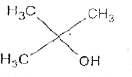
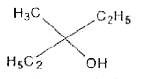
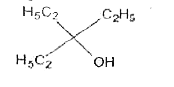
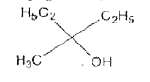
Answer»
|
|
| 12. |
CH_(3)COOCH_(2)CH_(3)underset((ii) H_(2)O)overset(LiAIH_(4))to X, identify X. |
|
Answer» `CH_(3)CH_(2)CH_(2)OH` |
|
| 13. |
The reaction CH_(3)COOC_(2)H_(5)+H_(2)Ooverset(H^(+))(to) products is a/an______process a. Instantantaneous B. Spontaneous C. Moderately slow Then correct statement(s) is/are |
|
Answer» A & C |
|
| 14. |
CH_3COOAg + C_2H_5Cl to(org.) Wrong statement about 'A' is |
|
Answer» A is an ESTER |
|
| 15. |
CH_3CONH_2overset(P_2 O_5)rarr…….. Is an example of: |
|
Answer» DEHYDRATION |
|
| 16. |
CH_(3)CONH_(2)toCH_(3)CN , In this conversion, the charge in hybridisation state of the carbon atom of the functional group is- |
|
Answer» `SP^(3) - sp` |
|
| 17. |
CH_(3)CONH_(2)overset(NaNO_(2)//HCl)toX |
|
Answer» `CH_(3)COOH` `CH_(3)CONH_(2) underset((HNO_(2)))overset(NaNO_(2)//HCL)tounderset("Acetic acid")(CH_(3)COOH)+N_(2)+H_(2)O` |
|
| 18. |
CH_3CONH_2 on reaction with NaOH and Br_2 in alcoholic medium gives |
|
Answer» `CH_3CH_2NH_2` |
|
| 19. |
CH_3CONH_2 overset(Br_2"/"KOH)(to) CH_3Nh_2+CO_2 This is…………….reaction. |
|
Answer» HOFFMAN bromamide |
|
| 20. |
CH_(3)CONH_(2) is subjected to Hoffmann bromamide degradation. Name the main nitrogen containing compound obtained. |
|
Answer» |
|
| 21. |
CH_3CONH_2 IS dehydrated by P_2O_5 to give : |
|
Answer» `CH_3NH_2` |
|
| 22. |
CH_(3)CONH_(2) is a we4aker base than CH_(3)CH_(2)NH_(2). |
Answer» Solution :Due to resonance, the lone pair of ELECTRONS on the nitrogen atom in `CH_(3)CONH_(2)` is delocalized over the carbonyl GROUP, C=O.  As a RESULT, electron density on the N-atom I acetamide decreases. In contrast, in ethylamine, due to +I-effect of the ethyl group, electron density on the N-atom increases. Consequently, `CH_(3)CONH_(2)` is a weaker BASE than `CH_(3)CH_(2)NH_(2)`. |
|
| 23. |
CH_(3)COH underset((ii) H_(2)O)overset(LiAIH_(4))to X What is X? |
|
Answer» `CH_(3)CH_(2)OH` |
|
| 24. |
CH_3COCloverset(Pd (H_2))underset(BaSO_4)rarr X : Here X is : |
|
Answer» Acetaldehyde |
|
| 26. |
CH_(3)COCl+H_(2)overset(Pd//BaSO_(4))underset("quinoline")rarrCH_(3)CHO. Here quinoline acts as |
|
Answer» Catalyst |
|
| 27. |
CH_(3)COCl +H_(2) underset(BaSO_(4))overset(Pd)to CH_(3)CHO+HCl is: |
|
Answer» CROSS ALDOL condensation |
|
| 29. |
CH_(3)COCI+H_(2)overset(Pd)(rarr)CH_(3)CH_(2)OH overset(Pd//BaSO_(4))underset("quinoline ")(rarr)CH_(3)CHOhere quinoline acts as |
|
Answer» `+` ve catalyst |
|
| 30. |
CH_3COCH_3overset(CH_3C=overset(Theta)Coverset(o+)Na)toXoverset(H_2O)toYoverset(H_2, Pd+CaCO_3)toZoverset(Al_2O_3)W,W: |
|
Answer» `CH_2=CH-CH=CH_2` 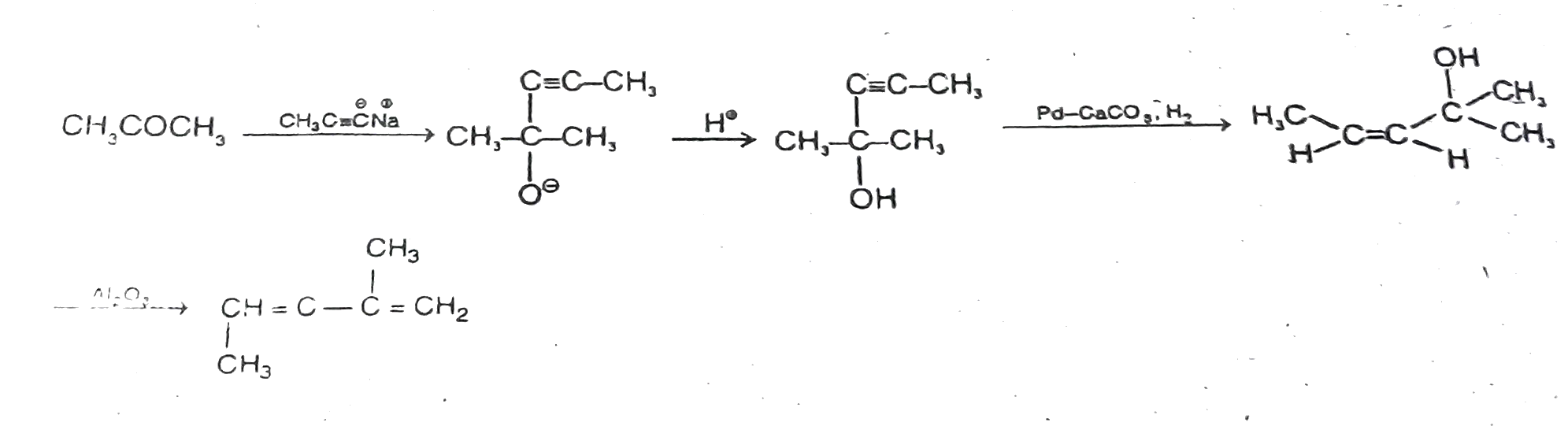
|
|
| 31. |
CH_(3)COCH_(2)Cl overset(OH^(-),Cl_(2))rarr " Product P " is |
|
Answer» `ClCH_(2)COCH_(2)CL` `CH_(3)-overset(O)overset(||)C-CH_(2)Cl overset(OH^(-))rarr underset("I")(CH_(3)-overset(O)overset(||)C-CHCl)` or `underset("II")(overset(-)CH_(2)-overset(O)overset(||)C-CH_(2)Cl)` However, `-I` effect of `-Cl` makes the H. of `CH_(2)Cl` more acidic, HENCE I is more likely to be formed.  `overset(OH^(-))rarr H_(3)C-overset(O)overset(||)C-overset(-)CH-Cl overset(Cl_(2))rarr H_(2)C-overset(O)overset(||)C-CHCl_(2)` |
|
| 32. |
Strutures of products , Starting materials or reagents CH_3COCH_(2)COOC_(2)H_5underset((ii) H^(+))overset((i) NaBH_4)rarr |
| Answer» Solution :`UNDERSET("Ethyl-3-hydroxy-butanoate")(CH_(3)-overset(OH)overset(|)(CH)-CH_(2)-overset(O)overset(||)(C)-O-C_(2)H_(5))` | |
| 33. |
CH_(3)Cnoverset(Na+C_(2)H_(2)OH)rarrX The compound X is |
|
Answer» `CH_(3)CONH_(2)` |
|
| 34. |
CH_(3)CO CH_(3) can be converted into CH_(3) COOH by |
|
Answer» REDUCTION |
|
| 35. |
CH_(3)CNandCH_(3)NC are, |
|
Answer» POSITION isomers |
|
| 36. |
CH_(3)CN is known as acetonitrile because |
|
Answer» It CONTAINS an ACETO group |
|
| 37. |
CH_2ClCOOH is a stronger acid than CH_3COOH. Why? |
|
Answer» |
|
| 38. |
CH_(3)Cl + NaI overset("Dry acetone")rarr CH_(3)I + NaCl. Name the above reaction. |
| Answer» SOLUTION :Finkel stein.s REACTION | |
| 39. |
CH_3CIoverset(Mg)underset(["Ether"])toXoverset(CH_3COCI)underset(["Hydrolysis"])to.....Y In the sequence given above, Y is |
|
Answer» ACETONE `CH_3COCI+2CH_3MgCIto(CH_3)_3COH+MgCI_2+Mg(OH)CI` |
|
| 40. |
CH_(3)CHOO_((1))+C_(2)H_(5)OH_((1))hArrCH_(3)COOC_(2)H_(5(1))+H_(2)O_((1)) In the above reaction, one mole of each of acetic acid and alcohol are heated in the presence of little conc. H_(2)SO_(4). On equlibrium being attained |
|
Answer» MOLE of ETHYL acetate is formed |
|
| 41. |
CH_3CH=overset(O)overset(||)(CHC)-CH_3overset(X)rarrCH_3CH=CHCOOH,Here the reagent 'X' is |
|
Answer» `K_(2) Cr_(2)O_(7)//H^(+)` |
|
| 42. |
CH_(3)CH(OH)CH overset(H_(3)O^(Theta))(to)CH_(3)CH(OH)COOH, In this reaction, the hydroxyacid obtained is- |
|
Answer» (+) - ENANTIOMER |
|
| 43. |
CH_3CHO=CHCHO is oxidized to CH_3CH=CHCOOH using |
|
Answer» ALKALINE POTASSIUM permanganate |
|
| 44. |
CH_(3)CHOandC_(6)H_(5)CH_(2)CHO can be distinguished by ______. |
| Answer» Answer :D | |
| 45. |
CH_(3)CHO reacts most readily with |
|
Answer» `NH_(2)-NH_(2)` |
|
| 46. |
CH_(3)CHO react with aqueous NaOH solution to form |
|
Answer» 3-hydroxy butanal `2CH_(3)CHO OVERSET(dil NaOH)RARR underset(3-"Hydroxy butanal")(CH_(3)-underset(OH)underset(|)(CH)-CH_(2)-CHO)` |
|
| 47. |
CH_(3)CHO overset(Na//C_(2)H_(5)OH)rarr X underset(170^(@)C)overset(conc. H_(2)SO_(4))rarr Y underset(AlCl_(3))overset(HCl)rarr Z. What happens when the final product 'Z' is treated with alkali solution? |
| Answer» SOLUTION :GIVES ETHANOL | |
| 48. |
CH_(3)CHOoverset(HCN)rarr(A) overset(HOH)rarr(B) The product (B) is : |
|
Answer» Malonic acid 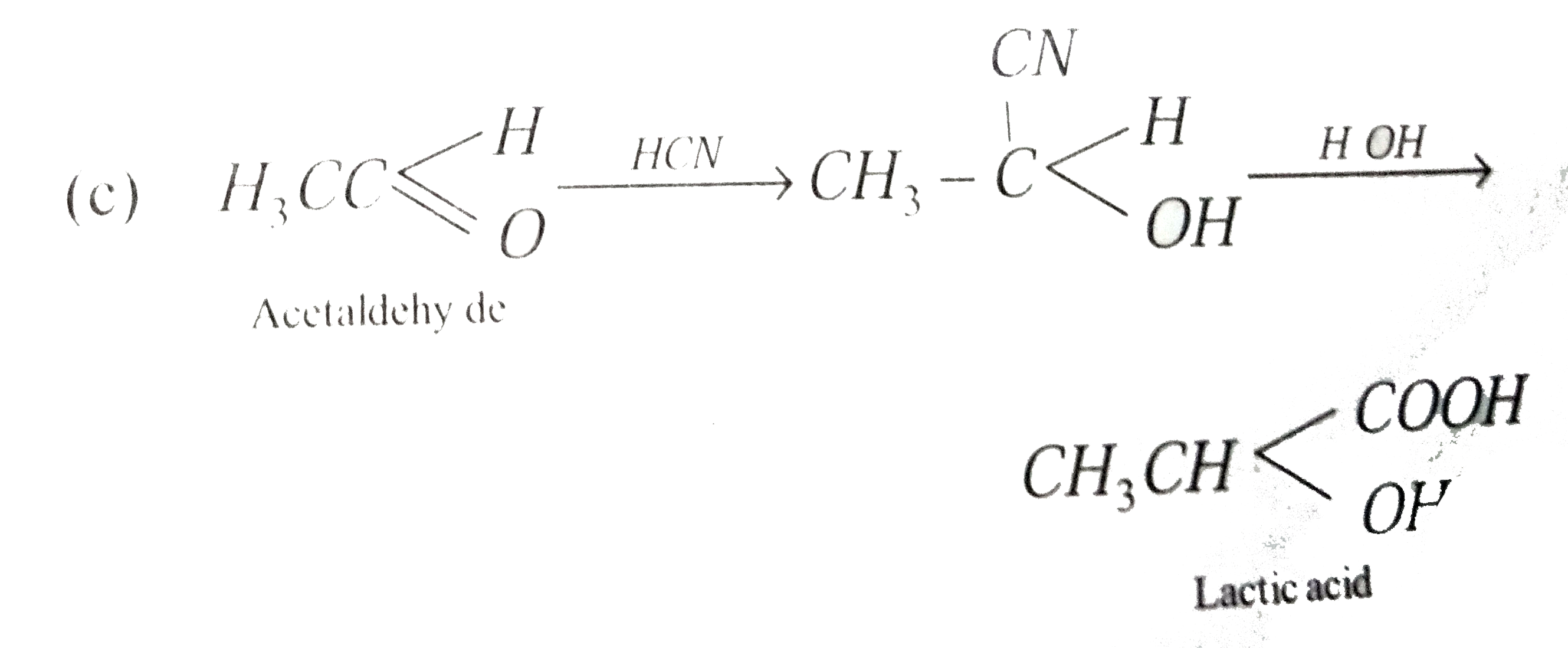
|
|
| 49. |
CH_(3)CHO overset("Chromic acid")rarr A overset(Ca(OH)_(2))rarr B underset("distillation")overset("dry")rarr C overset(NH_(2)OH)rarr D. Name the product 'D' of the above conversions. |
| Answer» SOLUTION :acetixune | |