Saved Bookmarks
This section includes 7 InterviewSolutions, each offering curated multiple-choice questions to sharpen your Current Affairs knowledge and support exam preparation. Choose a topic below to get started.
| 1. |
C_(6)H_(5)CHO+CH_(2)COCH_(3)overset(OH^(-))toC_(6)H_(5)CH(OH)CH_(2)CH_(2)COCH_(2)toC_(6)H_(5)CH=CHCOCH_(3) This reaction is known as |
|
Answer» ALDOL condensation |
|
| 2. |
C_(6)H_(5)CHO + HCN rarr C_(6)H_(5)CH(CN)OH. The product would be |
|
Answer» Benzioncondensation |
|
| 3. |
C_6H_5CHO+C_6H_5COCH_3overset(OH^(-) ,293K) to X, IUPAC name of cross condensation product X is |
|
Answer» Benzalacetophenone |
|
| 4. |
C_6H_5CH=CHCHO overset(X)to C_6H_5CH=CHCH_2OH In the above sequence X can be : |
|
Answer» `H_2//Ni` |
|
| 5. |
C_6H_5CH_3overset(Oxidation)rarroverset(NaOH)rarrBoverset(Sodalime)rarr______ |
|
Answer» |
|
| 6. |
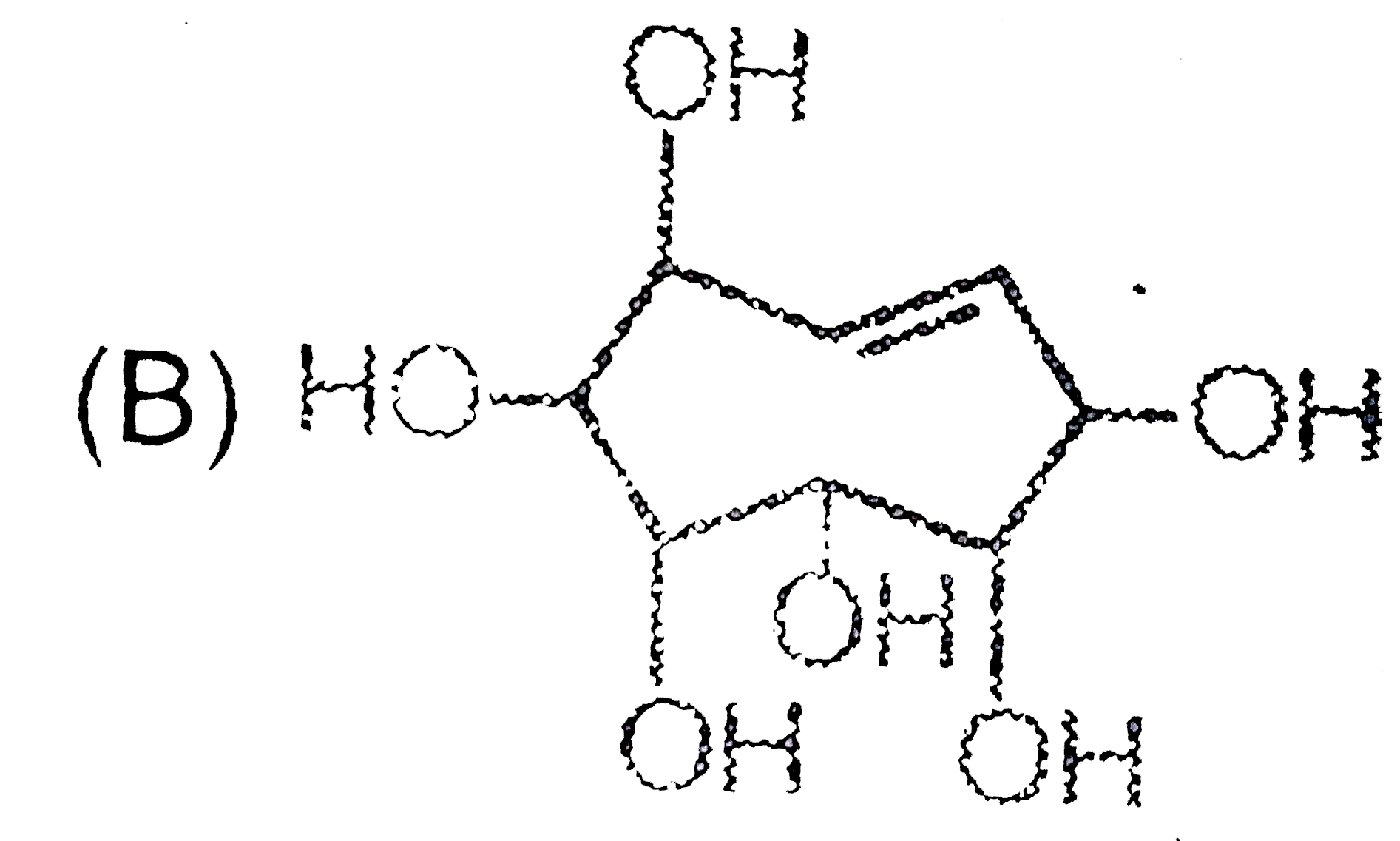
Write the products in the following: C_(6)H_(5)CH_(2)OH overset(HBr)to overset(KCN)to overset(H_(3)O^(+))underset(Delta)to |
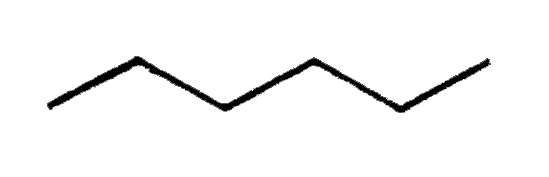
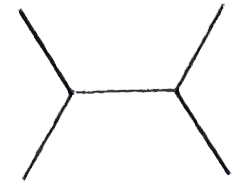
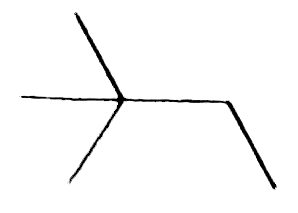
|
Answer» `X : C_6H_5CH_2 CH_2Br, Y : C_6H_5CH_2CH_2CN, Z : C_6H_5CH_2CO_2H` |
|
| 7. |
C_6H_5CH_2NH_2overset(HNO_2)(to)A overset((O))(to)B underset(HCl)overset(Zn"/"Hg)(to)C Identify A,B and C. |
|
Answer» Solution :`{:(C_6H_5NH_2overset(HNO_2)(to)C_6H_5CH_2OH overset((O))(to)C_6H_5CHO UNDERSET(HCl)overset(Zn"/"Hg)(to)C_6H_5-CH_3),(" BENZYL amineBenzyl alcohol(A)Banzaldehyde(B)CLEMMENSEN reductionToluene(C ) "):}` A-Benzyl alcohol, B-Benzaldehyde , C- Toluene. |
|
| 8. |
C_(6)H_(5)CH_(2)Cl + X rarr C_(6)H_(5)CH_(2) NH_(2) + Y The compounds X and Y are |
|
Answer» `"HNO"_(3)` and HCL |
|
| 9. |
C_6H_5Br+Mg overset( "dry ether") to A overset(CO_2) to B overset( H_3O^(+)) to C. IUPAC name of C is |
|
Answer» BENZENE CARBOXYLIC ACID |
|
| 10. |
[(C_6H_5)_2Pd(SCN)_2] and [9C_6H_5)_2Pd(NCS)_2] are __________ isomers. |
|
Answer» linkage |
|
| 11. |
C_(6)H_(5).^(14)COOH on heating with Na_(2)CO_(3) releases |
|
Answer» `CO_(2)` |
|
| 12. |
[(C_6H_5)_2Pd(SCN)_2] and [(C_6H_5)_2Pd(NCS)_2]are : |
|
Answer» LINKAGE ISOMERS |
|
| 13. |
C_(6)H_(5)-O-R when treated with hydrogen halide gives |
|
Answer» R - OX and `C_6H_5 - X` |
|
| 14. |
C_(6)H_(5)^(11)COOH on heating with Na_(2)CO_(3) releases |
|
Answer» `CO_(2)` `C_(6)H_(5).^(14)COOH+Na_(2)CO_(3) overset(DELTA)toC_(6)H_(5).^(14)COONa+CO_(2)+H_(2)O` |
|
| 15. |
C_6H_5-overset(OH)overset(|)(CH)-CH_3can be prepared form which of the following combinations |
|
Answer» `C_6H_5-CHO and CH_3MgCl` |
|
| 16. |
C_(6)H_(5)-O-CH_(3) is an exmaple of _________ |
|
Answer» nitriles |
|
| 17. |
C_(6)H_(5)-NH_(2)+CHCl_(3) + KOHnitrogencontaining compound+3KCl + H_(2)O. Thenitrogencontainingcompound. |
|
Answer» `C_(6)H_(5) -NH_(3) -CL` |
|
| 18. |
C_6H_5-O-CH_3 can be named as |
|
Answer» phenoxy methane |
|
| 19. |
C_(6)H_(5)-NH_(2) overset(NaNO_(2)//HCl)underset(0^(@)C)to A overset(CuCl_(2)//HCl)to B, is |
|
Answer» `C_(6)H_(5)CH_(3)` `B=C_(6)H_(5)-Cl` (chlorobenzene) |
|
| 20. |
C_6H_5 - O - CH_2 - CH_3 is known is ……………………. . |
| Answer» SOLUTION :PHENATOLE (or) ETHOXY BENZENE | |
| 21. |
C_(6)H_(5^(-))N_(2^(+))X^(-) is convertedintobenzeneby using |
| Answer» Answer :A | |
| 22. |
C_(6)H_(5) has electron withdrawing inductive effect yet each ring of biphenyl. C_(6)H_(5)-C_(6)H_(5) is more reactive than benzene towards S_(E) reaction and chief products are ortho and para-isomer. Show how reactivity and orientation can be aC Counted for on the basis of reasonance. |
|
Answer» |
|
| 23. |
C_6H_5CHO+CH_2 CH=CHCOoverset( overset(Oh^(-))toAthe product'A' is |
|
Answer» `C_6H_5 CH = UNDERSET(CH_2- CH_3 ) underset(|)C-CHO` |
|
| 24. |
C_(6)H_(5)-CH=CHCHO overset(x)to C_(6)H_(5)CH=CHCH_(2)OH. In the above sequence X can be |
|
Answer» `H_(2)`/Ni `underset("cinnamic aldehyde")(C_(6)H_(5)-CH=CHCHO)overset(NaBH_(4))to C_(6)H_(5)-underset("cinnamicalcohol")(CH=CH.CH_(2)OH)` |
|
| 25. |
C_(6)H_(5)-CH=CHCHO overset((X))rarr C_(6)H_(5)CH=CH_(2)OH In the above sequence (X) can be: |
|
Answer» `H_2//Ni ` |
|
| 26. |
C_(6)H_(5)-CH=CH-CHO is |
|
Answer» Benzaldehyde |
|
| 27. |
C_(6)H_(5)-C-=C-CH_(3)underset(H_(2)SO_(4))overset(HgSO_(4))rarrA |
|
Answer»
|
|
| 28. |
C_(6)H_(15)O_(6)(P) underset(Zn, H_(2)O)overset(O_(3))rarrC_(4)H_(8)O_(4)(Q) underset("reagent")overset("Molish")rarr Violet colour ring Structure of P connote be : |
|
Answer» `UNDERSET(OH)underset(|)(CH_(2))-underset(OH)underset(|)(CH)-underset(OH)underset(|)(CH)-CH=CH-underset(OH)underset(|)(CH)-underset(OH)underset(|)(CH)-underset(OH)underset(|)(CH_(2)`)` |
|
| 29. |
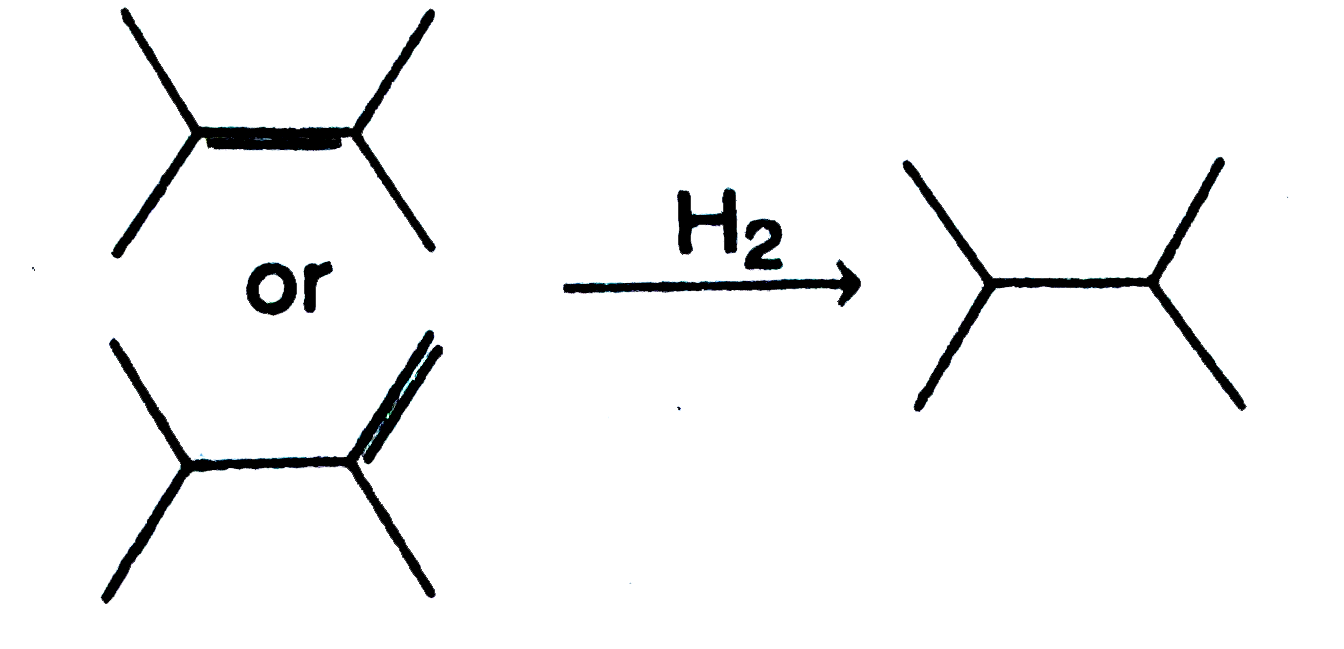
C_6H_12(A) has two types of alkenes that can be reduced to one type of C_6H_14(B) . B is |
|
Answer»
|
|
| 30. |
C_(60)contains 'x'five memberedrings & 'y'six memebered Then : |
|
Answer» x= 20 |
|
| 31. |
C_6 H_5CH_3 to C_6H_5CHO . Which one of the following reagents are not suitable for the conversion ? |
|
Answer» TREATING with alkaline `KMnO_4 ` and HEATING |
|
| 32. |
C_6H_5NH_2 underset(0-5^@C)overset(NaNO_2 + HCl)(rarr)A overset(KI)(rarr)B + C uarr.Here B and Care |
|
Answer» `C_6H_5I, N_2` |
|
| 33. |
C_6H_2N_2Cl overset(-CuCl//HCl)(rarr)C_6H_5Cl + N_2 is called |
|
Answer» Etard REACTION |
|
| 34. |
C_6 H_5 N_2 Cl + CuCN to C_6 H_5 CN + N_2 + CuCl is: |
|
Answer» Balz-Schiemann reaction |
|
| 35. |
C_6 H_5 Mg Br underset((2) H_3 O^+)overset((1) CO_2)to P In the above reaction , product P is |
|
Answer» Phenol |
|
| 36. |
C_6 H_5 COOCH_3 + ""^(18)OH to A + B In the above reaction , products A and B respectively are |
|
Answer» `C_3 H_5 OVERSET(O)overset(||)C-O^- + CH_3 O^(18) H` |
|
| 37. |
C_(5)underset((A))(H_(13))N+HNO_(2)rarrC_(5)H_(12)O(3^(@) "alcohol") Hence (A) gives |
|
Answer» carbylamine reaction |
|
| 38. |
C_6H_5COOH underset(2.Delta)overset(1.NH_3)to P overset(NaOBr)to Q underset("2. heat to " 460K)overset(1. Conc. H_2SO_4)to 'R' 'R' is |
|
Answer» o-bromo sulphanilic ACID 
|
|
| 39. |
C_(5)H_(13)N reacts with HNO_(2) to give an optically active compound -The compound is |
|
Answer» pentan-1-amine |
|
| 40. |
C_5H_(13)N reacts with HNO_2 to given an optically active compound - The compound is |
|
Answer» PENTAN - 1 -AMINE |
|
| 41. |
C_(5)H_(13)N reacts with HNO_(2) to give an optically active alcohol The compound is |
|
Answer» Pentan-1-amine Optically active alcohol means `C_(5)H_(11)`-segment CONTAINS a chiral CARBON. `CH_(3)-CH_(2)-CH_(2)-underset(CH_(3))underset(|)overset(H)overset(|)(C^(*))-NH_(2)` |
|
| 42. |
C_(5)H_(11)Cl by Wurtz reaction forms 2, 2, 5, 5 tetramethyl hexane as the main product. Hence C_(5)H_(11)Cl is. |
|
Answer» 2-methyl , 1-chlorobutane 2,2,5,5-tetramethyl hexane |
|
| 43. |
C_(5)H_(10)overset(H_(2)//Ni)rarr(X) overset(Cl_(2)//hv)rarr 3 monochloro structural isomers for compound C_(5)H_(10) how many pairs of geometrical isomers are possible |
|
Answer» 1 |
|
| 45. |
C_(5)H_(10) (A) can show Cannizzaro's reaction. (A) on treatment with Al(OC_(2)H_(5))_(3), forms C_(10)H_(20)O_(2) (B) which on hydrolysis gives acid (C) and alcohol (D). Compounds (A), (B) and (C) each on reaction with LiAlH_(4) is converted to alcohol (D). Identify (A), (B), (C) and (D). Give the reactions involved. |
Answer» Solution :SINCE, (A) gives Cannizzaro's REACTION HENCE, it should not have any `alpha`-HYDROGEN. 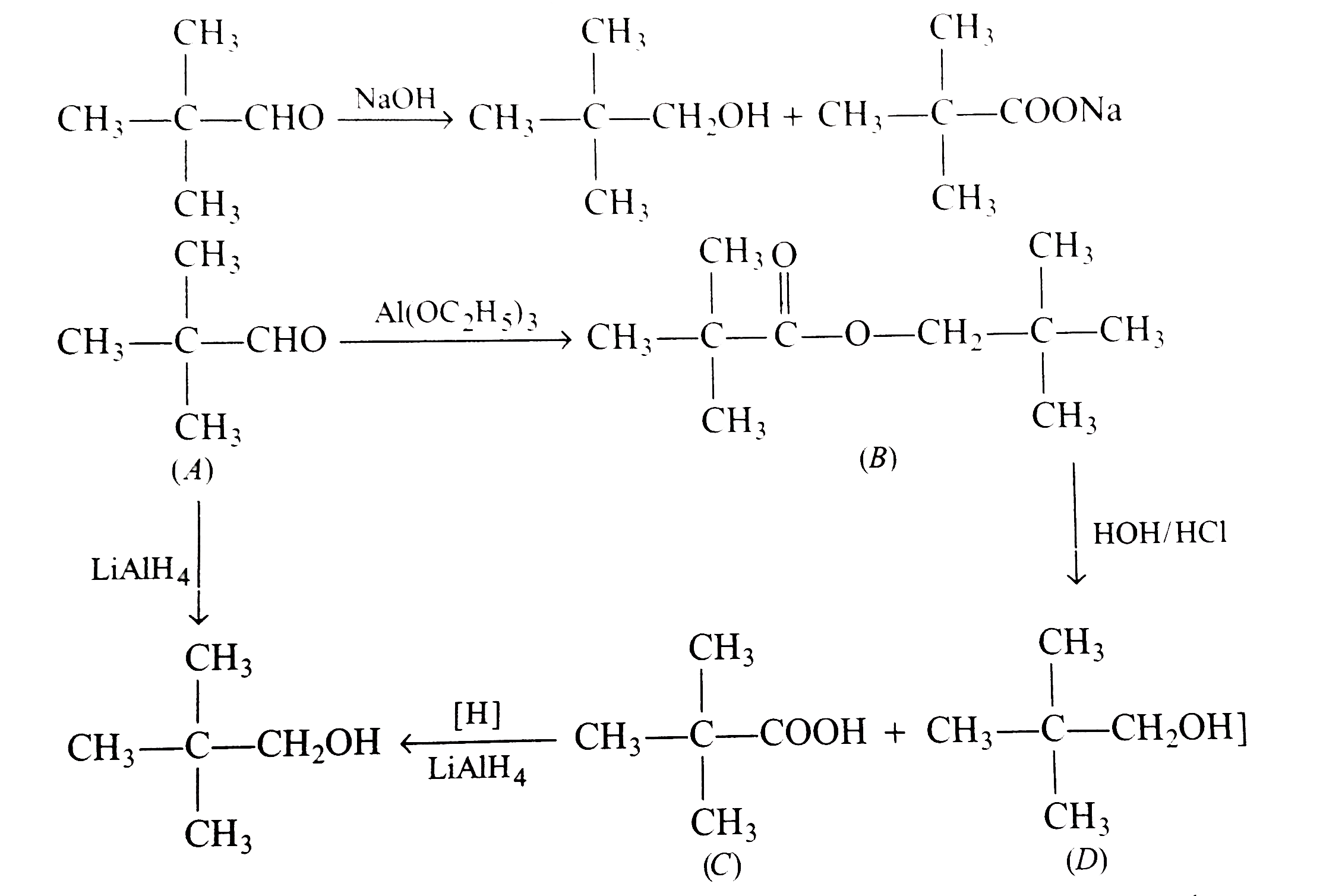
|
|
| 46. |
C_5H_(10) overset(A)to C_5H_(12)O overset(B) to CH_3(CH_2)_3CHO,A and B in the above reactions are _____. |
|
Answer» conc. `H_2SO_4`, hydrolysis , Na-Hg/`H_2O` |
|
| 47. |
C_(5) H_(13) N reacts with HNO_(2) to give an optically active compound . The compound is ……… |
|
Answer» pentan-1- amine `CH_(3) - CH_(2) - CH_(2) -overset(H)overset(|)underset(CH_(3))underset(|)(C)-NH_(2) overset(HONO)(to) CH_(3) - CH_2 - CH_(2) - overset(H)overset(|)underset(CH_(3))underset(|)(C)-OH` |
|
| 48. |
C_(4)H_(9)X shows |
|
Answer» CHAIN ISOMERISM |
|
| 49. |
C_(4)H_(9)X represents |
|
Answer» `1^(@)AND2^(@)R-X` |
|
_E01_135_O01.png)
_E01_135_O02.png)