Saved Bookmarks
This section includes 7 InterviewSolutions, each offering curated multiple-choice questions to sharpen your Current Affairs knowledge and support exam preparation. Choose a topic below to get started.
| 1. |
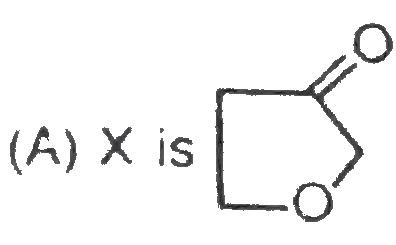
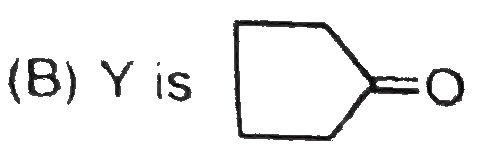
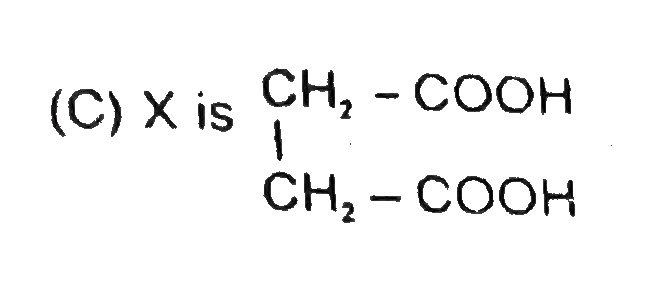
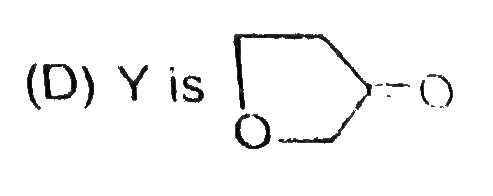
C_4H_6O_4(X)underset((LiAIH_4))overset(LAH)tooverset(HBr)tooverset(NaCN)tooverset(H_3O^(+),CaO,Delta)toYoverset(CaO,Delta)toHexanedioic acid. X and Y are |
|
Answer»

|
|
| 2. |
C_(4)H_(11)N(X)+HNO_(2) to C_(4)H_(10)O(3^(@)"alcohol") hence, (x) will give: |
|
Answer» Carbylamine reaction |
|
| 3. |
C_(4)H_(11)N represents |
|
Answer» `1^(0)` amines |
|
| 4. |
C_(4)H_(10)overset(Cl_(2)hv)rarr underset(("Mono chlorinated products"))(X+Y) The yield of X and Y formed in the above reaction is |
| Answer» Solution :`72:28` | |
| 5. |
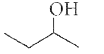
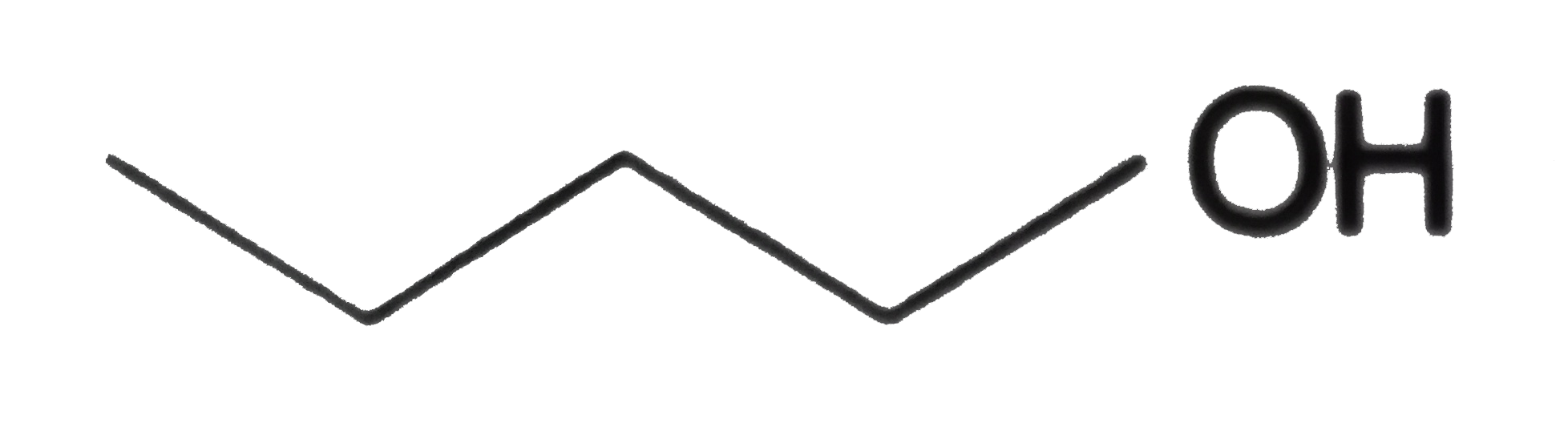
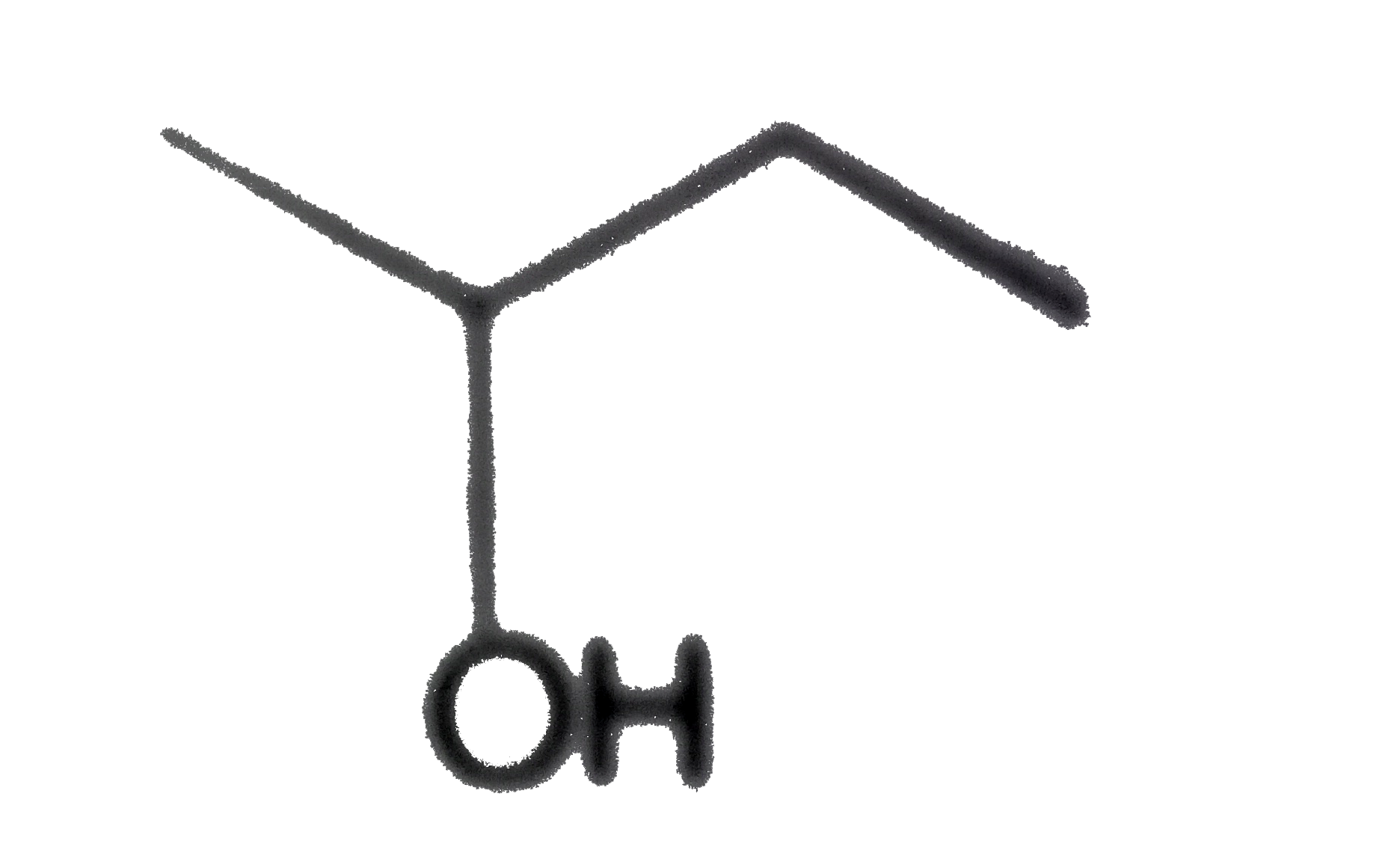
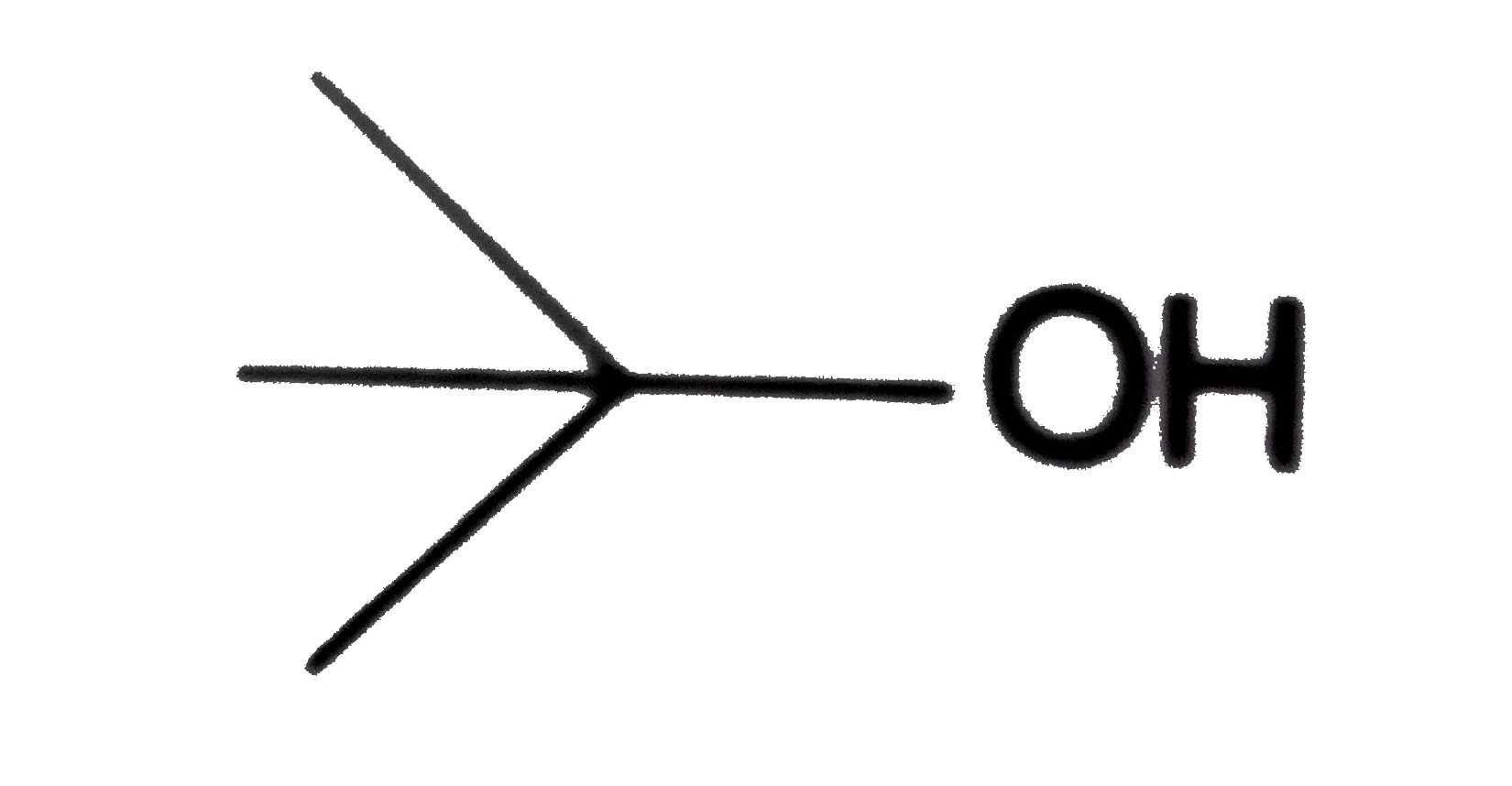
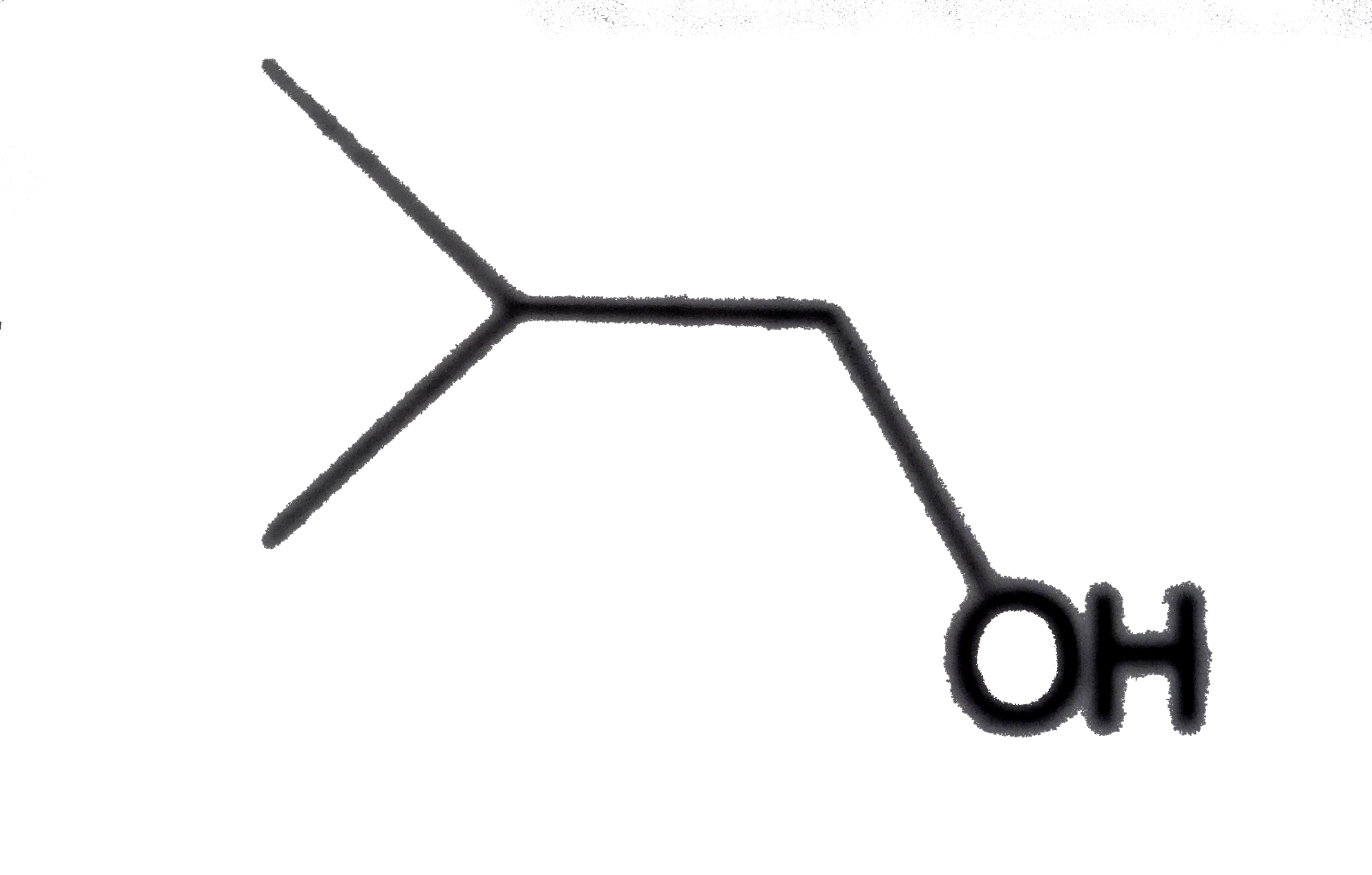
C_(4)H_(10)O underset(H_(2)SO_(4))overset(K_(2)Cr_(2)O_(7))toC_(4)H_(8)O underset("warm")overset(I_(2)//NaOH)to CHI_(3) Here N is |
|
Answer»
So `C_(4)H_(8)O` should have `-underset(O)underset(||)C-CH_(3)` group. `:. C_(4)H_(8)O` can be `CH_(3)CH_(2) - underset(O)underset(||)C-CH_(3)` so , `C_(4)H_(10)O(N)` should be `CH_(3)CH_(2)underset(OH)underset(|)(CH)CH_(3)` |
|
| 6. |
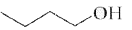
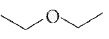
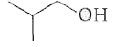
C_(4)H_(10)O has ____metamers. One of them is diethyl ether while the others are_____and_____. |
| Answer» SOLUTION :THREE, METHYL n-propyl ETHER, ISOPROPYL methyl ether. | |
| 7. |
C(4)H_(10)O+PCl_(5)rarrR_(1)Cl+R_(2)Cl+POCl_(3) R_(1)Cl gives halogrom test but R_(2)Cl does not, hence, the original compound of the reaction is : |
|
Answer» ethoxyethane |
|
| 8. |
C_4H_10O+HI overset("Hot")to R_1 - I + R_2 -I R_1-I and R_2-I on alkaline hydrolysis gives alcohols A and B respectively . The compound A and B gives haloform test. The original compound is |
|
Answer»
|
|
| 9. |
C_(4)H_(10)O gives white precipitate immediately with conc. HCl in the presence of anhydrous ZnCl_(2). Alcohol can be |
|
Answer»
`underset("alcohol")underset("Tertiary")(R_(3)COH)overset("Conc. HCl")underset("Anhy. "ZnCl_(2))rarrunderset("immediately")underset("Turbidity appears")(R_(3)"CCl")+H_(2)O` |
|
| 11. |
C_3H_9N represents |
|
Answer» PRIMARY amine |
|
| 13. |
C_(3)H_(9)N cannot represent: |
| Answer» Answer :D | |
| 14. |
C_3H_9Ncan not represent : |
|
Answer» `1^@` amine |
|
| 15. |
C_(3)H_(7)X represents |
|
Answer» `1^(@)AND2^(@)R-X` |
|
| 16. |
C_(3)H_(7)X shows |
|
Answer» OPTICAL ISOMERISM |
|
| 17. |
C_(3)H_(7) Cl overset(KOH(alc.))(rarr) (A) underset(770K)overset(Cl_(2) (g))(rarr) (X).(X) can be: |
|
Answer» Vinyl CHLORIDE `(X) implies "ALLYLIC chlorination" `Cl-CH_(2) - CH= CH_(2)` Allyl chloride |
|
| 18. |
C_(3)H_(6)O underset(Delta) overset(OH^(-)) toMesityl oxide . The C_(3)H_(6) O is |
|
Answer» `CH_(3) - CH_(2) - CHO` |
|
| 19. |
C_(3)H_(6)O shows |
|
Answer» CHAIN ISOMERISM |
|
| 20. |
C_(3)H_(6)O did not give a silver mirror with Tollens' reagent, but gave an oxime with hydroxylamine. It can give positive |
|
Answer» iodoform test |
|
| 21. |
C_(3)H_(8)O underset(K_(2)Cr_(2)O_(7)//H^(+))overset((O))rarr C_(3)H_(6)O overset(I_(2)//NaOH)rarr CHI_(3) In this sequence, the starting compound is |
|
Answer» 1- PROPANOL |
|
| 22. |
C_(3) H_(8)+Br_(2) overset(AlBr_(3)) to A (major product) C_(2)H_(5)ONa+A to B. What is B in above reaction ? |
|
Answer» `CH_(3)CH_(2)CH_(2)OC_(2)H_(5)` `C_(2)H_(5)Ona+CH_(3)-CHBrCH_(3) to CH_(3)CH=CH_(2)` |
|
| 23. |
C_(2)H_(6)(g) + 3.5O_(2)(g) rarr 2CO_(2)(g) + 3H_(2)O(g) DeltaS_("vap") (H_(2)O,l) = "x"_(1)calK^(-1) (boiling point =T_(1)) DeltaH_(f)(H_(2)O,l) = "x"_(2) DeltaH_(f)(CO_(2)) = "x"_(3) DeltaH_(f)(C_(2)H_(6)) = "x"_(4) Hence , DeltaH for the reaction is- |
|
Answer» `2"x"_(3) + 3"x"_(2)-"x"_(4)` `DeltaH_(f)(H_(2)O,g) = DeltaH_(f)(H_(2)O,I) + DeltaH_("vap") = "x"_(2) + "x"_(1)"T"_(1)` `DeltaH_("reaction") = 2DeltaH_(f) (CO_(2),g) + 3DeltaH_(f)(H_(2)O,g) - DeltaH_(f)(C_(2)H_(6),g)` `""=2"x"_(3) + 3("x"_(2) + "x"_(1)"T"_(1)) - "x"_(4)=2"x"_(3) + 3"x"_(2) + 3"x"_(1)"T"_(1) - "x"_(4).` |
|
| 24. |
C_(2)H_(5)OH+SOCl_(2) overset("Pyridine")rarr x + y + z, in the reaction x, y and z respectively are |
|
Answer» `C_(2)H_(5)Cl_(2), SO_(2), HCL` 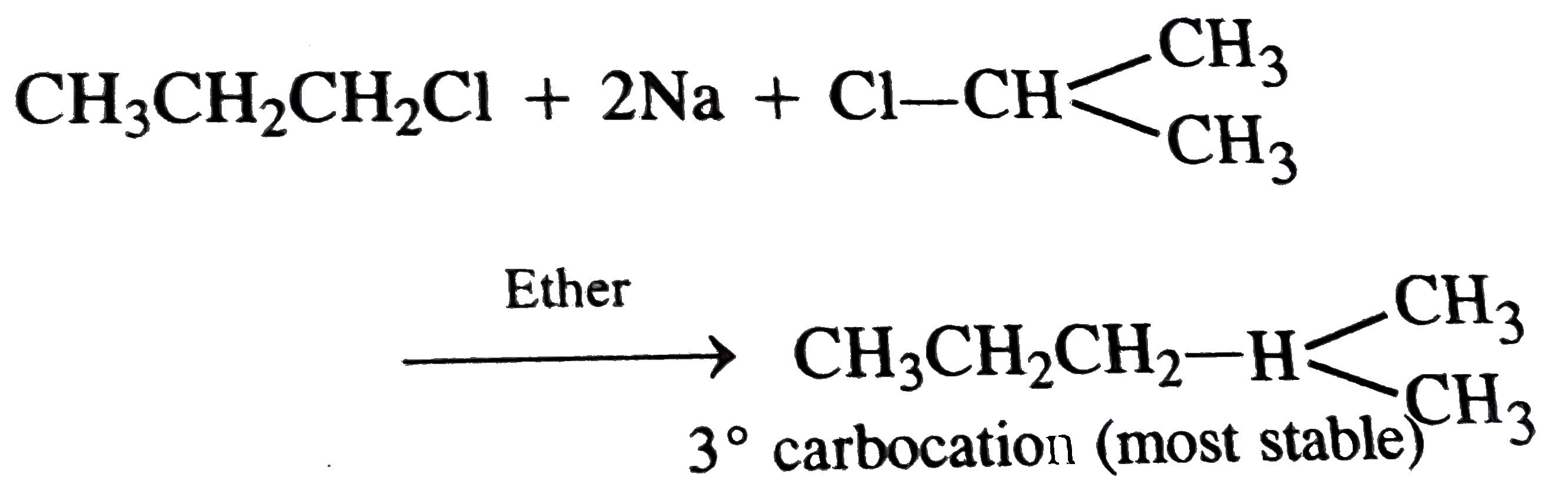
|
|
| 25. |
In the following reaction, X and Y respectively are C_(2)H_(5)OH overset(KMnO_(1)//II^(+))toX overset(y)underset(H_(2)SO_(1)//Delta)to CH_(3)COOC_(2)H_(5) |
|
Answer» `CH_(3)OH , C_(2)H_(5)OH` |
|
| 26. |
In the following reaction X and Y respectively are C_2 H_5 OH overset(KMnO_4//H^(o+))to X underset(H_2 SO_4)overset(Y)to CH_3 COOC_2 H_5 |
|
Answer» `CH_3OH , C_2H_5OH` |
|
| 27. |
C_(2)H_(5)OH overset(K_(2)Cr_(2)O_(7)//H_(2)SO_(4))to A overset(K_(2)Cr_(2)O_(7)//H_(2)SO_(4))to B A and B in the above reaction are |
|
Answer» ACETONE and ACETALDEHYDE |
|
| 28. |
C_2H_5 OHunderset(300^@C) overset(Cu)to CH_3 CHO The aboveprocess is |
|
Answer» REDUCTION |
|
| 29. |
C_(2)H_(5)OH+KMnO_(4)rarrHC_(2)H_(3)O_(2)+MnO_(2)+KOH+H_(2)O is the unbalanced equation if 5g of ethanol & excess amount of aqueous KMnO_(4) are reacted and 5.5g of HC_(2)H_(3)O_(2) result. What is the percent yield in the nearest integer? [Given: Atomic mass of H = 1, C = 12, O = 16] |
|
Answer» `3XX"moles of "C_(2)H_(5)OH=3xx"moles of "HC_(2)H_(3)O_(2)` `"moles of "HC_(2)H_(3)O_(2)=(5)/(46)"(Theoretical)"` `"moles of "HC_(2)H_(3)O_(2)" (experimental)"=(5.5)/(60)` `"% YIELD "=(5.5)/(60xx5)xx46xx100=84%` |
|
| 30. |
C_(2)H_(5)OH overset("Conc. "H_(2)SO_(4))underset(413K)rarr A, A will be : |
|
Answer» `CH_(2)=CH_(2)` |
|
| 31. |
C_(2)H_(5)OH+Na" (Metal)"rarr X, X+C_(2)H_(5)Br overset("Williamson reaction")rarrY. What are X and Y? |
|
Answer» Solution :`C_(2)H_(5)OH+Na RARR C_(2)H_(5)ON a:C_(2)H_(5)Br overset("Williamson")underset("reaction")rarr C_(2)H_(5)-O-C_(2)H_(5)` Ethanol on heating with SODIUM gives sodium ethoxide, in which sodium ethoxide is further reacted with BROMO ETHANE to give ethoxy ethane. |
|
| 32. |
C_2H_5OH has higher B.P. than, C_2H_5-SH due to |
|
Answer» association |
|
| 33. |
C_(2)H_(5)OH + HONO_(2) to A + H_(2)O. "A" is |
|
Answer» Ester |
|
| 34. |
C_2 H_5 OH +HCI underset( 200^@ C)overset(ZnCl_2) toC_2 H_5 Cl+H_2OIn this reaction, anhydrous ZnCl_2 acts as |
|
Answer» DEHYDRATING AGENT |
|
| 35. |
C_2H_5OH cannot be dried by anhydrous CaCl_2 because : |
|
Answer» `C_2H_5OH` is SOLUBLE in water |
|
| 36. |
C_2H_5OH can be distinguished from CH_3OH: |
| Answer» Answer :D | |
| 37. |
C_(2)H_(5)OH can be converted in to C_(2)H_(5)Cl by reacting with |
| Answer» Answer :D | |
| 38. |
C_(2)H_(5)OH and CH_(3)COOR can be separated from CH_(3)CHO using |
|
Answer» TOLLEN's reagent  `C_(2)H_(5)OH` and `RCOOC_(2)H_(5)` do not react with `NaHSO_(3)`. |
|
| 39. |
C_2H_5OH+Aoverset(H^+)hArr C_2H_5COOC_2H_5 + C_2H_5COOH The compound 'A' is |
|
Answer» `C_2H_5COCl` |
|
| 40. |
C_(2)H_(5)OH and C_(6)H_(5)OH can be distinguished by |
|
Answer» `Br_(2) + H_(2)O` `C_(2)H_(5)OH` gives iodoform test with `I_(2)+NaOH` solution while phenol does not give YELLOW ppt. of iodoform. `C_(2)H_(5)OH + 4I_(2)+ 6NaOH overset(Delta)to underset("iodoform")(CHI_(3))+ NCOONa+5NaI + 5H_(2)O` `C_(6)H_(5)OH + I_(2) + NaOH to ` No REACTION `C_(6)H_(5)OH` reacts with neutral `FeCl_(3)` solution to give purple colour while `C_(2)H_(5)OH` does not give any colour with neutral `FeCl_(3)` solution. |
|
| 41. |
C_(2)H_(5).OC_(2)H_(5)to underset("red color") underset(darr KCNS) underset( darr Fe^(2+)) (A+B) Which is not true for above reactions? |
|
Answer» `A` & `B` are explosives |
|
| 42. |
C_(2)H_(5)O-overset(O)overset(||)C-OC_(2)H_(5)overset(2CH_(2)MgBr)to A Product A formed can |
|
Answer» GIVE iodoform test |
|
| 43. |
C_(2)H_(5)NH_(2)underset("reagent")overset("Tilden")to(i)overset(NH_(3))to(ii)underset(HCl)overset(NaNO_(2))to(iii). The product (iii) can be |
|
Answer» Alcohol -CONVERSION of (II)`to`(III) in value diazzolization.  `R^(o+)+Cl^(ө)toR-Cl("Alkyl chloride")` `R^(o+)+HOHtoR-Cl("Alcohol")` `R^(o+)+ROHtoR-O-R("Ether")` `R^(o+)+overset(Theta)(N)O_(2)toR-NO_(2)("REACTION")` (where `-R=-C_(2)H_(5)` in above) |
|
| 44. |
C_(2)H_(5)NH_(2)underset("reagent")overset("Tilden")rarr(i)overset(NH_(3))rarr(ii)underset(HCl)overset(NaNO_(2))rarr(iii) |
| Answer» Solution :N//A | |
| 45. |
C_(2)H_(5)NH_(2) overset(HNO_(2))(rarr) A overset(PCl_(3))(rarr)B overset(NH_(3))(rarr) C Recognise the compound C from the following |
|
Answer» Ethylamine |
|
| 46. |
C_(2)H_(5)NH_(2) and CH_(3)NHC_(2)H_(5) canbe distinguishedby |
|
Answer» Hoffmann'sreaction |
|
| 47. |
C_(2)H_(5)Mgl reacts with HCHO to form last product |
|
Answer» `CH_(3)CHO` 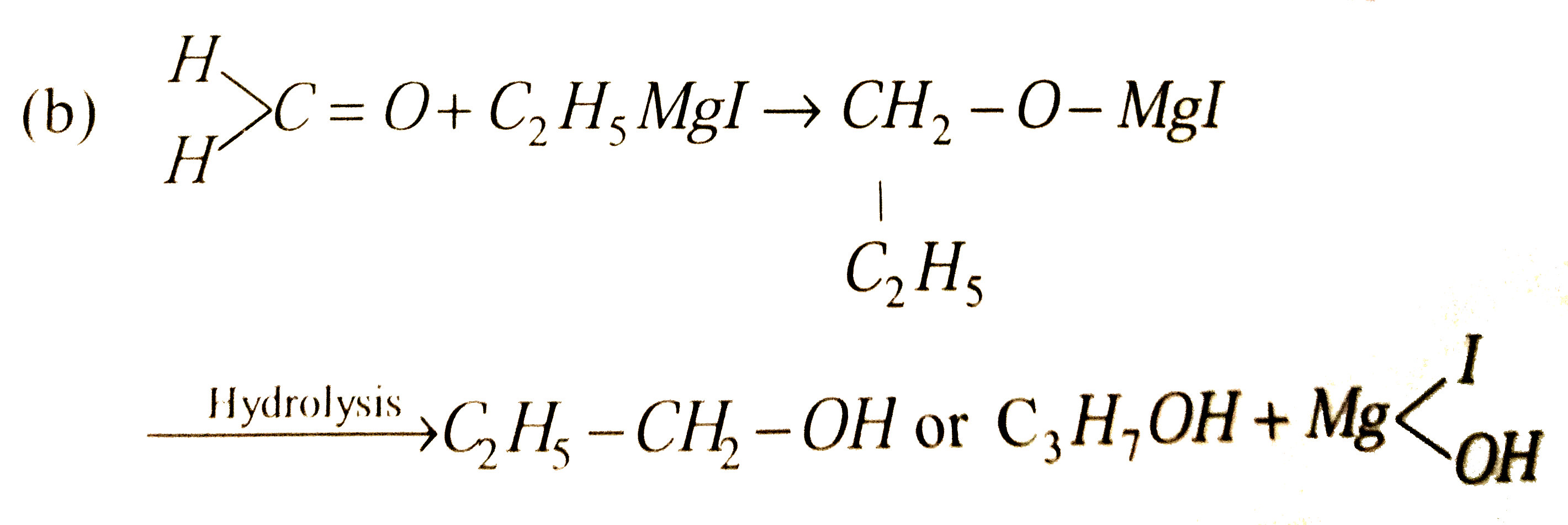
|
|
| 48. |
C_2H_5Ioverset(NaCN)toDoverset(HO^-)underset("partial hydrolysis")toEoverset(Br_2)underset(NaOH)toF. (ii) Write down the structure of ala-gly. |
| Answer» SOLUTION :`DimpliesC_2H_5CN" "EimpliesC_2H_5CONH_2" "FimpliesC_2H_5NH_2` | |
| 49. |
C_2H_5Ioverset(NaCN)toDoverset(HO^-)underset("partial hydrolysis")toEoverset(Br_2)underset(NaOH)toF. (i) Why do glucose and fructose give same osazone product? |
Answer» SOLUTION :
|
|