Saved Bookmarks
This section includes 7 InterviewSolutions, each offering curated multiple-choice questions to sharpen your Current Affairs knowledge and support exam preparation. Choose a topic below to get started.
| 2. |
Antipyretics are medicinal compounds which |
|
Answer» REDUCE fever |
|
| 3. |
Antimony with hot conc. HNO_(3), produces oxides and behave like |
|
Answer» metal |
|
| 4. |
Antioxidants are called sacrificial chemicals. Comment. |
|
Answer» Solution :Antioxidants retard the ACTION of oxygen on FOOD and preserve it. Antioxidants are more reactive towards oxygen than the food MATERIALS they protect. Hence antioxidants are called sacrificial chemicals. |
|
| 5. |
Antimony with hot conc. H_2SO_4, produced sulphates and behave like |
|
Answer» metal |
|
| 6. |
Antimony does not show allotropy. |
|
Answer» |
|
| 7. |
Antimony occurs mainly in form of: |
|
Answer» Sulphide |
|
| 8. |
Antimony burns in chlorine to form |
|
Answer» `SbCl_3` |
|
| 10. |
Antimicrobial drugs prevent the pathogenic effect of ...... |
|
Answer» Bacteria |
|
| 11. |
Antimony behaves as a non-metal in |
|
Answer» conc. HCl |
|
| 12. |
Antimicrobial drugs include (i) antiseptics(ii) antibiotics (iii) disinfectants |
|
Answer» (i) and (ii) |
|
| 13. |
Antiknoking agentusedfor unleadedgasoline is : |
|
Answer» BXT |
|
| 14. |
Antihistamines are not helpful |
|
Answer» in curing nasal ALLERGIES |
|
| 15. |
Antiknock compound is : |
|
Answer» LEAD TETRA acetate |
|
| 16. |
Antiferromagnetic substance possess: |
|
Answer» Low magnetic MOMENT |
|
| 17. |
Antichlor is a compound |
|
Answer» Which absorbs chlorine |
|
| 18. |
Antidepresent drugs function by ______. |
|
Answer» DECREASING the LEVEL of noradrenaline. |
|
| 19. |
Antibiotics may be defined as the drugs, which______. |
|
Answer» only retard the GROWTH of MICRO-ORGANISM |
|
| 20. |
Antibiotics are the chemicals secreted by the micro organisms which either inhibits the growth (or) destroy the pathogenic bacteria. Previously chloramycetin used to be a product of fermentation but at present synthetic method has replaced it The first viral disease detected in human being? |
|
Answer» YELLOW FEVER |
|
| 21. |
Antibodies are |
|
Answer» Carbohydrates |
|
| 22. |
Antibiotics have either ________________ effect or ________________ effect. |
| Answer» SOLUTION :KILLING, INHIBITORY | |
| 23. |
Antibiotics are the chemicals secreted by the micro organisms which either inhibits the growth (or) destroy the pathogenic bacteria. Previously chloramycetin used to be a product of fermentation but at present synthetic method has replaced it A drug effective in the treatment of pneumonia, bronchitis etc is |
|
Answer» Penicillin |
|
| 24. |
Antibiotics are the chemicals secreted by the micro organisms which either inhibits the growth (or) destroy the pathogenic bacteria. Previously chloramycetin used to be a product of fermentation but at present synthetic method has replaced it Streptomycin is effective in the treatment of |
|
Answer» MALARIA |
|
| 25. |
Antibiotic, penicillin G is |
|
Answer» An ALKALOID |
|
| 27. |
Anti-oxidants mainly work by ____ |
|
Answer» REMOVING HYDROGEN |
|
| 28. |
Anti-Markownikoff addition of HBr is not observed in : |
|
Answer» Propene |
|
| 29. |
"Anti-Markovnikov addition of HBr is not observed in |
|
Answer» propene |
|
| 30. |
Anti-histamine among the following is |
|
Answer» BROMPHENIRAMINE |
|
| 31. |
Anti haemorrhagic vitamin is |
|
Answer» A |
|
| 32. |
Anti-ferromagnetic solids has ......... |
|
Answer» ZERO magnetic MOMENT |
|
| 33. |
Anthrance has a resonance energy of 351 kJ mol^(-1) and the resonance energy of benzence is 150.5 kJ mol^(-1). Which of the two is more easily oxidised or reduced ? |
Answer» Solution :Anthrance 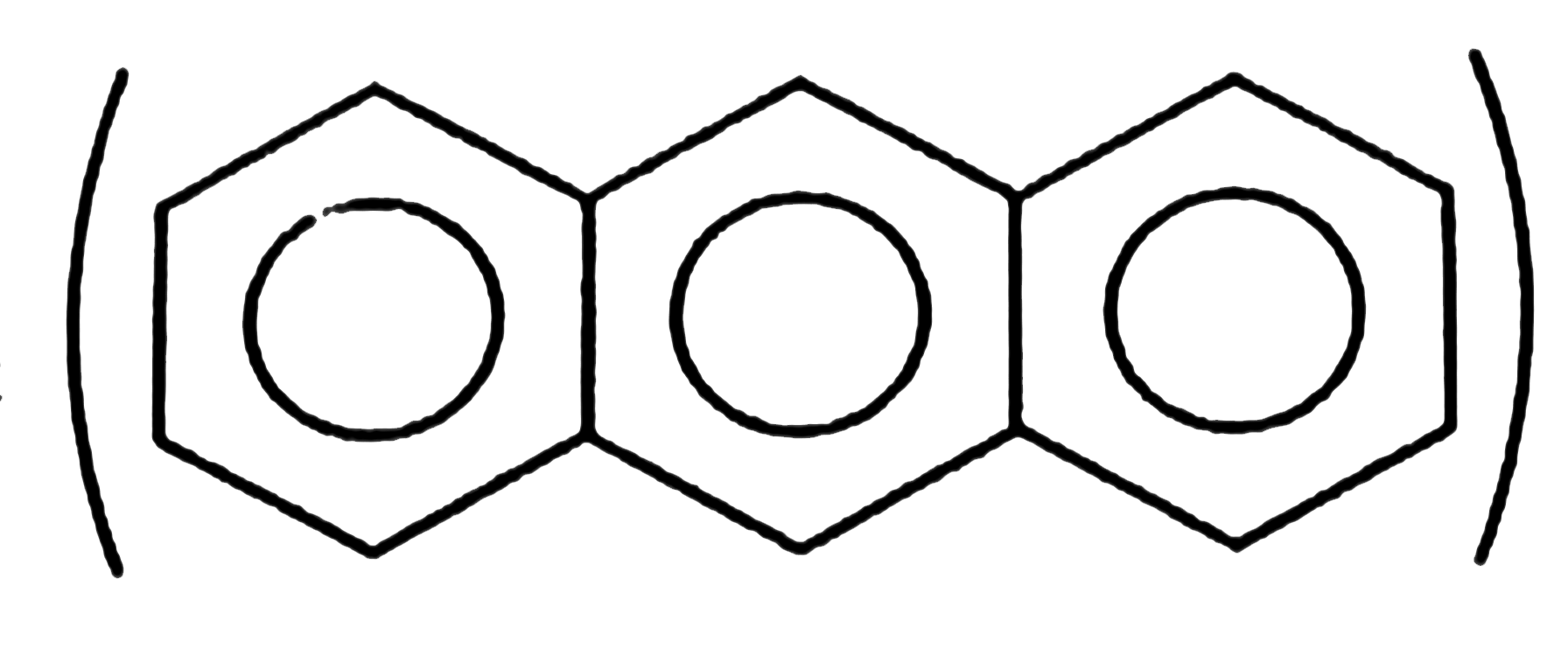 has threee benzene RINGS. has threee benzene RINGS. `R.E//"rings" = 351//3 = 117 kJ mol^(-1)` `R.E`. Of benzence `= 150.4` `R.E`. Of anthrance per ring is less than that of benzene, so antracene is less stable (or more reactive) thanbenzene. More the `R.E`, morestable is the compound. HENCE, anthracene is more easily oxidised and reduced. |
|
| 34. |
Anthracene can be purified by |
|
Answer» Distillation (a) isnot USED because anthracene is solid. (C ) is not used because flitration is used only to remove suspended impurity. (d ) is not correct because it is used in case of LIQUIDS. |
|
| 35. |
Anthracene can be oxidised anodically to anthraquinone. What weight of anthraquinone can be produced by the passage of a current of 1 amp for 60 minutes if the current efficiency is 100% |
|
Answer» EQ. wt. of `C_(14)H_(8)O_(2) = ("mol. Wt.")/(6)` |
|
| 36. |
Antacids are not drugs because ........ |
|
Answer» they give relief only from the symptoms but do not CONTROL the CAUSES |
|
| 37. |
Answer the questions given below with regard to vitamin D. (i) Main source (ii) Function (iii) Diseases caused due to its deficiency. |
|
Answer» Solution :(i) · Main source : Fish liver oil, milk, EGG yolk, ( exposure to SUNLIGHT) (II) FUNCTION : Absorption and m~intenance of calcium (iii) Deficiency disease : Rickets (children), Osteomalacia (adults) |
|
| 38. |
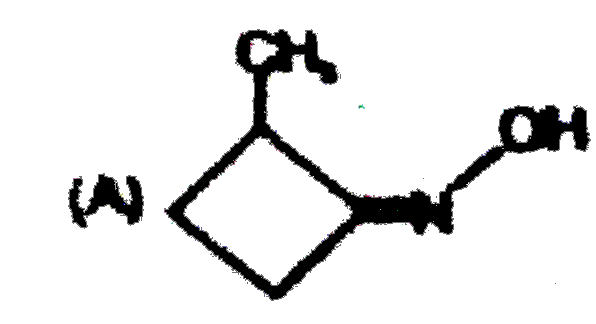
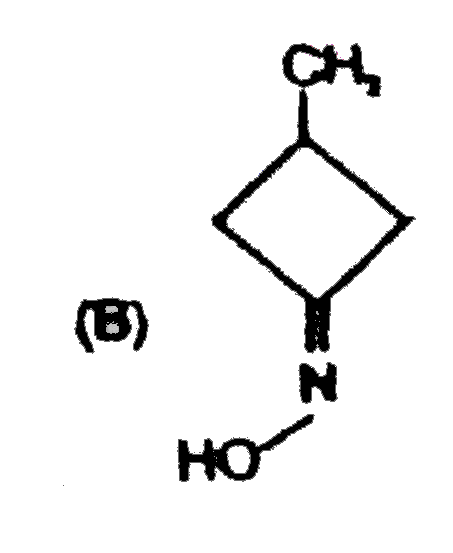
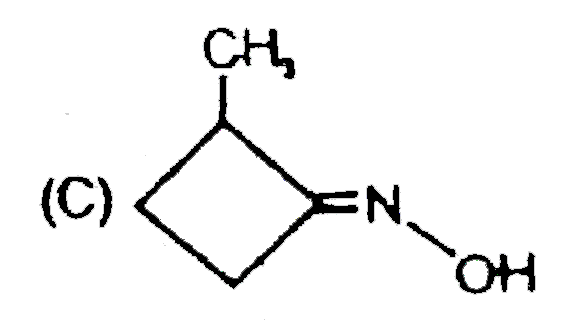
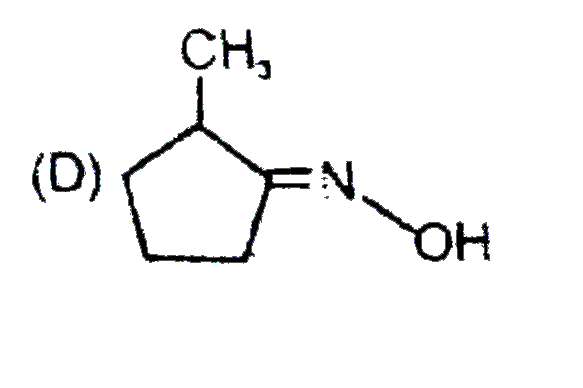
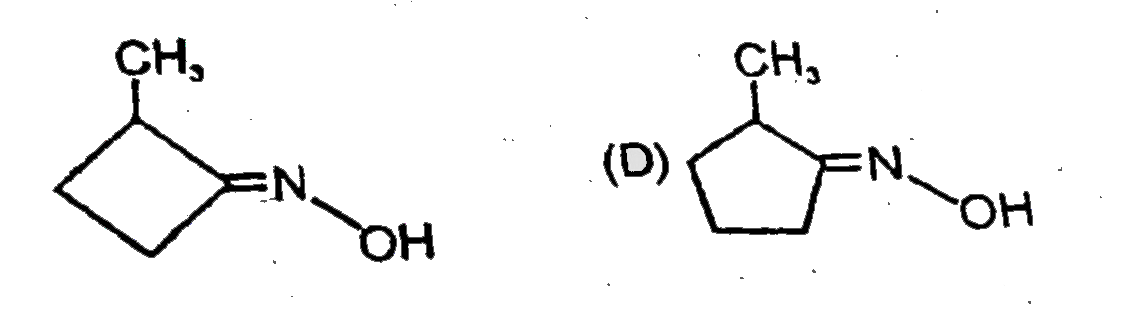
Answer the questions on the basis of following observations The compound (S) is : |
|
Answer»
|
|
| 39. |
Answer the questions (given below) which are based on the following diagram. Vapour pressure plots of benzene-toluence mixture at 20^(@)C. Solution of benzene and toluence are ideal. Raoult's law is valid for both components over the entrie range of concentration. There is deviation from ideal behaviour if mixture contains: |
|
Answer» n-hexane and n-heptane |
|
| 40. |
Answer the following : Write the IUPAC name of [Pt(NH_(3))_(2)Cl_(2)]Cl_(2). |
| Answer» SOLUTION :Diamminedichloridoplatinum(IV) CHLORIDE. | |
| 41. |
Answer the following : Why does fluorine not play the role of a central atom in interhalogen compounds ? |
|
Answer» Solution :FLUORINE does not PLAY the ROLE of central ATOM in interhalogen COMPOUNDS. For an atom to play the role of central atom, it has to be bigger and more electropositive than the other atom in an interhalogen compound. Fluorine is the smallest and most electronegative of all the halogens. Hence, it cannot play the role of central atom. |
|
| 42. |
Answer the following with reasoning: (i) Why all the acid derivatives (RCOG) [G may be -X (acid halides), -NH_(2) (amides), OR' (esters) or -OCOR (anhydrides)] are studied as a unit? (ii) Why the C-G bond in acid derivatives is expected to be shorter and stronger than in alkyl derivatives (R-G)? (iii) Why esters have lower boiling points than (a) ketones and (b) acids of comparable molecular masses? (iv) Amongst the following amides, CH_(3)CONH_(2), CH_(3)CONHCH_(3) and CH_(3)CON(CH_(3))_(2), why acetamide has the highest boiling point and CH_(3)CON(CH_(3))_(2)the minimum boiling point? (v) How the order of reactivity of the acid derivatives is related to the base strength of the leaving groups? (vi) Why cannot HCl convert RCOOHto RCOCl? (vii) Why does an acyl chloride undergo nucleophilic attack more rapidly than does an alkyl chloride? (viii) What is the essential difference between nucleophilic attack on the of an aldehyde or ketone andon an acyl derivative? (ix) Why a ketone is not isolated from the reaction of an ester with one equivalent of RMgX? (x) Amongst the following esters, CH_(3)COOC_(4)H_(9),CH_(3)COOC_(3)H_(7),CH_(3)COOCH(CH_(3))_(2) and CH_(3)COOCH_(3) : why CH_(3) COOCH_(3) is most readily hydrolysed with NaOH? (xi) Why formic anhydride cannot be prepared by heating formic acid? (xii) Primary and secondary amides exist as dimers in the solid and pure liquid state. (xiii) Why urea is basic? (xiv) Why guanidine is a strong monoacid base? (xv) Why melting point of primary amide is higher than secondary and tertiary amides? |
|
Answer» SOLUTION :(i) Most of the acid derivatives are interconvertible and all can be prepared from the corresponding carboxylic acid. (ii) In RCOG, C USES `sp^(2)`-hybrid orbital to form bond with G while in R-G, C uses `sp^(3)`-hybrid orbital to form bond with G. The increase in s-character makes the bond shorter and stronger. The presence of resonance in acid derivatives makes the molecule more stable. (iii) The positive charge on the carbon of the carbonyl group in esters is comparatively less than ketones. Hence, weaker dipole-dipole attraction is present in esters than in ketones resulting in lower boiling points in esters. Acids have strong intermolecular hydrogen bonds which are not present in esters. Hence, boiling points of esters are less than acid. (iv) Dimethyl acetamide has no hydrogen on nitrogen atom for intermolecular hydrogen bonding, thus it has lowest boiling point. Acetamide has two hydrogen atoms and extensively hydrogen bonded compound resulting in the highest boiling point while methyl acetamide has only one hydrogen atom and less hydrogen bonding. Its boiling point is between the boiling points of acetamide and dimethyl acetamide. (v) The order of reactivity decreases as the base strength of the leaving group increases, i. e , `Cl^(-) lt RCOO^(-) ltRO^(-) lt H_(2)N^(-)`. (vi) If the reaction were to occur, the acyl chloride and water products would react rapidly with each other to form starting materials. (vii) NUCLEOPHILIC attack on the tetrahedral carbon of RX involves a hindered transition state and to permit the attachment of the nucleophile, a sigma bond must be partly broken. In `CH_(3)COCL` the nucleophilic attack on 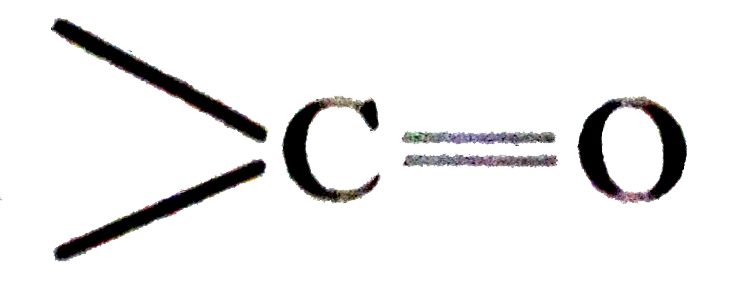 group involves an unhindered transition state leading to a tetrahedral intermediate. Thus, nucleophilic attack on acid chloride occurs readily. group involves an unhindered transition state leading to a tetrahedral intermediate. Thus, nucleophilic attack on acid chloride occurs readily. (VIII) In each case, the addition step leads to a tetrahedral intermediate. The intennediate from the carbonyl compound would have to eliminate the very strong bases `H:^(-)` or `R:^(-)` from RCHO and RCOR' respectively to restorethe C=O. The intermediate from the acyl derivative easily eliminates `G :^(-)`. (ix) A ketone is formed initially. As it is more reactive than ester to RMgX, tertiary alcohol is formed. (x) The size of the R determines the ease of hydrolysis. The larger the size of R group, the greater will be the sterie effect. Hence, the `CH_(3)COOCH_(3)` would be hydrolysed most readily. (xi) Formic acid on heating undergo intramolecular dehydration rather than intermolecularly. `HCOOHtoH_(2)O+CO` (xii) Dimer formation is by H-bonding. 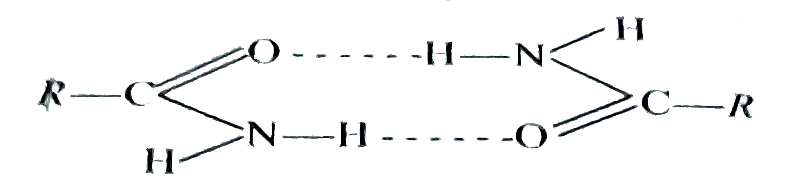 (xiii) Urea is a hybrid of the following resonance forms. `H_(2)N-overset(O)overset(||)C-NH_(2)harrH_(2)overset(+)N=overset(O^(-))overset(|)C-NH_(2)harrH_(2)N-overset(O^(-))overset(|)C=overset(+)NH_(2)` Urea is basic because in resonance hybrid the oxygen atom carries a negative charge and can combine with a proton to form a new -OH bond. The positive ion thus formed is also stabilized by resonance. `H_(2)overset(+)N=overset(OH)overset(|)C-NH_(2)harrH_(2)N-overset(OH)overset(|)C=overset(+)NH_(2)harrH_(2)N-overset(overset(+)OH)overset(||)C-NH_(2)` (xiv) It can be explained by resonance stabilization of guanidinium ion.  (xv) The melting point in primary amides is highest due to the presence of hydrogen bonding. Therefore, melting point decreases in the order: primary amide `gt` SECONDARY amide `gt` tertiary amide `gt` quaternary amide |
|
| 43. |
Answer the following : Why do we heat the solution of oxalic acid in redox tetration against KMnO_(4) ? |
| Answer» Solution :Higher the temperature FASTER the reaction. This is because increasing the temperature increases the Kinetic energy, and hence more molecules WOULD have energy greater than the activation energy resulting in increased rate and completion of the reaction. Hence OXALIC acid should be heated in redox titration against `KMnO_(4)`. | |
| 44. |
Answer the following : Why do noble gases have very low boiling points ? |
|
Answer» Solution :Noble gases have very LOW boiling points. The ATTRACTIVE forces between the atoms of noble gases are WEAK van DER Waal.s forces. There are no electronic attractions. Moreover, these gases are monoatomic and, therefore, have small surface area which further reduce the forces of attraction. Thus, they have very low boiling points. |
|
| 45. |
Answer the following : What is the basicity of H_2SO_4 and why? |
Answer» Solution :BASICITY of `H_2PO_4` is 2.It can be explained by its structure . 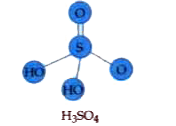 The hydrogens in OH only are REPLACEABLE. As there are two-OH groups in the MOLECULE, the basicity is 2. |
|
| 46. |
Answer the following questions with respect to the compound NO[BF_4] (P)Bond order of the part underlined. (Q)Total number of sigma bonds in the compound. (R)Total number of pi bonds in the compound . |
|
Answer» (P)Molecular orbital electronic configuration , `NO^(+)` is derivative of `O_2`, so MOT configuration is : `sigma1s^2 SIGMA^(**)1s^2sigma2s^2 sigma^(**)2s^2sigma2p_x^2 pi2p_y^2=pi2p_z^2` ( x is taken as molecular axis) Bond order =`(10-4)/2=3` One `sigma` bond are two `pi` bonds. (Q)NUMBER of `sigma` bonds in `NO^+` is one and in `BF_4^-` are four. So total number of `sigma` bonds are five. 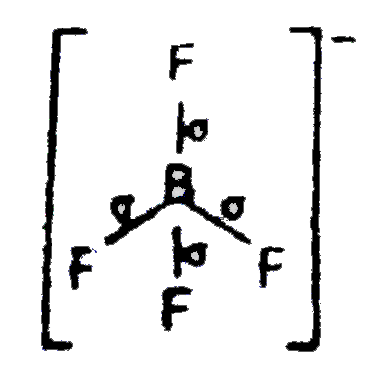 (R)Number of `pi` bonds is `NO^+` are two. (S) 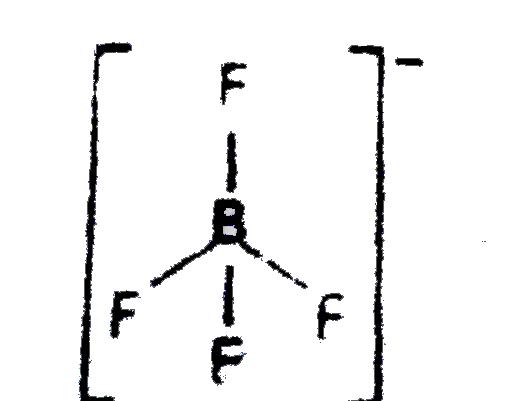 Steric number of CENTRAL atom boron is 4+0=4, so its hybridisation is `sp^3` and thus the number of hybrid ORBITALS involved in `sp^3` hybridisation is four. |
|
| 47. |
Answer the following questions :Which neutral molecule would be isoelectronic with ClO^(-) ? |
|
Answer» Solution :`ClF` is isoelectronic (same number of electrons) with `ClO^(-)`. Number of electrons in the two COMPOUNDS is CALCULATED as under: `ClO^(-) = 17 + 8 + 1 =26` `ClF=17 + 9 = 26` . |
|
| 48. |
Answer the following questions : Of Bi(V) and Sb(V), which may be a stronger oxidising agent and why? |
| Answer» SOLUTION :Bi(V) is a STRONGER oxidising agent. After oxidising action, Bi(V) will be reduced to Bi(III) state. As we move down a group, stability of +3 state GOES on increasing. Thus, Bi(V) will be a stronger oxidising agent because it will PROVIDE more stable Bi(III) state. | |
| 49. |
Answer the following questions : (i) Why do soaps not work in hard water? (ii) What are the main constituents of dettol? (iii) How do antiseptics differ from disinfectants? |
|
Answer» Solution :(i) Hard WATER contains calcium and magnesium ions. These ions form insolubIe calcium and magnesium soaps respectively when sodium or potassium soaps a re dissolved in hard water. `underset("Sope")(2C_17H_35)COONa+CaCl_2to2NaCl+underset("stearate (Soap)")underset("Insoluble calcium")((C_17H_35COO)_2)CA` These insoluble soaps separate as scum in water and are useless as cleansing agents. (ii) The main constituent of dettol are chloroxylenol and terpineol of in a suitable solvent. (iii) Antiseptics are the chemical substances which are used to either kill or prevent the GROWTH of micro-organisms. These are not harmful to living tissues and can be SAFELY applied on wounds, cuts, diseased skin surfaces. For EXAMPLE, dettol, savlon, furacin, soframycin, etc. Disinfectants are the chemical substances which kill micro-organisms but they cannot be applied on living tissues. Examples : Phenol and chlorine. |
|
| 50. |
Answer the following questions : (i) Which element in the first series of transition elements does not exhibit variable oxidation states and why? (ii) Why do actinoids, in general, exhibit a greater range of oxidation states than the lanthanoids ? |
|
Answer» Solution :(i) SCANDIUM does not EXHIBIT variable VALENCY. It shows +3 oxidation state only. This is because after losing 3 electrons, it attains stable noble GAS structure. (ii) The energies of 5f, 6d and 7s are comparable. So all of these electrons TAKE part in bond formation. Therefore, actinoids, in general, exhibit a greater range of oxidation states. |
|