Saved Bookmarks
This section includes 7 InterviewSolutions, each offering curated multiple-choice questions to sharpen your Current Affairs knowledge and support exam preparation. Choose a topic below to get started.
| 2. |
Carboxylic acid group can be tested by all the following tests except |
|
Answer» ferric CHLORIDE SOLUTION test |
|
| 3. |
Carboxylic acid donot give characteristic property of |
|
Answer» R - group |
|
| 4. |
Carboxylic acid dissolve in aq. NaOH because the acid undergo : |
|
Answer» PROTONATION |
|
| 5. |
Carboxylic acid can |
|
Answer» decompose CARBONATE and evolve `CO_(2)` |
|
| 7. |
Carboxy radicals formed from benzoyl peroxide on_____________ gives phenyl radical. |
|
Answer» DEACYLATION |
|
| 8. |
Carborundum is the commercial name of : |
|
Answer» `Al_2O_3` |
|
| 9. |
Carborandum and dry ice are _____and_____type of crystal respectively |
| Answer» SOLUTION :COVALENT and MOLECULAR | |
| 10. |
Carbonyl group undergoes : |
|
Answer» Electrophilic ADDITION REACTION |
|
| 11. |
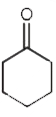
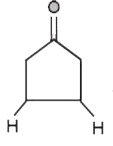
Carbonyl group show characteristic reaction of nucleophilic addition in which nucleophile attack in rate determing step on carbonyl carbon. Which of the reactant show geometrical isomerism when it react with hydrazine (NH_(2)–NH_(2)) |
|
Answer»
|
|
| 12. |
Carbonyl group show characteristic reaction of nucleophilic addition in which nucleophile attack in rate determing step on carbonyl carbon. Which P^(H) is suitable for oxime formation |
|
Answer» `4-5` |
|
| 13. |
Carbonyl group in aromatic aldehyde and ketone is |
|
Answer» <P>o-DIRECTING |
|
| 14. |
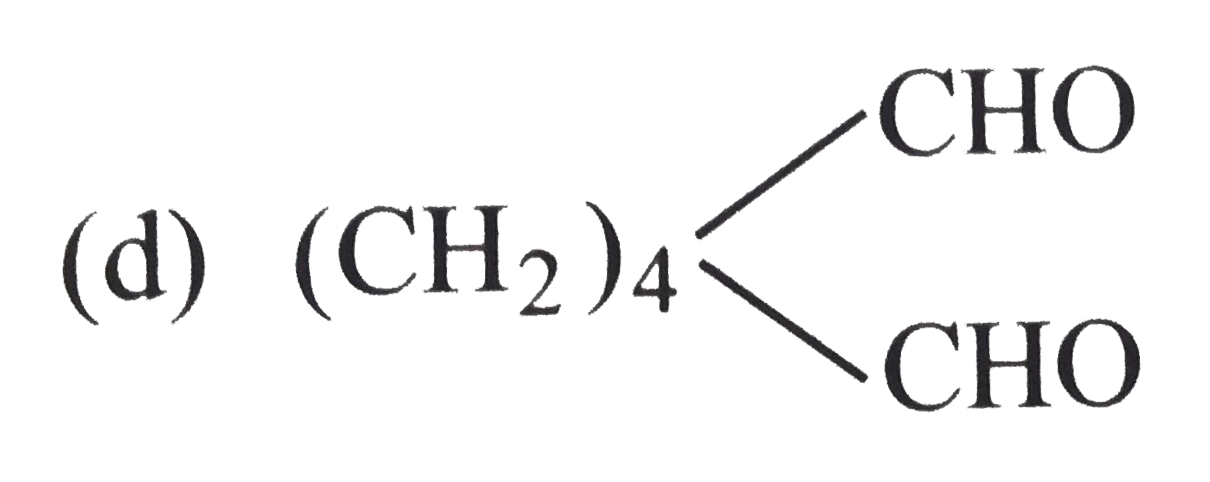
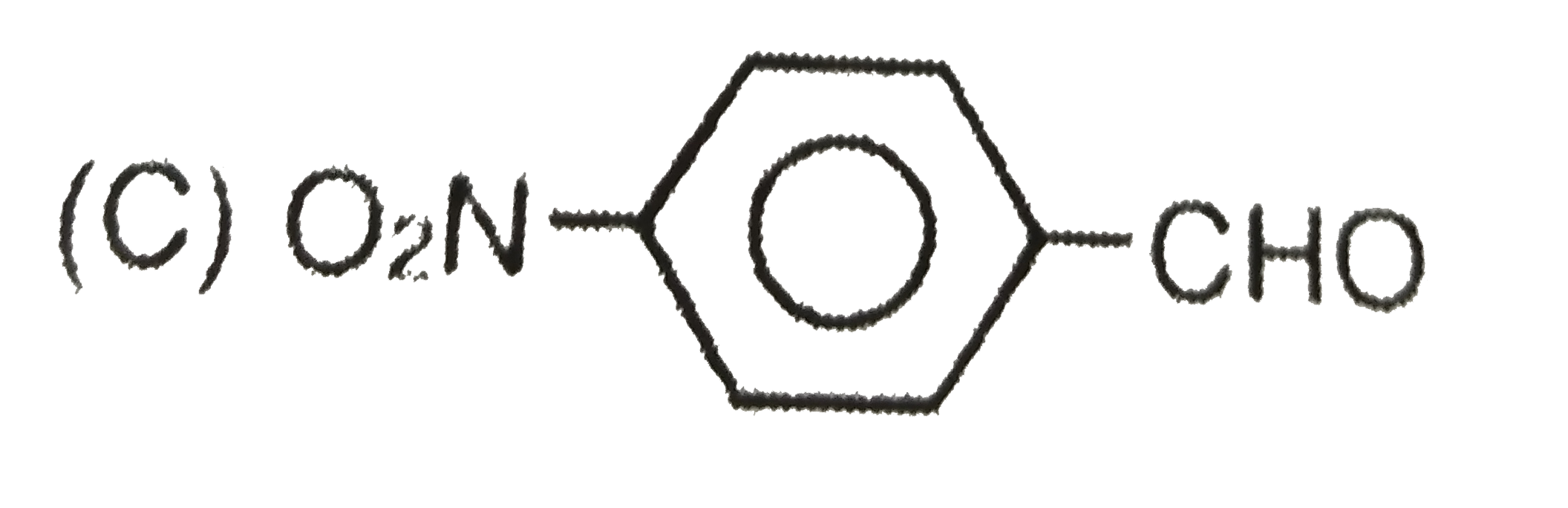
Carbonyl compound(s) which will not reduce Fehling's solution is/are |
|
Answer»
|
|
| 15. |
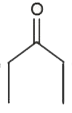
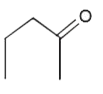
Carbonyl compounds when treated with sodium bisulphate solution then generally a crystalline sodium bisulphite addition product is formed but which of the following carbonyl compound does not forms crystalline addition product |
|
Answer» `C_2 H_5 COC_2 H_5` |
|
| 16. |
Carbonyl compounds when treated with sodium bisulfite solution generally a crystalline sodium bisulfite addition product is formed but which of the following carbonyl compound not. Forms crystalline addition product: |
|
Answer» HCHO |
|
| 19. |
Carbonyl compounds give different oxidation products withdifferent reagents. Several oxidising agents can be used to oxides carbonyl compound. Ammonical silvernitrate (Tollens' reagent) oxidises aliphitic as well as aromatic aldehydes. R-CHOoverset("Tollenes reagent ")rarrR-COOH+Ag("Silver mirror") Strong oxidising agents like KMnO_(4)//H^(+),HNO_(3) K_(2)Cr_(2)O_(7)//H^(+) oxidise aldehydes as well as ketones. Open chain ketnoes on oxidation give mixture of two carboxylic acids. Oxidation of unsymmetrical ketones takes place acording to Popoff's rule. According to this rule, alpha whose bond breks in oxidation always belongs to thealkyl group which has more number of carbons. Which of the following ismost reactive towards oxidation ? |
|
Answer» HCHO |
|
| 20. |
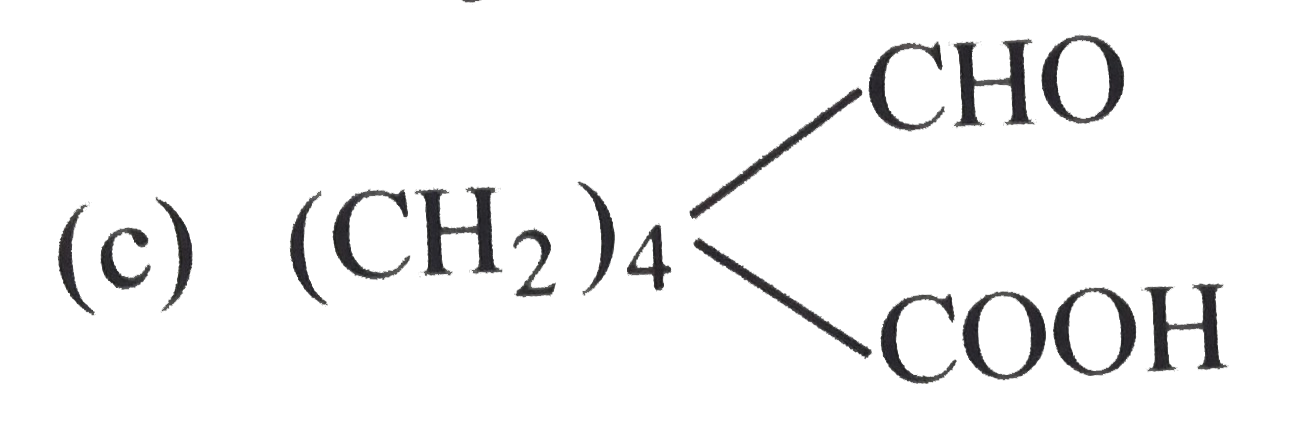
Carbonyl compounds give different oxidation products withdifferent reagents. Several oxidising agents can be used to oxides carbonyl compound. Ammonical silvernitrate (Tollens' reagent) oxidises aliphitic as well as aromatic aldehydes. R-CHOoverset("Tollenes reagent ")rarrR-COOH+Ag("Silver mirror") Strong oxidising agents like KMnO_(4)//H^(+),HNO_(3) K_(2)Cr_(2)O_(7)//H^(+) oxidise aldehydes as well as ketones. Open chain ketnoes on oxidation give mixture of two carboxylic acids. Oxidation of unsymmetrical ketones takes place acording to Popoff's rule. According to this rule, alpha whose bond breks in oxidation always belongs to thealkyl group which has more number of carbons. 2-Methylcycolhexanone on oxidation will give : |
|
Answer» `HOOC(CH_(2))_(5)-COOH` |
|
| 21. |
Carbonyl compounds give different oxidation products withdifferent reagents. Several oxidising agents can be used to oxides carbonyl compound. Ammonical silvernitrate (Tollens' reagent) oxidises aliphitic as well as aromatic aldehydes. R-CHOoverset("Tollenes reagent ")rarrR-COOH+Ag("Silver mirror") Strong oxidising agents like KMnO_(4)//H^(+),HNO_(3) K_(2)Cr_(2)O_(7)//H^(+) oxidise aldehydes as well as ketones. Open chain ketnoes on oxidation give mixture of two carboxylic acids. Oxidation of unsymmetrical ketones takes place acording to Popoff's rule. According to this rule, alpha whose bond breks in oxidation always belongs to thealkyl group which has more number of carbons.The prduct of given reaction is |
| Answer» Answer :A | |
| 22. |
Carbonyl compounds give different oxidation products withdifferent reagents. Several oxidising agents can be used to oxides carbonyl compound. Ammonical silvernitrate (Tollens' reagent) oxidises aliphitic as well as aromatic aldehydes. R-CHOoverset("Tollenes reagent ")rarrR-COOH+Ag("Silver mirror") Strong oxidising agents like KMnO_(4)//H^(+),HNO_(3) K_(2)Cr_(2)O_(7)//H^(+) oxidise aldehydes as well as ketones. Open chain ketnoes on oxidation give mixture of two carboxylic acids. Oxidation of unsymmetrical ketones takes place acording to Popoff's rule. According to this rule, alpha whose bond breks in oxidation always belongs to thealkyl group which has more number of carbons. The reagent which oxidises only aliphatic ketones is : |
|
Answer» Tollens' REAGENT |
|
| 23. |
Carbonyl compound which contains alpha-H gives aldol condenation reaction in presence of alkaline medium. The reaction between two molecules of acetaldehyde take placeas follows in presence of base Aldol condensation reaction is given by |
| Answer» Answer :D | |
| 24. |
Carbonyl compounds can serve both as reductant and oxidant, such processes being termed as disproportionation reactions. When non enolisable aldehydes are treated with strong aqueous or alcoholic base, one molecule of aldehydes undergoes reduction to alcohol while another molecule undergoes oxidation to acid. This disproportionation is the result of a nucleophilic addition of hydroxide ion to the aldehyde carbobyl to give a tetrahedral intermedate which can then regenerate the carbonyl group either by expelling hydroxide ion (to revert to aldehyde) or, by expelling hydride ions (to revert to carboxylic acid). Above reaction is |
|
Answer» proton-hydride transfer reaction  `2RCHO+OH^(-)rarr` rate = `k[RCHO]^(2)[OH^(-)]` |
|
| 25. |
Carbonyl compound reacts with phenyl hydrazine to form : |
|
Answer» Oxime |
|
| 26. |
Carbonyl chloride reacts with ammonia to from : |
|
Answer» `CO_2` |
|
| 29. |
Carbongene has X% of CO_(2) and is used as an antidote for poisoning of Y. Then, X and Y are: |
|
Answer» X=95% and Y= LEAD poisoning |
|
| 30. |
Carbonation of organometallic reagent |
|
Answer» is a ONE CARBON homologation |
|
| 31. |
Carbonation of Grignard reagents involves the reaction of a _________with _____. |
| Answer» SOLUTION :Grignard REAGENT, dry ICE or solid `CO_(2)`. | |
| 32. |
Carbonation of Grignard reagent followed by hydrolysis gives |
|
Answer» aldehyde |
|
| 33. |
Carbonation of CH_(3)MgI gives an organic compound. This compound is also obtained by |
|
Answer» hydrolysis of acetonitrile by a mineral acid Hydrolysis of acetonitrile by a mineral acid also forms `CH_(3)COOH`. |
|
| 35. |
Carbonate ores are usually subjected to calcination, while sulphide ores are subjected to roasting. Comment on the statement. |
|
Answer» |
|
| 36. |
Carbonate ores are mostly of |
|
Answer» GROUP 1 elements b) group |
|
| 37. |
Carbonate or hydroxide ores are generally converted to their oxides by |
|
Answer» Roasting |
|
| 38. |
Carbon tetrachloride reacts with steam at 500^@C to give: |
|
Answer» `Cocl_2` |
|
| 39. |
Carbon tetrachloride on treatment with (Fe) / (H_2O) gives: |
|
Answer» Chloromethane |
|
| 40. |
Carbon tetrachloride is used in fire extinguishers under the name of : |
|
Answer» Freon |
|
| 41. |
Carbon tetrachloride has zero dipole moment because of : |
|
Answer» PLANAR structure |
|
| 42. |
Carbon tetrachloride and water are immiscible wheres ethyl alcohol and water are miscible in all proportions. Explain. |
| Answer» SOLUTION :Ethyl alcohol and WATER are both POLAR while `C CI_(4)` is non-polar. | |
| 43. |
Carbon suboxide (C_(3)O_(2)) has recently been shown as a component of the atmosphere of Venus. Which of the following formulation represents the correct ground state Lewis structure for carbon suboxide? |
|
Answer» `:O:C::C:C:O:` |
|
| 44. |
Carbon reduction method is used in the extraction of : |
|
Answer» SN |
|
| 45. |
Carbon reduction method is used in the extraction of: |
|
Answer» Sn |
|
| 46. |
Carbon reduction is not used to obtain Cr and Mn because |
|
Answer» Process is not thermodynamically feasible. |
|
| 47. |
Carbon reduction is used for the extraction of : |
|
Answer» Fe |
|
| 48. |
Carbon reacts with strong electropositive metal oxides to form: |
|
Answer» Carbide |
|
| 49. |
Carbon reacts with oxygen to from two oxides, CO and CO_2.This is because : |
|
Answer» Carbon has TWO CRYSTALLINE forms |
|