Saved Bookmarks
This section includes 7 InterviewSolutions, each offering curated multiple-choice questions to sharpen your Current Affairs knowledge and support exam preparation. Choose a topic below to get started.
| 1. |
Carcinogens are the products of the reaction between |
|
Answer» `R_(2) NH + HNO_(2)` |
|
| 2. |
Carcinogens are the products of the reaction between : |
|
Answer» `R_2NH + HNO_2` |
|
| 3. |
Carbylamines have an offensive smell.How will you convert aniline into phenol? |
Answer» Solution :ANILINE is FIRST TREATED with `NaNO_2` and dil. HCl at 273-278 K to form BENZENE diazonium chloride. This solution on heating GIVES phenol.
|
|
| 4. |
Carbylamine test is used in the detection of |
|
Answer» ALIPHATIC `2^(@)` AMINE |
|
| 5. |
Carbylamine test is performed in alcoholic KOH by heating a mixture of |
|
Answer» Chloroform and silver powder |
|
| 6. |
Carbylamine test is performed in aloholic KOH by heating a mixture of |
|
Answer» Chloroform and silver powder |
|
| 7. |
Carbylamine test is used for the detection of primary amine group, which of these is related with carbylamine reaction ? |
|
Answer» `R-NC` |
|
| 10. |
Carbylamine test is given by |
|
Answer» Alcohols |
|
| 11. |
Carbylamine reaction tubes are not thrown into sink , to avoid bad odour, but are treated with cons. HCl to give : |
|
Answer» `RCOOH + NH_3` |
|
| 12. |
Carbylamine reaction is used for the preparation of |
|
Answer» `1^@` Amines `underset(1^@ " AMINE ") (R-NH_2) overset(CHCl_3 +KOH + DELTA)(to) underset("ISOCYANIDE")(R-NC)` |
|
| 13. |
Carbylamine reactionis givenonly by |
|
Answer» primary amines |
|
| 14. |
Carbylamine reaction is given by underline ("secondary amines"). |
| Answer» SOLUTION :Carbylamine reaction is GIVEN by primary AMINES | |
| 15. |
Carbylaminereactionis NOTgivenby |
|
Answer» `C_(2) H_(5) NH_(2)` |
|
| 17. |
Carbylamine reaction is given by : |
|
Answer» PRIMARY amines |
|
| 18. |
Carbylamines have an offensive smell. Write the carbylamine reaction. |
| Answer» SOLUTION :Primary AMINES when HEATED with chloroform and alcholic KOH give carbyl AMINE having foul SMELL. The reaction is called carbylamine test. | |
| 19. |
Carbylamine is liberated when . . . . Is heated with chloroform and alcoholic potash |
|
Answer» An aldehyde |
|
| 20. |
Carbylamine reaction is used for detection of |
|
Answer» METHANAMINE |
|
| 22. |
Carbylamine forms from aliphatic or aromatic primary amines via which of the following intermediates? |
|
Answer» Carbene |
|
| 24. |
Carboxylic carbon is……………….than carbonyl carbon : |
|
Answer» LESS ELECTROPHILIC |
|
| 25. |
Carboxylic acids on reduction with LiAlH_(4) give : |
|
Answer» Alkanes |
|
| 26. |
Carboxylic acids reacts with diazomethane to yield: |
| Answer» Answer :C | |
| 27. |
Carboxylic acids have higher boiling points than aldehydes, ketones and even alcohols of comparable molecular mass. It is due to their- |
|
Answer» more EXTENSIVE association of CARBOXYLIC acid via VAN der Waals FORCE of attraction |
|
| 28. |
Carboxylic acids have higher boiling points than aldehydes, ketones and even alcohols of comparable molecular mass. It is due to their |
|
Answer» more EXTENSIVE association of carboxylic ACID via VAN der Waals FORCE of attraction |
|
| 29. |
Carboxylic acids have higher boiling point than aldehyde, keton and even alcohols of comparable molecular masses. Give reason. |
Answer» SOLUTION :Carboxylic acids have higher boiling point due to more association of acid MOLECULES through inter molecular hydrogen bonding.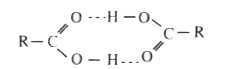 In fact, most of the carboxylic acids exist as DIMER in its VAPOUR phase. |
|
| 30. |
Carboxylic acids do not give reactions of aldehydes and ketones why ? |
Answer» Solution :It is due to RESONANCE 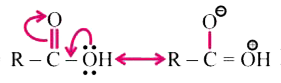 . Position of ` GT C=O` GROUP KEEP changing . . Position of ` GT C=O` GROUP KEEP changing .
|
|
| 31. |
Carboxylic acids do not give reactions of aldehydes and ketones, why? |
Answer» Solution :It is due to resonance Carbon of the carboxylic ACID is not ABLE to attain a positive charge. THEREFORE, carboxylic acids do not GIVE reactions of aldehydes and ketones. |
|
| 32. |
Carboxylic acids dissolve in aqueous NaOH because acids undego |
|
Answer» Protonation |
|
| 33. |
Carboxylic acids dissociate to give resonance stablised carboxlate anion R-underset(O)underset(||)-OH+H_(2)OhArrH_(3)O^(+) The above statement is |
|
Answer» true sometimes true 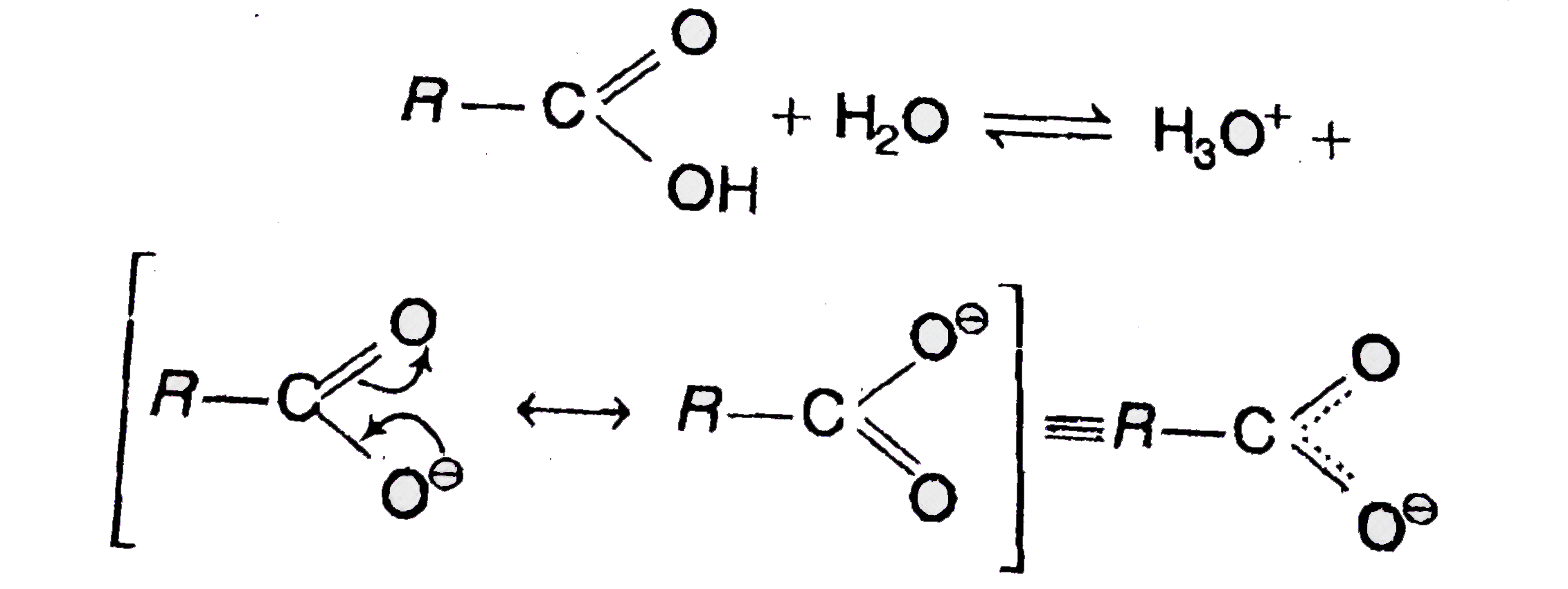
|
|
| 34. |
Carboxylic acids dissociate in water to give _______ stabilised carboxylate anions and hydronium ion. |
| Answer» SOLUTION :RESONANCE | |
| 35. |
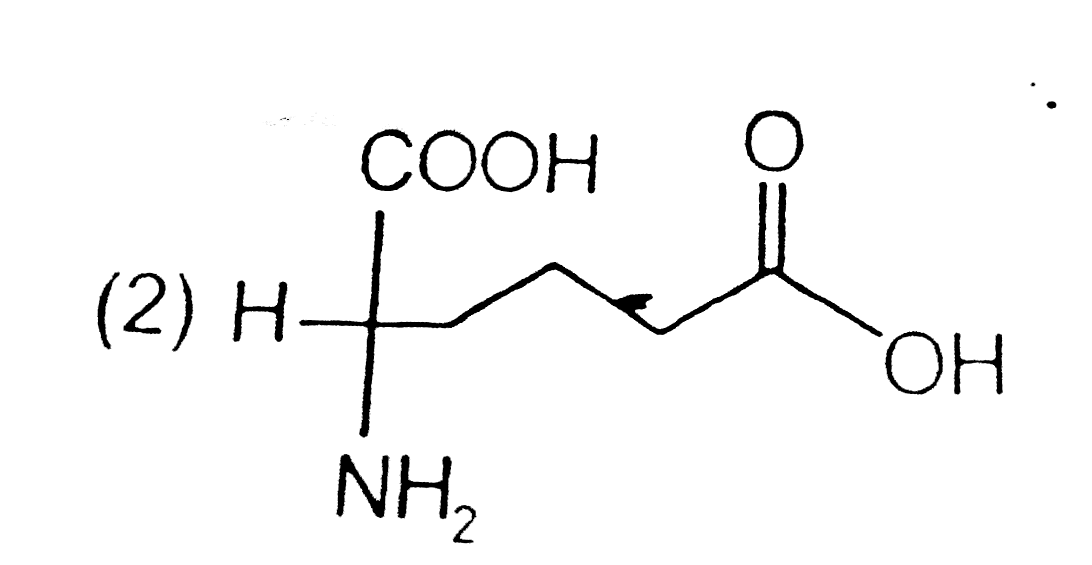
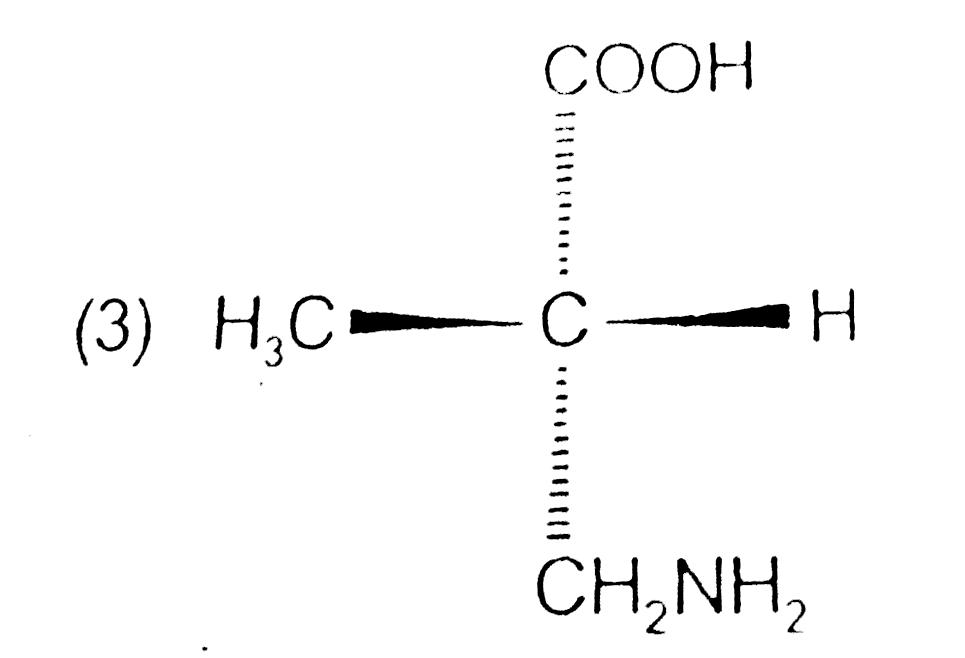
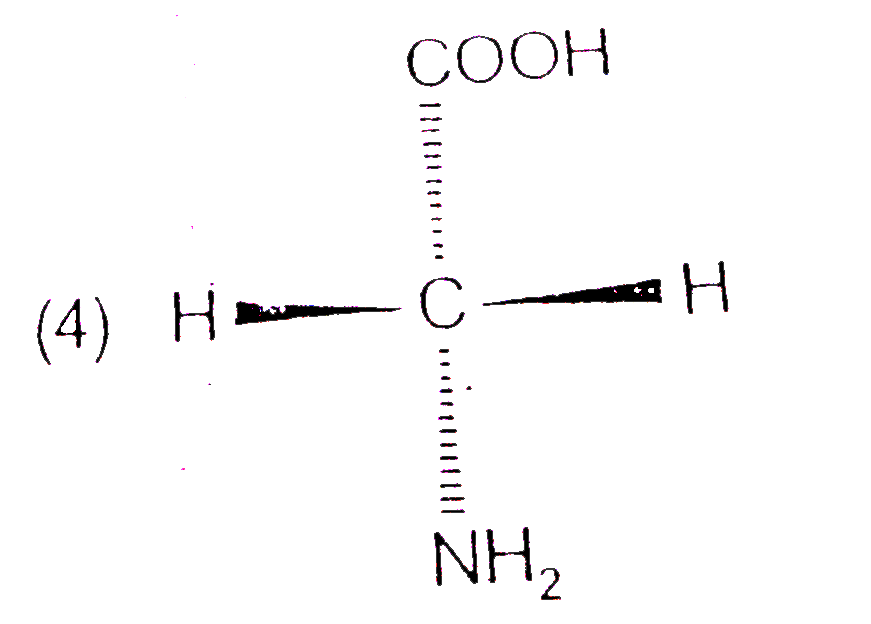
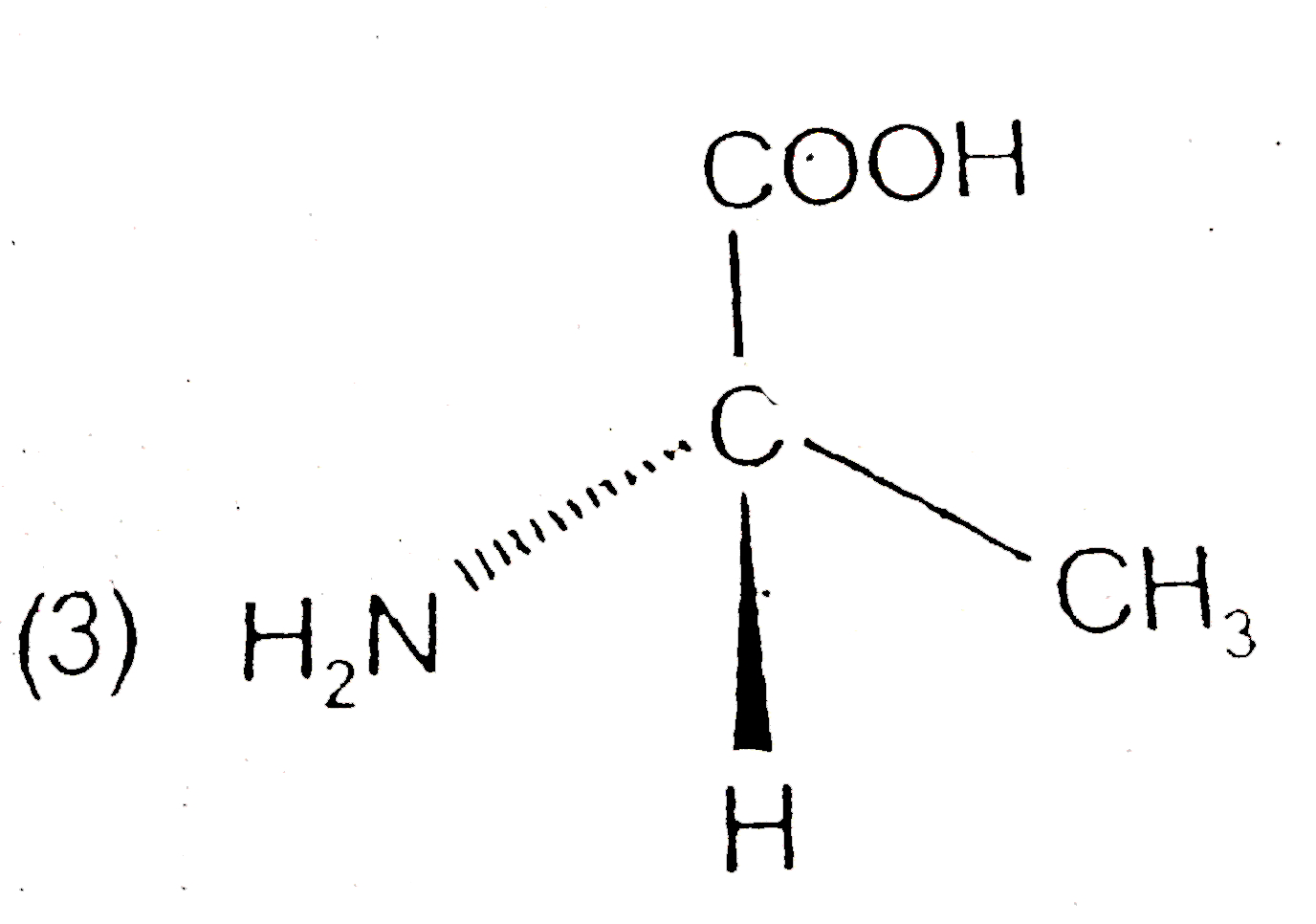
Carboxylic acids containing an amino group (-NH_(2)) as a substituent are called amino acids. When this amino group substitution is at alpha position with respect to carboxylic group, the aminoacid is called alpha-amino acid. The aminoacids with two carboxylic acids are called acidic amino acids whereas aminoacids with two amino group are called basic amino acids Amino acids show amphoteric character. Ali chiral natural amino acids exist in L-form. : Which of the following is not an alpha-amino acid? |
|
Answer»
|
|
| 36. |
Carboxylic acids dimerise due to |
|
Answer» HIGH molecular WEIGHT |
|
| 37. |
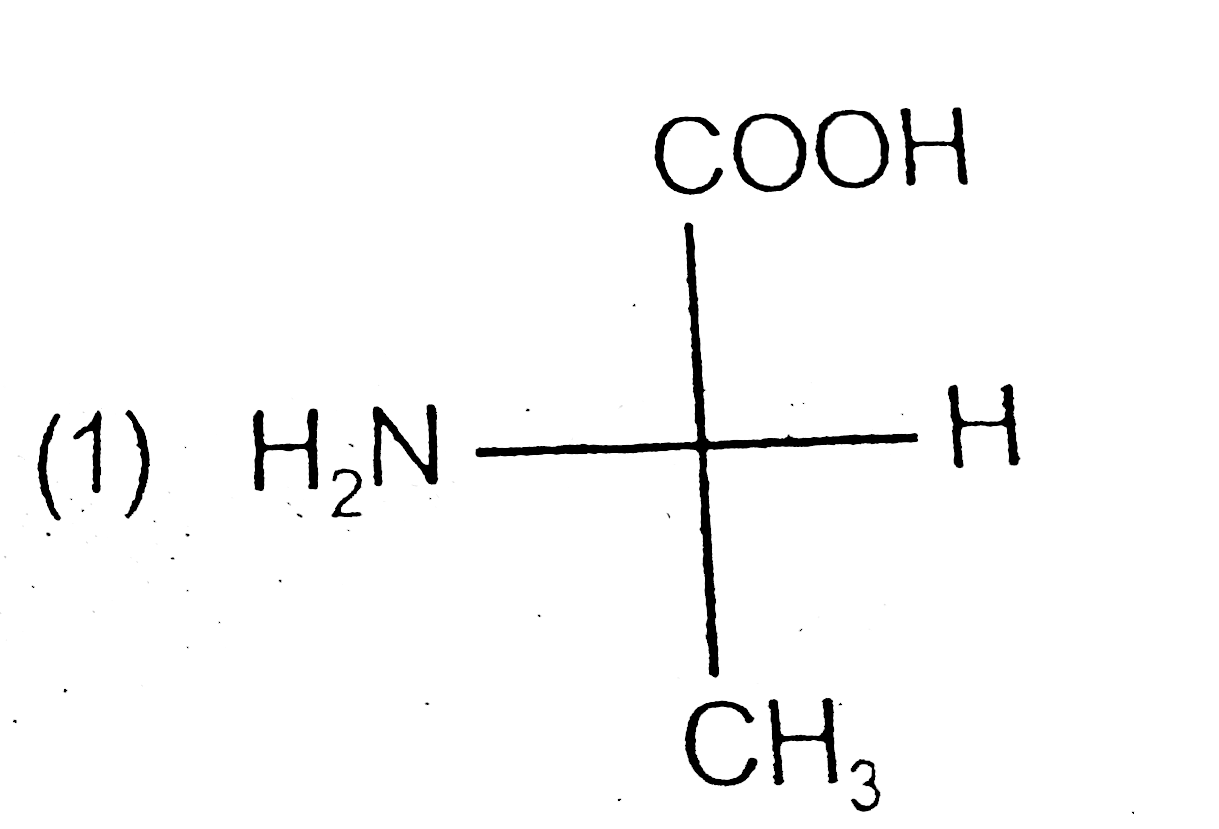
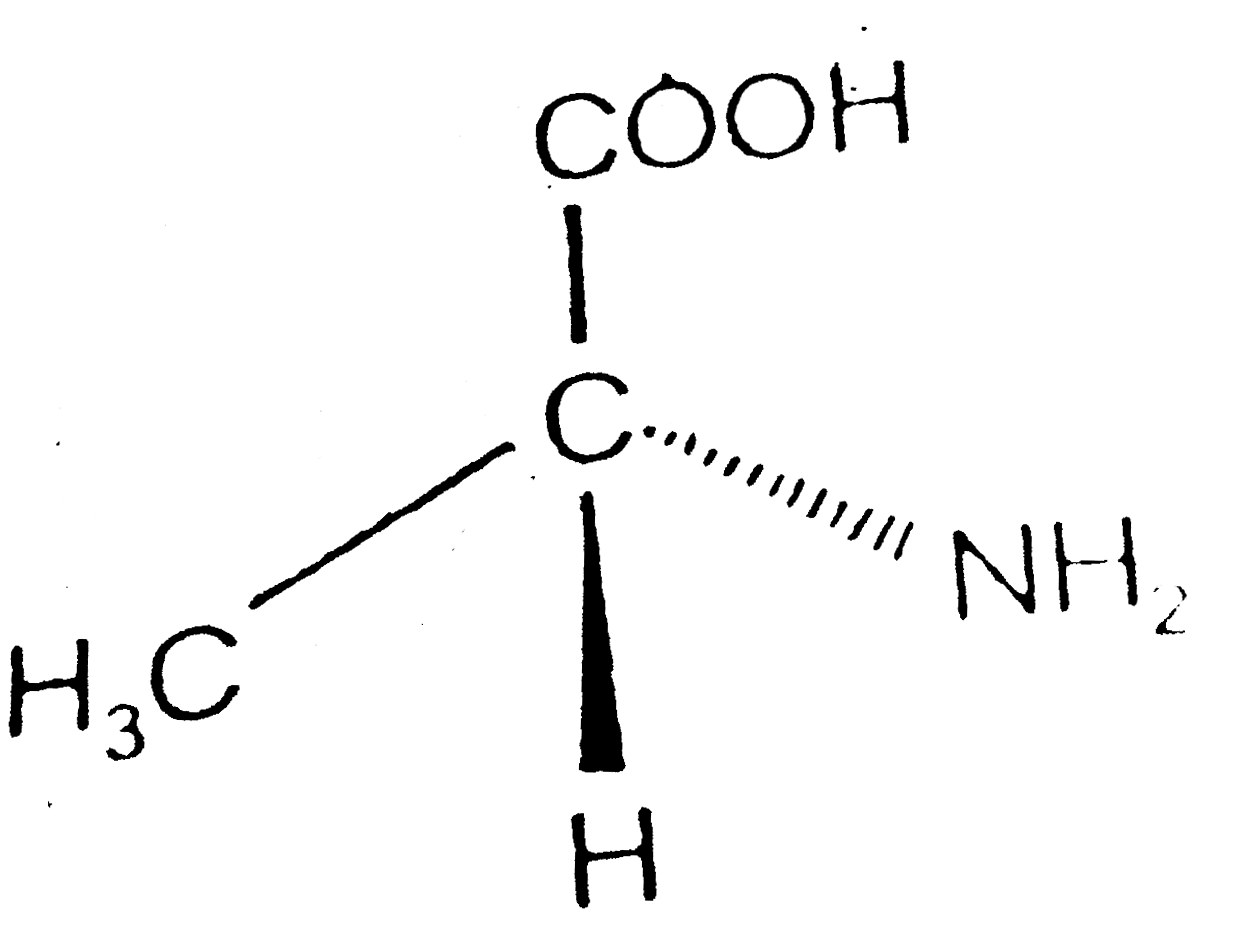
Carboxylic acids containing an amino group (-NH_(2)) as a substituent are called amino acids. When this amino group substitution is at alpha position with respect to carboxylic group, the aminoacid is called alpha-amino acid. The aminoacids with two carboxylic acids are called acidic amino acids whereas aminoacids with two amino group are called basic amino acids Amino acids show amphoteric character. Ali chiral natural amino acids exist in L-form. : Each of the following represent natural alanine (an amino acid) except |
|
Answer»
|
|
| 38. |
Carboxylic acids contain carbonyl group but do not show the nucleophilic addition reaction like aldehydes or ketones. Why? |
Answer» Solution :This is due to resonance as SOWN below:  The POSITIVE charge on carbonyl carbon ATOM is reduced. |
|
| 39. |
Carboxylic acids are synthesised from Grignard reagent by the action of ________. |
| Answer» Answer :A | |
| 40. |
Carboxylic acids are reduced by red P and HI to : |
|
Answer» Alkanes |
|
| 41. |
Carboxylicacidsare moreacidic than phenolsandalchols. Explin. Why ? |
|
Answer» Solution : (1) Carboxylicacid losea proton as compared to phenol.Consider the ionizationof carboxylic acidandphenol. `underset("alcohol")(R-OH) hArr underset("alkoxide ion")(R-O^(-)) +H^(+)` 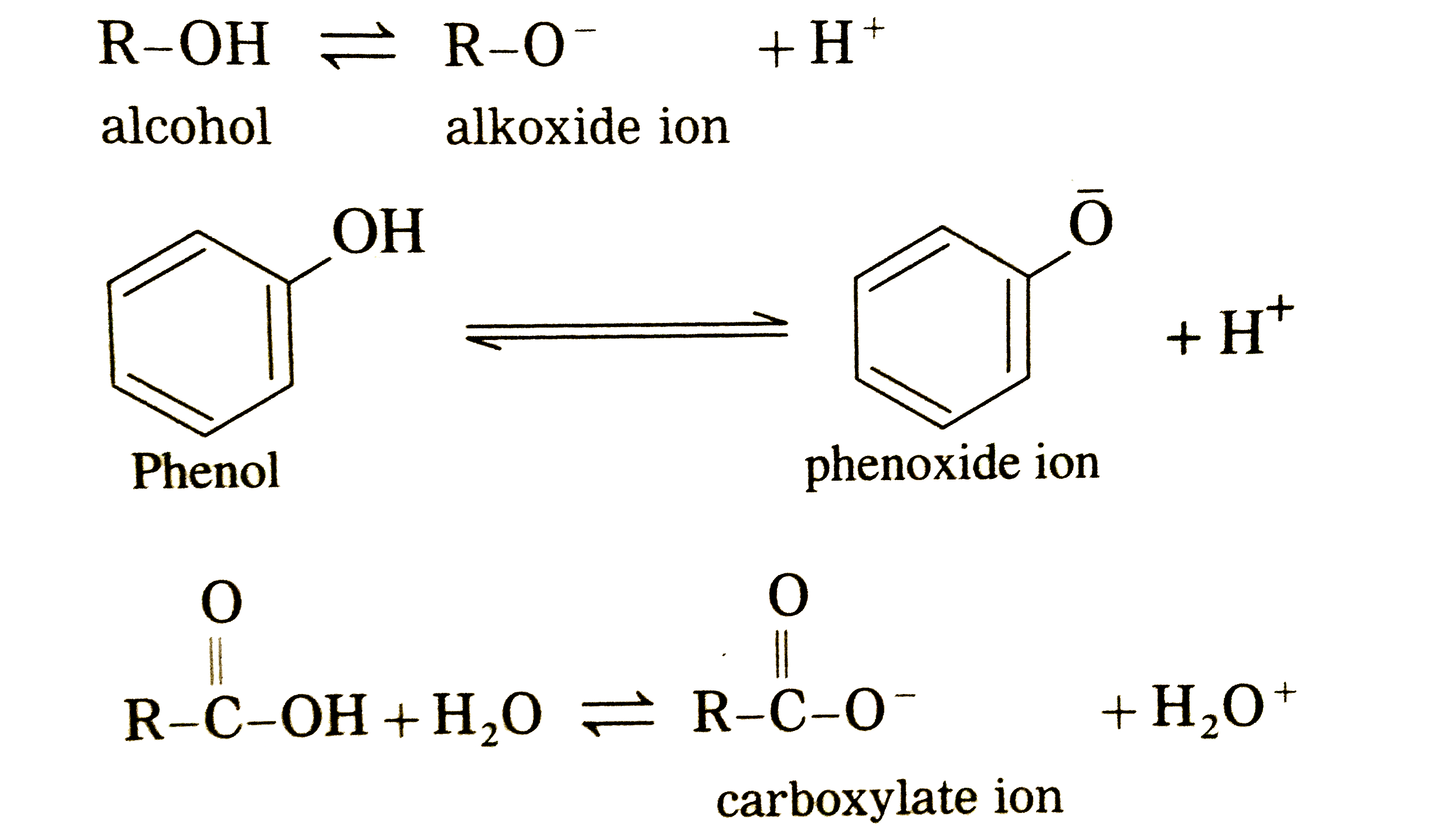 Dueto delocalizationthe negativechargeoverthe ortho andparapositions of aromaticring, phenoxideanion is morestablethanphenol. THUS phenoleasily undergoes ionization. 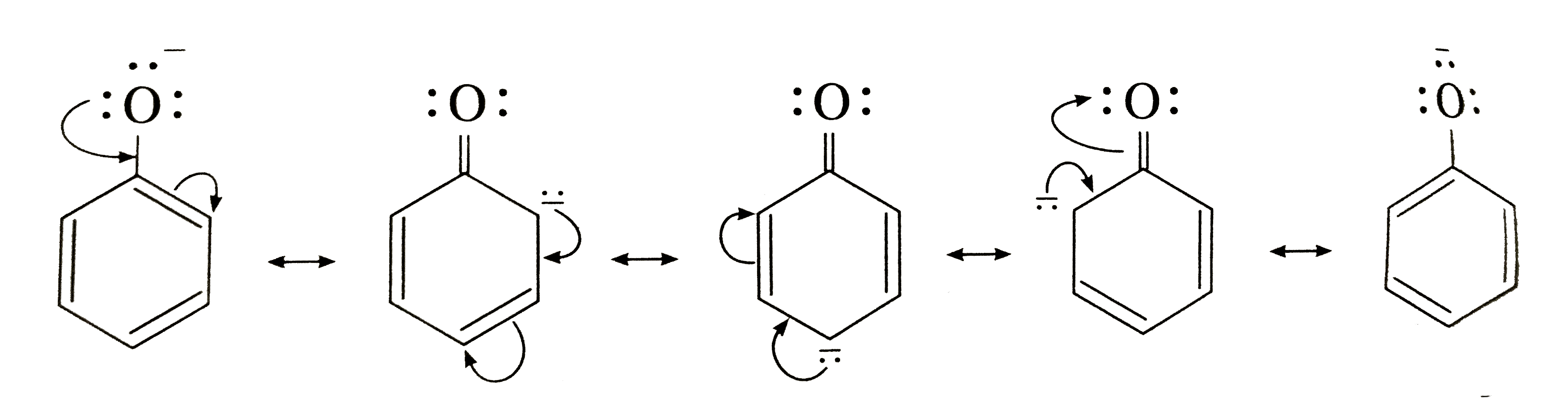 However, alcohol and alkoxide ion are single STRUCTURES. In an alkoxide ANION the negative charge is localized on a single oxygen atom. Hence, phenols are more acidic than alcohols. Carboxylic acid has two resonarice hybride non equivalent structures (I & II) while carboxylate anion has two resonance hybrid equivalent structures (III & IV). The carboxylate ion is more stable than carboxylic acid and equilibrium is shifted towards the direction of increased ionization. 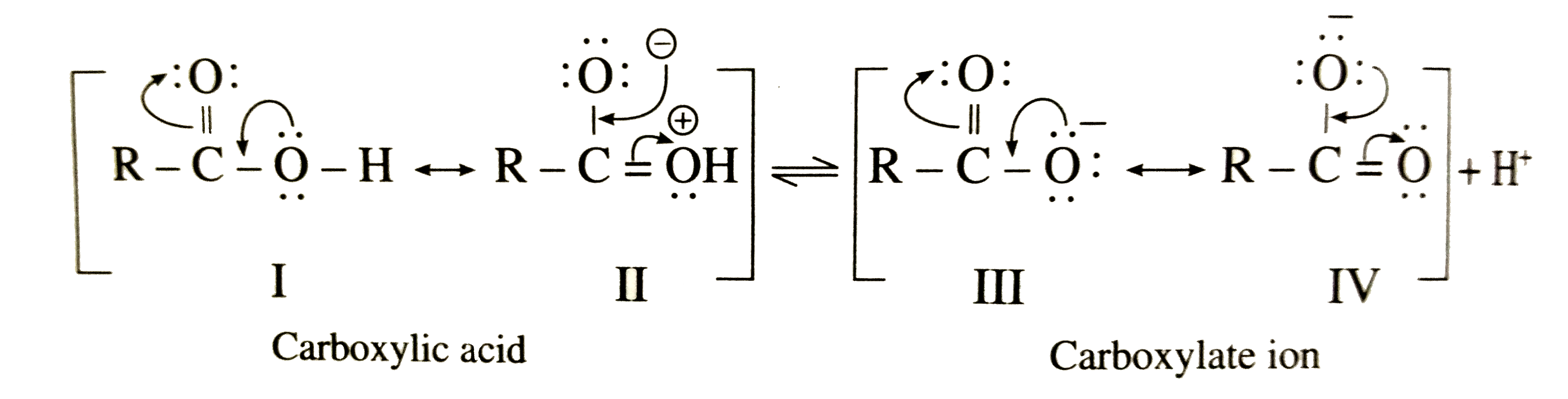 Carboxylate ion has two equivalent resonance structures with negative charge is delocalized over two electronegative oxygen atoms. Phenoxide anion has non-equivalent resonance structures in which negative charge is delocalized over one oxygen atom and less electronegative CARBON atom. As a result carboxylate anion is more stable than phenoxide ion. Hence carboxylic acids ionize to the greater extent than phenol furnishing higher concentration of H ions. Therefore, carboxylic acids are more acidic than phenols and alcohols. |
|
| 42. |
Why carboxylic acids are more acidic than Phenols ? |
| Answer» | |
| 43. |
Carboxylic acids are esterified with alcohols or phenols in the presence of a _____. |
| Answer» SOLUTION :MINERAL ACID | |
| 44. |
Carboxylic acids are distinctly acidic and ionise in water to give H_3O^+ ions. In general, electron withdrawing groups increase the acidity of carboxylic acids while electron donating groups decrease the acidity of the carboxylic acid. The electron releasing groups such as -CH_3-OH, -NH_2 and -OCH_3 make benzoic acid weaker while electron withdrawing groups such as -CI, -NO_2, etc., make benzoic acid stronger. The ortho isomer of every substituted benzoic acid is the strongest among the three isomers due to effect known as ortho effect. Carboxylic acids neutralise alkalies, decompose carbonates and bicarbonates evolving CO_2with brisk effervescence.Give a reaction for the preparation of benzoic acid using a Grignard reagent. |
Answer» SOLUTION :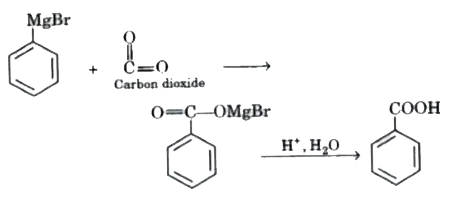
|
|
| 45. |
Carboxylic acid reacts with potassium metal. The amount of potassium used up and hydrogen liberated are in the molar ratio of |
|
Answer» `2 : 1` |
|
| 46. |
Carboxylic acid reacts with calcium metal .The amount of calcium used up and hydrogenliberated are in the molar ratio of |
|
Answer» `2 : 1` |
|
| 47. |
Carboxylic acid on reduction produces |
| Answer» Answer :A | |
| 48. |
Carboxylic acid on reacting with N_3H gives : |
|
Answer» Amines |
|