Saved Bookmarks
This section includes 7 InterviewSolutions, each offering curated multiple-choice questions to sharpen your Current Affairs knowledge and support exam preparation. Choose a topic below to get started.
| 1. |
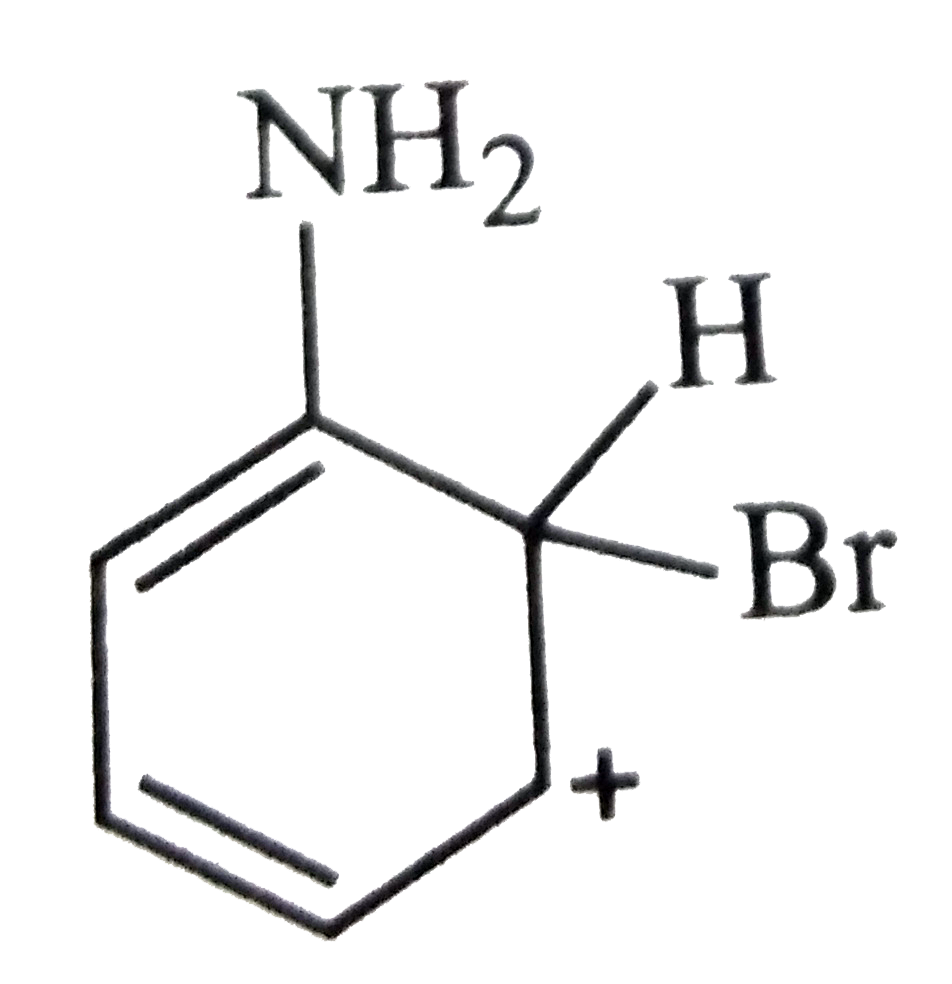
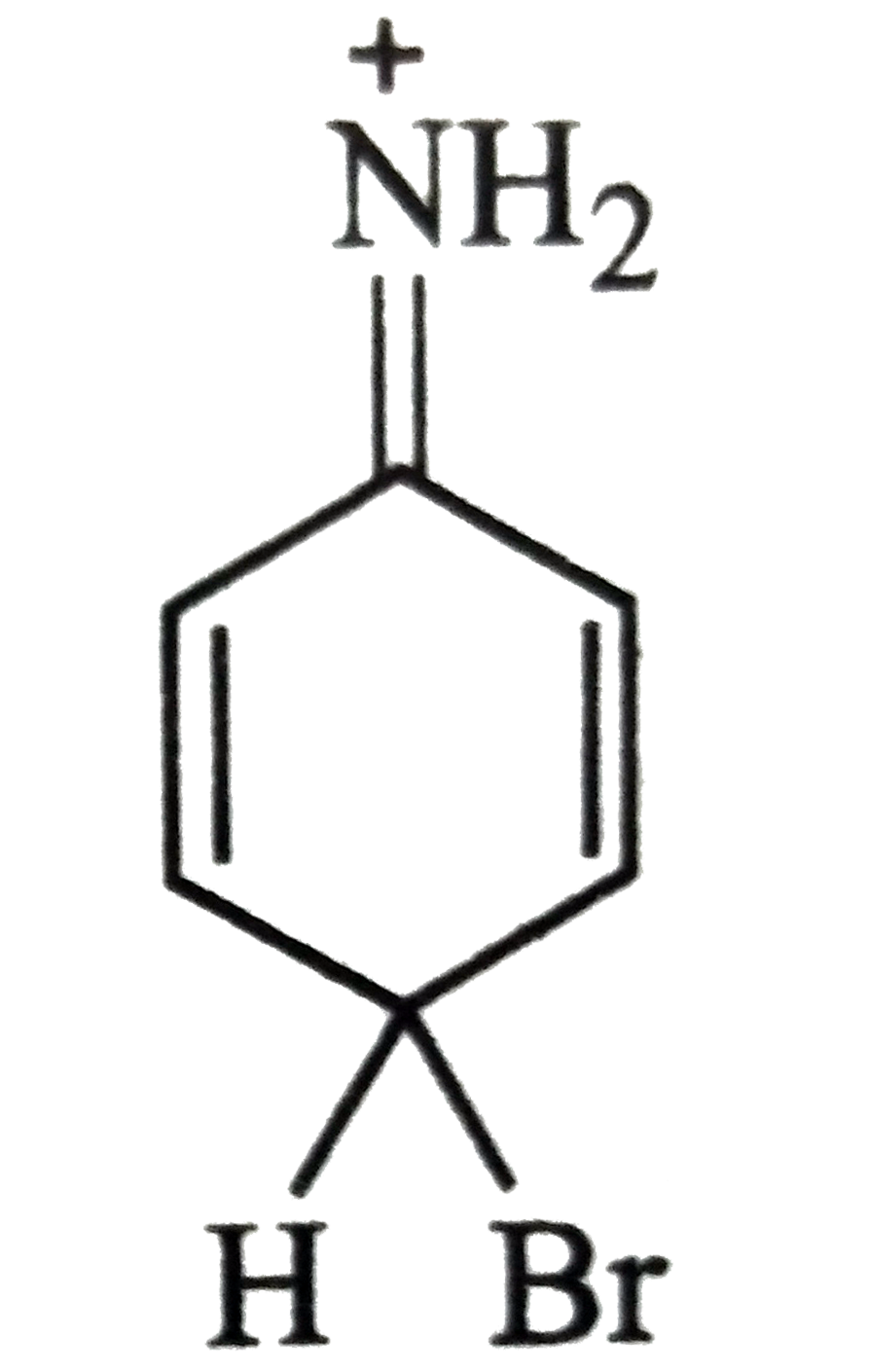
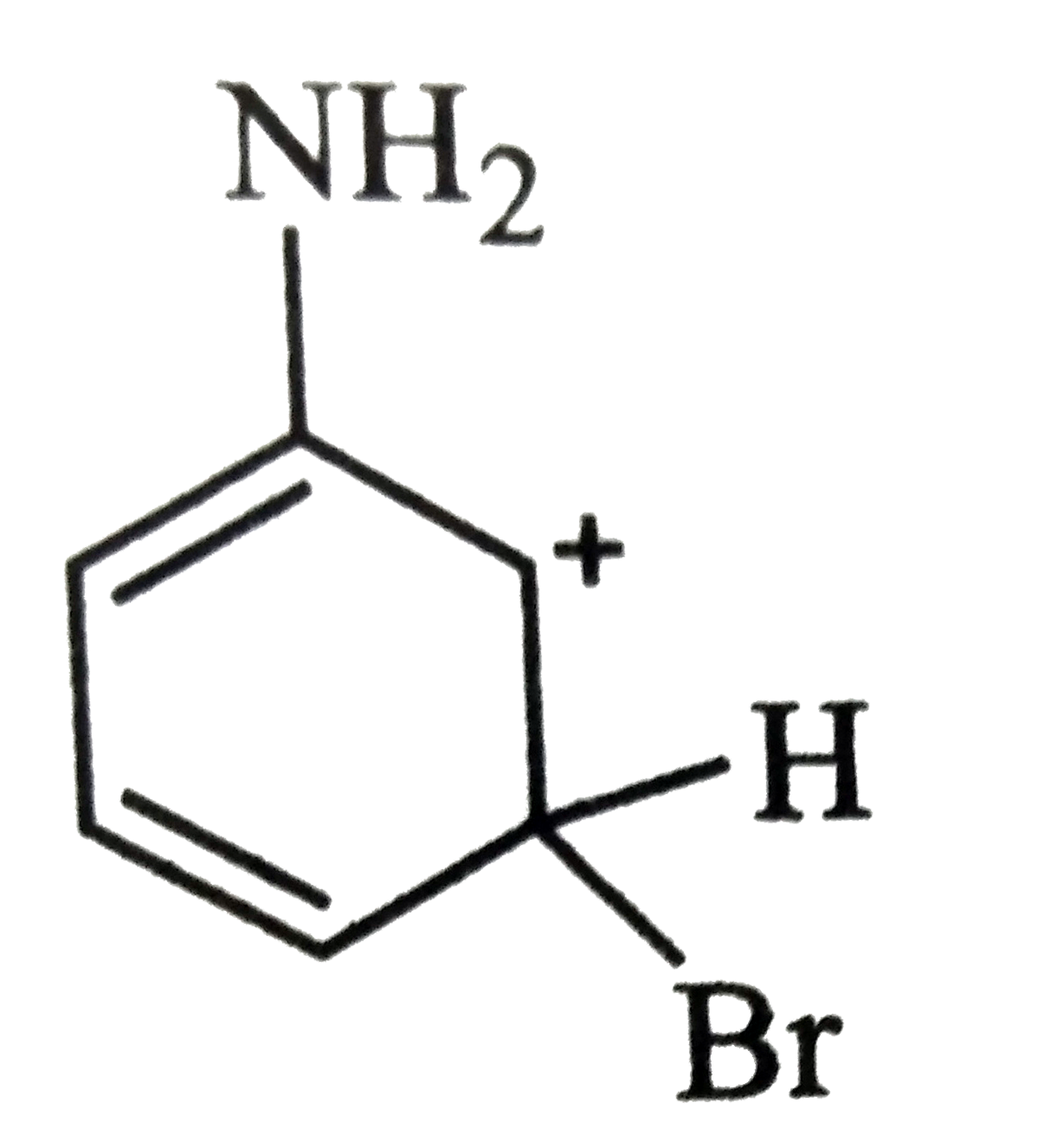
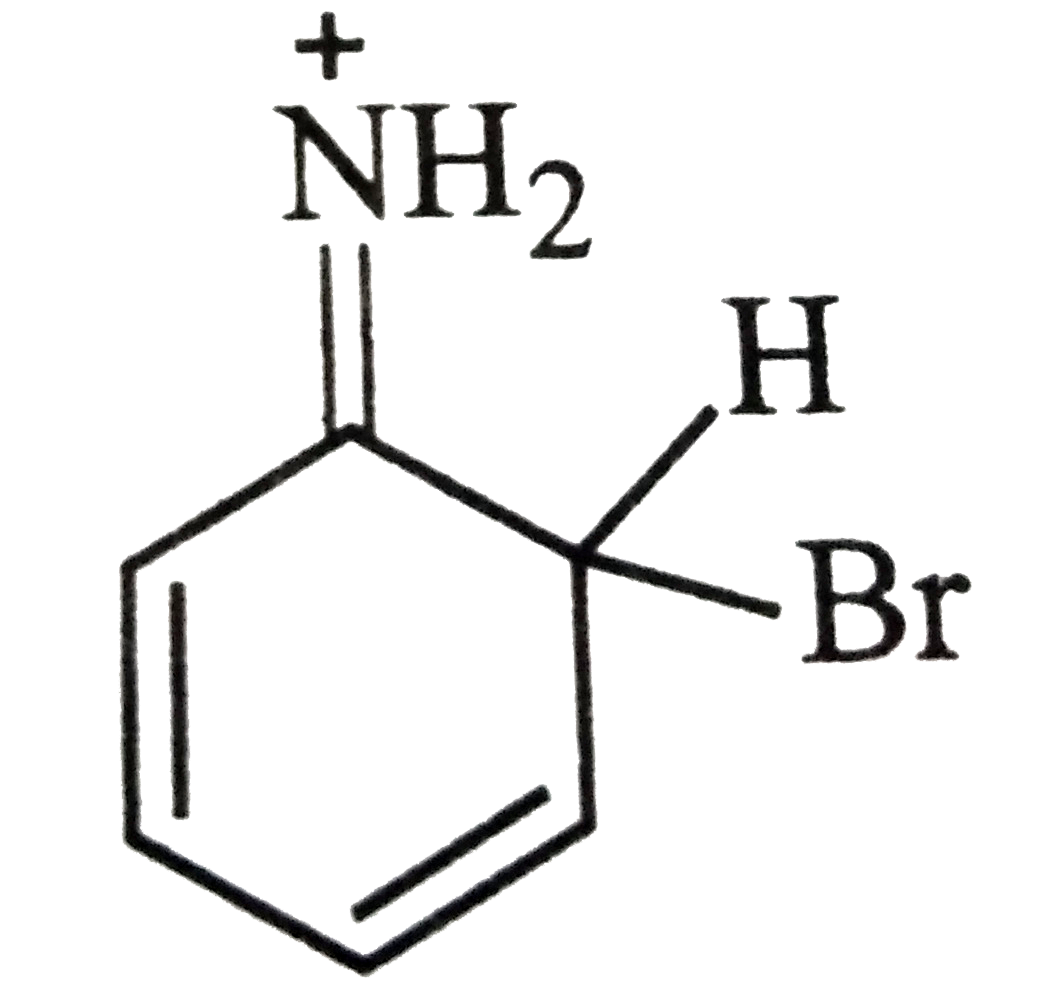
Arenium ion involved in the bromination of aniline is /are |
|
Answer»
|
|
| 2. |
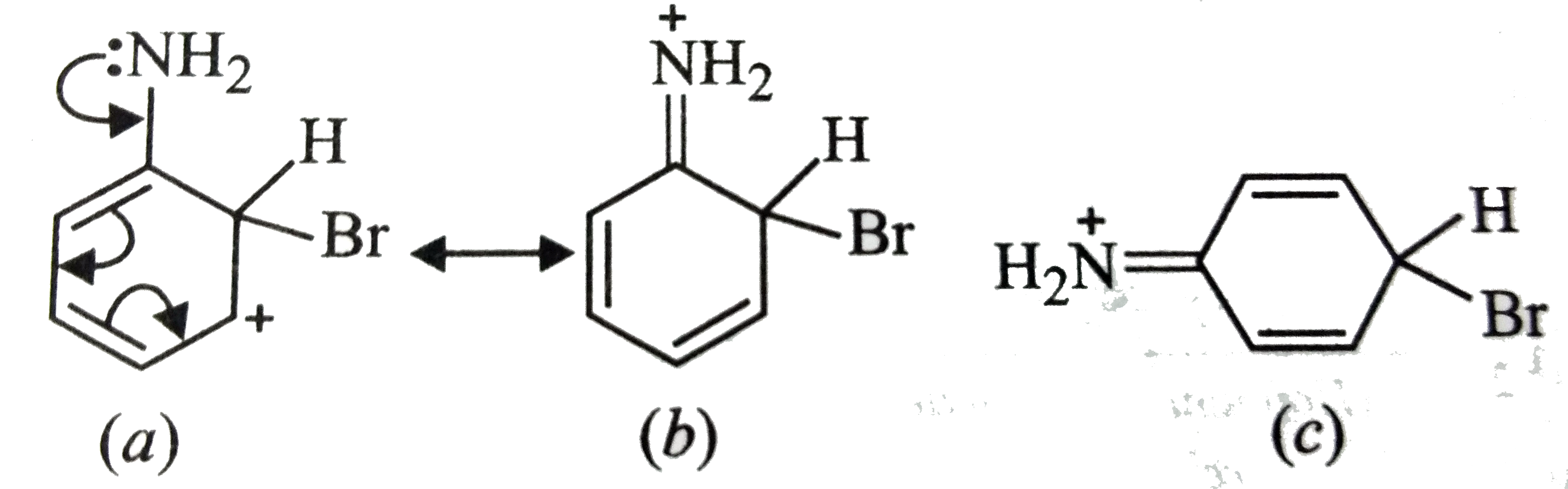
Arenium ion involved in the bromination of aniline is____ |
|
Answer»
|
|
| 3. |
Aqueous solution of nickel sulphate on treating with pyridine and then adding a solution of sodium nitrite gives dark blue crystals of |
|
Answer» ` [NI (py)_4]SO_(4)` |
|
| 4. |
Arenediazonium salts are more stable than alkanediazonium salts due to dispersal fo the positive charge on the benzene ring. Obviously, electron-donating groups favour diazotisation by retarding the decomposition of diazonium salts to phenyl cation. The high reactivity of arenediazonium salts is due to the excellent leaving ability of the diazo group as N_(2) gas. Q. The product formed when bromobenzene reacts with benzenediazonium chloride in presence of NaOH is |
|
Answer» diphenyl |
|
| 5. |
Aqueous solution of nickel sulphate on treating with pyridine and then adding a solution of sodium nitrite gives dark blue crystals of : |
|
Answer» `[Ni(PY)_(4)]SO_(4)` |
|
| 6. |
Aqueous solution of nickel sulphate on treating with pyridine and then adding a solution of sodium nitrite gives dark blue crystals of: |
|
Answer» `[Ni(Py)_4]SO_4` |
|
| 7. |
Arenes on treatment with chloride in presence of ferric chloride as a catalyst undergo what type of reaction? |
|
Answer» ELECTROPHILIC substitions 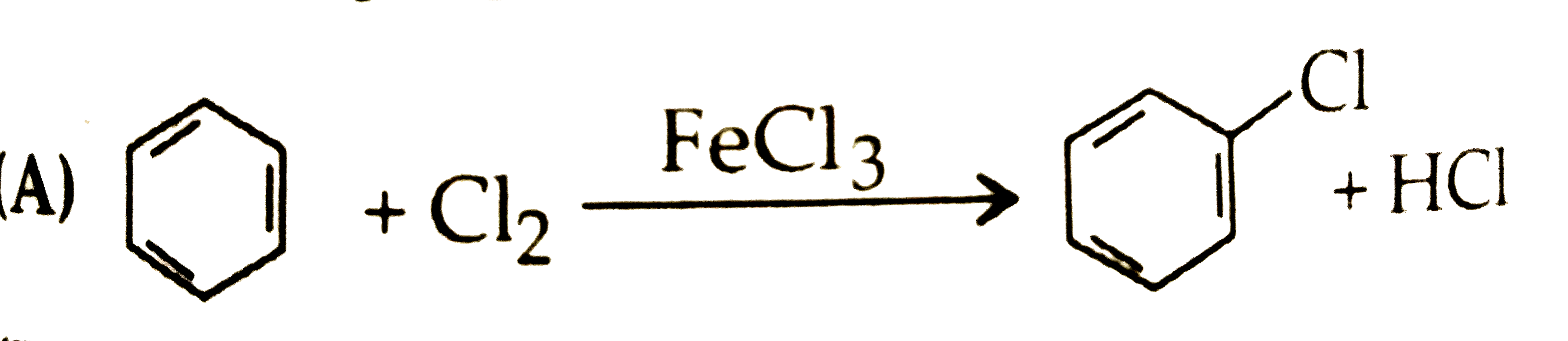
|
|
| 8. |
Aqueous solution of Ni^(2+) contains [Ni(H_(2)O)_(6)]^(2+) and its magnetic moment is 2.83 B.M. When ammonia is added in it, comment on the magnetic moment of solution : |
|
Answer» It will REMAIN same |
|
| 9. |
Arenediazonium salts are more stable than alkanediazonium salts due to dispersal fo the positive charge on the benzene ring. Obviously, electron-donating groups favour diazotisation by retarding the decomposition of diazonium salts to phenyl cation. The high reactivity of arenediazonium salts is due to the excellent leaving ability of the diazo group as N_(2) gas. Q. Which of the following diazonium salts when boiled dil. H_(2)SO_(4) gives the corresponding phenol most readily? |
|
Answer»
|
|
| 10. |
Arenediazonium salts are more stable than alkanediazonium salts due to dispersal fo the positive charge on the benzene ring. Obviously, electron-donating groups favour diazotisation by retarding the decomposition of diazonium salts to phenyl cation. The high reactivity of arenediazonium salts is due to the excellent leaving ability of the diazo group as N_(2) gas. Q. Which of the following arylamines undergoes diazotisation most readily? |
|
Answer»
|
|
| 11. |
Aqueoussolutionof NaOH ismarked10%(w//w). Thedensityof thesolutionis 1.070 g cm^(-3). Calculate (i) molarity and (ii)molalityof NaOH. |
|
Answer» Densityof NaOHsolution =D =1.070 G `CM^(-3)` Molarmass ofNaOH=40 g `mol^(-1)` (i) Molarity of NaOHsolution = ? (ii)Molalityof NaOHsolution = ? (i) Formolarityof solution: Consider 100 gNaOHsolution `:. ` Weight `H_(2)O+` Weightof NaOH =100 g `:. ` Weightof `H_(2)O = 100 - 10= 90 g` Numberof molesof NaOH`= (W_(NaOH))/(M_(NaOH))` `:. n_(NaOH) = .(10)/(40)` `=0.25 `mol Densityof solution `(D) = ("Weight of solution" )/(" volumeof solution " ) = (W)/(V)` `:.V = (W)/(D)` `=(100)/(1.070)` `=93 . 46 cm^(3)` `=0.09346 dm^(3)` Molarity`=(n)/(V)= (0.25)/(0.09346) =2.675 "mol"dm^(-3)(or M)` (ii) For molalityof NaOHsolution : Molality`=("MOLAR of NaOH ") /("Mass ofsolventin gram ") xx 1000` `=(0.25)/(90) xx 1000` `=2.779"mol" kg^(-1)(or m)` |
|
| 12. |
Aqueous solution of NaCl containing a small amount of MeOH( methyl orange ) is electrolysed using Pt- electrodes . The color of the solution after some time will . |
|
Answer» REMAINS yellow |
|
| 13. |
Are the sols of metals hydrophilic or hydrophobic? |
| Answer» SOLUTION :HYDROPHOBIC | |
| 14. |
Aqueous solution of Na_(2)SO_(4) containing a small amount of HPh is electrolysed using Pt-electrodes. The colour of the solution after some time will: |
|
Answer» REMAINS COLOURLESS |
|
| 15. |
pH value of aqueous solution of Nacl after electrolysis is ________ |
| Answer» SOLUTION :GREATER than 7 | |
| 16. |
Are the rate equations obtained from law of mass action always equal to those obtained experimentally? If not, then for what type of reactions are they equal? |
| Answer» SOLUTION :No, elementaryreaction | |
| 17. |
Aqueous solution of Na_(2)S_(2)O_(3) on reaction with Cl_(2) gives |
|
Answer» `Na_(2)S_(4)O_(6)` |
|
| 18. |
Aqueoussolution of Na_(2)S_(2)O_(3) onreactionwith CI_(2) water gives |
|
Answer» `Na_(2)S_(4)O_(4)` |
|
| 19. |
Are the following names correct according to IUPAC system of nomenclature? If not, the correct names: (a) Pent-3-yne (b) tert-Butanol (c) Hexa-1,6-diene (d)4,43-Trimethylhex-1-yne (e) 2-Keto-n-propanol (f) 1-Methoxyethan-2-ol (g) 3-Methylhexa-1,5-diyne (h) 4,4,5-Trimethylhex-1-yne |
|
Answer» |
|
| 20. |
Aqueous solution of how many of the following species turn blue limtus red ? (i) SF_(4) (ii) PCl_(3) (iii) H_(2)O (iv) NO_(2)Cl (v) SF_(6) (vi) SeF_(6) (vii) AsCl_(3) (viii) POCl_(3) (ix) SO_(2) (x) SO_(2)Cl_(2) (xi) SOCl_(2) (xii) COCl_(2) (viii) C Cl_(4) |
|
Answer» |
|
| 21. |
are related as: |
|
Answer» FUNCTIONAL Isomers |
|
| 22. |
Aqueous solution of hydrogen peroxide . |
|
Answer» Turns BLUE litmus pink |
|
| 23. |
Are polyesters and polyacrylates same ? Justify your answer. |
|
Answer» SOLUTION :Polyesters and polyacrylates are different types of polymers and differ in the following characteristics : (i) Polyacrylates are homopolymers while the polyesters are co-polymers in nature (ii) The MODE of synthesis of polyacrylates is addition polymerisation while that of polyesters is condensation polymerisation. (III) Polymerisation occurs ACROSS `C = C` bond in polyacrylates where as in polyesters it is through ester LINKAGE |
|
| 24. |
Aqueous solution of HCl has the pH = 4. Its molarity would be |
|
Answer» 4 M |
|
| 25. |
………………..arecarbohydrates that cannot be hydrolysed further and are also called simplesugars. |
| Answer» SOLUTION :Monosacchrides | |
| 26. |
Aqueous solution of HCl conducts electricity because it |
|
Answer» ionises |
|
| 27. |
Are all the five bonds in PCl_(5)molecule equivalent ? Justify your answer. |
| Answer» Solution :`PCl_(5)`has a trigonal bipyramidal STRUCTURE and the THREE EQUATORIAL P-Cl bonds are EQUIVALENT, while the two axial bonds are DIFFERENT and longer than equatorial bonds. | |
| 28. |
Aqueous solution of FeCl_3 is : |
|
Answer» ACIDIC |
|
| 29. |
Are all the five bonds of PCl_(5) equivalent ? Justify your answer. |
| Answer» Solution :No`PCl_(5)` has a trigonal bipyramidal structure. Three EQUITORIAL P-CI BONDS are equivalent, while the two axial bond are different and longer than equitorial bonds. | |
| 30. |
Aqueous solution of glucose on cystalline at 303k produces |
|
Answer» anomers |
|
| 31. |
Aqueous solution of ferric chloride is |
|
Answer» Acidic So the aqueous solution of `FeCl_(3)` will be acidic in NATURE |
|
| 32. |
Are all the five bonds in PCI_(5) equivalent ? Justify. |
| Answer» SOLUTION :`PCI_(5)` has trigonal bipyramid structure.It has THREE equatiorial bonds inclined at angle of `120^(@)` and two axial bonds inclined at an angle of `90^(@)`. Since two axial P-CI bonds are repelled by three bond pairs each while three equatorial P-CI bonds are repelled by two bond pairs each, therfore, axial bonds are longer (240 pm) and hence weaker as compared to more STABLE equatorial bonds (202 pm). Thus, all the five P-CI bonds in `PCI_(5)` are not equivalent. | |
| 33. |
Aqueous solution of CuSO_(4).5H_(2)O changes blue litmus paper to red due to |
|
Answer» Presence of `Cu^(++)` IONS |
|
| 34. |
are : |
|
Answer» ENANTIOMERS |
|
| 35. |
are a pair of |
|
Answer» Enantiomers |
|
| 36. |
Aqueous solution of CuSO_(4).5H_(2)O changes blue litmus paper red due to |
|
Answer» HYDROLYSIS of `CU^(2+)` ion |
|
| 37. |
ArArr2B,K_(p),CrArrD+E,K_(p). Ifdegrees of dissociation of A and C are same and K_(p)=2K_(p), then the ratio of total presure p//p=? |
| Answer» Answer :1 | |
| 38. |
Aqueous solution of CuSO_4 is electrolysed using inert electrodes till the blue coloured solutionbecomes colourless. The colourless solution formed is |
| Answer» | |
| 39. |
Aralkyl alcohols are also named as |
|
Answer» ALLYLIC ALCOHOL |
|
| 41. |
Aqueous solution of copper sulphate changes blue litmus to red because: |
|
Answer» `Cu^-2` is PRESENT |
|
| 42. |
Aradioactive isotope decays at such a rate that after 96 minutes only 1/8th of the original substance is left. The half life period of the nucleide is : |
|
Answer» 12 |
|
| 43. |
Aqueous ZnSO_(4) treated with Na_(2)CO_(3)//H_(2)O produces A which when heated forms B which further treated with cobalt nitrate and warmed C is formed. A,B and C are respectively. |
|
Answer» `ZnCO_(3), Zn` and `CoO` |
|
| 44. |
Aqueous solution of carbohydrate with 2 drops of alcoholic solution of alpha-napthol and H_2SO_4 gives a ring at the junction . The colour of the ring is |
|
Answer» Yellow |
|
| 45. |
Aquous solution of phenol is more acidic than which of the following ? |
| Answer» Solution :Alcohol | |
| 46. |
Aqueoussolutionof borax reactswithtwomol of acids.Thisis because of |
|
Answer» FORMATION of `2` MOL of `B(OH)_(3)` only |
|
| 47. |
Aqueous sulphuric acid reacts with 2-methy 1-1-butene to give predominantly : |
|
Answer» isobutyle HYDROGEN sulphite |
|
| 48. |
Aqueous Solution of BaBr_(2) gives yellow precipitate with: |
|
Answer» `K_(2)CrO_(4)` |
|
| 49. |
Aqueous solutions of two compounds M_(1)-O-H and M_(2)-O-H are prepared in two different beakers. If, the electronegativity of M_(1)=3.4,M_(2)=1.2, O=3.5 and H=2.1, then the nature of two solutions will be respectively: |
|
Answer» ACIDIC, basic |
|


 <
<