Saved Bookmarks
This section includes 7 InterviewSolutions, each offering curated multiple-choice questions to sharpen your Current Affairs knowledge and support exam preparation. Choose a topic below to get started.
| 1. |
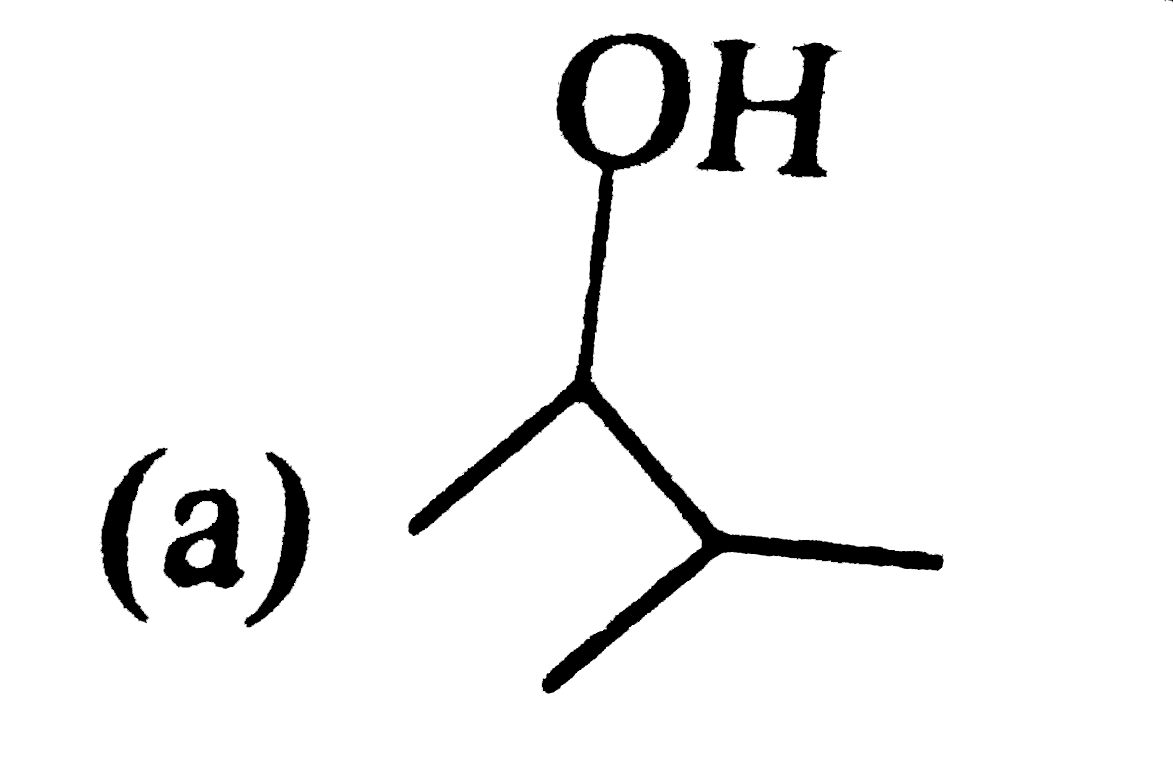
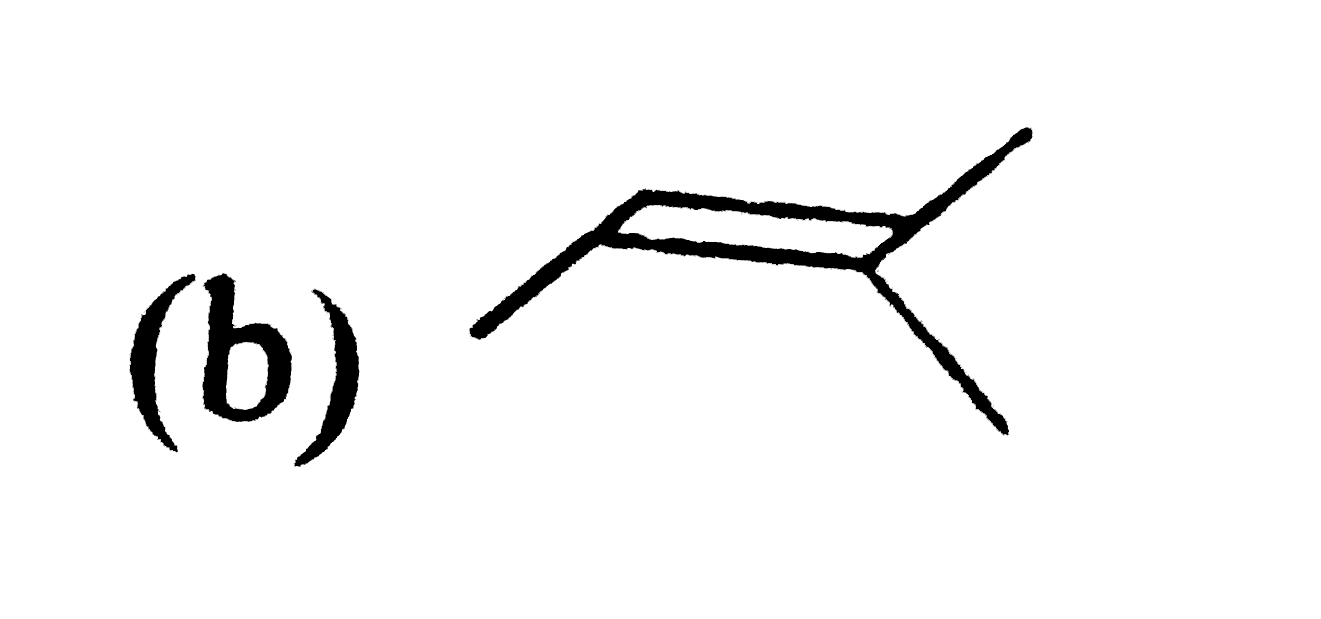
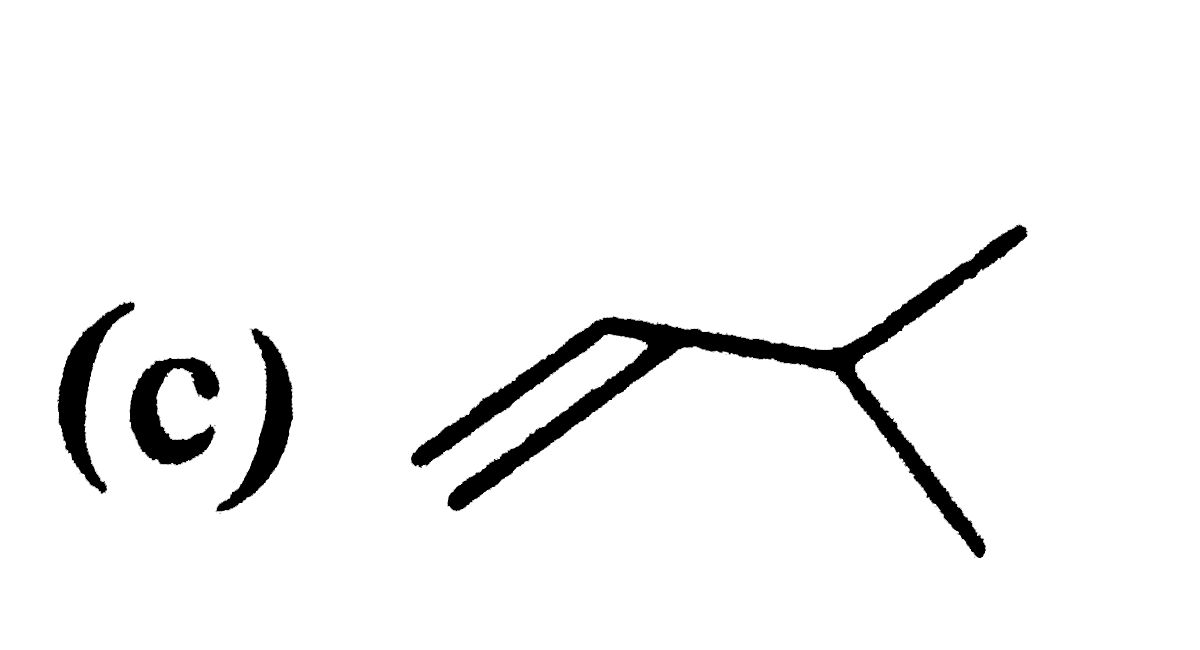
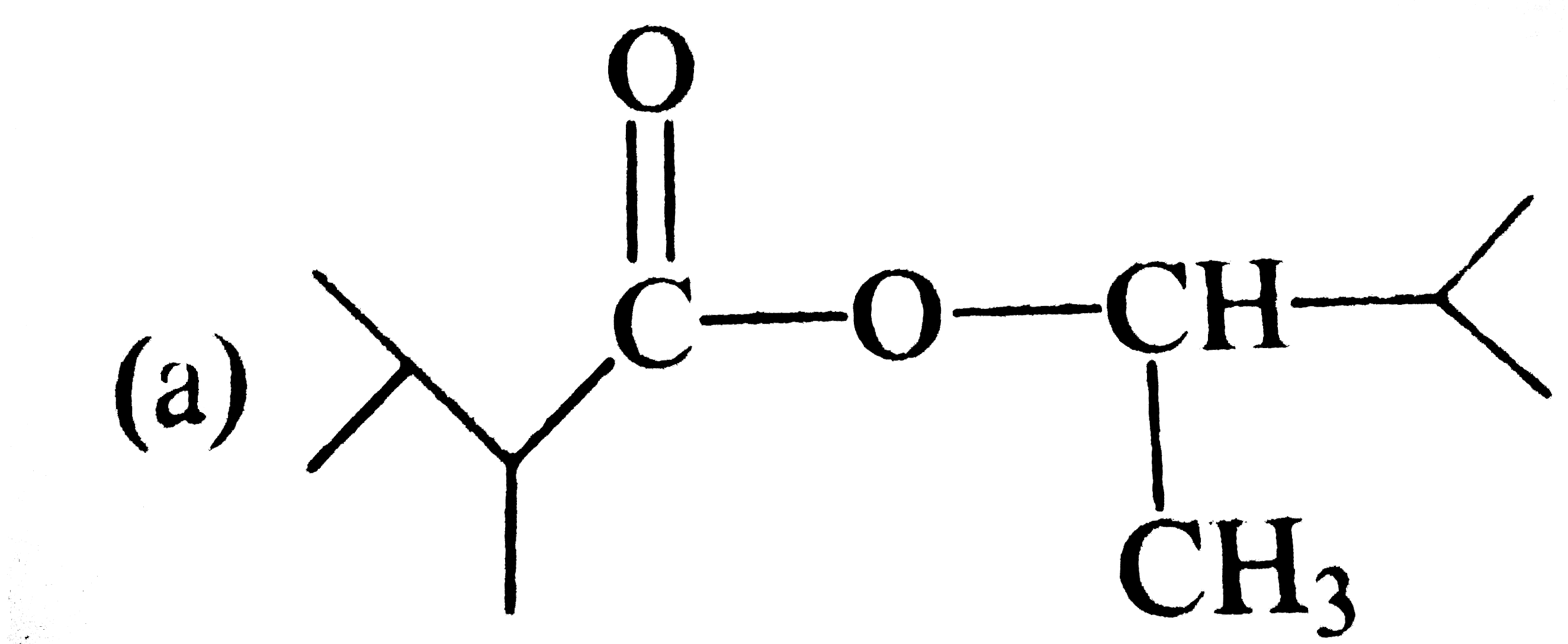
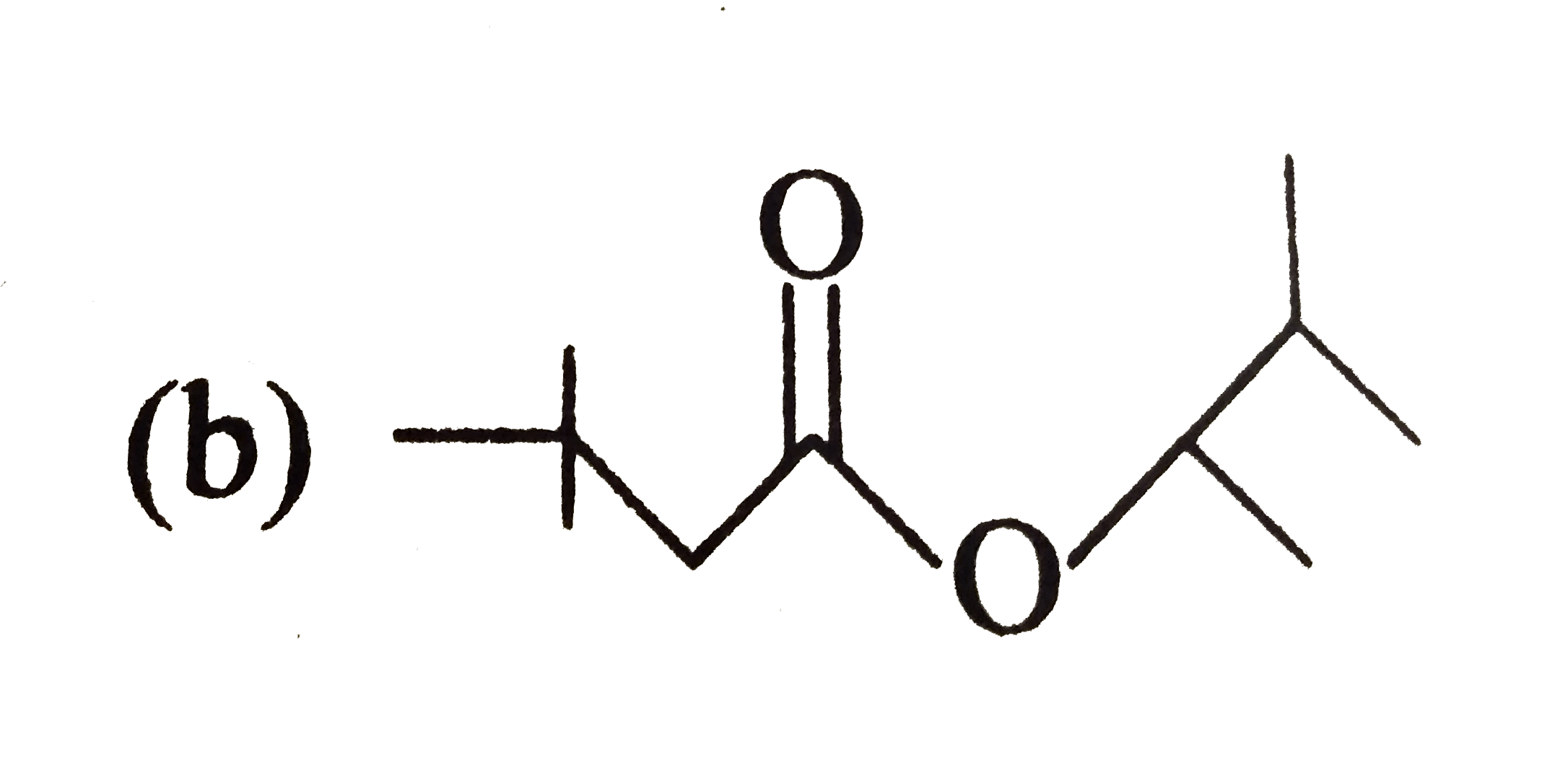
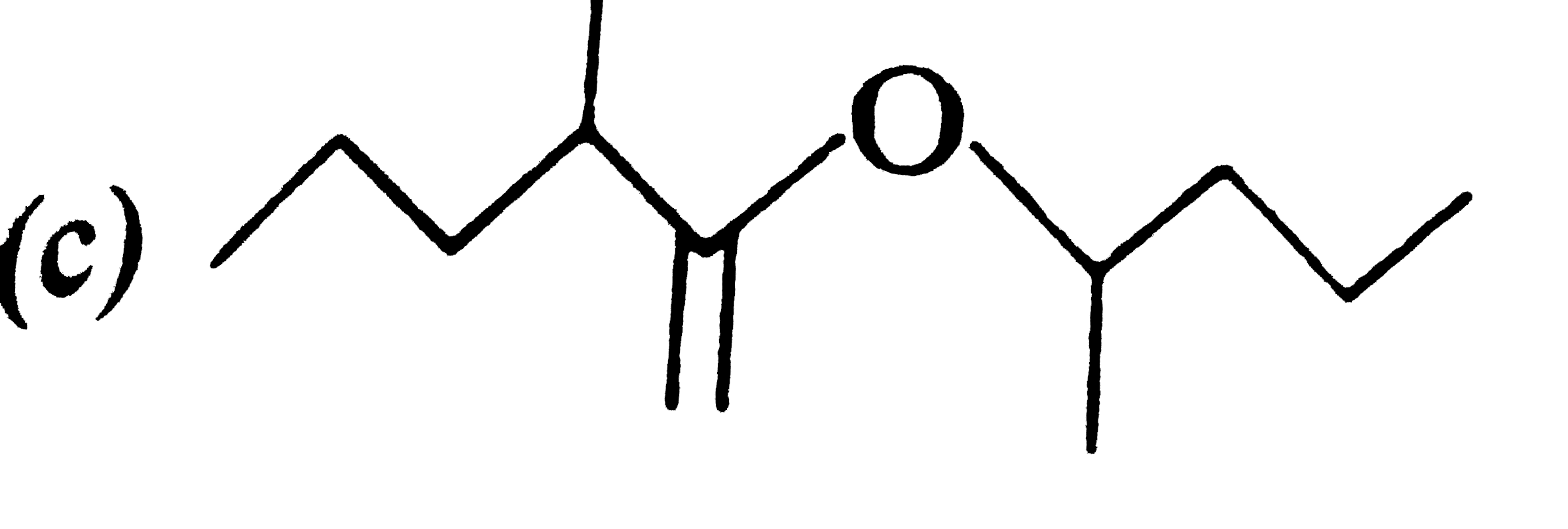
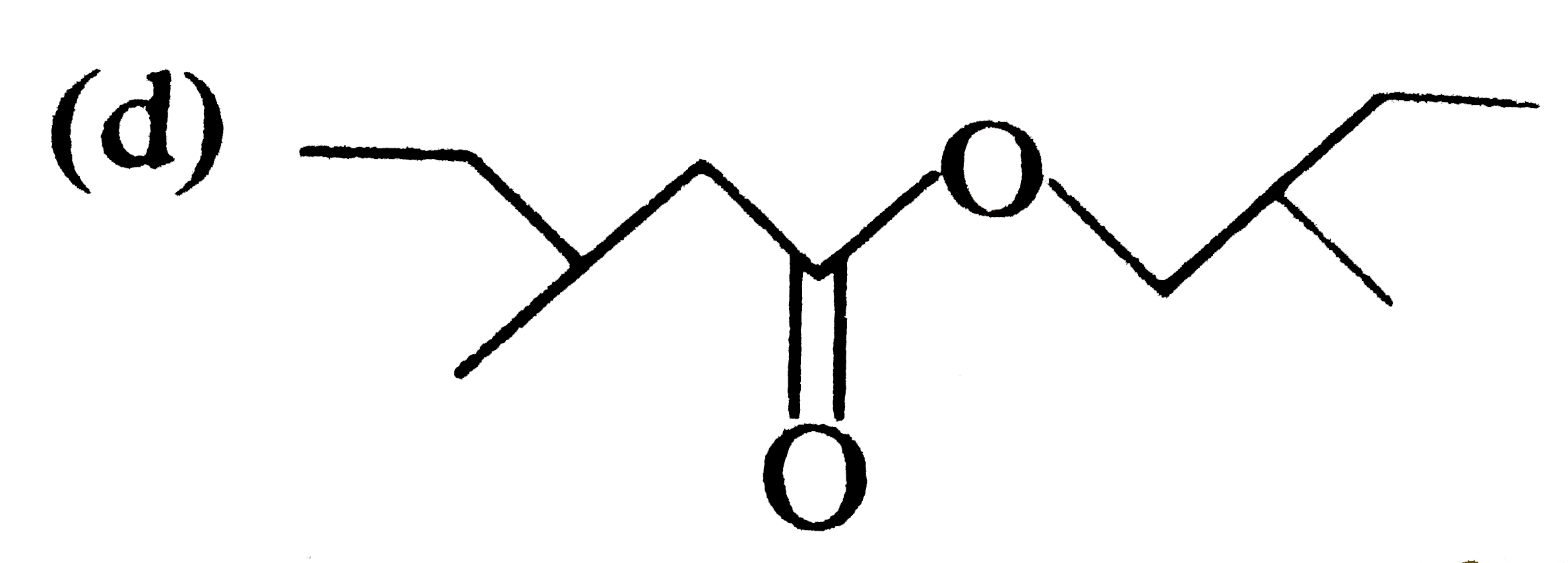
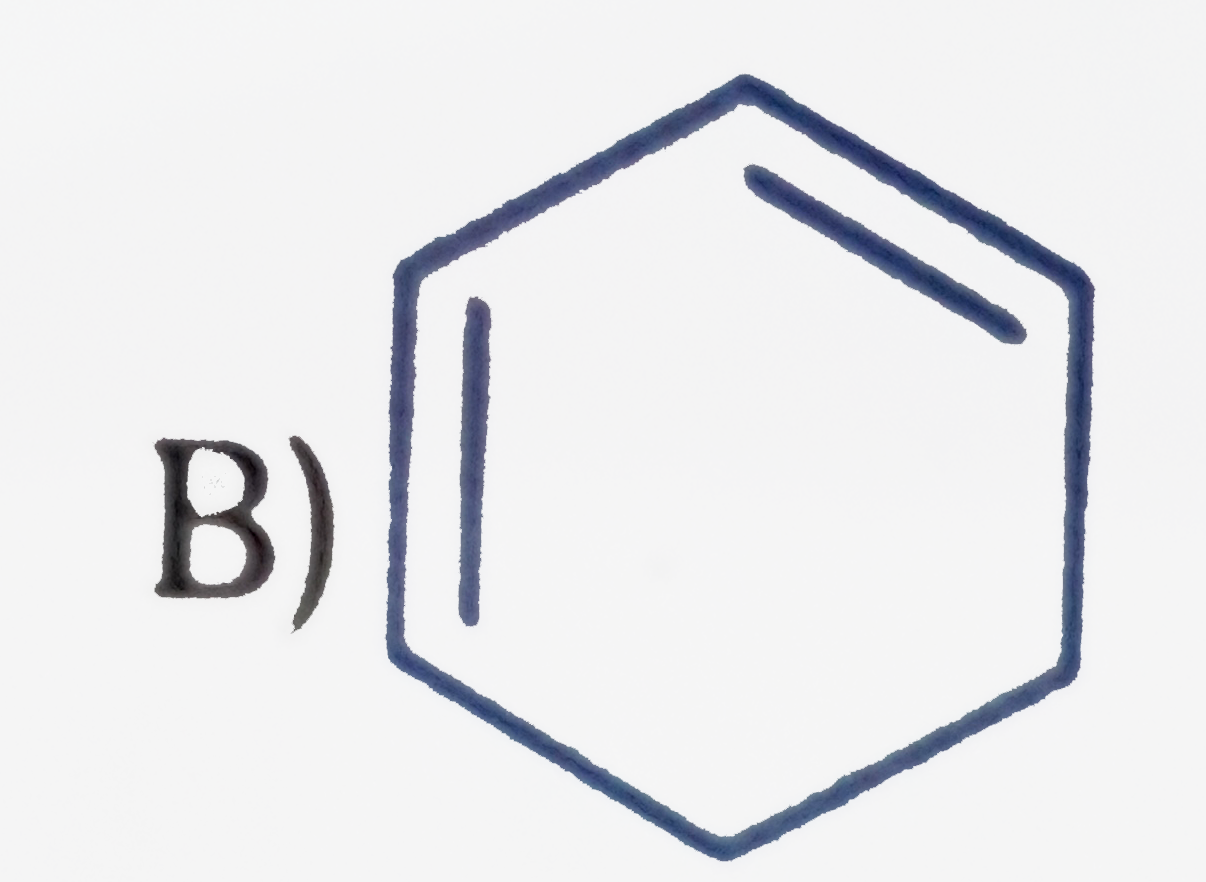
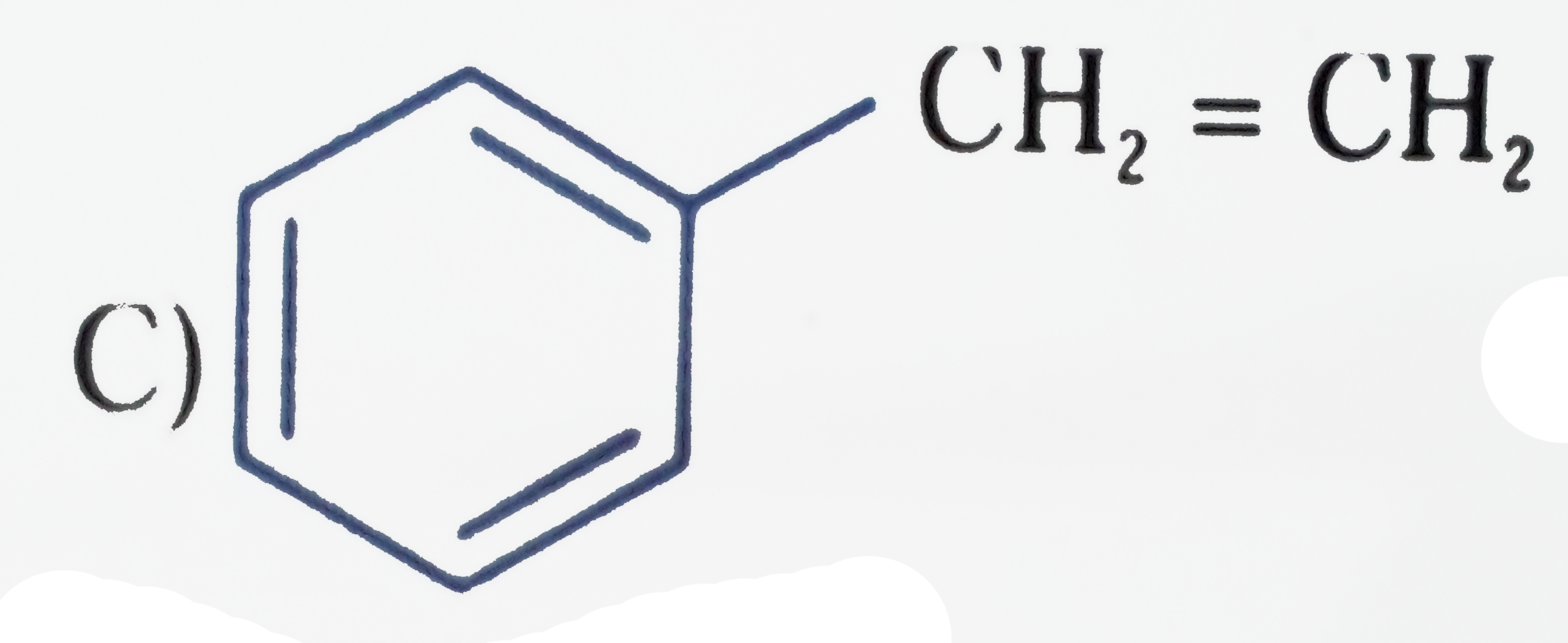
An organic acid (A), C_5 H_(10) O_2 reacts with Br_2 in the presence of phosphorus to give (B). Compound (B) contains an asymmetric carbon atom and yields (C) on dehydrobromination. Compound (C) does not show geometric isomerism and on decarboxylation gives an alkene (D) which on ozonolysis gives (E) and (F). Compound (E) gives a positive Schiff's test but (F) does not. Give structures of (A) to (F) with reasons. |
Answer» SOLUTION :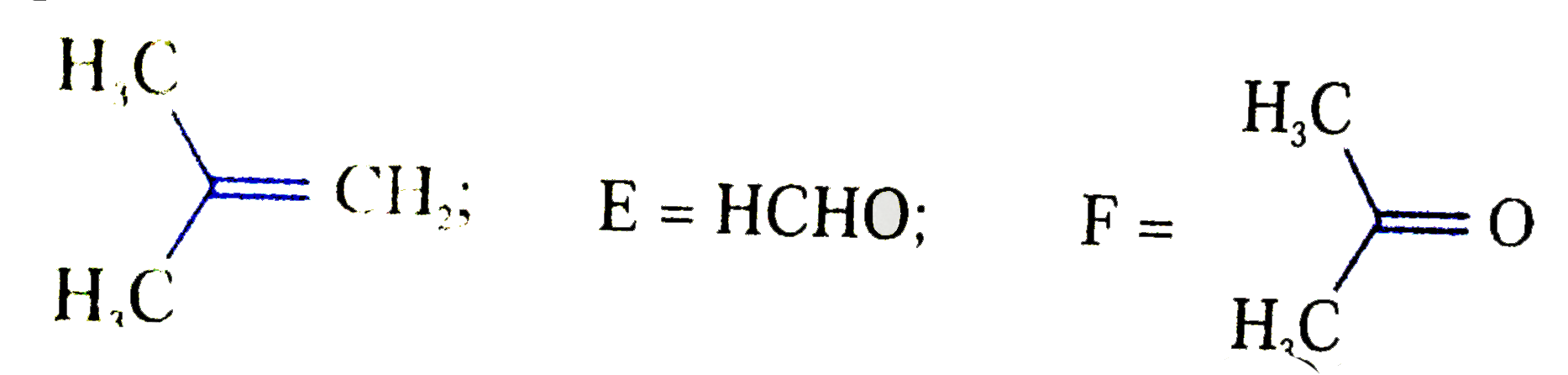
|
|
| 2. |
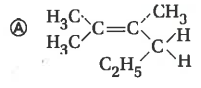
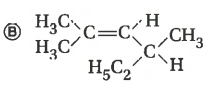
An organicacid (A) (C_(5)H_(10)O_(2)) reacts with Br_(2)in presenceof phosphorus to give (B). Compound(B) containsan asymmetriccarbon atom and yields(C). Ondehydrohalogention, compound (C) doesnot showgeometricisomersim andon decarboxylationgivesan alkene (D) whichon ozonlysis isomerism and on decarboxylation givesan alkene (D) whichon ozonolysis give (E) and (F). Compound (E) givesa positive Schiff'stest but (F) doesn 't. Give structures of (A) to (F) with reasons. |
Answer» Solution :(E) is aldehydeand (F) is ketone .The NUMBEROF C-atom in (A). (B) and (C) are5andin (D) justfour. It.salsoclear that (A) hasattlesat ONE `alpha` - hydrogenas ITIS showingHVZreaction . Twooptionsare possiblefor (A). 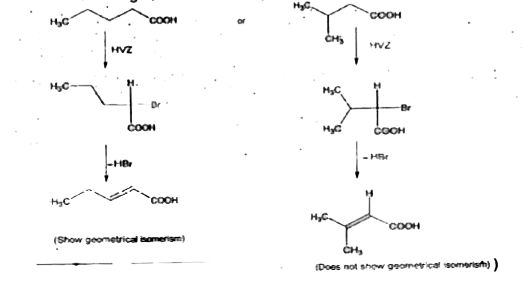 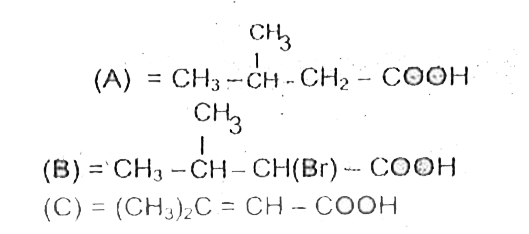
|
|
| 3. |
An organic acid A, C_3 H_4 O_3 is catalytically reduced in presence of ammonia to give B, C_3 H_7 NO_2. B reacts with acetyl chloride, hydrochloric acid and alcohols. It can also react with nitrous acid to give another compound C, C_3 H_6 O_3, along with the evolution of nitrogen. What are A, B and C. Give reasons? |
Answer» Solution :COMPOUND A is acid having ONE -COOH group only, the REMAINING part `C_(2)H_(3)O` can be `CH_(3)-overset(O)overset(||)(C)-` only hence, STRUCTURAL formula of A is `CH_(3)-overset(O)overset(||)(C)-CO OH` on catalytic reduction keto group is converted into secondary alcohol which with ammonia will GIVE amino acid, i.e., 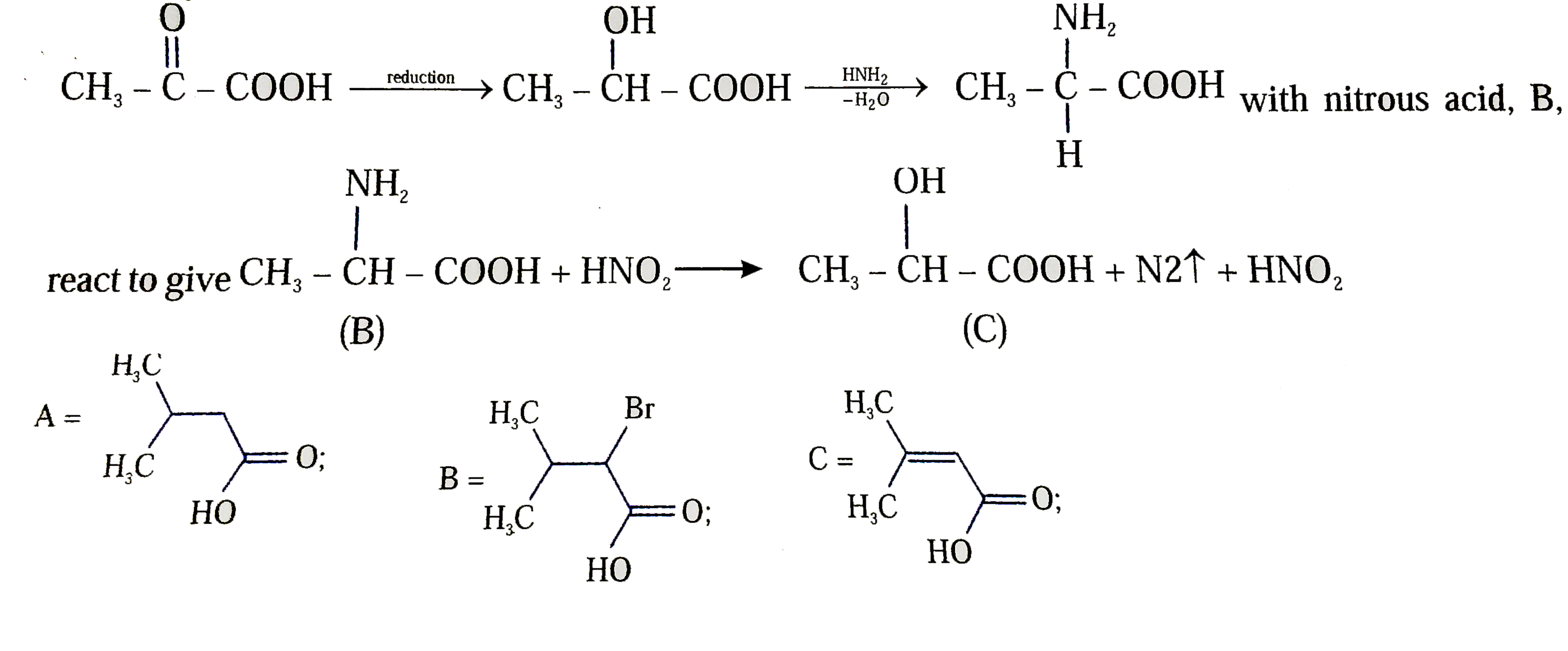
|
|
| 4. |
An organci compound C_(6) H_(4) O_(2) NCl (A) reacts with a,la,oo tp goveC_(6) H_(5)O_(3)N (B). On reduction with tinandHCl, (B) givesC_(6)H_(7)ON (C) whereason milder reduction it gives (D) C_(6) H_(7) O_(2) N, which rearranges in the presenceof a mineral acid to give a new compound (E). Identify the variouscompoundsfrom (A), to (E). |
Answer» Solution :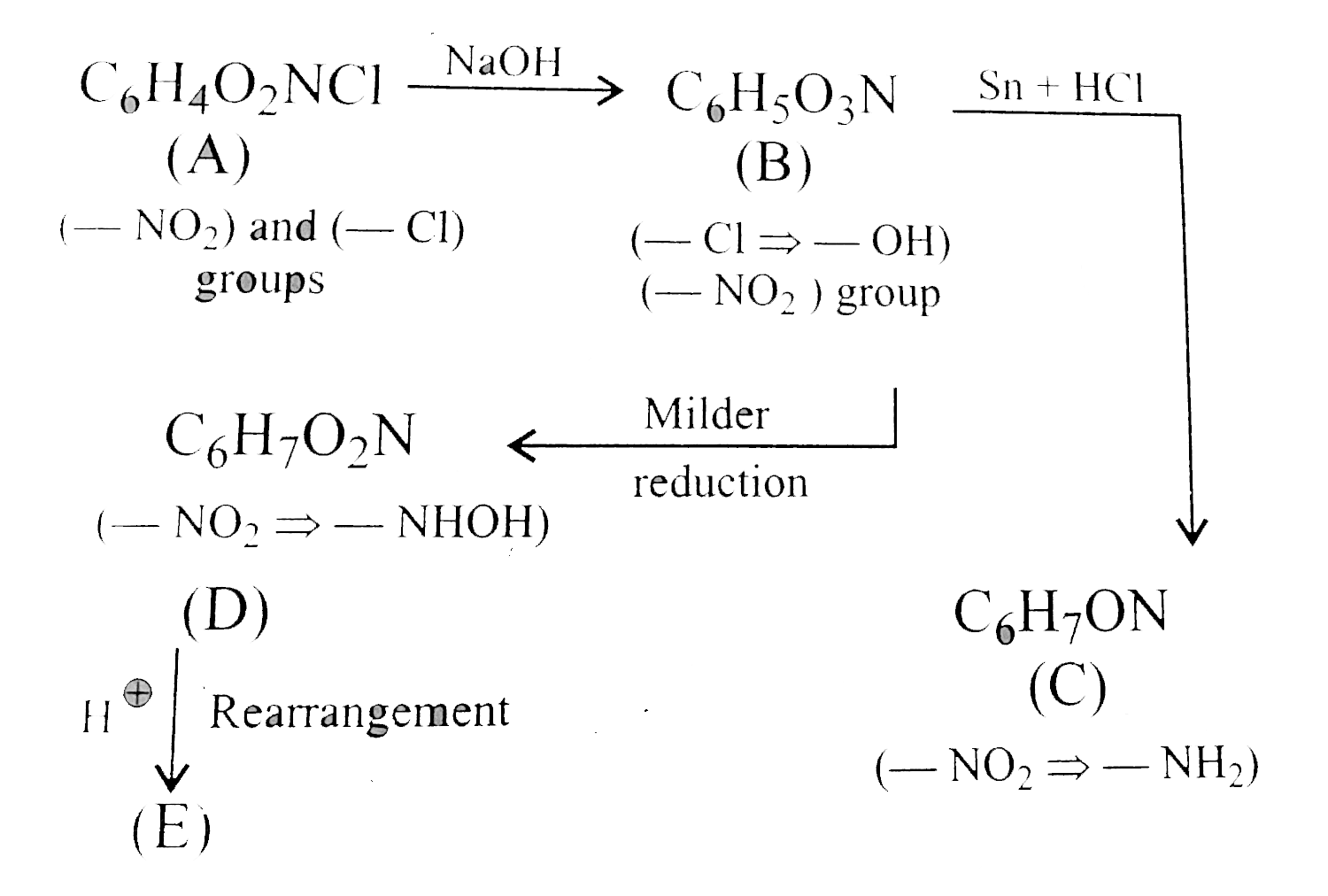 `(D)` to `(E)` formation shows rerrangement of `(-NHOH)` group in which `(OH)` group from `(NHOH)` migrates to `p-` positon. So `p-` positon is vacant. Therefore, `(-NO_(2))` and `(Cl)` groups in`(A)` MUST be PRESENT at ortho-positons. `D.U` in `A = ((2n_(C) +2)+n_(Cl) - n_(N) - n_(H))/(2)` `= ((2xx6+2)+1-1-4)/(2) = 5^(@)` `5 D.U` in `(A)` suggests BENZENE RING with `4.D.U` in zenen and`1 D.U` in `(NO_(2))` group. `(NO_(2))` group`(-NO_(2))` and `(-Cl)` groups are at ortho-positon. 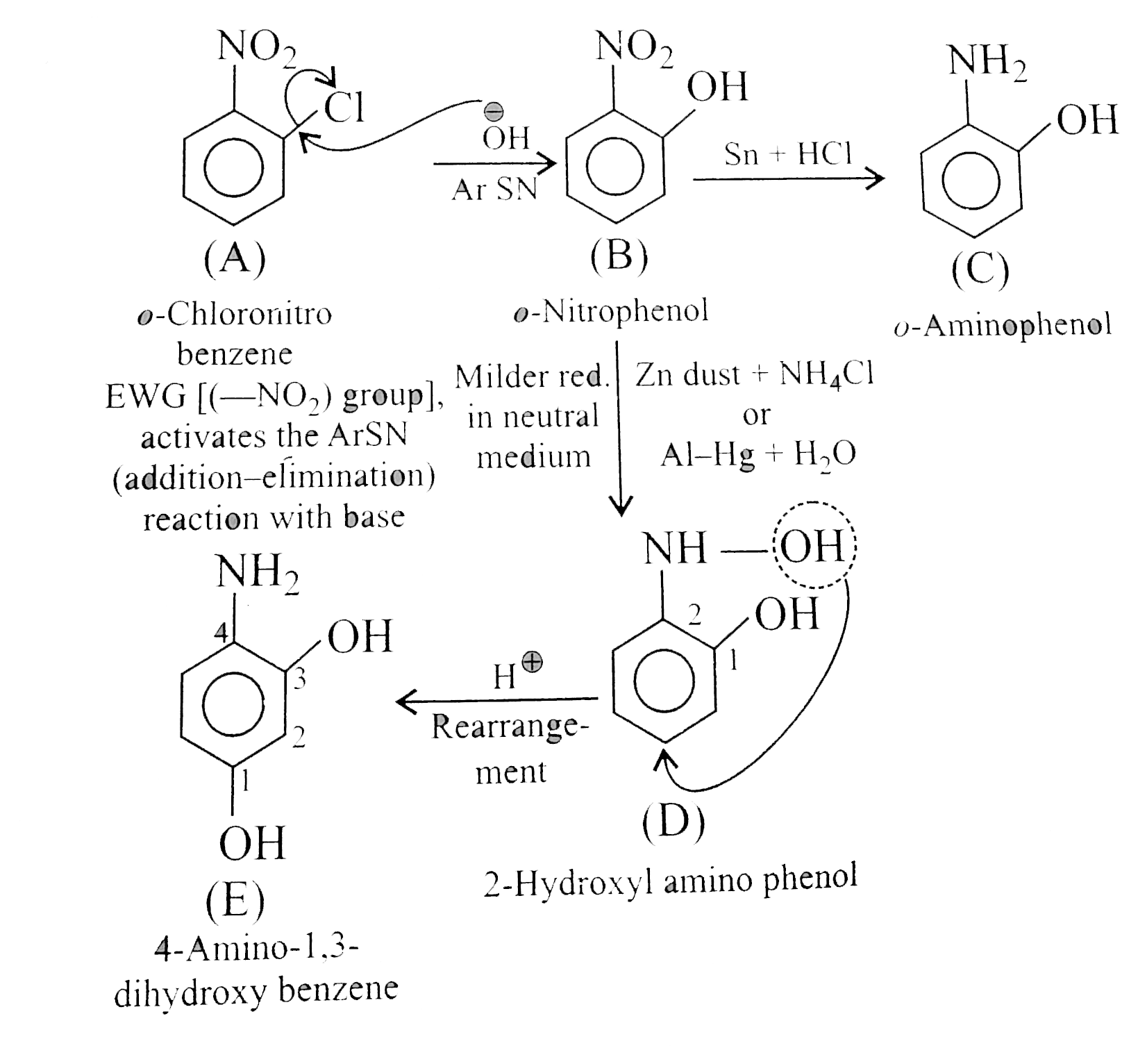
|
|
| 5. |
An organic (A) reacts with PCl_(5)to produce another compound (B). (B) reacts with magnesium metal in presence of ether to produce a Grignard reagent (C). (C) reacts with ethanal and the3 product is hydrolysed to produce propan-2-ol. Identify (A), (B) and (C) and explaiin the reactions. |
|
Answer» Solution :(i) Since prop-2-ol is OBTAINED by the action of a grignard reagent (C) on ethanal followed by hydrolysis, therefore, grignard reagent (C) must be `CH_(3)MgCl` `underset("Methylmagg. Chloride")(CH_(3)MgCl)+underset("Ethanal")(CH_(3)CHO) to [CH_(3)-overset(OMgBr)overset(|)(C)H-CH_(3)]overset(H^(+)//H_(2)O)to underset("Propan-2-ol")(CH_(3)-overset(OH)overset(|)(C)H-CH_(3))` (ii) Since `CH_(3)MgCl` is obtained by the action of Mg metal on COMPOUND (B), therefore, (B) must be methyl chloride, `CH_(3)Cl` `underset("Methyl chloride (B)")(CH_(3)Cl) + Mg overset("Ether")to underset("Methylmag. chloride (C)")(CH_(3)MgCl)` (iii) Since `CH_(3)Cl` is formed by the action of `PCl_(5)` on compound (A), therefore, compound (A) must be methanol, `CH_(3)OH`. `underset("Methanol (A)")(CH_(3)OH)+PCl_(5)to underset("Methyl chloride (B)")(CH_(3)Cl)+POCl_(3)+HCl` |
|
| 6. |
An ore which does not contain oxygen is |
|
Answer» BAUXITE |
|
| 7. |
An ore sample of galena (PbS) is contaminated with zince blende (ZnS). Name one chemical which can be used to concentrate galena selectively by froth floatation method? |
| Answer» Solution :SODIUM cyanide (NACN) may be used to CONCENTRATE GALENA SELECTIVELY. | |
| 8. |
Anoresample ofgalena(PbS) iscontaminatedwith zinc blende (ZnS). Name one chemical whichcan be usedto concentrategalenaselectivelybyfrothfloatationprocess. |
| Answer» SOLUTION :The chemicalissodiumcyanide(NaCN).Itformsassolublezinc complex,` Na_2 [ ZN (CN)_4] `with ZnS whichgoes intosolutionandthusprevents itform formingthe froth. Underthese conditions,onlyPbSforms frothandhencecan beseparatedfrom ZnS IMPURITY. | |
| 9. |
An ore of tin containing FeCrO_4 is concentrated by : |
|
Answer» magnetic separation |
|
| 10. |
Anoreof tincontainingFeCrO_4is concentrated by …………. . |
|
Answer» |
|
| 11. |
An ore of potassium is: |
|
Answer» Carnallite |
|
| 13. |
An ore is found to contain ._(90)^(232)Th and it's stable end product is in atom ratio of 1:3 respectively.How many times the age of ore will be that of half life of ._(90)^(232)Th? |
|
Answer» |
|
| 14. |
An ore of potassium is |
|
Answer» CARNALLITE |
|
| 15. |
An ore is subjected to roasting on doing so, agus A is liberate and the metal is obtained in state. Il gas turns acidified dichromate paper green the one is |
|
Answer» Casiterite `:.` It should be sulphide ore. |
|
| 16. |
An ore contains PbS and ZnS. Sodium cyanide is used as depressant. Which of these sulphide comes with the froth? |
| Answer» SOLUTION :PBS COMES with the FROTH. | |
| 17. |
An ore contains PbS, ZnS, and FeS2, During separation of the three by froth flotation, the role ofCuSO_(4) |
|
Answer» To make Zns wettable by froth |
|
| 18. |
An ore contains 1.24% of the mineral argentite, Ag_(2)S by mass. How many grams of this ore would have to be processed in order to obtain 1.0 g of pure solid silver? |
|
Answer» 46.3 g To get 1 mole of Ag, PURE `Ag_(2)S` required `=(1)/(2)"mole"` `therefore" To get 1/108 mole of Ag, pure "Ag_(2)s` required `=(1)/(216)"mole"=(1)/(216)xx(2xx108+32)g=(248)/(216)g` `therefore" ORE required "=(100)/(1.24)xx(248)/(216)g=92.6g` |
|
| 19. |
An ore containing ZnS and PbS can be seperated by treating them with an agent like NaCN in froth floatation process. What is the name of this agent in metallurgy ? |
|
Answer» DEPRESSANT AGENT |
|
| 20. |
An ore after levigation is found to contain basic impurities . Then flux which can be used during smelting is : |
|
Answer» `SiO_2` |
|
| 21. |
An ordinary oxygen contains |
|
Answer» Only `O - 16` isotopes |
|
| 22. |
An orangesolid (A) on heating gives a green residue along with a gas (C ). (C ) on treatment with Mg gives a compounds (D) which hydrolyses to give a gas (E) which on reaction with K_(2)HgI_(4) gives a ppt. An aq. Solution of (E) when passed through a solution of Hg^(2+) salt gives a ppt (F). The solution of (E) when passed through a solution of a metallic sulphide (M) white in colour gives a ppt which dissolves on addition of excess of (E). The metal in the metallic sulfide is |
|
Answer» Al 
|
|
| 23. |
An orangesolid (A) on heating gives a green residue along with a gas (C ). (C ) on treatment with Mg gives a compounds (D) which hydrolyses to give a gas (E) which on reaction with K_(2)HgI_(4) gives a ppt. An aq. Solution of (E) when passed through a solution of Hg^(2+) salt gives a ppt (F). The solution of (E) when passed through a solution of a metallic sulphide (M) white in colour gives a ppt which dissolves on addition of excess of (E). Gas (C ) is |
|
Answer» `N_(2)O` 
|
|
| 24. |
An orangesolid (A) on heating gives a green residue along with a gas (C ). (C ) on treatment with Mg gives a compounds (D) which hydrolyses to give a gas (E) which on reaction with K_(2)HgI_(4) gives a ppt. An aq. Solution of (E) when passed through a solution of Hg^(2+) salt gives a ppt (F). The solution of (E) when passed through a solution of a metallic sulphide (M) white in colour gives a ppt which dissolves on addition of excess of (E). The colour of ppt (F) is |
|
Answer» BLACK 
|
|
| 25. |
An orangesolid (A) on heating gives a green residue along with a gas (C ). (C ) on treatment with Mg gives a compounds (D) which hydrolyses to give a gas (E) which on reaction with K_(2)HgI_(4) gives a ppt. An aq. Solution of (E) when passed through a solution of Hg^(2+) salt gives a ppt (F). The solution of (E) when passed through a solution of a metallic sulphide (M) white in colour gives a ppt which dissolves on addition of excess of (E). The orange solid is |
|
Answer» `Bi_(2)(CrO_(4))_(3)` 
|
|
| 26. |
An orange solid A on heating gives a colourless gas B. The gas B in dry condition is passed over heated Ca to give a solid C. The solid C further reacts with water to produce gas D, which forms a blue coloured compound Eon reaction with copper sulphate solution. Identify A, B, C, D, E and give the sequence of reactions involved. |
|
Answer» SOLUTION :The orange solid A is ammonium dichromate `(NH_4)_2Cr_2O_7`. The reactions can be explained as under : `underset("Ammonium dichromate")((NH_4)_2Cr_2O_7) overset(Delta)to underset("NITROGEN gas ")(N_2) + 4H_2O + Cr_2O_7` `underset(B)(N_2) + 3Ca overset(Delta) tounderset("Calcium nitride")(Ca_3N_2)` `underset(C)(Ca_3N_2) + 6H_2O to 3Ca(OH)_2 + underset("Ammonia D")(2NH_3)` `4NH_3(aq) + Cu^(2+)(aq) to underset("Tetraamminecopper ion E (DEEP blue )")[Cu(NH_3)_4]^(2+)(aq))` |
|
| 27. |
An orange solid (A) on heating gave a green residue (B), a colourless gas (C ) and water vapours. The dry gas (C ) when passed over heated magnesium, gave a white solid (D) which evolved a gas (E ) on reacting with water. The gas formed dense white fumes with HCl. Identify all the compounds from A to E. Give the reactions involved. The white solid (D) is : |
|
Answer» MgO |
|
| 28. |
An orange solid (A) on heating gave a green residue (B), a colourless gas (C ) and water vapours. The dry gas (C ) when passed over heated magnesium, gave a white solid (D) which evolved a gas (E ) on reacting with water. The gas formed dense white fumes with HCl. Identify all the compounds from A to E. Give the reactions involved. The green residue (B) has the formula |
|
Answer» `CrO_(5)` |
|
| 29. |
An orange solid A on heatinggave qa greenresidue B, a colourless gas C , and water vapour .The drygas C onpassingoverbeated Mg gave awhite solid D.D on reaction with water gave a gas E formeddense white furmjes with HCI identify A to E and give the reactioninvolved |
|
Answer» SOLUTION :The gas E must be AMMONIA so D is maganessium nitride and gas C is mirogen, It is expectedthat the orange solid A is ammonium dishromade .The greenresidue B is `Cr_(2)O_(3) ` `underset((A))((NH_(4))_(2)Cr_(2)O_(7))rarrunderset((B))(Cr_(2)O_(3))+underset((C))(N_(2))+4H_(2)O` `N_(2) +3Mg rarr underset((D))(Mg_(3)N_(2))` `Mg_(3)N_(2)+6H_(2)O rarr 3Mg(OH)_(2) +underset((E))(2NH_(3))` `NH_(3) +HCI rarr NH_(4)CI` (Dense WHITE fumes) |
|
| 30. |
An orange solid a on heating gave a green residue B, a colourless gas c and water vapour. The dry gas c on passing over heated Mg gave a white solid D. D on reaction with water gave a gas E which formed dense white fumes with HCl. Identify A to E and give the reaction involved. |
| Answer» | |
| 31. |
An orangered precipitate abtained by passing H_(2)S through an acidified solution of an inoranganicsalt indisates the presence of |
|
Answer» Cadmium |
|
| 32. |
An orange precipitate of II group is dissolved in conc. HCl. The solution when treated with excess of water turns milky due to formation of: |
|
Answer» SN(OH)Cl |
|
| 33. |
An oragne colour solid (A) on heating gives a colourless gas (B) and colourless vapours (C) which on condensatio gives a colourless neutral liquid and a green residuce (D) which is a metal oxide. Gas - B gives a pungent odoured gas when reacts with hydrogen catalytically. Neutral liquid above formed converts anhydrous copper sulphate to blue Neutral liquid formed in the reaction is ........ |
|
Answer» `NH_(4)OH` `underset((A))underset("Orange")((NH_4)_2)Cr_2O_7overset(Delta)rarrunderset((B))underset((a))(N_2)+underset((C))underset((a))(4H_(2)O)+Cr_(2)O_(3)rarrunderset("Liquid")underset("Neutral")underset(uarr)(N_(2_((g))))+H_(2)O_((l))+underset((D))underset("green")(Cr_(2)O_3)` Natural liquid is water `(H_2O)` |
|
| 34. |
An orange precipitateof group II is dissolve in cone HCI the solution whentreated with excess of water turn milky due to formation of |
|
Answer» SN(OH)CI `SbCI_(3) + H_(2)O rarr SbOCI + 2HCI` |
|
| 35. |
An orange coloured solid (A) on heating left a green residue (B) with evolution of a colourless gas (C) and water vapour. When the gas (C) is passed over heated Mg a white solid (D) is formed. The soid (D) on boiling with water produces a gas (E), that forms a dense white fumes when comes in contact with HCI. Identify (A) to (E) from the options given below. |
|
Answer» `{:(A,B,C,D,E),(Cr_2O_3, CrO_3, Mg_3N_2, N_2, NH_3):}` As the gas .E. forms a dense white fumes with `HCl`, so it might be `NH_3`.As it is formed by boiling .D. with water, so .D. is `Mg_3N_2` and .C. is `N_2` gas. Hence, the organge coloured solid .A. is `(NH_4)_2 Cr_2 O_7` which on heating leaves the RESIDUE `Cr_2O_3(B)`. `underset("Orange")underset((A))((NH_4)_(2)) Cr_2O_7 rarr underset(("Green"))underset((B))(Cr_2O_3) + 4H_2O UARR + underset((C))(N_2) uarr` `3Mg + N_2 rarr underset((D))(Mg_3N_2) ` `3Mg_3N_2 + 6H_2O to 3Mg(OH)_(2) + overset((E))(2NH_3) uarr` `underset((E))(NH_3) + HCl rarr underset(("Dense white fumes"))(NH_4Cl)`. |
|
| 36. |
An oragne colour solid (A) on heating gives a colourless gas (B) and colourless vapours (C) which on condensatio gives a colourless neutral liquid and a green residuce (D) which is a metal oxide. Gas - B gives a pungent odoured gas when reacts with hydrogen catalytically. Neutral liquid above formed converts anhydrous copper sulphate to blue Gas 'B' in the above paragraph is ........ |
|
Answer» `H_2` `underset((A))underset("Orange")((NH_4)_2)Cr_2O_7overset(Delta)rarrunderset((B))underset((a))(N_2)+underset((C))underset((a))(4H_(2)O)+Cr_(2)O_(3)rarrunderset("Liquid")underset("NEUTRAL")underset(uarr)(N_(2_((g))))+H_(2)O_((l))+underset((D))underset("green")(Cr_(2)O_3)` B - is `N_2` gas |
|
| 37. |
An oragne colour solid (A) on heating gives a colourless gas (B) and colourless vapours (C) which on condensatio gives a colourless neutral liquid and a green residuce (D) which is a metal oxide. Gas - B gives a pungent odoured gas when reacts with hydrogen catalytically. Neutral liquid above formed converts anhydrous copper sulphate to blue Compound 'A' in the above paragraph is ....... |
|
Answer» `K_2Cr_(2)O_7` `underset((A))underset("Orange")((NH_4)_2)Cr_2O_7overset(Delta)rarrunderset((B))underset((a))(N_2)+underset((C))underset((a))(4H_(2)O)+Cr_(2)O_(3)rarrunderset("Liquid")underset("Neutral")underset(uarr)(N_(2_((g))))+H_(2)O_((l))+underset((D))underset("green")(Cr_(2)O_3)` SINCE Gas B - on reaacts with Hydrogen give pungent odoured gas i.e. `NH_(3)` the staring material .A. Should contain NITROGEN . So A - is `(NH_4)_(2)Cr_(2)O_7` |
|
| 38. |
An optically active substance A is decomposing into optically active substance B and C as : A.overset(k=10^(-3) min.^(-1))(to) 2B +C the specific rotations of A,B and C are + 40^(@), + 10^(@) and -30^(@) per mole , respectively Initially A and C were present in 4:3 mole ratio After what time (in min), the sample becomes optically inactive? ["Given" In 7/5 = 0.34, In (20)/(13) =0.43] |
|
Answer» |
|
| 39. |
An or ganic acid was converted into its calcium salt and it was dry distilled. The product formed is formaldehyde the organic acid is |
|
Answer» Oxalic acid |
|
| 40. |
An optically active halide when allowed to react with CN^(-) gives a racemic mixture. The halide is most likely to be |
| Answer» ANSWER :C | |
| 41. |
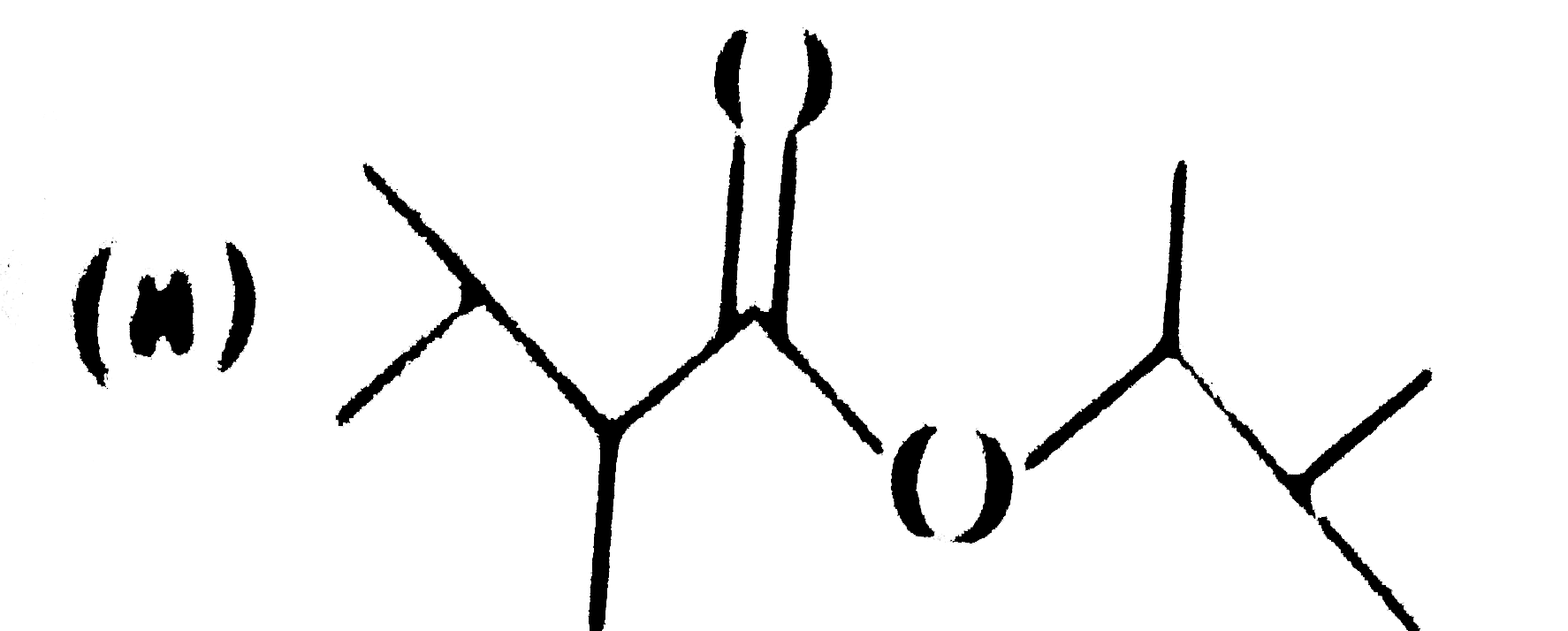
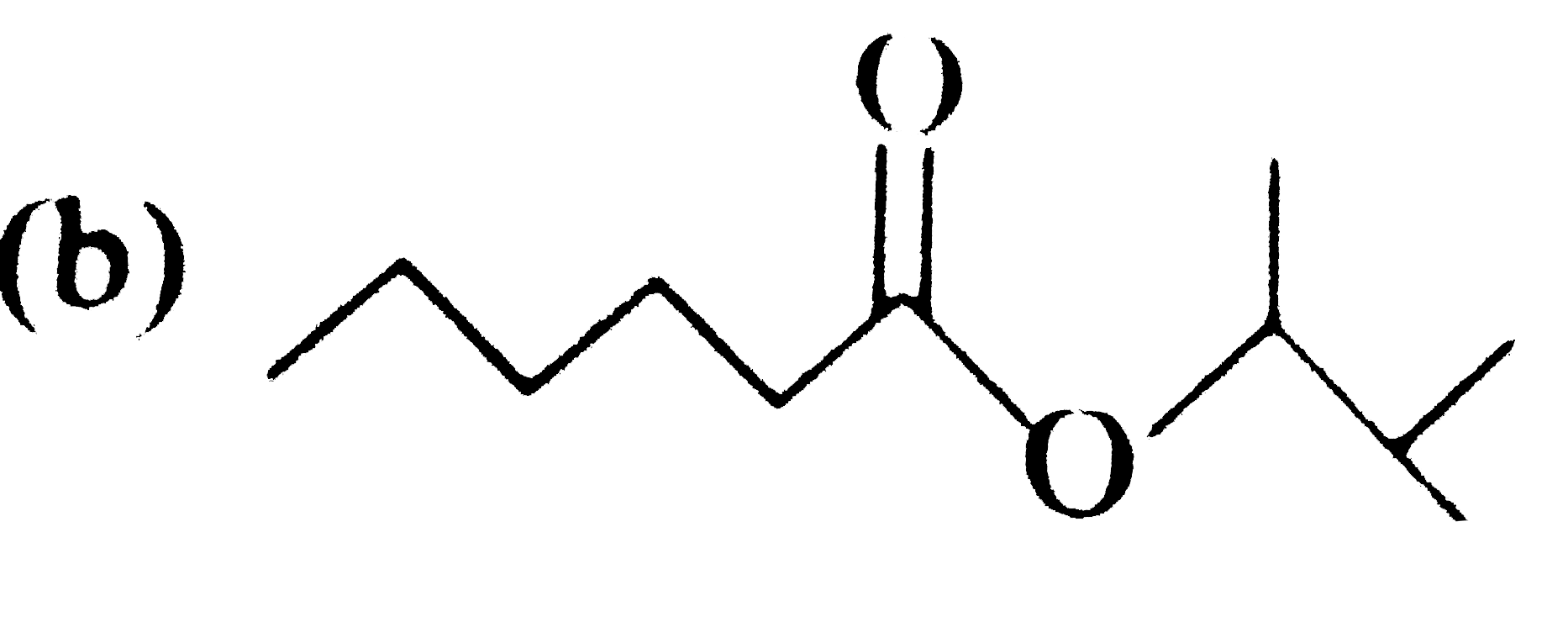
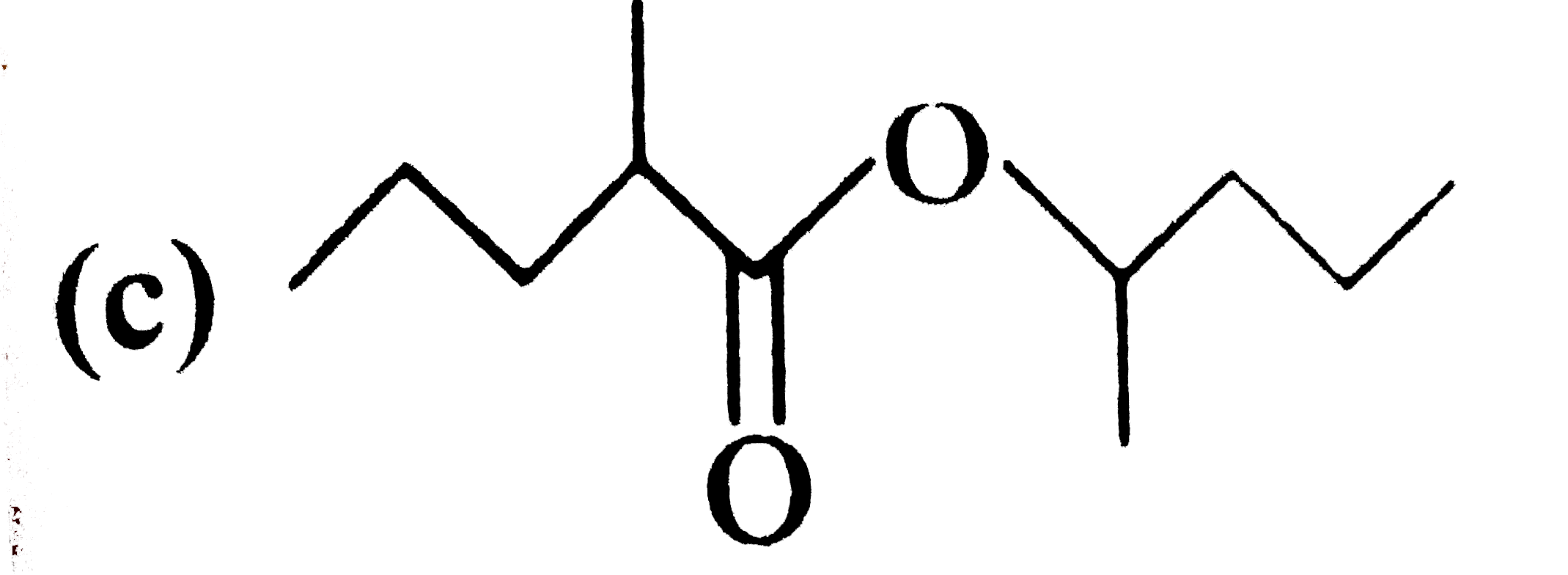
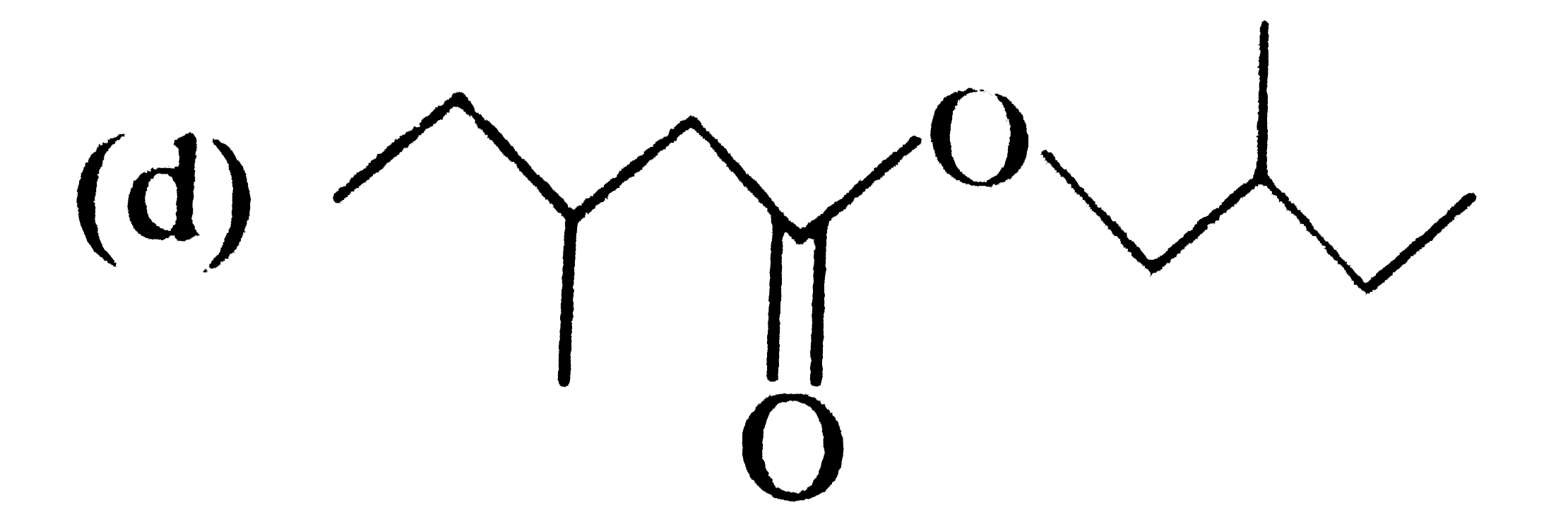
An optically active ester 'F' have molecular weight 186. Hydrolysis of 'F' gives two optically active compounds 'G' and 'H' . 'G' which is soluble in NaOH and 'H' . 'H' gives a positive iodoform test and on warming with conc. H_(2)SO_(4) gives 'I' with no diastereomers. When Ag salt of 'G' reacted with Br_(2) racemic mixture 'J' is formed optically active 'J' is formed when 'H' is treated with TsCl and then with NaBr. What would be the structure of F if H gives negative iodoform test ? |
|
Answer»
|
|
| 42. |
An optically active ester 'F' have molecular weight 186. Hydrolysis of 'F' gives two optically active compounds 'G' and 'H' . 'G' which is soluble in NaOH and 'H' . 'H' gives a positive iodoform test and on warming with conc. H_(2)SO_(4) gives 'I' with no diastereomers. When Ag salt of 'G' reacted with Br_(2) racemic mixture 'J' is formed optically active 'J' is formed when 'H' is treated with TsCl and then with NaBr. Find out correct structure of I : |
|
Answer»
|
|
| 43. |
An optically active compound 'X' evolve CO_(2) with NaHCO_(3). The 'X'reactwithLiAlH_(4) gives chiral compound. Thecompound 'X' is |
|
Answer» `CH_(3) - CH_(2)-CH_(2)-CH_(2) - COOH` |
|
| 44. |
An optically active ester 'F' have molecular weight 186. Hydrolysis of 'F' gives two optically active compounds 'G' and 'H' . 'G' which is soluble in NaOH and 'H' . 'H' gives a positive iodoform test and on warming with conc. H_(2)SO_(4) gives 'I' with no diastereomers. When Ag salt of 'G' reacted with Br_(2) racemic mixture 'J' is formed optically active 'J' is formed when 'H' is treated with TsCl and then with NaBr. Find out structure of F: |
|
Answer»
|
|
| 45. |
an optically active compouns is |
|
Answer» 1-bromobutane acid (B) `CH_(3)-CH_(2)- overset(**) CHBr-COOH` (c) `(CH_(3))_(3)CBr` (d) `CH_(3)-CH(CH_(3))-CH_(2)Br` The COMPOUND (b) has one asymmetric carbon ATOM, therefore, it has non-sugar imposable mirror-images and shows optical activity. |
|
| 46. |
An optically active compound with molecular formula C_6 H_(11) N dissolves in dilute aqueous HCl and releases N_2 on treatment with HNO_2. The compound on Hofmann eliminatioon gives |
|
Answer»
|
|
| 47. |
An optically active compound having molecular formula C_8H_(16) on ozonolysisgivesacetone (CH_3COCH_3) as one of the products . Structure of the compound is - |
|
Answer»

|
|
| 48. |
An optically active compound is: |
|
Answer» 1-bromobutane |
|
| 49. |
An optically active compound having molecular formula C_(7)H_(15)Brreacts with aqueous KOH to give a racemic mixture of products. Write the mechanism involved for this reaction. |
|
Answer» Solution :Since this is an optically active compound, the THREE alkyl GROUPS attached to central C-atom have to be different. Thus, the compound `C_(7)H_(15)Br`had the structure `C_(2)H_(5) - underset(C_(3)H_(7))underset(|)overset(CH_(3))overset(|)C - Br ` The reaction MAY be represented as under : `C_(2)H_(5) - underset(C_(3)H_(7))underset(|)overset(CH_(3))overset(|)C - Br + KOH (aq) to C_(2)H_(5) - underset(C_(3)H_(7))underset(|)overset(CH_(3))overset(|)C - OH + KBr ` Mechanism of the reaction It follows a `S_(N)1` reaction  The planar carbocation gives rise to a racemic mixture `(d + l)` due to TWO different compounds (optically active) obtained as a result of attack of OH from the front and rear of the planar carbocation. 
|
|
| 50. |
An optically active compound having molecular formula C_(8)H_(16) on ozonolysis gives acetone as one of the products. The structure of the compound is |
|
Answer»

|
|