

Saved Bookmarks
| 1. |
An organic acid A, C_3 H_4 O_3 is catalytically reduced in presence of ammonia to give B, C_3 H_7 NO_2. B reacts with acetyl chloride, hydrochloric acid and alcohols. It can also react with nitrous acid to give another compound C, C_3 H_6 O_3, along with the evolution of nitrogen. What are A, B and C. Give reasons? |
Answer» Solution :COMPOUND A is acid having ONE -COOH group only, the REMAINING part `C_(2)H_(3)O` can be `CH_(3)-overset(O)overset(||)(C)-` only hence, STRUCTURAL formula of A is `CH_(3)-overset(O)overset(||)(C)-CO OH` on catalytic reduction keto group is converted into secondary alcohol which with ammonia will GIVE amino acid, i.e., 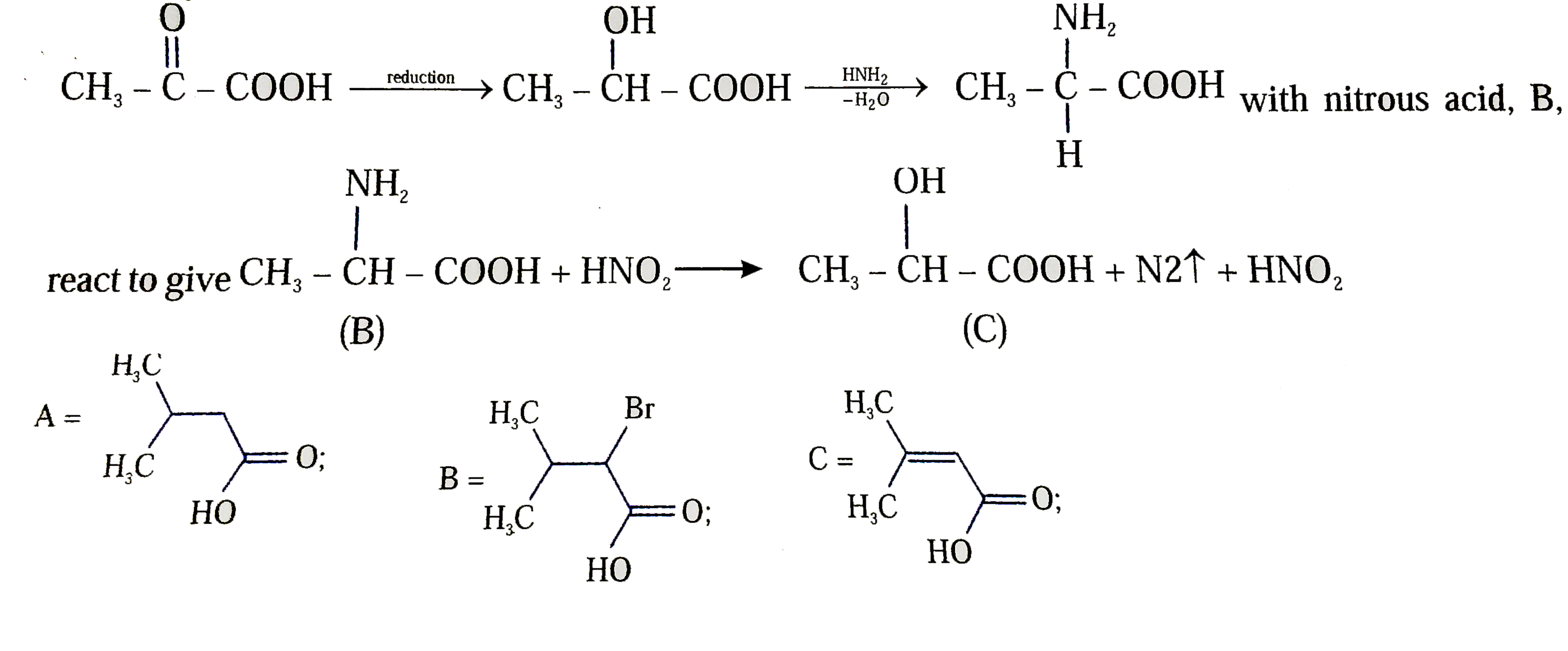
|
|