

Saved Bookmarks
| 1. |
An organci compound C_(6) H_(4) O_(2) NCl (A) reacts with a,la,oo tp goveC_(6) H_(5)O_(3)N (B). On reduction with tinandHCl, (B) givesC_(6)H_(7)ON (C) whereason milder reduction it gives (D) C_(6) H_(7) O_(2) N, which rearranges in the presenceof a mineral acid to give a new compound (E). Identify the variouscompoundsfrom (A), to (E). |
Answer» Solution :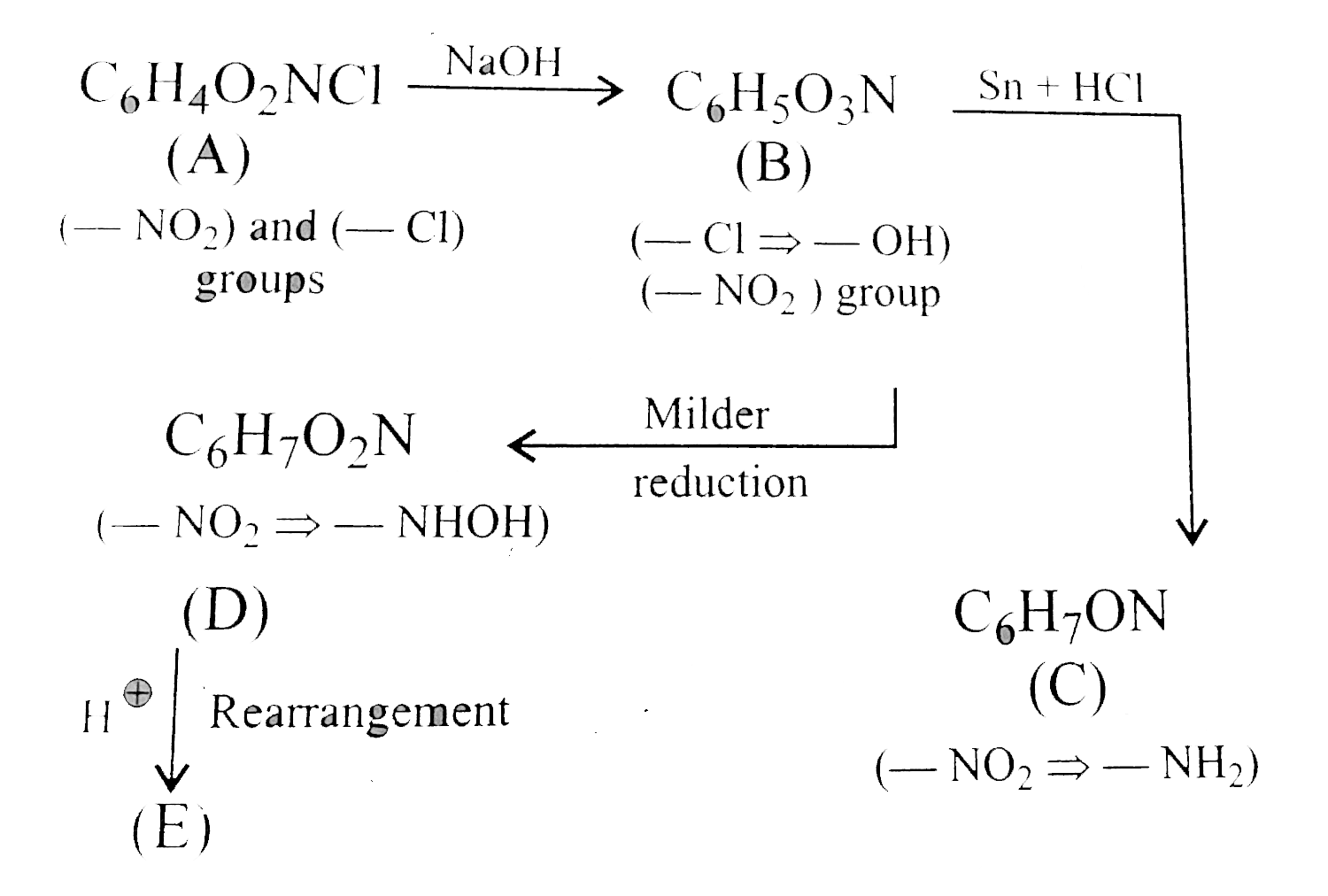 `(D)` to `(E)` formation shows rerrangement of `(-NHOH)` group in which `(OH)` group from `(NHOH)` migrates to `p-` positon. So `p-` positon is vacant. Therefore, `(-NO_(2))` and `(Cl)` groups in`(A)` MUST be PRESENT at ortho-positons. `D.U` in `A = ((2n_(C) +2)+n_(Cl) - n_(N) - n_(H))/(2)` `= ((2xx6+2)+1-1-4)/(2) = 5^(@)` `5 D.U` in `(A)` suggests BENZENE RING with `4.D.U` in zenen and`1 D.U` in `(NO_(2))` group. `(NO_(2))` group`(-NO_(2))` and `(-Cl)` groups are at ortho-positon. 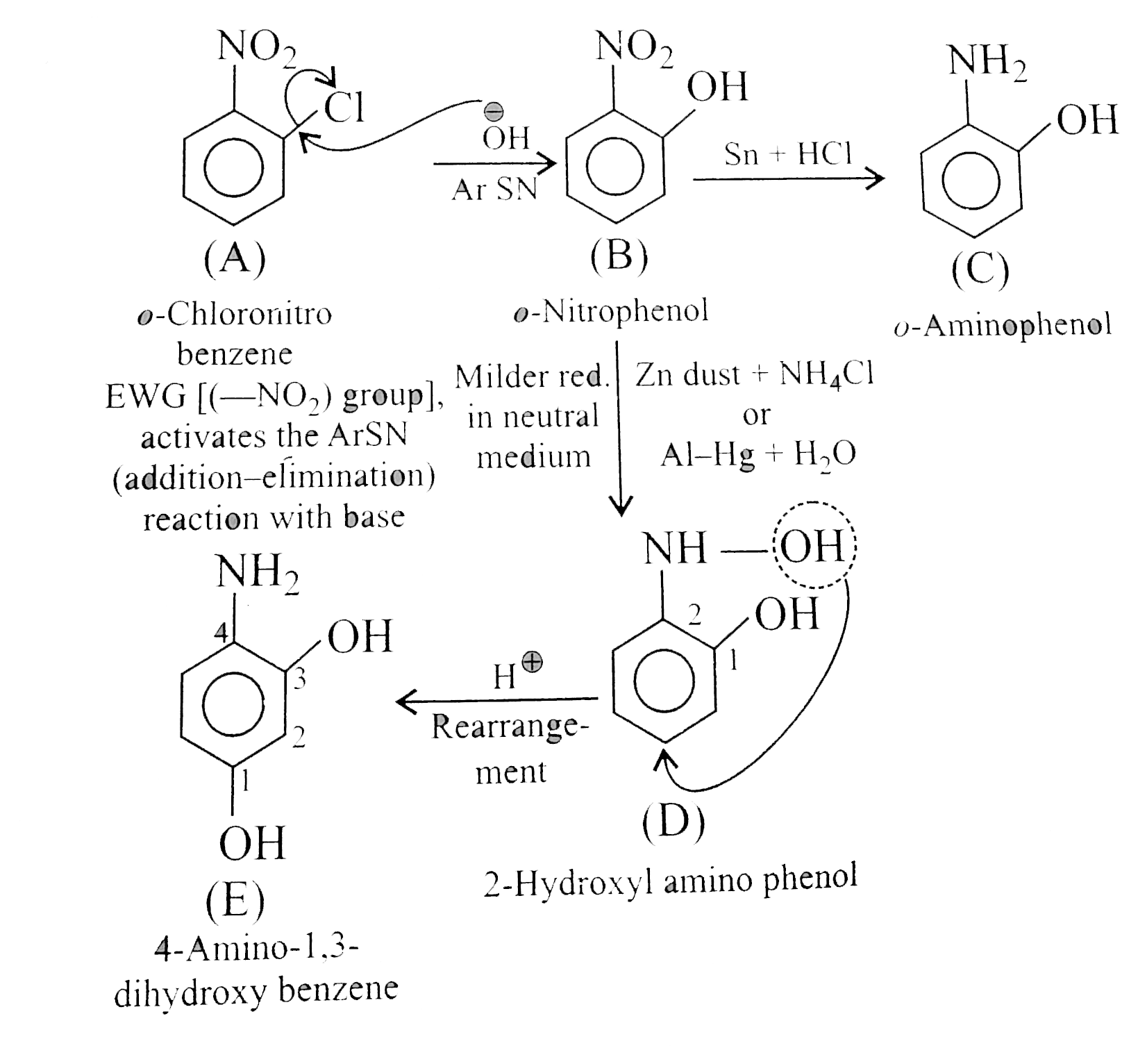
|
|