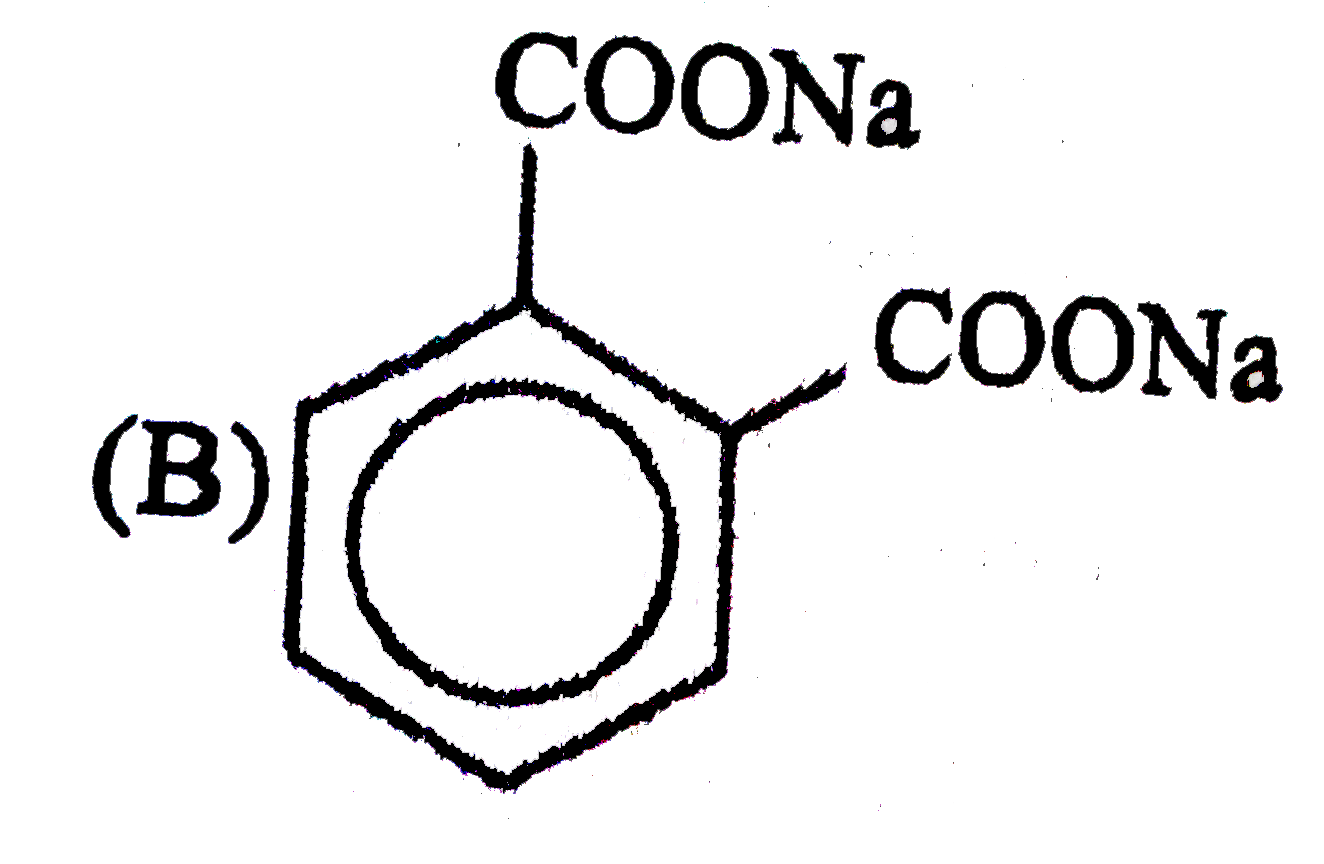
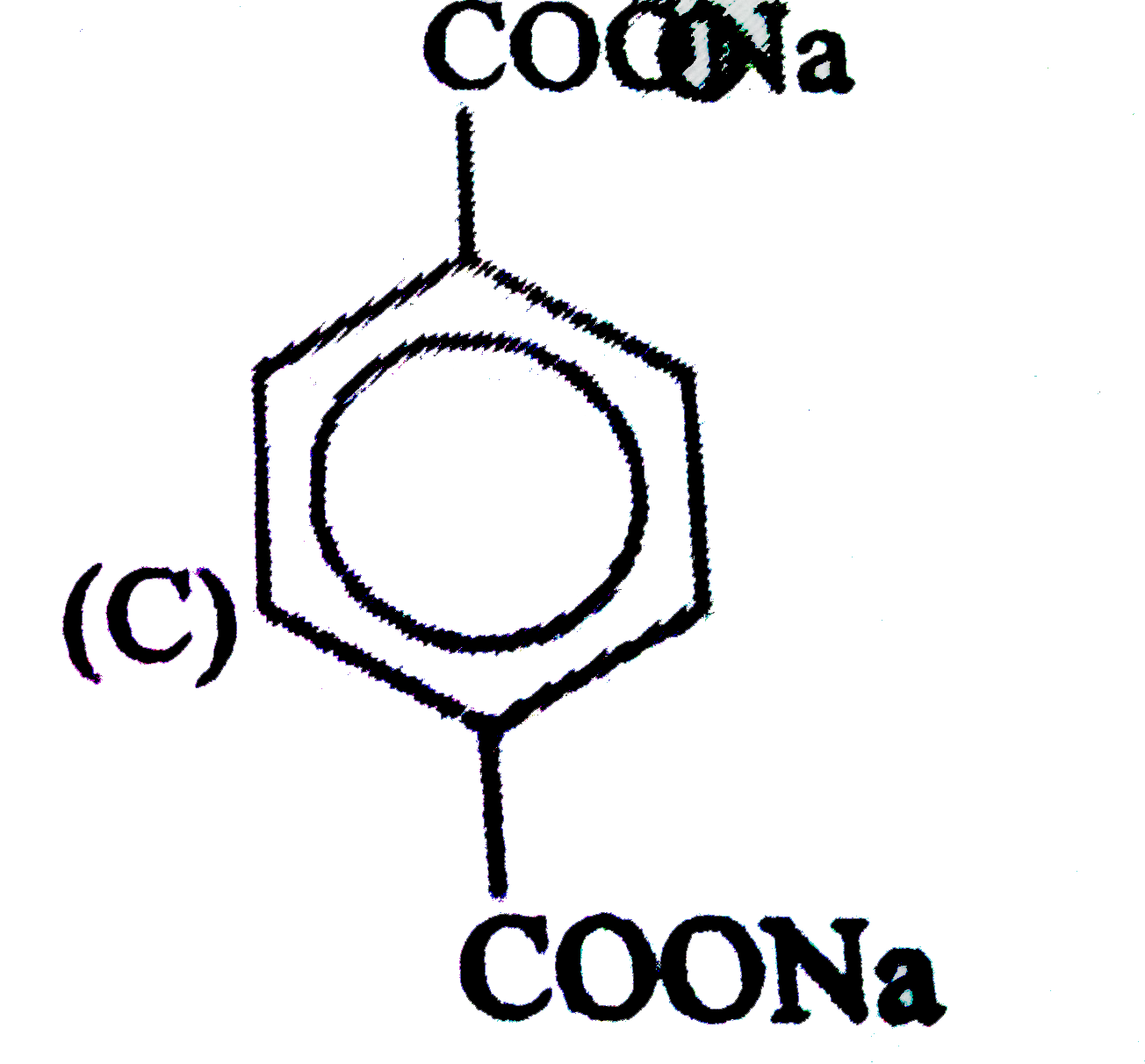
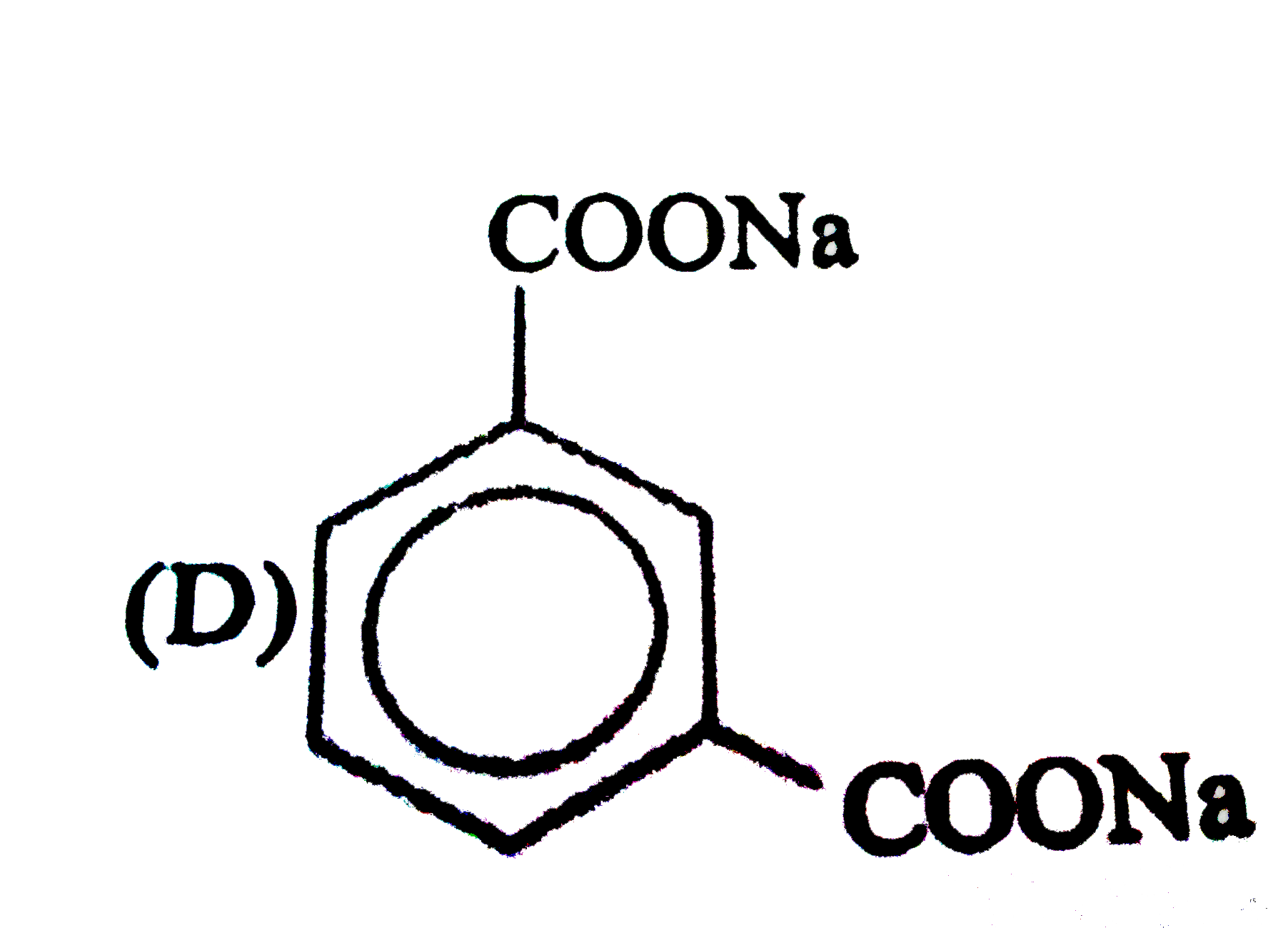
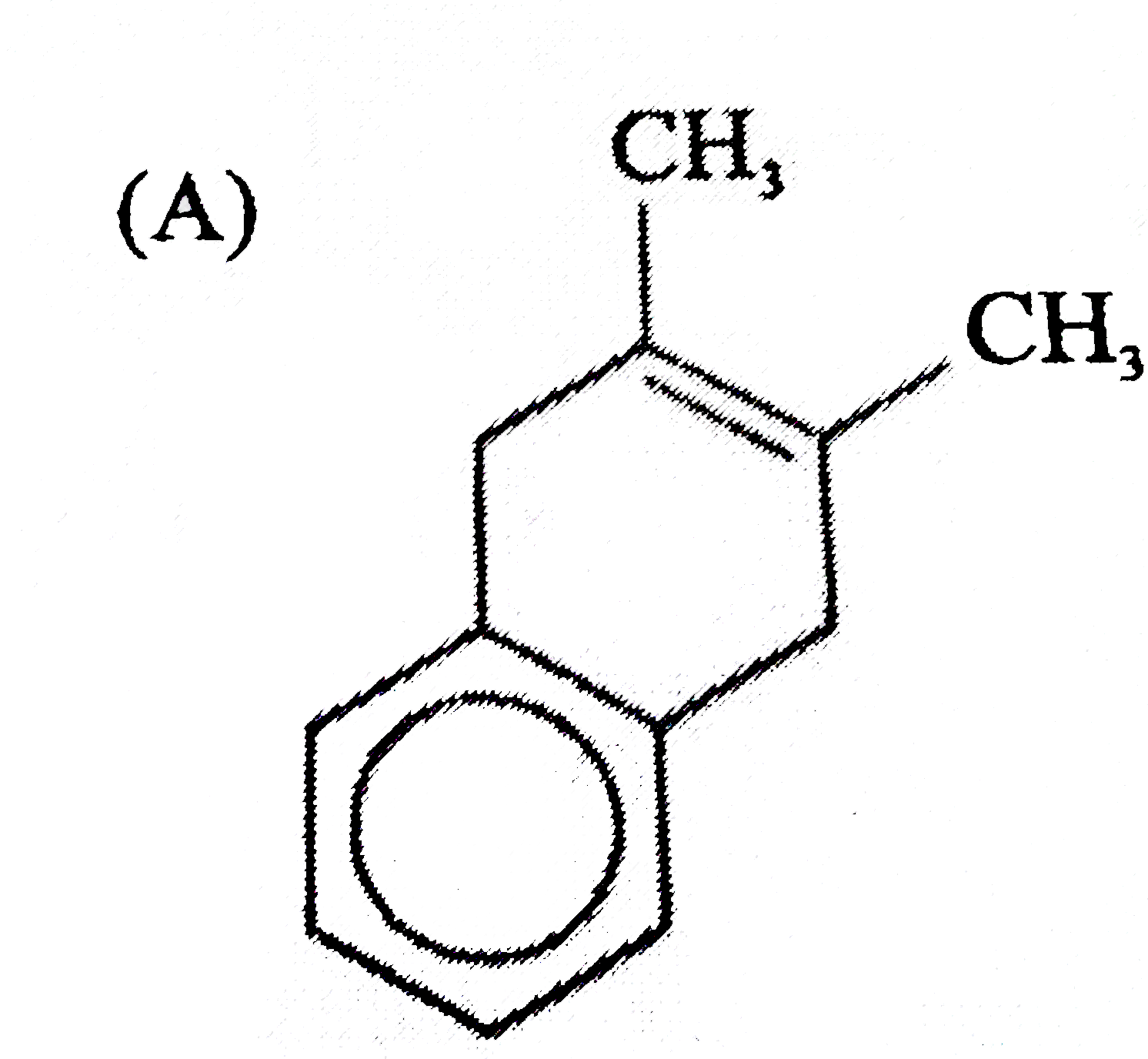
Saved Bookmarks
This section includes 7 InterviewSolutions, each offering curated multiple-choice questions to sharpen your Current Affairs knowledge and support exam preparation. Choose a topic below to get started.
| 1. |
An atom crystallizes in fee erystal lattice and has a density of "10 gcm"^(-3) with unit cell edge length of 100pm. calcutate the number of atoms present in 1 g of crystal. |
|
Answer» Solution :`"Given,Density"="10 g cm"^(-3)` mass = 1 g `"Edge length of unit cell"="100 pm"` `"Volume"=("mass")/("density")=(1g)/("10 g cm"^(-3))` `=0.1cm^(3)` `"Volume of unit cell"=a^(3)` `=(100xx10^(-10)" cm")^(3)` `=1xx10^(-24)cm^(3)` Number of unit cell in 1 g of CRYSTAL, `=("TOTAL volume")/("Volume of unit cell")` `=(0.1cm^(3))/(1xx10^(-24)cm^(3))` The given unit cell is of FCC type. Therefore, it contains 4 atoms. `0.1xx10^(24)` unit cells will contain `4xx0.1xx10^(24)=4xx10^(23)` atoms |
|
| 2. |
An atom at the corner of a simple cubic cell is shared by: |
|
Answer» 2 UNIT CELLS |
|
| 3. |
An atom crystallises in hexogonal closed pack arrangement. Determine dimensions (radius and length) of a large cyclindrical atom that can be accommodated in the centre of HCP, in terms of radius of host atom. |
|
Answer» Solution : The cylinder will pass through centre of middle layer and will lie between the face CENTRES. THEREFORE, Height of cylinder (H) = height of hexagon (h) = 2r Since ,in HCP:H=`4=sqrt((2)/(3))R`, Where r= radius of atoms. `implies h=(4sqrt((2)/(3)-2)` r=1.266 r Also, if R is the radius of cylinder, then in the case of closet contact : `(R)/(r)=0.155implies R=0.155 r,implies h=1.266 r` 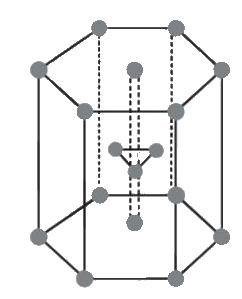
|
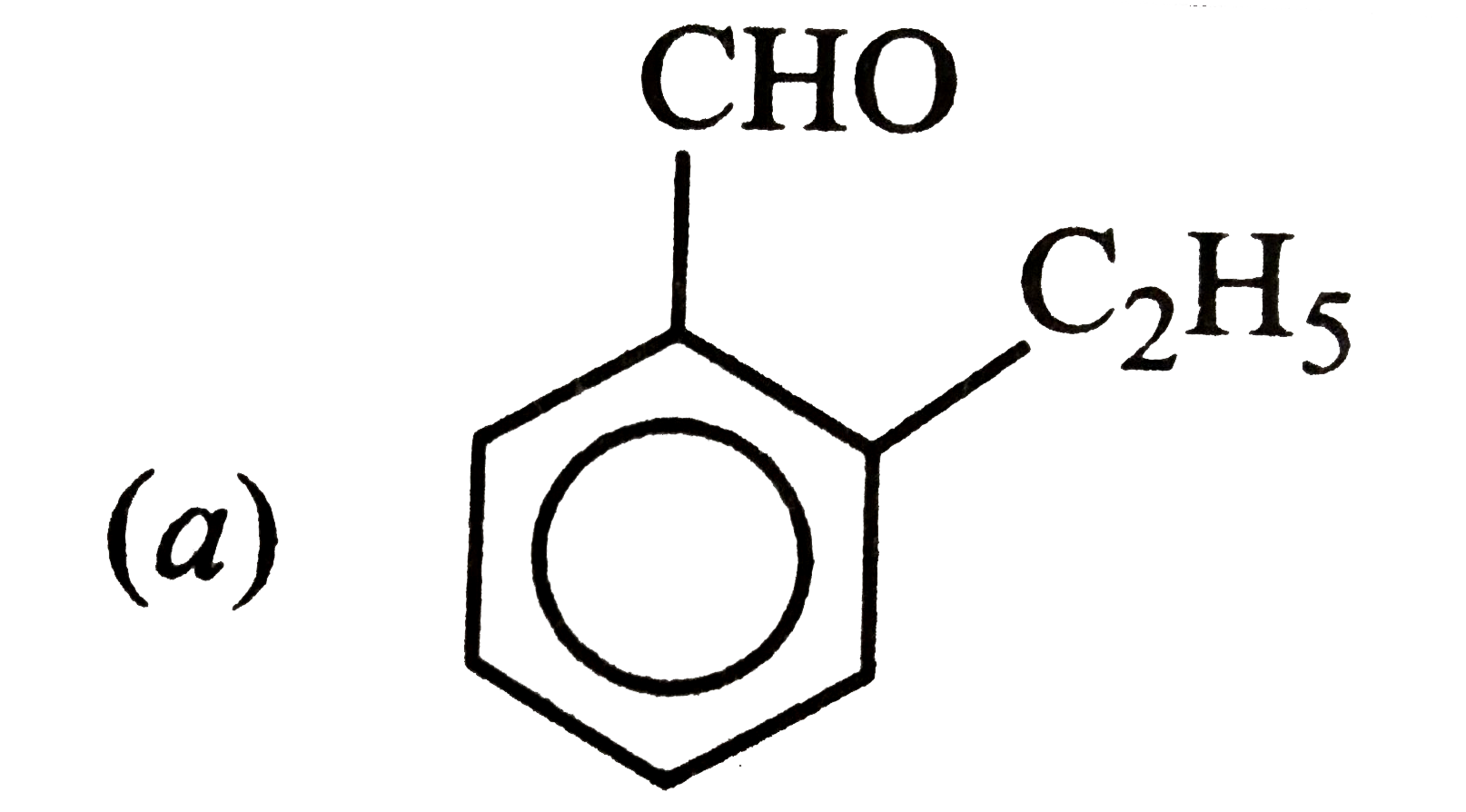
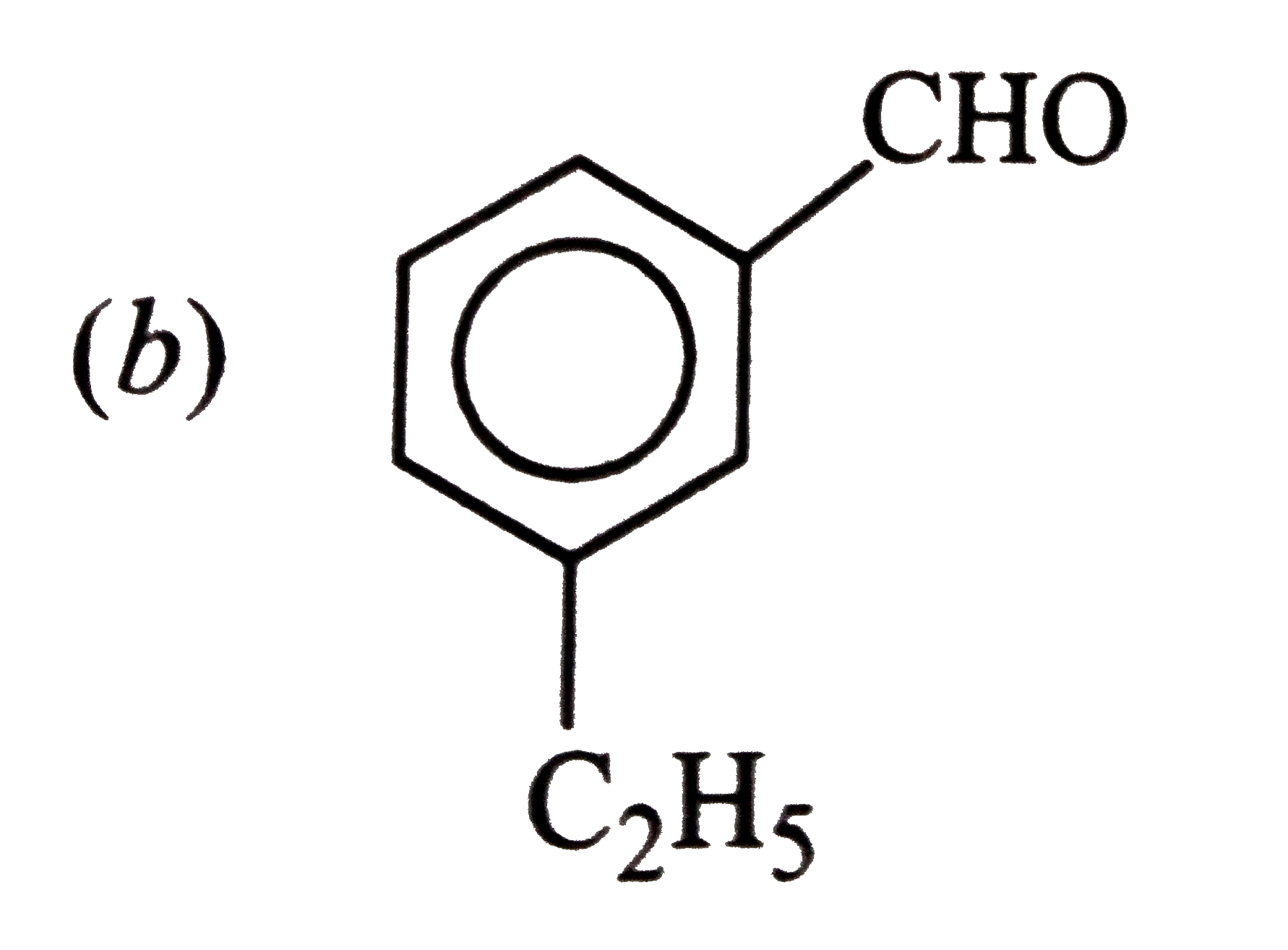
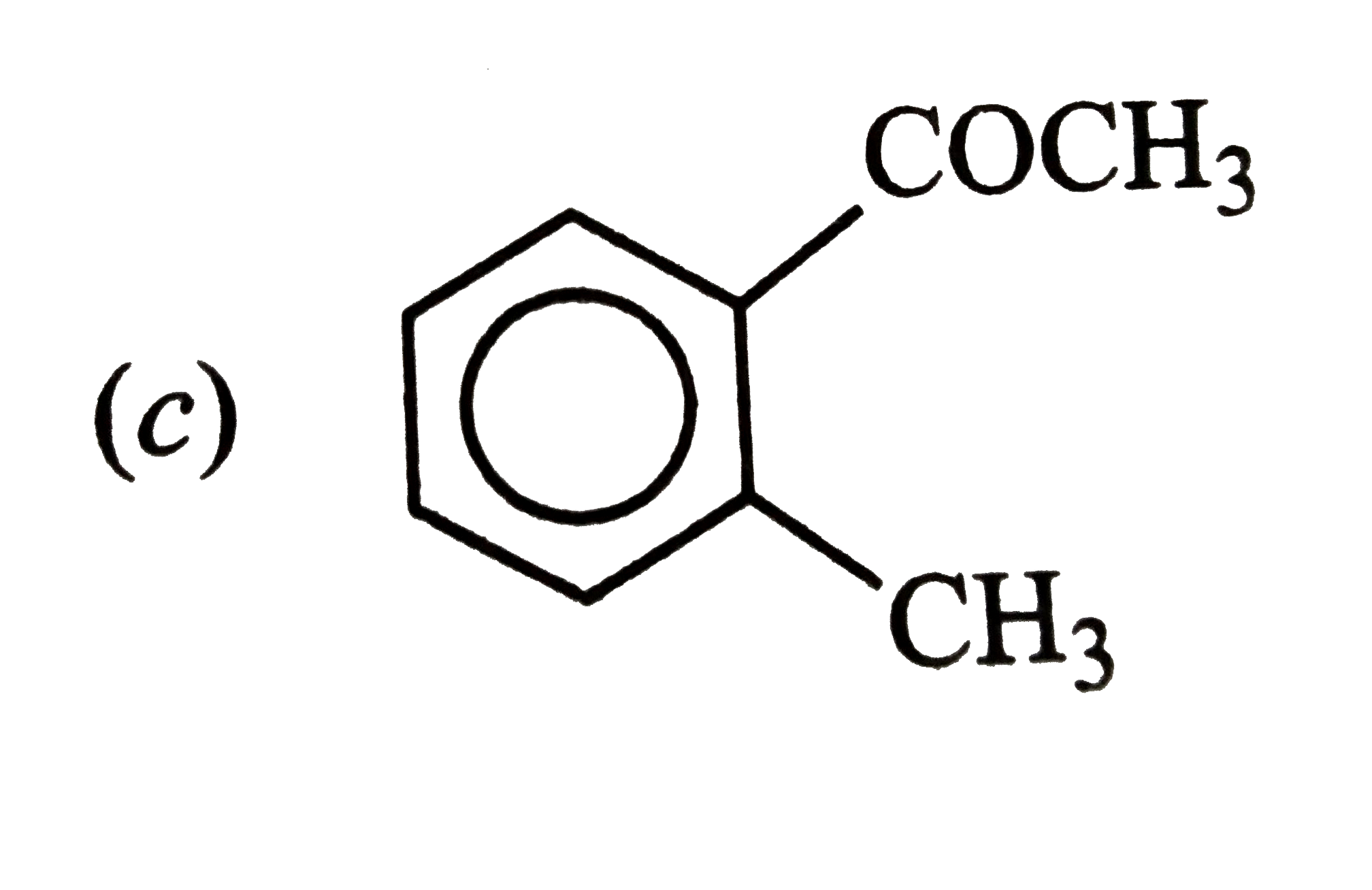
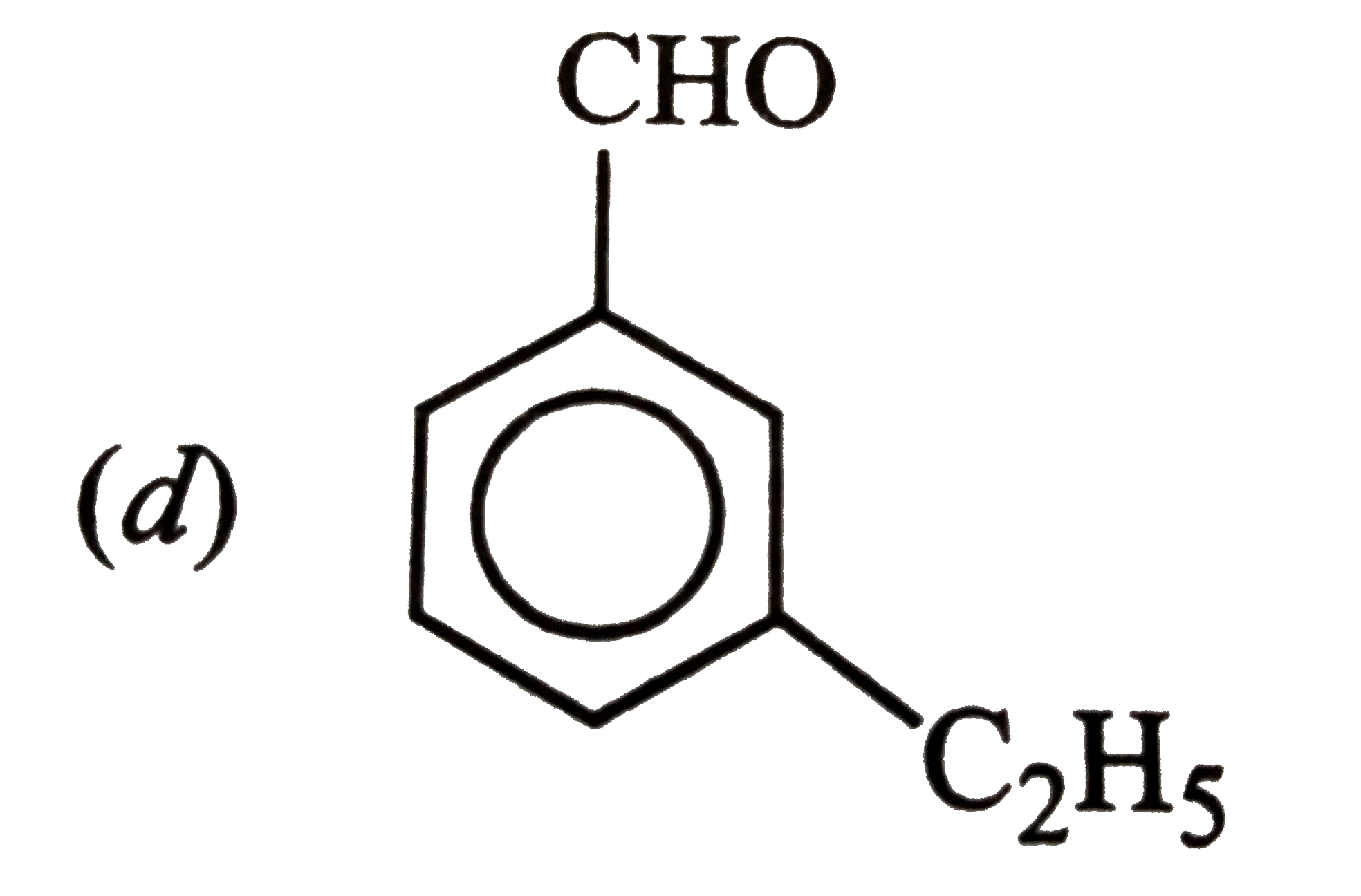
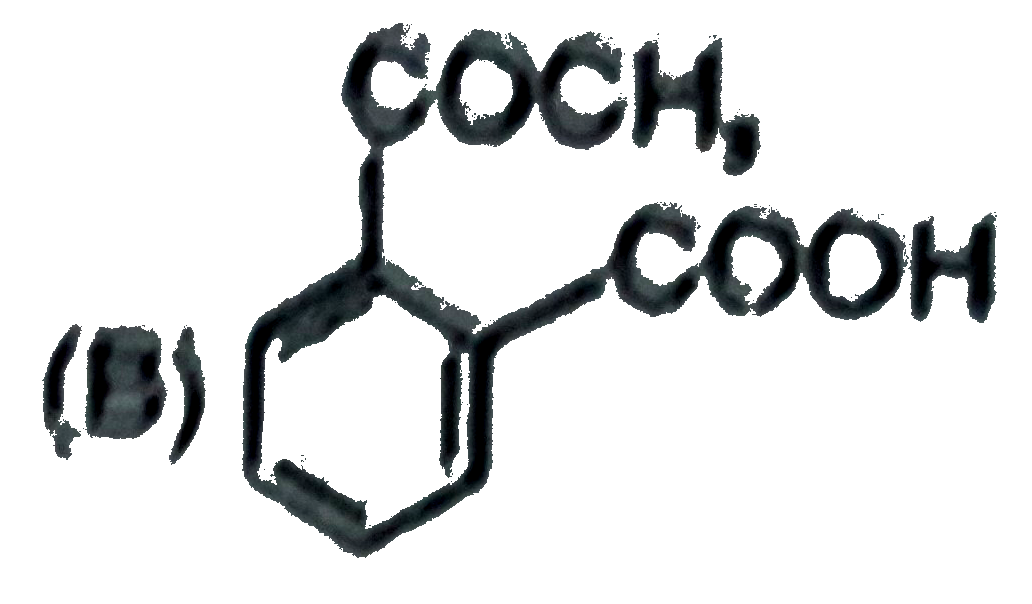
|
| 4. |
An athlete is given 100g of glucose (C_(6)H_(12)O_(6)) of energy equivalent to 1560 kJ. He utilizes 50% of this gained energy in the event . In order to avoid storage of energy in the body, calculate the weight of water he would need to perspire. The enthalpy of evaporation of water is 44 "kJ mole"^(-1) |
|
Answer» Solution :Energy remained in the body of the athlete after the event `=(1560)/(2)=780"kJ"` `:.` weight of water to be evaporated by `780 kJ` of energy `=(18)/(44)xx780=319.1g. (H_(2)O=18)` |
|
| 5. |
An artificial readioactive isotope gave ""_(7)^(14)N after two successive beta-particle emissions. The number of neutrons in the present nucleus must be |
|
Answer» 9 NUMBER of NEUTRONS in `X = 14-5 = 9`. |
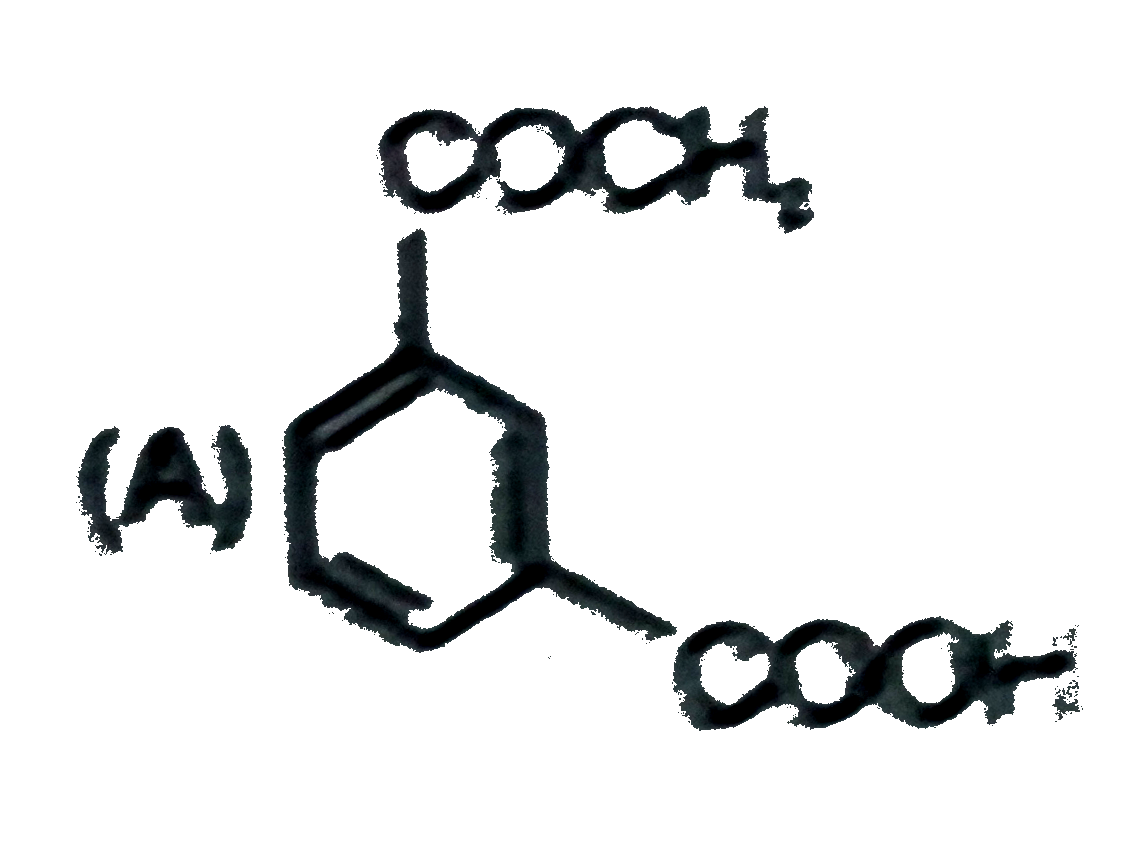
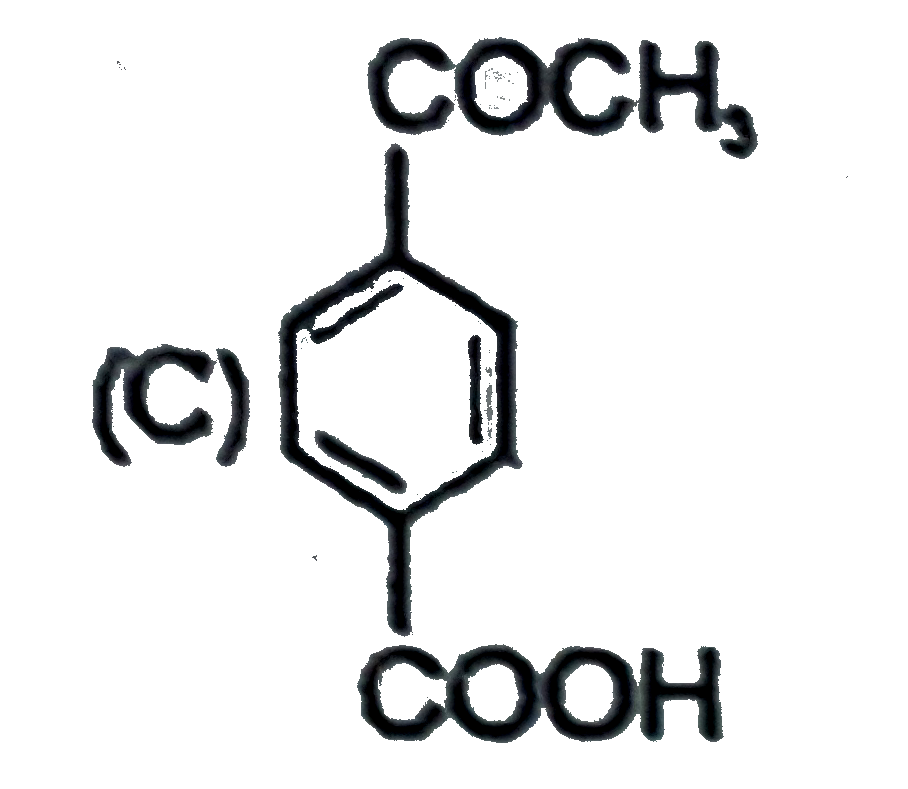
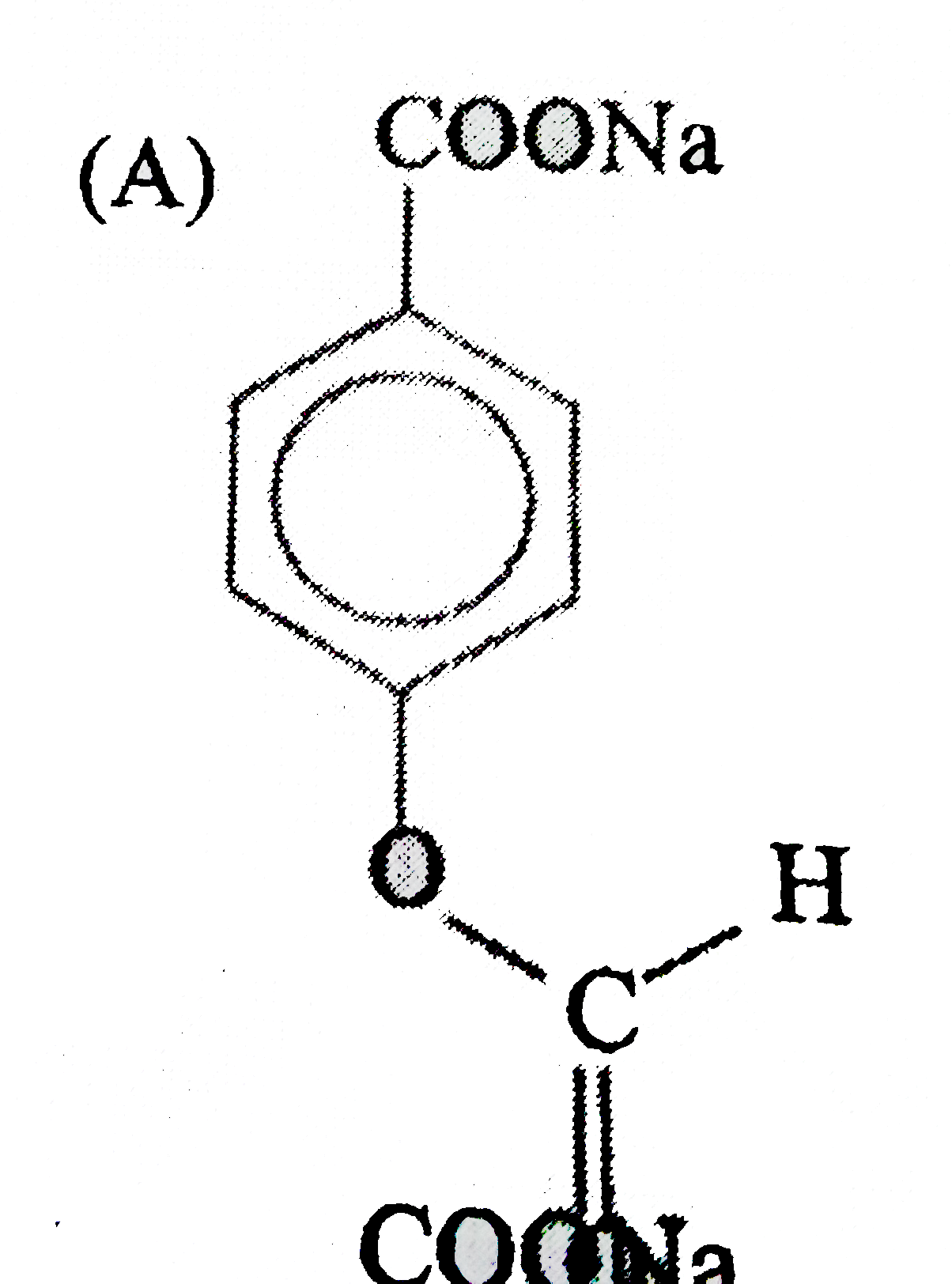
|
| 6. |
An artificial radioactive isotope gave ""_(7)^(14)N after two successive Beta-particle emissions. The number of neutrons in the parent nucleus must be |
|
Answer» 9 NUMBER of neutrons in PARENT nucleus - 14-5=9. |
|
| 7. |
An artifical radioactive isotope gave ""_(7)^(14)N after two successive beta-particle emissions. The number of neutrons in the parent nucleus must be |
|
Answer» 9 `._(x =7-2)X^(y =14) = ._(5)X^(14)` Total no. of NEUTRONS `= 14 - 5 = 9` |
|
| 8. |
An artifical transmutation was carried out on ._(7)^(14)N by an alpha-particle which resulted in an unstable nuclide and a proton. What is the ratio of the atmoic mass to be atomic number of the unstable nuclide? |
|
Answer» `(17)/(8)` `("MASS NUMBER")/("Atomic Number") = (17)/(8)` |
|
| 9. |
An arsenious sulphide sol carries a negative charge the maximum precipitating power fo this sol is possessed by |
|
Answer» `K_(2)SO_(4)` |
|
| 10. |
An aromatic simplest nitro compound A on reduction using Sn and HCl gives B. B undergoes carbylamine reaction. Identify A and B. Give any one use of compound A. |
|
Answer» Solution :(i) AROMATIC simplest nitro COMPOUND `C_6H_5NO_2`(A) `C_6H_5NO_2 UNDERSET(6[H])overset(Sn"/"HCl)(to) C_6H_5NH_2+2H_2O` `{:(C_6H_5NH_2+CHCl_3+3KOH overset(triangle)(to)C_6H_5+NC+3KCl+3H_2O),("Phenyl isocyanide "):}` Therefore, Compound A is `C_6H_5NO_2 to " Nitrobenzene "` Compound B is `C_6H_5NH_2 to " Aniline "` (II) It is used to prepare aniline, ANTHRANILIC acid and suphanilic acid. |
|
| 11. |
An arrangement of various ligands in decreasing order of crystal field splitting tendency is know as |
|
Answer» Nephelauxetic SERIES |
|
| 12. |
An aromatic hydrocarbon (A) (mol. Wt.= 78) contains 92.3% of carbon (A), on treatment with bromine in the dark, produced (B) which contains 48.85% of carbon, 3.19% of hydrogen and 50.96% of bromine. (B), on heating with CH_(3)Br and Na in etherical solution, gave (C ) containing 91.3% of C and 8.7%of H. (C ) on oxidation, produced a monobasic acid (D). The sodium salt of (D), on distillation with soda lime, gave (A). Determine the structures of (A), (B),(C ) and (D). |
|
Answer» Solution :Moles of `C:H= (92.3)/(12): (7.7)/(1)` `=7.7:7.7` `=1: 1` Empirical formula of (A) is CH and empirical formula weight is 13.As the molecular weight of (A) is 78, `n= (78)/(13)=6` Molecular formula of (A) is `C_(6)H_(6)` In COMPOUND (B): moles of `C:H:Br= (45.85)/(12): (3.19)/(1): (50.96)/(80)` `=3.82: 3.19: 0.637` `=6:5:1` As (B) must be `C_(6)H_(5)Br`, it has to be a substitution product and not the addition product. Further, (C ) is produced by HEATING `C_(6)H_(5)Br` with `CH_(3)Br` and Na (Fitting reaction), (C ) must be `C_(6)H_(5)CH_(3)`. This is ALSO supported by the FOLLOWING data, i.e., for (C ) being `C_(7)H_(8)` Moles of `C: H= (91.3)/(12): (8.7)/(1)` `=1: 1.143` `=7:8` (C ) on oxidation, will give `C_(6)H_(5)COOH` (D), the sodium salt of which on distillation with soda lime will give `C_(6)H_(6)`(A). |
|
| 13. |
An aromatic hydrocarbons A reacts with propene in the presence of anhydrous AlCl_(3) to give a compound B with a molecular formula C_(9)H_(12). Further compound B undergoes oxidation in the, presence of air to give hydrogenperoxide C. Compound C decomposes in HCl acid solutions to give compound D and acetone. Identify A,B, C and D. Explain the reactions. |
Answer» Solution :(i) An aromatic hydrocarbon A reacts with propene in the presence of anhydrous `AlCl_(3)` to give COMPOUND B.  (II) Compound B undergoes OXIDATION in the presence of air and hydrogenperoxide to give C.  (iii) Compound C decomposes in HCl ACID solution to give compound D and acetone. Identify A, B, C and D. Explain the reactions. 
|
|
| 14. |
An aromatic hydrocarbobn (A) containingC = 91.3% and H = 8.7% on treatmentwith chlorine gave there isomeric monochloro compound (X),(Y) and (Z), eachhaving28% chlorine . On oxidation withKMnO_(4) all the threegavemononbasicacids. The acid form (X) on distillation with soda line gave benzenewhile thoseform (Y) and (Z) gavemonochiorobenzene. What formulawould you assign to the variouscomnpounds? |
Answer» Solution :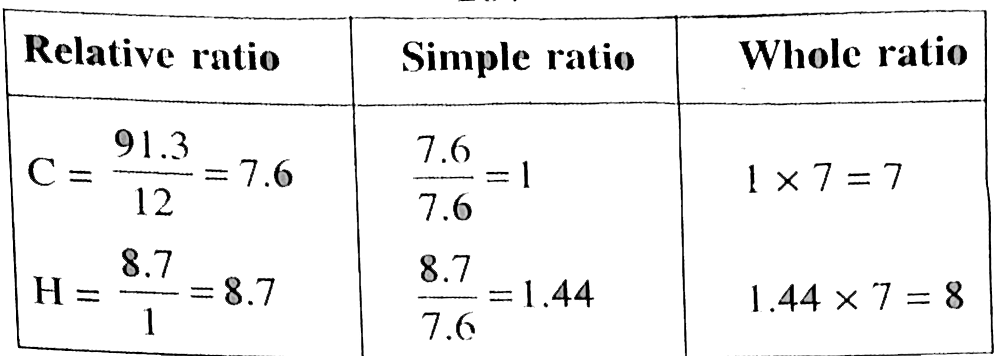 Molecular formula of `(A) = C_(7) H_(8)`. `4^(@) D.U`. And `C:H = 1:1` suggest benzene ring with with one `(-Me)` group. So `(A)` is touene. REACTIONS: 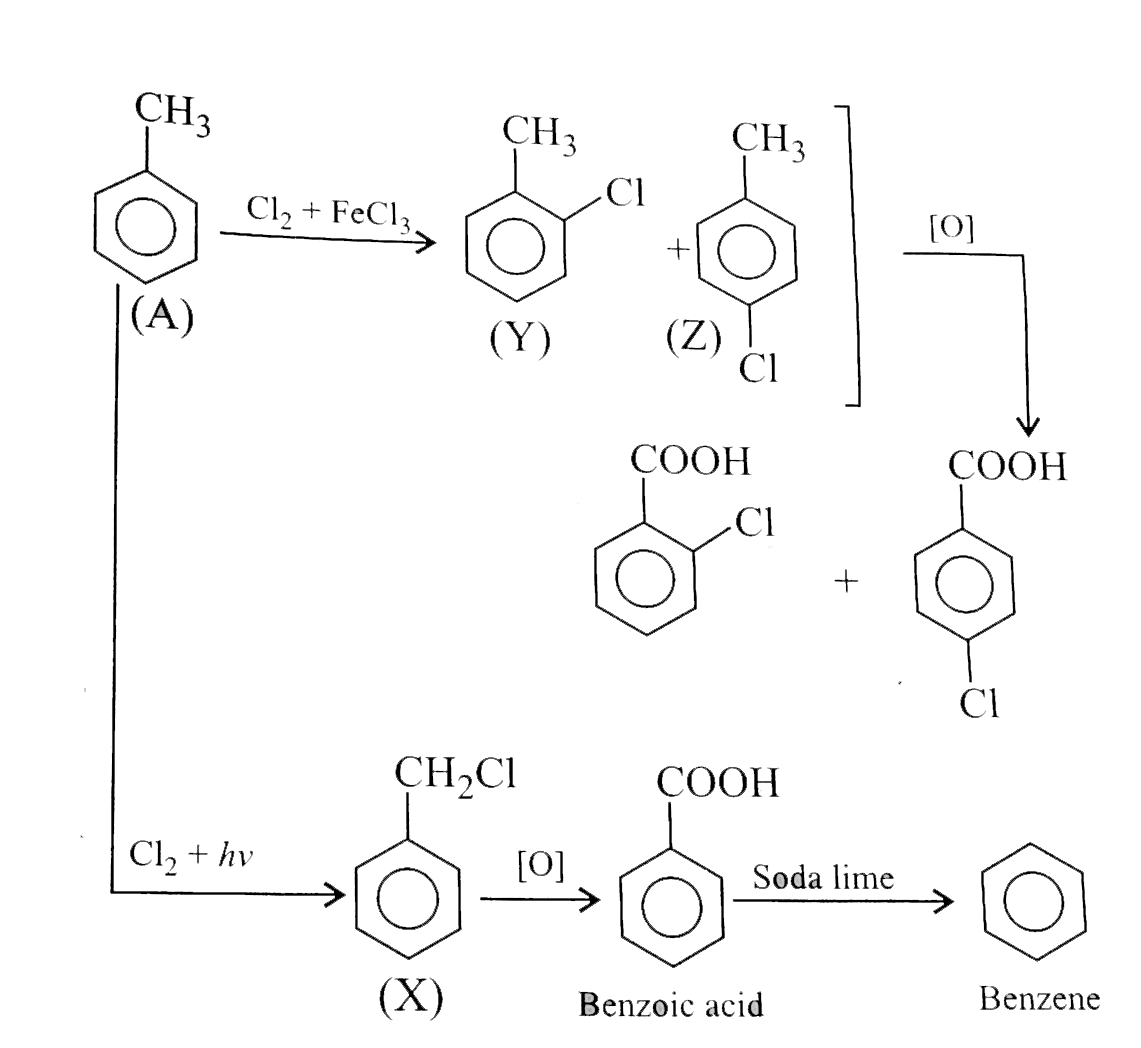 Molecular of formula of `(X,Y,Z) = C_(7) H_(7) Cl` Molecular mass of `(X,Y,Z) = 12xx7+7+35.5 = 126.5` Percentage of `Cl` in `(X,Y,Z) = (35.5xx100)/(126.5) = 28%` |
|
| 15. |
An aromatic hydrocarbon (A), containing 91.3% of C and 8.7% of H, on treatment with chlorine gave 3 isomeric monochlorocompounds (B), (C ) and (D), each having 28% of chlorine. On oxidation with permanganate, all the three gave a monobasic acid. The acid from (B) on distillation with soda lime gave benzene while those from (C ) and (D) gave monochlorobenzene on the same treatment. Assign formulae to (A), (B), (C ) and (D) |
| Answer» SOLUTION :`[((A) C_(6)H_(5).CH_(3),(B) C_(6)H_(5)CH_(2)CL),((C )C_(6)H_(4)(CH_(3))Cl ("ortho"),(D) ("para"))]` | |
| 16. |
An aromatic compund A on treatmetn with aqueous ammonia and heating formas compund B which on heating with Br_(2) and KOH forms a compound C of molecular formula C_(6)H^(7)N. Write the structures and IUPAC names of compound A,B and C |
|
Answer» Solution :Step-1: To FIND out the structure of compounds B and C <BR> (i) Since compund C with molecular formual `C_(6)H_(7)N` is formed from compound B on treatment with `Br_(2)+KOH` (i.e. Hoffmann bromamide reaction). Therefore, compound B must be an amide and C must be an amine. The only name having the molecular formula `C_(6)H_(7)N` is `C_(6)H_(5)NH_(2)` (i.e. must abniline or benzenamine). (ii) Since C is aniline, therefore te amide from whcih it is formed must be benzamide `(C_(6)H_(5)CONH_(2))`. Thus compound B is benzamide is The Chemical equation showing the conversion of B to C is `underset((M.F=C_(7)H_(7)NO))underset("Benzamide"(B))(C_(6)H_(5)CONH_(2))underset(("Hoffmann bromamide reaction"))OVERSET(Br_(2)//KOH)(to) underset((M.F=C_(6)H_(7)N))underset("Benzenamine"(C))(C_(6)H_(5)NH_(2))` Step-2: To find out the structure of compound A. Since compound B is formed from compund A by treatment with AQUEOUS AMMONIA and heating. Therefore, compound A must be benzoic acid or benzenecarboxylic acid. `underset("Benzenecarboxylic acid or Benzoic acid"(A)) (C_(6)H_(5)COOH)underset((ii)Delta)overset((i)Aq. NH_(2))(to) underset("Benzamide"(B))(C_(6)H_(5)CONH_(2)` |
|
| 17. |
An aromatic compound 'X' with molecular formula C_(9)H_(10)O gives the following chemical tests: (i) forms 2,4-DNP derivative. (ii) Reduces tollens' reagent. (iii) undergoes Cannizzaro reaction and (iv) on vigorous oxidation, 1,2-benzene-dicarboxylic acid is obtained. |
|
Answer»
|
|
| 18. |
An aromatic compound 'X' with molecular formula C_(9)H_(10)O gives the following chemical tests (i) Forms 2,4-DNP derivative (ii)Reduces Tollen's reagent (iii)Undergoes Cannizzaro reaction and (iv)On vigorous oxidation 1,2-benzenedicarboxylic acid is obtained X is |
|
Answer»
(IV) On vigorous oxidation, it PRODUCES 1,2-benzendicarboxylic acid. It shows that group are present at 1,2-position on benzene ring. 
|
|
| 19. |
An aromatic compound 'X' with molecular formulaC_9H_10Ogives the following chemical tests : (i) forms 2, 4-DNP derivative (ii) reduces Tollens' reagent (iii) undergoes Cannizzaro reaction, (iv) on vigorous oxidation, 1, 2-benzenedicarboxylicacid is obtained Identify the compound X. |
|
Answer»
|
|
| 20. |
An aromatic ether is not cleaved by HI even at 525K. The compound is |
|
Answer» `C_6H_5OCH_3` 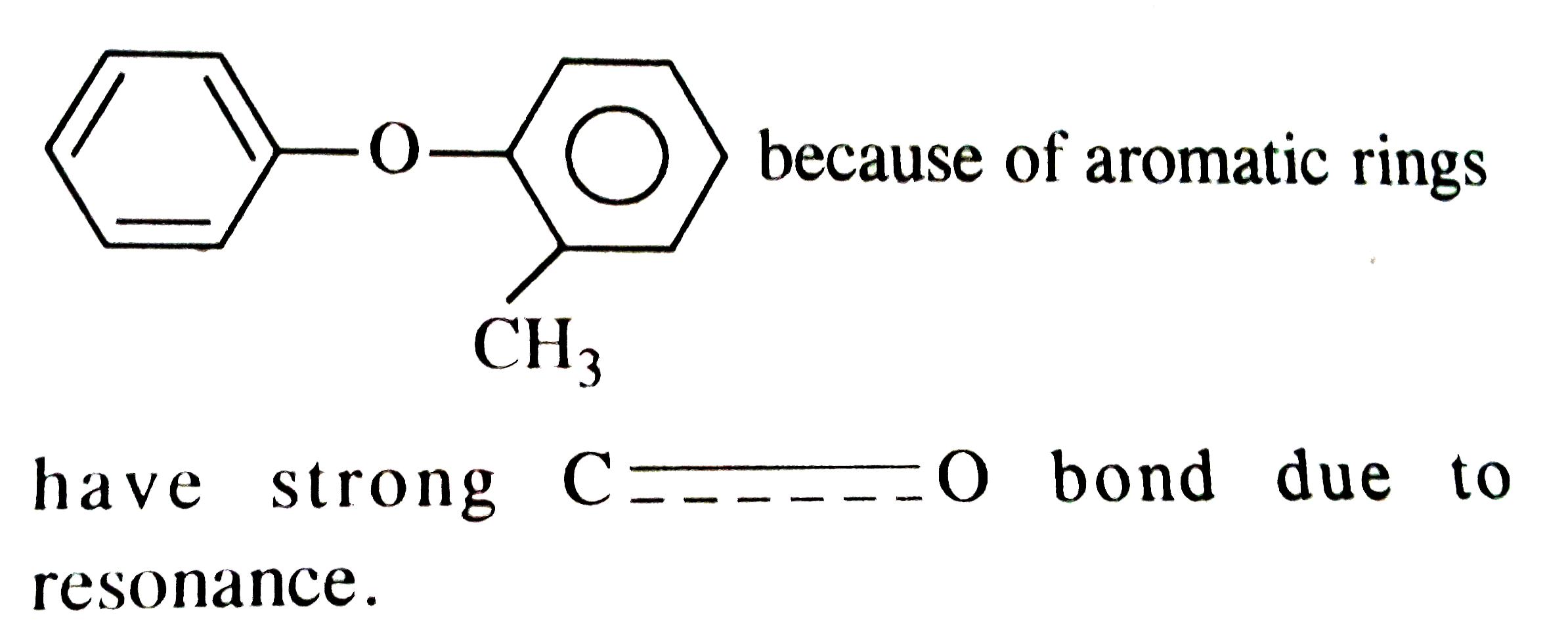
|
|
| 21. |
An aromatic compound (X) contained 58.5% of C, 4.1% of H and 11.4% of N. (X) may be obtained by the action of HNO_(3) on a compound (Y).(X) , on reduction, gives a monoacid organic base (Z). Give structural formulae of (X), (Y) and (Z). |
| Answer» SOLUTION :`(C_(6)H_(5)NO_(2), C_(6)H_(6), C_(6)H_(5)NH_(2))` | |
| 22. |
An aromatic compound (X) contains C (79.25%) and H(5.66%). (X) on treatment with alkali, gave a neutral product (Y) containing C (77.78%) and H (7.41%) and the sodium salt of an aromatic organic acid (Z) which on distillation with soda lime gave benzene. Assign structural formulae to (X), (Y) and (Z) |
| Answer» SOLUTION :`(C_(6)H_(5)CHO, C_(6)H_(5)CH_(2)OH, C_(6)H_(5)COOH)` | |
| 23. |
An aromatic compound 'X' (C_9H_8O_3) turns blue litmus to red.It gives yellow precipitate with I_2//NaOH and forms Y (C_8H_6O_4). Y forms three mononitro isomeric products. Identify X. |
|
Answer»
|
|
| 24. |
An aromatic compound (X) (C_(8)H_(8)O) gives positive 2, 4-DNP test. It gives a yellow precipitate of compound (Y) on reaction with iodine and sodium hydroxide solution. (X) does not give Tollens' test on oxidationunder drastic conditions. It gives a carboxylicacid (Z) (C_(7)H_(6)O_(2)).(Z) is also formed with (Y) during the reaction. (X), (Y) and (Z) respectively are |
|
Answer» `C_(6)H_(5)COCH_(3), CHI_(3), C_(6)H_(5)COOH` 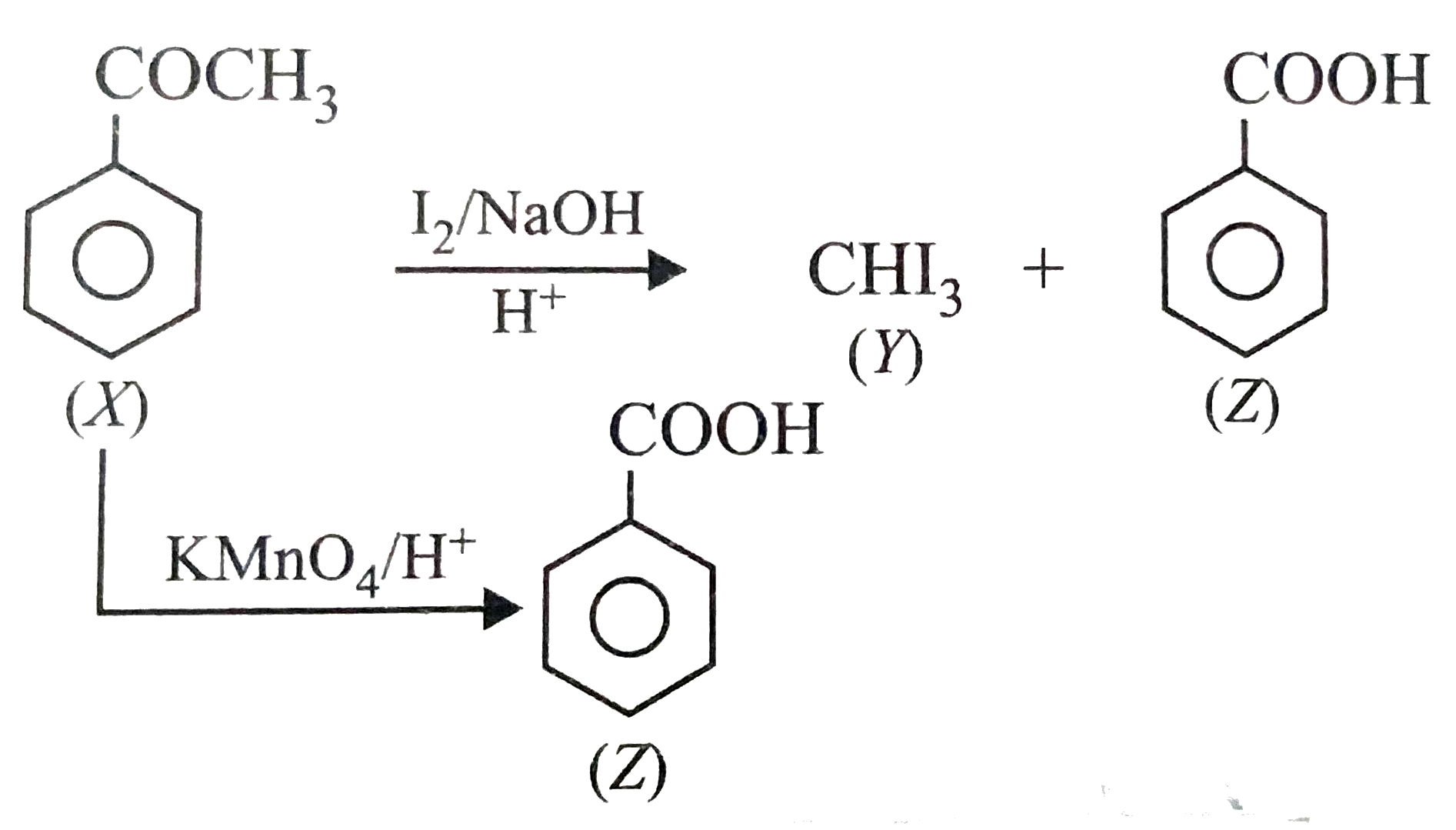
|
|
| 25. |
An aromatic compound X, C_(7)H_(7)Cl on oxidation gives an aromatic compound Y. The sodalime decarboxylation of Y produces benzene. X is : |
|
Answer» o-chlorotoluene |
|
| 26. |
An aromatic compound 'X' (C_(8)H_(8)Br_(2)) on treatment with aqueous KOH gives 'y' (C_(8)H_(9)BrO). On heating 'X' with alcoholic KOH, 'Z' (C_(8)H_(7)Br) is formed the compound 'Z' on reacting Br_(2)//C Cl_(4) forms 'A'. The compound 'A' reacts with fused KOH to give 'B'. Identify all the compound that are involved. |
Answer» Solution :The compound 'y' formed by REACTING 'X' with aqueous KOH is an alcohol 'y' which CONTAINS one Br atom. This showthat one of the Br atoms in compound 'X' is a PART of side chain while the other is ATTACHED to the ring preferable at the para position. the series of reactions involved and the corresponding compounds formed are GIVEN: 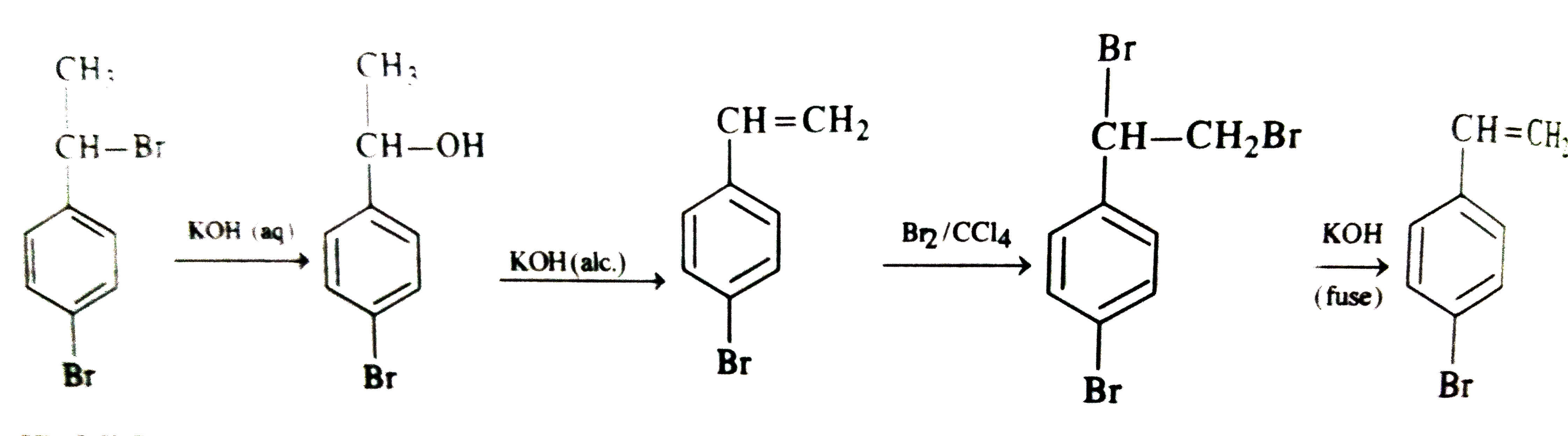 . .
|
|
| 27. |
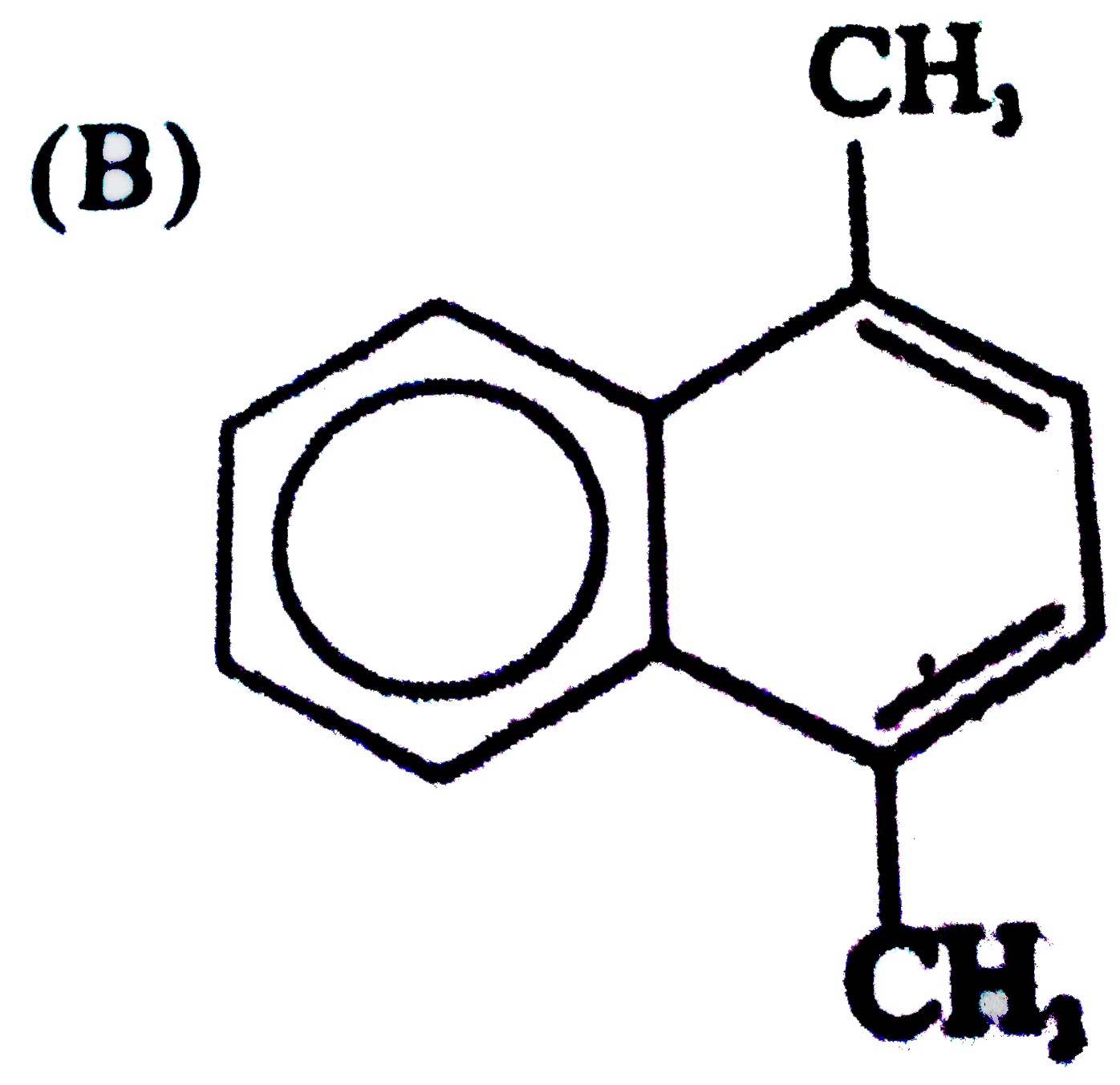
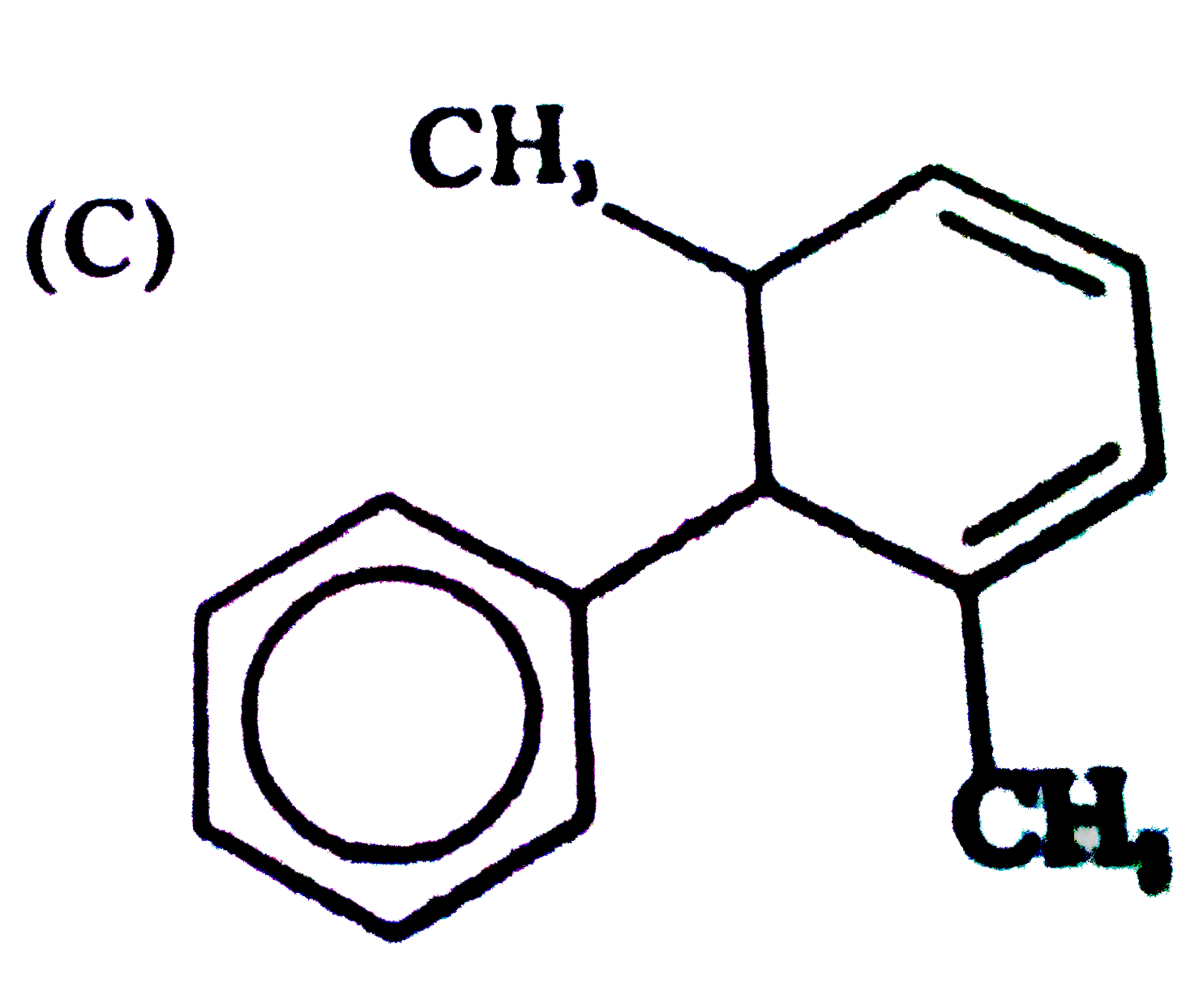
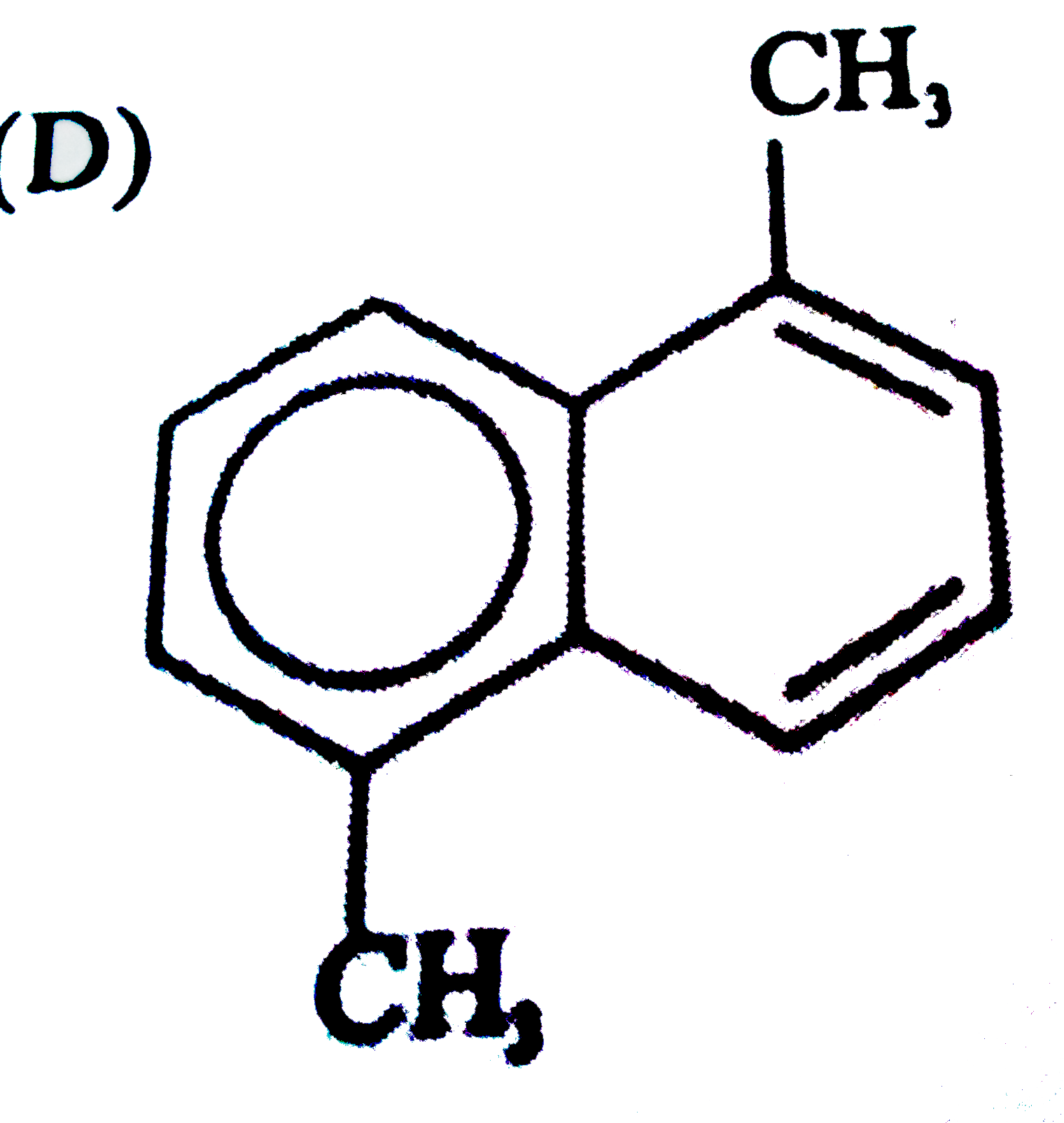
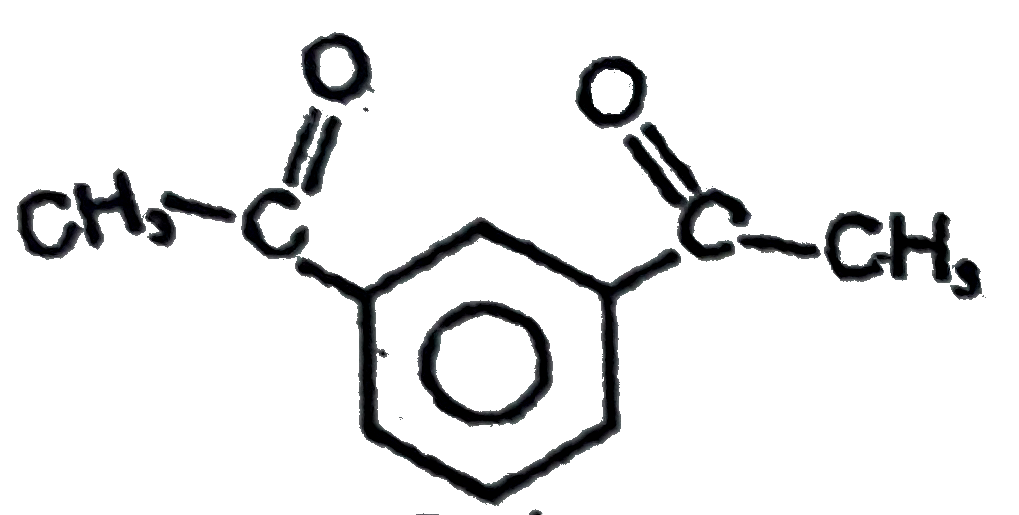
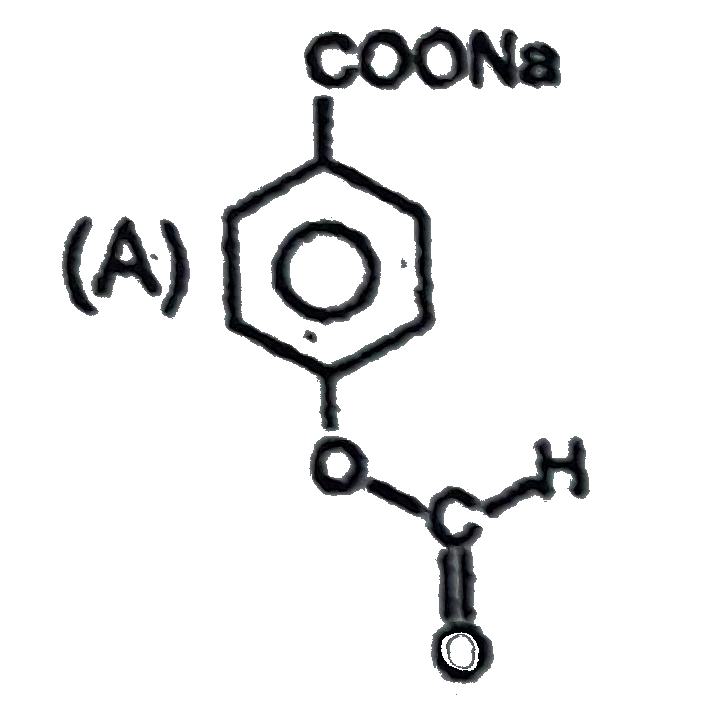
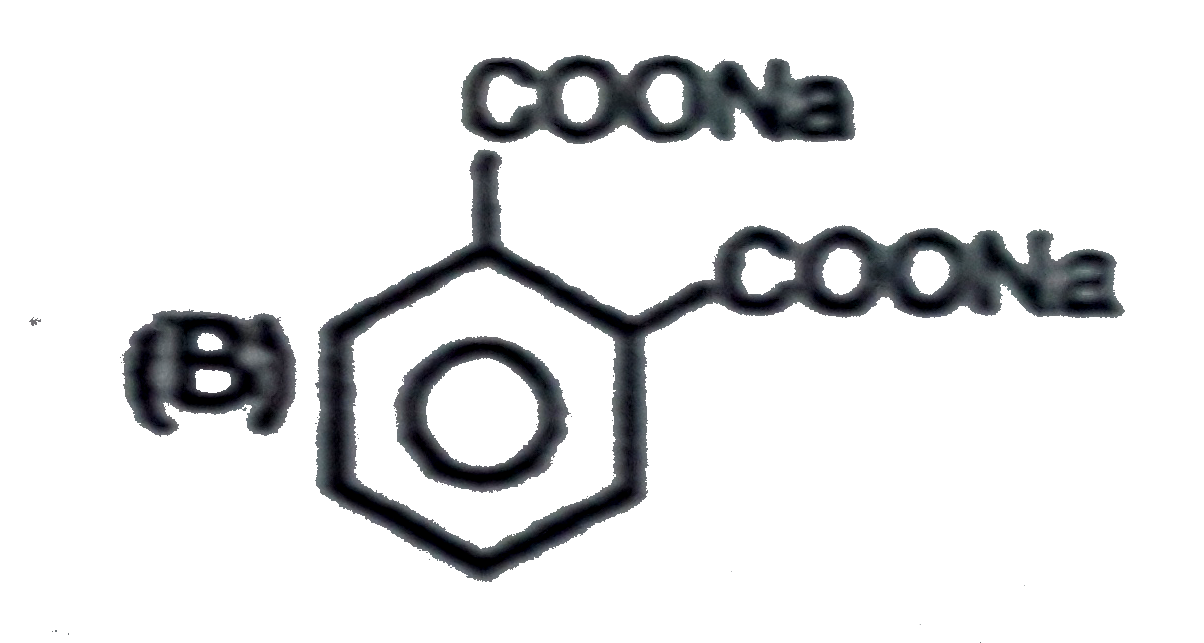
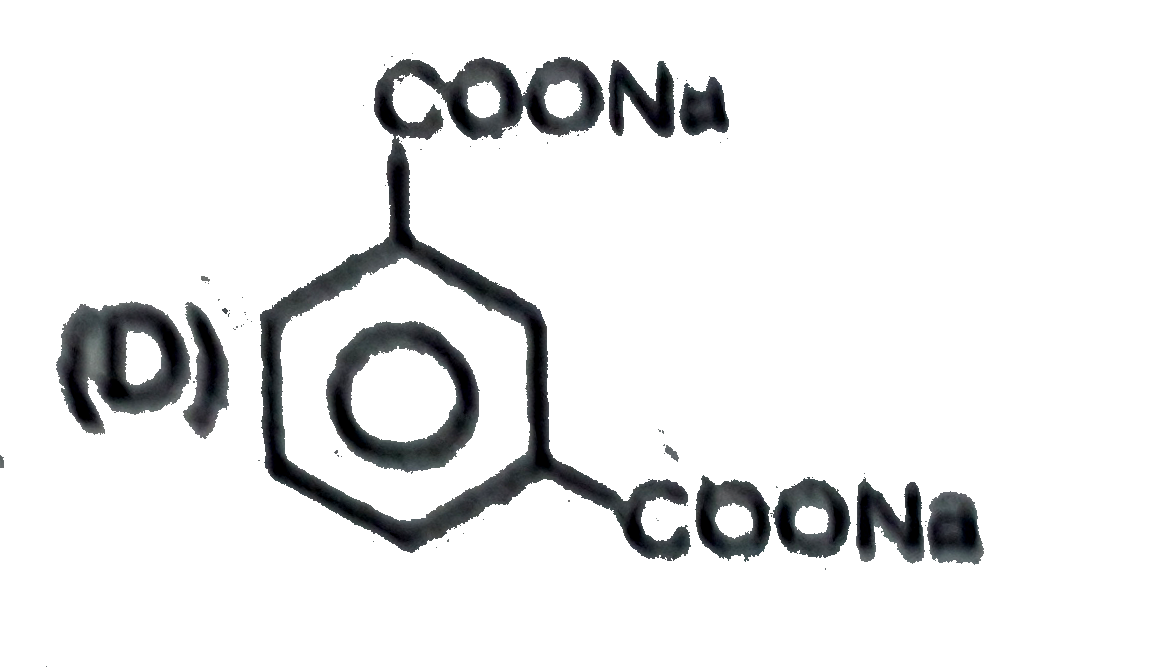
An aromatic compound T(C_(10)H_(10)O_(2)) give 2 moles of CHI_(3) and compound U(C_(8)H_(4)O_(4)Na_(2)) on treatment with I_(2) and NaOH. After acidification U gives two mononitro products on nitration. [GOC-POC] Compound (T) can also be obtained by ozonolysis of V, in this ozonolysis one mole of OHC-CHO is obtained alongwith (T). Compund U is[GOC-POC] |
|
Answer» 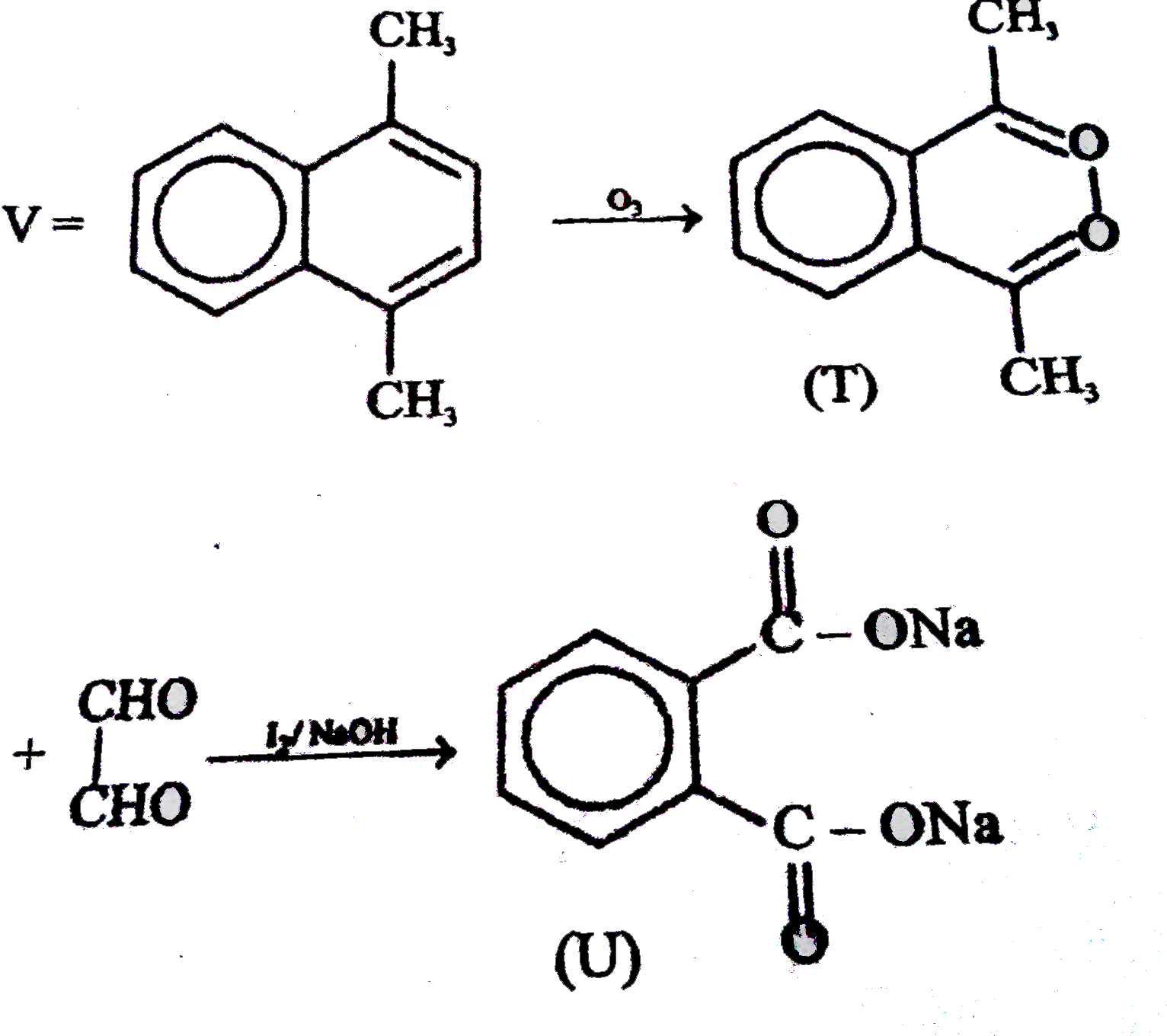
|
|
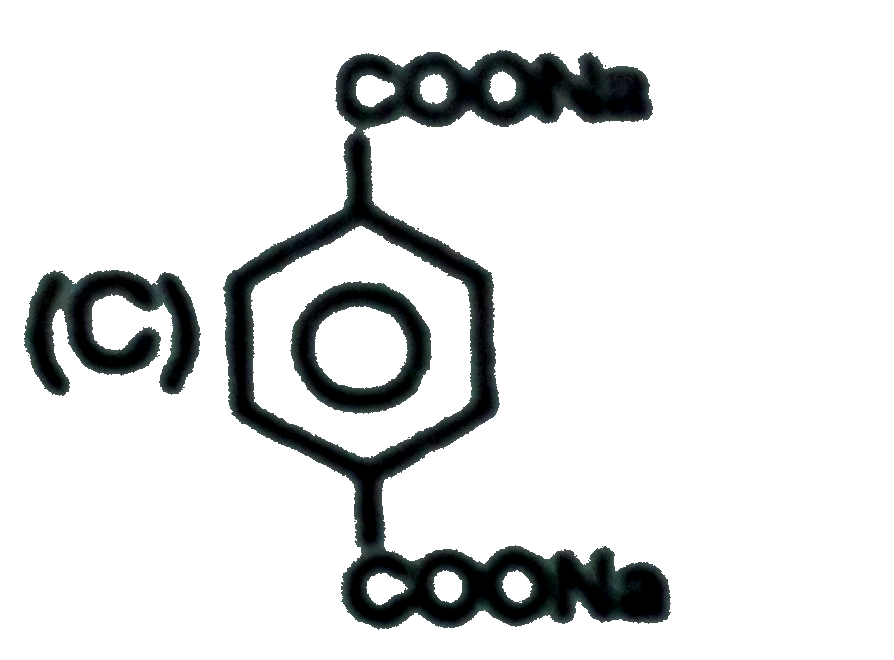
| 28. |
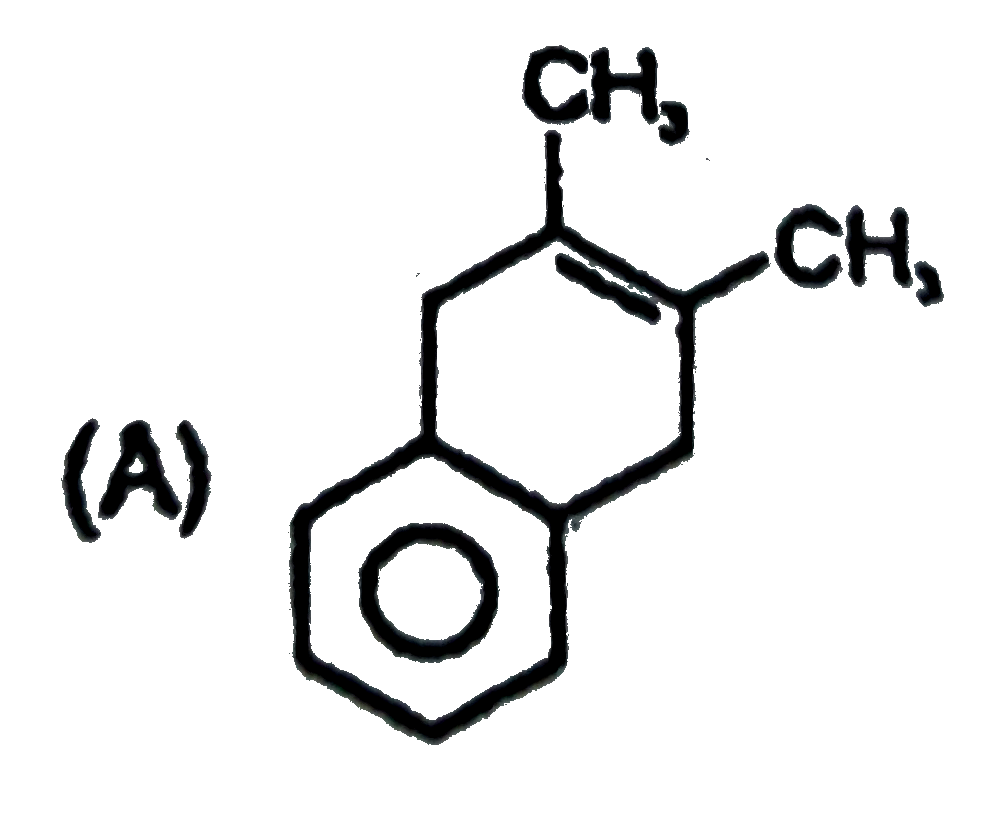
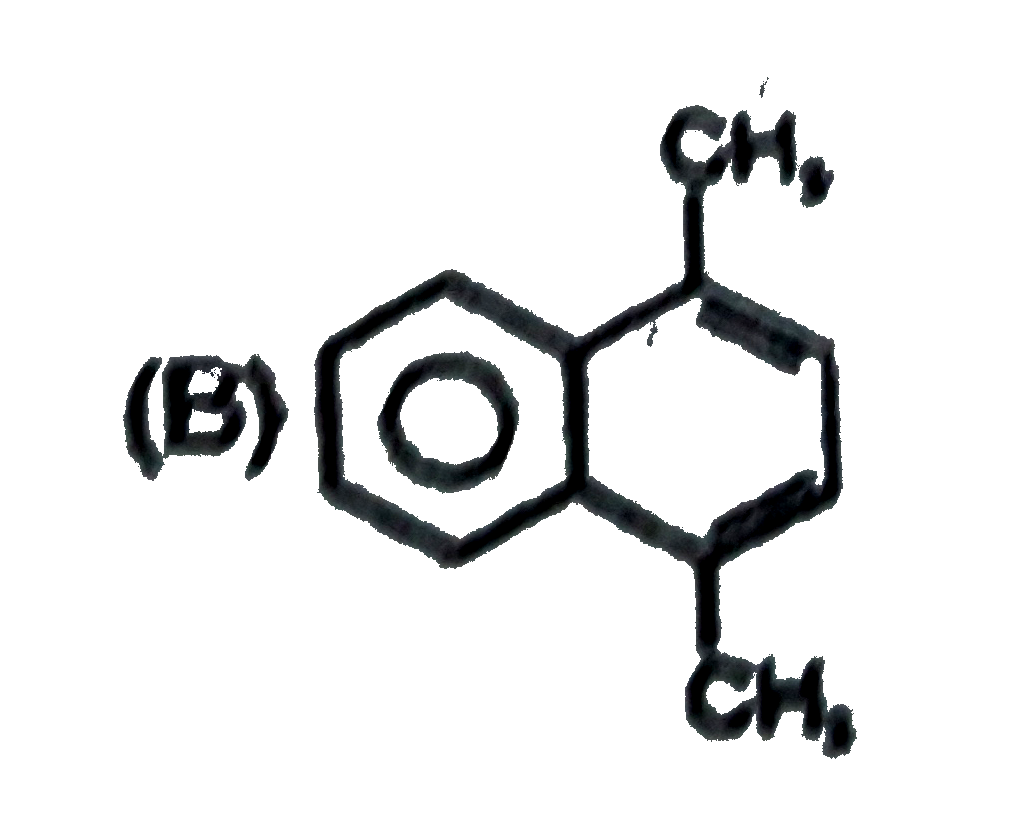
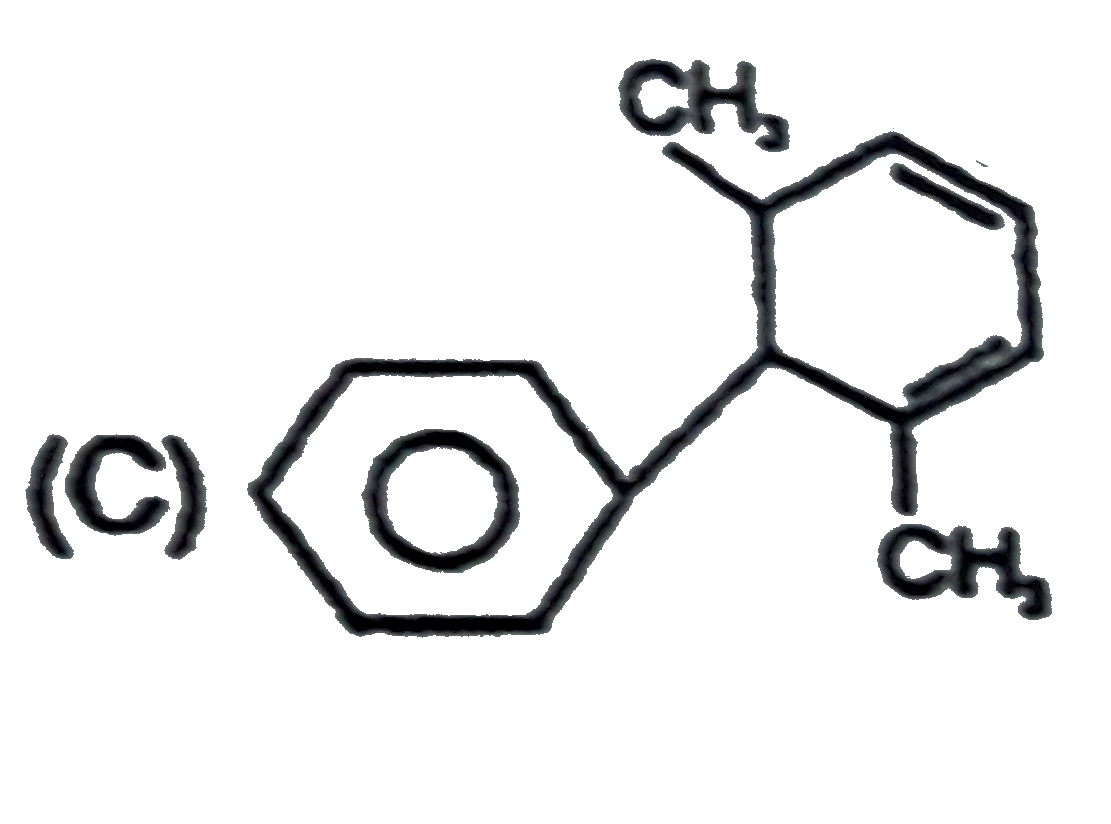
An aromatic compound T(C_(10)H_(10)O_(2)) give 2 moles of CHI_(3) and compound U(C_(8)H_(4)O_(4)Na_(2)) on treatment with I_(2) and NaOH. After acidification U gives two mononitro products on nitration. [GOC-POC] Compound (T) can also be obtained by ozonolysis of V, in this ozonolysis one mole of OHC-CHO is obtained alongwith (T). Possible structure for Compound V could be |
|
Answer»
|
|
| 29. |
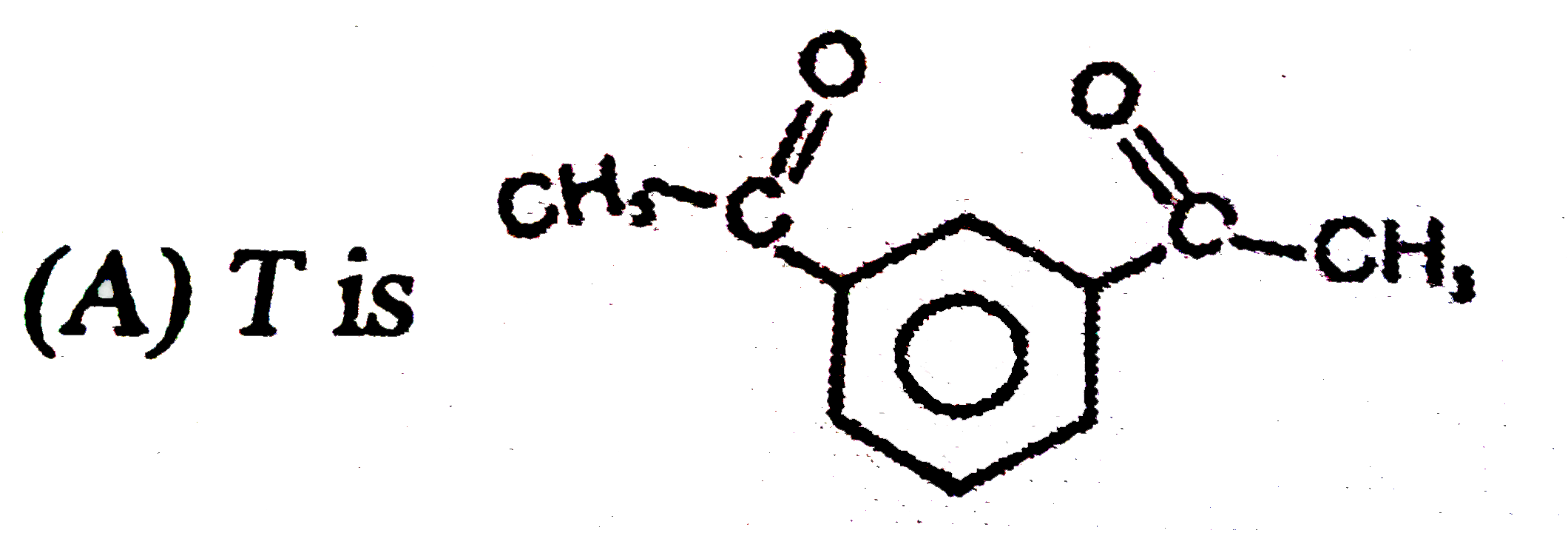
An aromatic compound T(C_(10)H_(10)O_(2)) give 2 moles of CHI_(3) and compound U(C_(8)H_(4)O_(4)Na_(2)) on treatment with I_(2) and NaOH. After acidification U gives two mononitro products on nitration. [GOC-POC] Compound (T) can also be obtained by ozonolysis of V, in this ozonolysis one mole of OHC-CHO is obtained alongwith (T). Which of the following statement is true [GOC-POC] |
|
Answer» `T` is |
|
| 30. |
An aromatic compound T (C_10H_10O_2) gives 2 moles of CHI_2 and compound U (C_8H_4O_4Na) on treatment with I_2.and NaOH . After acidification U gives two mononitro products on nitration. Which of the following statement is not true |
|
Answer»
|
|
| 31. |
An aromatic compound T (C_10H_10O_2) gives 2 moles of CHI_2 and compound U (C_8H_4O_4Na) on treatment with I_2.and NaOH . After acidification U gives two mononitro products on nitration. Compound U is |
|
Answer»
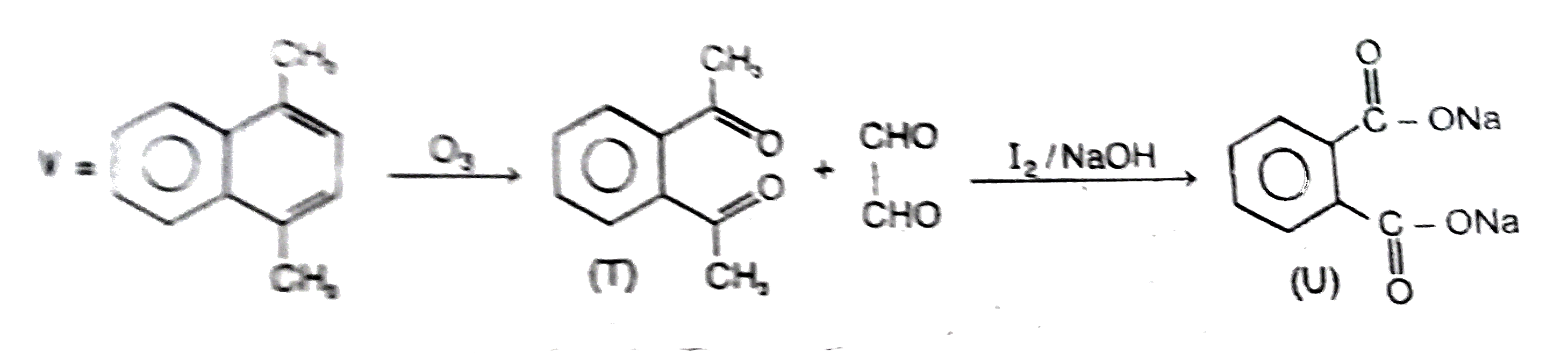
|
|
| 32. |
An aromatic compound of molecular formula C_(6)H_(4)Br_(2) was nitreated then three isomers of formual C_(6)H_(3)Br_(2)NO_(2) were obtained The original compound is . |
|
Answer» o-dibromobenzene 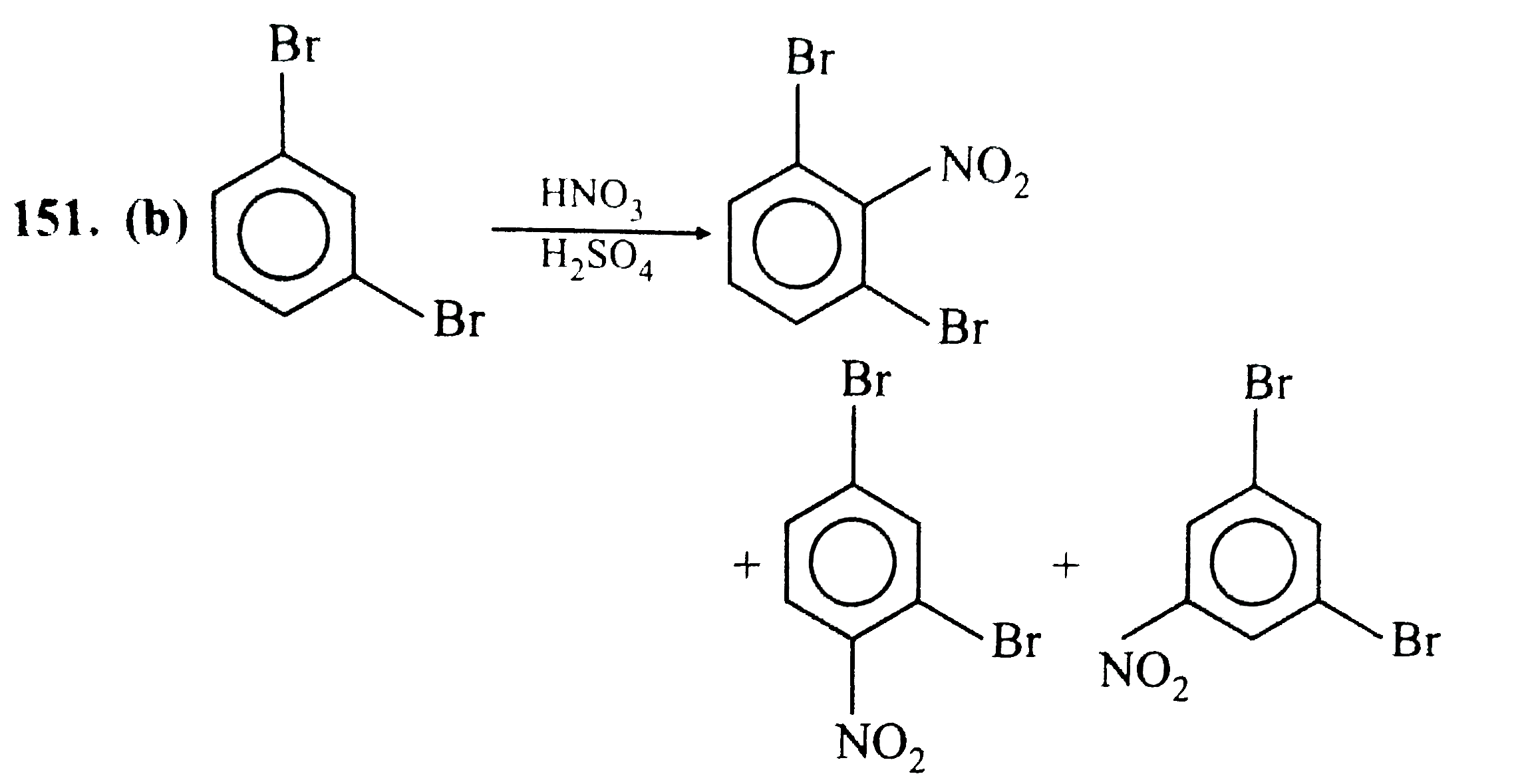 . .
|
|
| 33. |
An aromatic compound T (C_10H_10O_2) gives 2 moles of CHI_2 and compound U (C_8H_4O_4Na) on treatment with I_2.and NaOH . After acidification U gives two mononitro products on nitration. Compound (T) can also be obtained by ozonolysis of V, in this oxonolys is one mole of OHC-CHO is obtained alongwith (T).Possible structure for Compound V could be |
|
Answer»
|
|
| 34. |
An aromatic compound contains 69.4% carbon and 5.8% hydrogen. A sample of 0.303g of this compound was analysed for nitrogen by Kjeldahl's method. The ammonia evolved was absorbed in 50 ml of 0.05 M sulphuric acid. The excess of acid required 25 ml of 0.1 M sodium hydroxide for neutralization. Determine the molecular formula of the compound if its molecular weight is 121. Draw twopossible structures for this compound. |
|
Answer» `50ml "of" % nitrogen (`because` Normality of `H_(2)SO_(4))=2xx` molarity) EXCESS of acid requires 25 ml of `0.1M` or `0.1 N NaOH` (`because` Normality of NaOH=molarity of NaOH) 25 ml of 0.1N NaOH-=25 ml of `0.1 N H_(2)SO_(4)` `therefore` VOL. of `0.1 NH_(2)SO_(4)` used for the neutralisation of `NH_(3)=50-25=25ml` NOw we know that, `%` of nitrogen `=(1.4xx"Normaility of acid"xx"Voll. of acid")rarr` `=(1.4xx0.1xx25)/(0.303)=11.55%`; Hence `%` of oxygen `=100-(69.4+5.8+11.55)=13.25` |
|
| 35. |
An aromatic compound C_(7)H_(6)Cl_(2) (A) gives AgCl on boiling with alcoholic AgNO_(3) solution and yeilds C_(7)H_(7)Ocl on treatement with sodium hydroxide (A) on oxidation gives monochlorobenzoic acid. The compound (A). |
|
Answer»
|
|
| 36. |
An aromatic compound contains 69.4% C and 5.8% H. A sample of 0.303g of this compound was analysed for nitrogen by Kjeldahl method. The ammonia evolved was absorbed in 50mL of 0.05M H_(2)SO_(4). The excess acid required 25mL of 0.1M NaOH for neutralisation. Determine the molecular formula of the compound if its molecular weight is 121. Draw two possible structures for this compound. |
|
Answer» Solution :Let us first calculate the percentage of N in the compound. As all the N is converted to `NH_(3)`, applying POAC for N atoms Moles of N in the compound= moles of N in `NH_(3)` `=1 XX` moles of `NH_(3)` = EQ. of `NH_(3)` = m.e. of `NH_(3)//1000` = m.e. of `H_(2)SO_(4)//1000` `=("total m.e. of " H_(2)SO_(4)-" m.e. of excess" H_(2)SO_(4))/(1000)` `=("total m.e. of " H_(2)SO_(4)- "m.e. of " NaOH)/(1000)` `=(50 xx 0.1 -25 xx 0.1)/(1000)` =0.0025 `therefore` wt. of `N= 0.0025 xx 14= 0.035` and % of `N= (0.035)/(0.303) xx 100= 11.55%` `therefore` % of O `= 100- (69.4+ 5.8 + 11.55)` = 13.25% `therefore` moles of `C: H: N: O= (69.4)/(12): (5.8)/(1): (11.55)/(14): (13.25)/(16)` `=5.8: 5.8: 0.825: 0.825` `=7: 7:1:1` `therefore` empirical formula of the aromatic compound is `C_(7)H_(7)NO` (121) As the molecular weight is also 121, molecular formula is `C_(7)H_(7)NO` Since the compound is aromatic, it may be written as `C_(6)H_(5)CH=NOH`(benzaldoxime) with the following isomeric STRUCTURES: `{:(C_(6)H_(5)-C-H),("||"),(""N-OH):} and {:(C_(6)H_(5)-C-H),("||"),(""HO-N):}` |
|
| 37. |
An aromatic compound 'A' on treatment with aqueous ammonia and heating forms compound 'B' which on heating with Br_(2) and KOH forms a compound 'C' of molecular formula C_(6)H_(7)N. Write the structures and IUPAC names of compounds A, B and C. |
|
Answer» Solution :Step 1 : To find out the STRUCTURES of COMPOUNDS .B. and .C. (i) As the compound .C. with molecular formula `C_(6)H_(7)N` is formed from compound .B. on treatment with `Br_(2)+KOH` (i.e., Hoffmann bromamide REACTION), compound .B. must be an amide and .C. must be an amine. The amine having the molecular formula `C_(6)H_(7)N" is "C_(6)H_(5)NH_(2)` (aniline or benzenamine). (ii) Since .C. is aniline, the amide .B. from which it is formed must be benzamide `(C_(6)H_(5)CONH_(2))`. The chemical equation showing the conversion of .B. to .C. is `""underset(underset((M.F.=C_(7)H_(7)NO))("Benzamide (B)"))(C_(6)H_(5)CONH_(2)) underset("(Hoffmann bromamide reaction)")overset(Br_(2)//KOH)(rarr)underset(underset((M.F.=C_(6)H_(7)N))("Benzenamine (C)"))(C_(6)H_(5)NH_(2))` Step 2 : To find out the structure of compound .A. Since compound .B. is formed from compound .A. with aqueous ammonia and heating, compound .A. must be benzoic acid or benzenecarboxylic acid. ACIDS on treatment with `NH_(3)` and subsequent heating from amides. `""underset(underset("or Benzoic acid (A)")("Benzenecarboxylic acid"))(C_(6)H_(5)COOH) underset((ii)Delta)overset((i)Aq.NH_(3))(rarr)underset("Benzamide (B)")(C_(6)H_(5)CONH_(2))` |
|
| 38. |
An aromatic compound (A) with molecular formula C_(7)H_(6)O has the smell of bitter almonds. (A) reacts with Cl_(2) in the absence of catalyst to give (B) and in the presence of catalyst compound (A) reacts with chlorine to give ( C). Identify (A), (B) and (C). Explain the reactions. |
|
Answer» Solution :(i) An aromatic compound (A) possess the smell of bitter almonds is benzaldehyde. From the molecular FORMULA (A) is identified as `C_(6)H_(5)CHO` benzaldehyde. (ii) Benzaldehyde on treatment with `Cl_(2)` in the absence of catalyst gives benzoyl chloride `C_(6)H_(5)COCl` and it is (B).  (iii) Benzaldehyde on treatment with `Cl_(2)` in the PRESENCE of catalyst gives m-chlorobenzaldehyde and it is (C). 
|
|
| 39. |
An aromatic compound 'A' on treatment with aqueous ammonia and heating forms compound 'B' which on heating with Br_(2) and KOH forms a compound 'C' of molecular formula C_(6)H_(7)N. Write the structures and IUPAC names of compounds A,B,C. |
|
Answer» Solution :Step 1. To FIND out the structures of COMPOUNDS 'B' and 'C'. (i) Since compound 'C' with M.F. `C_(6)H_(7)N` is formed from compound 'B' on treatment with `Br_(2)+KOH` (i.e., Hofmann bromamide reaction), therefore, compound 'B' must be an amide and 'C' must be an amine. the only amine having the M.F. `C_(6)H_(7)N` is `C_(6)H_(5)NH_(2)` (ANILINE or benzenamine). (ii) Since 'C' is aniline, therefore, the amide from which it is formed must be benzamide `(C_(6)H_(5)CONH_(2))`. Thus, compound 'B' is benzamide. The chemical equation showing the conversion of 'B' to 'C' is `underset("Benzamide (B)"(M.F.=C_(7)H_(7)NO))(C_(6)H_(5)CONH_(2)) underset(("Hofmann bromamide reaction"))overset(Br_(2)//KOH)to underset("Benzenamine (C)"(M.F.C_(6)H_(7)N))(C_(6)H_(5)NH_(2))` Step 2. To find out the structure of compound 'A'. Since compound 'B' is formed from compound 'A' with aqueous ammonia and heating, therefore, compound 'A' must be benzoic acid or benzenecarboxylic acid. `underset("Benzoic acid")(C_(6)H_(5)COOH) underset((ii)Delta)overset((i)Aq.NH_(3))to underset("Benzamide (B)")(C_(6)H_(5)CONH_(2))`. |
|
| 40. |
An aromatic compound (A) on treatment with ammonia followed by heating forms compound (B), which on heating with Br_(2) and KOH forms a compound (C) having molecular formula C_(6)H_(7)N. Give the structures of A, B and C and write the reactions involved. |
Answer» Solution :The compound (A) is BENZOIC ACID, `C_(6)H_(5)COOH`. The REACTIONS are explained as under : 
|
|
| 41. |
An aromatic compound (A), on treatment with a saturated solution of sodium bisulphite, produced a solid crystalline product. (A) gave a compound (B) and a sodium salt of an aromatic monobasic acid (C ) on treatment with alkali. (B) contained 77.8% C and 7.4% H and rest, oxygen. The sodium salt on distillation with soda lime gave benzene. If (B) may be oxidised with KMnO_(4) to (C ), find the structural formulae of (A), (B) and (C ) |
|
Answer» Solution :For the compound (B): Moles of `C: H: O = (77.8)/(12): (7.4)/(1): (14.8)/(16)` `=6.48: 7.4: 0.925` `=7:8:1` `therefore` EMPIRICAL formula of (B) is `C_(7)H_(8)O` The reaction sequence given may be represented as  (A) is an aromatic aldehyde as it FORMS crystalline product with `NaHSO_(3)`. Sodium salt of (C ), on distillation with soda lime gives `C_(6)H_(6)`, so (C ) must be `C_(6)H_(5)COOH`. Further, since (C ) is produced by the oxidation of (B), it must be a homologue of `C_(6)H_(6)` or some compound containing an easily oxidisable side chain. From the formula of (B), it must be `C_(6)H_(5).CH_(2)OH` (benzyl alcohol). Again, since `C_(6)H_(5).CH_(2)OH` (B) and `C_(6)H_(5)COOH` (C ) are produced from (A) on treatment with alkali, (A) must be `C_(6)H_(5)CHO` (benzaldehyde) (Cannizzaro reaction). |
|
| 42. |
An aromatic compound (A) of molecular formula C_6H_5Cl on reaction with aqueous NaOH gives (B) of formula C_6H_6Othat give violet colouration with neutral FeCl_3.(B) on reaction with ammonia in presence of anhydrous ZnCl_2gives (C) of formula C_6H_7N. ldentify A, B. C and explain the reactions. |
|
Answer» SOLUTION :(i)An aromatic compound (A) of molecular formula `C_6H_5Cl`is identified as chloro benzenc. (ii) Chloro benzene on reaction with aqueous NaOH produces phenol as (B). `UNDERSET("Chloro benzene(A)")(C_6H_5Cl) + NaOH underset(633K)oveset(300" bar")to underset("Phenol(B)")(C_6H_5OH) + NaCl` (III) Phenol givesaiolet colour with NEUTRAL `FeCl_3`.Phenol on treated with `NH_3` in the presence of anhydrous `ZnCl_2` gives Amline as (C) `underset("Phenol(B)")(C_6H_5OH)+ NH_3 underset(ZnCl_2)overset("anhydrous")to underset("ANILINE(C)")(C_6H_5-NH_2) + H_2O` 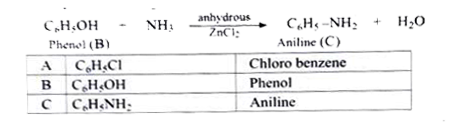
|
|
| 43. |
An aromatic compound A of molecular formula C_(7)H_(7)ON undergoes a series of reactions as shown below. Write the structure of A,B,C,D and E in the following reactions. |
Answer» SOLUTION : 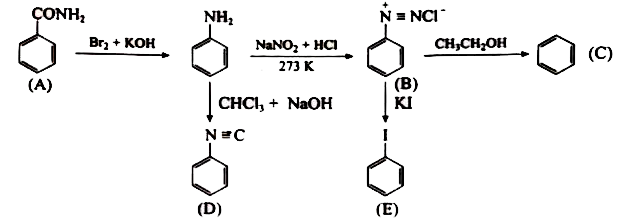
|
|
| 44. |
An aromatic compound 'A' (Molecular formula C_(8)H_(8)O) gives positive 2, 4-DNP test. It gives a yellow precipitate of compound 'B' on treatment with iodine and sodium hydroxide solution. Compound 'A' does not give Tollen's or Fehling's test. On drastic oxidation with potassium permanganate it forms a carboxylic acid 'C (Molecular formula C_7H_6O_2), which is also formed along with the yellow compound in the above reaction. Identify A, B and C and write all the reactions involved. |
Answer» SOLUTION :
|
|
| 45. |
An aromatic compound 'A' (molecular formula C_(8)H_(8)O) gives positive 2, 4-DNP test . It gives a yellow precipitate of compound 'B' on treatment with iodine and sodium hydroxide solution. Compound 'A' does not give tollen's or fehling's test. On drastic oxidation with potessium permanganate it forms a carboxylic acid 'C' (Molecular formula C_(7)H_(6)O_(2)), which is also formed along with the yellow compound in the above reaction. identify A,B and C and write all the reactions involved. |
|
Answer» Solution :(i) Since aromatic compound 'A' (MF `C_(8)H_(8)O`) gives positive 2,4-DNP test, it MUST be an ALDEHYE or a ketone. (ii) Since compound 'A" does not give tollens' test or Fehling's test, therefore, 'A" must be a ketone. (iii) Since compound 'A" on treatement with `I_(2)//NaOH`, gives yellow ppt. of compound 'B'. therefore, compound 'B' must be iodoform and the ketone 'A" must be a methyl ketone. (iv). Since methyl ketone 'A" on drastic oxidation with `KMnO_(4)` gives a carboxylic acid 'C' (MF `C_(7)H_(6)O_(2)`), therefore, 'C' must be benzoic acid and compound 'A" must be acetophenone `(C_(6)H_(5)COCH_(3))` (v) If 'A' is acetophenone, then all the reactions described above may be explained as follows 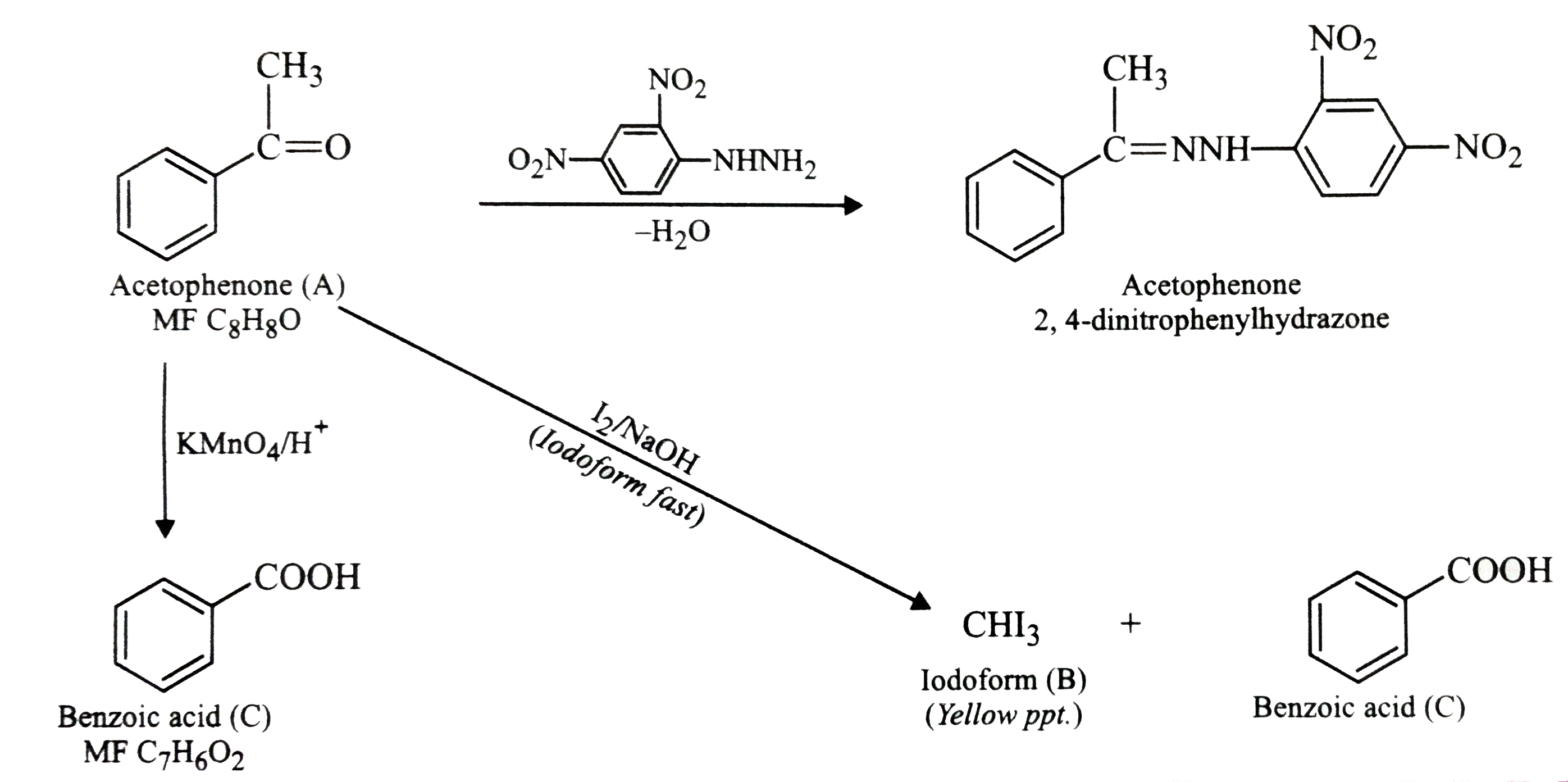
|
|
| 46. |
An aromatic compound (A), C_(9)H_(12)O was subjeted to a series of tests in the laboratory. It was found that this compound , (i) does not form silver mirror with Tollens' reagent. (ii) rotates the plane of polarised light. (iii) reacts with sodium metal to evolve hydrogen gas. ltbr. (iv) does not decolourise pink colour of bromine water. (v) reacts with hot KMnO_(4) to form monocarboxylic acid 'B' which on decarboxylation gives benzene. (vi) reacts with Lucas reagent in about 5 min. (vii) reacts with I_(2) and NaOH to produce yellow coloured precipitation of the compound (C ) . (viii) loses its optical activity due to formation of compound (D ) on reaction with Red P and HI. The compound (D ) will be : |
|
Answer» `C_(6)H_(5)CH_(2)CH_(2)CH_(3)` |
|
| 47. |
An aromatic compound (A), C_(9)H_(12)O was subjeted to a series of tests in the laboratory. It was found that this compound , (i) does not form silver mirror with Tollens' reagent. (ii) rotates the plane of polarised light. (iii) reacts with sodium metal to evolve hydrogen gas. ltbr. (iv) does not decolourise pink colour of bromine water. (v) reacts with hot KMnO_(4) to form monocarboxylic acid 'B' which on decarboxylation gives benzene. (vi) reacts with Lucas reagent in about 5 min. (vii) reacts with I_(2) and NaOH to produce yellow coloured precipitation of the compound (C ) . (viii) loses its optical activity due to formation of compound (D ) on reaction with Red P and HI. Monocarboxylic acid (B) will be : |
|
Answer» `HCOOH` |
|
| 48. |
An aromatic compound (A), C_(9)H_(12)O was subjeted to a series of tests in the laboratory. It was found that this compound , (i) does not form silver mirror with Tollens' reagent. (ii) rotates the plane of polarised light. (iii) reacts with sodium metal to evolve hydrogen gas. ltbr. (iv) does not decolourise pink colour of bromine water. (v) reacts with hot KMnO_(4) to form monocarboxylic acid 'B' which on decarboxylation gives benzene. (vi) reacts with Lucas reagent in about 5 min. (vii) reacts with I_(2) and NaOH to produce yellow coloured precipitation of the compound (C ) . (viii) loses its optical activity due to formation of compound (D ) on reaction with Red P and HI. Structure of the compound (A ) will be : |
|
Answer»
|
|
| 49. |
An aromatic compound (A), C_(9)H_(12)O was subjeted to a series of tests in the laboratory. It was found that this compound , (i) does not form silver mirror with Tollens' reagent. (ii) rotates the plane of polarised light. (iii) reacts with sodium metal to evolve hydrogen gas. ltbr. (iv) does not decolourise pink colour of bromine water. (v) reacts with hot KMnO_(4) to form monocarboxylic acid 'B' which on decarboxylation gives benzene. (vi) reacts with Lucas reagent in about 5 min. (vii) reacts with I_(2) and NaOH to produce yellow coloured precipitation of the compound (C ) . (viii) loses its optical activity due to formation of compound (D ) on reaction with Red P and HI. The functional groups present in the compound (A) is : |
|
Answer» ALDEHYDIC (-CHO) |
|
| 50. |
An aromatic compound (A), C_(9)H_(12)O was subjeted to a series of tests in the laboratory. It was found that this compound , (i) does not form silver mirror with Tollens' reagent. (ii) rotates the plane of polarised light. (iii) reacts with sodium metal to evolve hydrogen gas. ltbr. (iv) does not decolourise pink colour of bromine water. (v) reacts with hot KMnO_(4) to form monocarboxylic acid 'B' which on decarboxylation gives benzene. (vi) reacts with Lucas reagent in about 5 min. (vii) reacts with I_(2) and NaOH to produce yellow coloured precipitation of the compound (C ) . (viii) loses its optical activity due to formation of compound (D ) on reaction with Red P and HI. Molecular formula of the compound (C ) will be : |
|
Answer» `CH_(3)I` |
|