

Saved Bookmarks
This section includes 7 InterviewSolutions, each offering curated multiple-choice questions to sharpen your Current Affairs knowledge and support exam preparation. Choose a topic below to get started.
| 1. |
Match the reactions given in Column I with the type of reactions given in Column II |
|
Answer» Solution :A`to`(2)B`to`(4) C`to`(5)D`to`(1)E`to`(3) A. In this reaction, an electrophile `CL^(+)` attacks on to the benzene ring and substitution takes place. B. In this reaction, addition of HBr takes place on to the doubly bonded carbons of propene in accordance with Markownikoffs rule and electrophilic addition takes place C. In this reaction, the reactant is secondary HALIDE Here. halogen atom is substituted by hydroxy ion. As it is secondary halide so it follows `S_(N)1` mechanism. D. In this reaction, halogen atom is directiy bonded to aromatic ring. So, It is nucleophilic aromatic substitution as `""^(-)OH` GROUP has substituted halogen of given compound E. It is an elimination reaction. It follows SAYTZEFF elimination rule. |
|
| 2. |
Match the reactions given in Column I with the suitable reagents given in Column II. . |
|
Answer» |
|
| 3. |
Match the reactions given in Column - I with the names given in Column - II. |
| Answer» SOLUTION :(i - B), (ii - a), (III - d), (iv - C) | |
| 4. |
Match the reactions given in column I with the names given in column II. . |
|
Answer» |
|
| 5. |
Match the reaction listed in coloumn-I with characteristic(s) listed in column-II |
|
Answer» `1-p,Q, 2-p,q,s, 3-r, 4-s` (2) `2ClO_(2) + 2O_(3) overset(H^(+))rarr Cl_(2)O_(6)` (yellow solid) `+ 2O_(2)`, acidic, mixed anhydride of `HClO_(3) and HClO_(4)` (3) `K_(4) [Fe(CN)_(6)] + 6H_(2)O + 6H_(2)SO_(4) overset(Delta)rarr 2K_(2)SO_(4) + FeSO_(4) + 3(NH_(4))_(2) SO_(4) + 6CO uarr` (4) `2KOH + 5O_(3) rarr 2KO_(3) ("orange solid") + 5O_(2) + H_(2)O` |
|
| 7. |
Match the reaction in Column I with nature of the reactions/type of the products in Column II. {:("Column I","Column II"),((A)AgNO_3(aq)+I_2(s)("excess")+H_2O (l)to,(p)"Redox reaction"),((B)CrO_4^(2-)(aq)+H^+(aq)to,(q)"One of the products has trigonal planar structure"),(( C)MnO_4^(-)(aq)+NO_2^(-)(aq)+H^+(aq)to,"(r)Dimeric bridged tetrahedral metal ion"),((D)NO_3^(-)(aq)+H_2SO_4(aq)+Fe^(2+)(aq)to,"(s)Disproportionation"),(,"(t)Colour of one of the products is due to charge transfer spectrum"):} |
|
Answer» It is disproportionation and redox reaction. `NO_3^-` has planar structure. 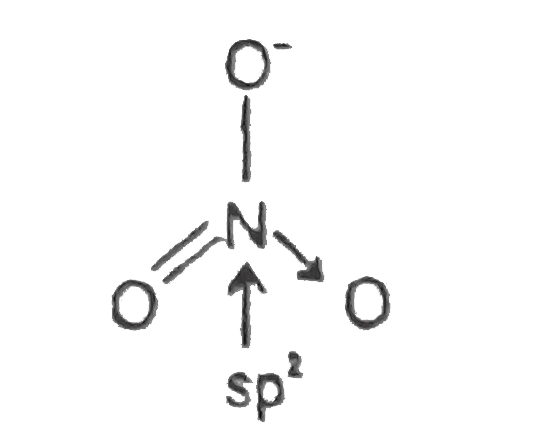 (B)`2CrO_4^(2-)+H^+ toCr_2O_7^(2-)+H_2O` 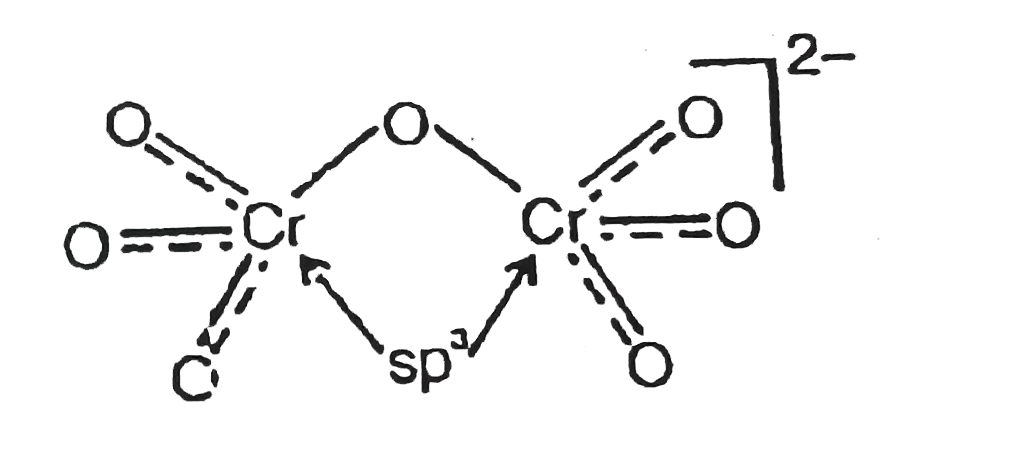 `Cr_2O_7^(2-)` has dimeric BRIDGED tetrahedral metal ion. The colour is DUE to charge transfer spectrum. (C )`NO_2^(-)` is being oxidised and `MnO_4^-` being reduced according to the following reaction. So it is redox reaction. , `2MnO_4^(-)+5NO_2^(-)+6H^(+)to2Mn^(2+)+5NO_3^(-)+3H_2O` 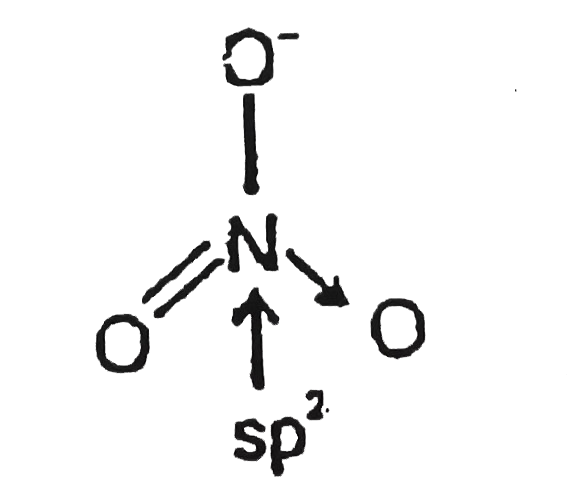 (D)`Fe^(2+)` is being oxidised and `NO_3^-` being reduced according to the following reaction. So it is redox reaction, `3Fe^(2+)+NO_3^(-)+4H^(+)toNO^(+)+3Fe^(3+)+2H_2O` `Fe^(2+)+NO^(+)+5H_2Oto [Fe(H_2O)_6NO]^(2+)` (brown ring) The colour is due to charge transfer spectrum. |
|
| 8. |
Match the reaction listed in coloumn -I with characteristic (s)/type of reactions listed in coloumn II |
|
Answer» <P> |
|
| 9. |
Match the reaction from Column l with the expected products from column II : |
|
Answer» |
|
| 10. |
Match the rate law given in column I with the dimensions of rate constants given in column II and mark the appropriate choice. {:("Column I","Column II"),((A) "Rate" = k[NH_(3)]^(0),(i) mol L^(-1) s^(-1)),((B)"Rate" = k[H_(2)O_(2)][I^(-)],(ii) L mol^(-1) s^(-1)),((C )"Rate" = k[CH_(3)CHO]^(3//2),(iii) S^(-1)),((D) "Rate" = k [C_(5)H_(5)CI],(iv)L^(1//2) mol^(-1//2) s^(-1)):} |
|
Answer» (A) `to` (iv), (B) `to` (III), (C ) `to` (II), (D) `to` (i) |
|
| 11. |
Match the reacting mixture in column-I with the reagent in column II {:("Column-I","Column-II"),((A)H_2C_2O_4+NaHC_2O_4,(p)NaOH),((B)NaHPO_4+NaNO_2,(q)HCl),(( C)Fe_2(SO_4)_3+FeC_2O_4,(r)KMnO_4),((D)FeO+Fe_2O_3,(s)"Zinc dust"):} |
|
Answer» |
|
| 12. |
Match the reactant in Column - I with the reaction in Column - II |
|
Answer» i-c, ii-a, iii-d, iv-b |
|
| 13. |
Match the reactant in column-I with the reaction in column-II |
|
Answer» i-C, ii-A, iii-D, iv-B 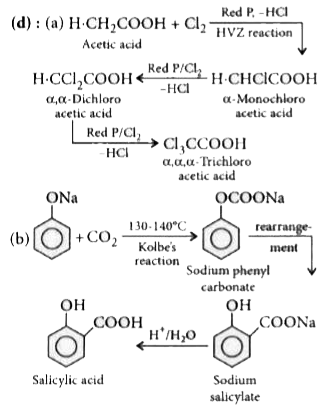 (c) `underset("[Stephen's reaction]")(R-C-=N) underset(2[A])overset(SnCl_(2)//HCl)rarr underset("Aldehyde")underset(""R-CHO+NH_(4)Cl)underset(" "darrH_(2)O)(R-CH=NH*HCl)` 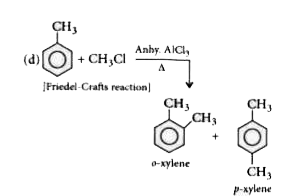
|
|
| 14. |
Match the quantity of Column I with the quantity of Column II {:(,"Column I",,"Column II"),("(A)","Glycine","(p)","Has S-S linkage"),("(B)","Arginine","(q)","Optically active"),("(C)","Glutamic acid","(r)","Has pH less than 7"),("(D)","Cystine","(s)","Has pH greater 7"):} |
|
Answer» <P> |
|
| 16. |
Match the property given in Column I with the element given in Column II. {:(,"Column I(Property)",,"Column II( Element)"),((i),"Lanthanoid which shows "+4"oxidation state",(a),P m),((ii),"lLnathanoid which can show "+2"oxidation state",(b),Ce),((iii),"Radiactive lanthaoid",(c ),Lu),((iv),"Lanthanoid which has "4f^(7)"electronic configuration in "+3"oxidation state",(d),Eu),((v),"Lanthanoid which has " 4f^(14) "electronic configuration in "+3"oxidation state",(e ) ,Gd),(,,(f ),Dy):} |
|
Answer» |
|
| 17. |
Match the quantity of Column I with the quantity of Column II |
|
Answer» <P> |
|
| 18. |
Match the properties givens in Column I with the metals given in Column II. {:(,"Column I ( Porperty)",,"Column II(Metal) "),((i),"An element which can show"+8"oxidation state",(a),Mn),((ii),"3d block element that can show upto "+7"oxidation state",(b),Cr),((iii),"3d block element with highest melting point",(c ) ,Os),(,,(d),Fe):} |
|
Answer» |
|
| 19. |
Match the property given in Column I with the element given in Column II. |
|
Answer» |
|
| 20. |
Match the properties given in Colunmn I with the emtals given in Column II. {:(,"Column I (Property)",,"Column II ( Metal)"),((i),"Element with higher second ionisation enthalpy ",(a),Co),((ii) ,"Element with highest third ionisation enthalpy",(b),Cr),((iii),"M in "M(CO)_(6)"is",(c ) ,Cu),((iv),"Element with highest heat of atomisation",(d ),Zn),(,,(e ),Ni):} |
|
Answer» (ii) `ZN^(2+) = 3d^(10)`. Hence, removal of 3rd electron requires very highenergy. Hence, (ii) `rarr` (d). (iii) Metal carbonyl with formula ` M (CO)_(6) `is `Cr(CO)_(6)` . Hence, (iii) `rarr` (b). (iv)Ni has highest enthalpy of atomisation . Hence, (iv)` rarr `( e ) |
|
| 21. |
Match the properties given in Column I with the metals given in Column II. |
|
Answer» |
|
| 22. |
Match the properties given in column I with the metals given in Column II. |
|
Answer» |
|
| 23. |
Match the proper pairs : {:(,[A],,[B]),((a),"Cyclo hexyl chloride",(e ),"Vinylic halide"),((b),"4-chloro pent-2-ene",(f),"Benzylic halide"),((c ),"Chloro ethene",(g),2^(@)" halide"),((d),"1-chloro 2-phenyl methane",(h),"Allylic halide"):} |
|
Answer» `a to G, B to h, c to E, d to f` |
|
| 24. |
Match the properties given in Column I with the metals given in Column II. |
|
Answer» B. `Zn^(2+) = 3d^(10)` which is very stable configuration. Hence, removal of THIRD electron reuqires very high energy. C. Metal carbonyl with formula `M(CO)_(6)` is `Cr(CO)_(6)`. D. Nickel is the element with highest heat of atomisation. |
|
| 25. |
Match the proper pairs : {:(,[A],,[B]),((P),S_(N)2,(i),"Freon"),((Q),TNP,(ii),"Hetrolytic fission"),((R ),CFC,(iii),"No Hetrolytic fission"),((S),S_(N)1,(iv),"Picric acid"),(,,(v),"Fire extinguisher"):} |
|
Answer» (P - ii), (Q - iv), (R - i), (S - iii) |
|
| 26. |
Match the precipitate of the compounds listed in (I) with the solvent(s) listed in column(II). {:(Column-I,Column-II),((A)Zn(OH)_2"precipitate dissolves in",(p)"Potassium cyanide"),((B)Cr(OH)_3"precipitate dissolves in",(q)"Ammonia"),((C )AgCl"precipitate dissolves in",(r)"Sodium hydroxide"),((D)CuS "precipitate dissolves in",(s)"Sodium peroxide"),(,(t)50% HNO_3):} |
|
Answer» `Zn(OH)_2darr+2NaOH(aq)toNa_2[Zn(OH)_4]` (colourless soluble complex) `Zn(OH)_2 darr + 2H^(+)(aq)toZn^(2+)(aq)+2H_2O(l)` (B)It is slightly soluble in red `Cr(OH)_3darr+6NH_3(aq)to[Cr(NH_3)_6]^(3+)`(PINK or violet soluble complex ) +`3OH^-`(aq) `Cr(OH)_3darr+OH^(-)(aq)to[Cr(OH)_4]^(-)`(green soluble complex) `2Cr(OH)_3darr+3Na_2O_2(s)to2Na_2CrO_4`(yellow solution) + 2NaOH (aq) +`2H_2O`(l) `Cr(OH)_3darr+3H^(+)(aq)toCr^(3+)(aq)+3H_2O(l)` (C )`AgCldarr+2NH_3(aq)to[Ag(NH_3)_]CL`(colourless soluble complex) `AgCldarr+2CN^(-)(aq)to[Ag(CN)_2]^(-)`(colourless soluble complex )+`Cl^-` (aq) Does not dissolve in NaOH, `Na_2O_2` and 50% `HNNO_3` (D)`2CuSdarr+8CN^(-)(aq)to2[Cu(CN)_4]^(3-)` (colourless soluble complex )+`S_2^(2-)` `CuSdarr+Na_2O_2(s)overset(H_2O)toCuSO_4(aq)+NaOH(aq)` CuS `darr`+ `H_2O `(l)`toCuSO_4(aq)` `3CuSdarr+8HNO_3(aq)to3Cu^(2+)(aq)+6NO_3^(-)(aq)+3Sdarr+2NOuarr+4H_2O(l)` |
|
| 27. |
Match the product of column -II with the reaction given in column -I |
Answer» 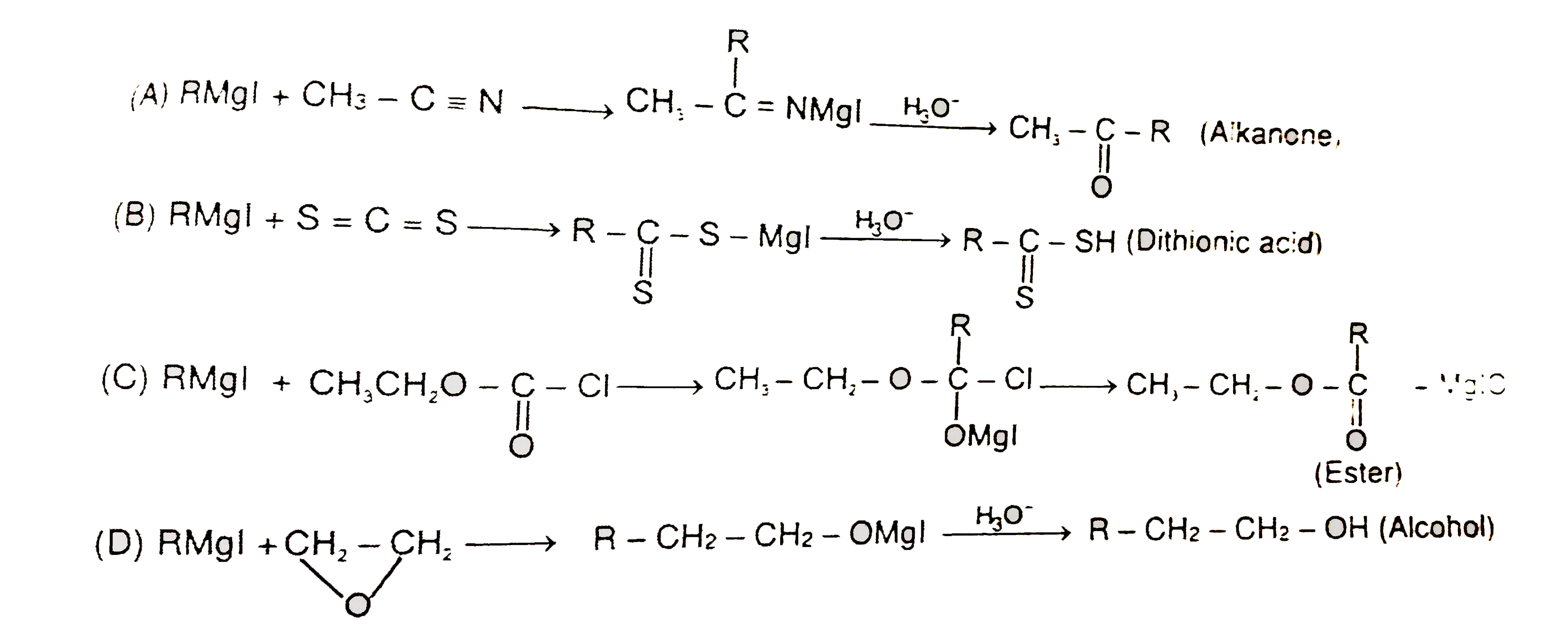
|
|
| 28. |
Match the process given in column I with its description given in column II. |
|
Answer» (i)-`("C")` , (ii)-(D), (III)-(B), (IV)-(A) |
|
| 29. |
Match the polymers in Column I with the characteristic listed in Column II. |
|
Answer» <P> |
|
| 30. |
Match the polymers given in Column I with their commercial names given in Column II. |
| Answer» SOLUTION :`(a)-(ii),(b)-(iii),(C)-(i),(d)-(V),(E)-(IV)` | |
| 31. |
Match the polymers given in Column-I with their commercial names given in column-II. |
|
Answer» |
|
| 33. |
Match the polymers given in column-I with the type of linkage present in them given in column-II. |
|
Answer» |
|
| 36. |
Match the polymer (column I) with the class of polymer (column II) |
|
Answer» `(i)-(C ), (II)-(B)` |
|
| 37. |
Match the polymer (column I) with its structural formula (column II) |
|
Answer» `(i) - (C ), (II) - (B), (III) - (A), (iv) - (D)` |
|
| 38. |
Match the polymer (column I) with its type (column II) |
|
Answer» `(i)-(D),(II)-(A),(III)-(B)` |
|
| 39. |
Match the polymer (column I) with its important use (column II) |
|
Answer» `(i) - (C ), (II)- (D), (III) - (B)` |
|
| 40. |
Match the pK_a values with the given compounds |
Answer» 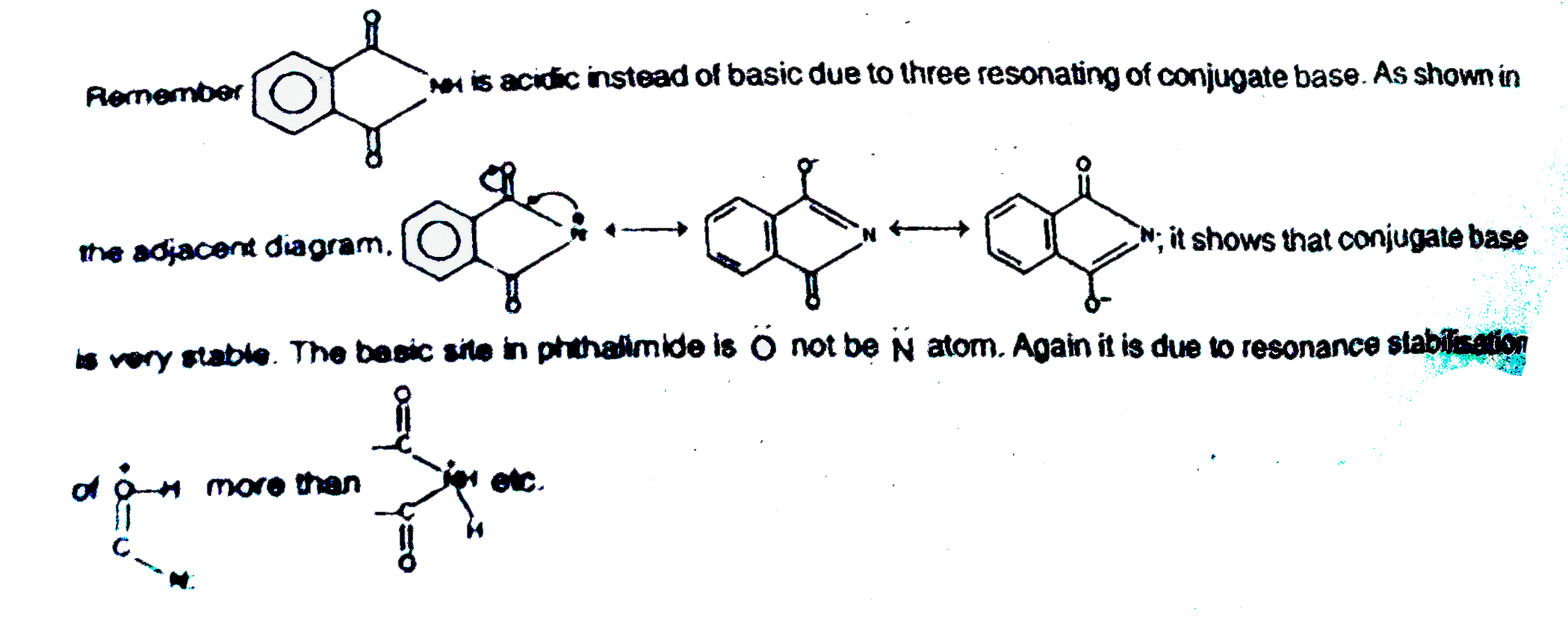
|
|
| 41. |
Match the physical quantities in the List-I with their units in List-II : |
|
Answer» |
|
| 42. |
Match the particular given in column (I) with the compound in column (II) {:("ColumnI","ColumnII"),((A)"Solvary process",(p)NaCl),((B)"Evolve" CO_2 "on heating",(q)Na_2O_3),((C )"Aqueous solution is neutral towards litmus",(r)NaHCO_3),((D)"Oxone",(s)Na_2CO_3),(,(t)CaCl_2"):} |
|
Answer» `NH_4HCO_3 + H_2O to NH_4OH + H_2CO_3` `2NaHCO_3 overset(250^@C)to Na_2CO_3 + H_2O+CO_2` `NH_4HCO_3 + NaCl to NaHCO_3+NH_4Cl` `CaO+H_2OtoCa(OH)_2` `Ca(OH)_2+2NH_4Cl toCaCl_2+2NH_3+2H_2O` `2NH_4Cl+Ca(OH)_2 to 2NH_3 +2H_2O+CaCl_2` (C )The solutions of `Na_2Cl_3` and `NaHCO_3` in water are alkaline in nature and thus turn the litmus paper blue. NaCl is neutral in AQUEOUS solution. (D)The commerical name of sodium peroxide is oxone which is used for the manufacture of OXYGEN gas. `Na_2O_2+H_2Oto2NaOH+1/2O_2` |
|
| 43. |
Match the pair of complexes given in Column-I and the characteristic given in column-II. {:("Column-I","Column-II"),((A)(NH_4)_2[NiCl_4] and (NH_(4))_(2)[NI(CN)_4],(p)"Both show same electrical conductance"),((B)CoCl_3. 6NH_3 and PtCl_4. 5NH_3,(q)"Both show same effective atomic number "),((C)[Pt(NH_3)_2Cl_2] and (NH_4)_2[PtCl_4],(r)"Both show same primary valencies "),((D )K_2[Fe(H_2O)_6] and K_4[FeCl_6], (s)"Both gives white participate with" AgNO_3 "solution"):} |
|
Answer» (B)`overset(III)([Co(NH_3)_6]Cl_3) and overset(IV)([Pt(NH_3)_5Cl])Cl_3` have different primary valencies but same number of ions. So same electrical conductance . Do not have same effective atomic number as in both complexes METALS have different atomic number. As there are three `Cl^-` ions out side the coordination sphere both will gives 3 moles of the precipitate of AgCl(WHITE). (C )`[Pt(NH_3)_2Cl_2] and (NH_4)_2 [PtCl_4]`. Pt is in +2 oxidation state so same primary valencies and same effective atomic number (84) and does not have same electrical conductance (former is NEUTRAL complex where as later ONE has 3 ions in aqueous solutons). No precipitate with `AgNO_3` as `Cl^-` ions in both complexes are in coordination sphere. (D)Both have Fe in +2 oxidation state so same primary valencies but have different number of ions.so different electrical conductance (former has 3 ions where as later one has 5 ions in aqueous solution). Both complexes have same effective atomic number (i.e. 36). |
|
| 44. |
Match the paris (choose the correct answer from Section B for Section A) : {:("Section A" ,"Section B"),((a) "Gold sol",(i) "Hardy-Schulze rule"),((b)"Gold No.",(ii)"van dar Wall force"),((c)"Coagulation power" ,(iii)"Electorchemical phenomenon"),((d)"Physical adsorption",(iv)"Lyophilic colloid"),((e)"Corrosion",(v)"Lyophobic colloid"),(,(iv)"Tyndall effect"):} |
| Answer» SOLUTION :`(a)-(V),(b)-(IV),©-(i),(d)-(ii),(e)-(iii).` | |
| 45. |
Match the ores of List - I with their composition in List - II : {:(,"Column - I",,"Column - II"),((A),"Iron pyrites",(p),FeS_(2)),((B),"Fool's gold",(q),"Sulphide ore"),((C),"Galena",(r),Fe_(2)O_(3)),((D),"Haematite",(s),"Concentrated by froth floatation process"):} |
|
Answer» <P> |
|
| 46. |
Match the ores of Column-I with their composition in Column -II {:("Column-I","Column-II"),((A)"Iron pyrites",(p)FeS_(2)),((B) "Fools gold",(q)"Sulphide ore"),((C )"Galena",(r )Fe_(2)O_(3)),((D)"Haematite",(s)"Concentrated by forth floatation process"):} |
|
Answer» <P> SOLUTION :`(A to p,Q,s) (B to p,q,s) (C to q,s) (D-r)` |
|
| 47. |
Match the ores of List-I with their composition in List-II |
|
Answer» |
|
| 48. |
Match the ores of Column -I with their composition in Coilumn -II {:("Column-I", "Column -II"),((A)"Malachite", (p)"Sulphide of iron"),(( C)"Chalcopyrites",(r )"Dirty white"),((D)"Cuprite",(s)"Ore containing carbonates of copper"):} |
| Answer» Solution :`(A to s) (B to s) (C to p,Q)(D to R)` | |
| 49. |
Match the ores listed in column(I) with the appropriate process(es) listed in column (II). {:("Column-I","Column-II"),((A)"Haemalite",(p)"Slag formation"),((B)"Copper pyrites",(q)"Reduction by carbon monoxide (mainly) as well as carbon at different temperature"),(( C)"Carnallite",(r)"Electrolytic reduction"),((D) "Bauxite",(s)"Calcination"),(" " ,(t)"Leaching"):}. |
|
Answer» `CaO+SiO_2 to CaSiO_3` (slag) (B)`2CuFeS_2 + 4O_2 to Cu_2S+2FeO+3SO_2` `FeO+SiO_2 to FeSiO_3` (C ) `KCl, MgCl_2 . 6H_2O to` calcination in presence of dry HCl to remove 6 water molecules.Mg extraction by electrolytic reduction from molten mixture of anhydrous `MgCl_2 + NaCl + CaCl_2` (D)`Al_2O_3(s)+2NaOH(aq)+3H_2O(l)overset("leaching")to2Na[Al(OH)_4](aq)` `2Al(OH)_3 underset("Calcination")overset(1275 K)to Al_2O_3+3H_2O`, Extraction of Al from purified `Al_2O_3` by electrolytic reduction. |
|
| 50. |
Match the order given in column (I) with the property(les) in column (II). {:("ColumnI","ColumnII"),((A)Rb_2CO_3gtK_2CO_3gtNa_2CO_3,(p)"Solubility of salts in water"),((B)SrSO_4gtCaSO_4gtMgSO_4,(q)"Thermal stability of salts"),((C )RbgtKgtNa,(r)"Softness of metals"),((D)BegtMggtCa,(s)"Hydration energy of metals"),(,(t)"Ionisation energy of metals "):} |
|
Answer» (B)The correct order of solubility is `MgSO_4 gt CaSO_4 gt SrSO_4` as in this case decrease in hydration energy is more as compared to that of lattice energy. The orde of thermal stability is correct, as down the group metallic character increases and thus the thermal stability of oxo-salts increases. (C )Down the group strength of metallic bond decreases Due to this there occurs a decrease in CLOSE packing of atoms in crystal lattice from LI to Cs and thus softness increase donw the group. (D)hydration energy `prop 1/ ("size of atom")`So BegtMggtCa is correct order. Ionisation energy `prop 1/("Size of atom")` So BegtMggtCa is correct order. |
|