Saved Bookmarks
This section includes 7 InterviewSolutions, each offering curated multiple-choice questions to sharpen your Current Affairs knowledge and support exam preparation. Choose a topic below to get started.
| 1. |
In which of the following numbers , all zeros are significant? |
|
Answer» 5.0005 |
|
| 2. |
In which case chiral carbon is not generated by reaction with HCN |
|
Answer»
|
|
| 3. |
In which of the following nuclear reactions neutron is emitted? |
|
Answer» A) `UNDERSET(13)27Al+underset(2)(4)Hetounderset(15)(30)P` |
|
| 4. |
In which of the following numbers, all zeros are significant ? |
|
Answer» 2.0E-5 |
|
| 5. |
In which case, a spontaneous reaction is impossible at any temperature: |
|
Answer» `triangleHgt0, triangleSgt0` |
|
| 6. |
In which of the following nuclear process , the electrically neutral atom remains electrically neutral ? |
|
Answer» `alpha` - DECAY |
|
| 7. |
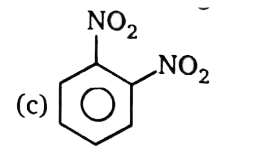
In which of the following neutralisation reactions, the heat of neutralisation will be highest |
|
Answer» `NH_(4)OH and CH_(3)COOH` |
|
| 8. |
In which case, a spontaneous reaction is possible at any temperature: |
|
Answer» `triangleHlt0, triangleSgt0` |
|
| 9. |
In which of the following, NH_(3) is not used |
|
Answer» Nessler's reagent |
|
| 10. |
In which case +1 oxidation state is stable than +3 : |
|
Answer» Ga |
|
| 11. |
In which of the following NH_(3) is not used? |
|
Answer» Nessler's REAGENT |
|
| 12. |
In which block 106^(th) element belongs |
|
Answer» s-block |
|
| 13. |
In which of the following neutralisation reaction, the heat of neutralisation will be highest ? |
|
Answer» HCl and `NH_(4)OH` |
|
| 14. |
In which arrangement 1 atom is present per unit cell ? |
| Answer» ANSWER :C | |
| 15. |
In which of the following neutralisation reaction, the heat of neutralisation is the highest |
|
Answer» `NH_4OH and H_2SO_4` |
|
| 16. |
In which among the following solids, Schottky defeat is not observed ? |
|
Answer» ZnS Note ZnS will show Frenkel defect. |
|
| 17. |
In which of the following N atom is not sp^(2) hybridised? |
|
Answer» `HNO_(4)` |
|
| 18. |
In which among the following solids, Schottky defect is NOT observed? |
|
Answer» ZNS |
|
| 19. |
In which of the following N has lowest oxidation number ? |
|
Answer» NO |
|
| 20. |
In which of the following molecules, the cleavage by HlO_(4) is not observed ? |
|
Answer»

|
|
| 21. |
In which of the following molecules the central atom has sp^2 hybridization |
|
Answer» `NH_3` |
|
| 22. |
In which allotropic form of sulphur, puckered S_8 rings are not present ? |
|
Answer» Plastic SULPHUR |
|
| 23. |
In which of the following molecules, the central atom has two lone pairs of electrons ? |
|
Answer» `SF_(4)` |
|
| 24. |
In which allotropic form of sulphur, puckered S_(8) rings are not present ? |
|
Answer» CHAIR FORM of sulphur |
|
| 25. |
In which all are planar? |
|
Answer» `N_(3)^(-),l_(3)^(-),ClF_(3)` |
|
| 26. |
Oxygen exhibits least oxidation state in |
|
Answer» `OF_(2)` |
|
| 27. |
In what ways these are different : (a) a sol and gel (b) a gel and an emulsion ? |
|
Answer» Solution :(a) For a SOL : Dispersed PHASE : Solid , DISPERSION MEDIUM : Liquid for a gel : Dispersed phase: Liquid , Dispersion medium : Solid (B) For a gel : Dispersed phase : Liquid , Dispersion medium : Solid For an emulsion : Dispersed phase : Liquid , Dispersion medium : Liquid |
|
| 28. |
In what way is the electronic configuration of trantision elementsdifferentfrom that of the non-transition elements ? |
| Answer» SOLUTION :Transition elements CONTAIN incompletely filled d-subshell, i.e., their electronic configuration is `( n-1) d^(1-10) NS^(0-2)` WHEREAS non- transition elements have no d-subshell or their d-subshell is completely filled and have `ns^(1-2) ` or `ns^(2) np ^(1-6)` in their outermost shell. | |
| 29. |
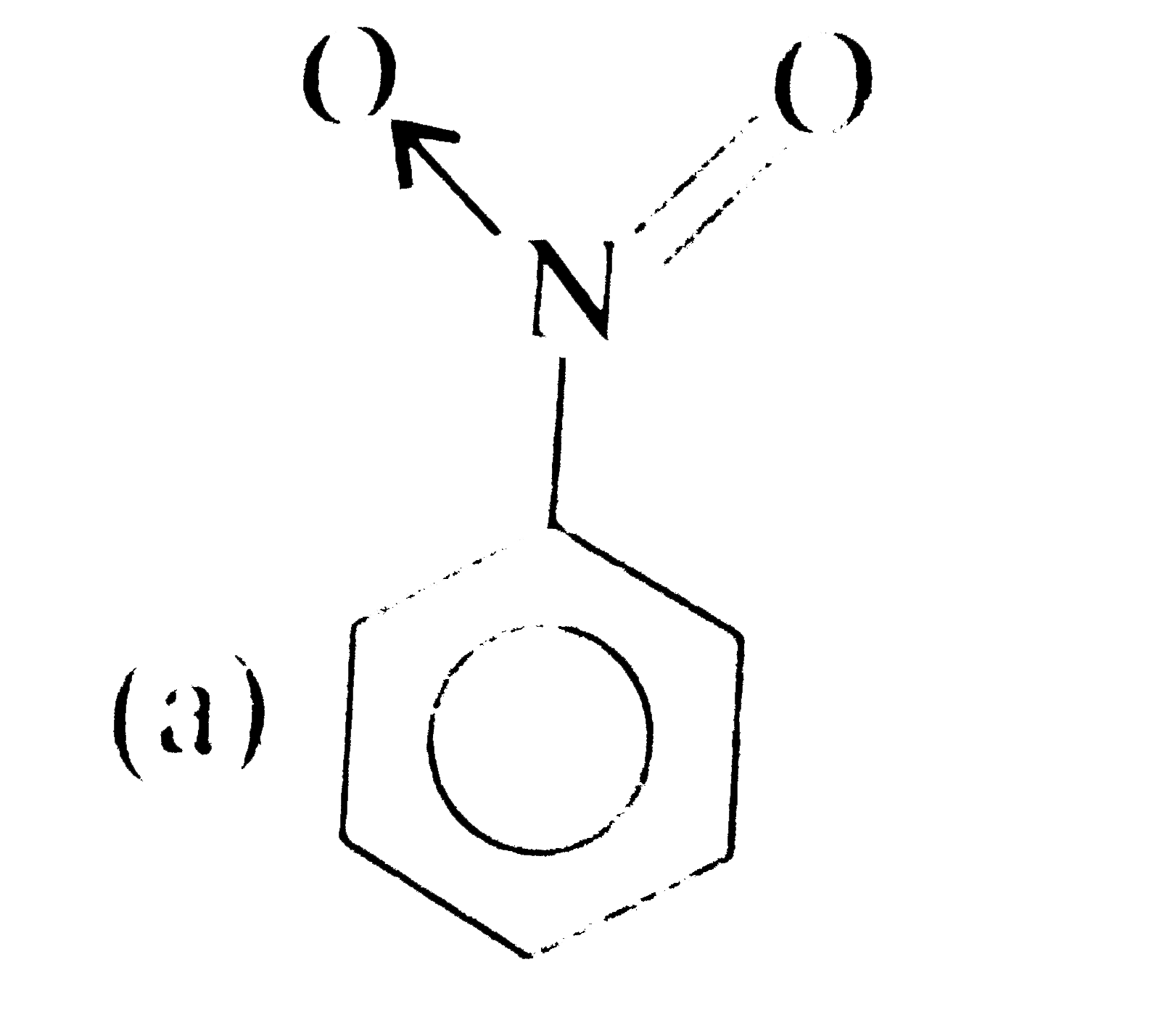
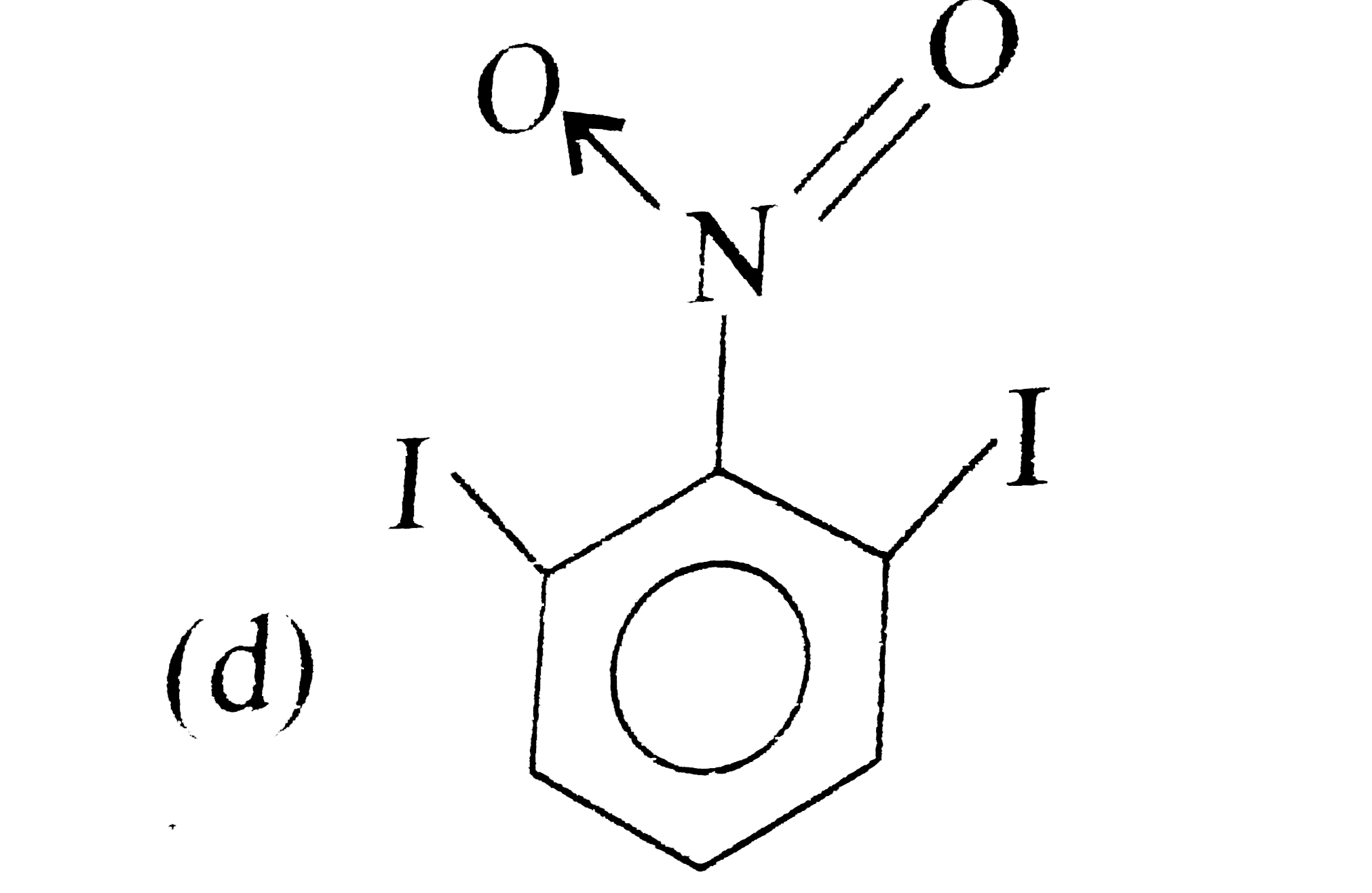
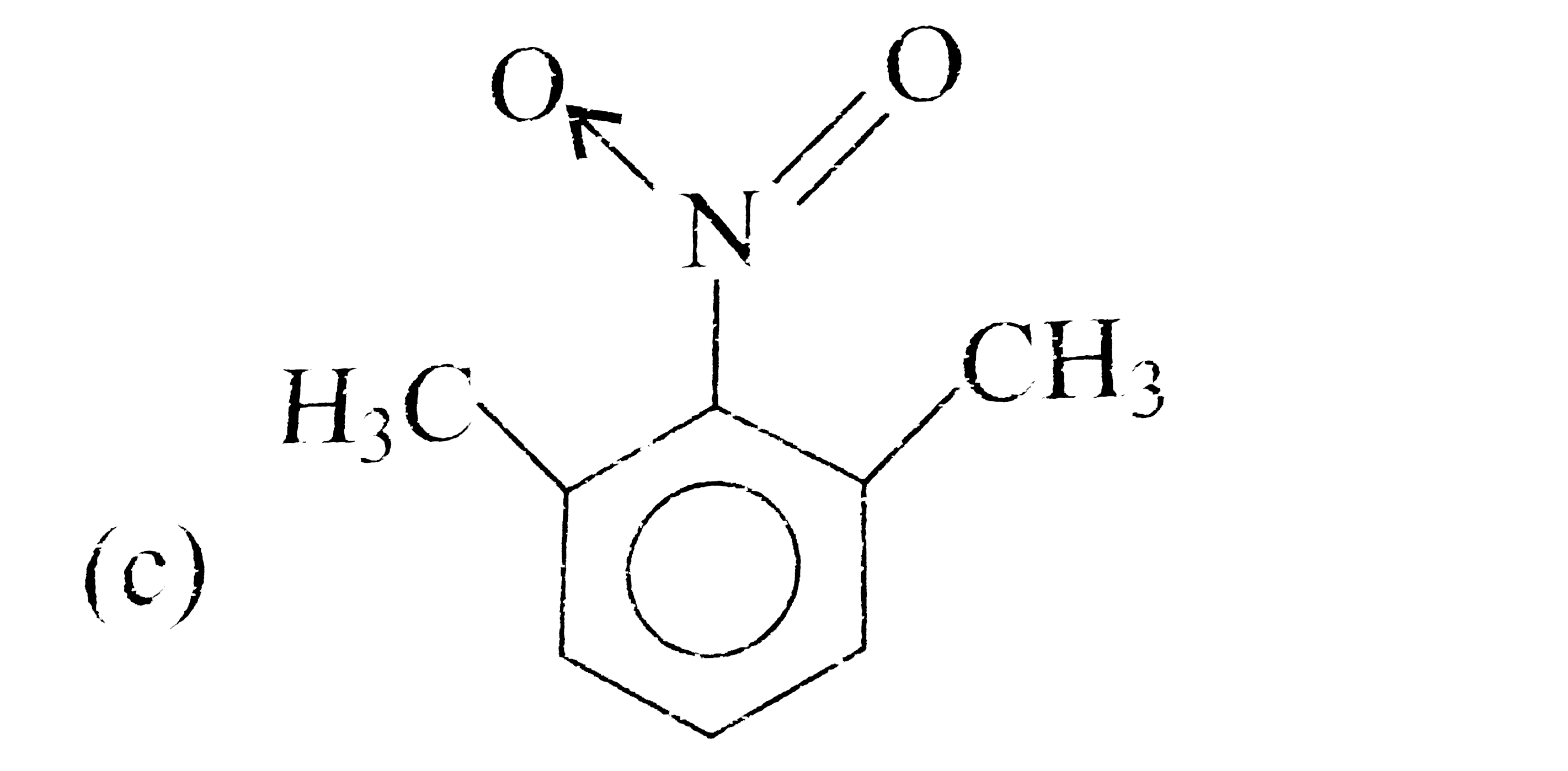
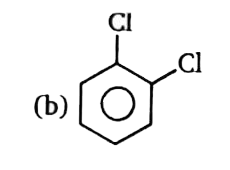
In which of the following molecules -NO_(2) group is not coplanar with phenyl ring? |
|
Answer»
|
|
| 30. |
In which of the following molecules - NO_2 group shows only I effect |
| Answer» Answer :C | |
| 31. |
In what way is the electronic configuration of transition elements different from that of the non transition elements ? |
| Answer» Solution :Transition elements CONTAIN incompletely filled d-subshell, i.e., their electronic configuration is `(n - 1) d^(1-10) ns^(1-2)` WHEREAS non-transition elements have no d-subshell or their subshell is COMPLETELY filled and have `ns^(1-2) or np^(1-6)` in their OUTERMOST shell | |
| 32. |
In which of the following molecules no. of lonepairs and bond pairs on central atom are not equal :- |
|
Answer» `H_(2)O` 
|
|
| 33. |
In what way is the electronic configuration of the transition elements different from that of the non-transition elements? |
| Answer» Solution :The GENERAL ELECTRONIC CONFIGURATION of transition elements is `(n-1) d^(1-10) ns^(1-2)` while for non-transition elements is `ns^(1-2)` for s-block and `ns^(2) np^(1-6)` for p-block elements. The basic DIFFERENCE of the electronic configuration is that in case of transition element PENULTIMATE shell i.e., (n-1)d shell is successively filled while in non-transition elements the valance shells are successively filled. | |
| 34. |
In which of the following molecules mu(oberved) is found to be greater than mu (theoretical): |
|
Answer» `CHCl_(3)` 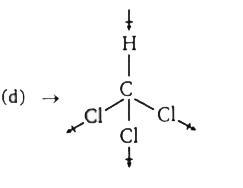 Due to steric repulsion AMONG Cl-atoms observed `angleClCCl` is found to be greater than expected. 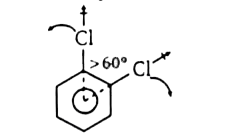 BOND angle between both `C-Cl` bonds is greater than `60^(@)` due to steric repulsion between both Cl-atom, HENCE `mu_(D)("observed")ltu_(D)("theoretical")` 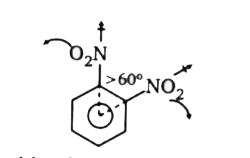 Observed bond angle between both `C-NO_(2)` bonds is found to be greater than `60^(@)` due to steric repulsion between `NO_(2)` groups, hence `mu_(D)("observed")ltu_(D)("theoretical")` 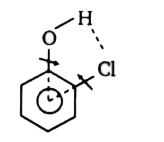 Observed bond angle between both `C-O and C-Cl ` bonds is found to be less than `60^(@)` due to intramolecular H-bonding present in it, hence `mu_(D)("observed")ltu_(D)("theoretical")` |
|
| 35. |
In what way, is the electronic configuration of transition elements different from that of non- transition elements ? |
|
Answer» SOLUTION :The transition ELEMENTS INVOLVE the filled d- orbitals whereas the representative elements involve the filling of s or p-orbitals. General electronic configuration of transition element :`(n-1) d^(1) - 10 s^(1 - 2)` General electronic configuration of representative elements : `ns^(1 - 2)` or `ns^(2)NP^(1-6)`. On comparison of the above electronic configurations, we FIND that in the representative elements, only the last shell is incomplete whereas in transition elements the last but one shell is also incomplete. |
|
| 36. |
In which of the following molecules mu_(exp) (observed dipole moment) is found to be greater than mu_(mu) (expected dipole moment)? |
|
Answer» `POCl_(3)` |
|
| 37. |
In what way is the electronic configuration of the transition elements different from that of the non-transition elements ? |
| Answer» SOLUTION :Transition ELEMENTS contain incompletely filled d-subshell, i.e., their electronic CONFIGURATION is `(n-1)d^(1-10)NS^(0-2)`, whereas non-transition elements have either no d-subshell or their d-subshell is completely filled and have `ns^(1-2)` or `ns^(2)np^(1-6)` in their outermost shell. | |
| 38. |
In which of the following molecules/ions all the bond angles are not equal ? |
|
Answer» `SiF_4` 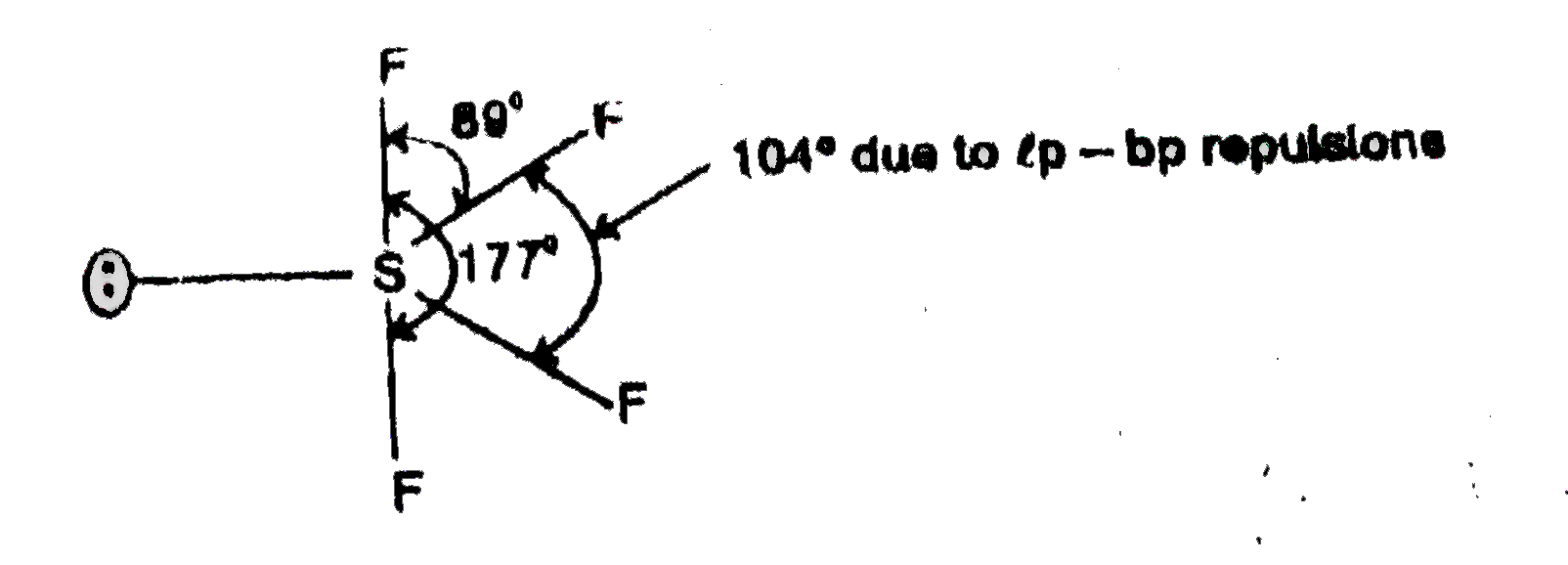 REMAINING molecules/ IONS have symmetrical structures , so they have all BONDS EQUAL . |
|
| 39. |
In what way do the d-blockmetals differ from alkali and alklaine each metals ? |
| Answer» Solution :`{:("d-block metals","Alkali and alkaline EARTH metals"),("(i) They are less metallic.","They are more metallic"),("(ii) The last electron in them ENTERS d-orbitals.","The last electron in them enters s-orbital."),("(iii) Most of them form complexes.","Very few ofthem form complexes. "),("(IV) Their salts are mostly coloured.","Their salts are white."),("(v)They are USUALLY USED as catalysts.","Very few of them are used as catalysts."):}` | |
| 40. |
In which of the following molecules, intermolecular attraction is purely London force? |
|
Answer» `CHCl_3` |
|
| 41. |
In what way can it be proved that PH_3 is basic in nature ? |
|
Answer» Solution :`PH_3` REACTS with acids Like HI to form `PH_4I` which SHOWS that it is basic in NATURE. `PH_3 + HI toPH_4I` Due to lone pair on PHOSPHORUS atom,`PH_3` is acting as a LEWIS base in the above reaction. |
|
| 42. |
In what volume ratio should you mix 1.00 M solution NH_(4)Cl and 1.00 M NH_(3) to produce a buffersolution of pH 9.80 ? [pK_(b)(NH_(3))=4.74] |
|
Answer» `1:1.35` `[NH_(3)]=V_(2)mL =V_(2)` millimol `=pH =9.80 , POH =4.2` `pOH =pK_(a)+LOG.(V_(1))/(V_(2))` `4.2 =4.74 +log. (V_(1))/(V_(2))` `-0.54=log. (V_(1))/(V_(2))` or `log.(V_(2))/(V_(1))=0.54` `(V_(2))/(V_(1))=` antilog `0.54=3.5` Thusl, `(V_(2))/(V_(1))=(3.5 )/(1)` |
|
| 43. |
In which of the following molecules / ions are all the bonds not equal ? |
|
Answer» `SiF_(4)` |
|
| 44. |
In which of the following molecules gauche form is more stable than their anti form? |
|
Answer» 2-Aminoethanol 
|
|
| 45. |
In which of the following molecules hydrogen bridge bond is present? |
|
Answer» Water 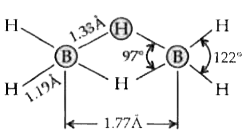
|
|
| 46. |
In which of the following molecules does all theatoms lieon the same straight line- |
|
Answer» `HC-=C-C-=CH` |
|
| 47. |
In what way a sol different from a gel ? |
| Answer» Solution :A SOL is a COLLOIDAL solution of a solid dispersed in a liquid WHEREAS a GEL is a colloidal solution of a liquid dispersed in a solid. | |
| 48. |
In which of the following molecules, carbon atom marked with asterisk (*) is asymmetric? |
|
Answer» (i),(II),(III),(IV) |
|
| 49. |
In which of the following molecules, central atom is not sp^3 hybridized? |
|
Answer» `NH_3` |
|
| 50. |
In what sense are the two strands of DNA not identical but complementary to each other? |
| Answer» Solution :There is specific PAIRING ie, A:TC: G in the two strands of DNA. Thus, the two strands of DNA are COMPLEMENTARY and not identical. | |