Saved Bookmarks
This section includes 7 InterviewSolutions, each offering curated multiple-choice questions to sharpen your Current Affairs knowledge and support exam preparation. Choose a topic below to get started.
| 1. |
In which of the following molecules, central atom is not sp^2 hybridized |
|
Answer» `BeCl_2` |
|
| 2. |
In which type of liquid, an ionic solid will go into solution ? |
| Answer» Solution :Ionic solids GO into solution in liquids having HIGH DIELECTRIC CONSTANT like `H_2O`. | |
| 3. |
In which of the following molecules carbon atom marked with asterisk (*) is asymmetric ? |
|
Answer» (i), (ii), (III), (iv) |
|
| 5. |
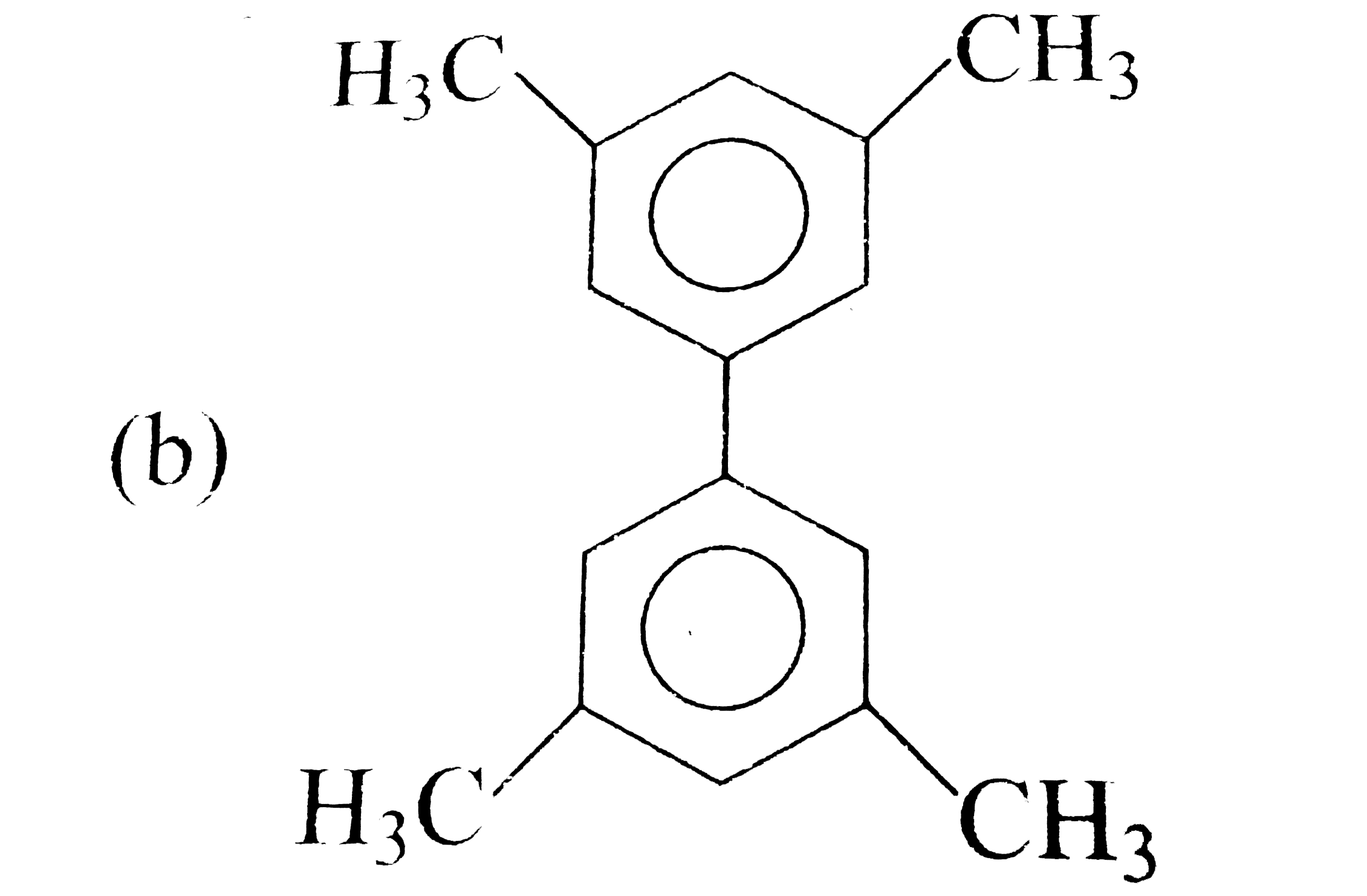
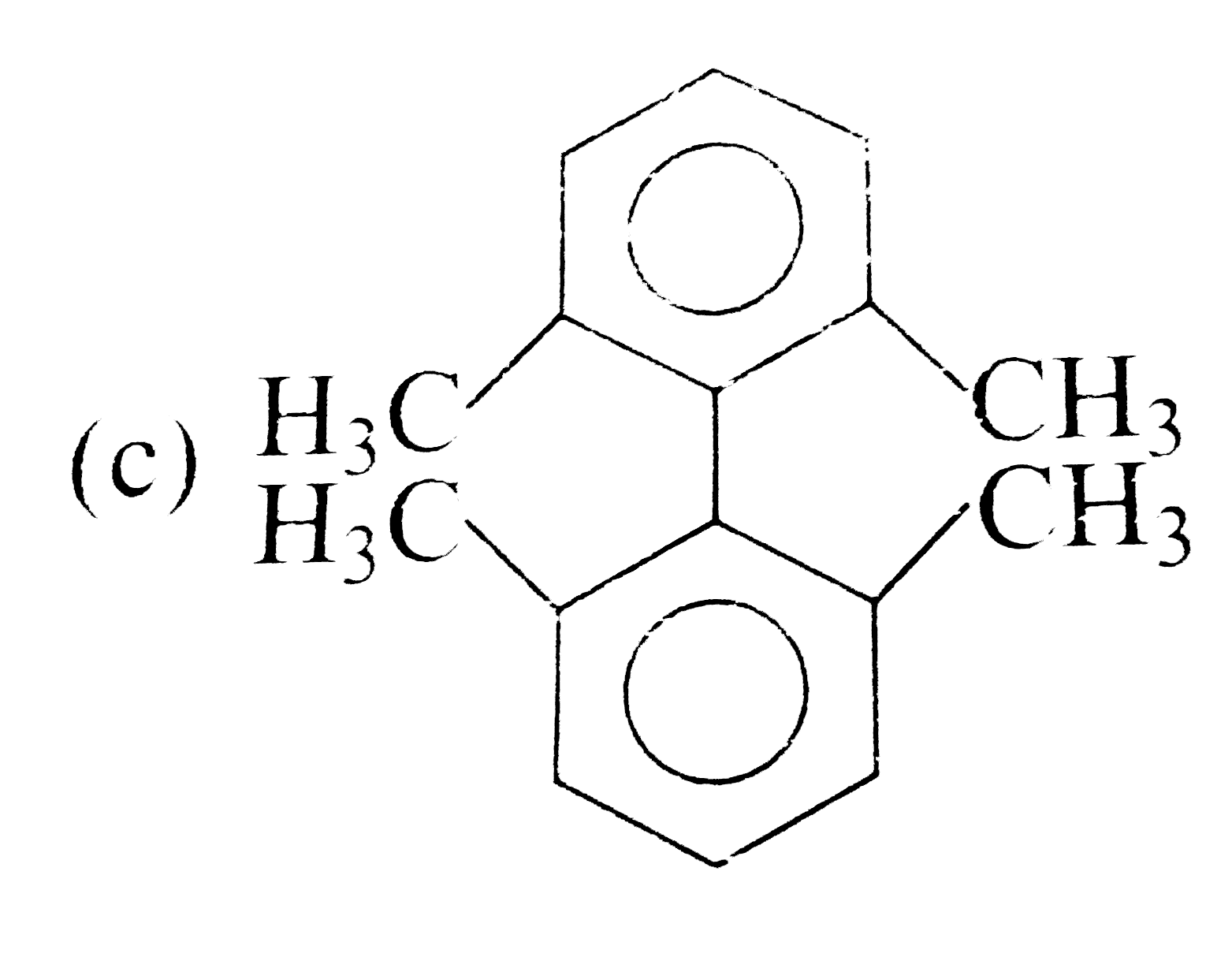
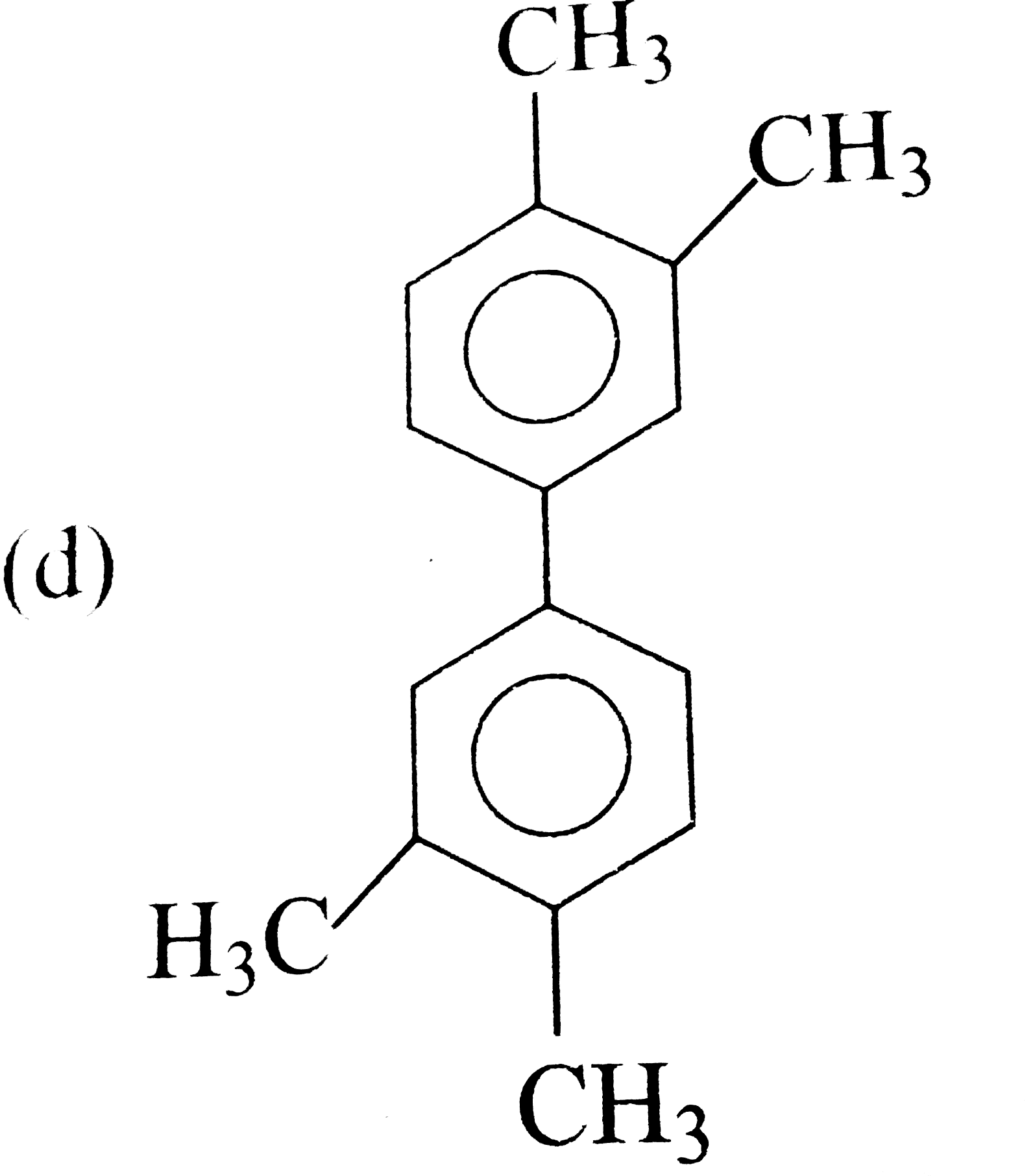
In which of the following molecules both phenyl rings are coplanar? |
|
Answer»
|
|
| 6. |
In which of the following molecules are all the bonds are not equal? |
|
Answer» `NF_(3)` |
|
| 7. |
In what rexampleions of the atmosphere, the temperature increasing with altitudes and in which rexampleions it decreases. |
| Answer» Solution :temperature increases with altituds in STRATOSPHERE and THERMOSPHERE while it decreases in troposphere and MESOSPHERE. | |
| 8. |
In what respect the reaction of N_(2) with (i)CaC_(2) (calcium carbide) & (ii)BaC_(2)(barium carbide) differ from each other. |
|
Answer» Solution :(i)`CaC_(2)` reacts with `N_(2)` to form calcuim cyanamide. `CaC_(2)(s)+N_(2)(g)overset("1373K")to UNDERSET("Calcuim cyanamide")(CaCN_(2))(s)+C(s)` (II)`BaC_(2)` reacts with `N_(2)` to form barium cyanide `BaC_(2)(s)+N_(2)(g)overset("Heating")to underset("Barium cyanide")(BaCN_(2))(s)` |
|
| 9. |
In which of the following molecules are all the bonds not equal ? |
|
Answer» `BF_(3)` |
|
| 10. |
In which of the following molecule, vacant orbital is not necessary for dimer formation :- |
|
Answer» `BH_(3)` |
|
| 11. |
In what respect would any two naturally occuring amino acids differ from one another ? |
| Answer» Solution :All the NATURALLY OCCURING `alpha`-amino ACIDS differ from ONE another in the nature of the side chain groups R. For EXAMPLE , in alanine , the side chain is `CH_3` group and in phenylalanine it is `CH_2C_6H_5` group. | |
| 12. |
In what respect do prontosil and salvarsan resemble. Is there any resemblance between azo dye and prontosil ? Explain. |
Answer» Solution :Paul Ehrlich a German bacteriologist, INVESTIGATED arsenic based structures in order to produce less toxic substances for the treatment of syphilis. He developed the medicine, arsphenamine, known as salvarsan. It was the first effective treatment discovered for syphilis. Although salvarsan is toxic to human beings, its effect on the bacteria, spirochete, which causes syphilis is much greater than on human beings. Ehrlich was WORKING on azodyes ALSO. He noted that there is similarity in structures of salvarsan and azodyes. The `-As = As-` linkage present in arsphenamine resembles the `-N = N-` linkage present in azodyes in the sense that arsenic atom is present in place of nitrogen. He also noted tissues getting coloured by dyes selectively. Therefore, Ehrlich began to search for the COMPOUNDS that resemble in structure to azodyes and selectively bind to bacteria. He found that protonsil resembles in structure to the compound salvarsan. 
|
|
| 13. |
In which of the following molecule all bond length are equal :- |
|
Answer» `SF_(4)`  all bond LENGTHS are equal |
|
| 14. |
In what respect do prontosil and salvarsan resemble. Is there may resemblance between azo dye and prontosil? Explain. |
|
Answer» Solution :Prontosi, also called sulfamido chrysoidine, trade name of the first synthetic drug used in the treatment of general bacterialinfections in humans. Prontosil resulted from research, directed by German chemist and pathologist Gerhard Domagk, on the antibactierial action of azo dyes. A red azo dye of LOW toxicity, prontosil was shown by Domagk to precent mortality in mice infected with Streptococcus bacteria. The dye was also effective in controlling staphloccus infections in rabbits. WITHIN a relativity SHORT period, it was demonstratedthat prontosil was effective not ony in combating experiment infections in animals but also Streptococcaldisease in humans, including meningitis and puerperal sepsis. Structural formula of prontosil is 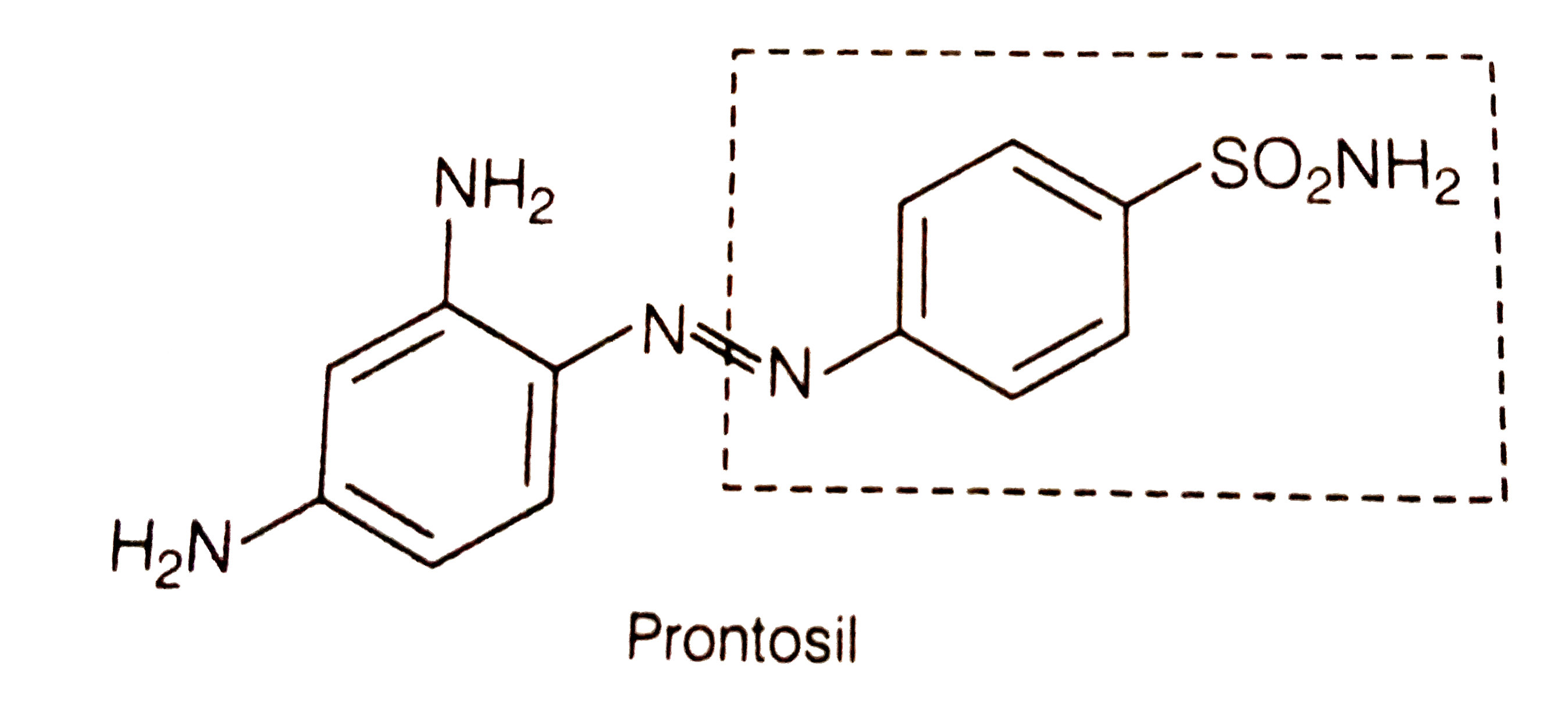 From the structure of prontosil, it is very clear that it has - N = N = - linkage. it was discovered that the part of the structure of protosil molecule shown in box, i.e., p-aminobenzenesuphonamide has antibacterial activity. Salvarsan is also known as arsphenamine. It was introduced at the begining of 1910s as the first effective treatment for syphills. t is an organosernic molecules and has -As = As- double bond. 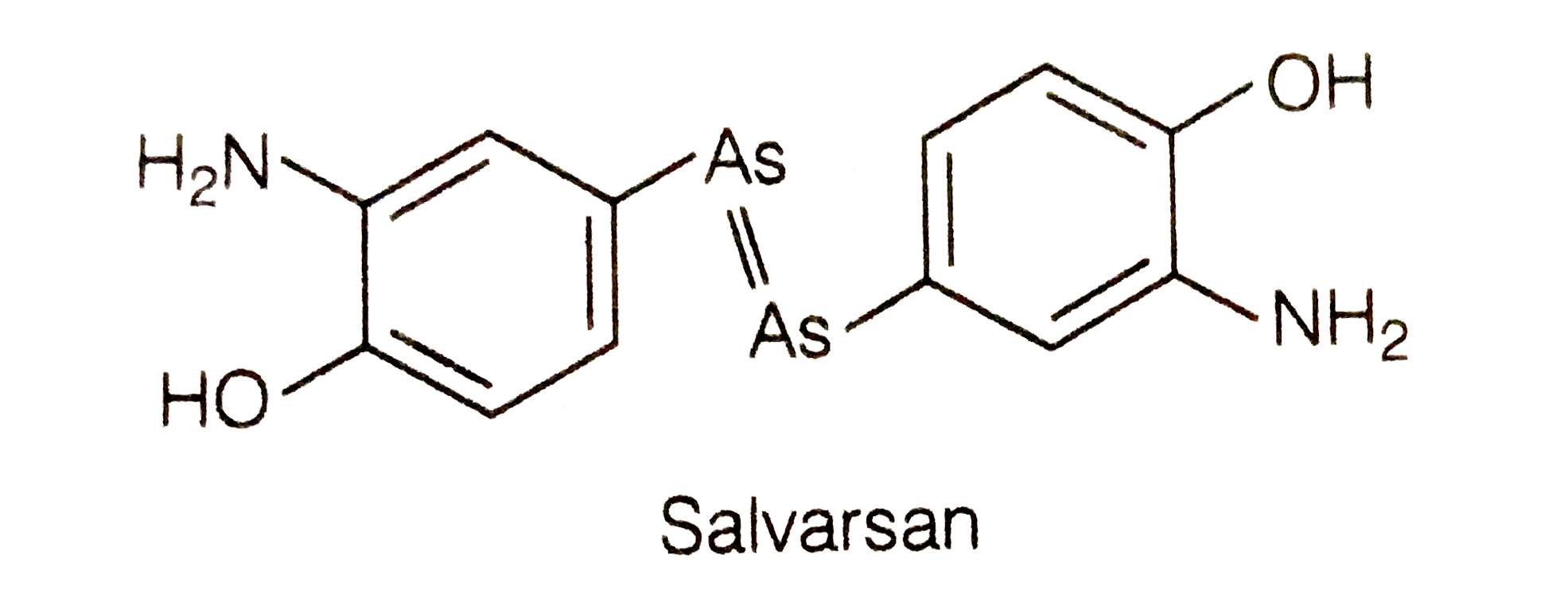 Salvarsan and prontosil show similarity in their structure in their structure. Both of these drugs are antimicrobials. Salvarsan CONTAINS -As = As - linkage whereas prontosil has -N = N - linkage. 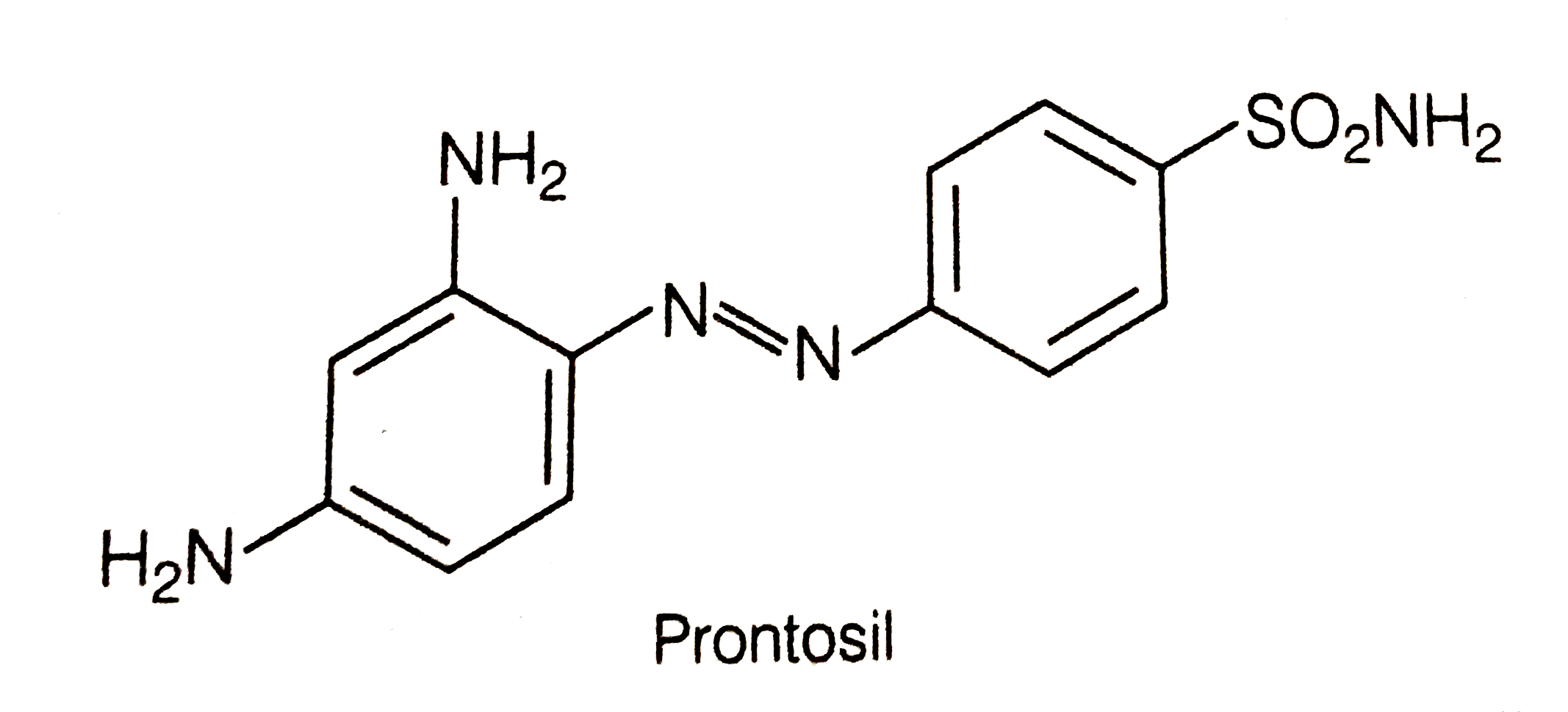 Prontosil (a red azo dye) and azo dye both have -N = N- linkage. 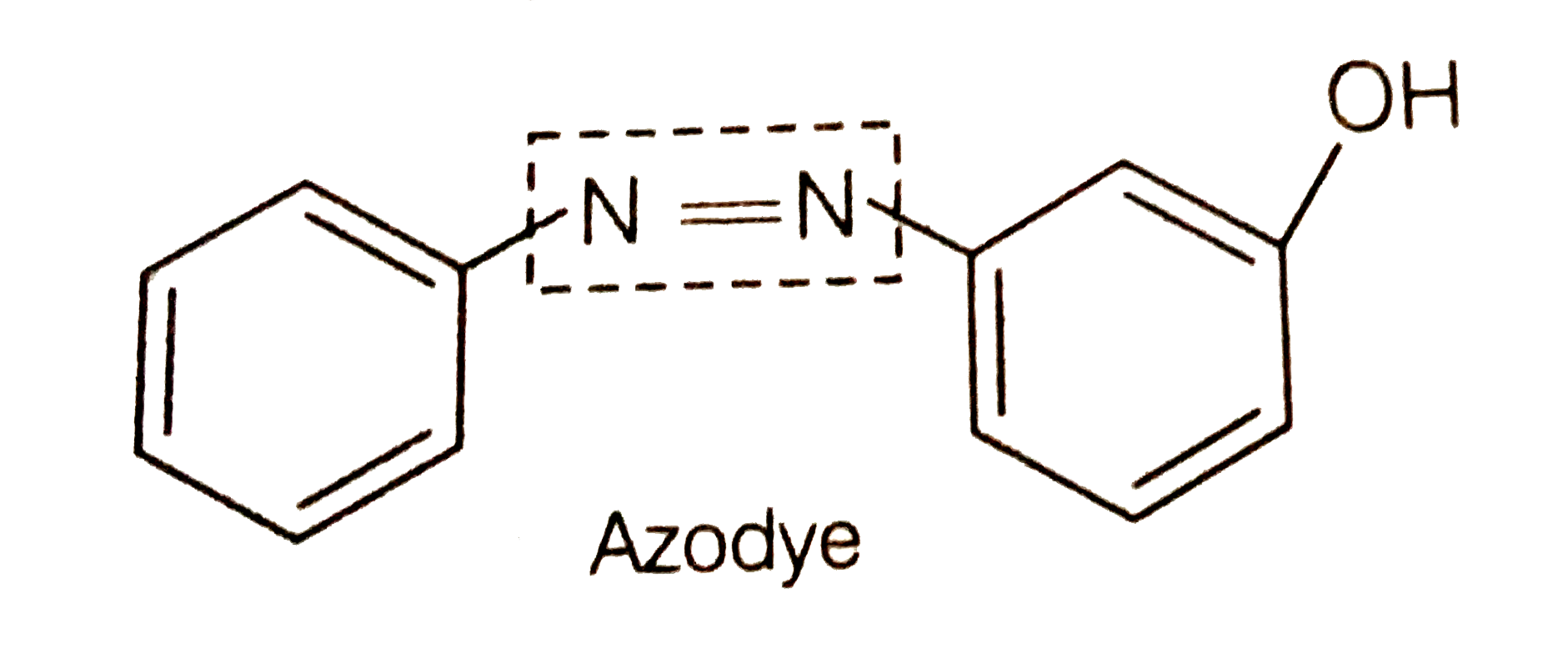
|
|
| 15. |
In what respect does a hydrosol resemble a solid aerosol ? |
| Answer» SOLUTION :both the DISPERSED PHASES are SOLIDS | |
| 16. |
In which of the following molecule 2pi and (1)/(2)sigma bond is present ? |
|
Answer» `O_(2)^(-1)`  [due to presence of bulky alkyl group] dimethyl ether is less polar than water. So DIELECTRIC CONSTANT and boiling point lesser than water. |
|
| 17. |
In what region of the electromagnetic spectrum would you look the spectral line resulting from the electronic transition from the tenth to the fifth electronic level in the hydrogen atoms ? (R_(H)=1.10xx10^(5) cm^(-1)) |
|
Answer» Microwave `1/bar(v)=1.1xx10^(5)[1/n_(1)-1/n_(2)]` |
|
| 18. |
In what ratio should a 15% solution of acetic acid be mixed with a 3% solution of the acid to prepare a 10% solution (all percentage are mass/mass percentage) : |
|
Answer» `7:3` or `1/4V_1+1/20V_2=1/6(V_1+V_2)` or `V_1/4-V_1/6=V_2/6-V_2/20` or `(6V_1-4V_1)/24=(10V_2-3V_2)/60` or `(2V_1)/24=(7V_2)/60` or `V_1/V_2=7//5` |
|
| 19. |
In which of the following molecular weight determination methods, sensitivity of the measurements decreases as the molecular weight of the solute increases ? |
|
Answer» ELEVATION of BOILING point/depression in f.pt. |
|
| 20. |
In what reaction of the following work is done by the system on the surroundings? |
|
Answer» `H_(g_(1)) to Hg_((g))` |
|
| 21. |
In which of the following molecular species sigma- dative bond is present? |
|
Answer» `BF_(3)` |
|
| 22. |
In what ratio by mass, sulphur trioxide and nitrogen should be mixed so that the partial pressure exerted by each gas is same ? |
|
Answer» `7:20` For partial pressure to be EQUAL, `x ( SO_(3)) = x ( N_(2))` `x ( SO_(3)) = ( W_(1) // 80)/( W_(1) // 80 + W_(2) // 28)` and `x(N_(2)) = ( W_(2)// 28) / ((W_(1))/( 80) + ( W_(2))/( 28))` `( W_(1))/( 80) = ( W_(2))/( 28)` `( W_(1))/( W_(2)) = ( 80)/( 28) = ( 20)/( 7)` |
|
| 23. |
In which of the following molecular species both sigma-dative and pi- dative bonds are present? |
|
Answer» `BF_4^-` |
|
| 24. |
In what ratio by mass carbon monoxide and nitrgoengas should be mixed so that partial pressure exerted by each gas is same ? |
| Answer» ANSWER :A | |
| 25. |
In which of the following mixed aqueous solutions pH = pk_a at equilibrium? (1) 100 mL of 0.1 M CH_3 COOH + 100 mL of 0.1 M CH_3 COONa (2) 100 mL o f 0.1 M CH_3 COOH + 50 mL o f 0.1 M NaOH (3) 100 mL o f 0.1 M CH_3 COOH + 100 mL o f 0.1 M NaOH (4) 100 mL o f 0.1 M CH_3 COOH + 100 mL o f 0,1 M NH_3 |
|
Answer» (1) is correct. ` (1) 100 m L` of 0.01`M CH_3COOH + 100 m L` of ` 0.1 M CH_3COONa` ` [CH_3 COOH]=(100 xx 0.1)` `[CH_3 COONA]=( 100 xx 0.1)` themixtureis anacidicbuffer usinghendersonequationwe get ` pH =pK_a + log([CH_3 COONa])/([CH_3 COOH])` ` impliesPH =pK_a+ og((100 xx 0.1 ))/( ( 100 xx 0.1 )) impliespH =pK_a+ log 1` `impliespH= pk_a( :.log1=0)` (2)100 mLof `0.1M CH)3 COOH+ 50mL ` of`0.1M NaOh `  WIDTH="80%"> WIDTH="80%"> Remaining 5milliole0 millimole5 millimole5millimole so anacidicbufferis forward ` thereforepH = pK_a+ log(["salt"])/(["acid"])` `impliespH=pK_a + log (5)/(5)IMPLIES PH= pK_a ` `(:.log (5)/(5) =- log1=0)` `(3)100m L` of ` 0.1 M CH_3COOH+100 mL` of ` 0.1 M` ` NaOH ` 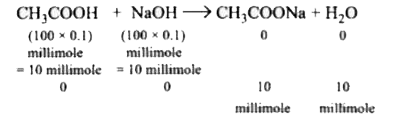 Now`CH_3COONa ` whichisa saltfromweakacidandstrongbasewillundergohydrolysis(anionichydrolysisandthe pHwillbedeter minedas below `pH =7 +1/2 pK_a+1/2log c` so` pHnepK_a ` (4) `100 mL` of `0.1M CH_3 COOH + 100mL`of 0.1 M `NH_3` `[CH_3] or [NH_4OH ] =( 100 xx 0.1) =10` ` (##MTG_WB_JEE_CHE_C12_E02_010_S03.png" width="80%"> Now`CH_3 COONa` whichis a saltfromweakacidand strongbasewill underogohydrolysis( anionichydrolysis) andthe pH will bedetereminedas below `pH= 7 + 1/2pK_a+1/2log c` So `PHnepK_a ` (4) 100 mLof 0.1 `CH_3COOH+ 100 mL ` of`0.1MCH_3` `[CH_3 COOH ]=(100 xx 0.1 )=10` `[NH_3 COOH ]=(100 xx 0.1 )=10`  `pH =7 +1/2(pk_a-pK_b)` so `pHnepK_a ` |
|
| 26. |
In what mass of water must 25g of CuSO_(4)*5H_(2)O be dissolved to obtain an 8% solution of CuSO_(4) ? |
|
Answer» |
|
| 27. |
In which of the following mixed aqueous solutions pH=kea at equilibrium- |
|
Answer» (I) is correct (II) `underset(10 mmol,5mmol)CH_3COOH+underset(10mmol 0)NaOHto underset(0 10mmol)CH_3COONa+underset(0 10mmol)H_2O` `pH=1/2(pK_w+pKa+logc)` or `pH1/2]14+pK_a+log((10)/(200))]` `:.pHcancel=pK_a` (incorrect) |
|
| 28. |
In whichofthe followingminerals, aluminiumisnot present ? |
|
Answer» CRYOLITE |
|
| 29. |
In what manner will increases of pressure affect the following equation ? C(s) +H_2O(g) hArr CO(g) +H_2(g) |
|
Answer» SHIFT in the forward direction |
|
| 30. |
In which of the following minerals Al is not present ? |
|
Answer» CRYOLITE |
|
| 31. |
In what manner will increase of pressure affect the following equation? C_((s))+H_(2)O_((g))iffCO_((g))+H_(2(g)) |
|
Answer» <P>Shift in the forward direction |
|
| 32. |
In which of the following method of purification, metal is converted to its volatile compound which is decomposed to give pure metal ? |
|
Answer» Heating with stream of carbon monoxide. `underset("(impure)")(N i) +4CO overset(330 - 350 K)(RARR) N i(CO)_(3)` `N i + (CO) overset(450 - 470 K)(rarr) underset("(pure)")(N i) + 4CO`. Van-Arkel method : `underset("(impure)")(Zr) + 2I_2 to ZrI_4` `ZrI_4 overset(1800K)(rarr) underset("(pure)") (Zr )+ 2I_2`. |
|
| 33. |
In which of the following method of purification, metal is converted to its volatile compound which is decomposed to give pure metal? |
|
Answer» HEATING with STREAM of CARBON monoxide |
|
| 34. |
In what condition extraction of Mg is possible by MgO using carbon reduction method. |
|
Answer» Solution :ACCORDING to Ellinghan diagram reduction of metal oxide with carbon will occur when the accompaying `DeltaG` is negative. Such reduction become feasible at very high temperature. `MgO` can only be reduced by carbon at the temperature approximate `2000^(@)C`. `Mg` form by heating `MgO` and `C` at `2000^(@)C`, at this temperature or above `C` reduces `MgO`. The gaseous mixture of `Mg` and `CO` was then cooled very repidly to deposit the metal. This quenching or shockooling was necessary as the reaction is REVERSIBLE, and if cooled slowely the reaction will come to equilibrium further to teh left and we get `Mg`. `Mg + C hArr Mg +CO` Limitations of Ellinghan Diagram: (a) The graph simply indicates whether a reaction is possible or not i.e. the tendency of reduction with a reducing agent is indicated. This is so because it is based only on the thermodynamic concepts. It doe not SAY about the kinetics of teh reduction PROCESS (Cannot ANSWER questions like how fast it could be?) (b) The interpretation of `DeltaG^(Theta)` is based on `K(DeltaG^(Theta) =- RT` InK). Thus it is persumed that the reactants of products are in equilibrium. `M_(x)O +A_(red) 1 xM +AO_(OX)` |
|
| 35. |
Inwhichofthefollowingmethodofpurification,metalisconvertedto itsvolatilecompoundwhich isdecomposedto givepuremetal ? |
|
Answer» HEATINGWITH stream ofcarbonmonoxide |
|
| 36. |
In water HCl dissolves in fomr of |
|
Answer» `H_(3)_((aq))^(+)` |
|
| 37. |
In which of the following metal carbonyls the C-O bond order is lowest ? |
|
Answer» `[V(CO)_(6)]^(-)` |
|
| 38. |
In weak electrolyte solution, degree of ionization |
|
Answer» Will be proportional to dilution |
|
| 39. |
In Which of the following metal to metal bond is present? |
|
Answer» Cupric chloride Mercurous ION is represented as `Hg_(2)^(2+)` it is evidenced by the FACT that its `mu=0`, i.e., it is diamagnetic. It is possible only when there is presence of a metal-metal BOND. |
|
| 40. |
In was the most important one type of Halogen compound which is the first prepared by gay -Lussac. Which one Hydrolysis gives different product. The repragentation is underset("Acid+C")underset(darr"Hydrolysis")((CONH_(2))_(2))overset("Hydrolysis")(larr)Aoverset("Hydrolysis")(rarr) HCN+underset(B)underset(darr"Hydrolysis Isomerisation")(HOCN) In aboveobservation, the acid is |
|
Answer» ACETIC ACID 
|
|
| 41. |
In which of the following metallurgy, no reducing agent is required from out side ? |
|
Answer» MERCURY from cinnabar |
|
| 42. |
In which of the following metal carbonyls, the C-O bond length is minimum ? |
|
Answer» `[V(CO)_(6)]^(-)` |
|
| 43. |
In was the most important one type of Halogen compound which is the first prepared by gay -Lussac. Which one Hydrolysis gives different product. The repragentation is underset("Acid+C")underset(darr"Hydrolysis")((CONH_(2))_(2))overset("Hydrolysis")(larr)Aoverset("Hydrolysis")(rarr) HCN+underset(B)underset(darr"Hydrolysis Isomerisation")(HOCN) The final isomerisation product (B) is |
|
Answer» `NH_(4)OCN` 
|
|
| 44. |
In was the most important one type of Halogen compound which is the first prepared by gay -Lussac. Which one Hydrolysis gives different product. The repragentation is underset("Acid+C")underset(darr"Hydrolysis")((CONH_(2))_(2))overset("Hydrolysis")(larr)Aoverset("Hydrolysis")(rarr) HCN+underset(B)underset(darr"Hydrolysis Isomerisation")(HOCN) The Halogen compound A is |
|
Answer» `(CN)_(2)` 
|
|
| 46. |
In which of the following lanthanides oxidation state +2 is most stable? |
|
Answer» Ce |
|
| 47. |
In Wacker oxidation of ethene, the product formed is |
|
Answer» ETHANOIC acid |
|
| 48. |
In vulcanization of rubber: |
|
Answer» SULPHUR reacts to form a NEW compound |
|
| 49. |
In vulcanisation of rubber |
|
Answer» sulphur REACTS to form a soft compound |
|