Saved Bookmarks
This section includes 7 InterviewSolutions, each offering curated multiple-choice questions to sharpen your Current Affairs knowledge and support exam preparation. Choose a topic below to get started.
| 1. |
In which of the following least stable compound is : |
|
Answer»
 this SPECIES is less stable. Because this compound is Anti - Aromatic and stability ORDER Aromatic `gt` Non - Aromatic `gt` Anti - Aromatic, this SPECIES is less stable. Because this compound is Anti - Aromatic and stability ORDER Aromatic `gt` Non - Aromatic `gt` Anti - Aromatic, 
|
|
| 2. |
In voltaic cells, the electrons lost during the oxidation flow from |
|
Answer» CATHODE to anode |
|
| 3. |
In Villages, people often wash their clothes with well water. They have to rub a lot of soap before lather is formed. This is because well water is hard water. Thus, a lot of soap is wasted. However, if they use detergent powder in place of soap, lather is formed easily and wastage is less. Now, answer the following questions : (i) What values are expressed in the above paragraph? (ii) Why soap does not form lather with hard water? |
|
Answer» Solution :(i) The values expressed in the above paragraph are that wherever WATER is hard, we should use detergent powder in place of SOAP for washing of clothes. (ii) Hard water contains `Ca^(2+)` ions and `Mg^(2+)`ions. Soaps are sodium salts of highers fatty acids, i.e., have the formula RCOONa. Soap first REACTS with `Ca^(2+)` and `Mg^(2+)` ion till they are removed from water `2 RCOONa + Ca^(2+) rarr (RCOO)_(2)Ca + 2 Na^(+)` `2 RCOONa + Mg^(2+) rarr (RCOO)_(2)Mg + 2 Na^(+)` Now, the water BECOMES soft and |
|
| 4. |
In vinyl alcohol -OH group is attached to |
|
Answer» SP - hybridised CARBON ATOM |
|
| 5. |
In view of the signs of Delta_(r)G^(@) for the following reactions: PbO_(2)+Pb to 2PbO,Delta_(r)G^(@) SnO_(2)+S to 2SnO, Delta_(r)G^(@) Which oxidation states are more characteristics for lead and tin? |
|
Answer» For LEAD +2, For tin +2 |
|
| 6. |
In which of the following Lanthanoids oxidation state +2 is most stable ? |
|
Answer» Ce |
|
| 7. |
In which of the following is bleaching powder not used: |
|
Answer» For BLEACHING PAPER pulp |
|
| 8. |
In which of the following ions , the colouris not due to d-d transition ? |
|
Answer» `Ti(H_(2)O)_(6)^(3+)` |
|
| 9. |
In which of the following ions does the metal have an oxidation state +3 ? |
|
Answer» `VO^(2+)` |
|
| 10. |
In which of the following ions, d-d transition is not possible |
|
Answer» `Ti ^(4+)` |
|
| 11. |
In view of the signs of Delta_(r)G^(@)for the following reactions : PbO_(2) + Pb to 2 Pb O , Delta_(r) G^(@) lt 0 SnO_(2) + Sn to 2 SnO , Delta _(r) G^(@) gt 0 , which oxidation states are more characteristic for lead and tin ? |
|
Answer» For LEAD + 2, for tin + 2 |
|
| 12. |
In which of the following ionization processes, the bond order has increased and the magnetic character has changed ? |
|
Answer» `NO to NO^(+)` `RARR NO^(+)`(B.O. = 3, diamagnetic) (B) `O_(2)` (B.O. = 2, paramagnetic) `rarr O_(2)^(+)` (B.O. = 2.5, paramagnetic) (C ) `N_(2)`(B.O. = 3, diamagnetic) `rarr N_(2)^(+)`(B.O. = 2.5, paramagnetic) (D)`C_(2)`(B.O. = 2, diamagnetic) `rarr C_(2)^(+)`(B.O. = 1.5,paramagnetic) Correct ANSWER is (A). |
|
| 13. |
In which of the following ionic radii of chromium would be smallest |
|
Answer» `K_(2)CrO_(4)` In given options (a) has high oxidation number therefore its radii with be low. Atomic radii decreases with increase in oxidation no. |
|
| 14. |
In viewof thesigns ofDelta _r G^(@)forthefollowingreactions:PbO_2+Pb to2 PbO, Delta_ rG^(@) lt0SnO_ 2+Snto2 SnO,Delta_ r G^(@) gt0 whichoxidation states are morecharacteristicforleadandtin ? |
|
Answer» Forlead` +4`, fortin + 2 |
|
| 15. |
In which of the following ion/molecules, the 'S' atom does not assume sp^(3) hybridization ? |
|
Answer» `SO_(4)^(2-)` |
|
| 16. |
In view of the signs of DeltaG^(ө) for the following reactions, PbO_(2)+Pb to 2PbO,Delta_(r)G^(ө) lt 0, SnO_(2)+Snto 2SnO,Delta_(r)G^(ө) gt 0 Which oxidation states are more characteristic for lead and tin? |
|
Answer» For lead +4, for TIN +2 Since, `Delta_(r)G^(@) lt 0`, HENCE +2 state of lead is favourable. `overset(+4)+(SN)O_(2)+overset(0)(Sn) to 2 overset(0)(Sn)O` Since, `Delta_(r)G^(@)gt0` it means forward reaction is not spontaneous. `2overset(+2)(Sn)O+overset(+4)(Sn)O_(2) to 2overset(0)(S)n` `Delta_(r)G^(@) lt0`, thus +4 state of tin is favourable. |
|
| 17. |
In which of the following ion the value of magentic moment (spin only) is sqrt(3) BM and outer d-orbitals is used in hybridization. |
|
Answer» `[Mn(CN)_(6)]^(4-)` |
|
| 18. |
In view of the signs of Delta_rG^@for the following reactions : PbO_2 +Pb rarr 2PbO,Delta_rG^@ lt 0 SnO_2 +Sn rarr 2SnO, Delta_rG^@ gt 0 Which oxidation states are more characteristic for lead and tin ? |
|
Answer» For lead +2 for TIN +2 or `Pb^(2+) ` is more stable than `Pb^(4+)` `DeltaG^@ GT 0` i.e., nonspontaneous so that `SN^(4+)` is more stable than `Sn^(2+)`. |
|
| 19. |
In which of the following, intermolecular H-bond is not present ? |
|
Answer» Alcohol-Alcohol |
|
| 20. |
In view of the sign of DeltaG^@ for the following reactions PbO_2 + Pb to 2PbO, DeltaG^(@) < 0 SnO_2 + Sn to 2SnO, DeltaG^@ > 0 Which oxidation states are more characteristic for lead and tin ? |
|
Answer» For lead + 2, for TIN + 2 |
|
| 21. |
In which of the following ion d-d transition is not possible? |
|
Answer» `Mn^(2+)` |
|
| 22. |
In which of the following interhalogen compounds the central atom is sp^3d hybridised: |
|
Answer» `ClF_3` |
|
| 23. |
In Victor Meyer's test no colouration will be observed in case of …………………….. . |
| Answer» SOLUTION :TERTIARY ALCOHOL | |
| 24. |
In Victor Mayer's method0.2 gmof an organicsubstance displaced 56 ml of air at STP the molecular weight of the compound |
|
Answer» Solution :Molecular mass `= (" WT. of organic substance TAKEN")/(" air displaced at STP") xx 22400` `= (0.2)/(56) xx 224000 = 80`. |
|
| 25. |
In which of the following interconversion of electrical energy into chemical energy and vice versa take place ? |
|
Answer» ELECTROCHEMICAL CELL |
|
| 26. |
In very dilute solution the no. of moles of solvent are 10 time more than that of the solute. The V.P. of the solution would be (V.P. of pure solvent = 80mm) |
|
Answer» 80mm `(P_(1)^(0)-P)/P_(1)^(0)=n/N or 1-P/P_(1)^(0)=n/N` `:. P=(1-n/N)P_(1)^(0)=(1-1/10)80=72mm` |
|
| 27. |
In vapour state the molecular weight of CH_(3) COOH becomes doubled . It is due to |
|
Answer» IONIC bond |
|
| 29. |
In vapour phase refining, the metal is converted into its………….compound which is collected and decomposed to give pure metal. |
| Answer» SOLUTION :VOLATILE | |
| 30. |
In vapour state, sulphur (S_2) shows paramagnetic behaviour due to |
|
Answer» PRESENCE of one unpaired electron in the antibonding `sigma^**`orbitals |
|
| 31. |
In which of the following hybridisation state of the central atom would be changed if transformed from monomeric to dimeric or polymeric species. BeCl_(2)(g)toBeCl_(2)(s), AlCl_(3)(g)toAl_(2)Cl_(6)(l) BeH_(2)(g)toBeH_(2)(s), ICl_(3)(g)toI_(2)Cl_(6) |
|
Answer» `SP^(2)` to `sp^(3)` |
|
| 32. |
In which of the following, homolytic bond fission takes place? |
|
Answer» FREE radical chlorination of methane |
|
| 33. |
In vaporisation of liquids into air, liquid dissolved into air, hence liquid is |
|
Answer» solution |
|
| 34. |
In van dor waals gas equation, the term that accounts for the volume occupied by 'n' mole molecules is |
|
Answer» <P>(V - NB) |
|
| 35. |
In which of the following Hofmann elimination product is more |
|
Answer» `CH_3-undersetunderset(CH_3)|oversetoverset(CH_3)|C-undersetunderset(OH)|CH-CH_3 undersetDeltaoverset(Conc. H_2SO_4)to` In ( c )`CH_3-undersetunderset(CH_3)(|)CH-CH=CH_2` is formed . (Hofmann product) In (a)`CH_3-undersetunderset(CH_3)(|)C=undersetunderset(CH_3)(|)C-CH_3` is formed . (Saytzeff's product) In (d)`CH_3-undersetunderset(CH_3)|C=CH-CH_3` is formed . (Saytzeff's product ) |
|
| 36. |
In which of the following, HCl conducts electricity to a large extent ? |
|
Answer» LIQUID HCL |
|
| 37. |
In van der Walls equation of state for a non-ideal gas the term that accounts for inter molecular forces is : |
|
Answer» <P>(V-b) |
|
| 38. |
In which of the following, halogenated carbon possesses sp^(3) hybridization ? |
| Answer» ANSWER :D | |
| 39. |
In van der Waals equation, the constant of accounts for what property of molecules of real gases ? |
|
Answer» 1. Average KINETIC ENERGY |
|
| 40. |
In Van Arkel method of refining metal, impure zirconium is converted to unstable volatile compound by heating it with- |
|
Answer» OXYGEN |
|
| 41. |
In which of the following>C=O and>C=C |
|
Answer» Hydrogenation |
|
| 42. |
In which of the following geometry around metal is tetrahedral and colour is due to charge transfer spectra (LMCT) ? |
|
Answer» `MnO_(4)^(-)` |
|
| 43. |
In van der Waals equation of state for a non-ideal gas , the term that accounts for intermolecular forces is |
| Answer» Answer :B | |
| 44. |
In which of the following gaseous molecules, the ionic character of the covalent bond is greatest : |
|
Answer» HCI |
|
| 45. |
In van der Waals equation for a non ideal gas, the term that account for intermolecular forces is : |
|
Answer» `( V - b)` |
|
| 46. |
In which of the following four P-OH bonds are present ? |
|
Answer» <P>`H_(4)P_(2)O_(6)` |
|
| 47. |
In which of the followingfirstis morebasic thansecond |
|
Answer»
Morethe electronwithdrawing POWEROF the groupless the basicity . `-NO_(2)`grouphas moreelectronwithdrawingpowerthan F. Hence p-fluoroanilineis morebasic thep-nitro aniline . |
|
| 48. |
In vulcanisation of rubber: |
|
Answer» Suiphur reacts to from NEW COMPOUND |
|
| 50. |
In which of the following first is more acidic than second ? |
|
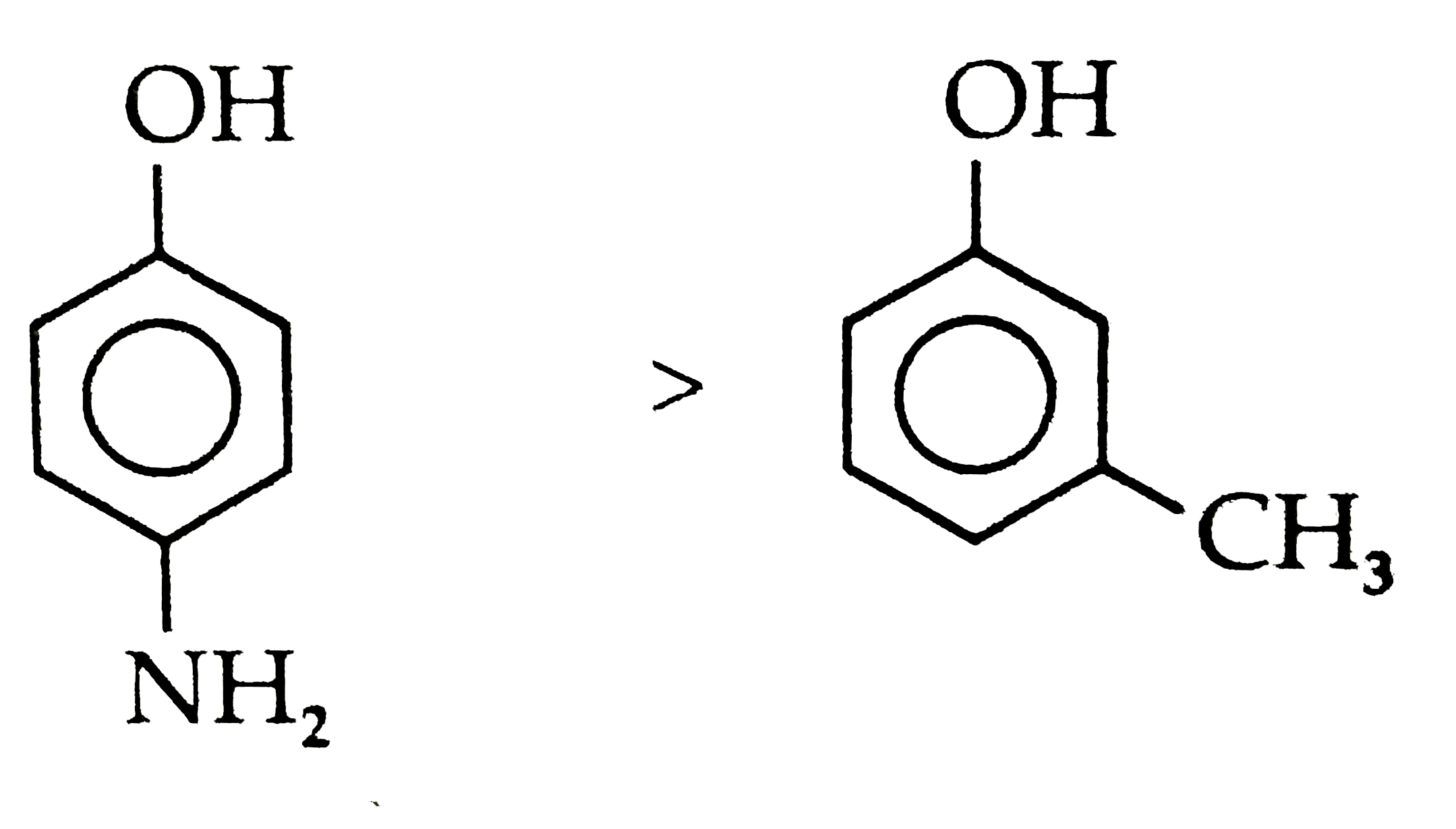
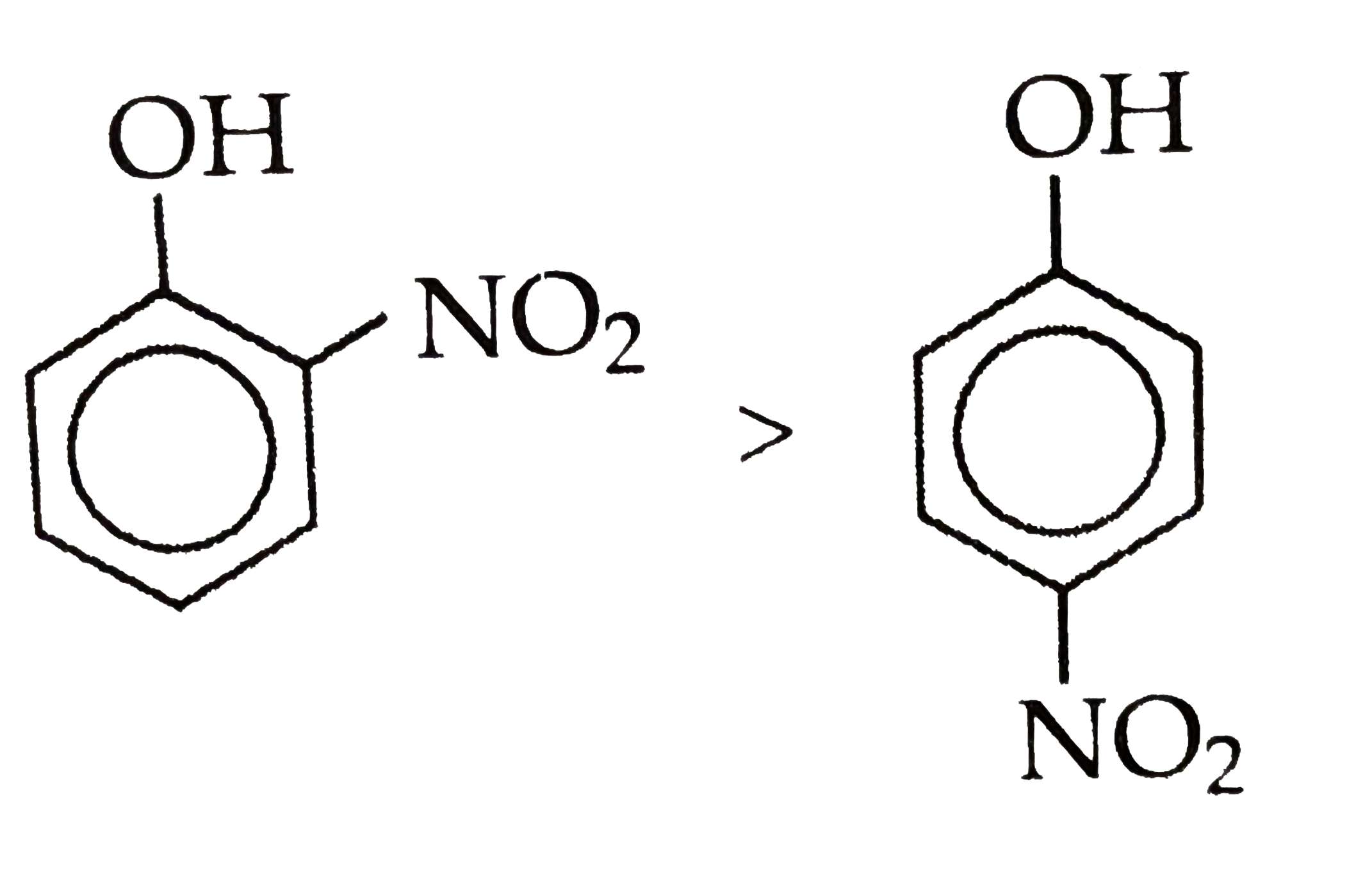
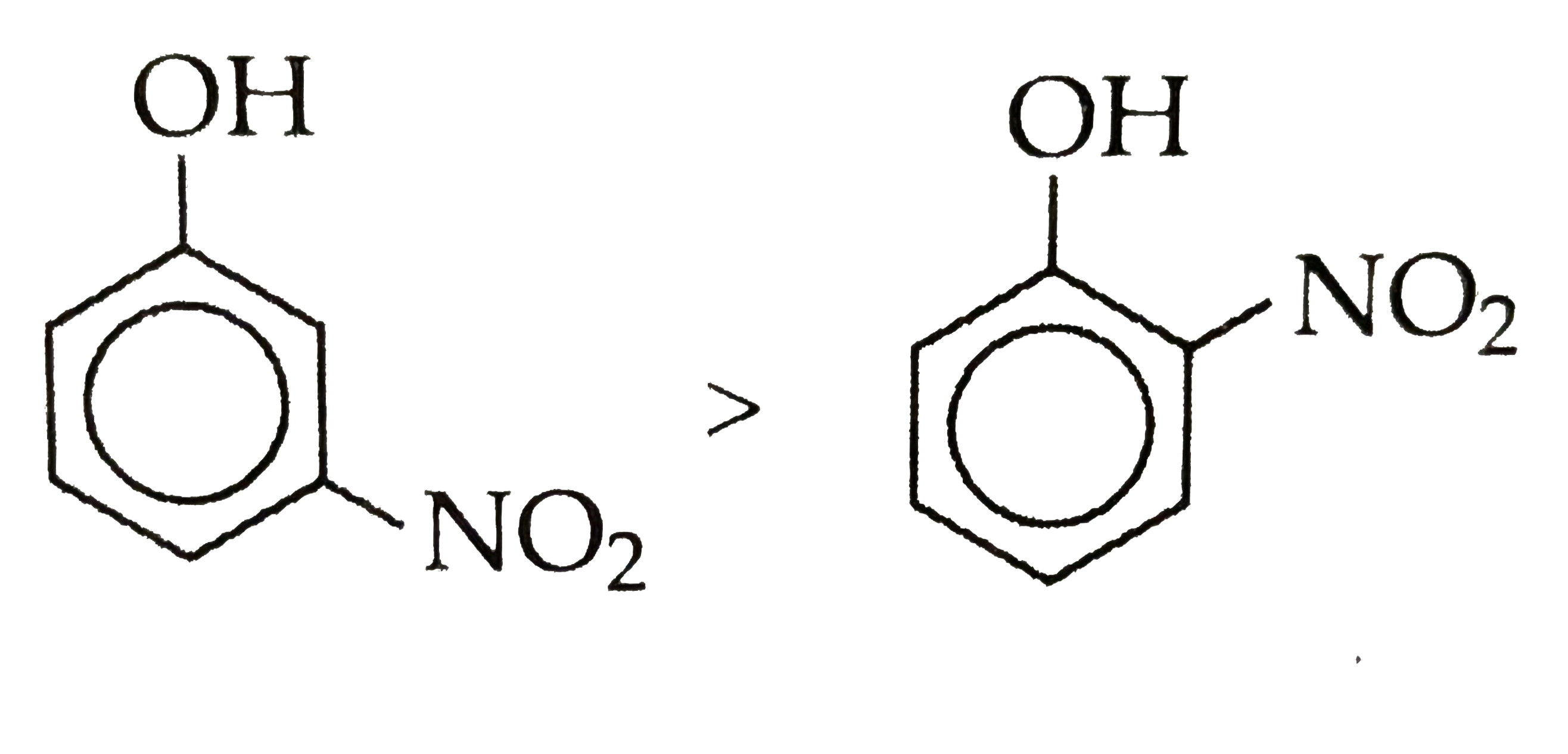
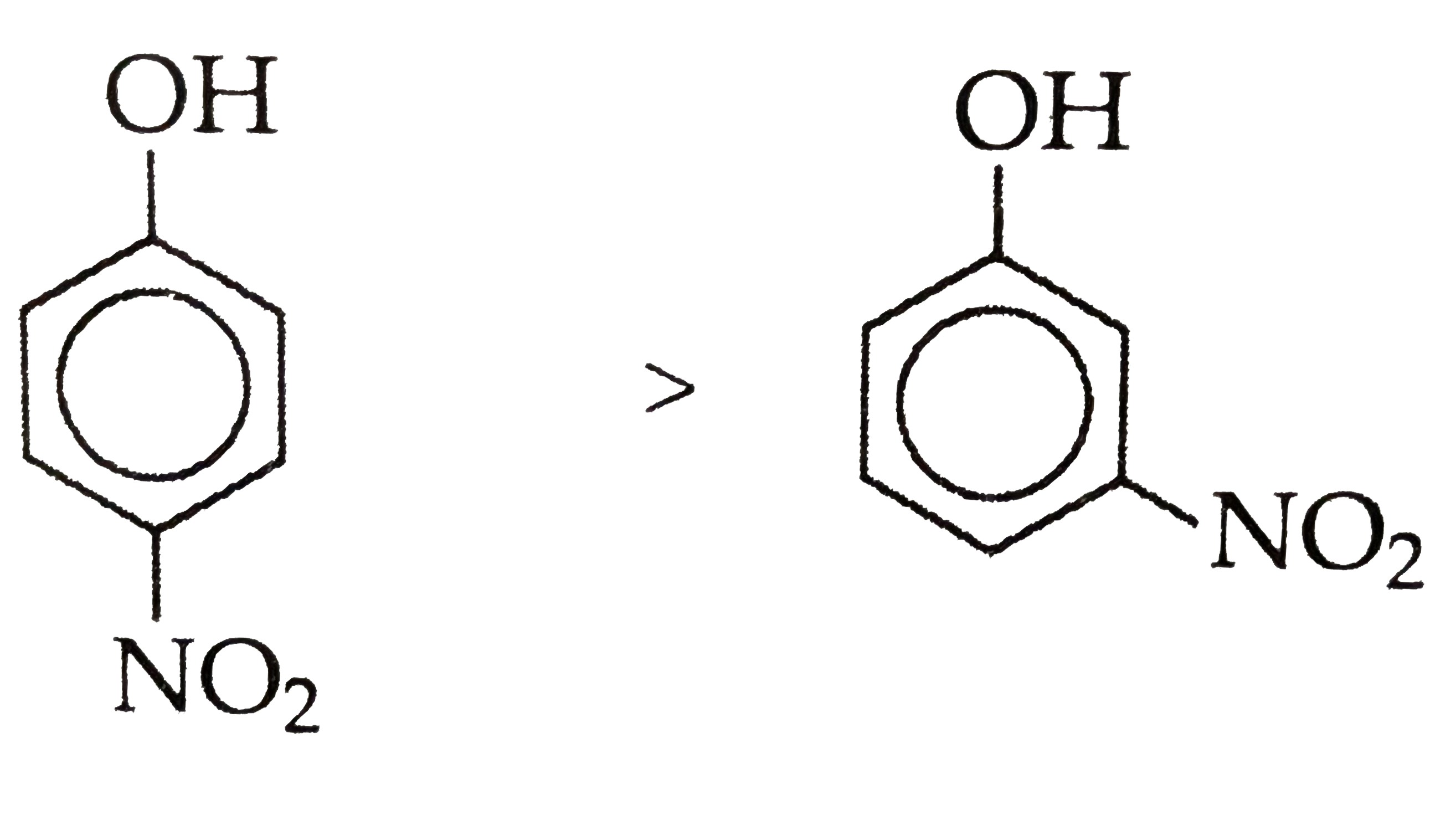
Answer»
|
|