Saved Bookmarks
This section includes 7 InterviewSolutions, each offering curated multiple-choice questions to sharpen your Current Affairs knowledge and support exam preparation. Choose a topic below to get started.
| 1. |
In which of the following extraction no reducing agent is required? |
|
Answer» IRON from haematitre |
|
| 2. |
In which of the following esters the alpha - hydrogen is acidic ? |
|
Answer» `H-overset(O)overset("||")C-OC_(2)H_(5)` |
|
| 3. |
In urotropine, the number of N-N bond |
|
Answer» 6 |
|
| 4. |
In which of the following equlibrium system is the rate of the backward reaction favoured by increase of pressure |
|
Answer» `PCl_(5)hArrPCl_(3)+Cl_(2)` `PCl_(4)hArrPCl_(3)+Cl_(2)` |
|
| 5. |
In upper stratospher ozone protects us from |
|
Answer» Infranred RADIATIONS |
|
| 6. |
In two solution having different osmotic pressure, the solution of higher osmotic pressure is called : |
|
Answer» ISOTONIC solution |
|
| 7. |
In which of the following equlibrium K_(c)and K_(p) are not equal |
|
Answer» `2C_((s))+O_(2(g))hArr2CO_(2(g))` |
|
| 8. |
In two different polar molecules, the ionic charge is 9.6 x 10^-10 e.s.u and 3.2 x 10^-19 coulombs respectively. If inter ionic distance in both the molecules is 1 A unit, then the dipole moment are respectively |
|
Answer» `4.8D, 4.8D` |
|
| 9. |
In which of the following equilibrium system is the rate of the backward reaction favoured by increase of pressure |
|
Answer» `N_(2) + 3H_(2) hArr 2NH_(3)` |
|
| 10. |
In twodimensionalAAAAtypesquareclosepackedstructure, thecoordinationnumberof thecompoundis _____. |
|
Answer» 2 |
|
| 11. |
In which of the following equilibrium, the value of K_(p) is less than K_(c) |
|
Answer» <P>`H_(2)+I_(2)hArr2HI` |
|
| 12. |
In triple phosphate the available P_2O_5 when compared to normal super phosphate is increased by how many times ? |
|
Answer» Solution :Super prophate is ` ""` Triple super phosphate `Ca(H_2PO_4)_2overset(P_2O_5)rarr""3Ca(H_2PO_4)_(2)OVERSET(3P_2O_5) rarr` i.e., Triple super phosphate gives 3 TIMES MOLE `P_2O_5` than super phosphate Calgen : `Na_(6)O_(18) IMPLIES (NaPO_3)rarr` |
|
| 13. |
In trimetaphosphate ion, the ratio of no. of oxygen atoms and P-O-P bond is/are ___ |
Answer» 
|
|
| 14. |
In which of the following equilibrium, (K_c = K_p) ? |
|
Answer» `[N_2(G) + O_2(g) ltimplies2NO(g)]` |
|
| 15. |
In which of the following equilibrium, change in the volume of the system does not alter the number of moles? |
|
Answer» `N_(2(G))+O_(2(g))iff2NO_((g))` |
|
| 16. |
In treatment of cancer, which of the following isotope is used |
| Answer» Solution :`Co^(60)` is used in radiotherapy of cancer | |
| 17. |
In triethylenediamine cobalt (III) chloride the coordination number of cobalt is: |
|
Answer» 3 |
|
| 18. |
In which of the following equilibrium, change in volume of the system does not alter the number of moles ? |
|
Answer» `N_(2)(g)+O_(2)(g)HARR 2NO(g)` |
|
| 19. |
in transition elements, the oribitals partly or incompletely filled by electrons are _______. |
|
Answer» s- orbitals |
|
| 20. |
In which of the following entropy decreases |
|
Answer» Crystallization of SUCROSE from the SOLUTION |
|
| 21. |
In transition elements, the last electron enters in the |
|
Answer» s-orbital of the OUTERMOST SHELL |
|
| 22. |
In transforming 1 mole of PbS to PbSO_(4) the volume of '10 volume' H_(2)O_(2) required will be |
|
Answer» 11.2 mL |
|
| 23. |
In which of the following entropy decreases ? |
|
Answer» DISSOLVING SUCROSE in WATER |
|
| 24. |
In which of the following energy is abosrbed? |
|
Answer» `CL+E^(-) to Cl^(-)` |
|
| 25. |
In Tollen.s reagent [Ag(NH_(3))_(2)]^(+1). The oxidation number coordination number and effective atomic number of central metal ion are respectively [Atomic number of Ag = 47] |
|
Answer» `+1, 2, 50` |
|
| 26. |
In which of the following elements number of d-electrons is zero in 6d-obitlas? |
|
Answer» Th |
|
| 27. |
In which of the following electrochemical cell, overall cell reaction is : HgO (s) + H_2 (g) rarr Hg E + H_2O(e ). |
|
Answer» `Pt | H_2 (g) | H^(+) (aq) |HgO(s) |Hg|Hg€ | Pt` ` LHE` reaction : ` H_2 (g) + 2 OH^(-) H_2O (l) _2e` ` RARR Hg (l) 2OH^(-)` NET cell reaction : ` HgO (s) + H_2 (g) rarr Hg (l) +H_2 O`. |
|
| 28. |
In which of the following does adsorpttion take place and why ? (i) Silica gel placed in the atomosphere saturated with water. (ii) Anhydrous CaCl_(2) placed in the atmosphere saturated with water. |
| Answer» SOLUTION :Silica gel is a GOOD adsorbent and HENCE water vapour are adsorbed on its surface. Anhydrous `CaCl_(2)` UNDERGOES abgsorption because it combine with water molecules to from hydrate calcium chloride, `CaCl_(2).2H_(2)O` | |
| 29. |
In which of the following does adsorption take place and why? (i) Silica gel placed in the atmosphere saturated with water. (ii) Anhydrous CaCl_2 placed in the atmosphere saturated with water. |
|
Answer» SOLUTION :(i) In silica GEL, adsorption takes PLACE. Silica gel can adsorb water molecules on its surface. (II) It is ABSORPTION that takes place with anhydrous `CaCl_2`. |
|
| 30. |
In which of the following do the ranges of temperature play an important role ? |
|
Answer» Electrolysis |
|
| 31. |
In which of the following dissociation of NH_(4)OH will be minimum |
|
Answer» NAOH |
|
| 32. |
In Tishchenko reaction an aldehyde is heated with catalyst …… |
|
Answer» NAOH |
|
| 33. |
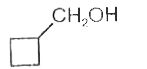
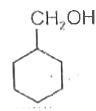
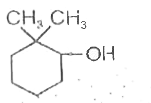
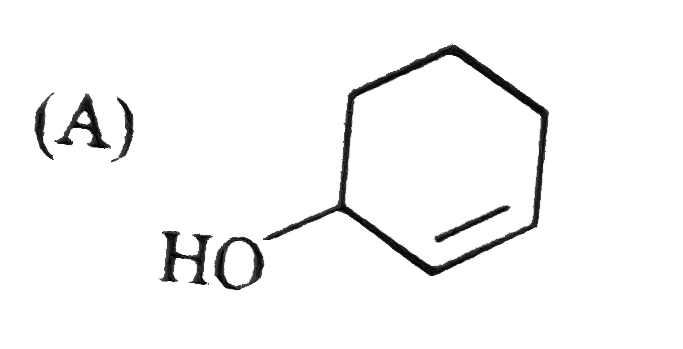
In which of the following dehydration by conc. H_(2)SO_(4) no rearrangement is favourable ? |
|
Answer»
|
|
| 34. |
In which of the following disaccarides, the two monosaccharides are joined through their reducing groups ? |
|
Answer» MALTOSE |
|
| 35. |
In which of the following defects, some of the cations are arranged in the interstitial sites? |
|
Answer» Schottky |
|
| 36. |
In [Ti(H_2O)_6]^(+3)complex the energy absorbed for excitation of 3d^1 electron is |
|
Answer» Purple |
|
| 37. |
In which of the following 'd' subshells are degenerate |
|
Answer» `Cu_((AQ))^(2+)` |
|
| 38. |
In three moles of ethane (C_(2)H_(6)), calculate : (i) Number of moles of carbon atoms (ii) Number of moles of hydrogen atoms (iii) Number of molecules of ethane |
|
Answer» Solution :(i) 1 mole of `C_(2)H_(6)` contains 2 moles of carbon atoms `therefore` 3 mole of `C_(2)H_(6)` will C-atoms = 6 moles (II) 1 mole of `C_(2)H_(6)` contain 6 moles of HYDROGEN atoms `therefore` 3 moles of `C_(2)H_(6)` will contain H-atoms = 18 moles (III) 1 mole of `C_(2)H_(6)` contains Avogadro's no. i.e., `6.02xx10^(23)` molecules `therefore` 3 moles of `C_(2)H_(6)` will contain ethane molecules `=3xx6.02xx10^(23)=18.06xx10^(23)" molecules"` |
|
| 39. |
In which of the following d-d transitioninvolves absorption in theultraviolent region ? |
|
Answer» |
|
| 40. |
In which of the following crystal systems F.C.C unit cells exists ? |
|
Answer» CUBIC, hexagonal |
|
| 41. |
In three beakers labelled as (A),(B) and (C ) , 100 mL of water, 100 mL of 1 M solution of glucose in water and 100 mL of 0.5 M solution of glucose in water are taken respectively and kept at same temperature . Which of the following statements is correct ? |
|
Answer» VAPOUR pressure in all the three beakers in same |
|
| 42. |
In which of the following coordination entities the magnitude of Delta_(0)will be maximum? |
|
Answer» `[Co(CN)_(6)]^(3-)` |
|
| 43. |
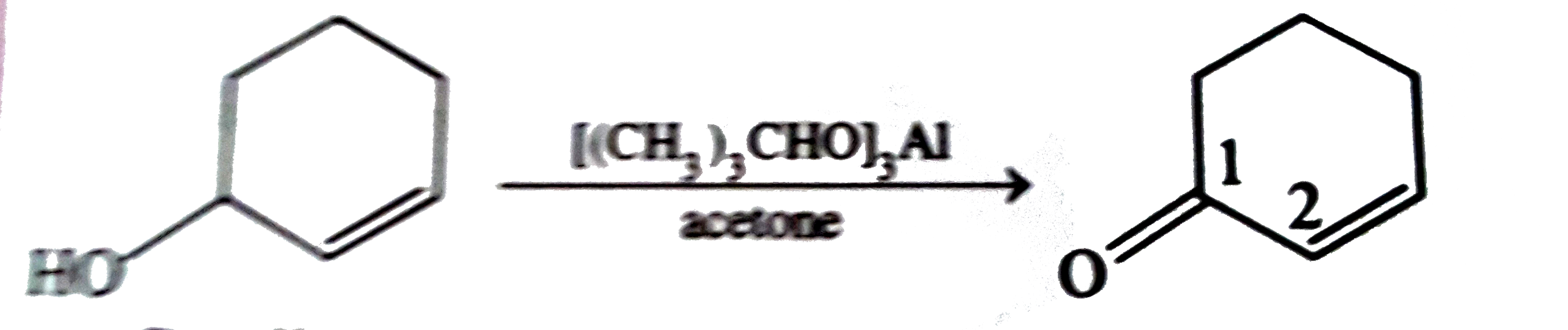
In this X is |
|
Answer»
|
|
| 44. |
In which of the following crystal structure the void efficiency is 32%? |
|
Answer» simple cube |
|
| 45. |
In which of the following coordinaton entities the magnitude ofDelta _0 will be maximum? |
|
Answer» `[CO(CN)_(6)]^(3-)` |
|
| 46. |
In this reaction the product (E) is |
|
Answer» o-nitrobenzoic ACID 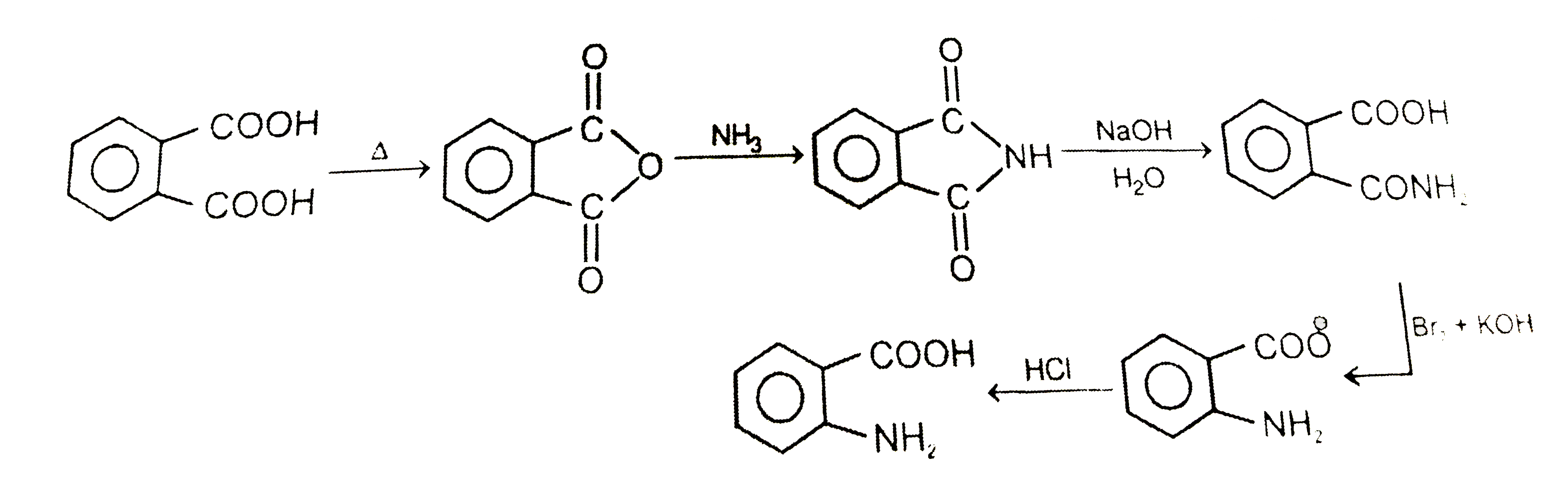
|
|
| 47. |
In this reaction the major products formed are |
|
Answer» propyne 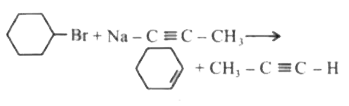
|
|
| 48. |
In which of the following coordination entities the magnitude fo Delta_(@) (CFSE in octahedral field ) willbe maximum ? |
|
Answer» `[CO(CN)_6]^(3-)` |
|
| 49. |
In this reaction SO_(2) is (i) SO_(2)+2H_(2)S to 3S+3H_(2)O (ii) 3SO_(2)+Cr_(2)O_(7)^(2-)+2H^(+) to 2Cr^(3+)+3SO_(4)^(2-)+H_(2)O |
|
Answer» OXIDIZING agent both in (i) and (II) |
|