Saved Bookmarks
This section includes 7 InterviewSolutions, each offering curated multiple-choice questions to sharpen your Current Affairs knowledge and support exam preparation. Choose a topic below to get started.
| 1. |
In the following reaction sequnce:underset(C_(6)H_(5)Cl_(2))(I)overset(KOH(aq))(to)(II)overset((i)CH_(3)MrBr)underset((ii)H_(2)"O/"H^(+))(to)(III)overset(anhy.ZnCl_(2)+conc.HCl)(to)"giventurbidite immediately" Thecompounds 1 is : |
|
Answer» `underset(CL)underset(|)(C)H_(2)-underset(Cl)underset(|)(C)H-CH_(3)` 
|
|
| 2. |
In the clathrates of xenon with water, the nature of bonding between xenon and water molecules is: |
| Answer» Answer :D | |
| 3. |
In the chromyl chloride test, the reagent used is |
|
Answer» `K_(2)CrO_(4)` |
|
| 4. |
In the following reaction the compound Z is |
|
Answer» BENZOIC acid |
|
| 5. |
In the chromyl chloride test, the reagent used is:- |
|
Answer» `K_(2)CrO_(4)` |
|
| 6. |
In the following reaction, the compound Z is |
|
Answer» BENZOIC acid 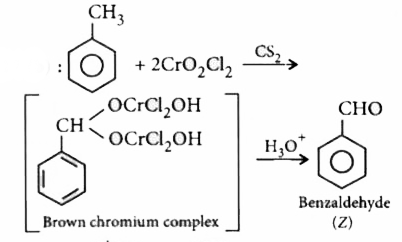
|
|
| 7. |
In the chorination of isobutane (2-methyl propane) the major product is |
|
Answer» `CH_(3)CH_(2)CH_(2)Cl` `(CH_(3))_(2)CHCH_(3) +Cl_(2) overset(U.V."LIGHT") to (CH_(3))_(2)C ClCH_(3)+HCL` |
|
| 8. |
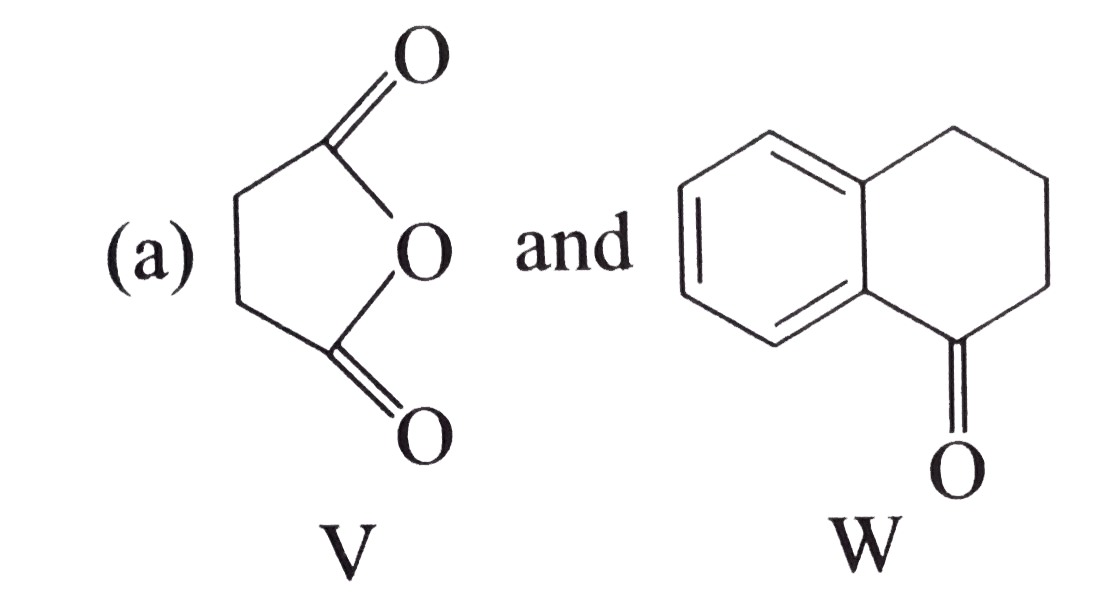
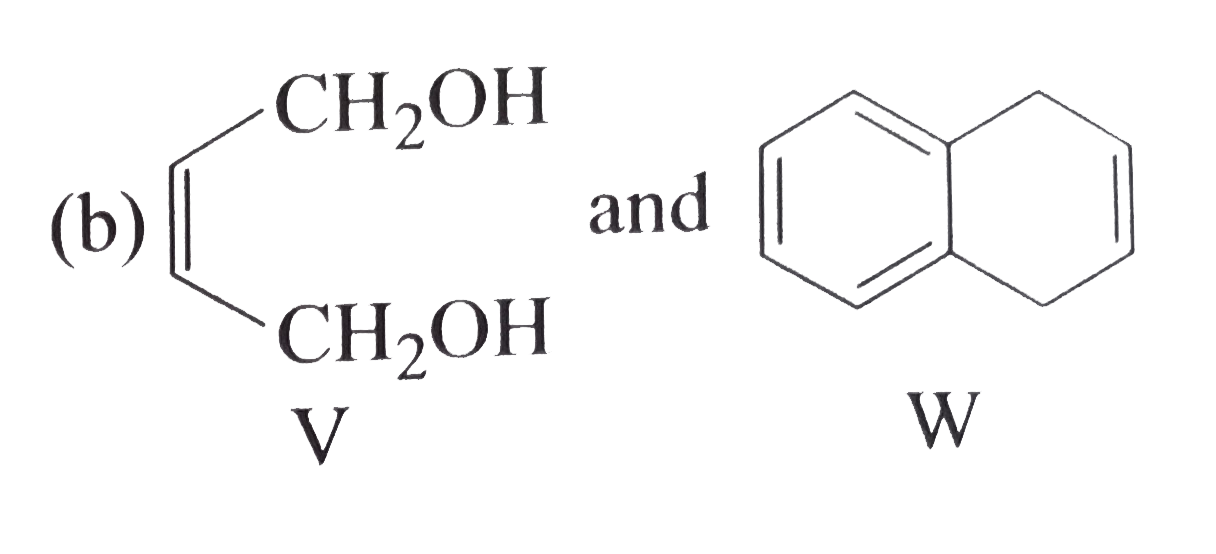
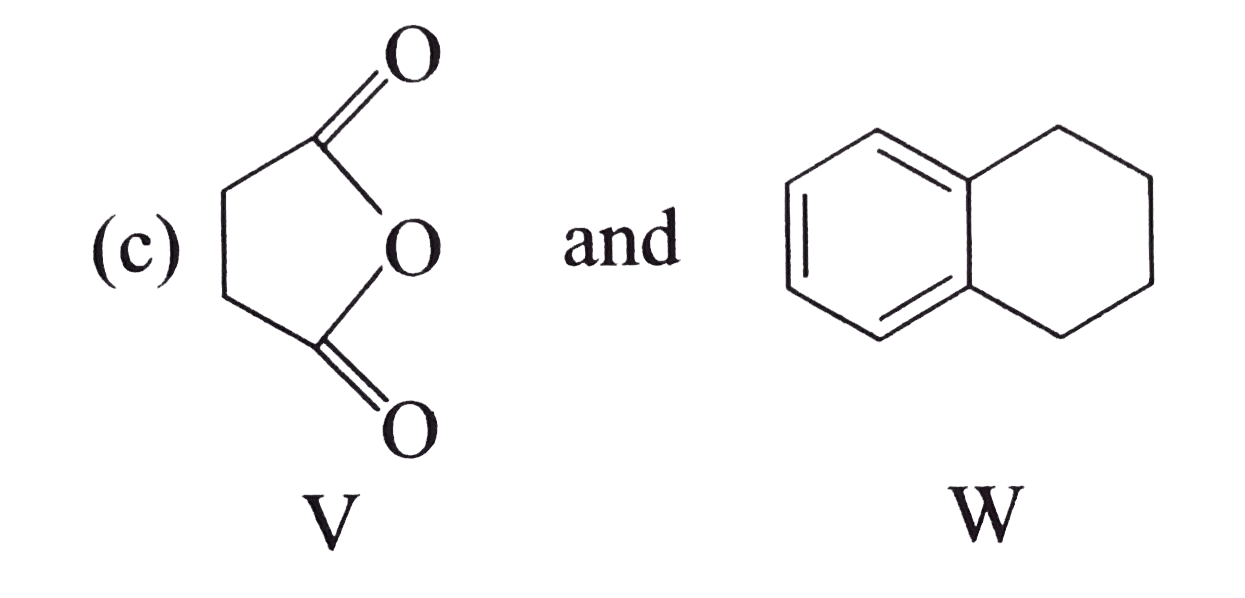
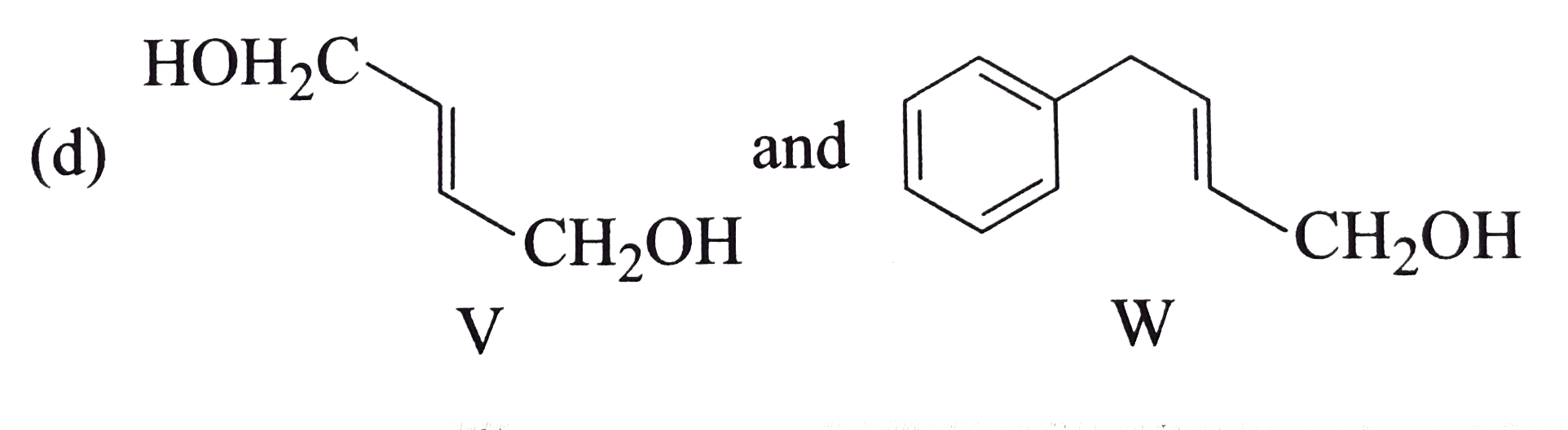
In the following reaction sequences V and W are respectively |
|
Answer»
|
|
| 9. |
In the chlorination reaction of propane, mixture of products are obtained. How many isomers, the mixture contains |
|
Answer» 2 |
|
| 10. |
In the following reaction sequence, which of the following steps is wrong? |
|
Answer» Step 3 
|
|
| 11. |
In the nitration of benzene ,the attacking reagent is ______. |
|
Answer» `NO_2` |
|
| 12. |
In the following reaction sequence, the compound J is an intermediate. Ioverset((CH_(3)CO)_(2)O)underset(CH_(3)COONa)rarroverset((i)H_(2),Pd//C)underset({:((ii)SOCl_(2)),((iii)"anhyd. AlCl"_(3)):})(rarr) 'J' (C_(9)H_(8)O_(2)) gives effervescence on treatment with NaHCO_(3) and a positive Baeyer's test. The compound K is |
|
Answer»
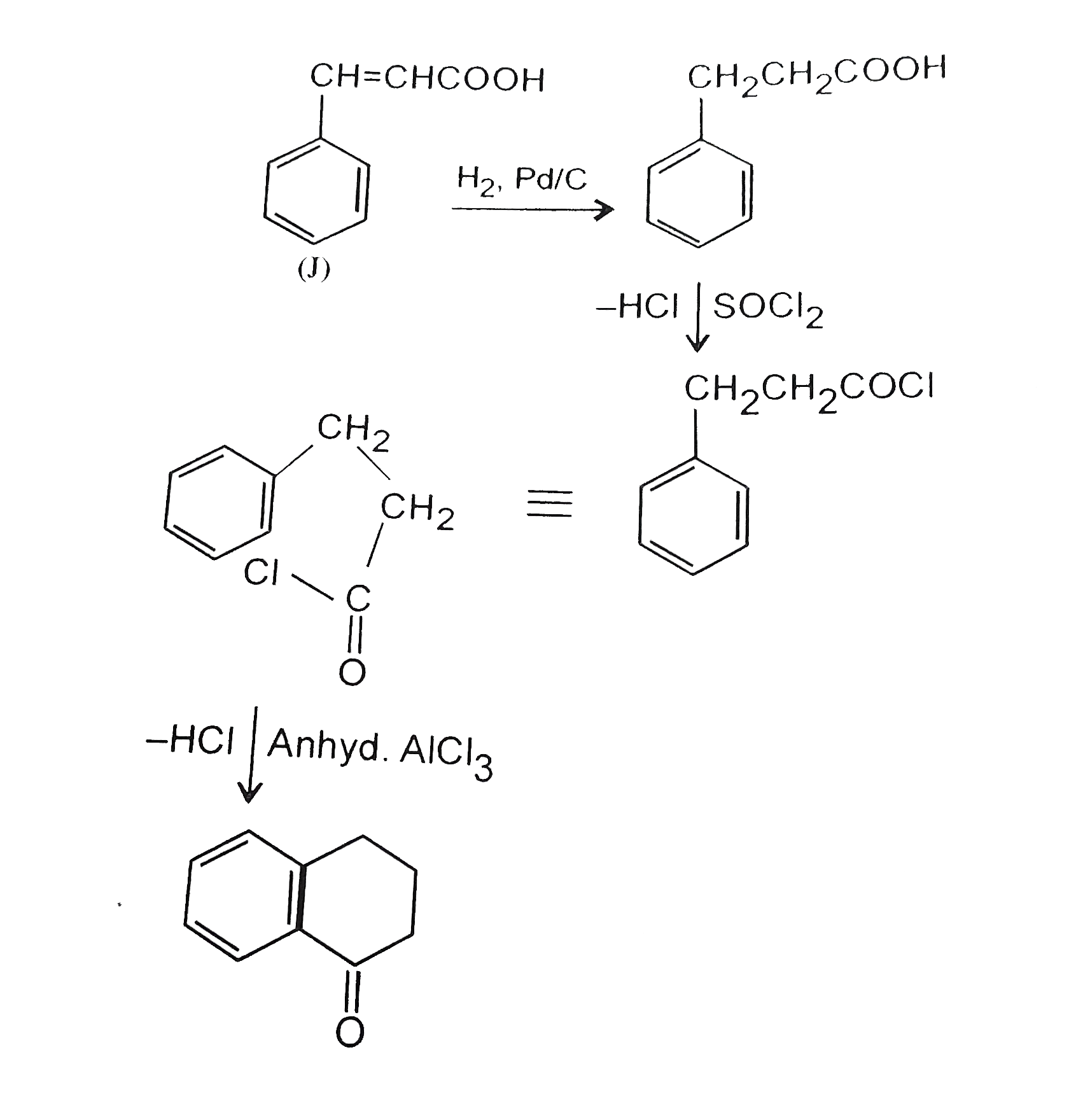
|
|
| 13. |
In the chemical sense digestion is basically |
|
Answer» Hydrolysis |
|
| 15. |
In the chemical reaction, the compounds 'A' and 'B' respectively are ….. |
|
Answer» NITROBENZENE and CHLOROBENZENE |
|
| 16. |
In the following reaction sequence, the compound J is an intermediate. Ioverset((CH_(3)CO)_(2)O)underset(CH_(3)COONa)rarroverset((i)H_(2),Pd//C)underset({:((ii)SOCl_(2)),((iii)"anhyd. AlCl"_(3)):})(rarr) 'J' (C_(9)H_(8)O_(2)) gives effervescence on treatment with NaHCO_(3) and a positive Baeyer's test. The compound I is |
|
Answer»
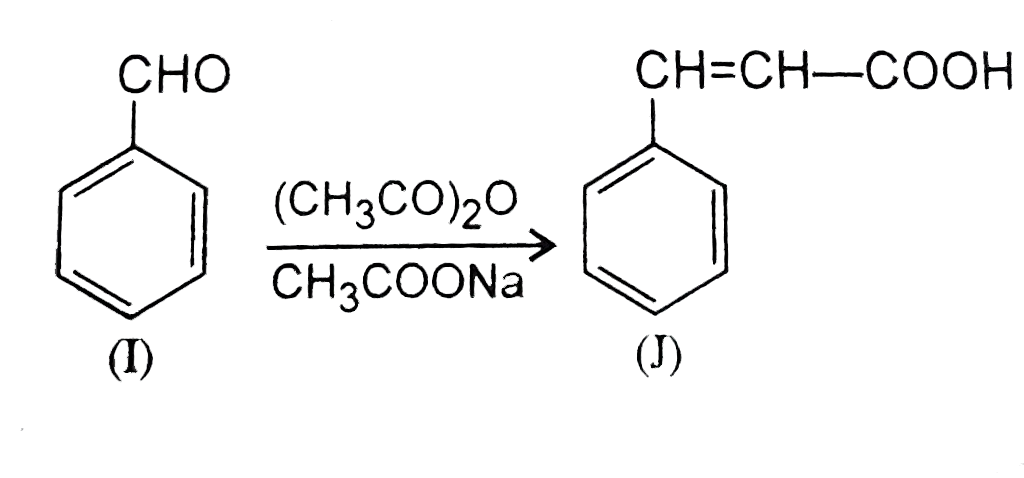
|
|
| 17. |
In the chemical reaction : CH_(3)CH_(2)NH_(2) + CHCI_(3) + 3KOH rightarrow A+B+ 3H_(2)O The compound A and B are respectively |
|
Answer» `CH_(3)CH_(2)CONH_(2) and 3KCI` |
|
| 18. |
In the chemical reaction, CH_(3)CH_(2)NH_(2)+CHCl_(3)+3KOHrarr (A)+(B)+3H_(2)O. the compounds (A) and (B) are respectively : |
|
Answer» `CH_(3)CH_(2)CONH_(2) and 3KCl` |
|
| 19. |
In the chemical reaction, CH_3CH_2NH_2 + CHCl_3 + 3KOH to (A) + (B) + 3H_2O, the compounds (A) and (B) are respectively |
|
Answer» `C_2H_5NC` and 3KCL `CH_3CH_2NH_2 +CHCl_3 + 3KOH to C_2H_5NC + 3KCl + 3H_2O` |
|
| 20. |
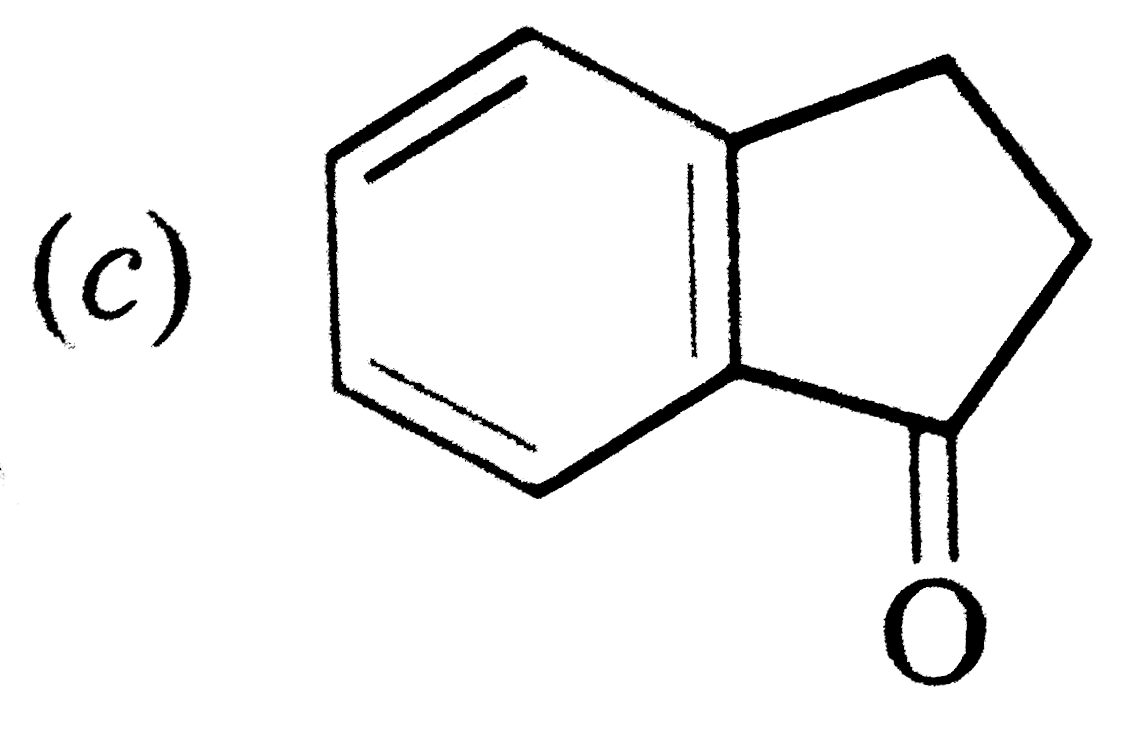
In the following reaction sequence, the compound J is an intermediate. I underset(CH_(3)COONa)overset((CH_(3)CO)_(2)O)toJ underset((ii)." "SOCl_(2),(iii)." anhyd. "AlCl_(3))overset((i)." "H_(2),Pd//C)toK J(C_(9)H_(8)O_(2)) gives effervescence on treatment with NaHCO_(3) and a positive Baeyer's test. Q. The compound K is |
|
Answer»
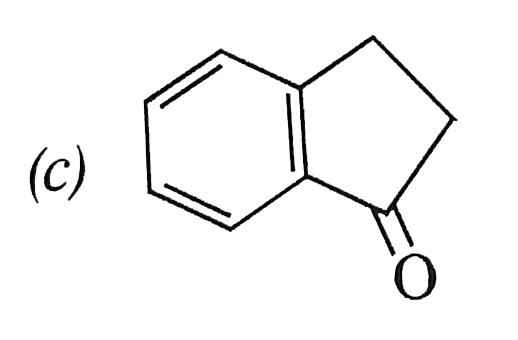
About CYCLIZATION to give the CYCLIC ketone, (K), i.e., I-indanone. 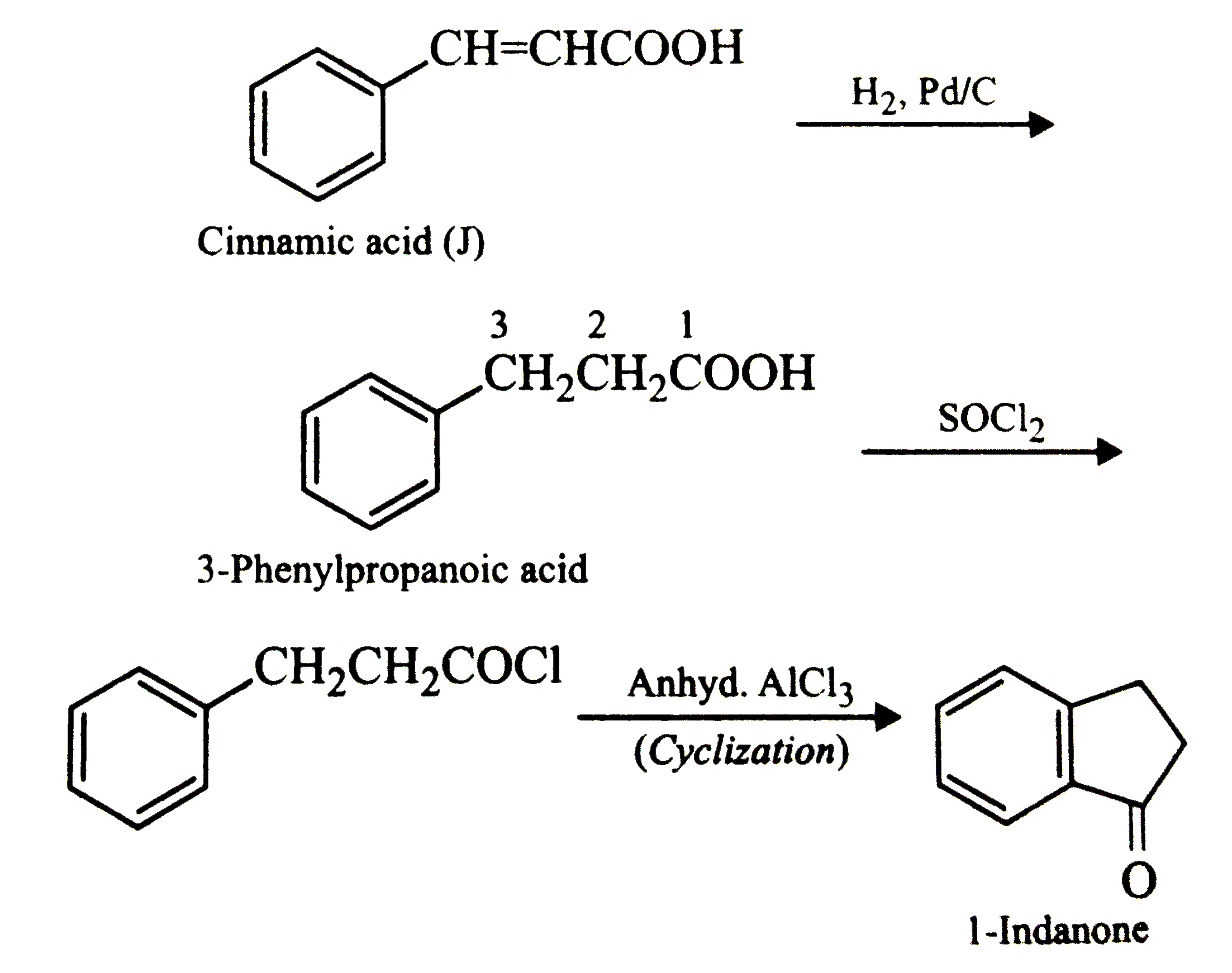
|
|
| 21. |
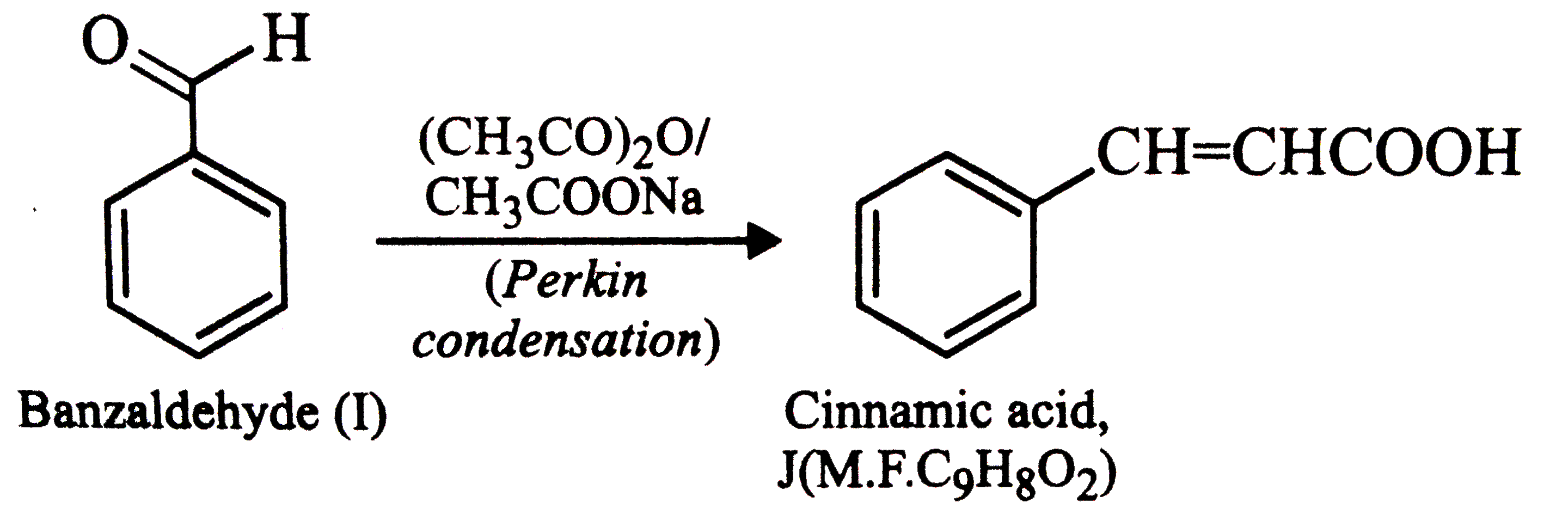
In the following reaction sequence, the compound J is an intermediate. I underset(CH_(3)COONa)overset((CH_(3)CO)_(2)O)toJ underset((ii)." "SOCl_(2),(iii)." anhyd. "AlCl_(3))overset((i)." "H_(2),Pd//C)toK J(C_(9)H_(8)O_(2)) gives effervescence on treatment with NaHCO_(3) and a positive Baeyer's test. Q. The compound I is |
|
Answer»
|
|
| 22. |
In the following reaction sequence, the compound J is an intermediate. I overset((CH_(3)CO)_(2)O)underset(CH_(3)COONa)rarr J overset((i)H_(2),Pd//C)undersetunderset((iii)"anhyd".AICI_(3))((ii)SOCI_(2))rarrK J(C_(9)H_(8)O_(2)) gives effervescence on treatment with NaHCO_(3) and positive Baeyer's test. The compound I is |
|
Answer»
`overset(H_(2)-PDLC)rarr Ph-CH_(2)-CH_(2)-COOH` `overset(SOCI_(2))rarr Ph-CH_(2)-CH_(2)-underset(O)underset(||)(C )-CI` 
|
|
| 23. |
In the change [Cu(H_(2)O)_(6)]^(2+)overset(HCl)rarr [CuCl(H_(2)O)_(5)]^(+), the colour changes from |
|
Answer» BLUE to GREEN |
|
| 24. |
In the cell Zn|Zn^(2+)||Cu^(2+)|Cu, the negative electrode is |
| Answer» Solution :In the CELL `Zn|Zn^(2+)||Cu^(2+)|Cu` the negative ELECTRODE always written on left side while CATHODE on right side. | |
| 25. |
In the following reaction sequence, the compound J is an intermediate. I overset((CH_(3)CO)_(2)O)underset(CH_(3)COONa)rarr J overset((i)H_(2),Pd//C)undersetunderset((iii)"anhyd".AICI_(3))((ii)SOCI_(2))rarrK J(C_(9)H_(8)O_(2)) gives effervescence on treatment with NaHCO_(3) and positive Baeyer's test. The compound K is |
|
Answer»
`OVERSET(H_(2)-PDLC)rarr Ph-CH_(2)-CH_(2)-COOH` `overset(SOCI_(2))rarr Ph-CH_(2)-CH_(2)-underset(O)underset(||)(C )-CI` 
|
|
| 26. |
In the cell represented by Pb_(s) |Pb^(2+) (1M) ||Ag^(+)(1M) |Ag_(s) the reducing agents is |
|
Answer» Pb The compound losing `e^(-)` is called reducing agent. `Pb to Pb^(2+) + 2E^(-)` |
|
| 27. |
In the cell Zn|Zn^(2+)(1M)||H^(+)(1M)|H_(2(g))|Pt Zn electrode is replaced by Cu electrode. Thecell potential will ____________. |
|
Answer» increases |
|
| 28. |
In the following reaction sequence The compound I is |
|
Answer» `CH_3-OVERSET(CL)overset(|)UNDERSET(Cl)underset(|)C-CH_3` |
|
| 29. |
In the following reaction sequence, the amount of D (in g) formed from to moles of acetophenone is.......... (Atomic weights in g mol^(-1) : H = 1, C = 12, N = 14, O = 16, Br = 80. The yield (%) corresponding to the product in each step is given in the parenthesis) |
|
Answer» |
|
| 30. |
In the cell representation (+) represents |
|
Answer» SALT bridge |
|
| 31. |
In the following reaction sequence, product I, J and L are formed. K represents a reagent The structure of product L is |
|
Answer»
|
|
| 32. |
In the cell reaction Cu(S) + 2 Ag^(+) (aq) to Cu^(2+) (aq) + 2 Ag(s) , E_("cell")^(@) = 0.46 V By doubling the concentration of Cu^(2+) , E_("cell")^(@)is |
|
Answer» DOUBLED Doubling `[Cu^(2+)]` decreases the EMF by a small fraction . |
|
| 33. |
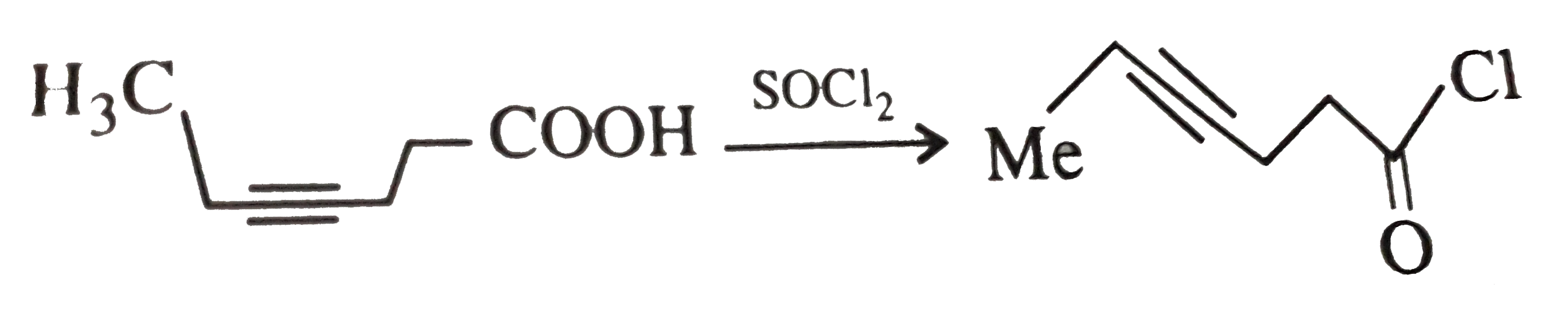
In the following reaction sequence, product I, J and L are formed. K represents a reagent The structure of J and K respectively are |
|
Answer»
|
|
| 34. |
In the cell , Pt, Sn^(+4)|| Fe^(+3)|Fe^(+2) ,Pt, the cathode half cell reaction is |
|
Answer» `FE^(+3)+E^(-) to Fe^(+2)` |
|
| 35. |
In the following reaction sequence, CH_(3)CHO overset(Cl_(2))underset(Ca(OH)_(2))(to) X overset(C_(6)H_(5)NH_(2))underset("Alc."KOH)(to) Y Y is |
|
Answer» `CH_(3)CH = NHC_(6)H_(5)` 
|
|
| 36. |
In the cell reaction :Ag(s)+Cu^(2+)(aq)+Br^(-)(aq)toAgBr(s)+Cu^(+)(aq)the reduction half reaction is : |
|
Answer» `Ag^(+)(s)+BR^(-)(AQ)toAgBr(s)` |
|
| 37. |
In the following reaction sequence in aqueous solution, the species X,Y and Z, respectively S_(2)O_(3)^(2-)overset(Ag^(+))(rarr)underset("clear solution")(X)overset(Ag^(+))(rarr)underset("white precipitate")(Y)overset("withtime")(rarr)underset(" black precipitate")(Z) |
|
Answer» `[AG(S_(2)O_(3))_(2)]^(3-), Ag_(2)S_(2)O_(3), Ag_(2)S` |
|
| 38. |
In the catalytic oxidation of ammonia, an oxide is formed which is used in the precipitation of HNO_3. The oxide is |
|
Answer» NO |
|
| 39. |
In the Castner process for the extraction of sodium, the anode is made of..... Metal. |
|
Answer» Copper |
|
| 40. |
In the following reaction sequence, (##MBD_HKR_CHE_XII_P02_C16_E07_099_Q01.png" width="80%"> The end product would be useful as : |
|
Answer» A soap |
|
| 41. |
In the following reaction sequence, C_(6)H_(5)Br underset(523K)overset(CuCN // "pyridine")to X underset("boil")overset(dil. H_(2)SO_(4))to Y the product Y is |
|
Answer» benzonitrile |
|
| 42. |
In the case of the alkali metals: |
|
Answer» The CATION is LESS stable than the atom |
|
| 43. |
In the following reaction sequence: |
|
Answer» REACTION 1 |
|
| 44. |
In the case of small cuts, bleeding is stopped by applying potash alum. Here alum act as |
|
Answer» germicide |
|
| 45. |
In the case of osmosis, solvent molecules move from: |
|
Answer» HIGHER VAPOUR PRESSURE to LOWER vapour pressure |
|
| 46. |
In the followingreaction sequence 'A' is C_(2)H_(5)Ioverset(alc KOH)rarrXunderset(C CI_(4))overset(Br_(2))rarrtYoverset(KCN)rarrZoverset(H_(3)O^(+))rarrA |
|
Answer» succinic ACID |
|
| 47. |
In the case of immiscible liquids, the addition of one liquid to another does not after the properties of either liquid. Hence liquid exerts its own vapour pressure independently of the pressure of the other. Since boiling point of any system is the temperature at which its total vapour pressure becomes equal to the prevailing pressure, so by knowing the miscibility of two liquids, we can find out boiling temperature. An immiscible mixture of water and quinoline is prepared and distillation is done. If p_("quinoline")^(@) = 7.9 torr and p_("water")^(@) = 732.04 torr at the boiling point of 98.9^(@)C. Find out the relative masses of water and quinoline in the distillate. If it is given that no of moles of any component in the vapour phase prop its vapour pressure. (Molar mass of water = 18 g/mol and molar mass of quinoline= 129g//mol) |
|
Answer» `W_("water"): W_("quinoline") : : 13:1` and `(n_("water"))/(n_("quinoline"))=(p_("water"))/(p_("quinoline"))=(732.04)/(7.9)` `(W_("water"))/(W_("quinoline"))=(73204)/(790)xx(18)/(129)~=(13)/(1)`. |
|
| 48. |
In thefollowingreaction RX + KCN overset(Delta) towhichof the followingisomericcompoundis formed |
|
Answer» RCN |
|
| 49. |
In the case of immiscible liquids, the addition of one liquid to another does not after the properties of either liquid. Hence liquid exerts its own vapour pressure independently of the pressure of the other. Since boiling point of any system is the temperature at which its total vapour pressure becomes equal to the prevailing pressure, so by knowing the miscibility of two liquids, we can find out boiling temperature. In which of the following mixtures, vapour pressure of each component is independent of the amount of the other components? |
|
Answer» MIXTURE of WATER and aniline |
|