

Saved Bookmarks
This section includes 7 InterviewSolutions, each offering curated multiple-choice questions to sharpen your Current Affairs knowledge and support exam preparation. Choose a topic below to get started.
| 1. |
In the case of immiscible liquids, the addition of one liquid to another does not after the properties of either liquid. Hence liquid exerts its own vapour pressure independently of the pressure of the other. Since boiling point of any system is the temperature at which its total vapour pressure becomes equal to the prevailing pressure, so by knowing the miscibility of two liquids, we can find out boiling temperature.If the vapour pressure of two liquids X and Y in their pure state at 300 K are 85 mm of Hg and 120 mm of Hg respectively and if their mole fraction in liquid solution are 0.45 and .55 respectivel. Then find out the total vapour pressure above the mixture containing two immiscible liquids at 300 K. |
|
Answer» <P>`104.25 mm` of HG |
|
| 2. |
In the following reaction: RMgBr + HC(O E t)_(3) overset("Ether")rarr overset(H_(3)O^(+))rarr P The product 'P' is |
|
Answer» RCHO 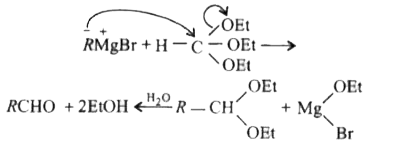
|
|
| 3. |
In the case of immiscible liquids, the addition of one liquid to another does not after the properties of either liquid. Hence liquid exerts its own vapour pressure independently of the pressure of the other. Since boiling point of any system is the temperature at which its total vapour pressure becomes equal to the prevailing pressure, so by knowing the miscibility of two liquids, we can find out boiling temperature. If we mix two immiscible liquids A and B then boiling point of the mixture will be (Given p_(A)^(@) gt p_(B)^(@)) |
|
Answer» greater than `T_(B)` and lower than `T_(A)` `p_(A)^(@)+p_(B)^(@)=` Atmospheric PRESSURE. |
|
| 4. |
In the following reaction :R-OH overset(HCl) rarr R-Cl+H_(2)Othe, ZnCl_(2) is not required if R is ……. |
|
Answer» `CH_(3)-` |
|
| 5. |
In the case of immiscible liquids, the addition of one liquid to another does not after the properties of either liquid. Hence liquid exerts its own vapour pressure independently of the pressure of the other. Since boiling point of any system is the temperature at which its total vapour pressure becomes equal to the prevailing pressure, so by knowing the miscibility of two liquids, we can find out boiling temperature. In question 6, if we decrease the amount of liquid X in the mixture then what will bethe effect on the boiling point of the mixture at constant temperature? |
|
Answer» It will remain constant |
|
| 6. |
In the following reaction RCH_(2)COOH overset(Br_(2)//P)rarr X overset("excess "NH_(3))rarr Y The major compounds X and Y are |
|
Answer» `RCH(BR)CONH_(2), RCH(NH_(2))COOH` |
|
| 7. |
In the following reaction, RCH_2CH=CH_2+I Cl to [A] Markownikoff's product [A] is |
|
Answer» `RCH_2undersetunderset(Cl)(|)CH-CH_2I` In IC L , Cl is more electronegative. So it will take negative CHARGE . i.e., `I^(+)Cl^(-)` So, the PRODUCT is `RCH_2CH=CH_2+IC l to R-CH_2-undersetunderset(Cl)(|)CH-CH_2I` |
|
| 8. |
In the case of d-block elements : |
|
Answer» OUTERMOST and PENULTIMATE SHELLS are incomplete |
|
| 9. |
In the following reaction : RCH_(2)CH = CH_(2) + Icl rarr [A] Markovinkoff's product [A] is : |
|
Answer» `RCH_(2)underset(Cl)underset(|)(CH) - CH_(2)I` In ACCORDANCE with Markovnikov.s rule, more ELECTRONEGATIVE chlorine atom goes to the carbon with LESSER number of hydrogens. |
|
| 10. |
In the following reaction oxidation state of fluorine changes to 2F_(2)+H_(2)O to 4HF+O_(2) |
|
Answer» 0 to -01 |
|
| 11. |
In the case of a radioisotope, the value of …….and …..are indentical in magnitude. The value is |
|
Answer» 1/0.693 or `X xx x = 0.693 i.e., x^2 = 0.693 " or " x = (0.693)^(1//2)` |
|
| 12. |
in the following reaction, product 'P' is R-overset(O)overset(||)(C)-Cl underset(Pd-BaSO_(4))overset(H_(2))toP |
|
Answer» `RCH_(2)OH` |
|
| 13. |
In the case of a radio isotope the value of T_(1//2) and lamda are identical in magnitude. The value is |
|
Answer» 0.693 half-life period, `T_(1//2)=0.696//LAMDA` SINCE `T_(1//2)=lamda` (given), `T_(1//2)^(2)=0.693` `impliesT_(1//2)=0.693^(1//2)`. Then VALUE of `T_(1//2)` on `lamda` is `0.693^(1//2)`. |
|
| 15. |
In the following reaction, how is the rate of appearance of the underline product related to the rate of disappearance of the underlined reactant? BrO_(3)^(-)(aq)+ul(5Br^(-))(aq)+6H^(+)(aq)toul(3Br_(2))_((1))+3H_(2)O_((1)) |
|
Answer» `(d[Br_(2)])/(dt)==5/3(d[Br^(-)])/(dt)` |
|
| 16. |
In the case of a first order reaction, the ratio of the time required for 99.9% completion of the reaction to its half life is nearly |
|
Answer» 1 |
|
| 17. |
In the following reaction most stable intermediate is CH_3overset(CH_3)overset|CHCH=CH_2+H_2O overset(H^+)to |
|
Answer» `CH_3overset(CH_3)OVERSET|CHCH_2overset(o+)CH_2` |
|
| 18. |
In the case homologous series of alkanes, which one of the following statements is incorrect |
|
Answer» The members of the series are isomers of each other `(CH_2=12+2=14)` |
|
| 19. |
In the carbon cycle, from which hot stars obtain their energy, the C_6^14nucleusis |
|
Answer» COMPLETELY CONVERTED into energy |
|
| 20. |
In the following reaction HC_(2)O_(4)^(-) + PO_(4)^(--) hArr HPO_(4)^(--) + C_(2)O_(4)^(--) Which are the two Bronsted bases |
|
Answer» `HC_(2)O_(4)^(-)` and `PO_(4)^(---)` |
|
| 21. |
In the carbon cycle from which stars hotter than the sun obtain their energy the ._(6)C^(12) isotope |
|
Answer» COMPLETELY CONVERTED into energy |
|
| 22. |
In the following reaction HCO_3^(-)+H_2OhArrCO_3^(2-)+H_3O^+ which two substances are Bronsted base ? |
|
Answer» `CO_3^(2-) and H_3O^+` |
|
| 23. |
In the following reaction , HC -= CH underset(HgSO_4)overset(H_2SO_4)(to) X product 'X' will not give |
|
Answer» tollen's TEST 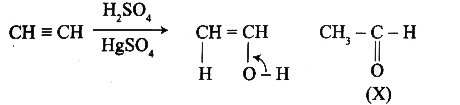 (X) reduces TOLLENS REAGENT and fehling solution and it also answer iodoform test . |
|
| 24. |
In the cannizzaro reaction given below, 2Ph-CHO overset(OH^(-))to Ph-CH_(2)OH+PhCO_(2)^(-) the slowest step is |
|
Answer» the attach of `.^(-)OH` at the carbonyl group |
|
| 25. |
In the Cannizzaro's reaction given below : 2Ph-CHOoverset (OH^-) rarr Ph-CH_2OH + PhCOO^- the slowest step is : |
|
Answer» The attack of OH^- at the carbonyl GROUP |
|
| 26. |
In the following reaction H_3C-underset(CH_3)underset(|)oversetoverset(CH_3)|C-CH=CH_2overset(H_2O //H^+)to underset"Major Product"A+underset"Minor Product"B The major product is |
|
Answer» `H_3C-undersetunderset(OH)|oversetoverset(CH_3)|C-undersetunderset(CH_3)|CH-CH_3` 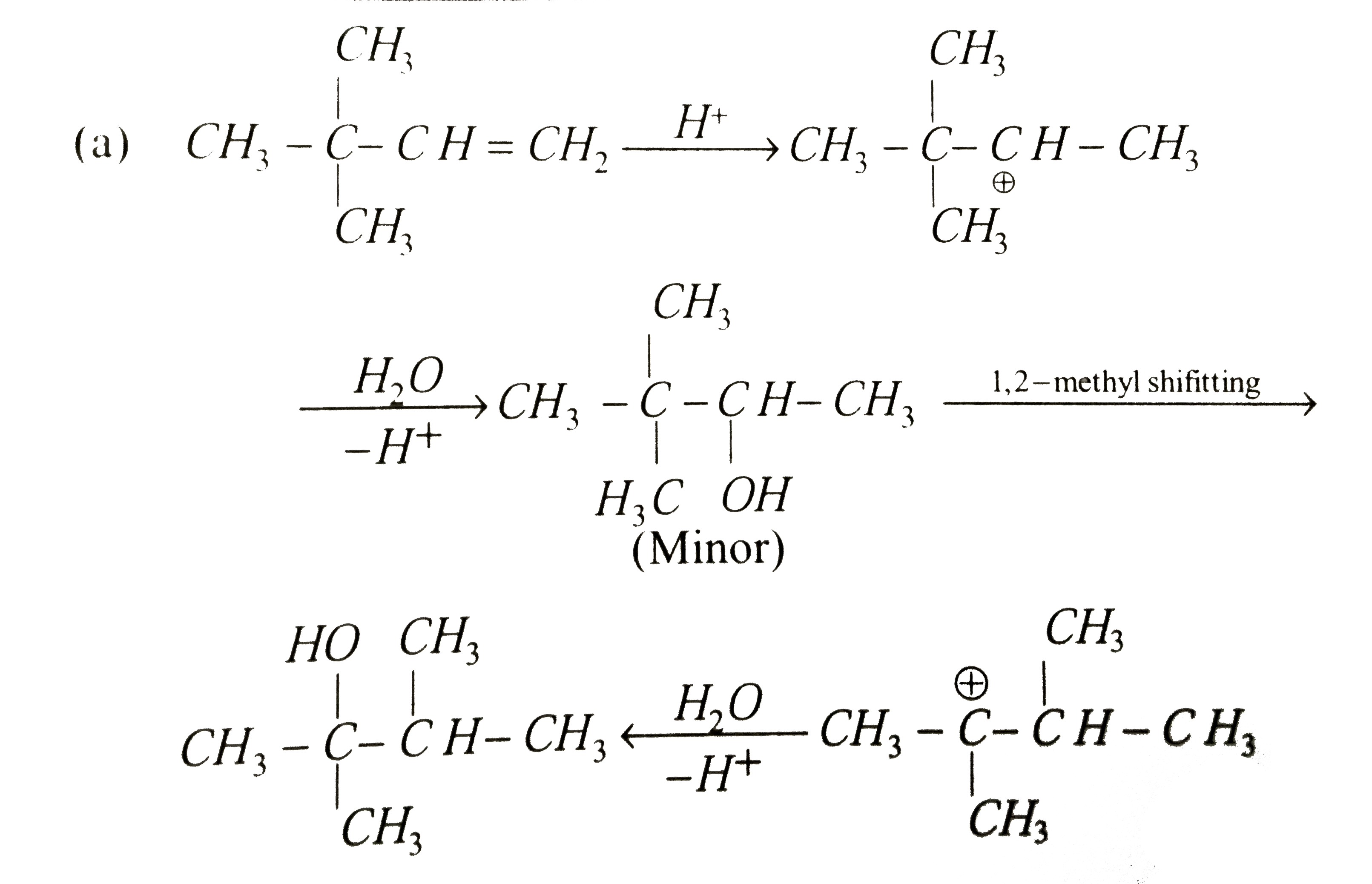
|
|
| 27. |
Inthe carbinol system , monohydric alcohols are named as derivatives of _________. |
|
Answer» METHYL ALCOHOL |
|
| 28. |
In the following reaction HC-=CH underset(Hg^(2+))overset(H_2SO_4)to 'P' Product 'P' will not give |
|
Answer» TOLLEN's reagent test |
|
| 29. |
In the Cannizzaro reaction given below: 2Ph-CHO overset(overset(Θ)OH)rarrPh-CH_(2)OH+PhCO_(2)^(-) the slowest step is: |
|
Answer» TGE attack of :` OH^(-)`at the carbonyl GROUP |
|
| 30. |
In the following reaction, H_(3)C-underset(CH_(3))underset(|)overset(CH_(3))overset(|)(C)-CH=CH_(2) overset(H_(2)O //H^(+))to underset("Major product")(A)+underset("Minor product")(B) The major product is, |
|
Answer» `H_(3)C-UNDERSET(OH)underset(|)OVERSET(CH_(3))overset(|)(C)-underset(CH_(3))underset(|)(C)H-CH_(3)` 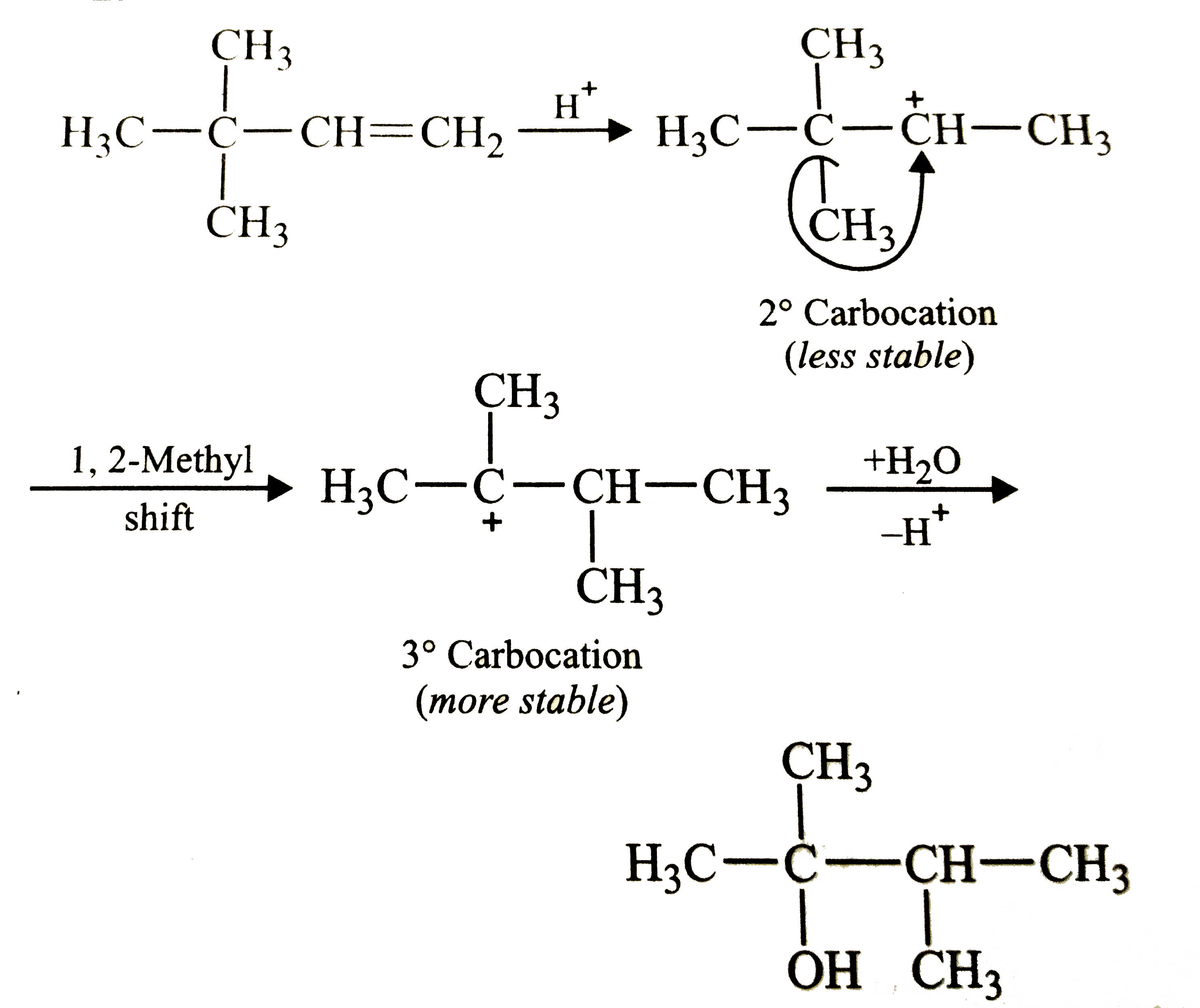
|
|
| 31. |
In the button cells widely used in watches and other devices, the following reaction takes place: Zn (s) + Ag_(2)O (s) + H_2O (l) to Zn^(2+) (aq) + 2Ag (s) + OH^(-) (aq) Determine E^(@) and Delta_(r)G^(@)for the reaction. |
|
Answer» Solution :Electrode reactions taking place in the button cell are as under : `Zn(s) to Zn^(2+)(aq) + 2e^(-)` `2Ag^(+)(aq) + 2e^(-) to 2Ag(s)` --------------------------------------------------------------------- `Zn(s) + 2Ag^(+)(aq) to Zn^(2+)(aq) + 2Ag(s)` THUS, n=2 `E^(@)` for the REACTION can be obtained as under: `E_("cell")^(@)= (E_("cathode")^(@) - E_("anode")^(@))` `=+0.80 V - (0.76 V) = + 1.56 V` Use the following RELATION to calculate `Delta_(r)G^(@)` `Delta_(r)G^(@) =-nE^(@) F` `=-301.080 kJ mol^(-1)` |
|
| 32. |
In the following reaction H_(3)C - underset(CH_(3))underset(|)overset(CH_(3))overset(|)(C) - CH = CH_(2) overset(H_(2)O //H^(oplus))rarr underset("Major product")(A) + underset("Minor product")(B) The major product is |
|
Answer» `H_(3)C - underset(OH)underset(|)overset(CH_(3))overset(|)(C) - CH - CH_(3)` 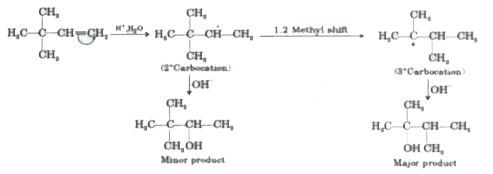
|
|
| 33. |
In the button cells widely used in watches and other devices the following reaction takes place : Zn_((S))+Ag_(2)O_((S))+H_(2)O_((l)) to Zn_((aq))^(2+)+2Ag_((S))+2OH_((aq))^(-) Determine Delta_(r)G^(@) and E^(Theta) cell for the reaction. |
|
Answer» Solution :(a) CALCULATION of standard reduction potential `E_(cell)^(Theta)` : The following reaction is carried out in button cell. `Zn_((S))+Ag_(2)O_((S)) +H_(2)O_((l)) to Zn_((aq))^(2+) +2Ag_((S))+2OH_((aq))^(-)` OXIDATION : `Zn_((S)) to Zn_((aq))^(2+)+2E^(-)` `therefore E_(L)^(Theta)=E_(Zn^(2+)|Zn)^(Theta)=-0.76V` Reduction : `Ag_(2)O_((S))+2e^(-) +H_(2)O_((l)) to 2Ag_((S))+2OH_((aq))^(-)` `therefore E_(R)^(Theta)=E_(Ag_(2)O|Ag)^(Theta)=0.344V` `therefore DeltaE_(cell)^(Theta)=E_(R)^(Theta)-E_(L)^(Theta)=E_(Ag_(2)O|Ag)^(Theta)-E_(Zn^(2+)|Zn)^(Theta)` `=0.344-(-0.76)` `+1.104V` (b) Calculation of `Delta_(r)G^(@)`,`Delta_(r)G^(@)=-nFE_(cell)^(Theta)|" Where, "n=2" mol "`, `E_(cell)^(Theta)=1.104V`,`F=96500" C "mol^(-1)` `therefore Delta_(r)G^(@)=-(2mol)xx(96500" C "mol^(-1))xx(1.104V)` `=-213072CV` `=-213072J` `=-2.13xx10^(5)J` `=-213.072kJ` `=-213kJ` |
|
| 34. |
In the button cells widely used in watches and other devices the following reaction takes plance : Zn(s)+Ag_(2)O(s)+H_(2)O(l) rarr Zn^(2+)(aq)+2Ag(s)+2OH^(-)(aq) Determine Delta_(r )G^(@) and E^(@) for the reaction. |
|
Answer» Solution :In the given cell, Zn is oxidised to `Zn^(2+)` and `Ag_(2)O` is REDUCED to Ag. `therefore E_("cell")^(@)=E_("cathode")^(@)-E_("ANODE")^(0)=[0.344-(-0.76)V]=1.104 V` `therefore Delta_(r )G^(@)=-nFE_("cell")^(@)=-2xx96500xx1.104=-2.13xx10^(5)J` |
|
| 35. |
Inthefollowingreaction gamma- Hydroxy carboxylicacid underset((ii) ^(+)) overset((i) DIBALH) to A is |
|
Answer» `gamma ` - lactone |
|
| 36. |
In the brown ring test, nitric oxide donates one electron to Fe^(2+) to form [Fe(H_(2)O)_(5)NO]^(2+), which contains ________ and ________ ions. |
| Answer» SOLUTION :`NO^(+), FE^(+)` | |
| 37. |
In the following reaction equation, what is A and C ? (i) CH_(3)-overset(CH_(3))overset(|)CH-underset(OH)underset(|)CH-CH_(3) overset(H^(+)//"Heat")to underset("Main product") (A)+ underset("By product")(B) ii) A overset("HBr, dark")to underset("Main product") (C) +underset("By product")(D) |
|
Answer» `CH_(3)=OVERSET(CH_(3))overset(|)C-CH_(2)-CH_(3)` and `UNDERSET(Br)underset(|)CH_(2)-overset(CH_(3))overset(|)CH-CH_(2)-CH_(3)` |
|
| 38. |
In the brown ring test , the brown colour of the ring is due to |
|
Answer» a MIXTURE of NO and `NO_(2)` `underset("Impure GAS")(FeSO_(4)+NO)tounderset("dark brown")(FeSO_(4)*NO)`(Nitrosoferrous sulphate) When this solution is heated , pure nitric OXIDE is liberated . `FeSO_(4)*NOoverset("heat")toFeSO_(4)+underset("pure gas")(NO)` |
|
| 39. |
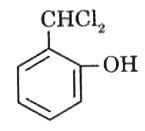
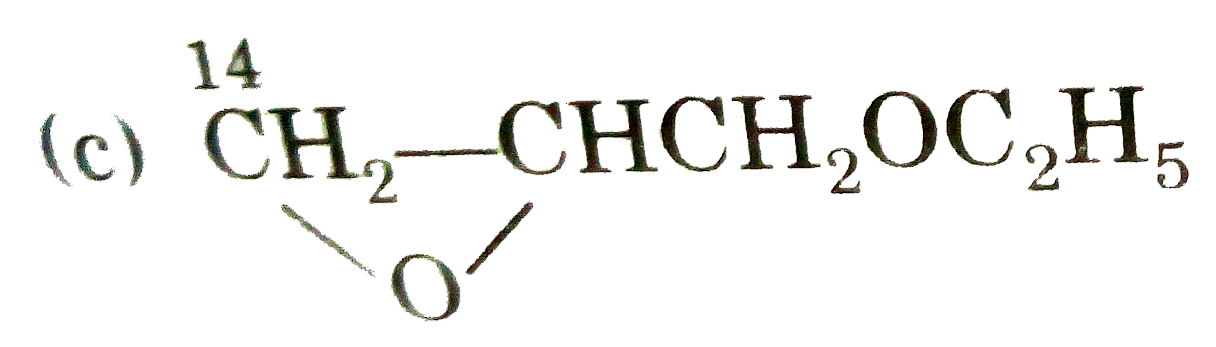
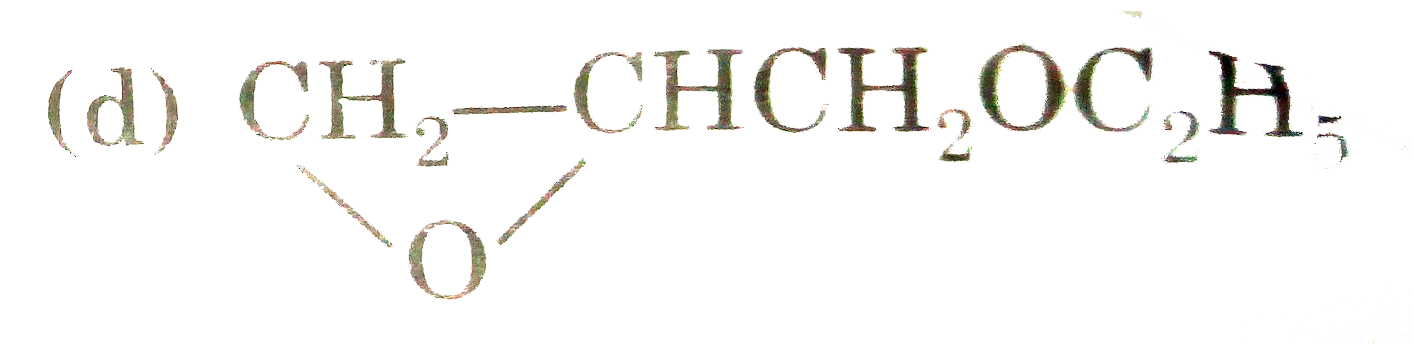
In the following reaction, final product is : |
|
Answer» `ClCH_(2)underset(OH)underset(|)CHoverset(14)CH_(2)OC_(2)H_(5)` |
|
| 40. |
In the brown ring complex [Fe(H_2 O)(NO)]SO_4, nitric oxide behaves as |
|
Answer» `NO^(+)` |
|
| 42. |
In the brown ring test, brown colour of the ring is due to ………………. . |
|
Answer» a MIXTURE of `NO and NO_(2)` |
|
| 43. |
In the following reaction CH_3-CH_2-CH_2-CH_3 underset"475 K"overset(H_2SO_4)to |
|
Answer» `CH_3CH=CHCH_3` predominates `CH_3-CH_2-CH_2-CH_3underset"475 K"overset(H_2SO_4)to underset"Less symmetrical for UNSYMMETRICAL (MINOR product)"(CH_2=CH-CH_2-CH_3)` It is based onSaytzeff's rule . According to this more symmetrical or more alkylated alkene predominates. |
|
| 44. |
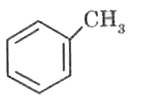
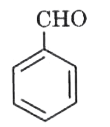
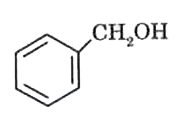
In the Bohr's model , for unielectronic species following symbols are used r_(n,z)to Radius of n^"th" orbit with atomic number "z" U_(n,z)to Potential energy of electron in n^"th" orbit with atomic number "z" K_(n,z)toKinetic energy of electron in n^"th" orbit with atomic number "z" V_(n,z)to Velocity of electon in n^"th" orbit with atomic number "z" T_(n,z)to Time period of revolution of electon in n^"th" orbit with atomic number "z" Calculate z in all in cases. (i)U_(1,2):K_(1,z)=-8:9 (ii)r_(1,z):r_(2,1) =1:12 (iii)v_(1,z):v_(3,1)=15:1 (iv)T_(1,2):T_(2,z)=9:32 Report your answer as (2r-p-q-s) where p,q,r and s represents the value of "z" in parts (i),(ii),(iii),(iv). |
|
Answer» |
|
| 45. |
In the following reaction, CH_(3)NH_(2)+CHCl_(3)+KOH to Nitrogen containing compound +KCl+H_(2)O. The nitrogen containing compound is |
|
Answer» `CH_(3)-NH-CH_(3)` |
|
| 46. |
In the Bohr's orbit, what is the ratio of total kinetic energy and the total energy of the electron? |
|
Answer» `-1` POTENTIAL energy `= -(ZE^(2))/R` But electrostatic force, `(Ze^(2))/(r^(2))=(MV^(2))/r` (centrifugal force) `THEREFORE` Potential energy `=-mv^(2)` Total energy `= 1/2mv^(2)-mv^(2)=-1/2mv^(2)` `therefore` Kinetic energy/total energy `= -1`. |
|
| 47. |
In the Borax bead test of Co^(2+), the blue colour of bead is due to the formation of : |
|
Answer» `B_(2)O_(3)` |
|
| 48. |
In the following reaction, calculate the mass of Cl_(2) required to produce 1385 gof KCiO_(4) (K=39):- Cl_(2)+ 2KOH to KCl +KClO +H_(2)O 3KClO to 2 KCl +KClO_(3) 4KClOto 3KClO_(4)+ KCl |
| Answer» Answer :B | |
| 49. |
In the Bohr’s model, for unielectronic species following symbols are used, r_(n,z)toRadius of n ^(th) orbit with atomic number "z". U _(n,z) to Potential energy of electron in n ^(th) orbit with atomic number "z". K _(n , z)to Kinetic energy of electron inn^(th) orbit with atomic number "z". v_(n,z) to Velocity of electron inn^(th) orbit with atomic number "z". T_(n,z)to Time period of revolution of electron in n^(th) orbit with atomic number "z". Calculate z in all in cases. (i) U _(1,2) : K _(1,z) =-8:1 (ii) r _(1,z) : r _(2,1) =1:8 (iii) v _(1,z):v _(3,1)=9:1 (iv)T_(1,2) : T_(2,z) =9:32 Represent your answer as abcd, where a,b,c and d represent number from 0 to 9. a,b,c and d represents the value of "z" in parts (i), (ii), (iii) & (iv). Suppose your answer is 1,2,3 & 4 then the same must be filled in OMR sheet as 1234.00. |
|
Answer» 2233 |
|
| 50. |
In the following reaction : CaC_(2) (s) + 2H_(2) O (l) rarr C_(2) H_(2) (g) + Ca (OH)_(2) (s) Suppose 16 gm CaC_(2) reacts with 9 gm water and acetylene formed is collected in 10 litre vessel at temperature 300 K then its pressure will be : |
|
Answer» `0.75` ATM `PV = nRT` `P = (0.25 xx 0.08 xx 300)/(10)` `P = 0.6 atm` |
|
_E01_676_O01.png)
_E01_676_O02.png)
_E01_676_O03.png)
_E01_676_O04.png)