Saved Bookmarks
This section includes 7 InterviewSolutions, each offering curated multiple-choice questions to sharpen your Current Affairs knowledge and support exam preparation. Choose a topic below to get started.
| 1. |
In the complex [Pt(NH_(3))_(3)Cl][CuCl_(3)(NH_(3)] the charges over [Pt(NH_(3))_(3)Cl]^(+x) and [CuCl_(3)(NH_(3)]^(-y) then (x+y) is |
|
Answer» `1 + 1 = 2` |
|
| 3. |
In the complexes [Fe(H_2O)_6]^(3+) , [Fe(CN)_6]^(3-), [Fe(C_2O_4)_3]^(3-) and [FeCl_6]^(3-) , more stability is shown by |
|
Answer» `[Fe(H_2O)_6]^(3+)` |
|
| 4. |
In the following reaction, X and Y respectively areC_(2)H_(5)OH overset(KMnO_(4)//H^(+))to X overset(Y)to CH_(3)CO_(2)C_(2)H_(5) |
|
Answer» `CH_(3)OH,C_(2)H_(5)OH` |
|
| 5. |
In the complex PtCl_(4). 4NH_(3), the number of ionisable chlorine ions is : |
| Answer» Answer :C | |
| 6. |
In the following reaction X and Y respectively are respectively are X overset(Aq. NaOH)to CH_3COOH overset(Y)to (CH_3 CO)_2 O |
|
Answer» `CH_(3) . CHO , PCl_(5)` |
|
| 7. |
In the complex [Ni(H_2O)_2 (NH_3)_4]^(2+)the number of unpaired electrons is |
|
Answer» 0 |
|
| 8. |
In the complex K_(2)Fe[Fe(CN)_(6)]: |
|
Answer» both Fe atoms are in the same OXIDATION STATE |
|
| 9. |
In the complex , K_4[Ni(CN)_4] , what is the oxidation state of nickel ? |
|
Answer» SOLUTION :`K_4[NI(CN)_4]` X + 4(-1) = -4 x = -4 +4 = zero |
|
| 10. |
In the following reaction, X and Y are respectively. CH_(3)COOH+NH_(3)toXoverset(Delta)toY+H_(2)O |
|
Answer» `CH_(3) CONH_(2) , CH_(4)` |
|
| 11. |
In the following reaction, which is the species being oxidized? 2Fe^(3+) ""_((aq)) +2I^(-) ""_((aq)) +2Fe_((aq))^(2+) |
|
Answer» `Fe^(3+)` hereO.Nof Iincreasesfrom-Iin `I^(-)` to 0`O_2`THEREFORE`I^(-)` ionsare oxidizedto `I_2` |
|
| 12. |
In the following reaction, which of the following steps is wrong ? |
|
Answer» STEP 1 |
|
| 13. |
In the complex Fe (CO)_X, the value of x is: |
|
Answer» 3 |
|
| 14. |
In the following reaction, which is the species being oxidised ?2Fe^(3+) (aq) + 2I^(-) (aq) rarr I_2 (aq) + 2Fe^(2+) (aq) |
|
Answer» `Fe^(3+)` |
|
| 15. |
In the complex [CoCl_(2)(en)_(2)] Br, the co-ordination number and oxidation state of cobalt are : |
| Answer» Answer :A | |
| 16. |
In the complex [Co(NH_(3))_(5)Cl]Cl_(2), the co-ordination sphere is : |
|
Answer» `CO^(3+)` |
|
| 17. |
In the following reaction we start with 2 mol of N_(2) and 5 of H_(2)exerting a total pressure of 7 atm at a given temperature in a closed vessel when 50% of N_(2) is converted into NH_(3), N_(2) + 3H_(2) to 2NH_(3) What will be the partial pressure of NH_(3) in atmosphere ? |
|
Answer» |
|
| 18. |
In the complex, basic beryllium acetate [Be_(4)O(CH_(3)COO)_(6)] it is known that 'overset(**)O' is acting as bridge for all 4 beryllium and (CH_(3)COO-) as a bridiging ligand for any two berylliums, in pairs. Now, answer the following questions : Identify the ligand which is ambidentate and has three different donor sites available : |
|
Answer» `NCS^(-)` |
|
| 19. |
In the following reactionwhat is A ? (CH_(3))_(3)C - NH_(2) +3[O] overset(Delta)(to) ( CH_(3))_(3) C-NO_(2) + H_(2) O |
|
Answer» `KOH` `(CH_(3))_(3) C - NH_(2)+ 3 [O]OVERSET( KMnO_(4)) (to)(CH_(3)) _(3)CNO_(2) +H_(2) O` |
|
| 20. |
In the complex, basic beryllium acetate [Be_(4)O(CH_(3)COO)_(6)] it is known that 'overset(**)O' is acting as bridge for all 4 beryllium and (CH_(3)COO-) as a bridiging ligand for any two berylliums, in pairs. Now, answer the following questions : Choose the correct set of hybridisation for Be" and "overset(**)O in the complex : |
|
Answer» `SP,sp^(3)` |
|
| 21. |
In the following reaction, trace the position of isotopic O^(18) CH_(3)-overset(O)overset(||)C-O-H+CH_(3)CH_(2)-overset(18)O-HhArrCH_(3)-overset(O)overset(||)C-O-CH_(2)CH_(3)+H_(2)O |
|
Answer» |
|
| 22. |
In the complex, basic beryllium acetate [Be_(4)O(CH_(3)COO)_(6)] it is known that 'overset(**)O' is acting as bridge for all 4 beryllium and (CH_(3)COO-) as a bridiging ligand for any two berylliums, in pairs. Now, answer the following questions : Number of Be-O-Be bond angles in the complex =x Number of O-Be-O bond angles in the complex=y Find the value of (y)/(x) |
|
Answer» 5 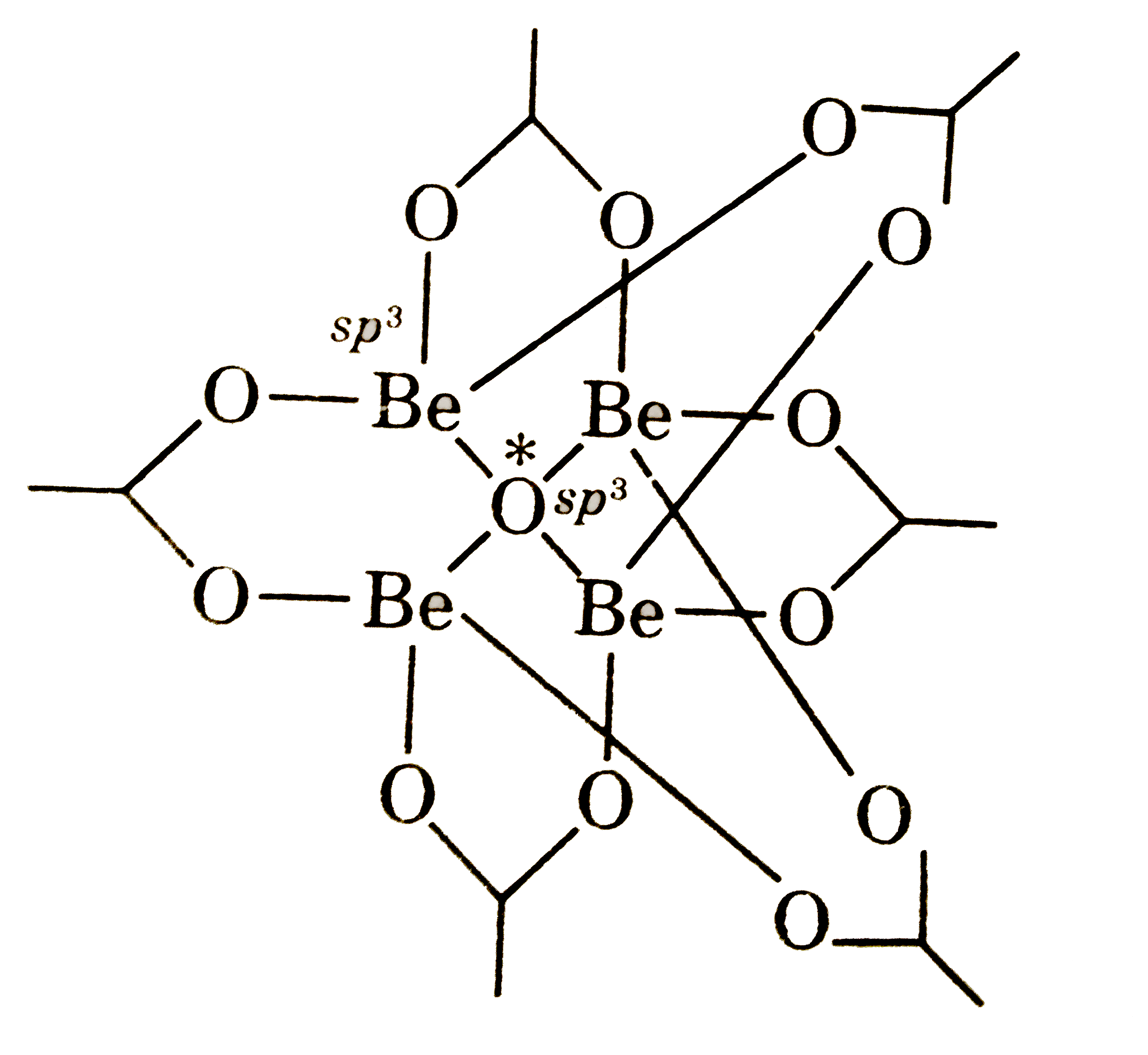
|
|
| 23. |
In the following reaction, three product a, b, c are obtained. H_(3)C-overset(CH_(3))overset("|")underset(CH_(3))underset("|")"C "-underset(OH)underset("|")"CH"-CH_(3)overset(H_(3)PO_(4)"/heat")rarr underset("(a)")(H_(3)-C-overset(CH_(2))overset("|")underset(CH_(3))underset("|")"C "-CH)=CH_(2)+ +H_(3)C-underset("(c)")(overset(CH_(2))overset("||")C-underset(CH_(2))underset("|")"CH"-CH_(3)) |
|
Answer» `(a) 33%, (B) 64%, (C) 3%` |
|
| 24. |
In the complex acetyl bromidodicarbonyl bis(triethyl phospine) iron (II), the numer of Fe-C bond (s) is |
|
Answer» <BR> Solution :The GIVEN complex is`[Fe(CH_(3)CO)(Br)(CO)_(2)(PEt_(3))_(2)]`. Its STRUCTURE is  Thus, it has two Fe-CO bonds and one `Fe larr overset(O)overset(||)(C )-CH_(3)` bond. Total number of Fe-C bonds = 3 |
|
| 25. |
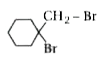
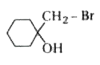
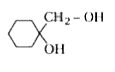
In the following reaction, The structure of the major product X is |
|
Answer»
|
|
| 26. |
In the complete combustion of butanol C_(4)H_(9)OH(l), if DeltaH is enthalpy of combustion and DeltaE is the heat of combustion at constant volume, then |
|
Answer» `DELTAH LT DeltaE` |
|
| 27. |
In the complete combustion of C_n H_(2n+2) the number of oxygen moles required is : |
|
Answer» `n/2O_2` |
|
| 28. |
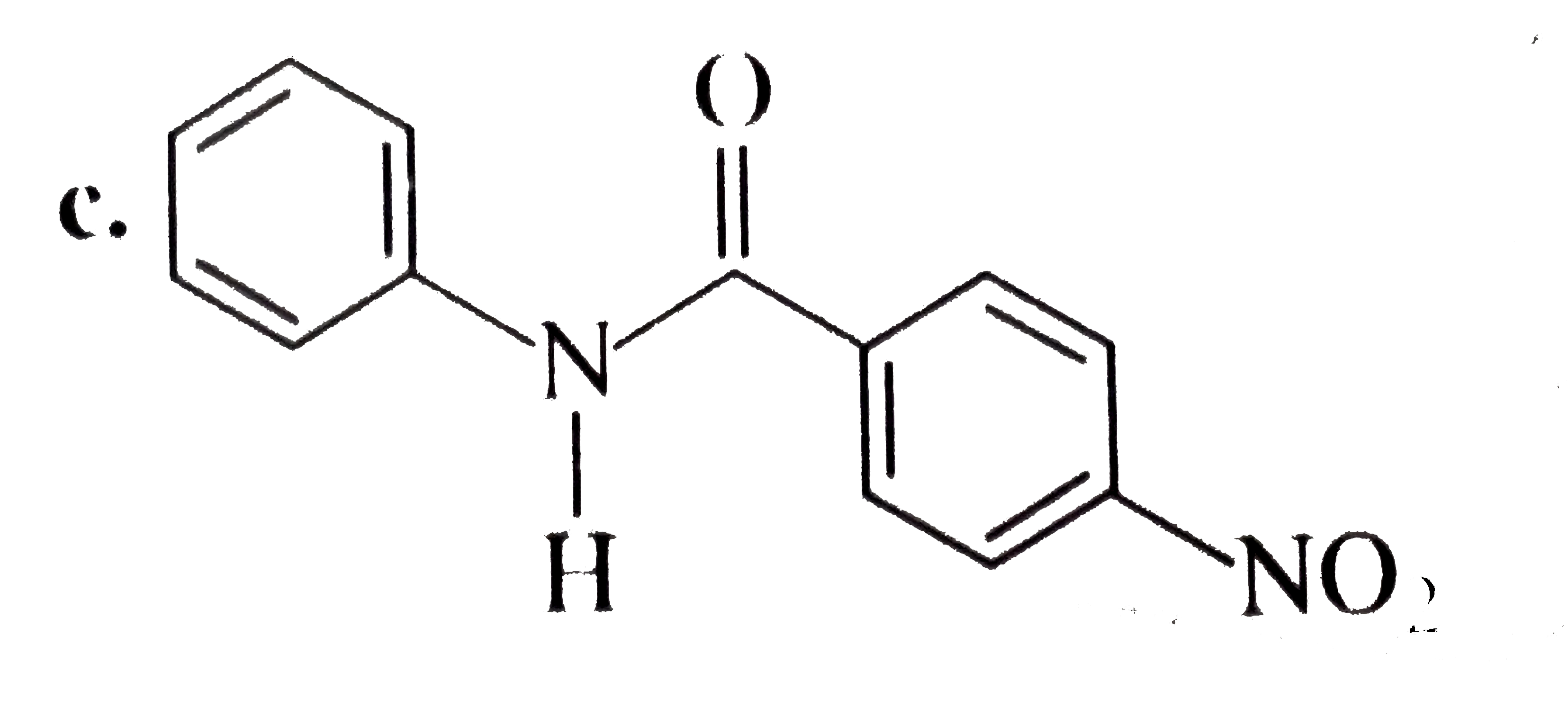
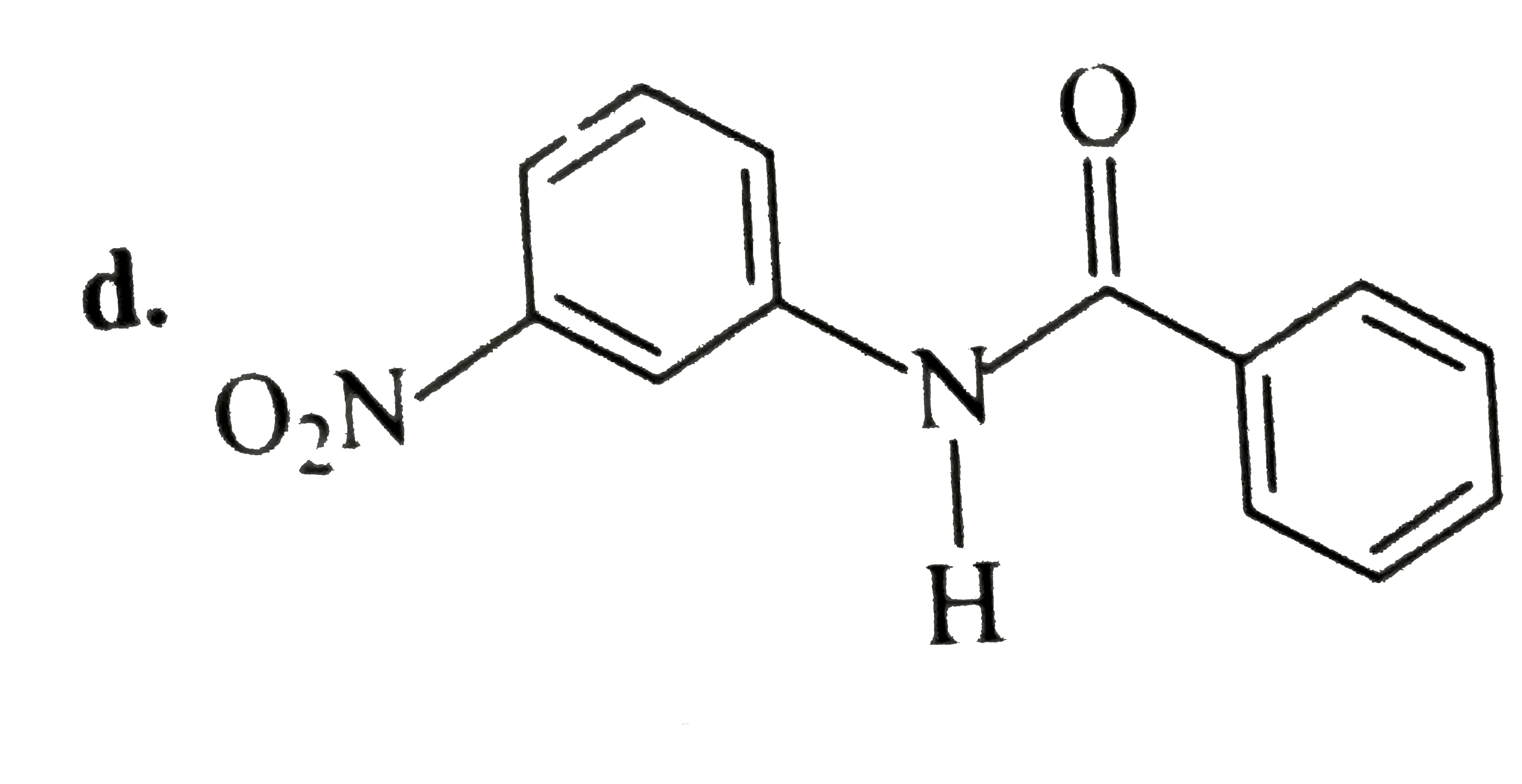
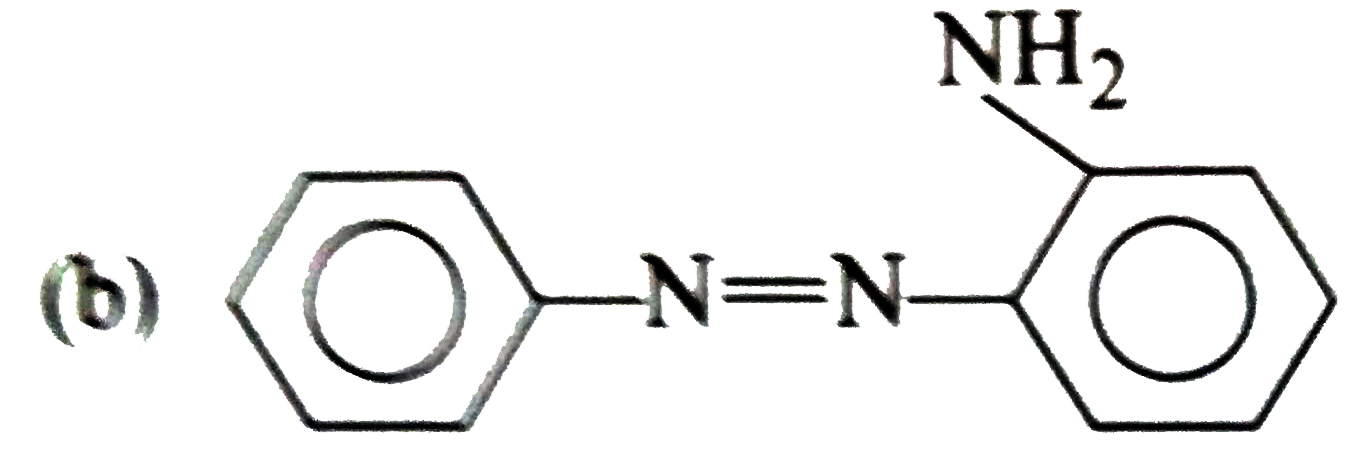
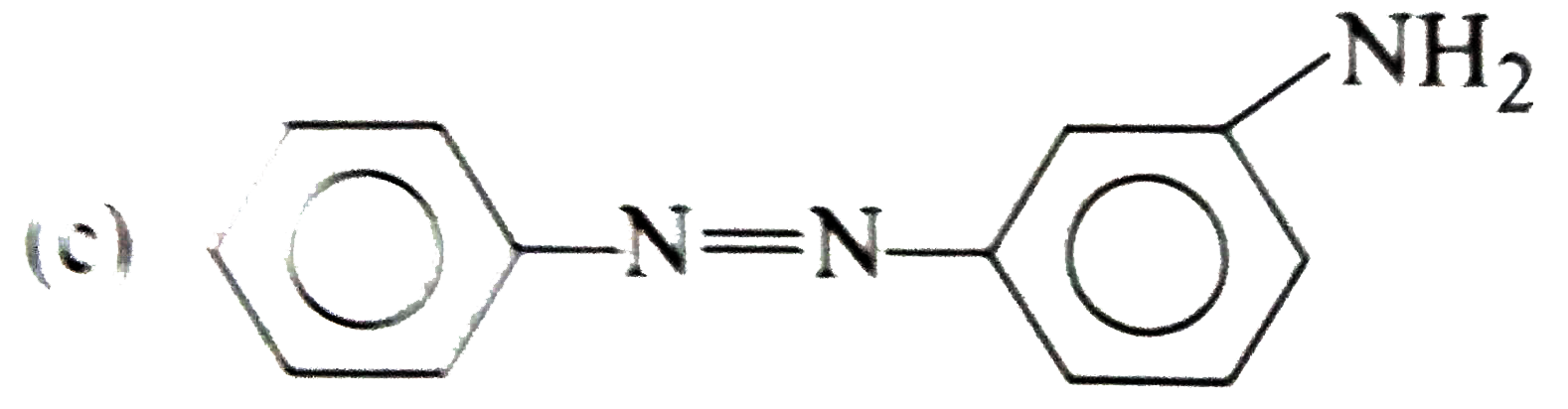
In the following reaction , . the structure of the major product (X ) is : |
|
Answer» ` (##KSV_CHM_ORG_P2_C15_E01_154_O01.png" width="30%"> 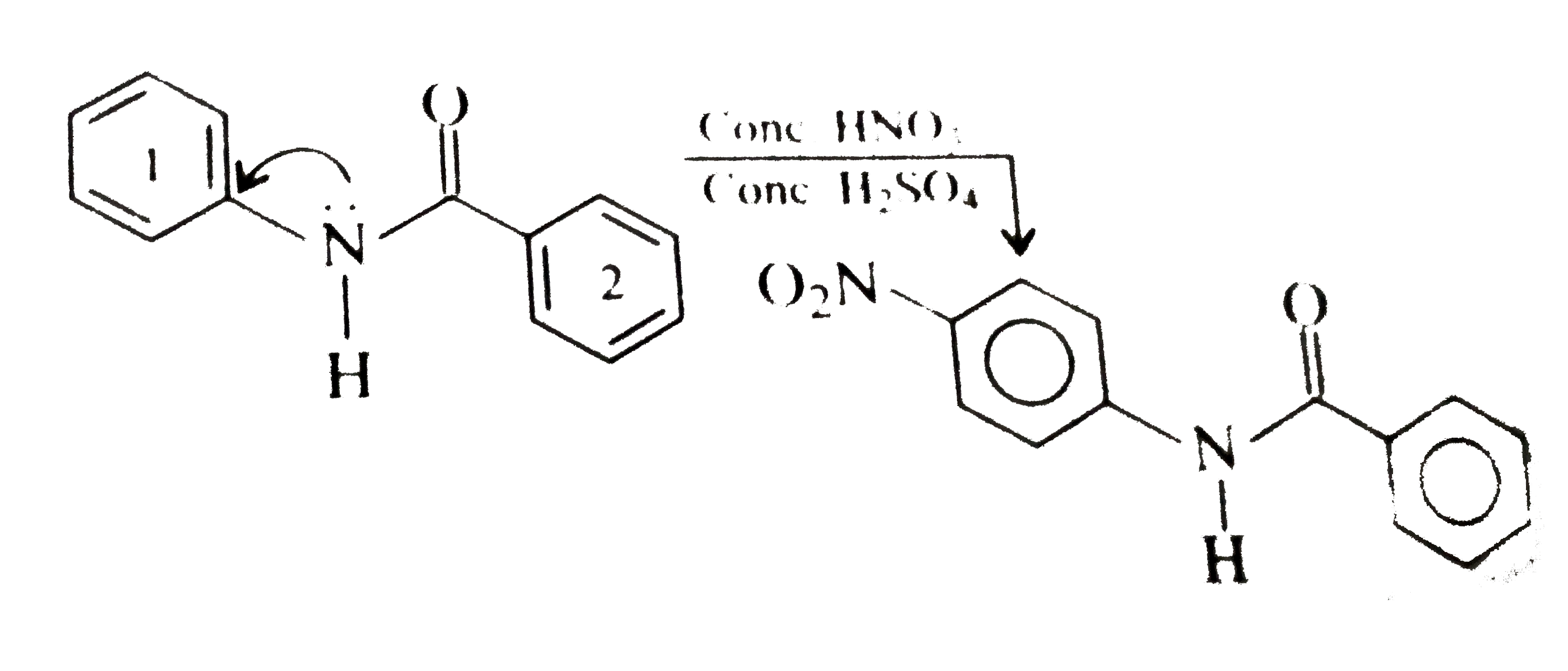 Ring `1` is more active , electrophilic subsititution TAKES place over ring 1. `-NH-UNDERSET(O)underset(||)(C)-Ph` is ortho-para directing , para-product is rpeduminating . |
|
| 29. |
In the commercial manufacture of nitric acid, howmany moles of NO_(2) produce 7.33 mol of HNO_(3) in the reaction : 3NO_(2)(g)+H_(2)O(l) rarr 2HNO_(3)(aq)+NO(g)? |
|
Answer» `NO_(2)=(3)/(2)xx7.33=10.995" moles."` |
|
| 30. |
In the following reaction, the product(s) formed is (are) : |
|
Answer» P(major)  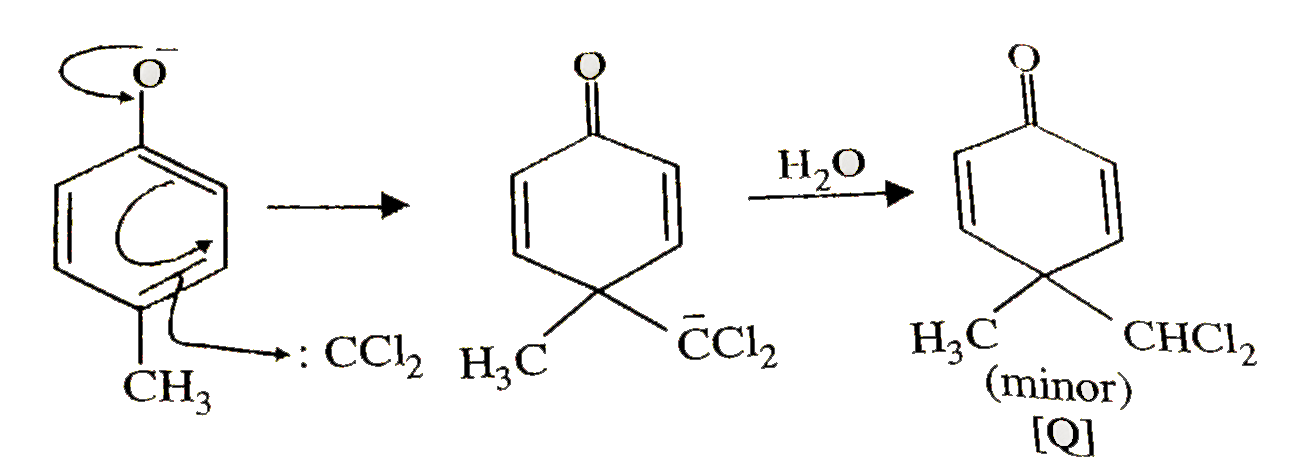
|
|
| 31. |
In the commercial manufacture of ethyl alcohol from starchy substances by fermentation method, which enzymes stepwise complete the fermentation reaction |
|
Answer» Diastase, MALTASE , and zymase `C_(12)H_(22)O_(11)+ H_(2)O underset("(from yeast)")overset("Maltase")to 2 underset("Glucose")(C_(6)H_(12)O_(6))` `C_(6)H_(12)O_(6)underset("(from yeast)")overset("Zymase")to 2C_(2)H_(5)OH + 2CO_(2)` |
|
| 32. |
In the following reaction, the product E is {:(,CHO),(,"|"),(,CHO):}underset(2.H^(+))overset(1.NaOH)toE |
|
Answer» `{:(,CH_(2)OH),(,"|"),(,CHO):}` |
|
| 33. |
In the commercial gasolines, the type of hydrocarbons which are more desirable is |
|
Answer» Branched hydrocarbon |
|
| 34. |
In the commercial electrochemical process for aluminium extraction the electrolyte used is |
|
Answer» `Al(OH)_(3)` in NaOH SOLUTION |
|
| 35. |
In the following reaction, the product 'R' is: CaC_(2) overset(H_(2)O)to P overset("hot iron")underset("tube")to Q overset(CH_(3)Cl)underset(AlCl_(3))toR |
|
Answer» Benzene 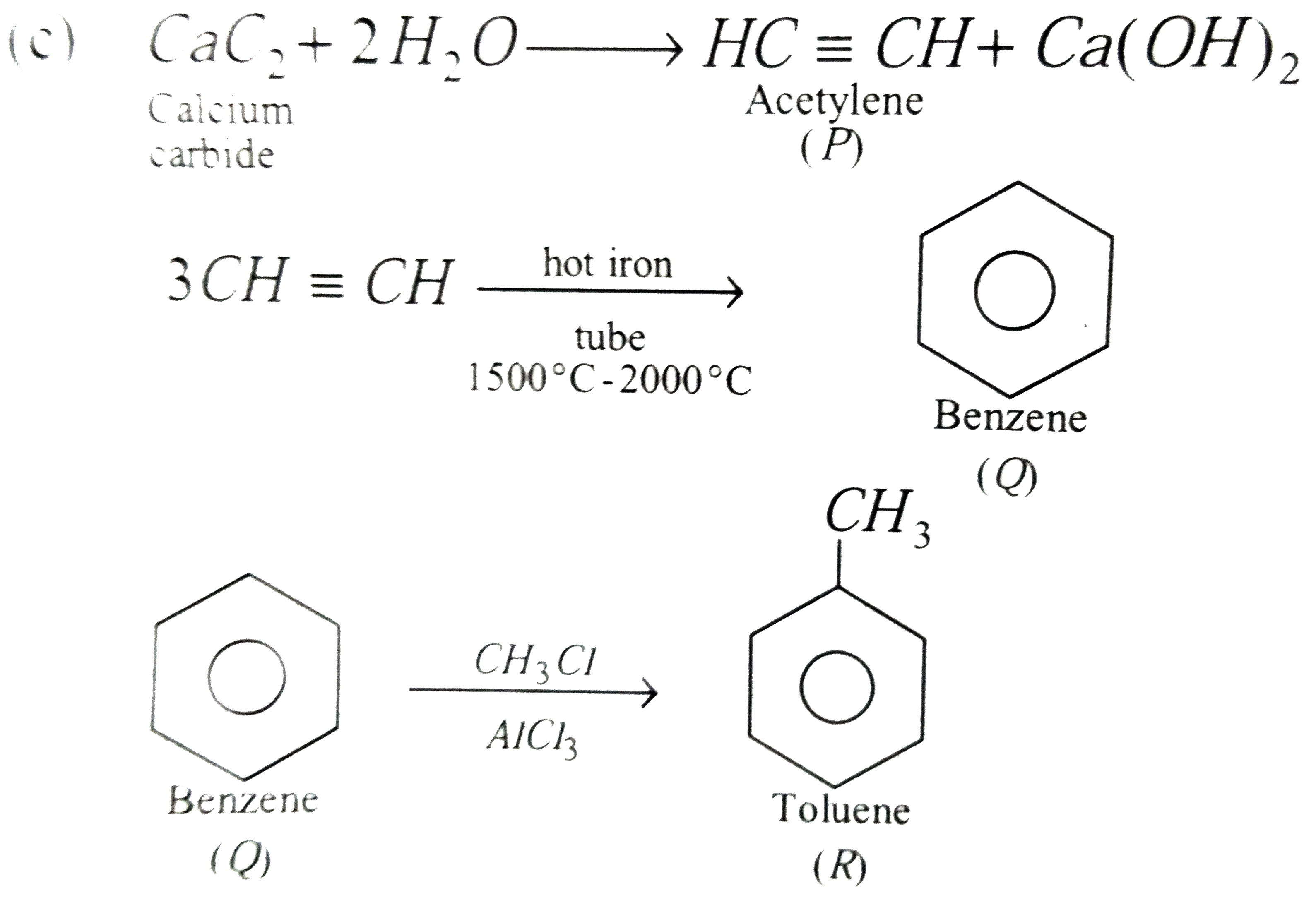
|
|
| 36. |
In the commercial electrochemical process for aluminium extraction, the electrolyte used as |
|
Answer» `AI(OH)_(3)` in NaOH solution |
|
| 37. |
In the following reaction, the product E is underset(CHO)overset(CHO)(|) underset(2. H^(+))overset(1. NaOH)to E |
|
Answer» `underset(CHO)overset(CH_(2)OH)(|)` 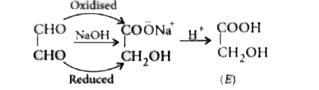
|
|
| 38. |
In the combustion of methane, what is the limiting reactant and why? |
| Answer» Solution :Methane is the LIMITING reactant because the other reactant is OXYGEN of the AIR which is always PRESENT in excess. Thus, the amounts of `CO_(2)` and `H_(2)O` formed will depend UPON the amount of `CH_(4)` burnt. | |
| 39. |
In the following reaction, the product (A) |
|
Answer»
|
|
| 40. |
In the colloidal state the particle size ranges |
|
Answer» below 1 nm |
|
| 41. |
In the following reaction The organic product X is |
|
Answer»

|
|
| 42. |
In the following reaction, the number of substituted alcohols is: . |
Answer» Solution : The reaction proceeds by `S_(N^(1))` mechanism and the three CARBOCATION intermediates are possible in the SLOW step. Therefore, three substituted alcohols are FORMED. |
|
| 43. |
In the combustion of hydrocarbons, triangleH is: |
|
Answer» Negative |
|
| 44. |
In the combustion of 2.0 gm of methane 25 kcal heat is liberated, heat of combustion of methane would be |
|
Answer» 100 kcal Molecular weight of `CH_(4)=12+4=16` `therefore` On the COMBUSTION of 2.0 gm of methane = 25.0 kcal `therefore` On the combustion of 16.0 gm = `(25xx16)/(2)` = 200 kcal. |
|
| 45. |
In the following reaction, the major product (thermodynamically stable) is |
|
Answer» `BrCH_2CH(CH_3)CH = CH_2`<BR>`CH_3C(Br)(CH_3)CH= CH_2` |
|
| 46. |
In the following reaction , the initial concentration of the reactant and initial rate at 298 K are given 2 A to C + D {:([A]_(0) "mol" L^(-1) ,, "Initial rate in mol" L^(-1) s^(-1)), (0.01 ,, 5. 0 xx 10^(-5)), (0.02 ,, 2xx 10^(-4)):} The value of rate constant of this reaction at 298 K is |
|
Answer» `0.01 s^(-1)` RATE = k `[A]^(alpha)` `5 xx 10^(-5) = k[0.01]^(alpha) "" … (i)` `2 xx 10^(-4) = k[0.02]^(alpha) ""… (ii)` By dividing eqn. (ii) by (i) , `(2xx 10^(-4))/(5 xx 10^(-5)) = (k[0.02]^(alpha))/(k[0.01]^(alpha))implies 4 (2)^(alpha)` i.e., `alpha = 2` Substituting the values of `alpha` in eq. (i) , `5 xx 10^(-5) = k[0.1]^(2) implies k = (5 xx 10^(-5))/(10^(-4)) = 5 xx 10^(-1) mol^(-1) L s^(-1)` |
|
| 47. |
In the coagulation of a positive sol, flocculation powers of CI^- , SO_4^(-2)and PO_4^(-3)are in the order |
|
Answer» `CL^(-) gt SO_4^(-2) gt PO_4^(-3)` |
|
| 48. |
In the following reaction, the major product formed will be …… CH_(3)-overset(CH_(3))overset("|")underset("Cl ")underset("|")("C ")-CH=CH_(2)+KSH overset(DMSO)rarr (P) |
|
Answer» `CH_(3)-overset(CH_(3))overset("|")underset("SH ")underset("|")("C ")-CH=CH_(2)` 
|
|
| 49. |
In the coagulating of a positive sol, flocculation powers of Cl^(-), SO_(4)^(-2) and PO_(4)^(-3) are in the order |
|
Answer» `ClgtSO_(4)^(-2)gtPO_(4)^(-3)` |
|