

Saved Bookmarks
This section includes 7 InterviewSolutions, each offering curated multiple-choice questions to sharpen your Current Affairs knowledge and support exam preparation. Choose a topic below to get started.
| 1. |
In the following questions, a statement of assertion (A) is followed by a statement of reason (R ) A : LiCl is more covalent than BeCl_(2) R : Li^(*) ion is smaller than Be^(2+) . |
|
Answer» If both ASSERTION & REASON are TRUE and the reason is the CORRECT explanation of the assertion, then MARK (1) |
|
| 2. |
In the following questions, a statement of assertion (A) is followed by a statement of reason (R ) A : Lattice energy ofCaO is higher than LiCl. R : Lattice energy of ionic compound is directly prportional to the product of charges of ion. |
|
Answer» If both Assertion & Reason are TRUE and the reason is the CORRECT explanation of the assertion, then MARK (1) |
|
| 3. |
In the following questions, a statement of assertion (A) is followed by a statement of reason (R ) A : Equal number of sigma and pi bonds are present in ethyne. pi Bond is stronger than sigma bond. |
|
Answer» If both ASSERTION & Reason are TRUE and the reason is the correct explanation of the assertion, then mark (1) |
|
| 4. |
In the Arrhenius for a certain reaction, the value of A and E_(a) (activation energy) are 4 xx 10^(13) sec^(-1) and 98.6 "kJ mol"^(-1), respectively. If the reaction is of first order, the temperature at which its half-life period is 10 minutes is |
|
Answer» `280 K` We know that `k = (2.303)/(t) "LOG"((a)/(a-x))` `(t_(1//2)=10xx60 SEC)=1.1558xx10^(-3)` According to ARREHENIUS equation, `log k = log A - (Ea)/(2.303 RT)` Substituting the various values in the above equation `log 1.155 xx 10^(-3) = log 4 xx 10^(13) - (98.6)/(2.303 xx 8.314 xx 10^(-3) xx T)` On usual calculation, `T = 311.35 K` |
|
| 5. |
In the arrhenius equation, what does the factor e^(-E_(a)//RT) correspond to ? |
| Answer» Solution :The quantity `e^(-E_(a)//RT)` CORRESPONDS to the fraction of MOLECULES that have KINETIC energy greater than `E_(a)`. | |
| 6. |
In the Arrhenius equation equation,the Boltzmann factor e^(Ea//RT) represents the…………..of the molecules possessing energ in excess of activation energy |
|
Answer» number |
|
| 7. |
In the arrangement given below 20 mole of N_(2) and 5 mole of He are present above water. The total pressure above the water is 60 atm. If K_(H) of N_(2) is 10^(5) atm. How many moles of N_(2) are dissolved in water? give your answer after multiplying by 10^(3) The vapour pressure of water is 10 atm. |
|
Answer» |
|
| 8. |
In the Arrhenius equation , K=Ae^(-Ea//RT), Arrheniuns constant |
|
Answer» `E_(a)=0` |
|
| 9. |
In the Arrhenius equation k=A e^(-E_a//RT), A may be termed as rate constant at …………. . |
| Answer» SOLUTION :INFINITE TEMPERATURE. | |
| 10. |
In the anion RCOO^(-), the two carbon -oxygen bonds are found to be of equal length. What is the reason for it? |
|
Answer» The anion is obtained by removal of a proton from the ACID molecule. 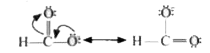
|
|
| 11. |
In the analysis of basic radicals, the group reagent H_(2)S gas is generally used in the groups |
|
Answer» I and II groups |
|
| 12. |
In the analysis of basic radicals, NH_(4)OH and NH_(4)Cl give precipitate with |
|
Answer» I-group radicals |
|
| 13. |
In theanalysis of a 0 .50 -gsample of feldspar, mixture, of thechlorides ofNa and Kis obtained, whichweight 0.1180 g . Subsequenttreatmentof themixedchlorides. with silver nitrate gives 0.2451 g of AgCl . Whatis the percentage of sodiumoxideand potassiumoxide in feldspar ? |
|
Answer» SOLUTION :Suppose the weight of NaCl is x g `{:(Na_(2)O + K_(2) O overset("Step I") to NaCl + KCI underset(AgNO_(3))overset("Stet II")to AgCl),("(in feldspar)x g (0.1180 - x)0.2451 g "):}` Applying POAC for Clatoms in Step IIto calculate x, molesof Cl in NaCl + moles of Cl in KCI = moles of Cl in AgCl ` 1 xx` moles of NaCl ` + 1 xx ` molesof KCl` = 1 xx ` moles of AgCl `(x)/( 58 . 5) + (0.1180)/( 84.5) = (0.2451)/( 143.5) , x = 0.0345 g` (NaCl = 58.5, KCI = 74. 5 and Ag Cl = 143 . 5 ) `:.` wt. of NaCl = 0.0343 g, wt. of KCI = 0.0837 g. Again, applying POAC for Naand Katoms to CALCULATETHE weight of `Na_(2)O and K_(2)O`respectively , we GET, `2 xx ` moles of `Na_(2) O` = moles ofNaCl and` 2 xx` moles of `K_(2)O` = molesof KCI `:. "wt. of " Na_(2) O = (1)/(2)xx ("wt. of Na Cl")/("mol. wt. of NaCl") xx "mol. wt. of " Na_(2) O ` and wt. of `K_(2) O = (1)/(2) xx ("wt. of KCI")/( "mol . wt. of KCI") xx "mol. wt. of " K_(2)O` `:. ` wt. of ` Na_(2) O = (1)/(2) xx (0.0343)/( 58.5) xx 62 = 0.018 g ` and wt. of `K_(2) O = (1)/(2) xx (0.0837)/( 74.5) xx 94 = 0.053 g` `:. % of Na_(2) O = (0.018)/(0.50) xx 100 = 3 . 6 %` and `% of K_(2) O = (0.053)/( 0.50) xx 100 = 10 . 6% ` |
|
| 14. |
In thealuminothermiteprocess,aluminium actsas |
|
Answer» an oxidising AGENT |
|
| 15. |
In the aluminothermic process, aluminum acts as |
|
Answer» a REDUCING AGENT |
|
| 16. |
In the aluminothermic process |
|
Answer» `Al_2O_3 " is reduced by " CR` |
|
| 17. |
In the aluminium thermite process, aluminium acts as |
| Answer» Answer :D | |
| 18. |
In the aluminothermic process, aluminium acts as: |
| Answer» Answer :A | |
| 20. |
In the alpha-halogenation of aliphatic acid (HVZ reaction ) the catalyst used is: |
|
Answer» |
|
| 21. |
In the Alksline earth metals, the element forming predominantly covalent compound is |
|
Answer» Be |
|
| 22. |
In the adsorption of oxalic acid by activated charcoal, the activated charcoal is known as: |
|
Answer» ADSORBENT |
|
| 23. |
In the adsorption of oxalic acid by activated charcoal, the activated charcoal is known as : |
|
Answer» Adsorbent |
|
| 24. |
In the adsorption of a gas on solid, Freundlich isotherm is obeyed. The slope of the plot is zero. The extent of adsorption is |
|
Answer» <P>DIRECTLY proportional to the pressure of the gas ln `(x)/(m ) K + (1)/(n) ln p` Slope `= 1/n =0` Thus, `x/m = kp ^(0)` |
|
| 25. |
In the addition of HBr to propene in the absence of peroxides the first step involves the addition of : |
| Answer» Answer :D | |
| 26. |
In the acidic medium MnO_(4)^(-) acts as an oixidising agent. MnO_(4) + 8H^(+) + 5e^(-) to Mn^(2+) + 4H_(2)O If the [H^(+)] is reduced to half of its original value, the electrode potential of the half cell MnO_(4), Mn^(2+) |Pt (log 2=0.3010) |
|
Answer» INCREASES by 14.23 MV |
|
| 27. |
In the addition of HBr to propene in the absence of peroxides, the first step involves the addition of: |
|
Answer» `H^(+)`<BR>`Br^(-)` |
|
| 28. |
In the addition of HBr to propene in the absence of peroxides, the first step involves the addition of |
|
Answer» `H^(+)` |
|
| 29. |
In the acid base titration [H_3PO_4(0.1 M)+NaOH(0.1 M)] e.m.f of the solution is measured by coupling this electrodes with suitable reference electrode.When alkali is added pH of solution is in acoodance with equation E_(Cell)=E_(Cell)^(@)+0.059 pH For H_3PO_(4) Ka_(1)=10^(-3) , Ka_(2)=10^(-8), Ka_(3)=10^(-13) What is the cell e.m.f at the lind end point of the titration if E_(cell)^(@) at this stage is 1.3805 V. |
|
Answer» `E_(CELL)=E_(cell)^@+0.059 pH=1.3805+0.059xx10.5=2V` |
|
| 30. |
In the acid - base reaction,HCl + CH_(3)COOH hArr Cl^(-)+CH_(3)COOH_(2)^(+)the conjugate acid of acetic acid is |
| Answer» Answer :A | |
| 31. |
In the acid hydrolysis of an ester what is the time taken for complete hydrolysis ? |
| Answer» Answer :A | |
| 32. |
In the acetylation of glucose, which group is involved in the reaction |
|
Answer» CHO group |
|
| 33. |
In the above transaformation 'X' could be |
|
Answer» `NaBH_(4)|C_(2)H_(5)OH|H_(3)O^(+)` |
|
| 34. |
In the above set of redox reactions, where MnO_(4)^(-1)is the only oxidising agent, order of the required molar quantities of the reducing agents is : |
|
Answer» `n_(1) LT n_(2) lt n_(3)` `{:(n_(f),FeSO_(4),Na_(2)C_(2)O_(4),FeC_(2)O_(4)),(,1,2,3):}` `therefore` ORDER : `n_(2) lt n_(1) lt n_(3)` |
|
| 35. |
In the above sequence Y is: |
|
Answer»

|
|
| 36. |
In the above sequence X is |
|
Answer» nitrochloromethane |
|
| 38. |
In the above sequence, II is |
|
Answer» `BETA`-ALANINE |
|
| 39. |
In the above sequence, II is : |
|
Answer» `BETA`-ALANINE 
|
|
| 40. |
In the above reaction the major product is shown, which is formed through the intermediate (carbocation given below:Which bond will migrate to form above product ? |
|
Answer» <P>p |
|
| 41. |
In the above reaction sequence X & Y are. |
|
Answer» Identical |
|
| 42. |
In the above reaction sequence, A , B and C respectively are |
|
Answer» BENZENE, NITROBENZENE, aniline |
|
| 43. |
In the above reaction (in Q.99) Na_(2)S_(2)O_(4) acts as a |
|
Answer» 2 ELECTRON REDUCING agent |
|
| 44. |
In the above question, the order w.r.t. B is: |
|
Answer» Solution :d) In the second experiment, Rate `propto [A]^(x)[B]^(y)` `8 propto [2]^(3)[2]^(y)` y=0. ORDER w.r.t.B is zero. |
|
| 45. |
In the above question, solution is opticaly inactive when : |
|
Answer» `r_(t)=a` |
|
| 46. |
In the above question, the velocity acquired by the electron will be: |
|
Answer» `SQRT(V/m` |
|
| 47. |
In the above question if cone, of the reactant is less than 1 M, then |
|
Answer» `r_1=r_2=r_3` |
|
| 48. |
In the above question |
|
Answer» All CL atoms show PRIMARY valencies |
|
| 49. |
In the above problem if concentration of reactant is less than 1 M then: |
|
Answer» `r_(1)=r_(2)=r_(3)` `r_(1) gt r_(2) gt r_(3)` |
|
| 50. |
In the above problem if concentration of reactant is 1 M then: |
|
Answer» `r_2=r_2=r_3` |
|


