Saved Bookmarks
This section includes 7 InterviewSolutions, each offering curated multiple-choice questions to sharpen your Current Affairs knowledge and support exam preparation. Choose a topic below to get started.
| 1. |
In a solid atom M occupies ccp lattice and ((1)/(3)) of tetrahedral voids are occupied by atom N, find the formula of solid formed by M and N . |
|
Answer» `MN` Given that `((1)/(3))RD` of tetrahedral voids are OCCUPIED i.e., `((1)/(3))xx2n` are occupied by N atom. `therefore M:N rArr M_(3)N_(2)` |
|
| 2. |
In a solid AB of NaCl structure, A atoms occupy the corners of the cubic unit cell. If all the corner atoms are removed then the formula of the unit cell will be: |
| Answer» ANSWER :C | |
| 3. |
In a solid AB having the NaCl structure, A atom occupies the corners of the cubic unit cell. If all the face-centred atoms along one of the axes are removed, then the resultant stoichiometry of the solid is |
|
Answer» `AB_(2)` |
|
| 4. |
In a solid AB having the NaCZ structure. ‘A’ atoms occupy the corners of the cubic unit cell. If all the edge-centred atoms along one of the axes are removed, then the resultant stoichiometry of the solid is |
|
Answer» `AB_2` |
|
| 5. |
In a solid (AB) having rock salt type structure all the atoms along body diagonal plane are removed the formula of the remaining unit cell will be |
| Answer» SOLUTION :`PH-OVERSET(O)overset(||)(C)-CH_(2)-PH`does not give `(+)` ve Halform Test. | |
| 6. |
In a solid 'AB' having NaCl structure, 'A' atoms occupy the corners of the cubic unit cell. If all the face-centred atoms along one of the axes are removed,then the resultant stiochiometry of the solid is |
|
Answer» `AB_(2)` No. of atoms (A) on the face centres = 6 Removing face centred atoms along one of the axes means removal of 2A atoms so that No. of A atoms per UNIT cell `= 8 xx ( 1)/( 8 ) + 4 xx ( 1)/( 2) = 3 ` No. of B atoms per unit cell in NACL type structure=4. Formula = `A_(3) B_(4)` |
|
| 7. |
In a sodium chloride crystal, each chloride ion is surrounded by |
| Answer» Solution :6 sodium ions | |
| 8. |
In a sodium chloride crystal, each chloride ion is surrounded by: |
| Answer» Answer :A | |
| 9. |
IN a sodium chloride crystal, each chloride ion is surrounded by : |
| Answer» Answer :A | |
| 10. |
In a S_(N)2 substitution reaction of the type R-Br+Cl^(-) overset(DMF)to R-Cl+Br^(-) which one of the following has thehighest relative rate? |
|
Answer» `CH_(3)-underset(CH_(3))underset(|)OVERSET(CH_(3))overset(|)(C)-CH_(2)Br` |
|
| 11. |
In a simple Galvanic cell , which is in standard state, half cell reactions with their appropriate oxidation potentials are {:(Pb (s) - 2e^(-) to Pb^(2+) (aq) E^(@) = +0.13 "volt") , (Ag (s) - e^(-) to Ag^(2+) (aq) E^(@) = - 0.80 "volt"):} Which of the following reaction takes place ? |
|
Answer» `PB^(2+) (AQ.) + 2 Ag (s) to 2 Ag^(+) (aq.) + Pb (s)` |
|
| 12. |
In a S_(N)2 substitution reaction of the type R-Br+Cl^(-)overset(DMF)rarr R-Cl+Br^(-)which one of the following has the highest relative rate ? |
|
Answer» `CH_(3)-CH_(2)-CH_(2)Br` |
|
| 13. |
In a single isolated atomof hydrogen electron make transition from4^(th)excited state to grond state producingmaximumpossible number of wavelengthsif the 2^(nd)lowest energy of theselinesis used to further excite an already excitedsample of Li^(2+)ion then transition will be |
|
Answer» `12rarr 15` |
|
| 14. |
In a S_(N)^(1) reaction on chiral centres, there is |
|
Answer» 100% RETENTION |
|
| 15. |
In a simple cubic crystal, the corner atom touches |
|
Answer» 3 other atoms |
|
| 16. |
In a simple cubic crystal, each atom is shared by |
| Answer» Answer :D | |
| 17. |
In a simple cubic cell, the number of atoms present : |
|
Answer» 4 |
|
| 18. |
In a simple cubic cell, each atom on a corner is shared by: |
|
Answer» 2 UNIT cells |
|
| 19. |
In a set of the given reactions, acetic acid yielded a product iC. CH_(3)COOH+PCl_(5) to A overset(C_(6)H_(6))underset(Anh. AlCl_(3))toB overset(C_(2)H_(5)MgBr)underset("ether")toC Product C would be |
|
Answer» `CH_(3)CH(OH)C_(2)H_(5)` |
|
| 20. |
In a set of reactions, propionic acid yielded a compound D underset((A))(CH_(3)CH_(2)COOH) overset(SOCl_(2))(rarr) B overset(NH_(3))(rarr) C overset(Br_(2)//KOH)(rarr) D The structure of D would be |
|
Answer» `CH_(3)CH_(2)NH_(2)`<BR>`CH_(3)CH_(2)CH_(2)NH_(2)` |
|
| 21. |
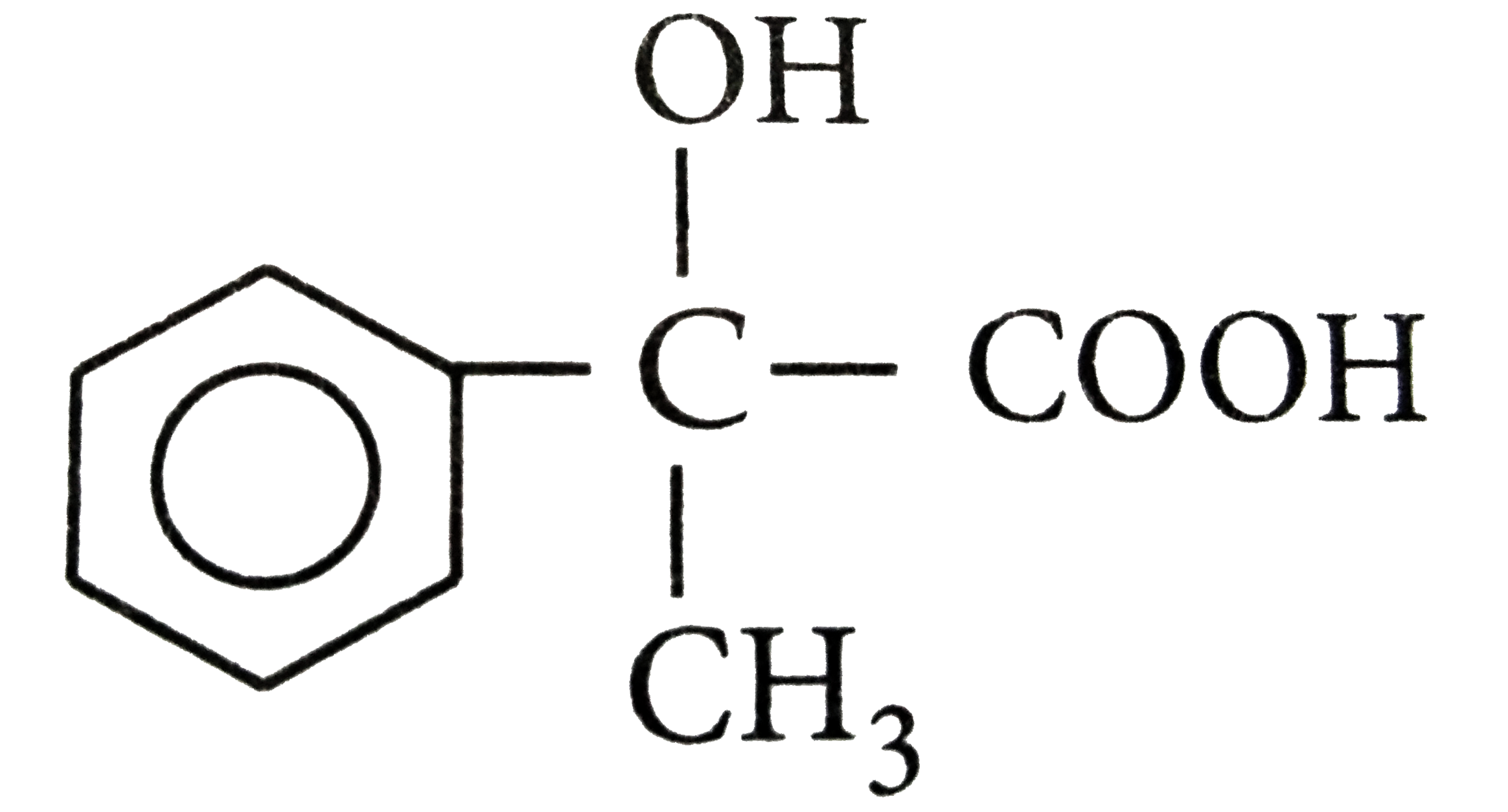
In a set of the given reactions, acetic acid yielded a product C. CH_3COOH + PCl_5 to A underset(Anh. AlCl_3)overset(C_6H_6)to B underset"Ether " overset(C_2H_5MgBr)to C Product C would be |
|
Answer» `CH_3-overset(C_2H_5)overset|C(OH)C_6H_5` 
|
|
| 22. |
In a set of reactions propionic acid yielded compound D, CH_(3)CH_(2)COOHoverset(SOCl_(2))toBoverset(NH_(3))toCunderset(Br_(2))overset(KOH)toDThe structure of D would be : |
|
Answer» `CH_(3)CONH_(2)` |
|
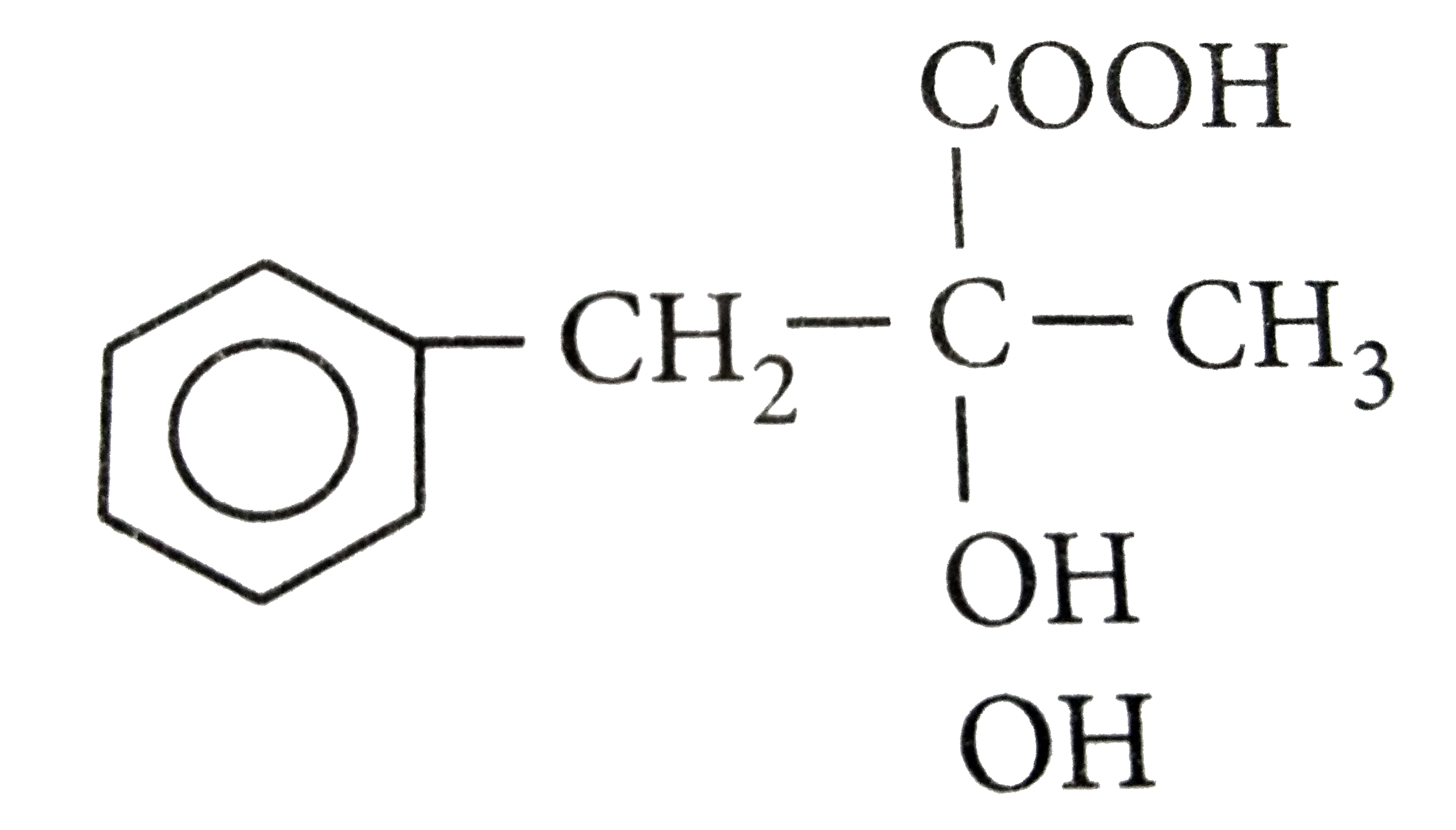
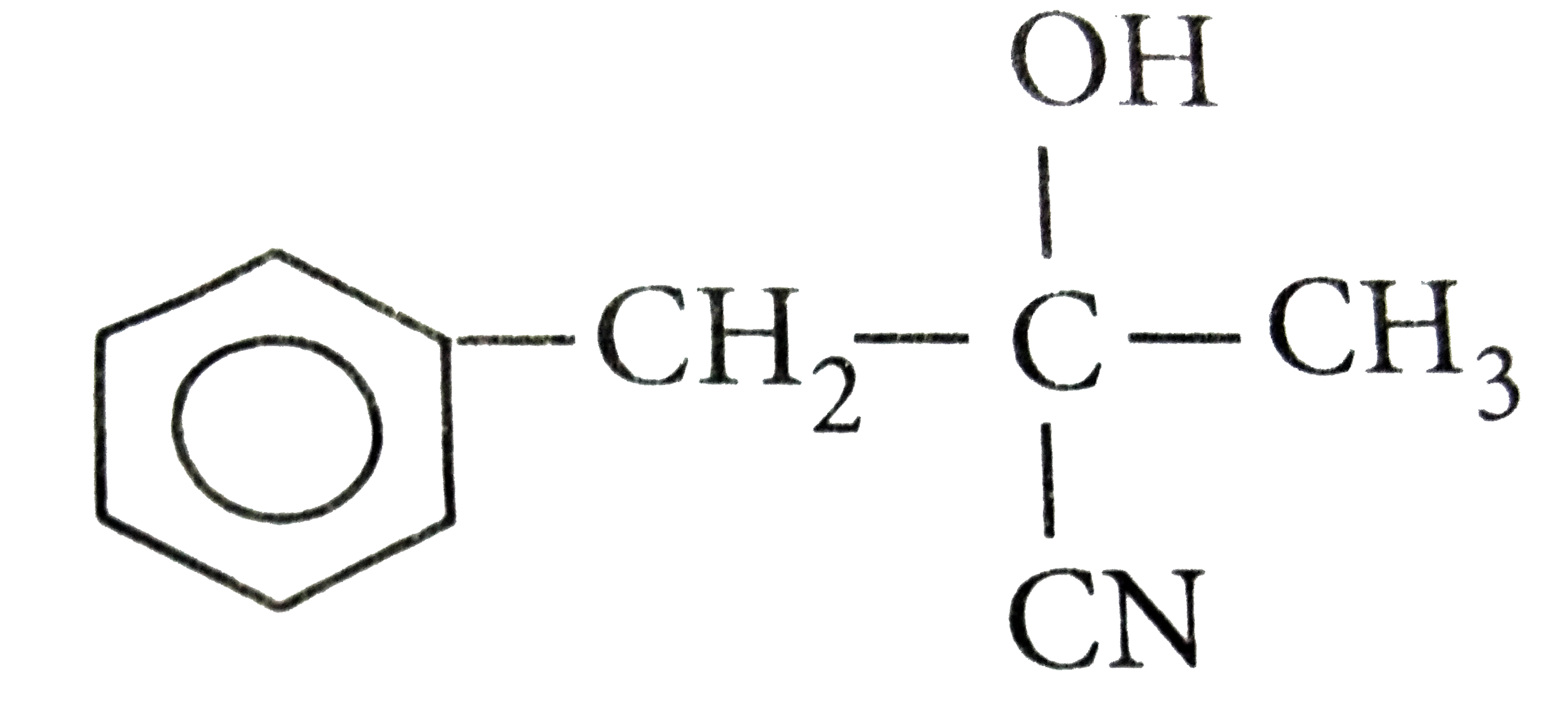
| 23. |
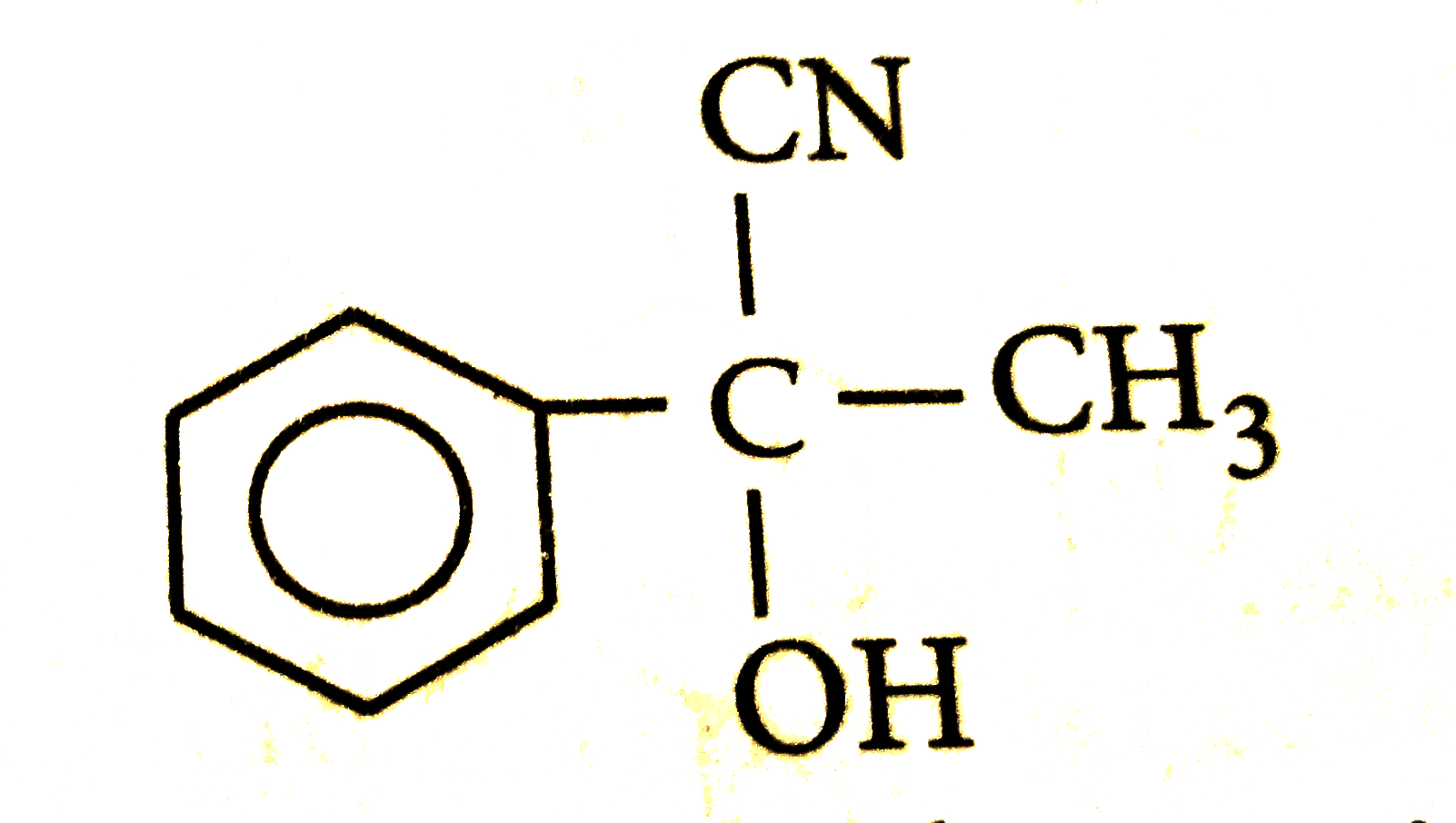
In a set of reactions acetic acid yields a product [D] The structures of [D] would be: CH_(3)COOHoverset(SOCl_(2))to[A]overset(C_(6)H_(5))underset(Anhy. AlCl_(3))to[B] overset(HCN)to[C]overset(HOH)to[D] |
|
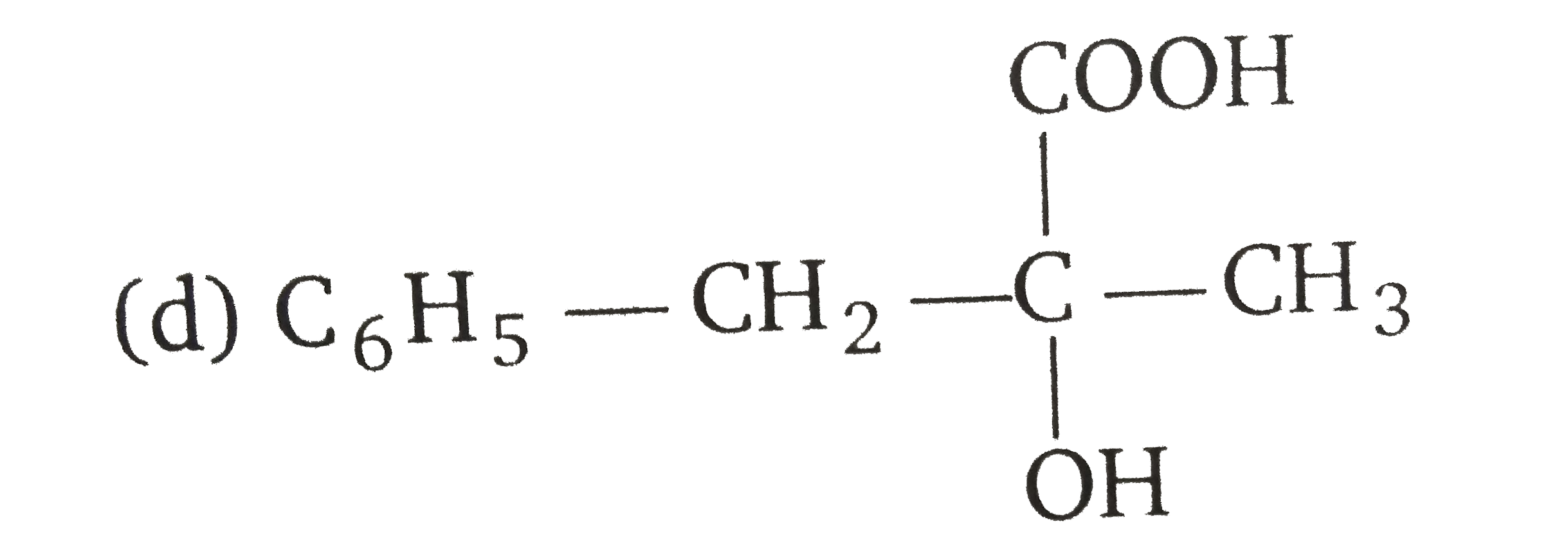
Answer» `C_(6)H_(5)CH_(2)-overset(OH)overset(|)UNDERSET(CN)underset(|)(C)-CH_(3)` 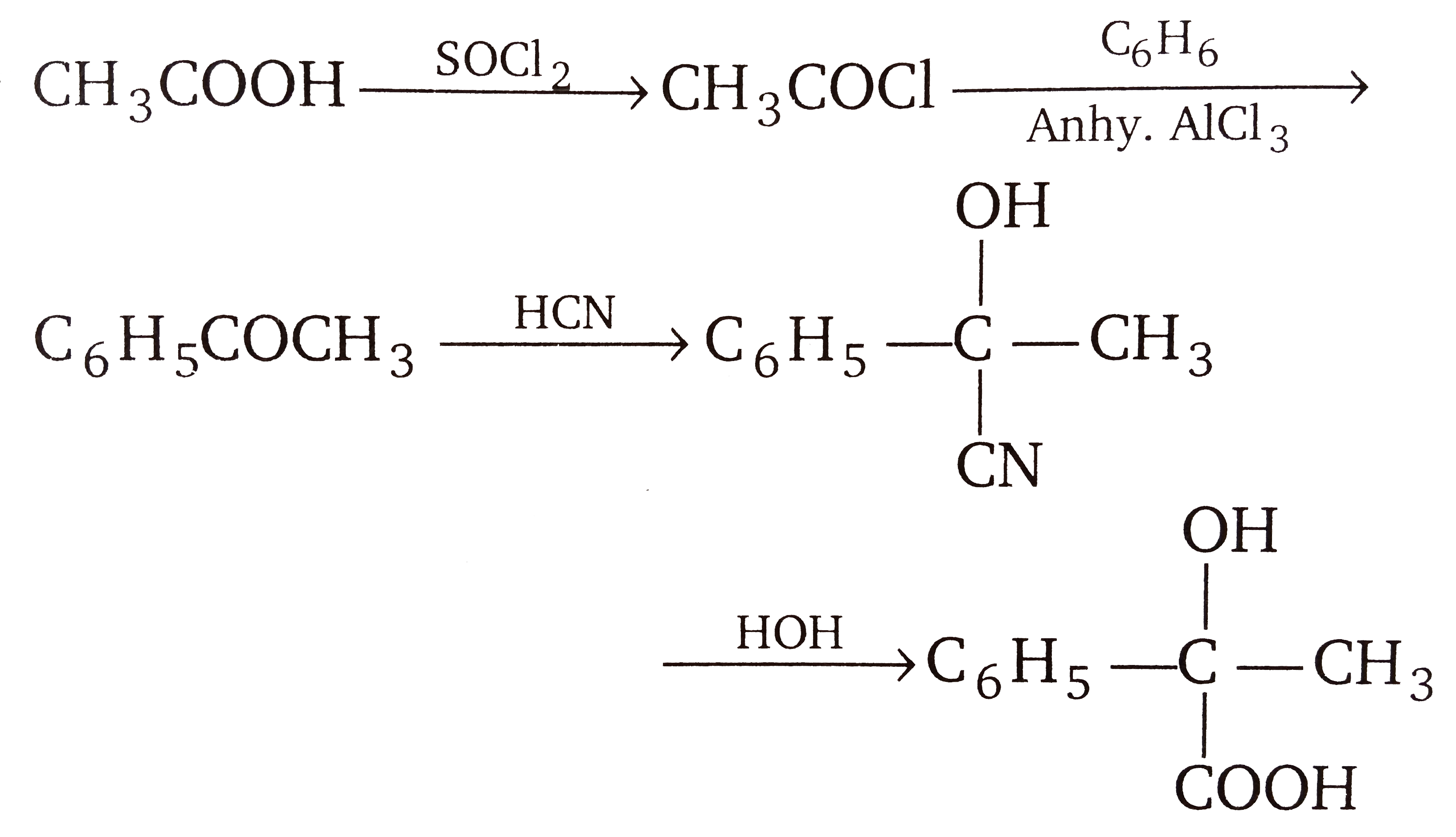
|
|
| 24. |
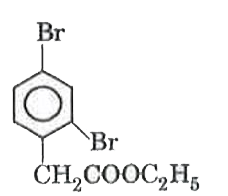
In a set of reactions, ethyl benzene yielded a product D. 'D' would be : |
|
Answer»
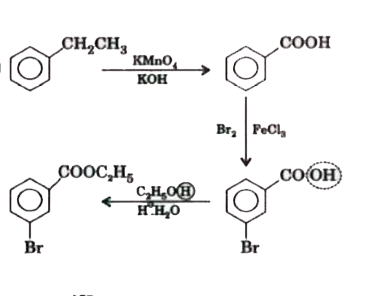
|
|
| 25. |
In a set of reactions p- nitrotoluene yielded a produce E The product E would be |
|
Answer»

|
|
| 26. |
In a set of reactions, ethyl benzene yielded a product D. 'D' would be : |
|
Answer»

|
|
| 27. |
In a set of degenerate orbitals, the electrons distribute themselves to retain like spins as far as possible. The statement is attributed to |
|
Answer» PAULI EXCLUSION principle |
|
| 28. |
In a set of reaction, m bromobenzoic acid gave a product D. Identify the product D. |
|
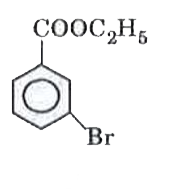
Answer»

|
|
| 29. |
In a set of reaction, ethyl benzene yielded a product D. The product D would be |
|
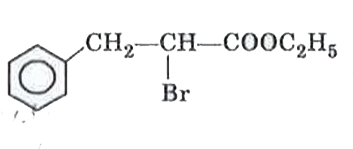
Answer»
 . .
|
|
| 30. |
In a set of reactions, acetic acid yielded a product D. The structure of D would be : |
|
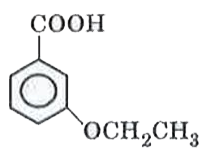
Answer»
|
|
| 31. |
in aset of degenerate orbitals the electrons distribute themselves to retailsimilar spins as far as possible. This statement is attributed to |
|
Answer» PAULI's EXCLUSION principle |
|
| 32. |
In a secondary cell , |
|
Answer» the electrical energy obtained is first hand |
|
| 33. |
In a second order reaction, if one of the concentration is excess, the order of the reaction is ________ order reaction. |
| Answer» ANSWER :B | |
| 34. |
In a saturated solution of the sparingly soluble strong electrolyte AglO_(3) (s) hArr Ag^(+)(aq)+IO_(3)^(-)(aq). If the solubility product constant K_(sp) " of " AgIO_(3) at a given temperature is 1.0xx10^(-8), what is the mass of AgIO_(3) contained in 100 ml of its saturated solution ? |
|
Answer» `1.0xx10^(-4)G` `AgIO_(3) hArr underset(s)(Ag^(**)) ** underset(s)(IO_(3))` `K_(sp)=[Ag^(+)][IO_(3)^(-)]=sxxs=s^(2)` Given `K_(sp)=1xx10^(-8)` `therefore s= sqrt(K_(sp))=sqrt(1xx10^(-8))` `=1.0xx10^(-4) "mol"//"LIT"=1.0xx10^(-4)xx283`g/lit `(because` Molecular mass of `Ag IO_(3)=283)` `=(1.0xx10^(-4)xx283xx100)/(1000)gm//100ml` `=2.83xx10^(-3)gm//100ml` |
|
| 35. |
In a saturated solution of the sparingly soluble strong electrolyte AgIO_(3) (Molecular mass = 283) the equilibrium which sets in is AgIO_(3_(s)) hArr Ag_((aq))^(-) + IO_(3_(aq))^(-) If the solubility product constant K_(sp) of AgIO_(3) at a given temperature is 1.0 xx 10^(-8), what is the mass of AgIO_(3) contained in 100 ml of its saturated solution |
|
Answer» `28.3 xx 10^(-2) g` `K_(sp) = [AG^(+)] [IO_(3)^(-)]` `1.0 xx 10^(-8) = s^(2)` `s = 10^(-4)` mol/litre `= (10^(-4) xx 283)/(1000) xx 100 = 283 xx 10^(-5) = 2.83 xx 10^(-3)` g/100 ML. |
|
| 36. |
In a saturated solution of the sparingly soluble strong electrolyte. AgIO_(3) (molecular mass = 283), the equilibrium which sets in is :AgIO_(3)(s)hArr Ag^(+)(aq)+IO_(3)^(-)(aq)If the solubility product constant, K_(sp) of AgIO_(3)at a given temperature is 1.0xx10^(-8), what is the mass of AgIO_(3) contained in 100ml of its saturated solution ? |
|
Answer» `2.83xx10^(-3)g` Let the solubility of `AgIO_(3)` in a saturated solution = s `K_(sp)=[Ag^(+)][IO_(3)^(-)]=s xx s =s^(2)` or `s=sqrt(K_(sp))=sqrt(1.0xx10^(-8))=10^(-4)mol L^(-1)` Concentration `=10^(-4)xx 283 g L^(-1)` or`=(10^(-4)xx283xx100)/(1000)` `=2.83xx10^(-3)` g per 100 ml . |
|
| 37. |
In a saturated solution of electrolyte, the ionic product of their concentration are constant at constant temperature and this constant for electrolyte is known as |
|
Answer» IONIC product |
|
| 38. |
In a saturated solution of calcium phosphate, the concentration of PO_(4)^(3-) ions is 3.3xx10^(-7)M. The K_(sp) of Ca_(3)(PO_(4))_(2) will be : |
|
Answer» `1.32xx10^(-31)` |
|
| 39. |
In a sample of wood, the reading of a counter is 32 dpm and in a fresh sample of tree it is 122dpm . Due to error counter gives the reading 2 dpm in absence of .^(14)C . Half life of .^(14)C is 5770 years . The approximate age (in years) of wood sample is : |
|
Answer» 7997.2 |
|
| 40. |
In a sample of hydrogen atom containing 1 mole of H atoms, electrons in 30% of H-atoms are in 1^"st" excited state and remaining are in 2^"nd" excited state and ground state . If the total energy emitted when all electrons return to ground state is 642.24 kJ, find % of electron in 2^"nd" excited state . Energy level in H-atom =E_1=-13.6 eV, E_2=-3.4 eV, E_3= -1.5 eV and (1 eV/ species =96 kJ /mole) |
|
Answer» |
|
| 41. |
In a sample of pitchblende the ratio of ""^(206)Pb, ""^(238)U= 0.2: 1 by weight. If the disintegration constant of ""^(238)U " is " 1.54 xx 10^(-10) per year and all Pb is supposed to be originated from uranium, what will be the age of the mineral? |
|
Answer» SOLUTION :INITIAL moles: `N^(0)""^(238)U rarr ""^(206)PB` Moles after time `t: (N^(0)-x) " " x` `(WT. "of " ""^(206)Pb)/("wt. of" ""^(238)U)= (0.2)/(1)` `therefore ("mole of" Pb^(206))/("mole of " U^(238))=(0.2//206)/(1//238)= (0.231)/(1)` or `(x)/(N^(0)-x)= 0.231` Adding 1 in both sides, `1+ (x)/(N^(0)-x)= 0.231 +1` `(N^(0))/(N^(0)-x)= 1.231` We have, `lamda= (2.303)/(t) "log" (N^(0))/(N)` or `lamda= (2.303)/(t)"log" (N^(0))/(N^(0)-x)` `1.54 xx 10^(-10) = (2.303)/(t) "log" 1.231` `t= 1.35 xx 10^(9)` years |
|
| 42. |
In a sample of pitchblende the atomic ratio is ""^(206)Pb, ""^(238)U= 0.23: 1. Calculate the age of the mineral, if half-life of uranium is taken as 4.5 xx 10^(9) years. All lead originated from uranium. |
| Answer» SOLUTION :`1.34 XX 10^(9)` YEARS | |
| 43. |
In a sample of H-atom if only 3 atoms are present and all are in 6th excited state then maximum possible photons of different wavelengths are |
|
Answer» 9 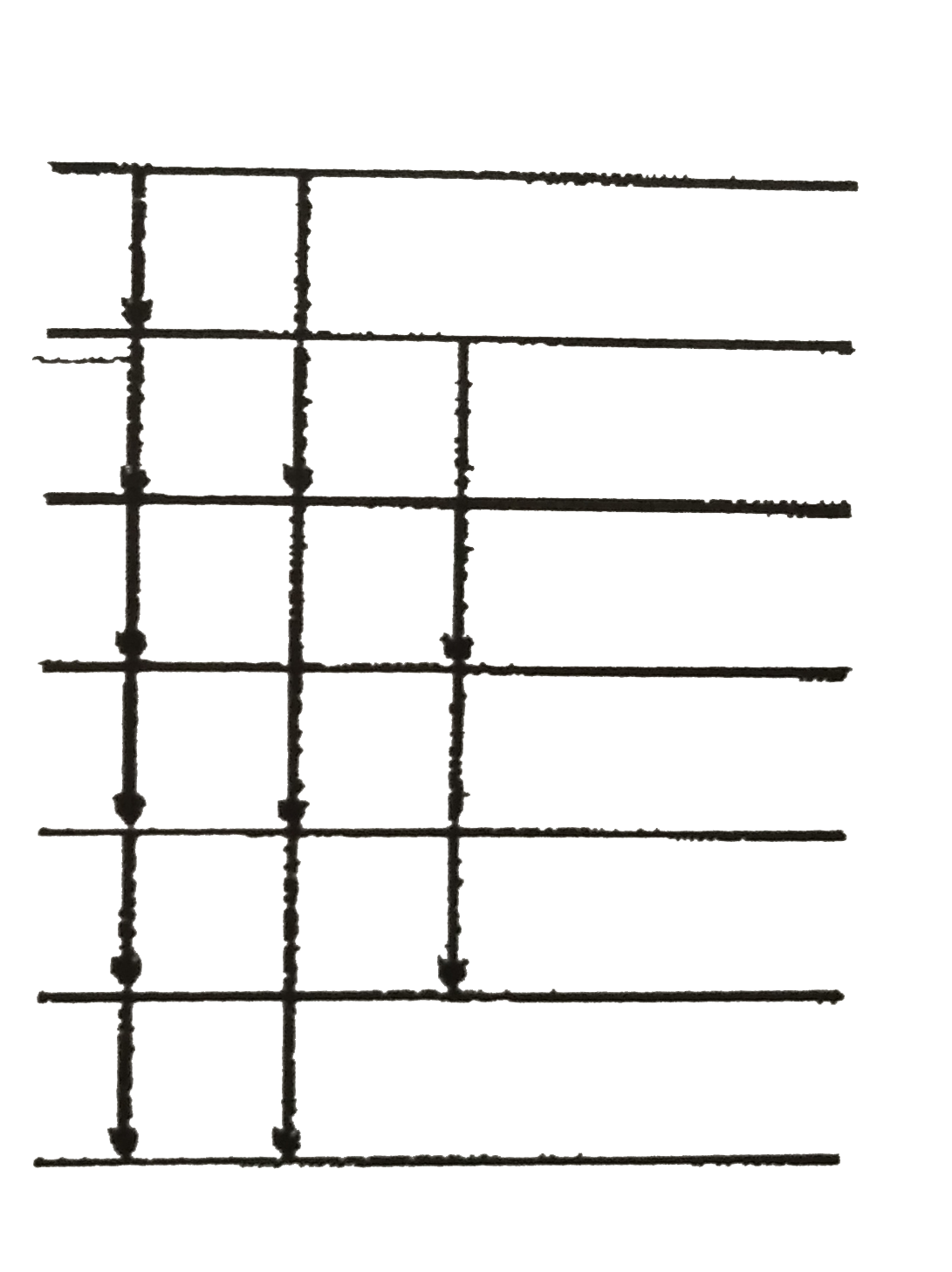 Maximum POSSIBLE photons of DIFFERENT wavelength are `=6+3+2=11` |
|
| 44. |
In a sample of H-atom electrons make transition from 5^(th) excited state to ground state, producing all possible types of photons, then number of lines in infrared region are |
Answer» Solution :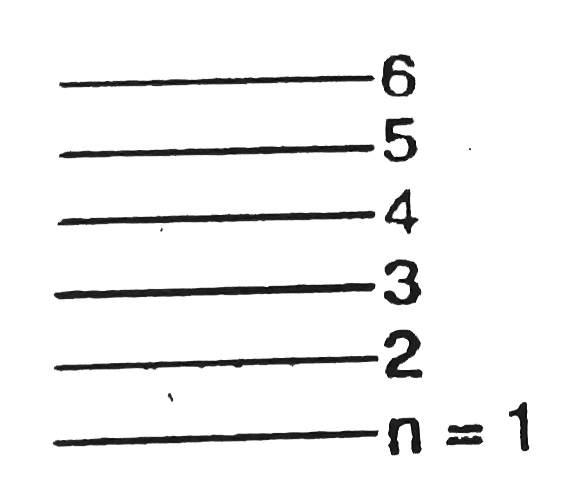 maximum number of lines produced =`(6(6-1))/2=15` out of these 15 lines. 5 lines belong to ultra violet REGION and 4 lines are in visible region and rest are in INFRARED region. |
|
| 45. |
In a salt bridge,KCI is used because: |
|
Answer» It is an electrolyte |
|
| 46. |
In a salt bridge KCl is used because |
|
Answer» KCl is present in the calomel electrode |
|
| 47. |
In a reversible reaction two substances are in equilibrium. If the concentration of each is double the equilibrium is: |
|
Answer» REDUCED to HALF of its ORIGINAL VALUE |
|
| 48. |
in areversible reactiontheenergyofactivationof theforwardreactionis 50 kcal . the energyof activationfor thereverse reaction will be |
|
Answer» lt 50 kcal |
|
| 49. |
In a reversible reaction , the enthalpy change and the activation energy in the forward direction are respectively -x kJ mol^(-1) and y kJ mol^(-1) is |
|
Answer» y-X |
|
| 50. |
In a reversible reaction, the enthalpy change and the activation energy in the forward direction are respectively -xkJmol and y kJ mol ^(-1) . Therefore , the energy of activation in the backward direction is ........ |
|
Answer» `(y-x) "KJ MOL"^(-1)`  `(x+y)"kJ mol"^(-1)` `(x+y) xx10^3"J mol"^(-1)` |
|