Saved Bookmarks
This section includes 7 InterviewSolutions, each offering curated multiple-choice questions to sharpen your Current Affairs knowledge and support exam preparation. Choose a topic below to get started.
| 1. |
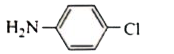
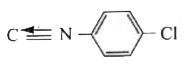
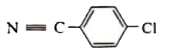
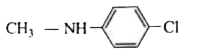
Identify y in the following reaction, C_(6)H_(5)NH_(2) overset(NaNO_(2)//HCl)rarr(280 K) X overset(CuBr//HBr)to Y |
|
Answer»

|
|
| 2. |
Identify Y in the following reaction : CH_(3) COOH overset(NH_(3)) (to) X overset(Delta) (- H_(2)O) Y |
|
Answer» `CH_(3) CH_(2) NH_(2)` |
|
| 3. |
Identify (Y) |
|
Answer»
|
|
| 4. |
Identify (X), (Y) andc (Z) in the given reaction : CH_(3)CHO overset(K_(2)Cr_(2)O_(7))underset(H_(2)SO_(4))to(X) overset(PCl_(5))to(Y)overset(C_(6)H_(6))underset(anh.AlCl_(3))to(Z) |
|
Answer» `(X)=HCOOH, (Y)=COCl_(2),(Y)=COCl_(2), (Z)=C_(6)H_(5)CL` |
|
| 5. |
Identify (X), (Y) and (Z) retgents in the given sequence of reaction. CH-=CH overset(X) to CH_(3)CHO overset(Y) to CH_(3)CH(OH)CH_(3) overset(Z) to CH_(3)COCH_(3) |
|
Answer» `X=H_(2)SO_(4), Y=H_(2)O//OH^(-), Z=PCl_(5)`, HEAT |
|
| 6. |
Identify (X), (Y) and (Z) reagents in the given sequence of reaction. CH-=CH overset(X) to CH_(3)CHO overset(Y) to CH_(3)CH(OH)CH_(3) overset(Z) to CH_(3)COCH_(3) |
|
Answer» `X=H_(2)SO_(4), Y=H_(2)O//OH^(-), Z=PCl_(5)`, HEAT |
|
| 7. |
Identify (X), (Y) and (Z) reagents in the given sequence of reaction. CH-=CH overset(x)rarr CH_(3)CHO overset(Y)rarr CH_(3)CH(OH)CH_(3)overset(Z)rarr CH_(3)COCH_(3) |
|
Answer» `X = H_(2)SO_(4), Y = H_(2)O // OH^(-), Z = PCl_(5)`, HEAT |
|
| 8. |
Identify (X), (Y) and (Z) in the given reaction. X+Y overset(Z)rarrunderset("3-Hydroxybutanal")(CH_(3)-overset(OH)overset(|)(CH)-CH_(2))-CHO |
|
Answer» `X-HCHO, Y - CH_(3)CHO, Z-KOH` |
|
| 9. |
Identify (X), (Y) and (Z) in the given reaction. X +Y overset(Z) to underset("3-Hydroxybutanal")(CH_(3)-overset(OH)overset(|)(CH)-CH_(2))-CHO |
|
Answer» `{:(X,Y,Z),(HCHO,CH_(3)CHO,KOH):}` |
|
| 10. |
Identify (X), (Y) and (Z) in the given reaction. CH_(3)COCH_(3) overset(I_(2)+NaOH)underset("heat") to X overset(Ag)underset("heat") to Y overset(H_(2)SO_(4)//HgSO_(4))underset("heat") to Z |
|
Answer» `X=CHI_(3), Y=CH_(3)CHO, Z=HCHO` |
|
| 11. |
Identify (X), (Y), and (Z) in the following synthetic scheme and write their structures. Is the compound (Z) optically active? Justify your answer. |
Answer» SOLUTION :
|
|
| 12. |
Identify X in the sequence given below: |
|
Answer»

|
|
| 13. |
Identify X in the sequence give below. underset(KOH)overset(CHCl_(3))(to)(Y)underset((300K))overset(HCl)(to)xx + methanoic acid |
|
Answer» |
|
| 14. |
identify (X) in the sequence, C_4H_7OClundersetrarr(NH_3)C_4H_9ONunderset(CH_3CH_2CH_2NH_2)overset(Br_2KOH)rarr. |
|
Answer»
|
|
| 15. |
identify (X) in the sequence, C_4H_7OCloverset(NH_3)rarrC_4H_9ONoverset(Br_2KOH)rarrCH_3CH_2CH_2NH_2 |
|
Answer»
|
|
| 16. |
Identify X in the sequence,CH_3Br + Mg rarroverset (CO_2)rarroverset(H_2O)rarr(X) |
|
Answer» |
|
| 17. |
Identify (X) in the sequence : |
|
Answer» `CH_3-CH_2-CH_2OH` |
|
| 18. |
Identify X in the reaction , HCHO + CH_3MgI overset(dry)underset(ether)rarrIntermediate overset(H^/H_2O)rarr .X. |
|
Answer» `CH_3OH` |
|
| 19. |
Identify X in the following sequence of reactions :CH_(3)-underset(Br)underset("|")CH-underset(Br)underset("|")CH-CH_(2)-CH_(2)-CH_(3) underset(" 2. Na in liquid" NH_(3))overset(1. NaNH_(2))rarrX |
|
Answer» `CH_(3)-UNDERSET(BR" ")underset("|")(CH)-underset(NH_(2))underset("|")(CH)-CH_(2)CH_(2)CH_(3)` 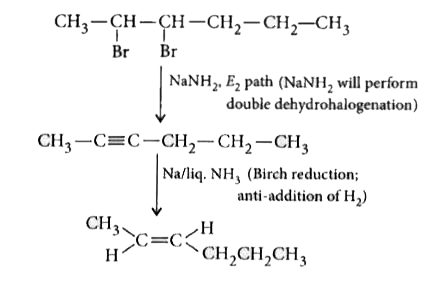
|
|
| 20. |
Identify X in the following sequence of reactions- CH_3-underset(Br)underset(|)CH-underset(NH_2)underset(|)CH-CH_2CH_2CH_3overset(1.NaNH_2)underset(2.Na//NH_3(l))toX |
|
Answer» `H_3C-UNDERSET(BR)underset(|)CH-underset(NH_2)underset(|)CH-CH_2CH_2CH_3` 
|
|
| 21. |
Identify X in the following reaction. C_(2)H_(5)CN overset("Hydrolysis")underset("(NaOH)")rarr C_(2)H_(5)COONa+X. |
| Answer» SOLUTION :In the above REACTION X is `NH_(3)`. | |
| 22. |
Identify X and Y in the following sequence C_(2)H_(5)Broverset(X)toproductoverset(Y)toC_(3)H_(7)NH_(2) |
|
Answer» `X=KCN,Y=LiAlH_(4)` X=KCN, Y=`LiAlH_(4)` |
|
| 23. |
Identify X in the following sequence of reaction- |
|
Answer» `H_(3)C-underset(Br)underset(|)(C)H-underset(NH_2)underset(|)(C)H-CH_(2)CH_(2)CH_(3)` 
|
|
| 24. |
Identify X and Y in the following reactions R - CH = CH -CH_2 OH overset(X) to R - CH = CH - CHO R - CH_2 OH overset (Y) to R - COOH |
|
Answer» `X: KMnO_4//H^(+) , Y, K_2Cr_2O_7//H^(+)` |
|
| 25. |
Identify (X) and (Y) formed in the given reaction. |
|
Answer» `CH_3-underset(CH_3)underset(|)C=CH_2 ` in both cases |
|
| 26. |
Identify X and Y CH_3COCH_2CH_2COOC_2H_5 overset(CH_3MgBr)(to)X overset(H_3O^(+))(to) Y |
Answer» SOLUTION :
|
|
| 27. |
Identify, with a reason, the stronger oxidising agent in each of the following pairs. Cr^(3+),Fe^(2+) ["Given : "E_((1)/(2)Cl_(2)(g)|Cl^(-))^(@)=+1.36V, E_((1)/(2)Br_(2)(l)|Br^(-))^(@)=+1.07V, E_(Cu^(2+)|Cu)^(@)=+0.34V, E_(Ag^(+)|Ag)^(@)=+0.80V, E_(Pb^(2+)|Pb)^(@)=-0.13V, E_(Fe^(2+)|Fe)^(@)=-0.44V, E_(Fe^(3+)|Fe)^(@)=-0.036V, E_(Cr^(3+)|Cr)^(@)=-0.74V] |
| Answer» SOLUTION :`Fe^(3+)` is stronger OXIDANT than `CR^(3+)` | |
| 28. |
Identify X |
|
Answer» `CuSO_(4)` `ii 2CuSO_(4)+4KI to 2K_(2)SO_(4)+underset("white PPT.")(CuI_(2)+I_(2)darr` `I_(2)+2Na_(2)S_(2)O_(3)to 2NaI+Na_(2)S_(4)O_(6)` `(iii) 2Cu^(2+)+K_(4)[Fe(CN)_(6)]to underset("ppt.")underset("(chocolate)")underset("Red-brown")` |
|
| 29. |
Identify (X) : |
|
Answer»
|
|
| 30. |
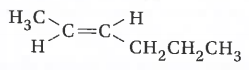
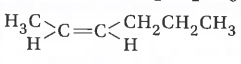
Identify which of the structures below are meso structures ? |
|
Answer» 1 and 3 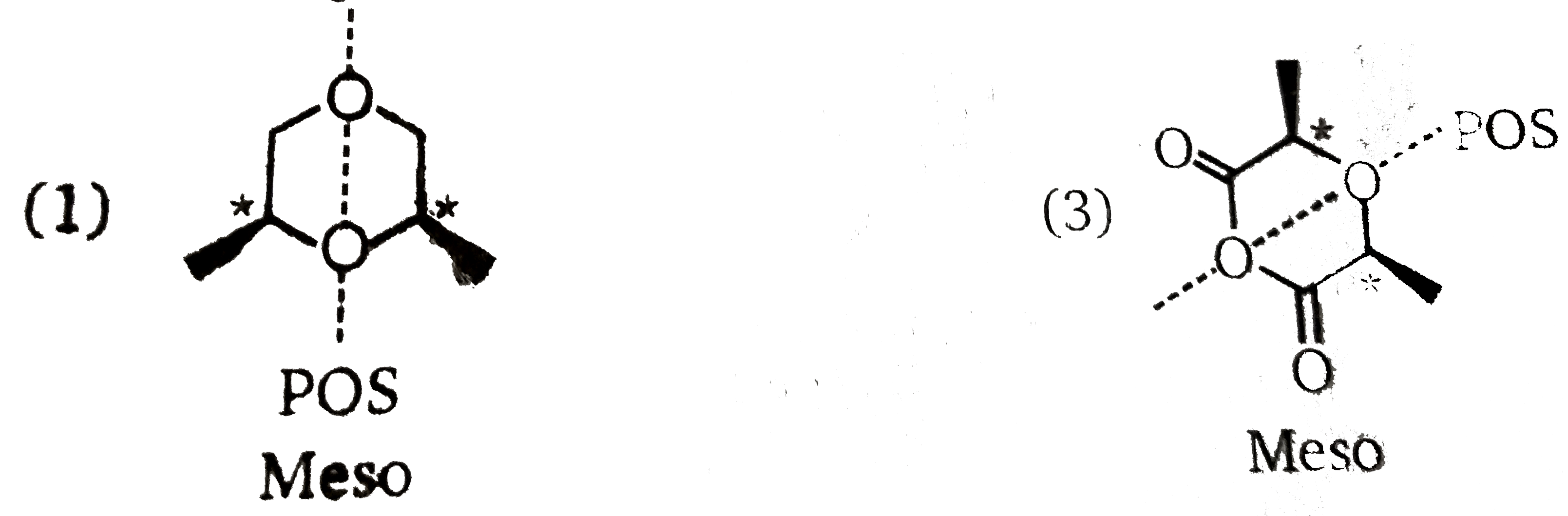
|
|
| 31. |
Identify which product give lucas test with HCl+ZnCl_(2) |
|
Answer»
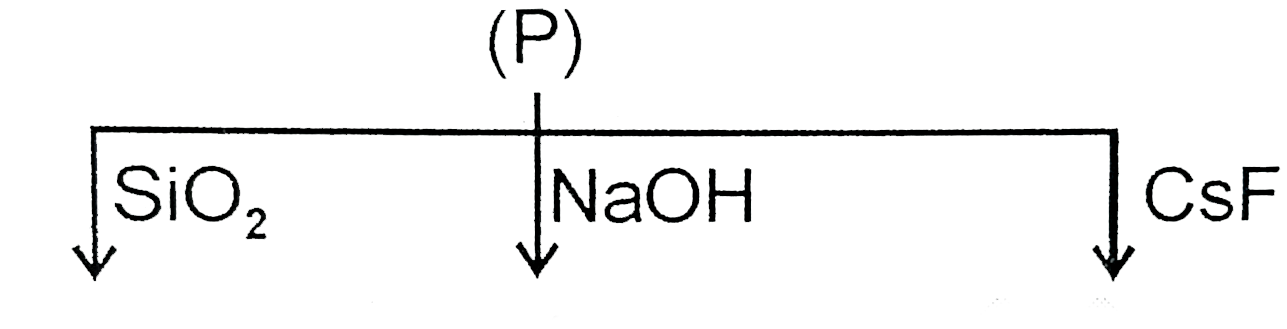 `XeO_(3)+SiF_(4)" "XeO_(6)^(4-)+Xe+O_(2)" "CS^(+)[XeF_(7)]^(-)` |
|
| 32. |
Identify which liquid will have a higher vapour pressure at 90^(@)C if the boiling points of two liquids A and B are 140^(@)C and 180^(@)C, respectively. |
| Answer» SOLUTION :A, as it has a LOWER BOILING POINT. | |
| 33. |
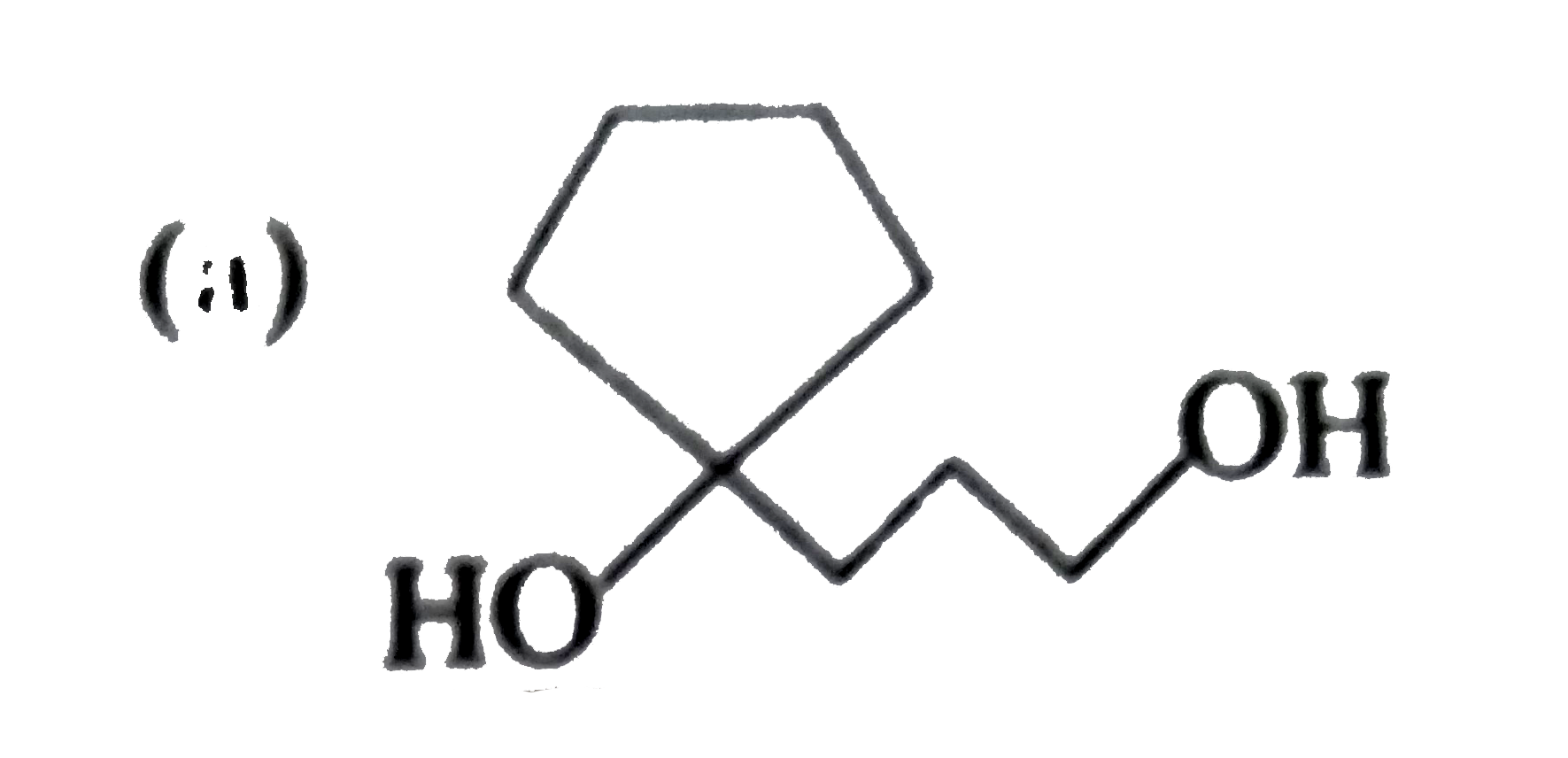
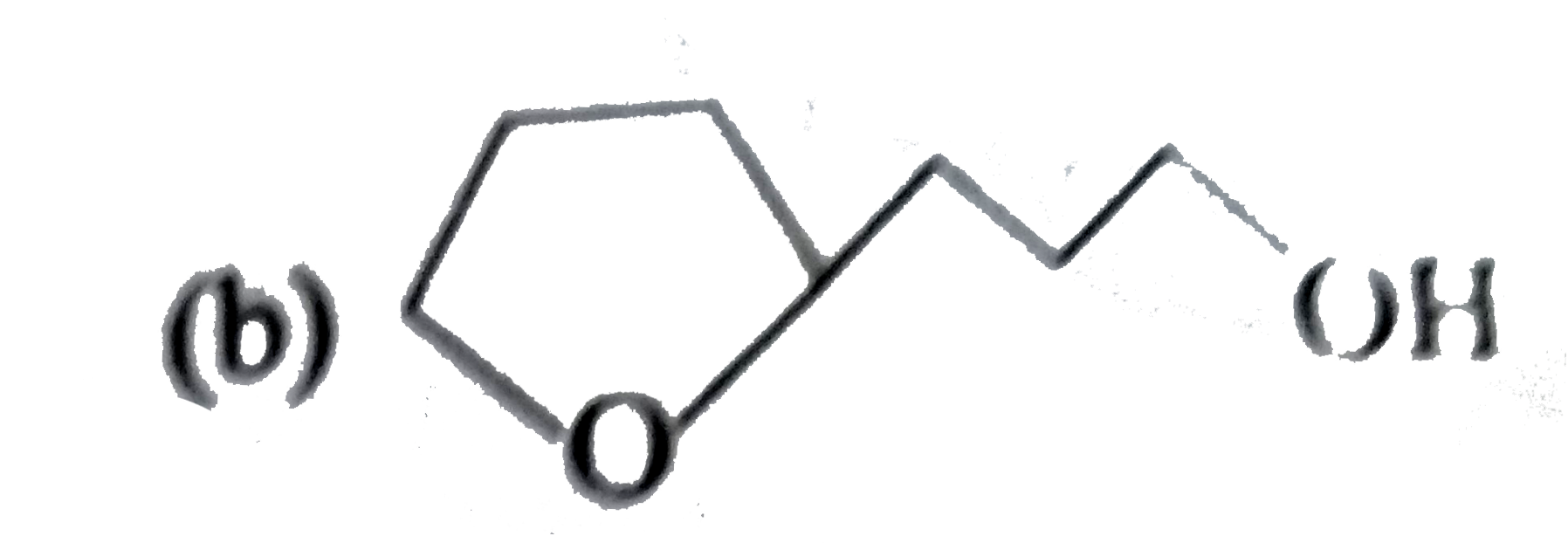
Identify which of the following compounds would give positive iodoform test. |
|
Answer» `CH_(3)-CH_(2)-CH_(2)-overset(O)overset(||)(C)-CH_(3)` |
|
| 34. |
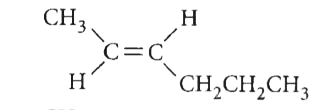
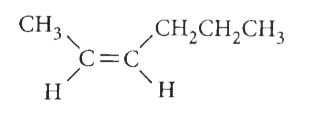
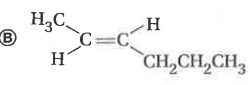
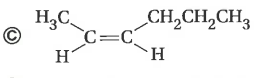
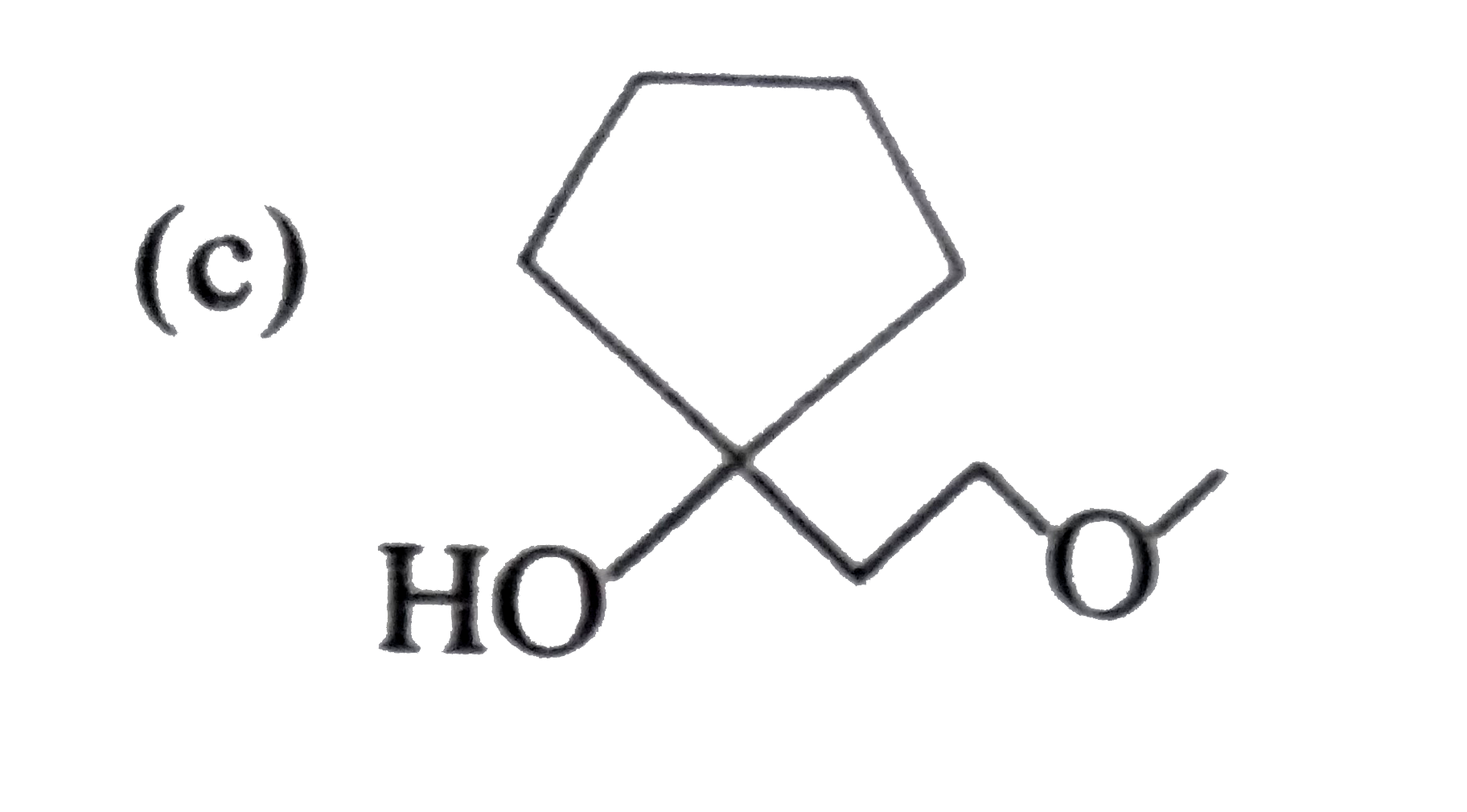
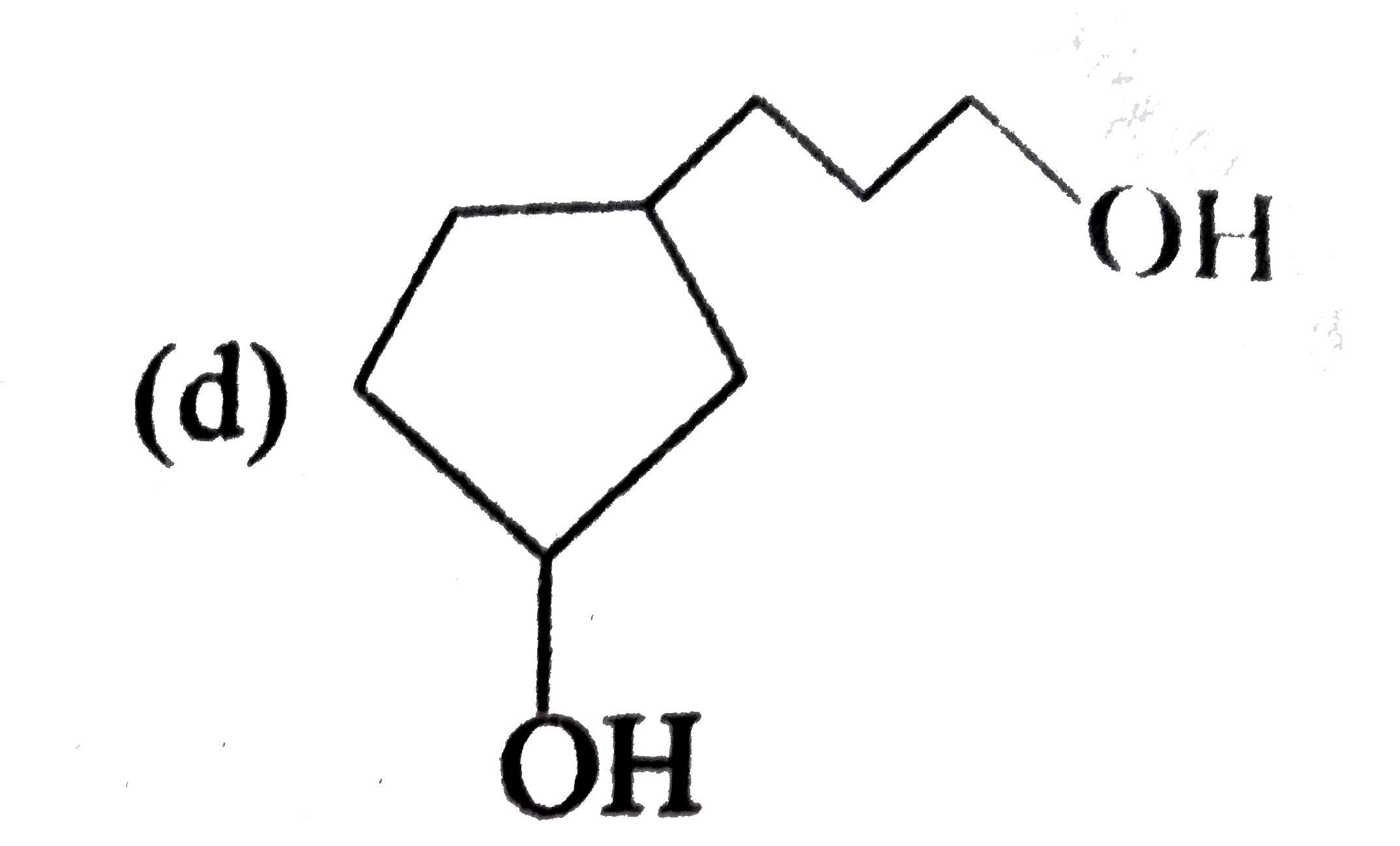
Identify whether the stereogenic centre is present or not: (a) 2-cyclopentan-1-ol (b) 3-cyclopenten-1-ol (c) 2-bromopentane (d) 3-bromopentane |
Answer» SOLUTION :
|
|
| 35. |
Identify whether the following compounds · are D or L isomers H-overset(CHO)overset(|)underset(CH_2)Ohoverset(|)C-OH |
|
Answer» |
|
| 36. |
Identify whether the following compounds · are D or L isomers {:(""CHO),(""|),(HO-C-H),(""|),(" "H-C-OH),(""|),(HO-C-H),(""|),(HO-C-H),(""|),(""CH_2OH):} |
|
Answer» |
|
| 37. |
Identify true and false statements for fixed amount of gas in following isotherm of real gas. (i) Keeping pressure constant state x can be converted into state y only by decreasing volume. (ii) Keeping volume constant state x can be converted into state z only by decreasing pressure. (iii) State x can never be converted into state z only by increasing pressure at the temperature above C. (iv) Below temperature C state x cann't exist at any pressure. (v) State x,y and z gas, liquid and liquid vapour respectively. (vi) State x canbe converted into state y at temperature d and pressure F. |
|
Answer» |
|
| 38. |
Identify true and false statements for fixed amount of gas in following isotherm of real gas. (i) From point P to point S volume is constant and temperature is increasing. (ii) From point S to point Q pressure is constant and temperature is decreasing. (iii) Through path P,S,Q we can convert gas into liquid through continuity of state. |
|
Answer» |
|
| 39. |
Identify the (X), (Y), and (Z) in the following reactions CH_(3)I+PhCOCH_(3)underset("(ii) :"B^(Theta))overset("(i) "Ph_(3)P)rarr(Y) |
| Answer» SOLUTION :`(Y)=Ph-C(CH_(3))=CH_(2)` | |
| 40. |
Identify the zeiglar natta catalyst. |
|
Answer» `TiCl_4 + (C_2H_5)_3 AL ` |
|
| 41. |
Identify the (X) in the following reaction : H_(2)C= underset(CH_(3))underset(|)C- CH_(2)OH overset(X)to H_(2)C= underset(CH_(3))underset(|)C-CHO |
|
Answer» `CrO_(3)//H_(2)SO_(4)` |
|
| 42. |
Identify the wrong statements in the following: |
|
Answer» Chlorofluorocarbons are responsible for OZONE LAYER depletion. |
|
| 43. |
Identify the wrong statement/s I) All halogens are coloured II) F_(2)andCl_(2) are gases whereas Br_(2)andI_(2)are liquids III) Br_(2)andI_(2) are sparingly soluble in water but are soluble in various organic solvents like C Cl_(4),CS_(2) etc . |
|
Answer» Only I & III |
|
| 44. |
Identify the wrong statement regarding alizarin |
|
Answer» Alizarin was EXTRACTED from the roots of the madder PLANT |
|
| 45. |
identify the wrong statement from the following: |
|
Answer» Salicylic acid is a monobasic acid |
|
| 46. |
Identify the weaksest oxidising agent among the following: |
|
Answer» `Li^(+)` Li has the SMALLEST size and high polarisiing power Li acts as a strongest reducing agent hence `Li^(+)` a weakest oxidising agent. |
|
| 47. |
Identify the weakest base amongst the following |
|
Answer» p-methoxyaniline |
|
| 48. |
Identify the weakest acidic compound amongst the following |
|
Answer» p-nitrophenol |
|
| 49. |
Identify the weak electrolyte from the following . |
|
Answer» KCL |
|
| 50. |
Identify the vitamin whose deficiency out food decrease reproductive power |
|
Answer» vit-A |
|