Saved Bookmarks
This section includes 7 InterviewSolutions, each offering curated multiple-choice questions to sharpen your Current Affairs knowledge and support exam preparation. Choose a topic below to get started.
| 1. |
If 0.1 M HA is titrated with 0.1 M NaOH, calculate the pH at the end point. K_a(HA) = 5 xx 10^(-6) and alpha lt lt 1 |
|
Answer» SOLUTION :APPLY PH ` = 1/2 [pK_w+ pK_a + log a] , a= (0.1)/(2) M` 9 |
|
| 2. |
If 0.1M solution of glucose and 0.1M solution of urea are placed on two sides of a semi permeable membrane to equal heights, then it will be correct to say that |
|
Answer» Glucose will flow towards urea SOLUTION |
|
| 3. |
If 0.15 g of a solute dissolved in 15 g of solvent is boiled at a temperature higher by 0.216^(@)C than that of the pure solvent. The molecular weight of the substance (molal elevation constant for the solvent is 2.16^(@)C kg/mol) is |
| Answer» Solution :`m=(K_(b)xxw XX 1000)/(Delta T_(b)xx W)=(2.16xx0.15xx1000)/(0.216xx15)=100`. | |
| 4. |
if 0 . 5mole of BaCl_(2)is mixedwith 0.2mole of Na_(3) PO_(4) , the maximum number of mole of Ba_(3) (PO_(4))_(2)that can be formed is |
| Answer» Answer :D | |
| 5. |
If (+)-2 methyl-1-butanol rotates the plane of polarised light towards right hand side (in the clockwise direction) and the angle of rotation is 5.90^(@) , indicate the angle of rotation and the direction towards which the plane of polarised light will rotated by (-)-2-methyl-1-butanol. |
| Answer» SOLUTION :`5.90^(@)` TOWARDS LEFT (in the COUNTERCLOCKWISE DIRECTION). | |
| 6. |
(i)Explain the concentration of copper pyrites and galena ores. (ii) Out of Lu(OH)_(3) and La(OH)_(3) which is more basic and why? |
Answer» Solution :(i) froth floatation: This method is commonly used to concentrate sulphide ores such as galena (PbS), zinc blende (ZnS) etc. In this method, the metallic ore particles which are preferentially wetted by oil can be separated from gangue. 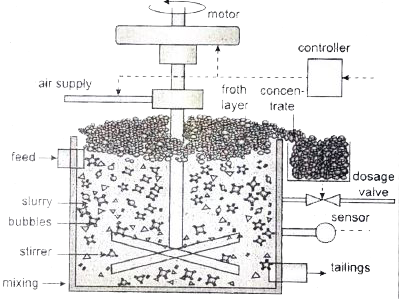 In this method, the crushed ore is suspended in water and mixed with frothing agent such as pine oil, eucalyptus oil etc. A small quantity of sodium ethyl xanthate which acts as a collector is also added. A froth is generated by blowing air through this mixture. The collector molecules attach to the ore particle and make them water repellent. As a result, ore particles, wetted by the oil, rise to the surface along with the froth. The froth is skimmed off and dried to recover the concentrated ore. The gangue particles that are preferentially wetted by water settle at the bottom. When a sulphide ore of a metal of interest contains other sulphides as impurities, depressing agents such as sodium cyanide, sodium carbonate etc are used to selectively prevent other metal sulphides from coming to the froth. For example, when impurities such as ZnS is present in galena (PbS), sodium cyanide (NaCN) is added to depresses the floatation property of ZnS by FORMING a layer of zinc complex `Na_(2)[ZN(CN)_(4)]` on the surface of zinc sulphide. (ii) 1. As we move from `Ce^(3+)` to `Lu^(3+)`, the basic character of `Lu^(3+)` ions decreases. 2. Due to the DECREASE in the size of `Lu^(3+)` ions, the ionic character of Lu-OH bond decreases, covalent character increases which results in the decrease in the basicity. 3. Hence, `LA(OH)_(3)` is more basic than `Lu(OH)_(3)`. |
|
| 7. |
IE _(2) for an element is invariably higer than IE _(1) because |
|
Answer» the size of CATIONS is smaller than its atom |
|
| 8. |
IE _(1), IE_(2) and IE_(3) of an element are 9.32, 18.21 and 153.83eV. Want information these data convery ? |
|
Answer» The element has TWO s electrrons in the VALENCE SHELL. |
|
| 10. |
Identity(X):CHCl_(3)overset(SbF_(3))underset(HF)rarrCHF_(2)Cloverset(1070K)rarr(X)+2HCl |
|
Answer» `F_(2)C=CF_(2)` |
|
| 11. |
Identity Z in the sequence of reactions, CH_3CH_2CH=CH_2overset(HBr//H_2O_2)to Y overset(C_2H_5ONa)to Z |
|
Answer» `CH_3(CH_2)_4-O-CH_3` 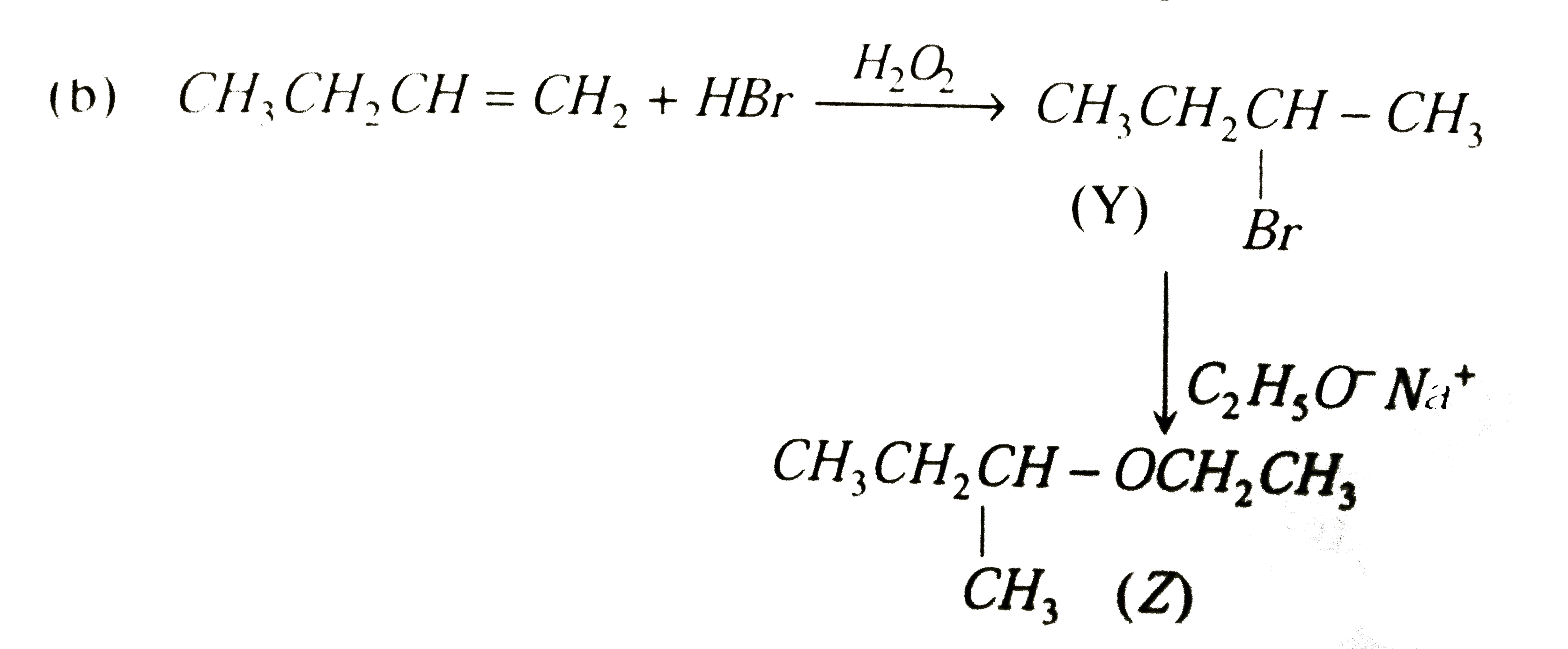
|
|
| 12. |
Identity (Z) in the reaction series, CH_2 = CH_2 overset(HBr)(to) (X) overset("hydrolysis")(to) (Y) underset(I_2"(excess)") overset(NaOH)(to) (Z) : |
|
Answer» `C_2H_5I` |
|
| 13. |
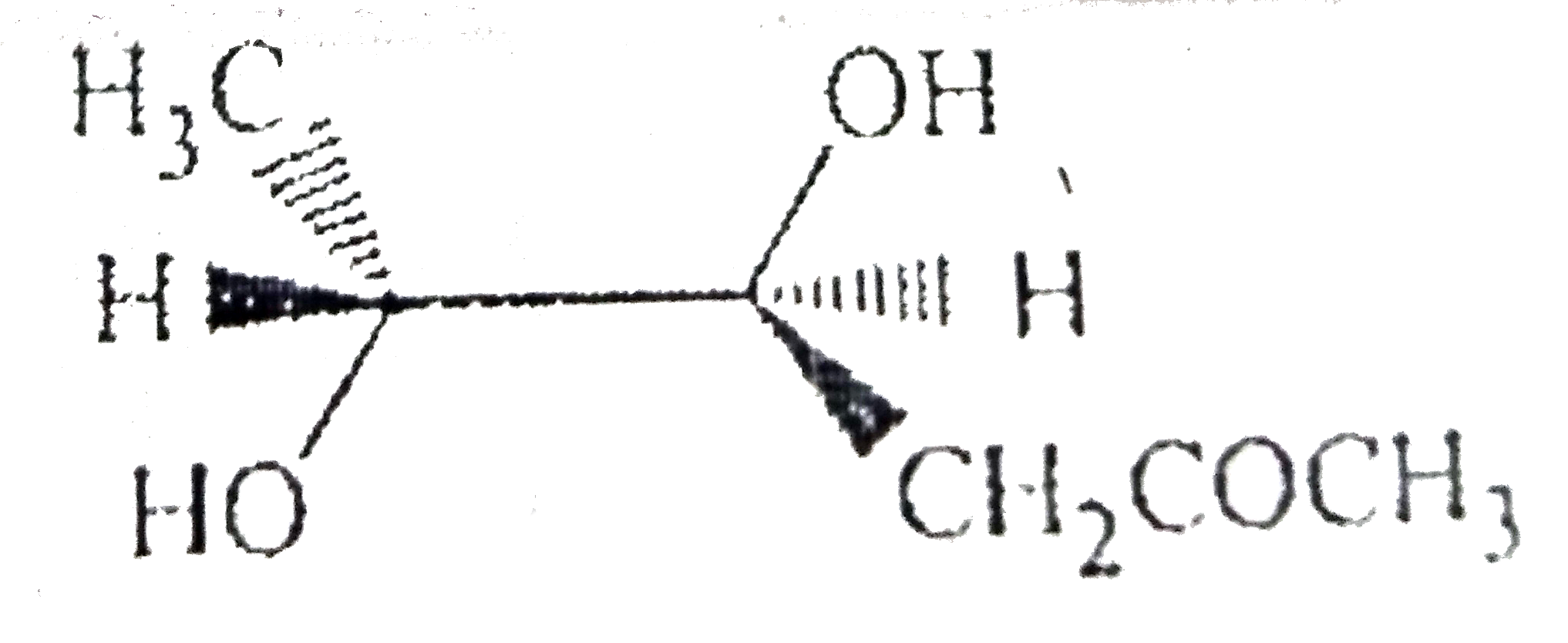
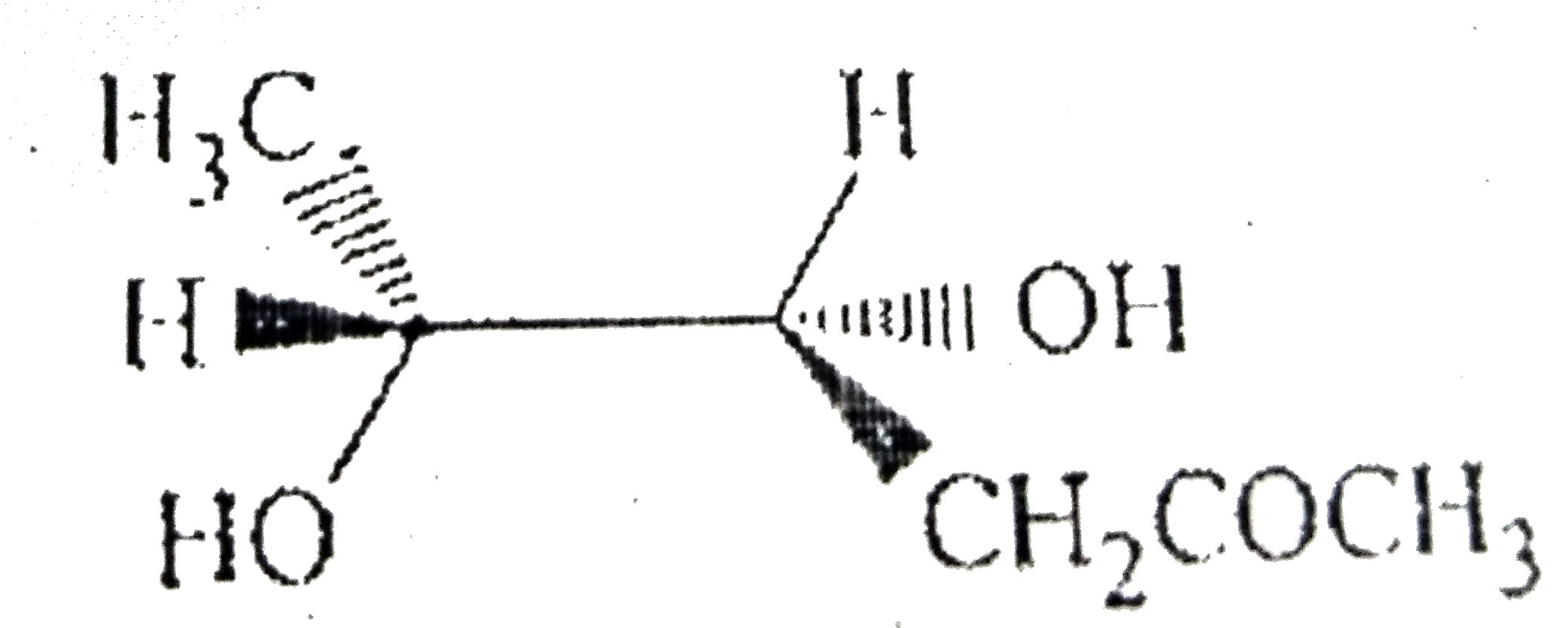
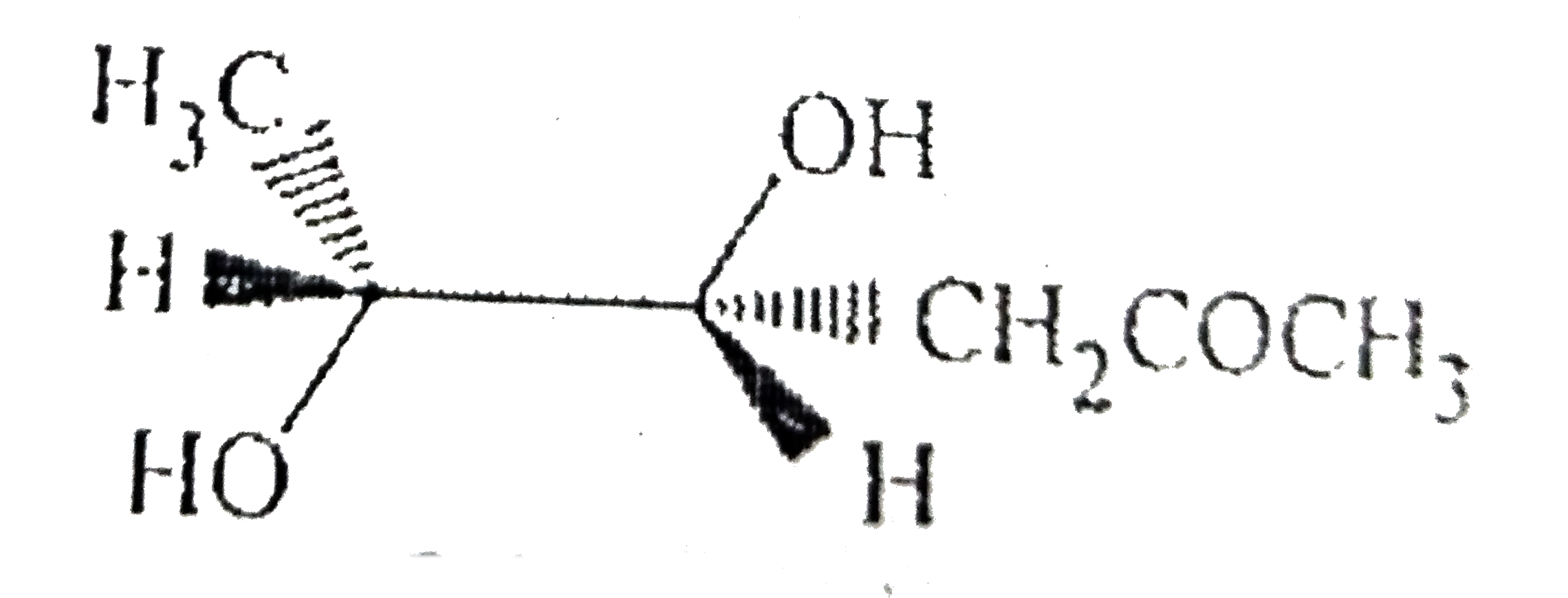
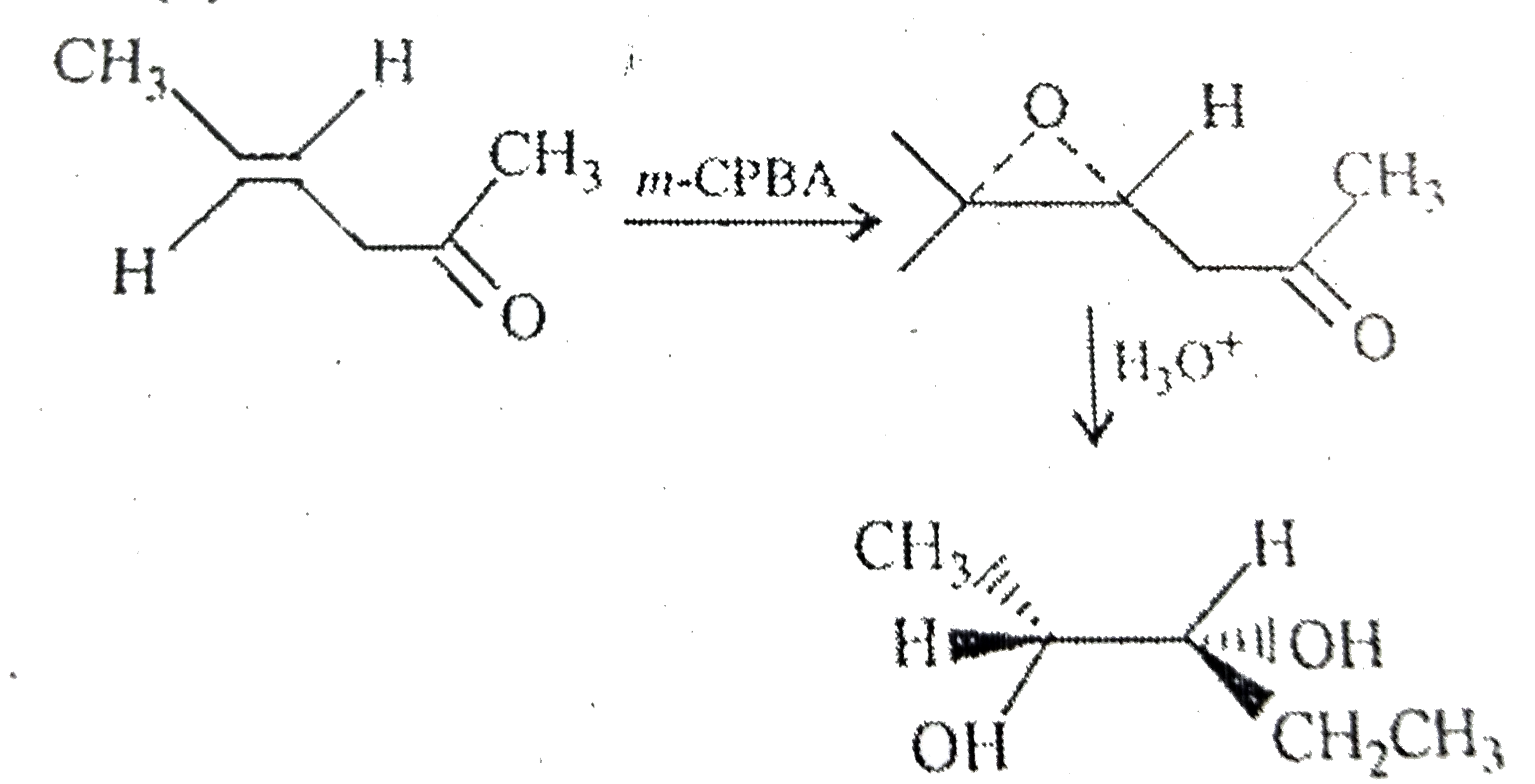
Identity the following compounds : a. b.overset (C_(5)H_(12)O_(2) underset (Chiral) (C) overset (Na + MeI) rarr overset (C_(6)H_(14)O_(2) underset (Achiral) (D) c. d. overset (C_(6)H_(14)O) underset ((An ether)) (G) overset (Excess HI) rarr Single alkyl iodide (HI) e.Saturated ether with fewest C atom atoms (I) that cannot be prepared by Williamson's synthesis. f.Unsaturated ether with fewest C atoms (II) that cannot be prepared by Williamson's synthesis. |
Answer» Solution :a.One DU in (A) and unreactivity with cold alk. `KMnO_(4)` (Baeyer's reagent) suggest (A) to be a ring compound. (A) is optically active, suggesting a ttrans epoxide. 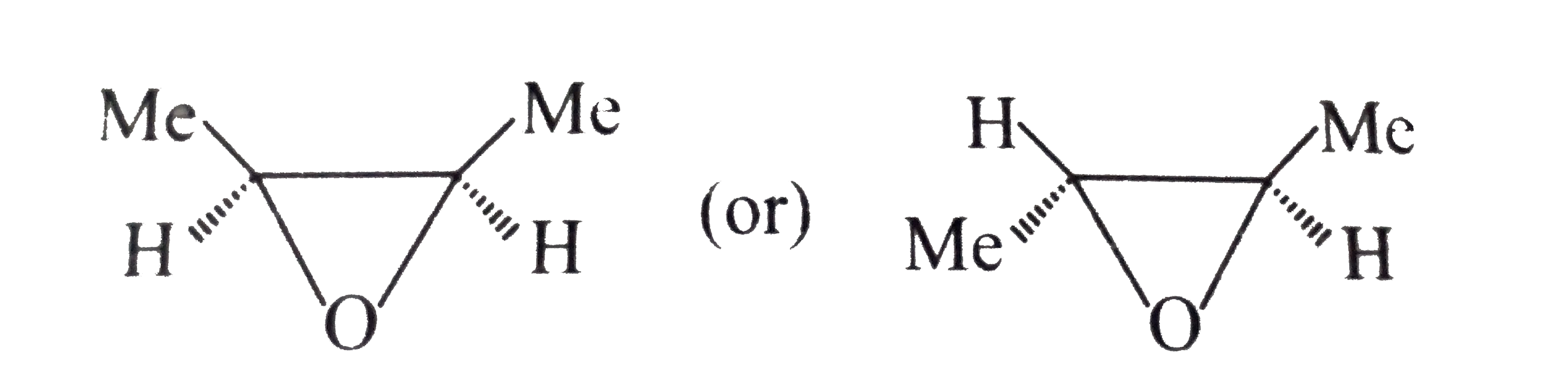 or or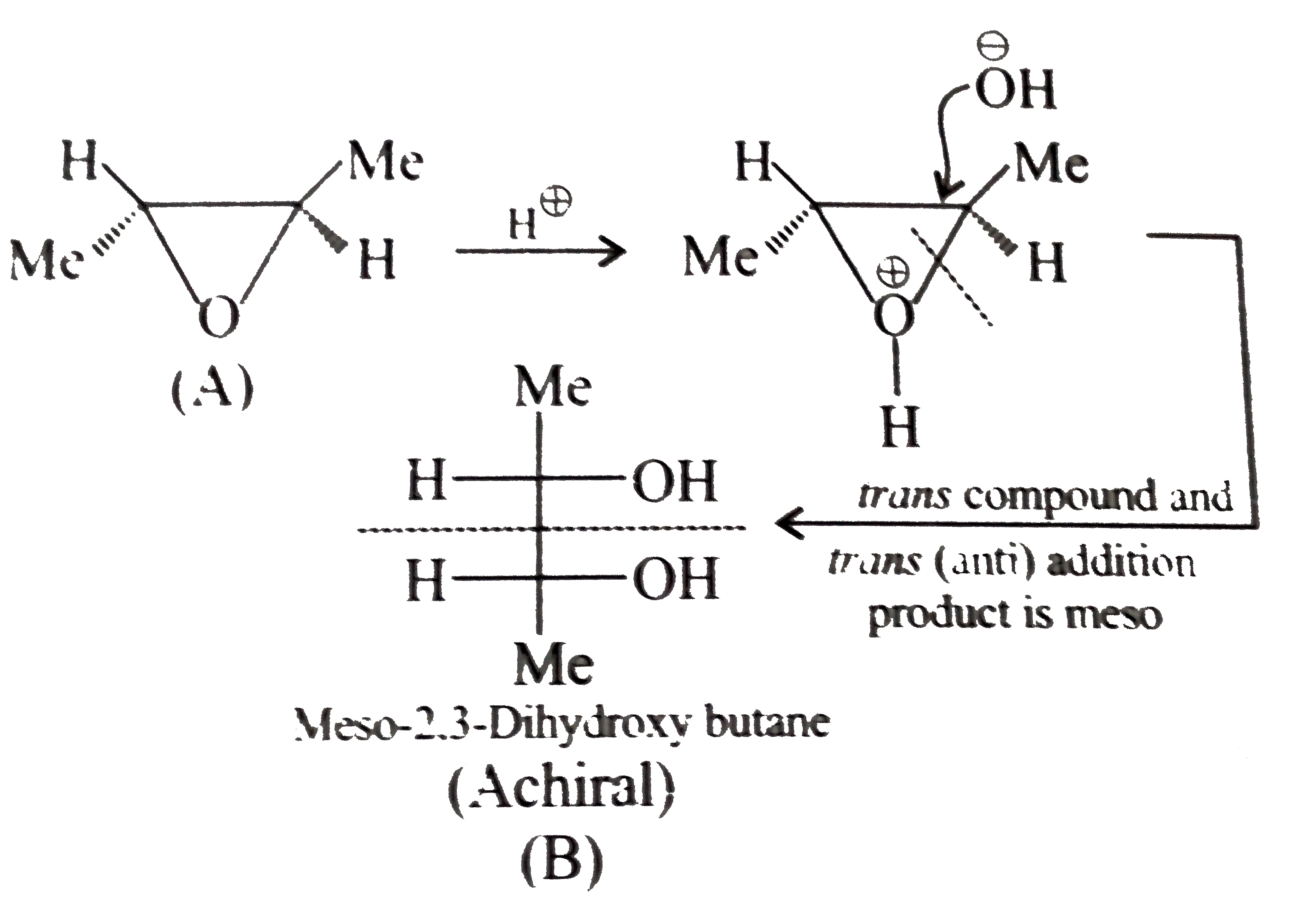 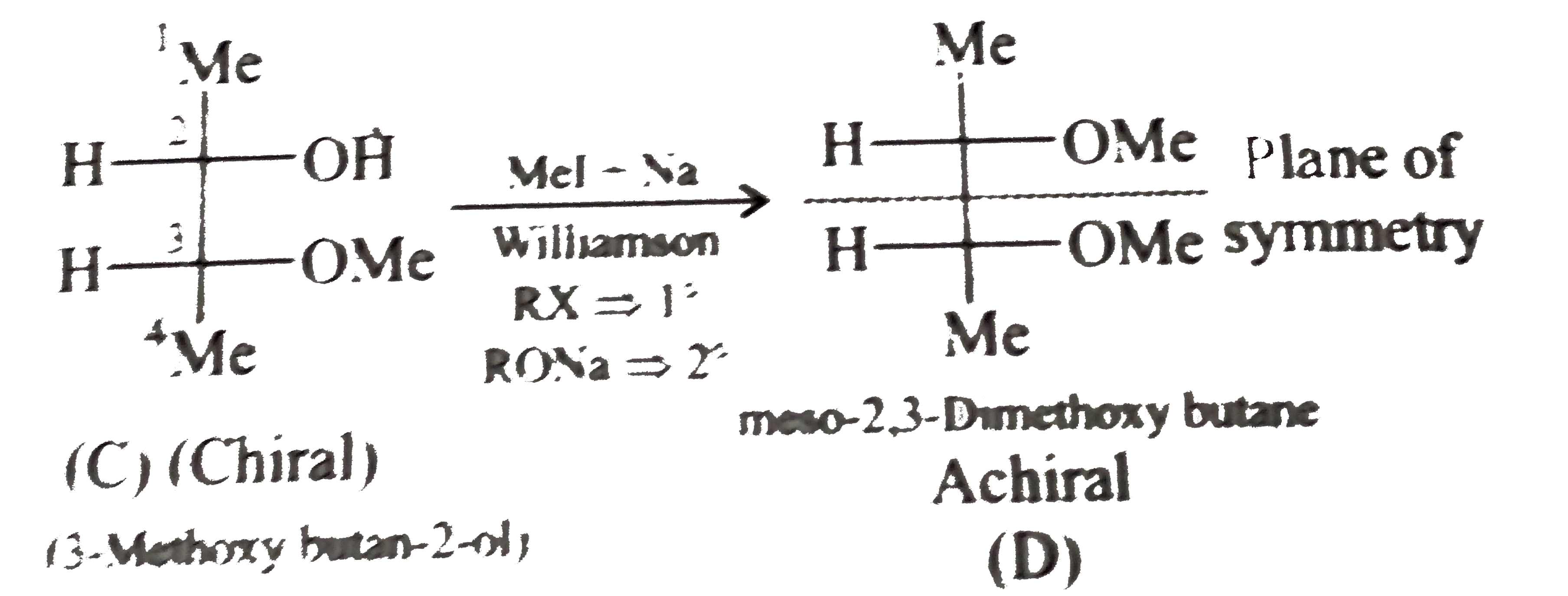 b.Zero DU in (C) and (D) suggests that both are SATURATED compounds, (C) can be either diol or containinh one (OH) and one (OMe) group since only one mole of MeI reacts with (C) (five C atoms) to give (D) (six C atoms). Compounds (C) contains one (OH) and one (OMe) given at adjacent positions to make (C) chiral. 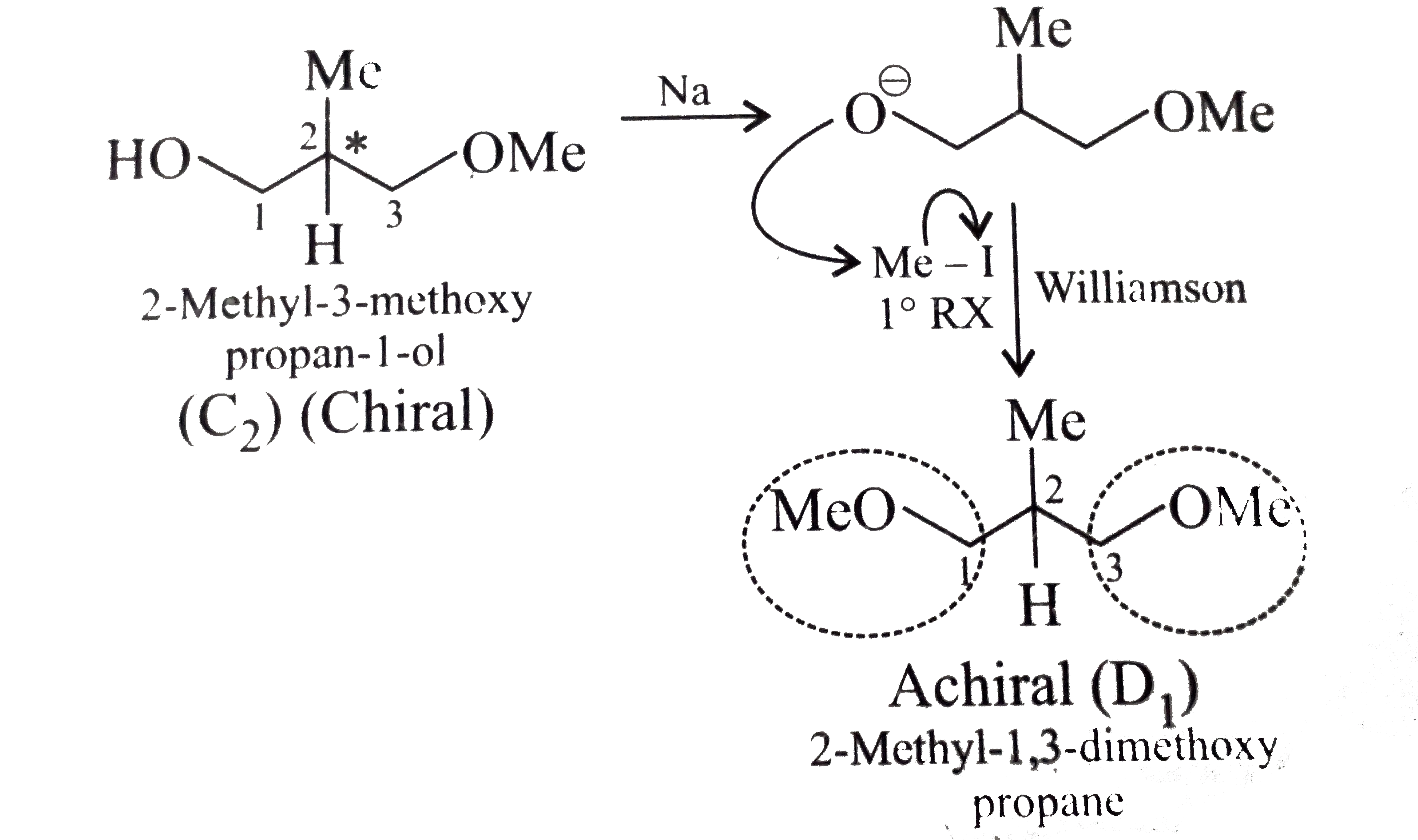 Another possiblity is: 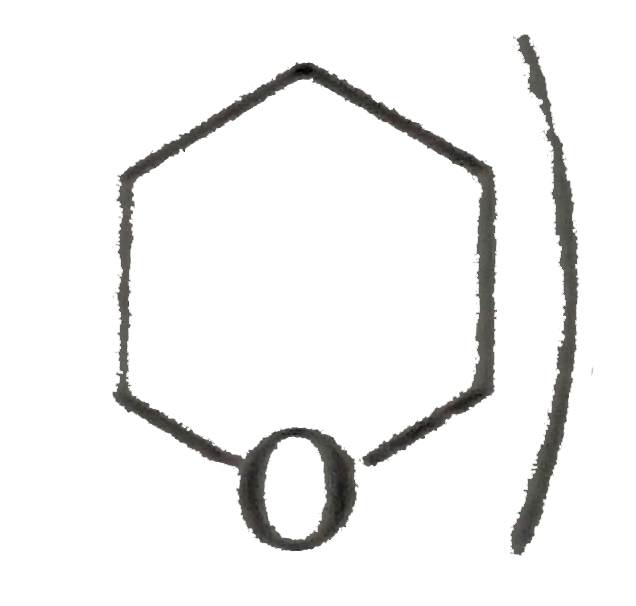 c.i. Zero DU in (E) and 1 DU in (F). Here, (F) cannot be an ALKENE because it is inert to `KMnO_(4)` . It must be a cyclic be a cyclic ether. THP (tetrahlydropyran 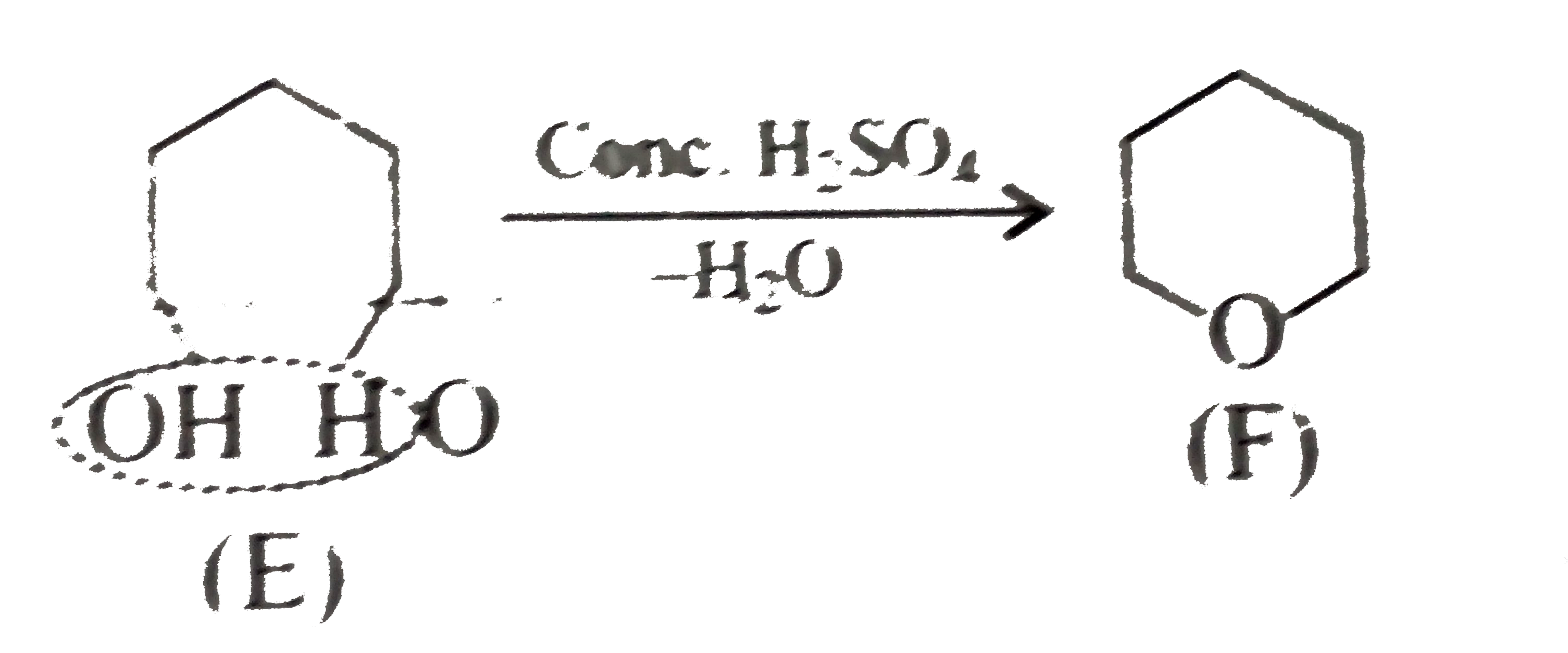 ) therefore (E) must be pentan 1,5-diol. ) therefore (E) must be pentan 1,5-diol. 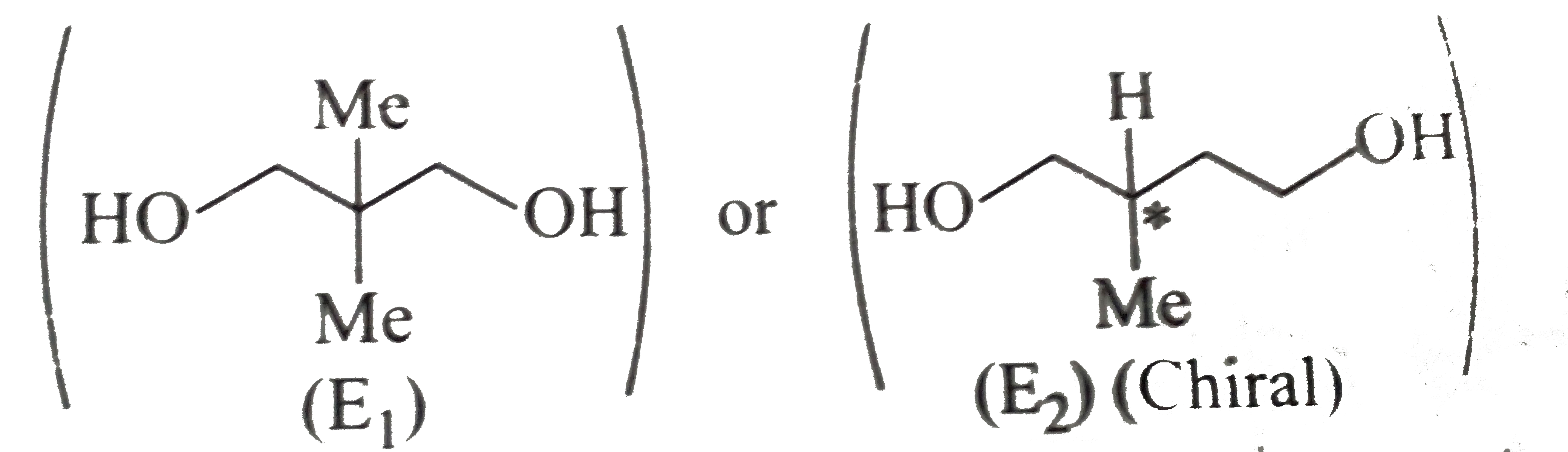 ii. (E) cannot be 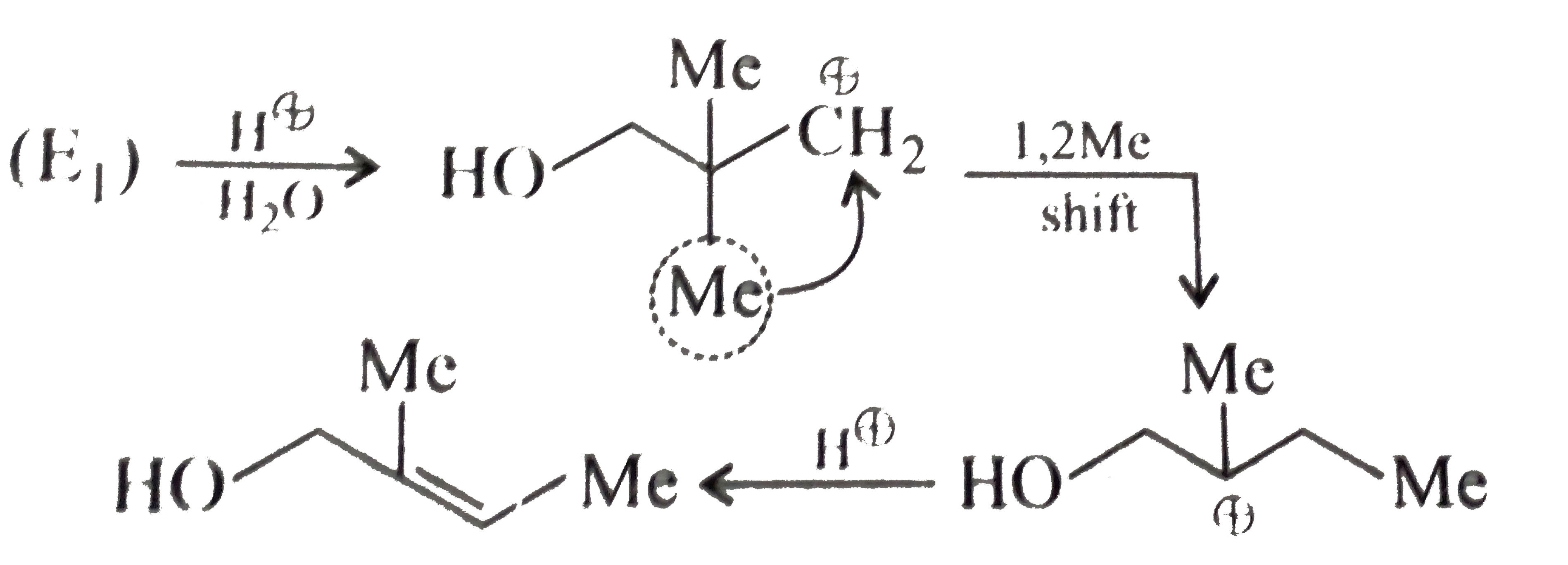 or or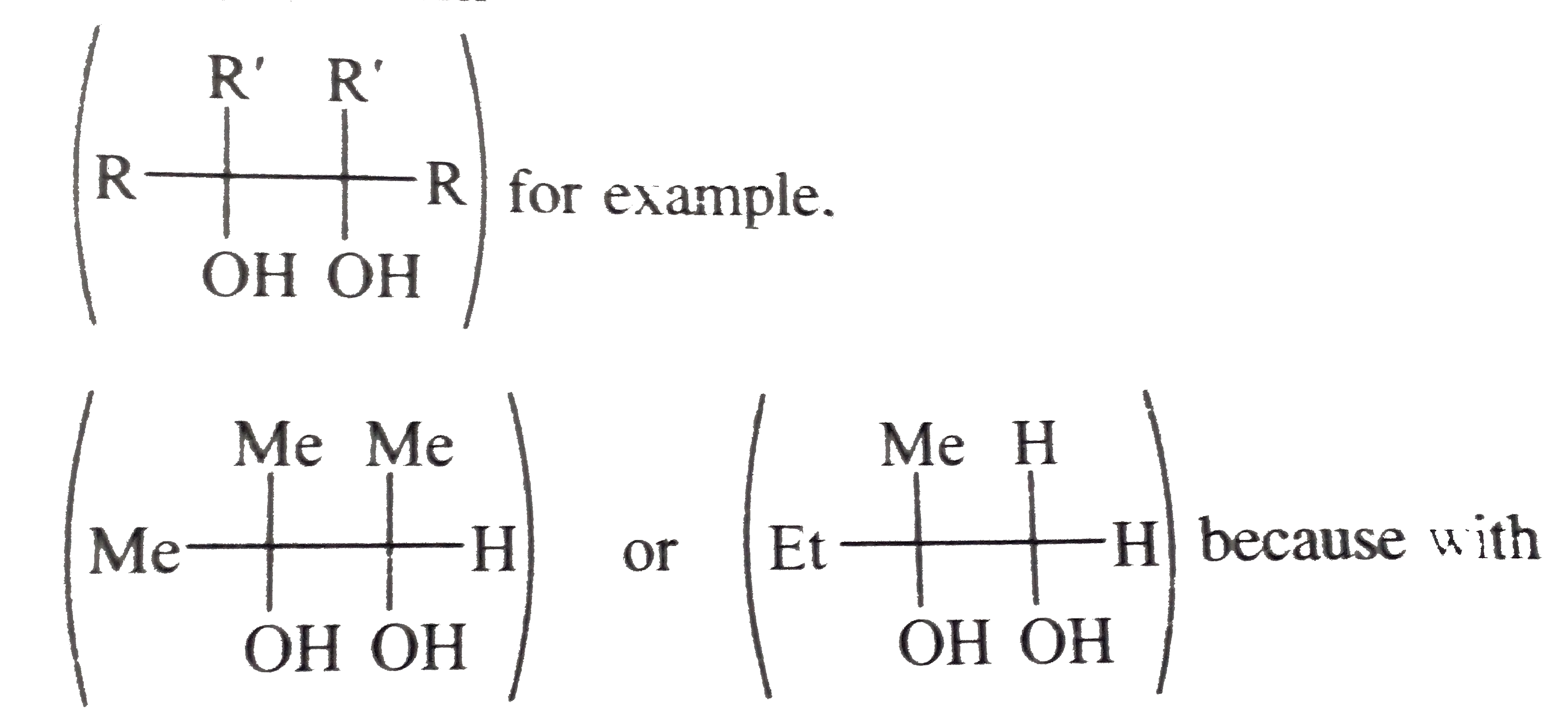 because `(E_(1))` on REACTION with conc. `H_(2)SO_(4)` would give alkene and `(E_(2))` is chiral. 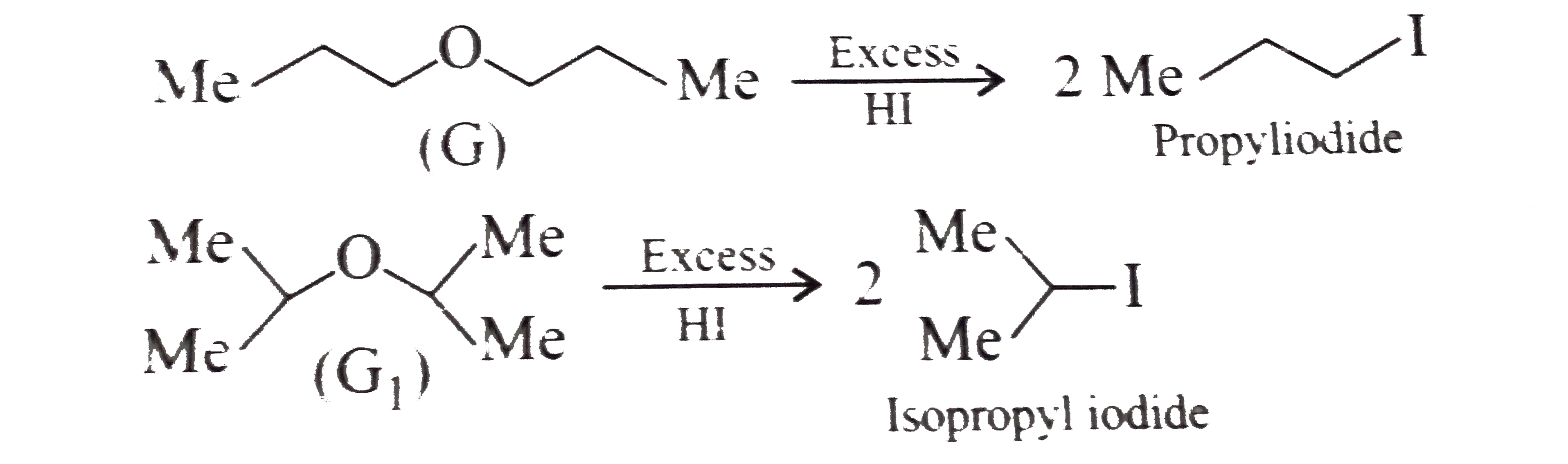 iii. (E) cannot be vicinal diol of the typefor exampleorbecause with an acide they would undergo pinacol-pinacolone rearrangement reaction to give ketone which would undergo oxidation with `KMnO_(4)` . d.(G) must be a symmetrical ether since on reaction with excess of HI, it gives single RI (G), di-n-propyl ether, or di-isopropyl ether. e.Williamson's synthesis cannot be carried out in the following six types. i. Both C atoms are `2^(@)``R_(2)CH--O--CHR_(2)` ii.One C is `2^(@)` and one is `3^(@)``R_(2)CH--O--CR_(3)` iii.Both C atoms are `3^(@)``R_(3)C--O--CR_(3)` iv. Both aryl GROUPS`Ar--O--Ar` v.Both vinyl groups`H_(2)C=CH--O--CH=CH_(2)` vi.Both neopntyl groups  Satured ether (I) with fewest C atom is `(Me_(2)CH--O--CHMe_(2))`(Di-isopropyl ether). f.Unsaturated ether (II) with fewest C atoms is divinyl ether `(H_(2)C=CH--O--CH=CH_(2))`. |
|
| 14. |
Identity the product Z in the series , CH_3CN overset((Na)/(C_2H_5OH))rarrXoverset(HNO_2)rarr Yoverset((O))rarrZ |
|
Answer» `CH_3CHO` |
|
| 15. |
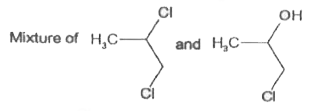
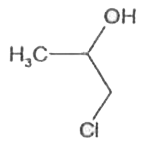
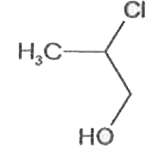
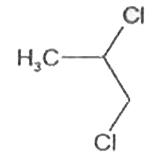
Identity the chiral molecule in the following pair. |
Answer» SOLUTION :2-Chlorobutand or CHIRAL MOLECULE. 
|
|
| 16. |
Identity A,B and C in the following reaction HC-=CH underset(HgSO_(4)) overset(dil.H_(2)SO_(4))toA overset(dil.NaOH)toB overset(heat)toC |
| Answer» Solution :`underset("Acetylene")(HC-=CH) underset(("ADDITION of "H_(2)O))overset(dil.H_(2)SO_(4),HgSO_(4))to underset("Vinyl alcohol (UNSTABLE)")[H_(2)C=CHOH] overset("tautomerises")to underset("Acetaldehyde (A)")(CH_(3)-CHO) underset(("ALDOL CONDENSATION"))overset(dil.NaOH)to underset(beta-"Hydroxybutyraldehyde (B) (An aldol)")(CH_(3)-CHOH-CH_(2)-CHO underset("Dehydration "(-H_(2)O))overset(heat)to underset("But-2-en-1-al(C)")(CH_(3)-CH=CH-CHO)` | |
| 17. |
Identitfy 'B' in the following reactions: H_(2)C=CH_(2)+HCl overset("Anhyd".AlCl_(3))to(A)+2Hoverset(Zn-Cu)underset(C_(2)H_(5)OH)to (B)+HCl |
| Answer» Solution :N//A | |
| 19. |
Identify (Z) in the series:CH_2=CH_2 overset(HBr)rarr(X)overset (Hydrolysis)rarr(Y) overset(NaOH)underset(I_2(excess))rarr(Z) |
|
Answer» `C_2H_5I` |
|
| 20. |
Identify (Z) in the series:CH_2=CH_2 overset(HBr)rarr(X)overset (Hydrolysis)rarr(Y) overset(Na_2CO_3)underset(I_2(excess))rarr(Z) |
|
Answer» `C_2H_5I` |
|
| 21. |
Identify Z in the series, CH_3C HO overset(MnO_4)underset(dil.H_2SO_4)rarrX overset(SOCl_2)rarrY rarroverset(CH_3COONa)underset(heat)rarrZ |
|
Answer» `CH_3COCH_2COONa` |
|
| 22. |
Identify Z in the series CH_2=CH_2overset"HBr" to X overset"aq.KOH"to Y underset(I_2 "excess")overset(Na_2CO_3)to Z |
|
Answer» `C_2H_5I` 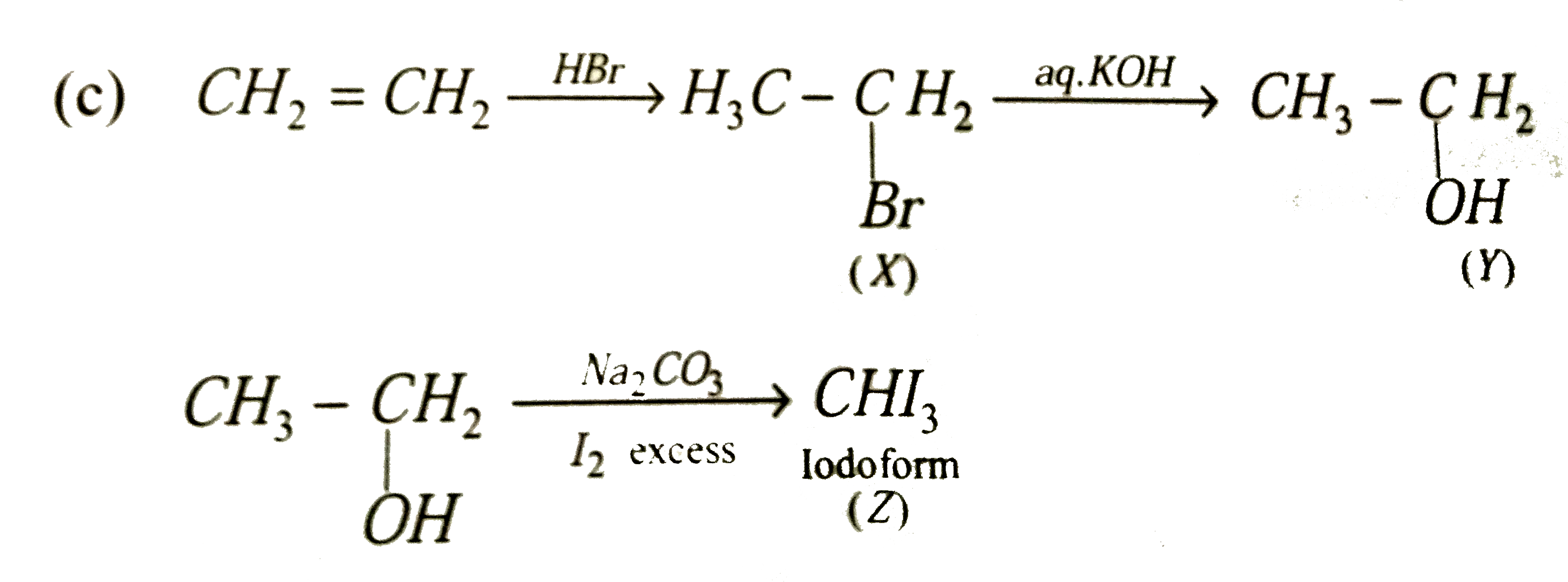
|
|
| 23. |
Identify Z in the sequence of reactions: CH_(3)CH_(2)CH=CH_(2)overset(HBr//H_(2)O_(2))to Y overset(C_(2)H_(5)ON a)toZ |
|
Answer» `CH_(3)-(CH_(2))_(3)-O-CH_(2)CH_(3)`<BR>`(CH_(3))_(2)CH-O-CH_(2)CH_(3)` |
|
| 24. |
Identify Z in the sequence of reactions : CH_(3)CH_(2)CH=CH_(2)underset(H_(2)O_(2))overset(HBr)rarrYoverset(C_(2)H_(5)ONa)rarrZ |
|
Answer» `CH_(3)-(CH_(2))_(3)-O-CH_(2)CH_(3)` |
|
| 25. |
Identify (Z) in the sequence: CH_3COO^-NH_4^+underset(2P_2O_5)overset(1.heat)rarrYundersetrarr(H_2O(H^+)Z: |
|
Answer»
|
|
| 26. |
Identify (Z) in the sequence: CH_3COO^(-)NH_4^+underset(2.P_2O_5)overset(1.heat)rarrY underset( H_2O) overset(H^+)rarrZ |
|
Answer» `CH_3CH_3` |
|
| 27. |
Identify Z in the sequence of reaction : CH_(3)CH_(2)CH= CH_(2) underset(H_(2)O_(2))overset(HBr)to Y overset(C_(2)H_(5)Ona)to Z |
|
Answer» `CH_(3)-(CH_(2))_(3)-O-CH_(2)CH_(3)` HBr in presence of peroxide gives ANTI Markovnikov addition product. `1^(@)` alkyl HALIDE on reaction with `C_(2)H_(5)ONa` gives `SN^(2)` reaction. |
|
| 28. |
Identify in the sequence CH_3CH_2CH=CH_2overset(HBr//H_2O_2)toyoverset(C_2H_5ONa)toz |
|
Answer» `CH_3-(CH_2)_3-O-CH_2CH_3` |
|
| 29. |
Identify Z in the sequence , CH_3-CH_2-CH=CH_2overset(HBr//H_2O_2)rarrYoverset((C_2H_5O^-)-Na^+)rarrZ |
|
Answer» `CH_3-CH(CH_3)-CH_2-O-CH_2-CH_3` |
|
| 31. |
Identify 'Z' in the reaction given below: CH_(3)CHO overset(MnO_(4)^(-))underset(dil.H_(2)SO_(4))rarrXoverset(SOCl_(2))rarrYoverset(CH_(3)COONa)rarrZ |
|
Answer» `CH_(3)COCH_(2)COONa` |
|
| 32. |
Identify Z in the reaction : C_(2)H_(5)Ioverset("alc. KOH")rarrXoverset(Br_(2))rarrYoverset(KCN)rarrZ |
|
Answer» `CH_(3)CH_(2)CN` <BR>`CNCH_(2)CH_(2)CN` |
|
| 33. |
Identify Z in the following series,CH_3-CH_2-CH_2OH overset(conc.H_2SO_4)underset(160-180^@C)rarrXoverset(Br_2)rarrYoverset(1.alc.KOH)underset(2.NaNH_2)rarrZ |
|
Answer»
|
|
| 34. |
Identify Z in the following series,CH_2=CH_2overset(HBr)rarrXoverset(Hydrolysis)rarrYunderset(l_2excess)overset(Na_2CO_3)rarrZ |
|
Answer» `C_2H_5I` |
|
| 35. |
Identify (Z) in the following series, Ethanol overset(PBr_3)rarr(X)overset(alc.)underset(KOH)rarr (Y) overset((i)H_2SO_4//room temp.)underset((ii)H_2O,heat)rarr (Z) |
|
Answer» `CH_2=CH_2` |
|
| 36. |
Identify Z in the following series, CH_(2)=CH_(2)overset(HBr)(to)Xoverset("hudrolysis")(to)Yunderset(I_(2)" excess")overset(Na_(2)CO_(3))(to)Z |
| Answer» Answer :C | |
| 37. |
Identify (Z) in the following series, Ethanol overset(PBr_3)rarr(X)overset(alc.)underset(KOH)rarr (Y) overset((i)H_2SO_4//ro om temp.)underset((ii)H_2O,heat)rarr (Z) |
|
Answer» `CH_2=CH_2` |
|
| 38. |
Identify Z in the following series C_2H_5 l overset ("Alc KOH") toX overset( Br_2) to Y overset ( KCN) toZ |
|
Answer» `CH_3 CH_2CN` <BR>` NCCH_2-CH_2CN` |
|
| 39. |
Identify 'Z' in the following reaction series, CH_(3)CH_(2)CH_(2)Br overset(NaOH_(aq))(X) underset(Delta)overset(Al_(2)O_(2))to (Y) overset(HOCl)to(Z) |
|
Answer»
|
|
| 40. |
Identify Z in the following sequence of reactions Ethanoloverset( PBr_3)to X overset( Alc. KOH) to Y underset( (ii) H_2O , "heat") overset( (i) Conc, H_2SO_4) to ZCH_3COONH_4 overset(Delta )to X overset(P_2O_5) to Y overset(H_2O //H^(+)) to Z |
|
Answer» ` CH_3 CH_2CONH_2` |
|
| 41. |
Identify (z) in the following reaction seriesEthanoloverset(PBr_2)(to)X overset(alc. KOH)(to) Y underset(H_2O, "heat")overset(H_2SO_4, "room temp")(to) Z |
|
Answer» `CH_2 = CH_2` |
|
| 42. |
Identify Z in the following reaction series, CH_3CH_2CH_2Br overset(aq.NaOH)rarr(X)overset(Al_2O_3 heat)rarr(Y)overset(Cl_2)underset(H_2O)rarr(Z): |
|
Answer»
|
|
| 43. |
Identify (Z) in the following reaction serices: CH_(3)CH_(2)CH_(2)Broverset(NaOH(aq))to(X)underset(Delta)overset(Al_(2)O_(3))to(Y)overset(HOCl)to(Z) |
|
Answer»
|
|
| 44. |
Identify (Z) in the following reaction series, C_2H_5I overset(Alcoholic KOH)rarr (X) overset(Br_2)rarr(Y)overset(KCN)rarr(Z) |
|
Answer» `CH_3-CH_2-CN` |
|
| 45. |
Identify 'Z' in the following reaction sequence? CH_3COONH_4 underset(P_2O_5)overset(" Heat ")(to)Y overset(H_2O(H^+))(to)Z |
|
Answer» `CH_3CH_2CONH_2` |
|
| 46. |
Identify Z in the following reaction : CH_3 CH= CH_2 underset("Peroxide")overset(HBr)to X underset("Ether")overset(Mg)to Y underset((ii)H_2O)overset((i)CO_2)to Z |
|
Answer» `(CH_3)_2CHCOOH` |
|
| 47. |
Identify 'C' in the following sequence : C_(6)H_(5)NH_(2) underset(273 K)overset(NaNO_(2) + HCl) rarr A overset(CuCN)rarr B overset(LiAIH_(4))rarr C |
|
Answer»
|
|
| 48. |
Identify Z in the followig reaction 2H_(3)C COCH_(3) underset((ii) Delta)overset((i) Ba(OH)_(2))rarr Z |
|
Answer» `H_(3)C CH_(2)CO_(2)H` |
|
| 49. |
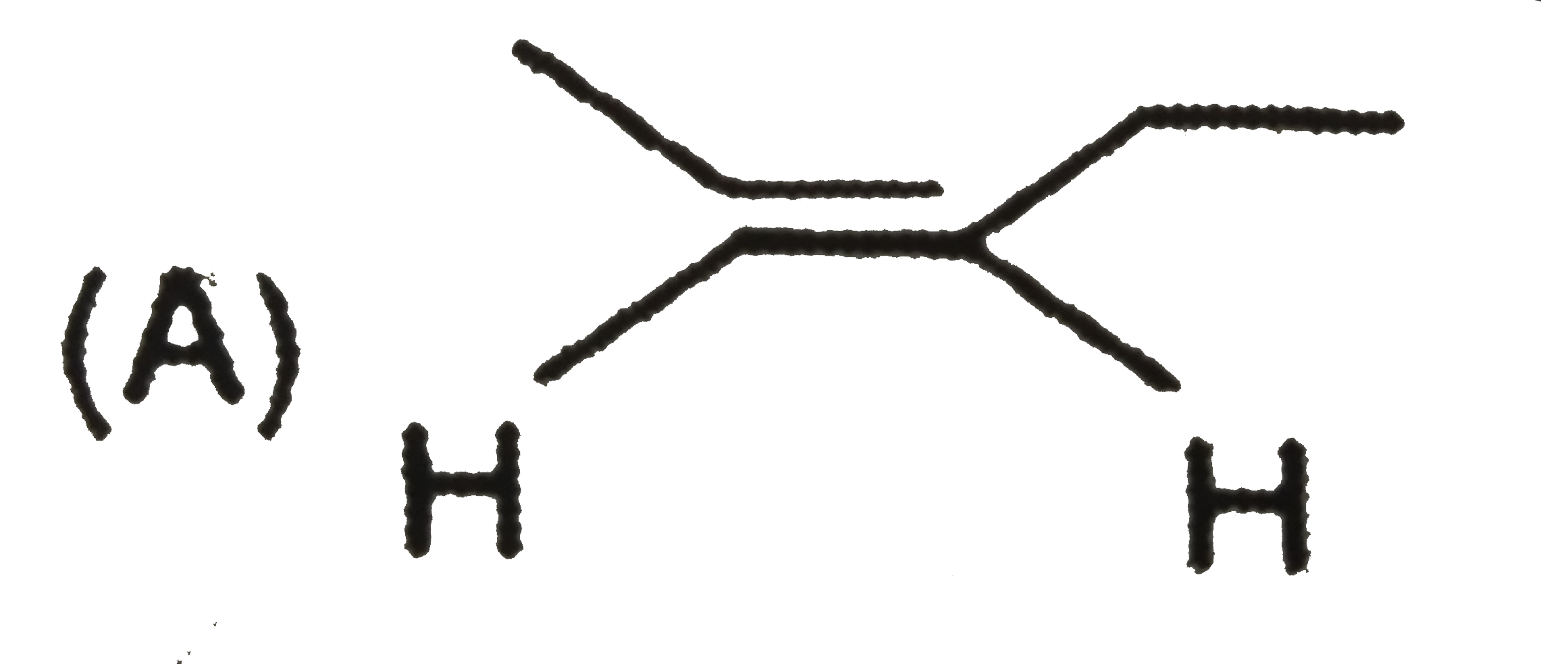
Identify (Z)-2-pentene : |
|
Answer»
|
|
| 50. |
Identify yellow solution F |
|
Answer» `Fe_(2)O_(3)` `FeSO_(4)+BaCl_(2)tounderset((B))(BaSO_(4)darr)+FeCl_(2)` `2FeSO_(4)overset(Delta)tounderset((E))(Fe_(2)O_(3))+UNDERSET((C))(SO_(2))+underset((D))(SO_(3))` `Fe_(2)O_(3)+6HCL tounderset((F))(2FeCl_(3))+3H_(2)O` `2FeCl_(3)+H_(2)Stounderset((H))(2FeCl_(2))+2HCl+underset((G))(S)` `2FeCl_(3)+SnCl_(2)to 2FeCl_(2)+SnCl_(4)` `4FeCl_(3)+3K_(4)Fe(CN)_(6)tounderset("Prussian blue")(Fe_(4)[Fe(CN)_(6)]_(3))+12KCl` |
|