Saved Bookmarks
This section includes 7 InterviewSolutions, each offering curated multiple-choice questions to sharpen your Current Affairs knowledge and support exam preparation. Choose a topic below to get started.
| 1. |
For a chemical reaction A+B rarr Cit has been found that : (i) rate becomes double when the concentrations of A is doubled (ii) rate becomes 16 times when the concentrations of both A and B are doubled . The rate expression is : |
|
Answer» rate `= K[A]^(2) [B]` |
|
| 2. |
Fora chemical reactionA +2B to Cif therateofdisappearanceof A is 0 .5mol dm^(-3)perhour, therateofdisappearanceof Bis |
|
Answer» `0.25mol DM^(-3) hr ^(-1)` `=2xx0.5=-(d[B])/(dt)` |
|
| 3. |
For a chemical reaction 2A+BiffC, the thermodynamic equilibrium constant K_(p) is |
|
Answer» <P>in `atm^(-2)` |
|
| 4. |
For a chemical raction AtoB the rate of the reaction is 2xx10^(-3) mol dm^(-3)s^(-1), when the initial concentration is 0.05 mol dm^(-3). The rate of the same reaction is 1.6xx10^(-2) mol dm^(-3)s^(-1) when the initial concentration is 0.1 mol dm^(-3). The order of the reaction is |
|
Answer» 0 rate `=k[A]^(n)` where `k=` rate CONSTANT, n=order of reaction [A]= concenration of reactant given`"rate"_(1)=2xx10^(-3)"mol dm^(-3)s^(-1)` `[A_(0)'=0.05"mol"dm^(-3)` `"rate"_(II)=1.6xx10^(-2)"mol"dm^(-3)s^(-1)` `[A_(0)]=0.1"mol"dm^(-3)` `:.2xx10^(-3)=k[0.1]^(n)`...............i `1.6xx10^(-2)=k[0.1]^(n)`.............ii Divide i by ii `IMPLIES(2xx10^(-3))/(1.6xx10^(-2))=([0.05]^(n))/([0.1]^(n))=([0.05]^(n))/(2^(n)[0.05]^(n))` `implies1/(2^(n))=1/8` `impliesn=3, :.` Order of reaction =3 |
|
| 5. |
For a chemical change AtoB, it is found that the rate doubles when the concentration of A is increased 4 times. The order in A is |
|
Answer» 2 |
|
| 6. |
For a chemical change 2A+3Brarr Product's the rates w.r.t. 'A' is r_1 and w.r.t. 'B' is r_2. The rates, r_1 and r_2 are related as |
|
Answer» `r_1=r_2` |
|
| 7. |
For a certain van der Waal's gas, critical temperature is-243^(@)C. Match the graphs (given in column-I) with the temperature of the gas (given in column-II). |
|
Answer» |
|
| 8. |
for a certain reactions, large fractions of molecules has energy more than the threshold energy, yet the rate of reaction is very slow. Why? |
| Answer» Solution :Apart from the possessing energy equal to threshold energy `(E^(@))` or more, the reacting species must be property orientation the time of collision. i.e., the atoms of the reacting species which are to ACTUALLY combine must face each other. In the time REACTION under observation, the orientation effect is not proper. Therefore, effective collisions are not as much as EXPECTED. The reaction is therefore, a slow reaction. | |
| 9. |
For a certain reaction of order n, the time for half change, t_(1//2) is given by t_(1//2)=((2-sqrt2))/(k)xxC_(0)^(1//2) where k is constant and C_(0) is the initial concentration. What is n? |
|
Answer» 1 |
|
| 10. |
For a reaction (d x)/(d t) = K[H^(+)]^(n). If pH of reaction medium changes from two to one rate becomes 100 times of value at pH = 2, The order of reaction is |
|
Answer» Solution :pH = 2, `r_(1)=k XX (10^(-2))^(n)` {`:. [H^(+)]=10^(-pH)`} pH = 1, `r_(2)=k xx (10^(-1))^(n)` Given `r_(2) = 100r_(1)` `IMPLIES ((10^(-1))/(10^(-2)))^(n)=100` `10^(n)=100` `:.` n = 2 |
|
| 11. |
For a certain reaction large fraction of the molecules has energy more than the threshold energy, yet the rate of the reaction is very slow. Why? |
| Answer» Solution :Apart from ENERGY considerations, the colliding MOLECULES should have a proper ORIENTATION for effective collision. It appears that this condition is not FULFILLED in this case. That is why the reaction is very slow. | |
| 12. |
For a certain reaction, large fraction of molecules has energy more than the threshold energy, yet the rate of reaction is very slow. Why ? |
| Answer» SOLUTION :This is because colliding molecules MAY not be having proper ORIENTATION for COLLISION to be effective. | |
| 13. |
For a certain reaction large fraction of molecules has energy more than the threshold energy,yet the rate of reaction is very slow.Why? |
|
Answer» Solution :Though the reacting molecules MAY be having energy more than THRESHOLD energy,yet they may not be effective due to lack of PROPER orientation. For chemical reaction as per collision theory reactant and molecule must have threshold energy and collision must be in proper direction then PRODUCT will FORM ,if reactant molecule do not have proper direction than reaction will not take place or rate is slow. Rate =`PZ_(AB)e^(-E_(a)/(RT))`,where P=proper orientation |
|
| 14. |
For a certain reaction, DeltaH=-50 kJ and Delta S=-80JK^(-1), at what temperature does the reaction turn from spontaneous to non-spontaneous ? |
|
Answer» 6.25 K |
|
| 15. |
For a certain reaction Delta H = -50 kJ and Delta S = -80 jK^(-1), at what temperature does the reaction turn from spontaneous to nonspontaneous? |
|
Answer» 6.25 K |
|
| 16. |
For a certain reaction Ato products, the t_(1//2) as a function of [A]_0 is given as below: {:([A]_0(M),0.1,0.025),(t_(1//2),100,50):} Which of the following is true : |
|
Answer» The ORDER of `1/2` `50prop(0.025)^(1-n)` Divide `2=4^(1-n)` `2=2^(2-2n) IMPLIES " " 2-2n=1` `n=1/2` `100 prop (0.1)^(1//2) implies t^(1//2)prop(1)^(1//2)` Divide `t_(1//2)/100=(1/0.1)^(1//2)` `t_(1//2)=100sqrt10` min. |
|
| 17. |
Fora certainreactionDelta H^(@) =- 224 kJand Delta S^(@) =- 153 JK Atwhattemperaturewill itchangefromspontaneous tonon-spontaneous ? |
|
Answer» `Delta S^(@)= - 153 JK^(-1)` Temperature(T)at whichreactionchangesfromspontaneousto non- spontaneous = ? Find thetemperatureat eqilibriumwhere `Delta G^(@) = 0` `Delta G^(@)= Delta H^(@) - T Delta S^(@)` `0 = Delta H^(@)- T Delta S^(@)` `:. T Delta S^(@)= Delta H^(@)` `:.T = (Delta H^(@))/(Delta S^(@)) = (224000)/(153)= 1465 K` Hencereactionwill bespontaneousbelow1465 K. It WILLBE atequilibriumat 1464 Kand non- spontaneousabove 1464 K. |
|
| 18. |
For a certain reaction, AH -50 kJ and AS -80JK, at what temperature does the reaction turn from spontaneous to non-spontaneous. |
| Answer» SOLUTION :(V) (C) 625 K | |
| 19. |
Fora certain reacation large fraction of molecules has energymorethanenergymore thanthethresholdenrgy,yettherate of reactionis very slow. Why ? |
|
Answer» This conditionmightnot to begettingfulfiled in thereactionas itshowsthe number ofreactants takingpart in a reaction , whichcan NEVER be zero. |
|
| 20. |
For a certain process, DeltaH=280 kJ and DeltaS=140 J K^(-1) "mol"^(-1) .What is the minimum temperature at which the process will be spontaneous? |
|
Answer» 2000 K SINCE `DeltaG=DeltaH-TDeltaS, therefore T=(DeltaH)/(DeltaS)` `T=(280xx10^3)/140` = 2000 K |
|
| 21. |
For a certain process, DeltaH=178 kJ and DeltaH=160 J/K . What is the minimum temperature at which the process will be spontaneous ? Assume that DeltaH and DeltaS do not vary with temperature. |
|
Answer» SOLUTION :When the PROCESS is at EQUILIBRIUM , `DeltaG=0` `:.DeltaH=TDeltaS` `(:.DeltaG=DeltaH-TDeltaS)` or `T=(DeltaH)/(DeltaS)=(178000)/(160)=1112.5K` THUS the process will become spontaneous above `1112.5K` |
|
| 22. |
For a cell reaction involving a two electron change, the standrard emf of the cell is found to be 0.295V" at "25^(@)C. The equilibrium constant of the reaction at 25^(@)C will be: |
|
Answer» `1 XX 10^(-10)` |
|
| 23. |
For a cell reaction involving a two-electron change, the standard e.m.f. of the cell is found to be 0.295 V at 25^@C . The equilibrium constant of the reaction at 25^@C will be |
|
Answer» `1 XX 10^(-10)` |
|
| 24. |
For a cell reaction involving a two-electron change, the standard emf of the cell is found to be 0.295 V at 25^@C. the equilibrium constant of the reaction at 25^(@)C will be |
|
Answer» `1xx10^(-10)` `DeltaG=-2.303RT" log "K,nFE^(o)=2.303RTlogK` `LOGK=(nFE^(o))/(2.303RT)=(2xx96500xx0.295)/(2.303xx8.314xx298)` `logK=9.97=K=1xx10^(10)` |
|
| 25. |
For a cell reaction, 2 "Ag"^(+)+Cu(s) rarr Cu^(+2)+2"Ag"(s) schematic diagram indicating migration of cation, anion and electrons is : |
|
Answer»
|
|
| 26. |
For a cell reaction2H_(2(g)) + O_(2(g))to 2H_2O_((l)) DeltaS_(298)^(@) = - 0.32 kJ // K . What is the value Delta_(i) H_(298)^(@) (H_2O, l) ? Given : O_(2(g)) + 4H_((aq))^(+) + 4e^(-) to 2H_2O_((l)) , E^(@) = 1.23 V |
|
Answer» `-285. 07 kJ// mol ` `DeltaH_("for2 moles") = -(4 xx 1.23 xx 96,500) - (298 xx 0.32)` `DeltaH_(H_2O)` for 1 mole `=(1)/(2) [(-4 xx 1.23 xx 96,500) - (298 xx 0.32)] = -285.07 "KJ/mole"` |
|
| 27. |
For a cell reaction , Cu^(2+) (C_1 , aq) + Zn(s) to Zn^(2+) (C_2 , aq) + Cu(s) of an electro chemical cell , the change in standard free energy , DeltaG^(0) at a given temeprature is |
|
Answer» `DELTAG^(@)=RT ln.(C_(2))/(C_(1))` |
|
| 28. |
For a cell involving two electrons changes, E_(cell)^(@)=0.3" V" at 25^(@)C. The equilibrium constant for the reaction is : |
|
Answer» `10^(10)` `K_(C )="Antilog "10=10^(10)` |
|
| 29. |
For a cell given below: Ag|Ag^(+)||Cu^(2+)|Cu Ag^(+)+e^(-)toAg,E^(@)=x Cu^(2+)+2e^(-)toCu,,E^(@)=y ltbr. The value of E_(cell)^(@) is |
|
Answer» `x+2y` `UNDERLINE("At RHS" (reduction) Cu^(2+)+2e^(-)toCu""E_(red)^(@)=+y)` `underline(2Ag+Cu^(2+)toCu+2Ag^(+)""E_(red)^(@)=(y-x))` |
|
| 30. |
For a cell involving two electron changes, E_("cell")^(@) =0.3V at 25^(@)C.The cell equilibrium constant of the reaction is |
|
Answer» `10^(-10)` `log_10K=(nE_(cell)^@)/(0.0591)=(2xx0.3)/(0.0591)=10impliesK=10^10` |
|
| 31. |
For a cell containing copper and silver electrodes , which of the following statements is correct ? |
|
Answer» copper ACCEPTS electrodes and gets REDUCED `E_(Cu)^(@) = 0.337` V and `E_(Ag)^(@) = 0.799` V |
|
| 32. |
For a carnot engine, the source is at 500 K and the sink at 300 K. What is efficiency of this engine |
|
Answer» 0.2 By USING,`eta=(T_(1)-T_(2))/(T_(1))=(500-300)/(500)=(200)/(500)=0.4` |
|
| 33. |
For a calomel electrode , which of the following is 'FALSE' statement ? |
|
Answer» it is a secondary REFERENCE electrode The two half cell reactions are `Zn(s) to Zn_((aq))^(2+) + 2e^(-)` `[Ag_((aq))^(+) + e^(-) to Ag (s)] xx 2` Therefore , Zn is oxidised and act as negative electrode (anode ) whereas , `Ag^(+)` ions are reduced and acts as positive electrode (cathode) Hence the cell representation is `Zn | Zn^(2+) | | Ag^(+) |Ag` |
|
| 34. |
For a binary liquid solution of A and B. P^(overset(0)A)= pure vapour pressure of A. P^(overset(0)H)= pure pressure of B. X_(A)= mole fraction of A in liquid phase. Y_(A)= mole fraction of A in vapour phase. |
|
Answer» <P>`{:(Column-I,Column-II),(P_(A)^(0)GT P_(B)^(0)["Ideal liquid solution"],(p)X_(A)=Y_(A)):}` |
|
| 35. |
For a blue coloured solution obtained in column-2, select the only correct option. |
|
Answer» 1,d,S `Ni^(2+), 3d^8, t_(2g)^(2,2,2)e_g^(1,1)implies sp^3d^2` n=2 paramagnetic & octahedral complex `CO^(3+), 3d^8, t_(2g)^(2,2,2)e_g^(1,1)implies sp^3d^2` n=2, paramagnetic & octahedral complex |
|
| 36. |
For a binary liquid solution of A and B. P_A^0=pure vapour pressure of A . P_B^0=pure vapour pressure of B. X_A=mole fraction of A in liquid phase.Y_A=mole fraction of A in vapour phase. {:("Column I","Column II"),((A)P_A^0gtP_B^0"[Ideal liquid solution]",(p)X_A=Y_A),((B)"Azeotropic mixture",(q)X_AltY_A),(( C)"Equimolar ideal mixture of A & B with "P_A^0ltP_B^0,(r)X_BltY_B),((D)"Equimolar ideal mixture of A & B with "P_A^0=P_B^0,(s)Y_BgtY_A),(,(t)X_B=Y_B):} |
|
Answer» (B)For azeotropes composition of vapour phase and liquid phase is same (C )For `P_A^0 lt P_B^@ ,X_B lt Y_B and Y_B GT Y_A` for an equimolar ratio. (D) For `P_A^0=P_B^0,X_A=Y_A` for an equimolar ratio. |
|
| 37. |
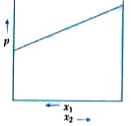
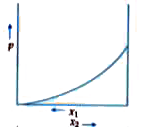
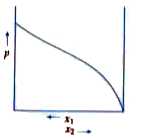
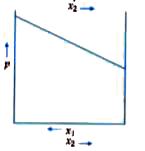
For a binary ideal liquid solution, the variation in total vapour pressure versus compositionof solution is given by which of the curves ? |
|
Answer»
|
|
| 38. |
For a binary ideal liquid solution, the variation in total vapour pressure versus composition of solution is given by which of the curves ? |
|
Answer»
|
|
| 39. |
For a binary ideal liquid solution, the variation in total vapour pressure us composition of solution is given by which of the curves ? |
|
Answer»
|
|
| 40. |
For A+B to C in column-II the graphs given can be from any of these four types. (a)-(dA)/(dt) Vs time (x axis), (b)t_(1//2) Vs initial conc. (x axis) (c )((C_o-C_r)/C_t) Vs time (x axis) , (d) Conc. Vs time (x axis ) Match the graphs in Column-II for the given order of reactions in Column-I |
|
Answer» |
|
| 41. |
For A+BtoC+D when [A] alone is doubled rate gets doubled but when [B] alone is increased by 9 times rate gets tripled. Then orders of reaction is |
|
Answer» `3//4` |
|
| 42. |
For A+B rarr C+D,DeltaH=-20 kJ mol^-1, The activation energy of the forward reaction is 85 kJ mol^-1. The activation energy for backward reaction is…….kJ mol^-1: |
|
Answer» 65 |
|
| 43. |
For a Ag -Zn button cell , net reaction is : Zn_((s) + Ag_2 O_((s)) to ZnO_((s)) + 2Ag_((s)) , DeltaG^(0)f (Ag_2O) = -11 . 21 kJmol^(-1)DeltaG^(0)F (ZnO) = -318 . 3 kJ mol^(-1) HenceE_("cell")^(0) of the button cell is : |
|
Answer» `3.182 V ` `DeltaG^(0) = -nF E^(0)` ......... (2) `:. -nfE^(0) = -307 xx 10^(3)` ` 2 xx 96500 xx E^(0) = 307 xx 10^(3) , E^(0) = (3.07 xx 10^(3))/(2 xx 96500) = + 1.59V` |
|
| 44. |
For a 5% solution of urea (Molar mass = 60 g/mol), calculate the osomotic pressure at 300 K. [R=0.0821 " L atm K"^(-1)"mol"^(-1)] |
|
Answer» Solution :Applying the relation : `PI =CRT`, where C is the number of moles per litre of the solution. Let US CONSIDER one litre of the solution. Mass of the solute in one litre = 50 g Number of moles of the solute `=(50)/(6)` Concentration, `C=(5)/(6)` Substitutingthe values in the above equation, we have `pi=(5)/(6) xx 0.0821 xx 300` `=20.525` atm |
|
| 45. |
For a A+Btoproduct,the rate law is given by r=k[A]^(1/2)[B]^2.What is the order of the reaction . |
| Answer» SOLUTION :ORDER`=1/2 +2=2^(1/2)` | |
| 46. |
For a 1st order reaction log (a-x) is plotted Vs time, a straight line is obtained with slope |
|
Answer» `K/2.303` |
|
| 47. |
For a 1^(st) order reaction (gaseous) (constant V, T) : aAto(b-1)B+1 C(with bgta) the pressure of the system rose by 50(b/a-1) %in a time of 10 min. The half life of the reaction is therefore. |
|
Answer» Solution :`{:(AA,to,(B-a)B,+C),(t=0,P_0,0,0),(t=t,P_3x,((b-a)x)/a,x/a):}` Total PRESSURE `P_0-x+b/ax=P_0+(b/a-1) 1/2 P_0` `P_0+(b/a-1)x=P_0+(b/a-1)P_0/2` `x=P_0/2` `P_A=P_0-x=P_0-P_0/2=P_0/2` `P_A` reduces to half in 10 min, so `t_(t//2)`=10 min |
|
| 48. |
For a 1st order reaction log K is plotted against 1/T and, the slope of the line is -1.5xx10^2K. The activation energy for the reaction would be |
|
Answer» 2872 J `mol^-1` |
|
| 49. |
For a 1st order reaction, the time required for 99.9% completion is |
|
Answer» ten TIMES the TIME required for HALF competion of reaction |
|
| 50. |
For a 0.1 M aqueous solution of a weak acis, HA (K_(a)=10^(-9)), the pH is approximately equal to |
|
Answer» 9 |
|