

Saved Bookmarks
This section includes 7 InterviewSolutions, each offering curated multiple-choice questions to sharpen your Current Affairs knowledge and support exam preparation. Choose a topic below to get started.
| 1. |
For ""_(92)^(238)U the binding energy per nucleon is 7.576 MeV. What is the atomic weight of this isotope? Use the mass of neutron and proton |
|
Answer» |
|
| 2. |
For 500ml 22.4V H_(2)O_(2) solution having density 1.2 gm/ml. Identify correct statement(s) |
|
Answer» Molality =1.76m `d_("solution")=1.2gm//ml=("Mass of solution")/(500)rArr` Mass of solution =600gm Mass of solvent =600-34=566gm (A) `m=(n_(H_(2)O_(2))xx1000)/(W_("water")(gm))=(1000)/(566)=1.76` (B) `(W)/(W)%=(34)/(600)xx100=5.66%` (C) `(W)/(v)%=(34)/(500)xx100=6.8%` (D) 1 litre `H_(2)O_(2)` solution produce `O_(3)` (NTP) =22.4litre `500 ml H_(2)O_(2)` solution produce `O_(2)(NTP)=11.2` litre |
|
| 3. |
for 3d_(z^2) orbital the value of l and m respectively are |
| Answer» Answer :A | |
| 4. |
For 3AtoxB,(d[B])/(dt) is found to be 2/3rd of (d[A])/(dt),. Then the value of x is |
|
Answer» 1.5 |
|
| 5. |
For 2SO_2 + O_2 to 2SO_3, rate of disappearance of SO_2 is 4 xx 10^(-3)M - s^(-1)att=10 sec. Then, the amount of SO_3 formed & amount of O_2consumed at t = 10 sec respectively are |
|
Answer» 0.1g, 0.1g |
|
| 6. |
For 2NH_(3)overset("Au")(to)N_(2)+3H_(2), rate w.r.t N_(2) is 2xx10^(-3)"M - min"^(-1), then rate w.r.t N_(2) after 20 minutes will be ("in M - min"^(-1)) |
|
Answer» `2XX10^(-3)` |
|
| 7. |
For 2NH_3(g) underset(Delta)overset(Pt)(to)products follows zero order kinetics. If t_(1//2)at p = 4 atm is 25 sec, t_(1//2)atp = 16 atm will be (in sec) |
|
Answer» 6.25 |
|
| 8. |
For 2H_2O_2 to 2H_2O +O_2. If(-d)/(dt) [H_2O_2] = K_1 [H_2O_2] (+d[H_2O])/(dt) = K_2[H_2O_2](+d[O_2])/(dt) = K_3[H_2O_2] |
|
Answer» `k_1 = k_2 = k_3` |
|
| 9. |
For 2H_2O_2 to 2H_2O + O_2 , t_(0.5) = 0.301 hr. When [H_2O_2]at t =0 is 0.5 M, initial rate is |
|
Answer» `2.303 M.h^(-1)` |
|
| 10. |
For 2A(g) B(g) +3C(g), Pressure of A at t = 0 is 500 mm, then total pressure of A, B & C at t =10 min is( in mm) |
|
Answer» 100 |
|
| 11. |
For 2A to B,[A] changed from 0.08M to 0.04M in100 seconds. Now (Delta [B])/(Delta t)will be |
|
Answer» `2 XX 10^(-4) Ms^(-1)` |
|
| 12. |
For 2A+B+Cto Products, rate law is given by rate =" k [A] [B]"^(2) & rate constant (k) is 2xx10^(-6)M^(-2)-s^(-1). Then rate of the reaction become 2xx10^(-9)"M - s"^(-1) only when |
|
Answer» `{:(" [A]","[B]","[C]"),(0.1M,01.M,0.2M):}` |
|
| 13. |
For 2A B+3C_(3) 2C overset(k_(2))rarr 3D. Which of the following is correct : |
|
Answer» `d[C]//dt=3k_(1)[A]^(2)-3k_(1)[B][C]^(3)-2K_(2)[C]^(2)` |
|
| 14. |
For ""^(24)Na,t_((1)/(2))=14.8 hours. In what period of time will a sample of this substance lose 90% of its radioactive intensity ? |
|
Answer» Solution :Let the initial radioactive intensity be 100 which corresponds to `N^(0)`. The radioactive intensity after a time period, say t HOURS, will be 10 (CORRESPONDING to N) as the SUBSTANCE has lost 90% of its radioactive intensity. `lamda= (0.6932)/(t_((1)/(2))) = (0.6932)/(14.8)` We have, `lamda= (2.303)/(t) "log" (N^(0))/(N)` `(0.6932)/(14.8) =(2.303)/(t) "log" (100)/(10)` t= 49.17 hours. |
|
| 15. |
For I_2+2erarr2I^-,standard reduction potential =+0.54 volt. For Br^(- )rarrBr_2 +2e^-, standard oxidation potential=-1.09 volt. For FerarrFe^(2+) +2e^-, standard oxidation potential=+0.44 volt. Which of the following reactions is non-spontaneous : |
|
Answer» `Br_2+2I^-` `rarr2Br^(-) +I_2` |
|
| 17. |
For 10 minutes each, at 27^(@)C, from two identical holes nitrogen and an unknown gas are leaked into a common vessel of 3L capacity. The resulting pressure is 4.18bar and the mixture contains 0.4mol of nitrogen. What is the molar mass of the unknown gas? |
|
Answer» Solution :Let unknown gas is ‘a’ Here, `T = 300K, t_(N_(2)) = t_(a) = 10 "MINUTES"`, `V = 3 L = 3dm^(3), P_(T) = 4.18bar, n_(N_(2))= 0.4 "MOL"` From Dalton’s law of PARTIAL pressures, we known that. `P_(T) = R_(N_(2)) + P_(a)` `P_(T) = n_(N_(2)) (RT)/(V)+n_(2)(RT)/(V)=(n_(N_(2))+n_(2))(RT)/(V)` `4.18 = (0.4 + n_(2)) (0.083 xx 300)/(3)` `implies (0.4 + n_(2) ) = (4.18 xx 3)/(0.083 xx 300)= 0.5036 implies n_(2)=0.5036-0.4=0.1036` Now, from Graham’s law of diffusion, we now that. `(n_(N_(2)))/(n_(2))= (t_(N_(2)))/(t_(a))sqrt((M_(a))/(M_(N_(2))))implies (0.4)/(0.1036)= (10)/(10)sqrt((M_(a))/(28))implies 3.861=sqrt((M_(a))/(28))` `M_(a)=(3.861)^(2) xx 28= 417.4` therefore Molar mass of un NOWN gas `= 417.4 G//"mol"`. |
|
| 18. |
For 100 times increase in concentration of H^(+) ions : |
|
Answer» pH INCREASES by 2 units |
|
| 19. |
For 10 minute each, at 27^(@)C, from two identical holes nitrogen and an unknown gas are leaked into a common vessel of 3 litre capacity. The resulting pressure is 4.18 bar and the mixture contains 0.4 mole of nitrogen. What is the molar mass of unknown gas ? |
|
Answer» Solution :P=4.18 bar, V=3L, T=300 K `n_(T) =(PV)/(RT) =(4.18xx3)/(0.83xx300)=0.50` Total mole of gases diffused =0.50 Mole of UNKNOWN GAS `n_(g)` diffused `=n_(T)-n_(N_(2))` `=0.50 -0.40=0.10` `(n_(g)//t_(g))/(n_(g)//t_(n_(2)))=sqrt((M_(n_(2))/(M_((g))))` `rArr =(0.1)/(0.4) =sqrt((28)/(M_((g)))` `rArr Mg =448" gm mole "^(-1)` |
|
| 20. |
For1 mole of monoatomic gas . Calculate w, DeltaU, DeltaH,q |
|
Answer» `W=0` `q= DU= C_(V) (T_(2)_T_(1)) =3//2xx(400-300)=150 R` `DeltaH=C_(P)DELTAT=(5)/(2)R(400-300)=250R` |
|
| 21. |
For 1 mole of an ideal gas, a graph of pressure vs volume is plotted as shown. Which of the following option is correct ? |
|
Answer» AB process is isothermal. |
|
| 22. |
For 1 mole of an ideal gas, a graph of pressure vs volume is plotted as shown. Which of the following options is correct ? |
|
Answer» AB process is isothermal `P=-V+10` `RT=-V^(2)+11V` `(RDT)/(dV)=-2V+11=0` `V=1/2` `T_(max)=(-121/4+11xx11/2)/R=121/(4xx0.0821)K` |
|
| 23. |
For 1 molal aqueous solution of the following compounds, which one will show the highest freezing point? |
|
Answer» `[CO(H_(2)O)_(3)Cl_(3)]3H_(2)O` |
|
| 24. |
For 1 molal aqueous solution of the following compounds, which one will show the highest freezing point ? |
|
Answer» `[Co(H_(2)O)_(6)]Cl_(3)` `{:("AQUEOUS solution",,i),([Co(H_(2)O)_(6)]Cl_(3),to,4),([Co(H_(2)O)_(5)Cl]Cl_(2).H_(2)O,to,3),([Co(H_(2)O)_(4)Cl_(2)]Cl.2H_(2)O,to,3),([Co(H_(2)O)_(3)Cl_(3)].3H_(2)O,to,1):}` |
|
| 25. |
For 1 molal aqueous solution of the following compounds, which one will show the highest freezing point - |
|
Answer» `[Co(H_(2)O)_(6)]Cl_(3)` |
|
| 26. |
For 1 mol ofan ideal gas at a constant temperature T, the plot of (log P) against (log V) is a (P: Pressure, V: Volume) |
|
Answer» STRAIGHT line parallel to x-axis. `thereforelogp+logV` =constant LOGP=-logV+ constant Hence, the plot of logP vs LOG V is straight line with negative slope. 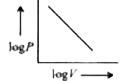
|
|
| 27. |
For 0.0128 N solution of acetic acid at 25^(@)C equivalent conductance of the solution is 1.4 "mho cm"^(2) eq^(-1) and Lambda_(0) = 391 "mho cm"^(-2)eq^(-1). Calculate dissociation constant (K_(a)) of acetic acid. |
| Answer» SOLUTION :`1.6 XX 10^(-7)` | |
| 28. |
For 1 g molecule of an ideal gas : |
|
Answer» `(PV)/T` = 2cal |
|
| 29. |
For 0.01 N KCl, the resistivity 709.22 ohm cm. Calculate the conductivity and equivalent conductance. |
|
Answer» |
|
| 30. |
For 1/2X_(2)+Y_(2)toXY_(2) relartive rates of species is given as |
|
Answer» ` "RATE" =(-d[x_(2)])/(dt)=(-d[y_(2)])/(dt)=+(d[xy_(2)])/(dt)` |
|
| 31. |
Fool's gold is |
|
Answer» `Cu_(2)S` |
|
| 32. |
Fool'sgoldis |
|
Answer» ` Cu_ 2 S ` |
|
| 34. |
Food preservative in tomato ketchup is |
|
Answer» SODIUM ACETATE |
|
| 35. |
Food preservatives prevent spoilage of food due to microbial growth. The most commonly used preservatives are |
|
Answer» table SALT, sugar |
|
| 36. |
Food preservatives prevent spoilage of food due to microbial growth. The most commonly used preservatives are : |
|
Answer» table SALT, sugar |
|
| 37. |
Food preservative among the following |
|
Answer» Vanomycine |
|
| 38. |
Food preservation by removal of heat involves_____. |
|
Answer» refrigeration |
|
| 39. |
Following two reactions can occurs at cathode in the electrolysis of aqueous sodium chloride. Na^(+)+e^(-)toNa(s),E_(Red)^(@)=-2.71V 2H_(2)O(l)+2e^(-)toH_(2)(g)+2OH^(-)(aq)E_(Red)^(@)=-0.83V Which reaction takes place preferentially and why? |
| Answer» Solution :As the standard REDUCTION potential of `H_(2)O` is greater than that of `Na^(+)` ION, reduction of WAER takes place preferentially, i.e., `H_(2)` is liberated at CATHODE. | |
| 40. |
Following two graphs are based on the conductometric titration of acid-base reaction. Answer the questions given at the end of it. Select correct statement, |
|
Answer» GRAPH A is for weak monobasic acid while graph B is for monobasic STRONG acid |
|
| 41. |
Following statements is/are correct about mixture : |
|
Answer» MIXTURE is 3-types of OXIMES |
|
| 42. |
Following solutions were prepared by mixing different volumes of NAOH of HCL different concentrations. (i) 60 mL (M)/(10) HCI+40 mL (M)/(10) NaOH (ii) 55 mL (M)/(10) HCI+45 mL (M)/(10) NaOH (iii) 75 mL (M)/(5) HCI+25 mL (M)/(5) NaOH (iv) 100 mL (M)/(10) HCI+100 mL (M)/(10) NaOH pH of which one of them will be equal to I? |
|
Answer» iv No of mole of `NaOH = 0.2 xx 25 xx 10^(-3) = 5 xx 10^(-3)` No of moles of HCl after mixing `=15 xx 10^(-3) -5 xx 10^(-3)` `:.` Concentration of HCl `= ("No. of moles of HCl")/("Vol in litre") = (10 xx 10^(-3))/(100 xx 10^(-3)) = 0.1M` For (iii) solutiion, pH of 0.1 M HCl = `-log_(10) (0.1) = 1` |
|
| 43. |
Following solutions at the same temperature will be isotonic: |
|
Answer» 3.42 g of cane SUGAR in ONE litre WATER and 0.18 g of GLUCOSE in one litre water |
|
| 44. |
Following solutions at the same temperature will be isotonic |
|
Answer» 3.42 g of cane sugar in one litre water and 0.18 g of glucose in one litre water (andfor nonelectrolytes also `C_(1) = C_(2))` `pi_(1) = W/(M xx V) xx RT = 3.42 /(342 xx 1)RT = 0.01 RT` `pi_(2) = 0.18/(180 xx 0.1) RT = 0.01 RT` |
|
| 45. |
Following solution are prepared by the mixing different volumes of NaOH of HCl different concentrations. |
|
Answer» `60 mL M/10 HCl+40 mL M/10 NaOH` No. of moles of HCl= `0.2 TIMES 75 times 10^-3=15 times 10^-3` No of Moles of NaOH=`0.2 times 25 times 10^-3=5 times 10^-3` No of moles of HCl after mixing `=15 times 10^-3 -5 times 10^-3` `therefore"Concentration"= ("No. of moles of HCl")/("Vol in litre")=(10 times 10^-3)/(100 times 10^-3)=0.1M` for (III) solution pH of 0.1 M HCl=`-log_10(0.1)=1`. |
|
| 46. |
Following sidwick.s rule of EAN, Co(CO)_(x) will be: |
|
Answer» `CO(CO)_(4)` 
|
|
| 47. |
Following Sidwick's rule of EAN, Co(CO)_(x) will be : |
|
Answer» `Co_(2)(CO)_(4)` |
|
| 48. |
Following Sidgwick's rule of EAN, Co(CO)_(x) will be. |
|
Answer» `Co_(2)(CO)_(4)` |
|
| 49. |
Following reactions occur at cathode during the electrolysis of aqueous silver chloride solution: Ag^(+)(aq)+e^(-)toAg(s),E^(@)=+0.80V,H^(+)(aq)+e^(-)to(1)/(2)H_(2)(g),E^(@)=0.00V On the basis of their standard reduction electrode potential (E^(@)) values, which reaction is feasible at the cathode and why? |
|
Answer» Solution :Higher the standard REDUCTION potential of a species, more easily it is reduced at the CATHODE. As `Ag^(+)(aq)` has GREATER standard reduction potential, therefore, the reaction that will OCCUR at the cathode is `Ag^(+)(aq)+e^(-)TOAG(s)`. |
|
| 50. |
Following reactionsoccur spontaneously as written below: 2Fe^(+++)+2l^(-) to 4Fe^(++)+I_(2) O_(2)(g)+H^(+)+4Fe^(++) to 4Fe^(+++)+2H_(2)O Oxidizing power of O_(2),Fe^(+++) and I_(2) will be in the order: |
|
Answer» `O_(2) GT Fe^(3+) gt I_(2)` |
|