

Saved Bookmarks
This section includes 7 InterviewSolutions, each offering curated multiple-choice questions to sharpen your Current Affairs knowledge and support exam preparation. Choose a topic below to get started.
| 1. |
Each of these are added to a mixture of aqueous solutions of iodide and CHCl_(3) separately. Which will give a positive test for iodine when the solution are vigorously mixed ? |
|
Answer» NACL solution |
|
| 2. |
Each of the three metals x, y and z were put in turn into aqueous solution of the other two that is [x + Salt of y (or z) = y (or z) + salt of x]. Which of the following may be wrong? |
|
Answer» y + SALT of X = no ACTION OBSERVED |
|
| 3. |
Each of the three metals X, Y and Z were put in turn into aqueous solution of the other two , X + Salt of Y (or Z)=Y (or Z ) + Salt of X . Which observation is probably incorrect : |
|
Answer» Y + Salt of X =No ACTION observed |
|
| 4. |
Each of the three metals X , Y and Z were put in turn into aqueous solution of the other two . X + Salt of Y (or Z) = Y (or Z) + Salt of X . Which observation is probably incorrect . |
|
Answer» Y + salt of X = No ACTION observed |
|
| 5. |
Each of the six compounds shown at the bottom of the page has two aromatic (benzene) rings. In each case the two rings are different and are labeled A & B. If an electrophilic substitution, such as nitration or bromination, is carried out on each compound, then identify which ring (A or B) will be preferntially attacked, and indicate the orientation of the substitution (orhto/para, meta or all sites) {:("Compound","Reactivity",,"Substitution",,"Compound","Reactivity",,"Substitution",,),(1,A,,"ortho/para",,2,A,,"ortho/para",,),(,B,,"meta",,,B,,"meta",,),(,,,"all sites",,,,,"all sites",,),(3,A,,"ortho/para",,4,A,,"ortho/para",,),(,B,,"meta",,,B,,"meta",,),(,,,"all sites",,,,,"all sites",,),(5,A,,"ortho/para",,6,A,,"ortho/para",,),(,B,,"meta",,,B,,"meta",,),(,,,"all sites",,,,,"all sites",,):} |
|
Answer» Each of the six compounds shown at the BOTTOM of the page has two aromatic (benzene) rings. In every case the tworings are different andare labled A and B. If an electrophilic substitution, such as nitration or bromination, is carried out on each compound can the MAJOR product (s) be predicted ? Identify which ring (A or B) will be PREFERENTIALLY attacked, and indicate the orientation of the substitution (ortho/para, meta or all sites). 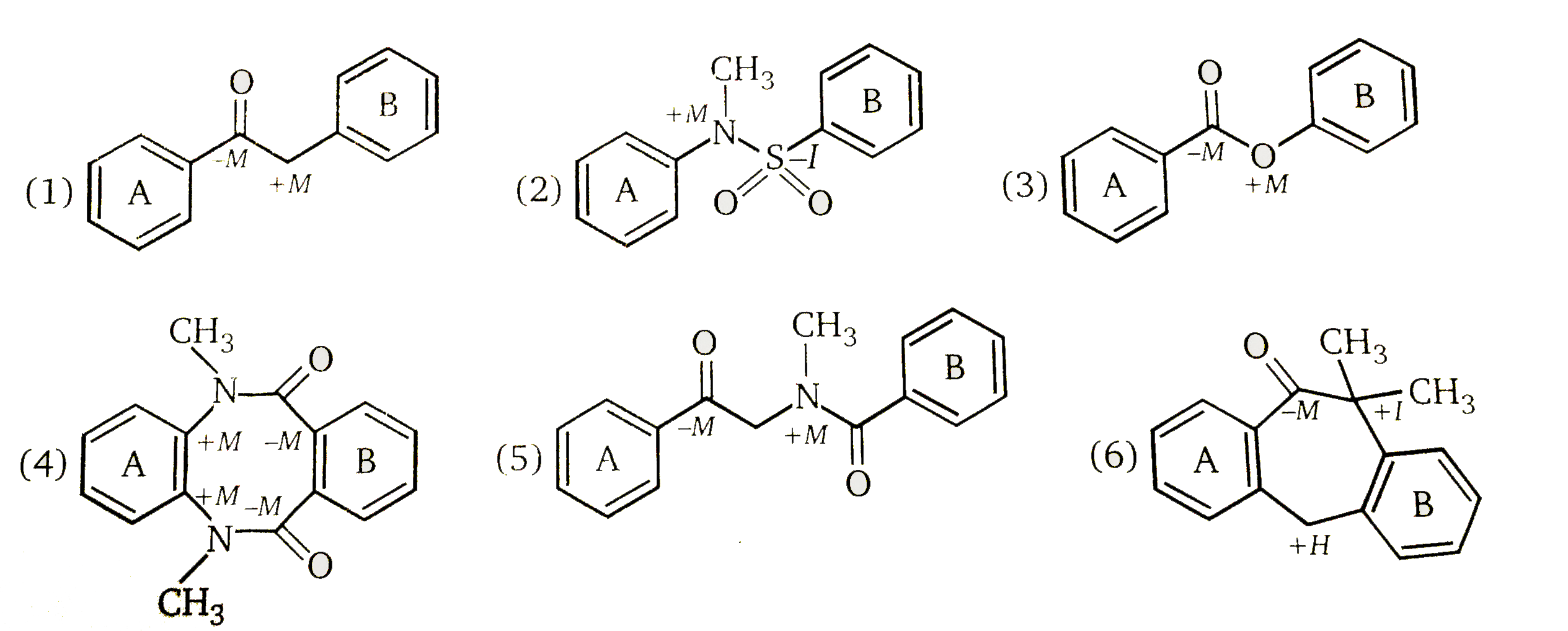
|
|
| 6. |
Each of the following metal on reaction with dilute hydrochloric acid produces H_(2) (g) . In which of the following reaction of metal, the molar ratio of the metal used and hydrogen produced is 2 : 3 ? |
|
Answer» Fe |
|
| 7. |
Each of the following is true about white and red phosphorus except that they : |
|
Answer» are both SOLUBLE in `CS_2` |
|
| 8. |
Each of the followingis true about white and red phosphorousexceptthat they |
|
Answer» Can be CONVERTED into one another |
|
| 9. |
Each of the following ion contains vanadium the +V oxidation state except: |
|
Answer» `VO_(2)^(+)` |
|
| 10. |
Each of the following ion contains vanadium the + V oxidation state except |
| Answer» Solution :`VO^(2+) rArr x -2=2, rArr x=4` | |
| 11. |
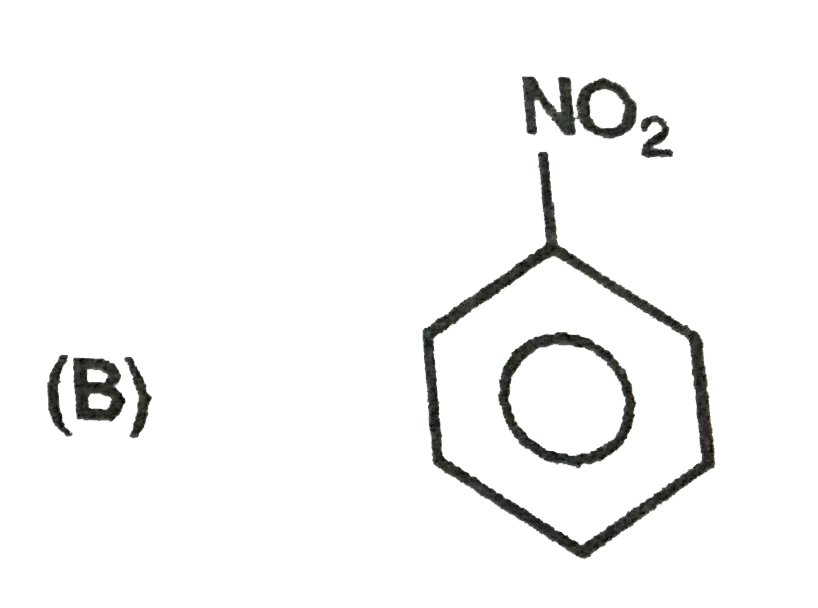
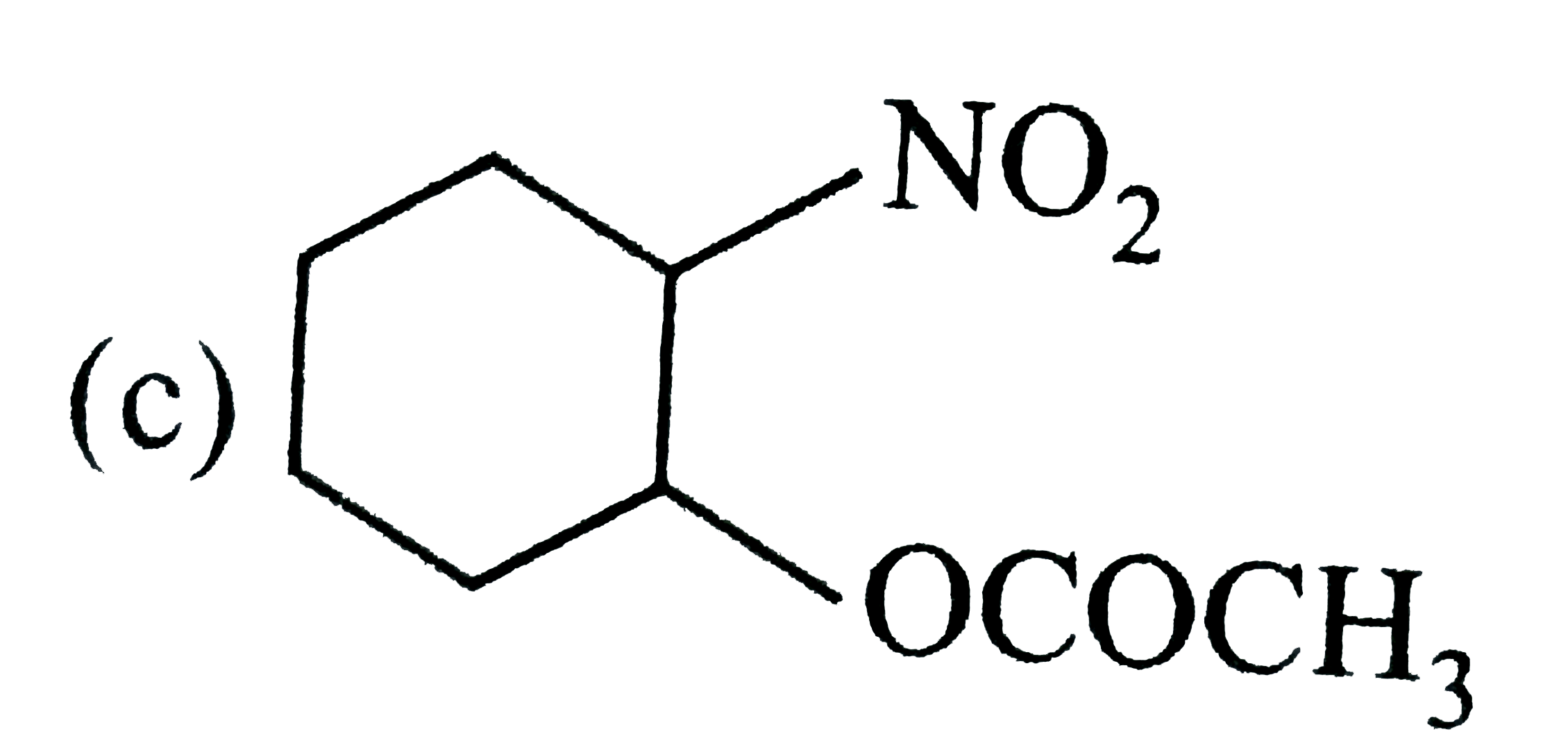
Each of the following gives a m-nitro compound on nitro except |
|
Answer»
 Due to the presence of these elctronegative Cl atoms in `C Cl_(3)` group, ALSO witdraws the electrons DENSITY from o- and p-more than m-position. Only in PHENOL, the OH group is activating and phenol will give o- and p-nitrophenol. |
|
| 12. |
Each of the following has non zero dipole moment ,except: |
|
Answer» `C_6H_6 ` |
|
| 13. |
Each of the following compounds is an aromatic except |
|
Answer» benzene 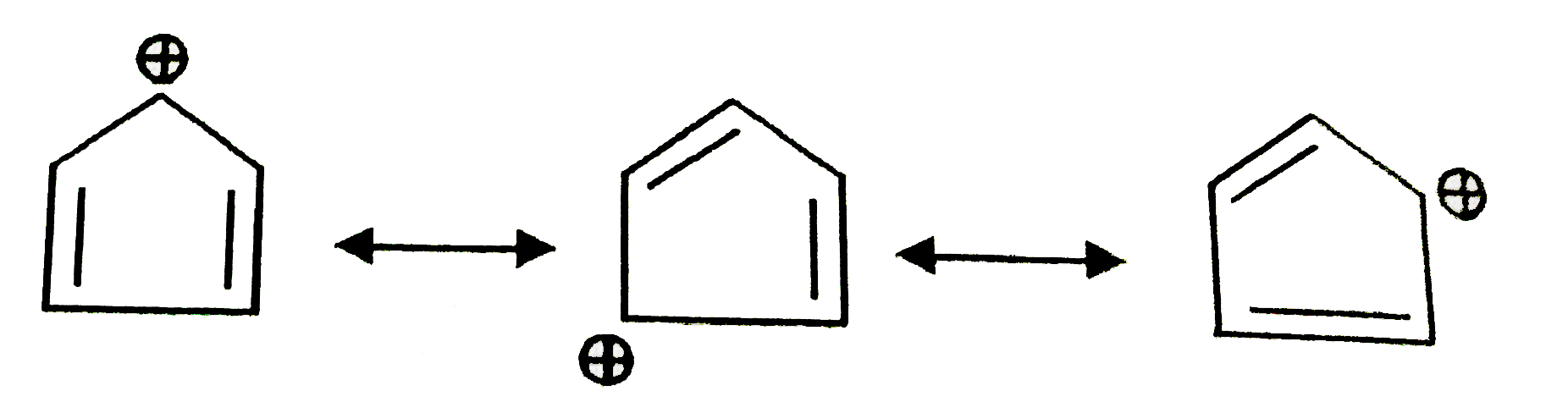
|
|
| 14. |
Each metal possesses: |
|
Answer» PRIMARY VALENCIES satisfied by ANIONS only |
|
| 15. |
Each halogen combines with other halogens to form a series of compounds called ………………… |
| Answer» SOLUTION :INTER - HALOGEN COMPOUNDS | |
| 16. |
Each coinage metal has: |
|
Answer» 18 ELECTRONS in their PENULTIMATE shell |
|
| 17. |
Each atom in the corner of the cubic unit cell is shared by how many unit cells ? |
|
Answer» 8 |
|
| 18. |
Each atom in bcc structure has …….. Nearest neighbours. |
|
Answer» 8 |
|
| 19. |
EA_(1) value of some group of p-Block elements ae given: a, b, c…………l are non radioactive p-Block elements: Select the correct order of 2^(nd) ionisation energy: |
|
Answer» `a LT E lt i` |
|
| 20. |
EA_(1) value of some group of p-Block elements ae given: a, b, c…………l are non radioactive p-Block elements: Choose correct match : |
|
Answer» `a, B, C,d =` Pnictogens |
|
| 21. |
EA_(1) value of some group of p-Block elements ae given: a, b, c…………l are non radioactive p-Block elements: Select the correct order of atomic radius: |
|
Answer» `A lt blt c lt d` |
|
| 22. |
E_(1),E_(2) and E_(3) the emf values of the three galvanic cells respectively. (i) Zn|Zn_(0.1M)^(2+)||Cu_(0.1M)^(2+)|Cu, (ii) Zn|Zn_(0.1M)^(2+)||Cu_(0.1M)^(2+)|Cu ltBrgt (iii) Zn|Zn_(0.1M)^(2+)||Cu_(0.1M)^(2+)|Cu Which one of the following is true |
|
Answer» `E_(2) gt E_(3) gt E_(1)` Higher the `([Zn^(2+)])/([Cu^(2+)])` ratio lower is the e.m.f. of cell. (i) `"log"[(Zn^(2+)])/([Cu^(2+)])=10,""(ii)" log"([Zn^(2+)])/([Cu^(2+)])=1` (III) `"log"([Zn^(2+)])/([Cu^(2+)])=0.1` So is `E_(3) gt E_(2) gt E_(1)`. |
|
| 23. |
E_(1),E_(2) and E_(3) are the emf values of the three galvanic cells respectively (i) Zn|Zn^(2+)(1M)||Cu^(2+)(0.1M)|Cu (ii) Zn|Zn^(2+)(1M)||Cu^(2+)(1M)|Cu (iii) Zn|Zn^(2+)(0.1M)||Cu^(2+)(1M)|Cu Which one of the following is true? |
|
Answer» `E_(2) gt E_(3) gt E_(1)` `E_(CELL)=E_(cell)^(@)-(0.0591)/(2)"log"([Zn^(2+)])/([Cu^(2+)])` Thus, HIGHER the value of `[Zn^(2+)]//[Cu^(2+)]`, LOWER is the emf of the cell, `([Zn^(2+)])/([Cu^(2+)])` for `(i)=(1)/(0.1)=10`, for (ii)`=(1)/(1)=1`, for `(III)=(0.1)/(1)=0.1` Hence, `E_(3) gt E_(2) gt E_(1)`. |
|
| 24. |
E_(1),E_(2) andE_(3) are the emf of the following three galvanciccells respectively (i) Zn(s)|Zn^(2+)(0.1 M)||Cu^(2+)(1 M)|Cu(s) (ii) Zn(s)|Zn^(2+)(1 M)||Cu^(2+)(1 M)|Cu(s) (iii) An(s)|An^(2+)(1 M)||Cu^(2+)(0.1 M)|Cu(s) Whichone of the following is true? |
|
Answer» `E_(2)gtE_(1)gtE_(3)` (i) `E_(1)=E_("cell")^(@)-(0.0591)/(2)log (Zn^(2+))/(Cu^(2+))` `I E_(1)=E_(cell)^(@)-(0.0591)/(2) log (1)/(0.1)` `ii E_(2) =E_(cell)^(@)-(0.0591)/(2)xx0=E_(cell)^(2)` `E_(3)=E_(cell)^(2)-(0.0591)/(2) log (0.1)/(1) E_(3) =E_(cell)^(@) +(0.591)/(2)` `E_(3)=E_(cell)^(@)+0.2955 thereforeE_(3) GT E_(2) LGT E_(1)` |
|
| 25. |
E_(1),E_(2) and E_(3) are the emfsof the following three galvanic cells respectively. (i)Zn_((s))|Zn^(2+)(0.1M)||Cu^(2+)(1M)|Cu_((s)) (ii)Zn_((s))|Zn^(2+)(1M)||Cu^(2+)(1M)|Cu_((s)) (iii)Zn_((s))|Zn^(2+)(1M)||Cu^(2+)(0.1M)|Cu_((s)) Which one of the following is true? |
|
Answer» `E_(2)gtE_(1)gtE_(3)` `E_(red)^(@)` for `Cu^(2)//Cu=0.35V` `E_("ox")^(@)` for `Zn//Zn^(2+)`=0.76 V `THEREFORE E_(cell)^(@)=E_(red)^(@)+E_("ox")^(@)=0.35+0.76=1.11V` `Zn_(s)|Zn^(2+)(0.1M)|Cu^(2+)(1M)|CU_(s)`,`E_(1)` `E_(cell)=E_(cell)^(@)-(0.0591)/(n)log[(Zn^(2+))/(Cu^(2+))]` `=1.11-(0.591)/(2)log(0.1)/(1)=1.11+(0.591)/(2)toE_(1)` (ii)For`Zn_(s)|Zn^(2+)(1M)|Cu^(2+)(1M)|Cu_(s)` `E_(cell)=1.11-(0.591)/(2)log(1)/(1)` `E_(cell)=1.11toE_(2)` (III)Fo`Zn_(s)|Zn^(2+)(1M)||Cu^(2+)(1M)|Cu_(s)` `E_(cell)=1.11-(0.0591)/(2)log(1)/(0.1)=1.11-(0.0591)/(2)toE_(3)` `therefore E_(1)gtE_(2)gtE_(3)`. |
|
| 26. |
E_(1),E_(2) and E_(3) are the emf values of the three galvanic cells respectively. (i) Zn|Zn_(1M)^(2+)||Cu_(0.1M)^(2+)|Cu (ii) Zn|Zn_(1M)^(2+)||Cu_(1M)^(2+)|Cu (iii) Zn|Zn_(0.1M)^(2+)||Cu_(1M)^(2+)|Cu Which one of the following is true ? |
|
Answer» `E_(2)gtE_(3)gtE_(1)` Higher the `([Zn^(2+)])/([Cu^(2+)])` ratio lower is the emf of cell. (i) `"log"([Zn^(2+)])/([Cu^(2+)])=10,` (ii) `"log"([Zn^(2+)])/([Cu^(2+)])=1` (iii) `"log"([Zn^(2+)])/([Cu^(2+)])=0.1` So, ORDER is `E_(3)gtE_(2)gtE_(1)`. |
|
| 27. |
E_1 for He^+ is -54.4 eV. The E_2 for He^+ would be: |
|
Answer» -6.8 eV |
|
| 28. |
E_(1) cB reaction is givesby which of the following |
|
Answer» `CF_(3)-CHCI_(2)` |
|
| 29. |
E_(1) and E_(2) are the reaction is inversely proportional to initial concentration of the reactant, what is the order of reaction? |
| Answer» Solution :As `E_(2)gtE_(1)`, this MEANS that the REACTION is exothermic in NATURE. | |
| 30. |
E^(0)Cu//Cu^(+2) = +0.34V, E^(0) Sn//Sn^(+2)= -0.14V E^(0) Zn//Zn^(2+) = -0.76V. Predict spontaneous reaction. |
|
Answer» `Zn+CuSO_(4) to ZnSO_(4)+Cu` |
|
| 31. |
E_(1//2Cl_(2)|Cl^(-))^(@)= + 1.36V. The single electrode potential ofPt, Cl_(2)(1 "atm") |Cl^(-)(0.1M) is |
|
Answer» `-1.36 V` |
|
| 32. |
E^(0) values of three metals are listed below . Zn_((aq))^(2+)+2e^(-) to Zn_((s)),E^(0) = -0.76 V Fe_((aq))^(2+)+2e^(-) to 2Fe_((s)) ,E^(0) = -0.44 V Sn_((aq))^(2+) +2e^(-) to Sn_((s)) ,E^(0) = -0.14 V Which of the following statements are correct on the basis of the above information ? (i) Zinc will be corroded in preference to iron if zinc coating is broken on the surface. (ii) If iron is coated with tin and the coating is broken on the surface then iron will be corroded. (iii) Zinc is more reactive than iron but tin is less reactive than iron. |
|
Answer» (i) and (II) |
|
| 33. |
Standard potentials (E°) for some half-reactions are given below: Sn^(4+) + 2e rightarrow Sn^(2+) , E^(@) = + 0.15V 2Hg^(2+) + 2e rightarrow Hg_(2)^(2+) , E^(@) = 0.92 V pbo_(2) + 4H^(+) + 2e rightarrow pb^(2+)+ 2H_(2)O , E^(@) = + 1.45 V Based on the above , Which one of the following statement is correct? |
|
Answer» `SN^(4+)` is a STRONGER OXIDISING AGENT than `Pb^(4+)`. |
|
| 34. |
E^0 for F_2_2e |
|
Answer» 1.35V |
|
| 35. |
E^@ values of three metals are listed below. {:(Zn_((aq))^(2+) + 2e^(-) to Zn_((s)),, E^@=-0.76V),(Fe_((aq))^(2+) + 2e^(-) to 2Fe(s) , , E^@=-0.44 V),(Sn_((aq))^(2+)+2e^(-)to Sn_((s)) ,, E^@=-0.14 V) :} Which of the following statements are correct on the basis of the above information ? (i)Zinc will be corroded in preference to iron if zinc coating is broken on the surface. (ii)If iron is coated with tin and the coating is broken on the surface then iron will be corroded . (iii)Zinc is more reactive than iron but tin is less reactive theniron. |
|
Answer» (i) and (ii) only |
|
| 36. |
Explain carbyl amine reaction withequation. |
Answer» SOLUTION :When a primary AMINE is heated with choloroform and ALCOHOLIC potash, an intolerable smell of an isocyanide is OBTAINED . This is called carbylamine REACTION. 
|
|
| 37. |
E^@ values of Zn^(2+), Znand Cu^(2+), Cuare respectively -0.76 V and + 0.34. Calculate the EMF of the cell Zn//Zn^(2+) (0.1M)"//"Cu^(2+)(0.1 M)//Cu. |
|
Answer» |
|
| 38. |
E^@ values of some redox couples are given below. On the basis of these values choose the correct option. E^@ values : Br_2|Br^(-) = + 1.90 , Ag^(+)|Ag_((s))= + 0.80 Cu^(2+)|Cu_((s)) =+0.34 , I_(2(s))|I^(-) = + 0.54 |
|
Answer» CU will REDUCE `BR^-` |
|
| 39. |
E^(@) Values of the half cells Mg^(2+)//Mgand Cl_(2)//Cl^(-) are respectively -2.36V and +1.36 V.The E^(@)vlaue of the cell Mg//Mg^(2+)// // Cl_(2)//Cl^(-) is |
|
Answer» 3.72 V |
|
| 40. |
E^(@)values of some redox couples are given below On the basis of these values choose the correct option. E^(@)"values":Br_(2)|Br^(-)=+1.90,Ag^(+)|Ag(s)=+0.80Cu^(2+)|Cu(s)=+0.34,I_(2)(s)|I^(-)=0.54 |
|
Answer» CU will reduce `Br^(-)` |
|
| 41. |
E^@ values of N^(2+), Ni and Cl_(2), Cl^(-) are respectively -0.25 V and +1.37 V. Calculate the EMF of the cell, Ni , Ni^(2+) (0.01M)"//"Cl^(-)(0.1M), Cl_(2),Pt. |
|
Answer» Solution :POTENTIAL of nickel electrode is given as, `E = E^@ + 0.0295 log [NI^(2+)] = -0.25 + 0.0295 log 10^(-2) = -0.25+ 0.0295(-2) = -0.305V`. Potential of chlorine electode is given as, `E = E^@ - 0.059 log [Cl^(-)] = +1.37 - 0.059 log 10^(-1) = 1.43 V`. EMF of cell l= E (chlorine electrode) - E(nickel electrode) = `1.43 - (-0.305) = 1.735 V`. |
|
| 42. |
E^(@) values of Ni^(2+), Niand Cl_(2), Cl^(-) are respectively -0.25V and +1.37V. Calculate the EMF of the cell Ni, Ni^(2+)(0.01M)//Cl^(-)(0.1M), Cl_(2),pt. Potential of nickel electrode is given as, |
|
Answer» Solution :`E =E^(@) + 0.0295 LOG [Ni^(2+)]= -0.25+0.0295log 10^(-2)` `= -0.25 + 0.0295(-2) = -0.305 V` POTENTIAL of chlorine electrode is given as, `E =E^(@)-0.059log [Cl^(-)]=+1.37-0.059log 10^(-1) = 1.43V` EMF of cell `=1.43-(-0.305) = 1.735` V. |
|
| 43. |
E^@ values of mg^(2+)//mg is -2.37 V, Zn^(2+)//Zn is -0.76V, and Fe^(2+)//Fe is -0.44 V. Which of the following statement is correct ? |
|
Answer» ZN will REDUCE `Fe^(2+)` |
|
| 44. |
E^(@)valuesof Mg^(2+)//Mg "is" -2.37 V of Zn^(2+)//Zn is -0.76 V and Fe^(2+)//Fe:-0.44 V whichof the followingstatementis correct ? |
|
Answer» ZN will REDUCE`Fe^(2+)` `-2.37 GT -0.76 gt -0.44` `therefore`Mg can reduce both`Zn^(2+)` and `Fe^(2+)`Zn can reduce`Fe^(2+)` but not `Ng^(2+)` Fe cannot reduce MGAND Zn but can oxidse them |
|
| 45. |
E^(@) value of following half-cell in standard conditions are given as follows : [E_(Fe^(3+)|Fe^(2+))^(o)=0.77V,E_(Sn^(2+)|Sn)^(o)=-0.14V] by using such value calculate potential of given reaction ? Sn_((S))+2Fe_((aq))^(3+) to 2Fe_((aq))^(2+)+Sn_((aq))^(2+). |
|
Answer» 0.91V `=0.77-(-0.14)=0.91V`. |
|
| 46. |
E^(@) value of Co^(2+), Co, Al^(3+) , Al , Ag^(+), Ag and Ba^(2+), Ba are respectively 0.28, -1.66, +0.8and -2.9 V.write the increasing order of the reduction ability of metals and discuss . |
|
Answer» |
|
| 47. |
E^@ (standard electrode potential) values generally become less negative as we move across a transition series. But E^@values of Ni^2//Ni and Zn^(2+)//Zn are exceptions. Justify. |
| Answer» SOLUTION :The values of`E^@` for `Ni^(2+)//Ni ` and `ZN^(2+)//Zn`are more NEGATIVE than expected. The high negative value `E^@Ni^(2+)//Ni ` is due to the high enthalpy of hydration of `Ni^(2+)` + ions. This stabilises `Ni^(2+)`ions. The high negative value of `E^@Zn^(2+)//Zn`is due to the STABLE completely filled `3d^10` electronic configuration of `Zn^(2+)` ions. | |
| 48. |
E represents an element belonging to boron family. E+2X_(2) to EX_(4) (X=F, Cl, Br, l) |
|
Answer» Stability of `EX_(4)` decreases down the `14^(th)` group |
|
| 49. |
E represents an element belonging to boron family. 2E+3X_(2) to 2EX_(3) (X=F,Cl, Br, I) |
|
Answer» OXIDATION state of `E` in all `EX_(3)` is `+3` |
|



 .
.