

Saved Bookmarks
| 1. |
Each of the six compounds shown at the bottom of the page has two aromatic (benzene) rings. In each case the two rings are different and are labeled A & B. If an electrophilic substitution, such as nitration or bromination, is carried out on each compound, then identify which ring (A or B) will be preferntially attacked, and indicate the orientation of the substitution (orhto/para, meta or all sites) {:("Compound","Reactivity",,"Substitution",,"Compound","Reactivity",,"Substitution",,),(1,A,,"ortho/para",,2,A,,"ortho/para",,),(,B,,"meta",,,B,,"meta",,),(,,,"all sites",,,,,"all sites",,),(3,A,,"ortho/para",,4,A,,"ortho/para",,),(,B,,"meta",,,B,,"meta",,),(,,,"all sites",,,,,"all sites",,),(5,A,,"ortho/para",,6,A,,"ortho/para",,),(,B,,"meta",,,B,,"meta",,),(,,,"all sites",,,,,"all sites",,):} |
|
Answer» Each of the six compounds shown at the BOTTOM of the page has two aromatic (benzene) rings. In every case the tworings are different andare labled A and B. If an electrophilic substitution, such as nitration or bromination, is carried out on each compound can the MAJOR product (s) be predicted ? Identify which ring (A or B) will be PREFERENTIALLY attacked, and indicate the orientation of the substitution (ortho/para, meta or all sites). 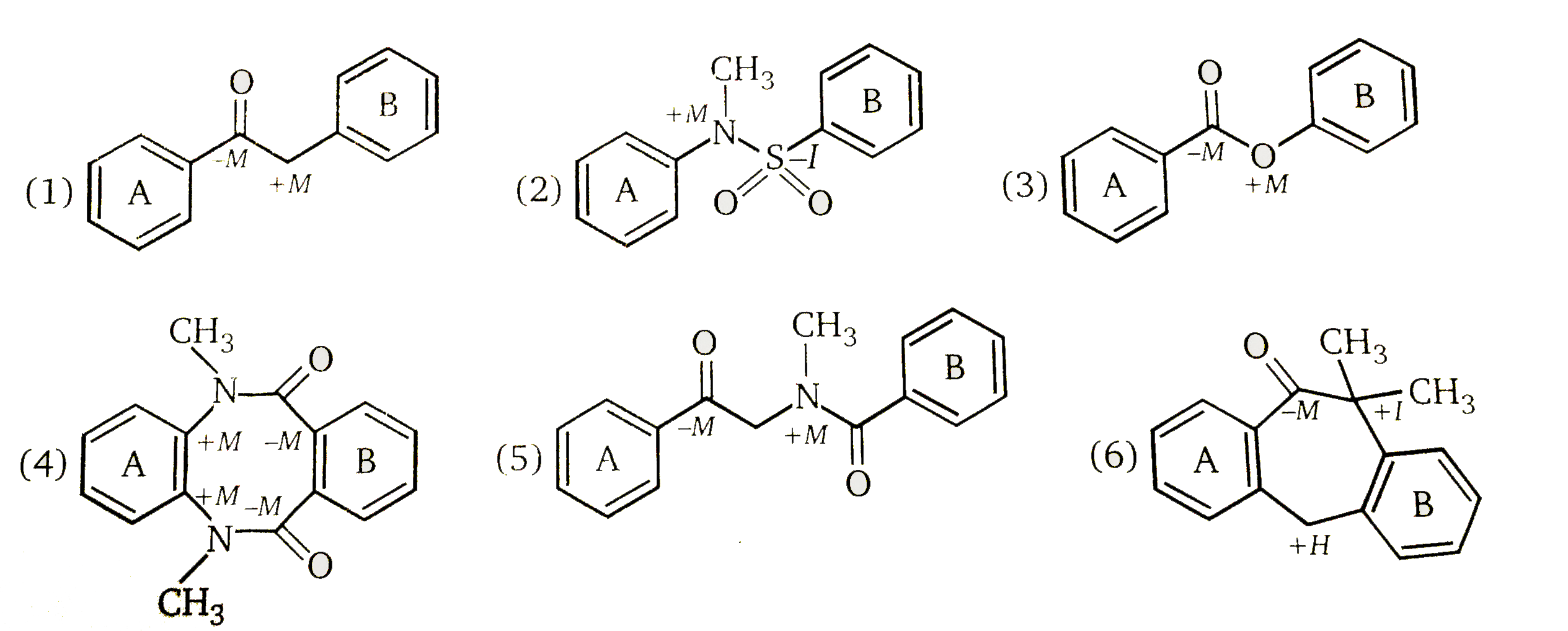
|
|