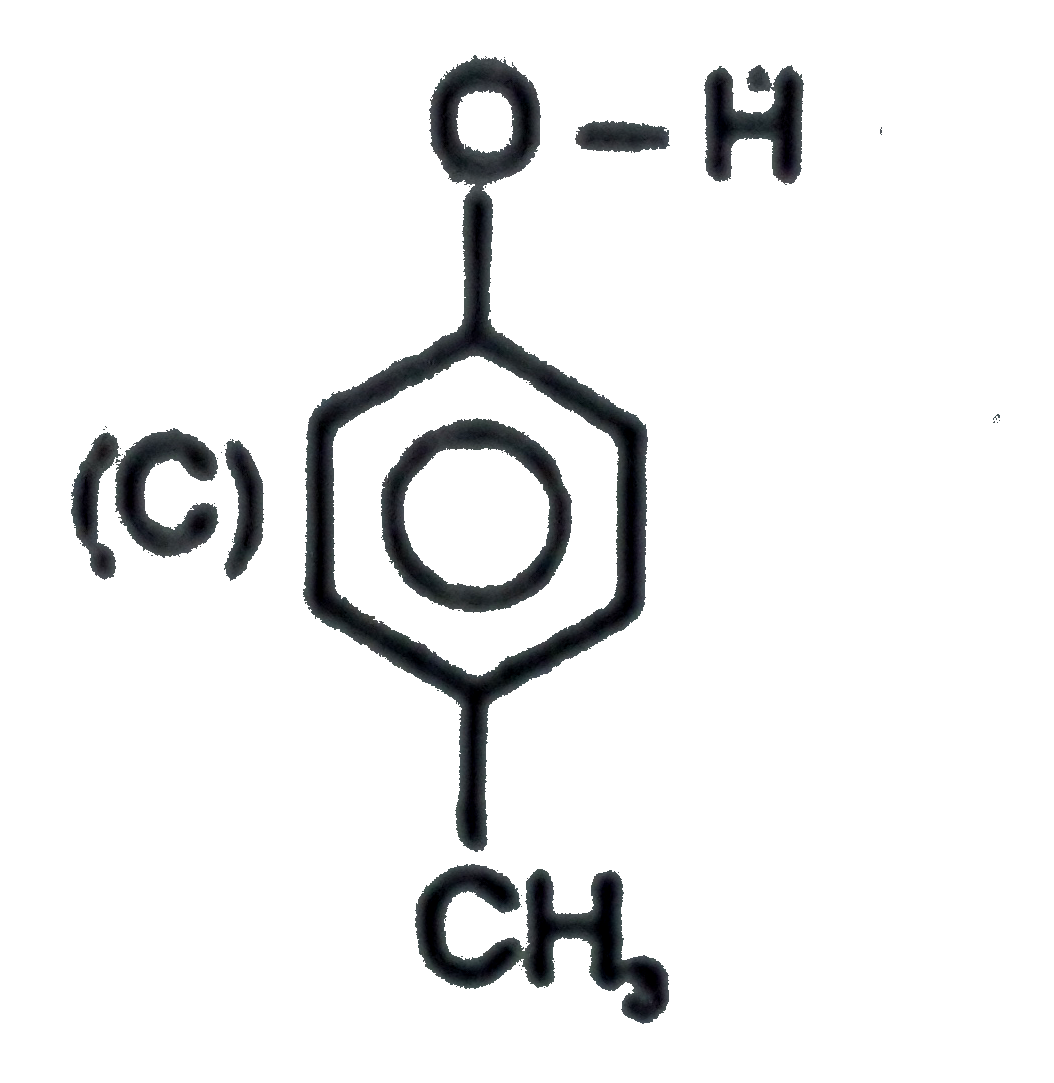
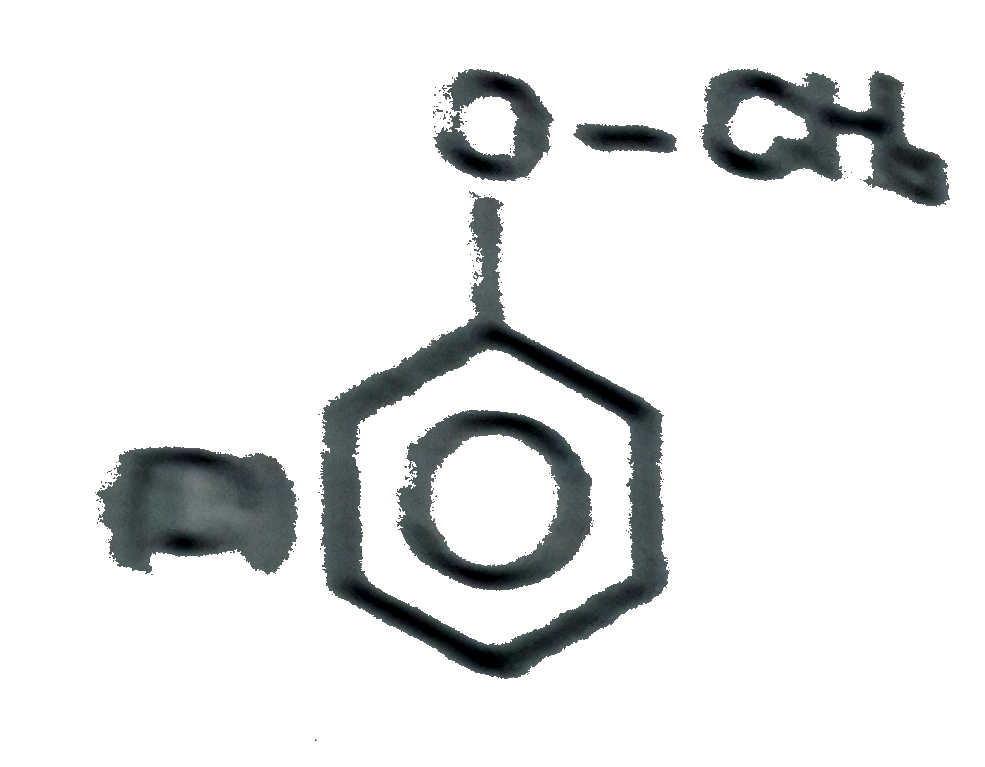
Saved Bookmarks
This section includes 7 InterviewSolutions, each offering curated multiple-choice questions to sharpen your Current Affairs knowledge and support exam preparation. Choose a topic below to get started.
| 1. |
Compounds with high heat of formation are less stable because |
|
Answer» HIGH TEMPERATURE is required to synthesise them |
|
| 2. |
Compounds with antiseptic properties are... |
|
Answer» `CHCl_3` |
|
| 3. |
Compounds with antiseptic properties are ........ |
|
Answer» `CHCI_(3)` |
|
| 4. |
Compoundswith antiseptic properties are "……….." |
|
Answer» `CHCl_(3)` (a) `CHCl_(3)` (CHLOROFORM) was used as an anaesthesia in surgery but not its is used in the production of the freon refrigerant `R-22`. (b) lodoform `(CHI)_(3)` produces iodine on coming in contact with skin, so it is used as an antiseptic for wounds. (c ) Boric acid `(H_(2)BO_(3))` in dilute aqueous solution is a weak antiseptic for EYES. THUS, chemical messenger gives messagle to the all without entereing the cell. (d) Chloric in the concentration of `0.2`, to `0.4 "ppm"` in aqueous solution and sulphur dioxide in very LOW concentrations, are disinfectants. |
|
| 5. |
Compounds which rotate plane of plane polarised light in clockwise direction are knownas |
|
Answer» DEXTRO ROTATORY |
|
| 6. |
Compounds which do not give coupling reaction with benzenediazonium chloride in acidic medium is/are |
|
Answer» PHENOL 
|
|
| 7. |
Compounds which contain two lone pairs and four bonds pairs are |
|
Answer» `XeF_2` 
|
|
| 8. |
Compounds which contain one lone pair and six bond pairs are |
|
Answer» `XeO_2 F_2 `  He has low BOILING POINT due to weak intermolecular ATTRACTIVE force. |
|
| 9. |
Compounds which can give periodic cleavage are : |
|
Answer»
|
|
| 10. |
Compounds used in Holme's signal are ……………… . |
|
Answer» `"PHOSPHINE"+"ACETYLENE"` |
|
| 12. |
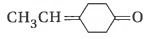
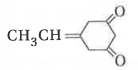
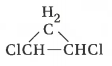
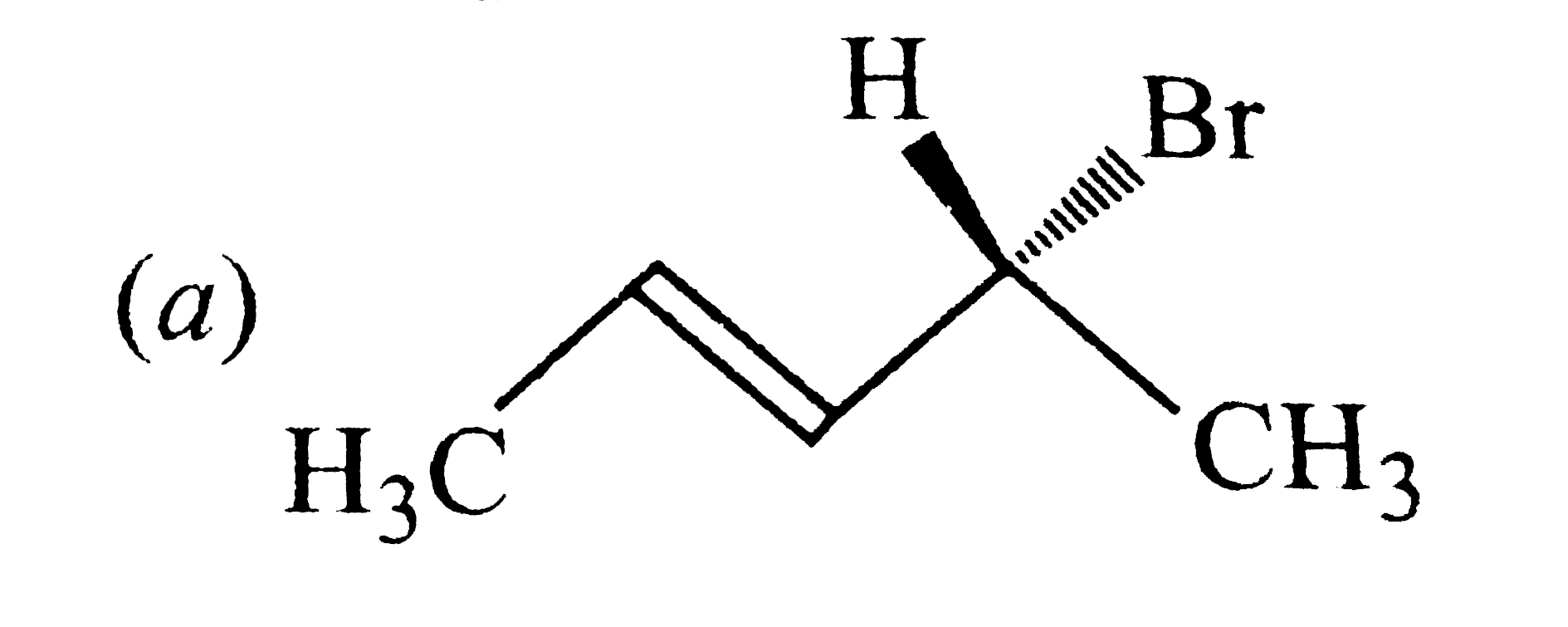
Compound(s) that on hydrogenation produce(s) optically inactive compound(s) is (are) |
|
Answer»
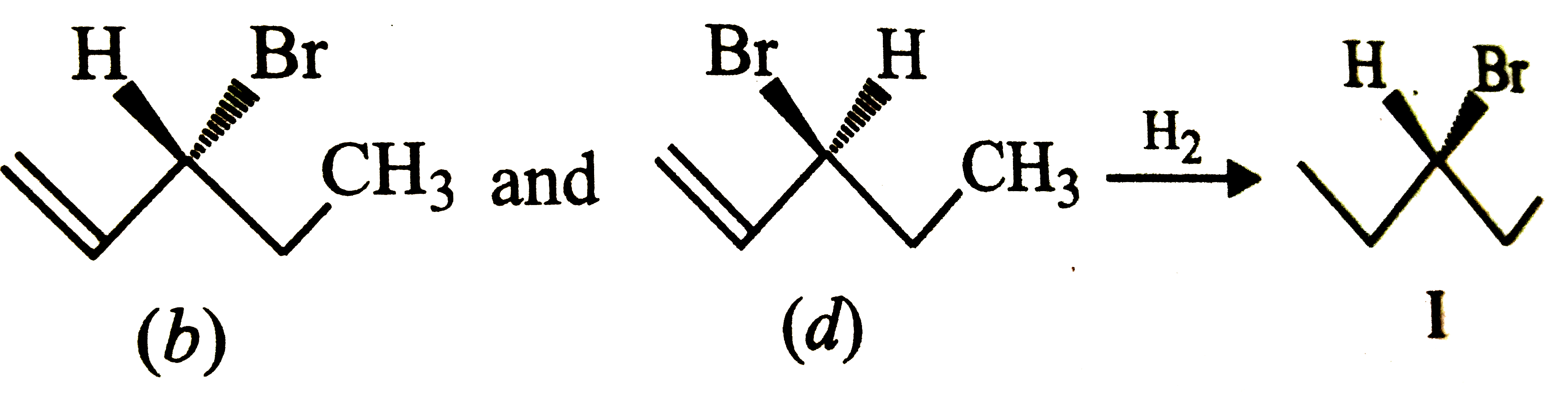 Compound (I) being symmetrical does not contain a chiral carbon and hence is optically inactive. Thus, OPTION (b) and (d) are CORRECT. please find out yourself that OPTIONS (a) and (c) give optically active products. |
|
| 13. |
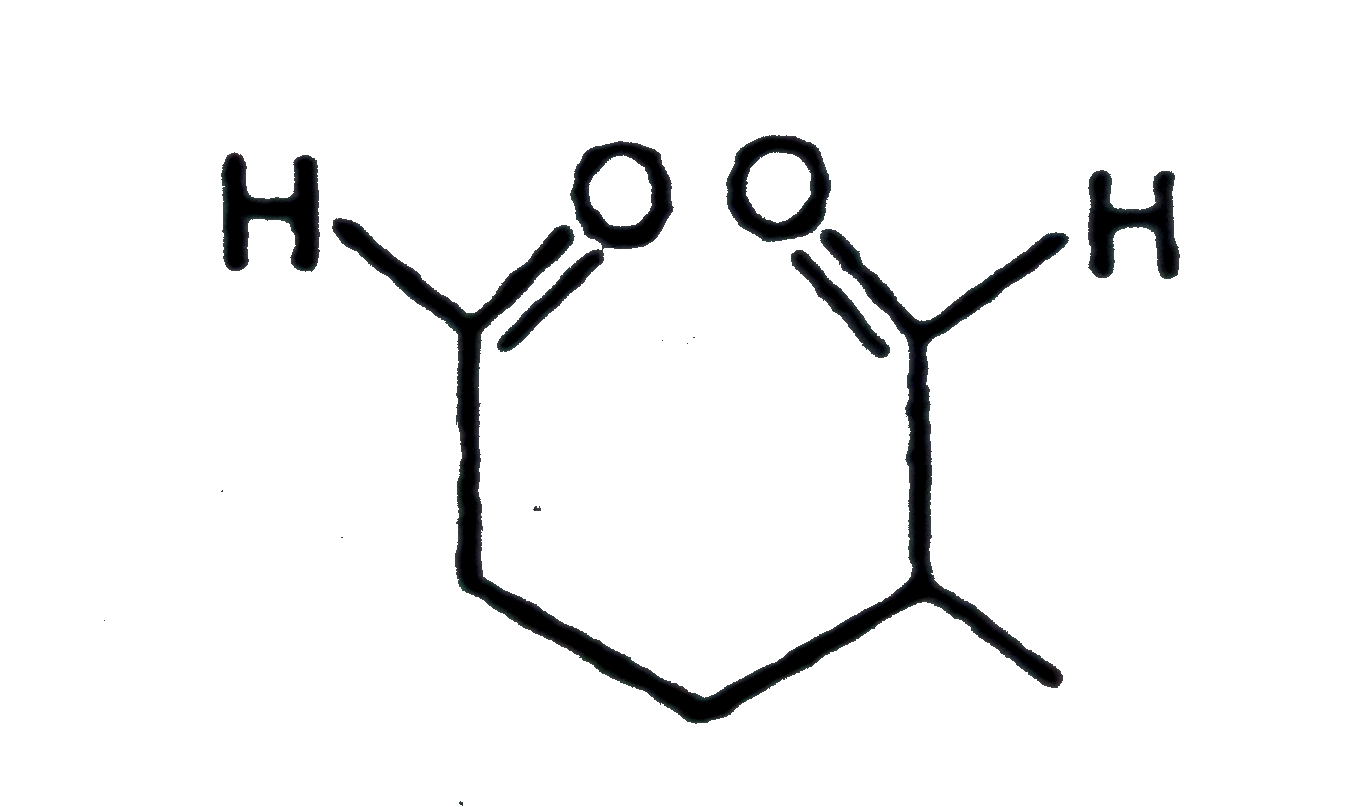
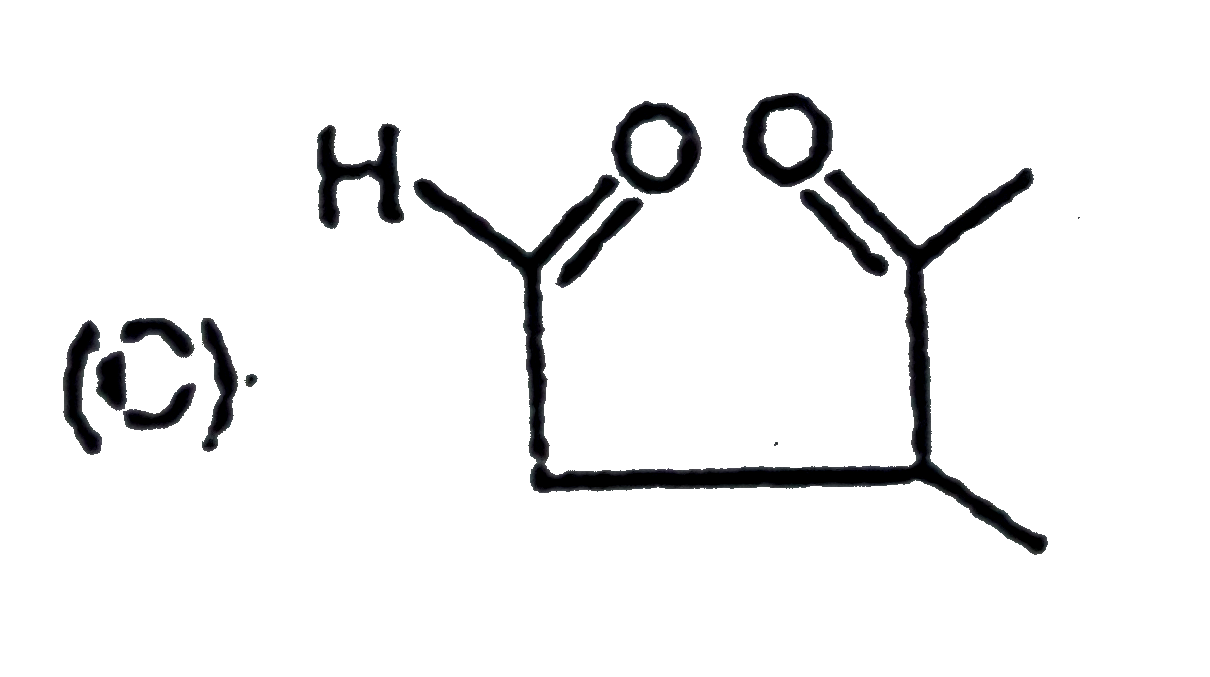
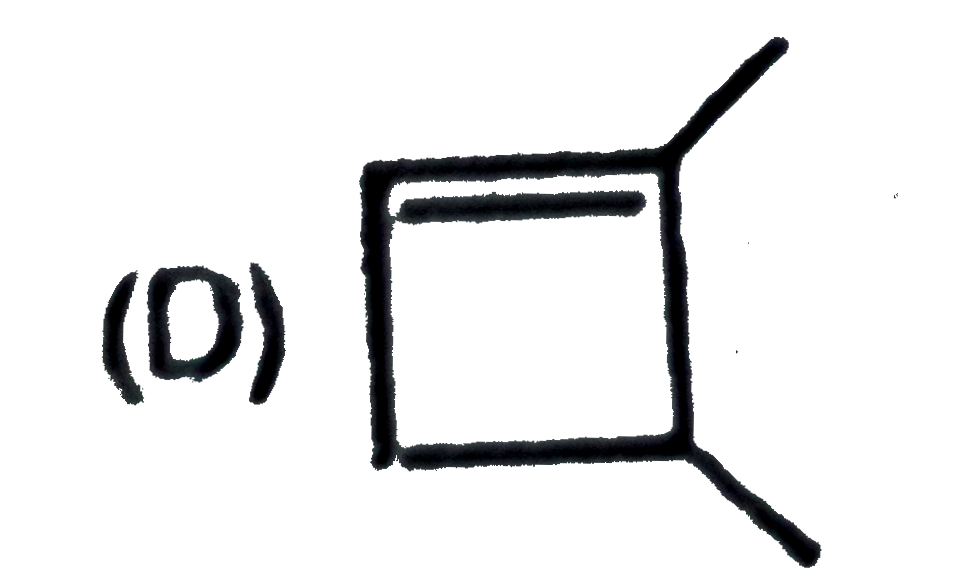
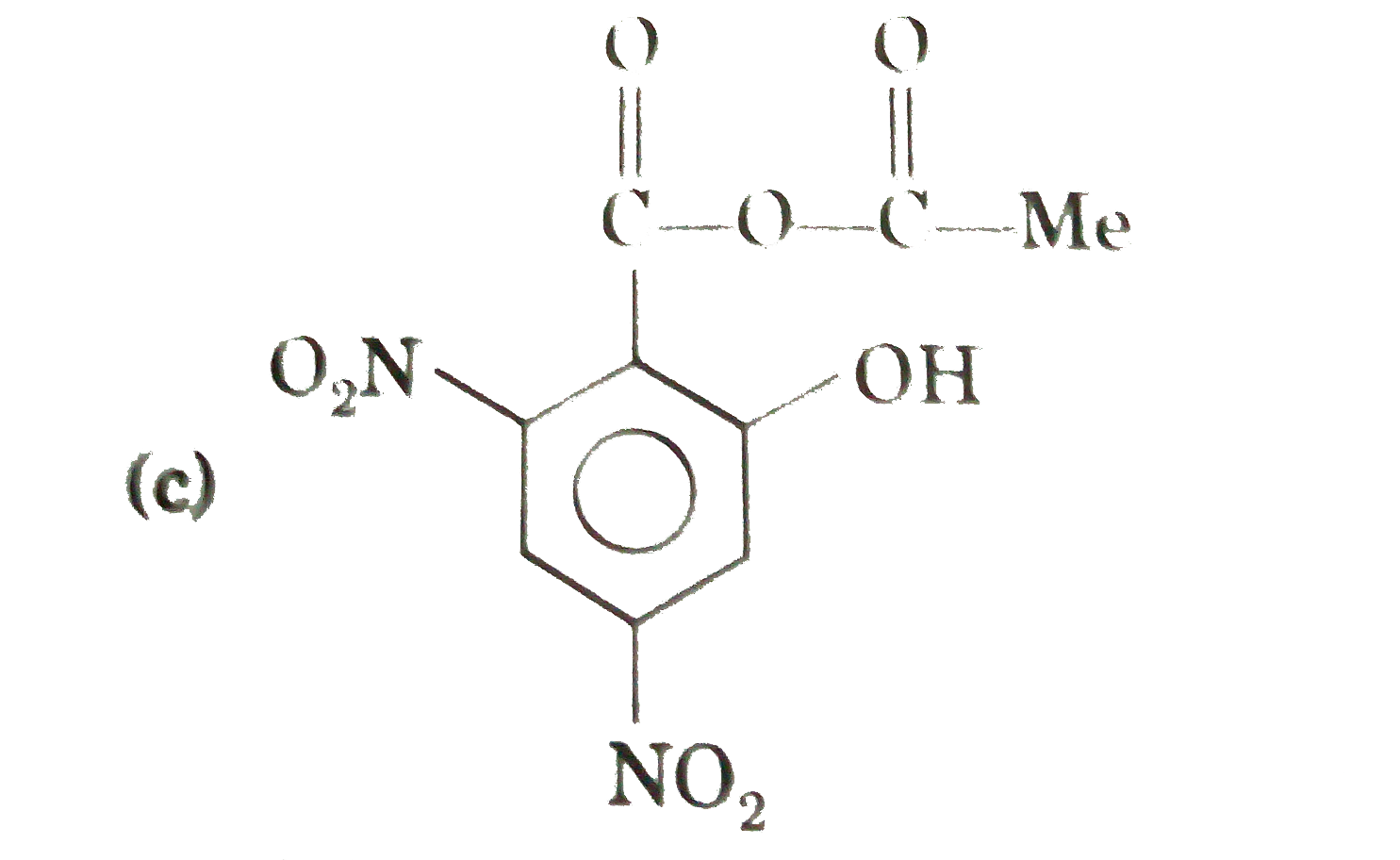
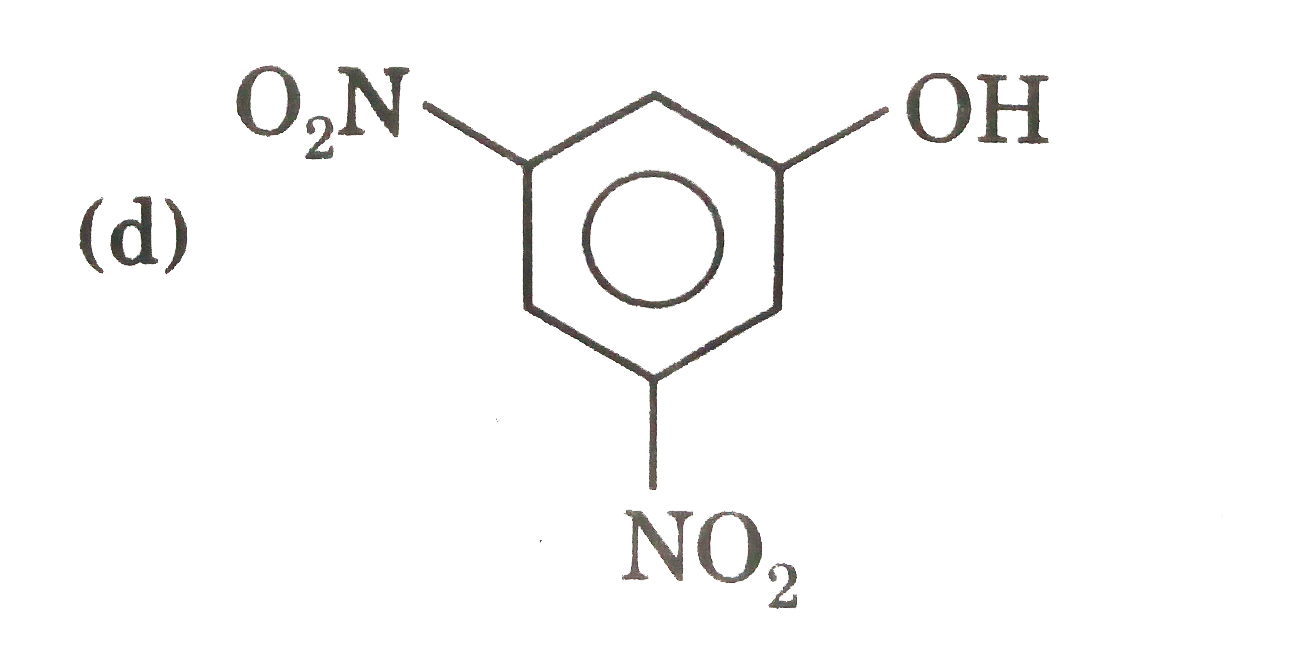
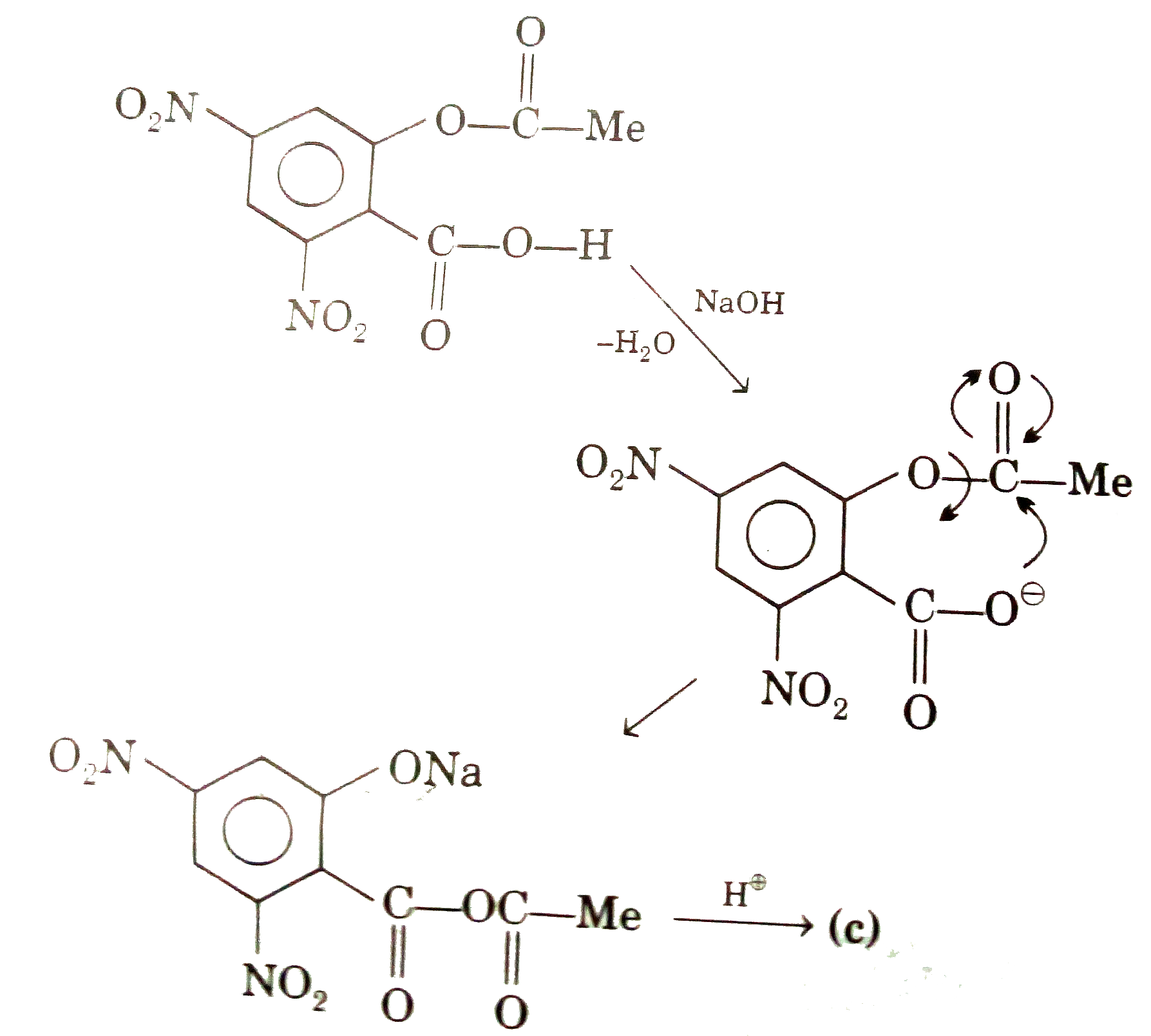
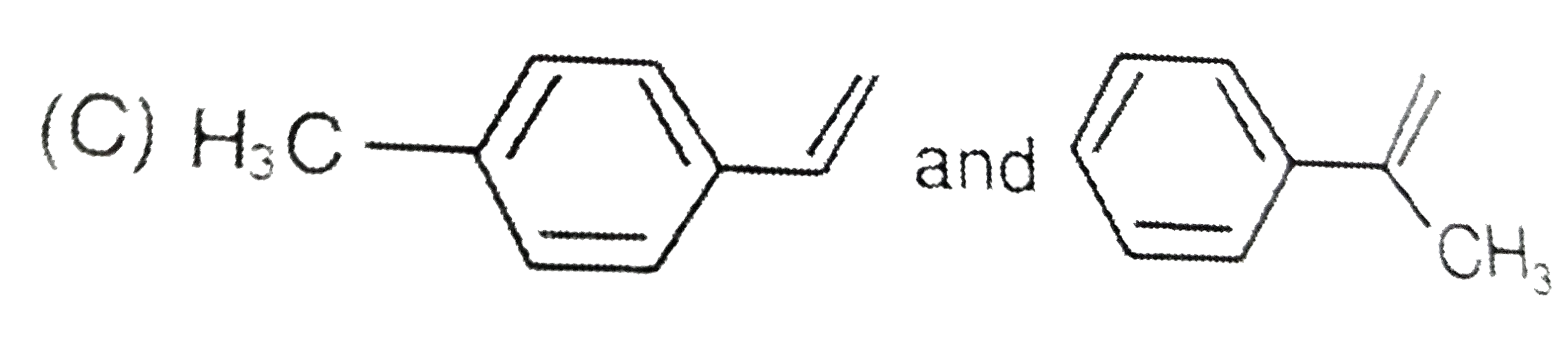
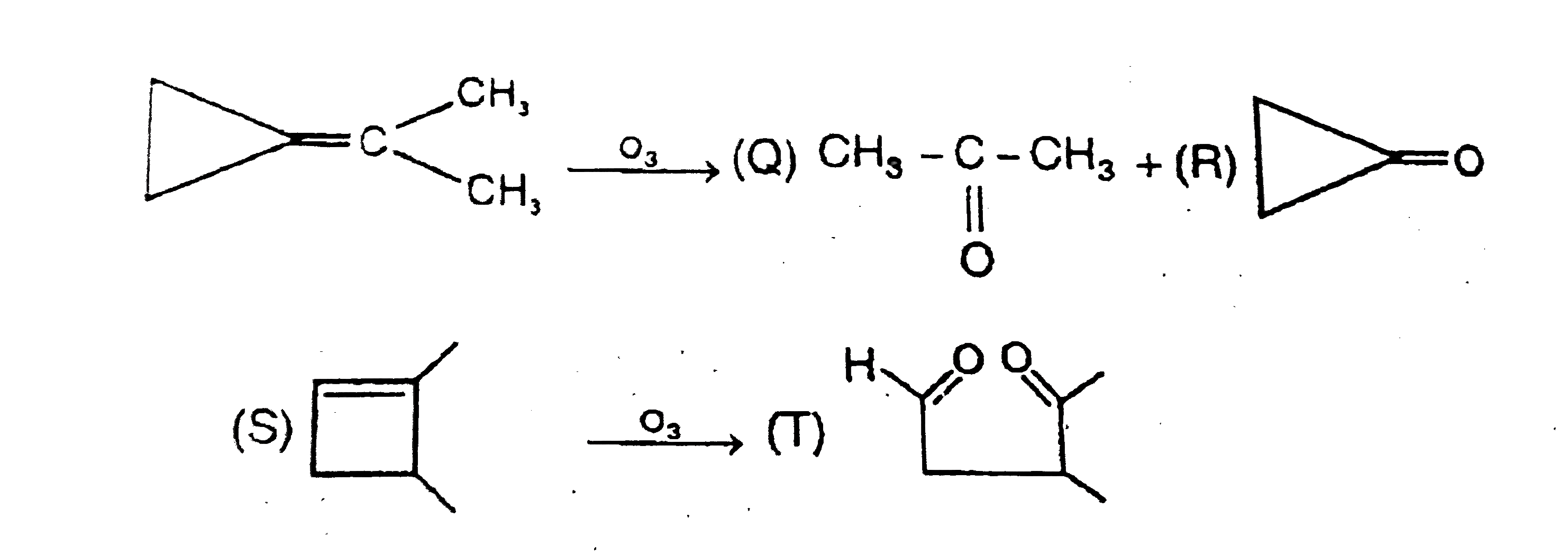
Compounds P(C_6H_10) does not have any geometrical isomer.On ozonolysis, two products R(C_3H_4O) and Q(C_3H_6O) are formed.R gives negative iodoform test while Q responds positively towards I_2//NaOH solution.S, another isomer of P is an unsymetrical alkene and on ozonolysis produces T(C_6H_(10_7)) which also gives a yellow precipitate with l_2//NaOH solution and also positive test with Tollen's reagent Which of the following does not represent any of the molecules amongst P,Q,R,S & T. |
|
Answer»
|
|
| 15. |
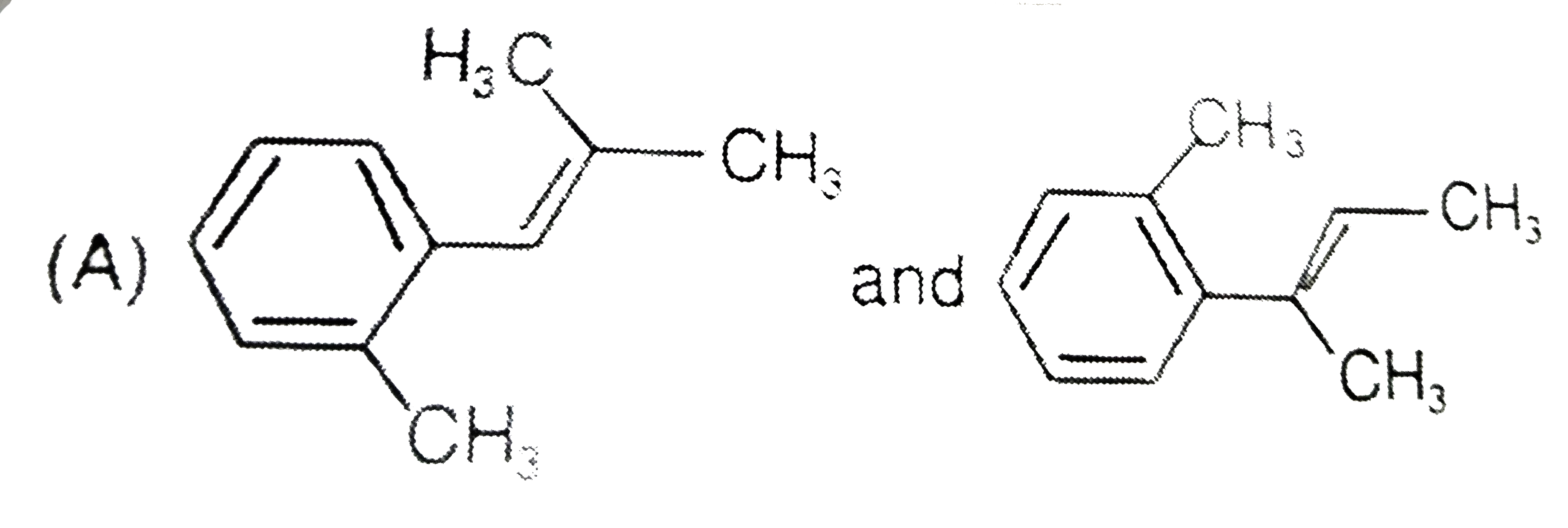
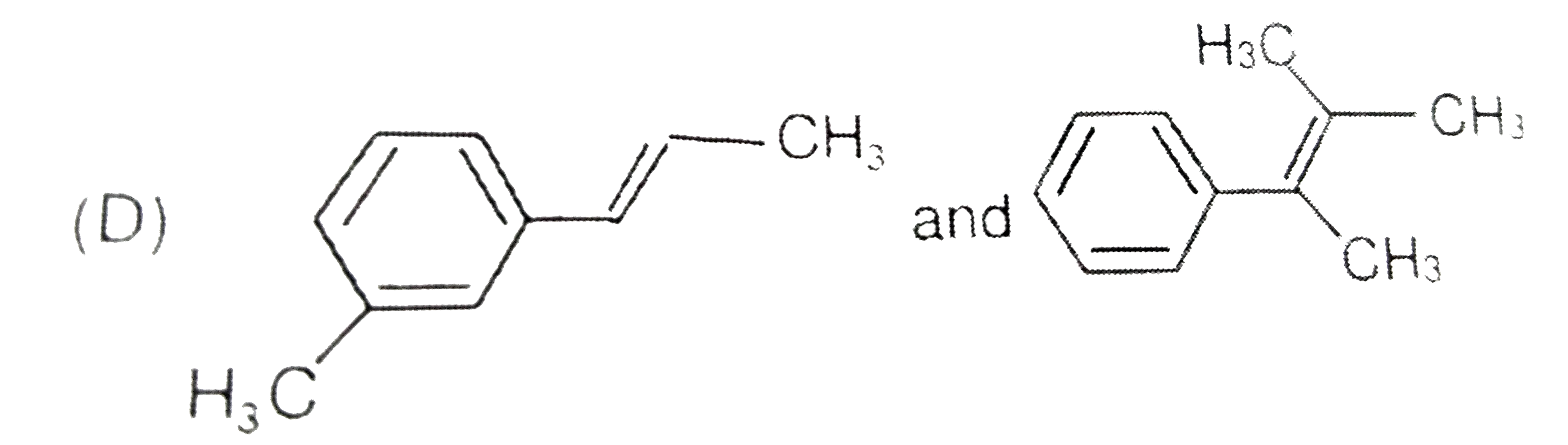
Compounds P and R upon ozonolysis produce Q and S, respectively. The molecular formula of Q and S is C_(8)H_(8)O. Q undergoes cannizzaro reactions but not haloform reaction. Whereas S undergoes haloform reactions but not cannizzaro reactions. (i) P overset((i) O_(3)//CH_(2)Cl_(2))underset((ii)Zn//H_(2)O)tounderset((C_(8)H_(8)O))(Q) "" (ii) R overset((i) O_(3)//CH_(2)Cl_(2))underset((ii) Zn//H_2O)tounderset((C_(8)H_(8)O))(S) The option (s) with suitable combination of P and R , respectively is (are) |
|
Answer»
|
|
| 16. |
Compounds of nitrogen, phosphorus and sulphur such as ammonia, phosphoric acid and sulphuric acid are used in fertilizer industry. Write the chemical equation for the preparation of phosphoric acid (H_3PO_4) from H_3PO_3 |
| Answer» SOLUTION :`4H_3PO_3overset"HEAT"to3H_3PO_4+PH_3` | |
| 17. |
Compounds I and II may be grouped as |
|
Answer» diastereomers |
|
| 18. |
Compounds I and II can be distinguished by using reagent. (I) -4-Amino-2-methylbut-3-en-ol (II) -4-Amino-2,2dimethylbut-3-yn-1-ol |
|
Answer» `NaNO_(2)//HCl`<BR>`Br_(2)//H_(2)O` 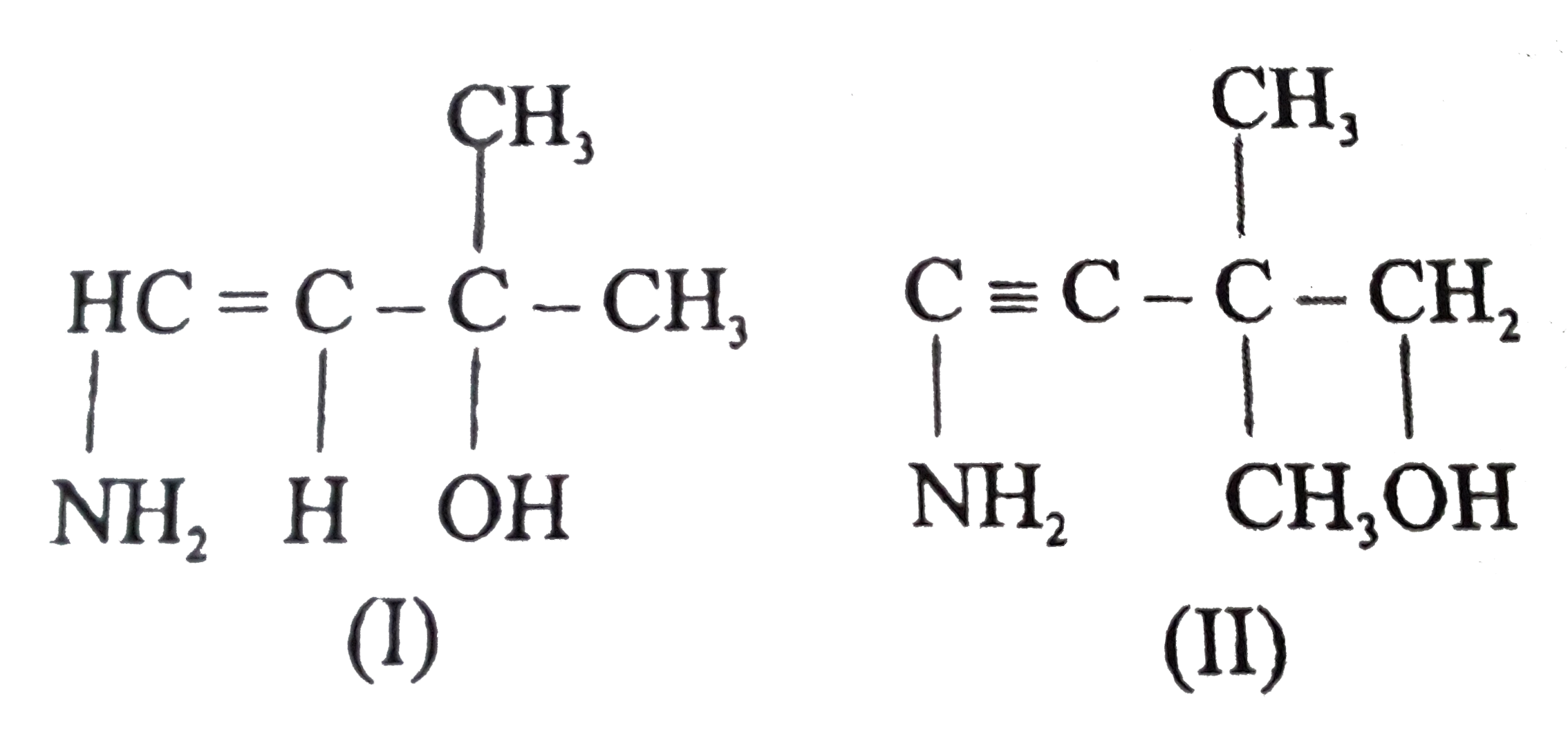
|
|
| 19. |
Compounds I and II can be distinguished by using reagent. {:(""I,""II),("4-Amino-2methylbut-3-en-2ol","4-Amino-2,2-dimethylbut-3-yn-1-ol"):} |
|
Answer» `NaNO_2//HCl` 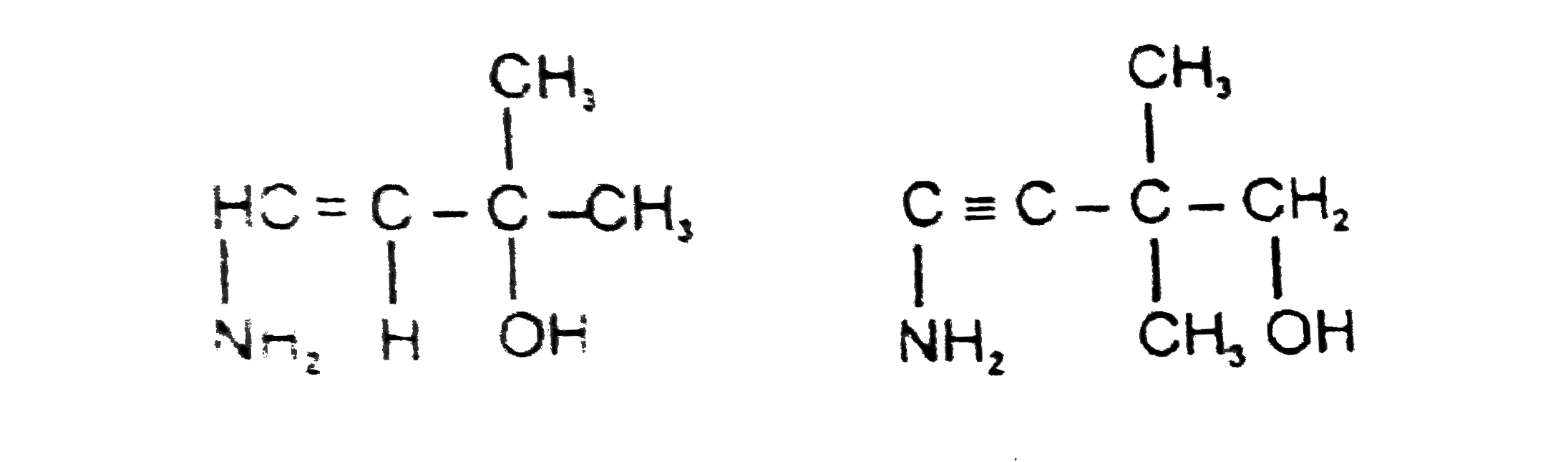 (I) gives immediately TURBIDITY by LUCAS reagent and (II) does not GIVE turbidity appriciably. |
|
| 20. |
Compounds having the same molecular formula but different strucutres are cllassified as: |
|
Answer» METAMERISM |
|
| 21. |
Compounds having same number and kind of atoms but different arrangement of atoms in their molecules are called: |
|
Answer» allotropes |
|
| 22. |
compounds formed when the noble gases get entrapped in the cavities of crystal lattices of certain organic compounds are known as: |
|
Answer» INTERSTITIAL Compounds |
|
| 23. |
Compounds formed by the union of two different halogens are called....... |
| Answer» SOLUTION :INTERHALOGEN COMPOUNDS | |
| 24. |
Compounds containing both amino and COOH groups are known as |
|
Answer» Diamines |
|
| 25. |
Compounds containing both -NH_2 and -COOH groups are called |
|
Answer» Proteins |
|
| 26. |
Compounds A(C_9 H_8 O_3) on reduction with Zn-Hg&HCI gave a carboxylic acid B(C_9 H_(10) O_3). B on further oxidation gave bezoic acid. A on strong heating gave a ketone C(C_8H_8 O). C reacts with I_2 -, NaOH to give yellow solid along with a salt. The salt on treatment with acid gave benzoic acid.Study the paragraph carefully and answer the following questions give belowthe structureof'C' is |
|
Answer»

|
|
| 27. |
Compounds (C ) and (D) respectively are : |
|
Answer» `AgNO_3 and Hg(NO_3)_2` `PbI_2 + 2I^(-)to [PbI_4]^(2-)`(soluble complex) `PbI_2` is moderately soluble in boiling WATER giving a colourless solution. `Bi^(2+)+3I^(-)to BiI_3 darr` (black) , `BiI_3 darr+I^(-) to [BiI_4]^(-)` (soluble complex) |
|
| 28. |
Compounds A(C_9 H_8 O_3) on reduction with Zn-Hg&HCI gave a carboxylic acid B(C_9 H_(10) O_3). B on further oxidation gave bezoic acid. A on strong heating gave a ketone C(C_8H_8 O). C reacts with I_2 -, NaOH to give yellow solid along with a salt. The salt on treatment with acid gave benzoic acid.Study the paragraph carefully and answer the following questions give belowThe structureof 'A'is |
|
Answer»

|
|
| 29. |
Compounds A(C_9 H_8 O_3) on reduction with Zn-Hg&HCI gave a carboxylic acid B(C_9 H_(10) O_3). B on further oxidation gave bezoic acid. A on strong heating gave a ketone C(C_8H_8 O). C reacts with I_2 -, NaOH to give yellow solid along with a salt. The salt on treatment with acid gave benzoic acid.Study the paragraph carefully and answer the following questions give belowThestructureof 'B' is |
|
Answer»

|
|
| 30. |
Compounds A(C_9 H_(16) ) decolourises Br, in C CI_4 A reacts alkaline KMnO_4 to give a diol. A on ozonolysis gave B(C_7 H_(12)O) and acetaldehyde. B reacts in presence of sodium hydroxide to give two products C(C_7 H_(12)O_2) and sodium salt which on nentralisation gave D(C2H,20). Con oxidation also gave 'D'. On the basis of the reactions give above answer the following questions. The structure of 'D' is likely to be |
|
Answer»

|
|
| 31. |
Compounds A(C_9 H_(16) ) decolourises Br, in C CI_4 A reacts alkaline KMnO_4 to give a diol. A on ozonolysis gave B(C_7 H_(12)O) and acetaldehyde. B reacts in presence of sodium hydroxide to give two products C(C_7 H_(12)O_2) and sodium salt which on nentralisation gave D(C2H,20). Con oxidation also gave 'D'. On the basis of the reactions give above answer the following questions.The structure of 'B' is likely to be |
|
Answer»

|
|
| 32. |
Compounds A(C_(10) H_(10)) decolourises Br, in C CI_4 Ozonolysis of A gave B(C_(10) H_(10),O_2). B reacts hydrazine and base followed by heating in ethylene glycol gave a hydrocarbon C(C_(10) H_(14)) C on oxidation gave a dicarboxylic acid which form anhydride easily.thestructureof compound 'A' is |
|
Answer»

|
|
| 33. |
Compounds A(C_(10) H_(10)) decolourises Br, in C CI_4 Ozonolysis of A gave B(C_(10) H_(10),O_2). B reacts hydrazine and base followed by heating in ethylene glycol gave a hydrocarbon C(C_(10) H_(14)) C on oxidation gave a dicarboxylic acid which form anhydride easily.Conversion of B to C is called |
|
Answer» Wolff-Kishner REDUCTION |
|
| 34. |
Compounds A undergoes hydrolysis to produce a colourless gas with rotten fish smell. The gas gives a vortex ring. The gas is |
|
Answer» `PH_3` |
|
| 35. |
CompoundsA (molecularformulaC_(3) H_(8) O) is treatedwith acidifiedpotassiumdichromate toforma product B( molecularformulaC_(3) H_(6) O) B.Formaa shiningsilvermirroron warmingwith ammonicalsilver nitrateB whentreatedwith aqueoussolutionof H_(2) NCONHNH_(2) HCI and sodiumacetategivesa product C. Identifythe structureof C. |
|
Answer» `CH_(3) CH_(2) CH- NNHCONH_(2)`  Reactionof Bindicatesthat BIS analdehydethus Bshouldbe `C_(2) H_(5) CHO` or `CH_(3) CH_(2)CHO`and thereforeC shouldbe `CH_(3) CH_(2) CH=NNHCONH_(2)` `CH_(3) CH_(2) CH_(2) OHoverset([O])(to) CH_(3) CH_(2)CHO` `overset( "Silver mirror test ") (to)CH_(3) CH_(2) COOH+ 2 AG ` `CH_(3) CH_(2) CHO + H_(2) NNHCONH_(2)` SEMICARBAZIDE `to CH_(3) CH_(2) CH=NNHCONH_(2)` semicarbazone [C] |
|
| 36. |
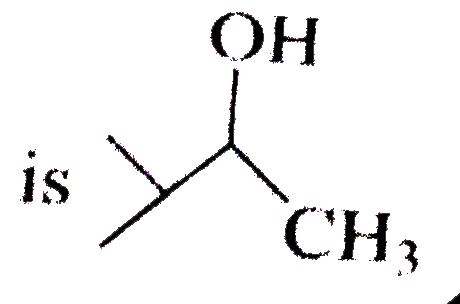
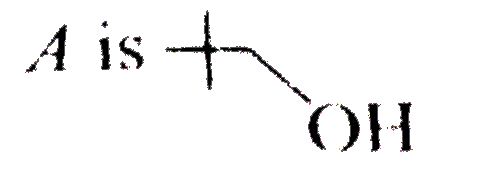
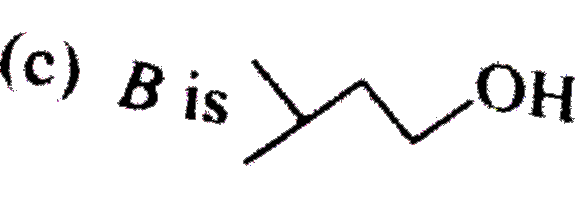
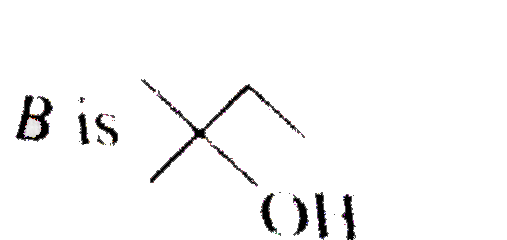
Compounds A, B and C are isomeric alcohols with formula C_(5)H_(12)O. A on oxidation given ketone, B gives acid while C is not oxidised, A gives test with I_(2)//NaOH. The three isomerice alcohols react with HBr with decreasing rates C gt A gt B. Identify A and B. |
|
Answer»
|
|
| 37. |
Compounds A and C in the following reactions are CH_(3)CHO underset((ii)H_(2)O)overset((i)CH_(3)MgBr)to (A) overset(H_(2)SO_(4),Delta)to(B) overset((i)gt" Hydroboration, (ii) Oxidation")to(C) |
|
Answer» Identical Thus, `CH_(3)CHOHCH_(3)(A)` and `CH_(3)CH_(2)CH_(2)OH(C)` are position isomers, i.e., option (b) is correct. |
|
| 38. |
Compounds (A) and (C ) in the following reactions are CH_(3)CHO overset((i)CH_(3)MgBr)underset((ii)H_(2)O)to(A) overset(H_(2)SO_(4),Delta)to(B)overset("Hydroboration oxidation")to (C) |
|
Answer» identical 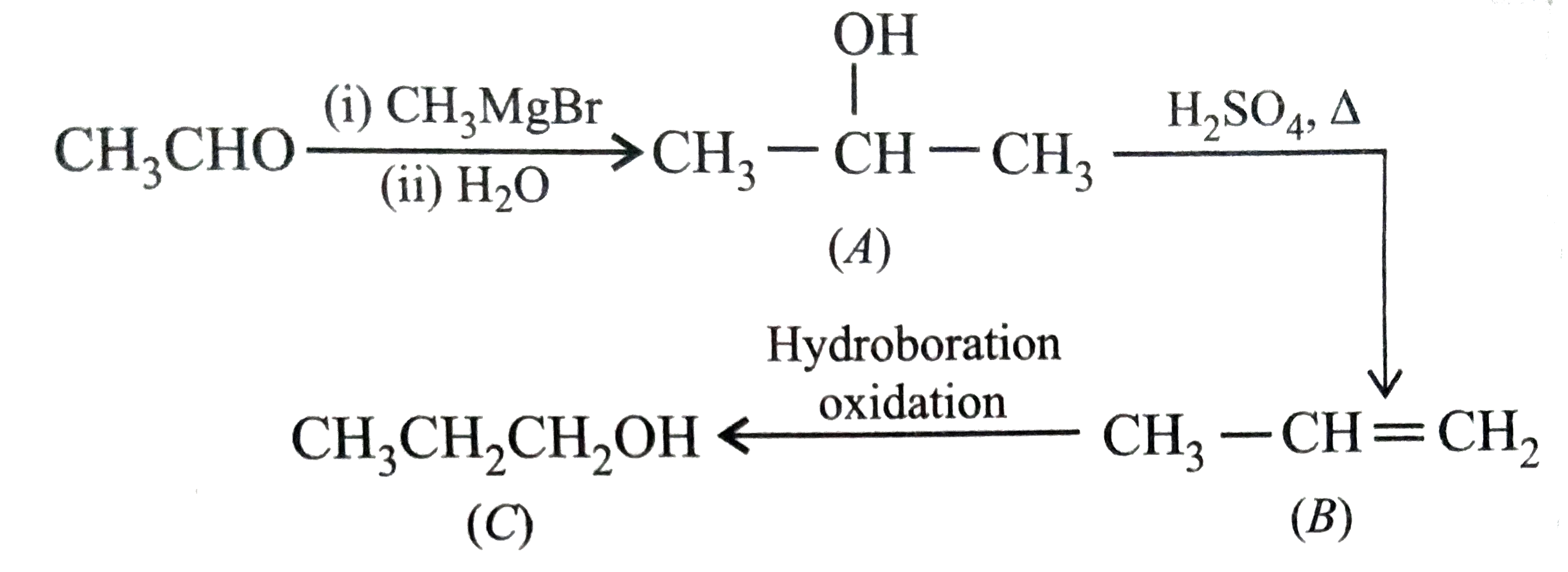
|
|
| 39. |
Compounds (A) and (B) respectively are : |
|
Answer» `Cu(NO_3)_2 and pb(NO_3)_2` `Hg^(2+)+2I^(-)toHgI_2dar (red) , HgI_2 darr +2I^(-)to [HgI_4]^(2-)` (soluble complex) |
|
| 40. |
Compounds A and B react with a common reagent according to first order kinetics in both cases. If 99% of A must react before 1% of B has reacted. What is the minimum ratio for their respective rate constants? ("Given":(2)/(2-log^(99)) = 458) |
|
Answer» |
|
| 41. |
Compounds 'A' and 'B' react according to the following chemical equation A(g) + 2B(g) to 2C(g) Concentration of either 'A' or 'B' were changed keeping the concentrations of one of the reactants constant and rates were measured as a function of initial concentration. Following results were obtained. Choose the correct option for the rate of equations for this reaction. |
|
Answer» RATE of = `K[A]^(2)[B]` |
|
| 42. |
Compounds A and B react according to the following chemical equation : A(g) + 2B(g) rarr2C(g) Concentration of either A or B were changed keeping the concentrations of one of the reactantconstants and rates were measured as a function of initial concentration, Following results were obtained. Choose the correct option for the rate equations for this reaction. |
|
Answer» Rate = `k[A]^(2)[B]` On putting values, we get `0.10 = K [0.30]^(x)[0.30]^(y) ""....(ii)` `0.40 = K[0.30]^(x)[0.60]^(y)""....(iii)` `0.20=K[0.60]^(x)[0.30]^(y)""....(iv)` From EQS. (ii) and (iii), we get `(0.1)/(0.4)=[(0.30)/(0.30)]^(x)[(0.30)/(0.60)]^(y)` `(1)/(4)=[(1)/(2)]^(y)implies y = 2` From Eqs.(iii) and (iv), we get `(0.40)/(0.20)=((0.30)/(0.60))^(x)((0.60)/(0.30))^(y)` `2=((1)/(2))^(x)(2)^(y)` On putting the values of y, we get `2=((1)/(2))^(x)(2)^(2)` `implies ""x=1` On putting the values of x and y in Eq. (i), we get `r=k[A]^(1)[B]^(2)=k[A][B]^(2)` |
|
| 43. |
Compounds A & B on reaction with HCl released gases P & Q saperately ''Q'' turns di chromate solution green. Hence ''B' can be |
|
Answer» `Na_(2)SO_(3)` |
|
| 44. |
Compounds A and B are the structural isomers of each other with molecular formula C_(4)H_(9)Br. Compound 'A' is a linear chain and optically inactive while 'B' is optically active. When compound 'A' is treated with aq. KOH solution, it gives compound 'C' whereascompound 'B' when treated with aq.KOH solution, it gives compound 'D'. Identify compound 'C' and 'D'. |
|
Answer» `CH_(3)-CH_(2)-CH_(2)-CH_(2)-OH , CH_(3)-UNDERSET(CH_(3))underset(|)OVERSET(CH_(3))overset(|)C-OH` |
|
| 45. |
Compounds (A) and (B) are: |
|
Answer» `NaClO_(3), NACLO` |
|
| 46. |
Compound (X)C_(9)H_(10)O in inert to Br_(2)//"CC"l_(4). Vigorous oxidation with hot alkaline KMnO_(4)//ObarH yields C_(6)H_(5)COOH . (X) gives precipitate with 2,4,-dinitrophenyl hydrazine. How casn these isomers be distinguished by the usual chemical tests? Following are possible isomers of X: (I) C_(6)H(5)-CH_(2)-CH_(2)-CHO CH_(6)H_(5)-underset(CH_(3))underset(|)(CH)-CHO (III) C_(6)H_(5)-CH_(2)-overset(O)overset(||)(C)-CH_(3) (IV) CH_(6)H_(5)-overset(O)overset(||)(C)-CH_(2)-CH_(3) |
|
Answer» I give RED ppt with Fehling SOLUTION and II & III canbe distinguished by iodoform test |
|
| 47. |
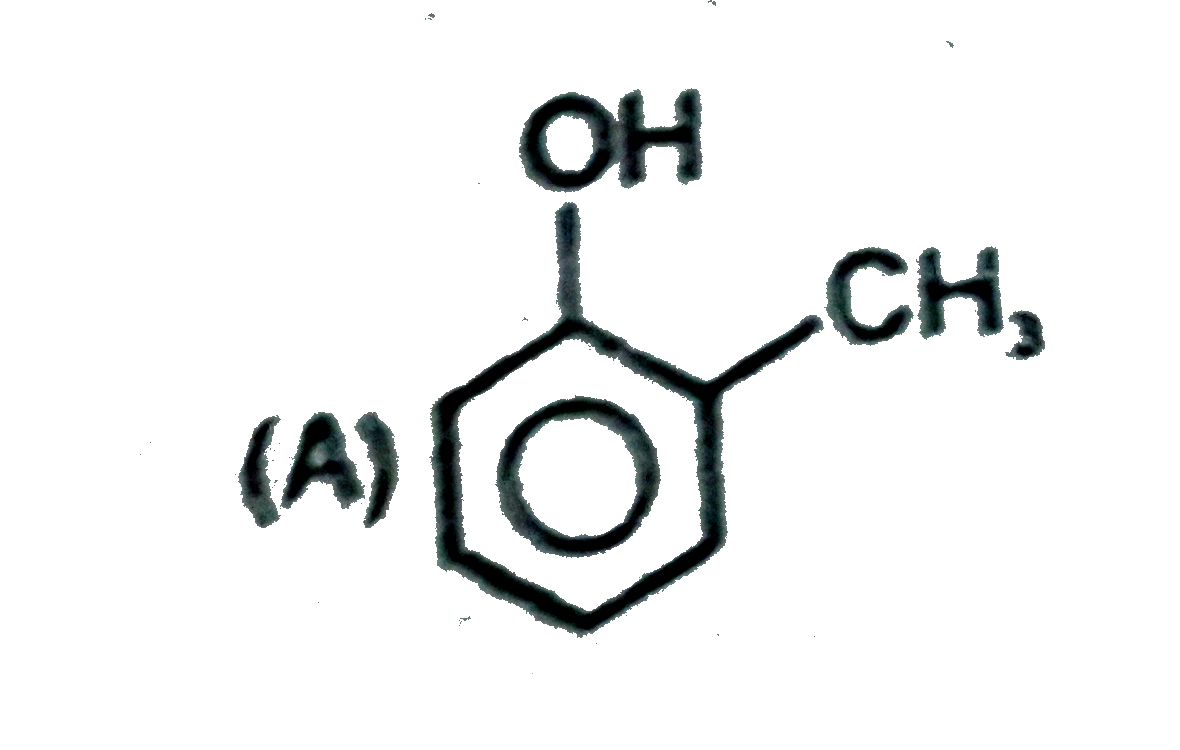
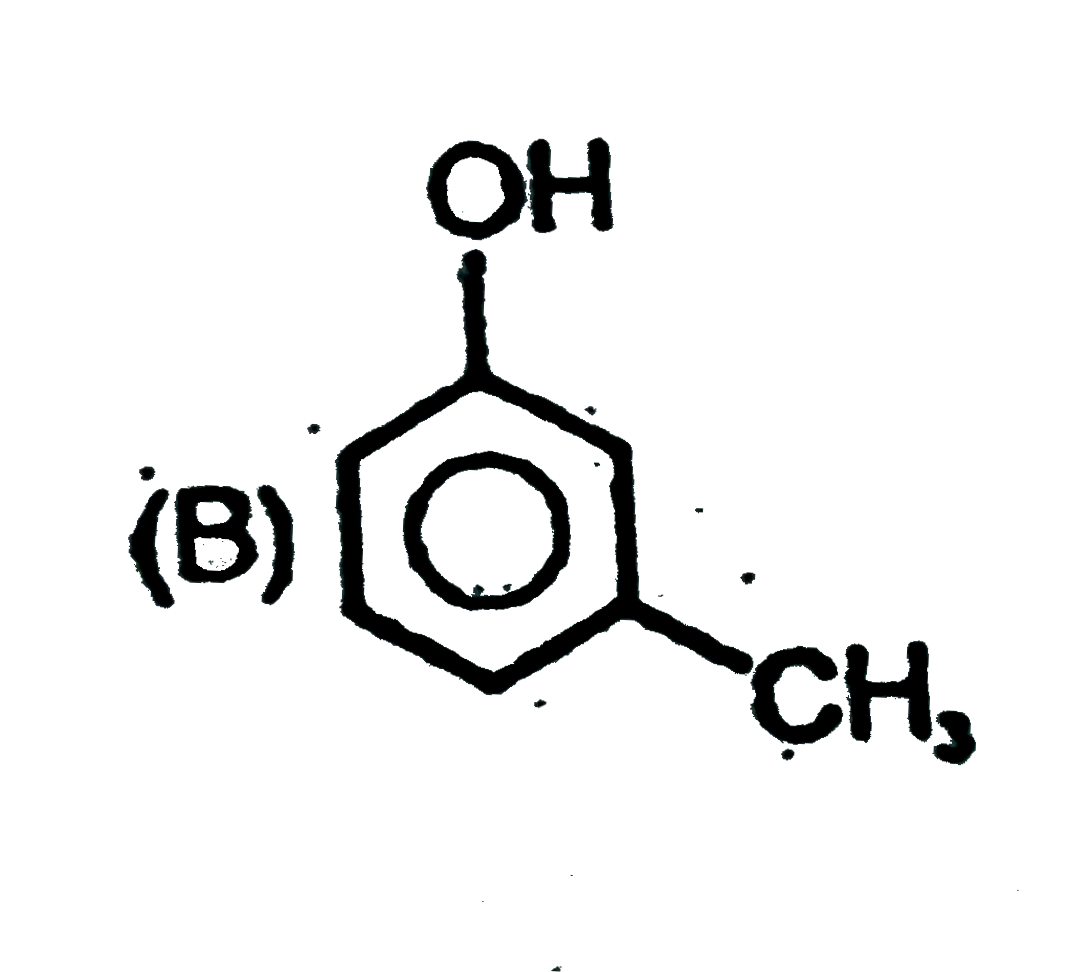
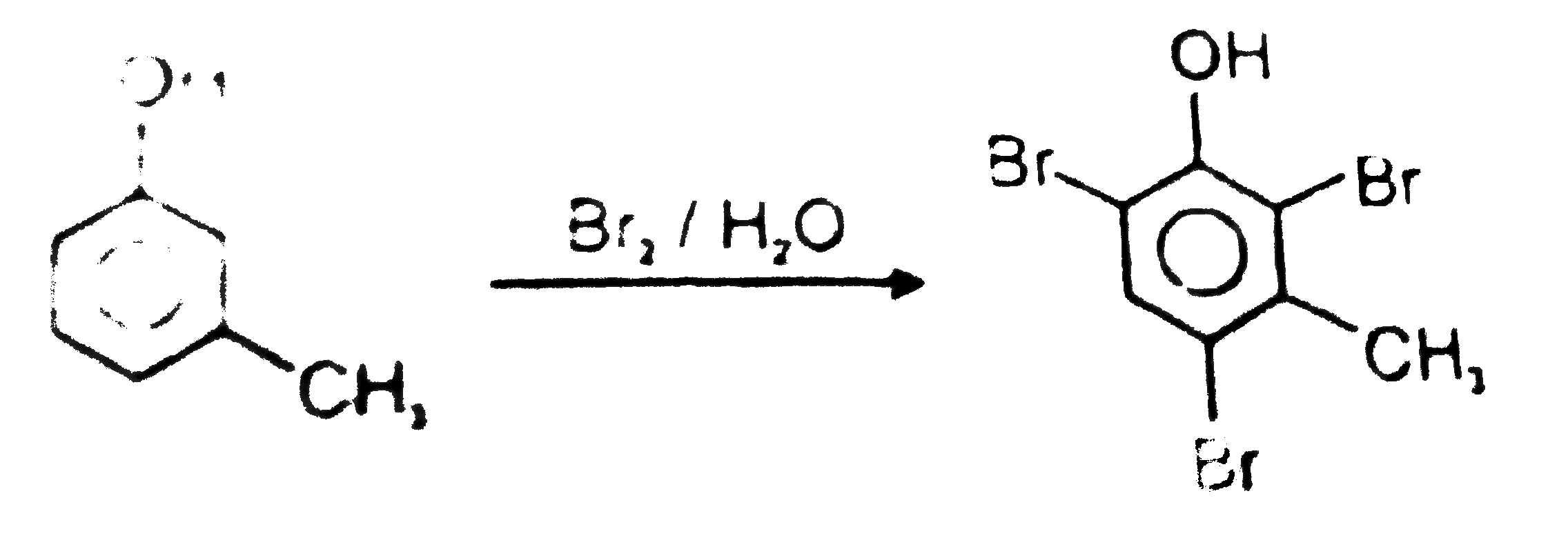
Compound Y,C_7H_8O is insoluble in water, dil HCl and aqueous NaHCO_3 it dissolves in dilute NaOH.When Y is treated with bromine water it is converted rapidly into a compound of formula C_7H_6OBr_3.Identify the structure of Y |
|
Answer»
|
|
| 48. |
Compound (X)C_9H_10O is inert to Br_2//C Cl_4.Vigorous oxidation with hot alkaline KMnO_4//OH yield C_6H_5COOH (X) gives precipitate with 2,4-Dintrophenyl hydrazine. How can these isomers be distinguished by the usual chemical tests ? Following are possible isomers of X : (i)C_6H_5-CH_2-CH_2-CHO , (ii)C_6H_5-undersetunderset(CH_3)(|)CH-CHO (iii)C_6H_5-CH_2-oversetoverset(O)(||)C-CH_3 , (iv)C_6H_5-oversetoverset(O)(||)C-CH_2-CH_3 |
|
Answer» I gives red ppt. with FEHLING solution and II & III can be distinguished by iodoform TEST |
|
| 49. |
Compound (X) with molecular formula C_(3)H_(8)O is treated with acidifiedpotassium dichromate to forma product(Y) with molecularformula C_(3)H_(6)O. (Y) does not form a shining silver mirror on warming with ammoniacal AgNO_(3). (Y) when treated with an aqueous solution ofNH_(2)CONHNH_(2).HCland sodium acetate, gives a product (Z). The structure of (Z) is |
|
Answer» `CH_(3)CH_(2)CH=N NHCONH_(2)` |
|
| 50. |
Compound X with a molecular formula C_(4)H_(11)N did not react with Hinsberg's reagent, but reacted with one mole of CH_(3)I to form a salt. What is the structure of X ? |
|
Answer» Solution :The structure of X is `UNDERSET("N, N-Dimethylethanamine")(H_(3)C-overset(C_(2)H_(5))overset("|")underset(CH_(3))underset("|")("N": ))` Since the compound does not react with `HNO_(2)`, it must be a TERTIARY amine. Tertiary amine reacts with one mole of `CH_(3)I` to from a quaternary SALT i.e. `[(CH_(3))_(3)N^(+)-C_(2)H_(5)]I^(-)`. |
|