Saved Bookmarks
This section includes 7 InterviewSolutions, each offering curated multiple-choice questions to sharpen your Current Affairs knowledge and support exam preparation. Choose a topic below to get started.
| 1. |
Br_2 gas turns starch iodide paper |
|
Answer» BLUE |
|
| 2. |
Br_(2) dissolved in CS_(2) reacts with phenol at 273K to give …............ as the major product |
|
Answer» o - Bromophenol |
|
| 3. |
Br^(-) ions form close packed structure. If the radius of Br^(-) ion is 195 p, calculate the radius of the cation that just fits in the tetrahedral hole. Can a cation A^(+) having a radius of 82 pm be slipped into the octahedral hole of the crystal A^(+) Br^(-)? |
|
Answer» Solution :(i) For a TETRAHEDRAL hole, `(R^(+))/(r^(-))= 0.225` `r^(+)` or radius of tetrahedral hole = `0.225 XX r^(-)=0.225 xx 195=43.875` pm Thus, a cation having radius 43.875 pm will just fit in the tetrahedral hole. (ii) For an OCTAHEDRAL hole, `(r^(+))/(r^(-))= 0.414` , `r^(-) = 195` pm `r^+` or radius of octahedral hole = `0.414 xx r^(-)=0.414 xx 195` pm=80.73 pm Therefore, cation having radius of 82 pm cannot be slipped into an octahedral hole of 80.73 pm. |
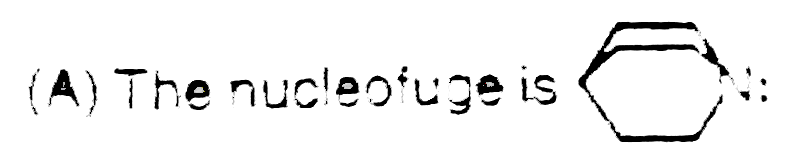
|
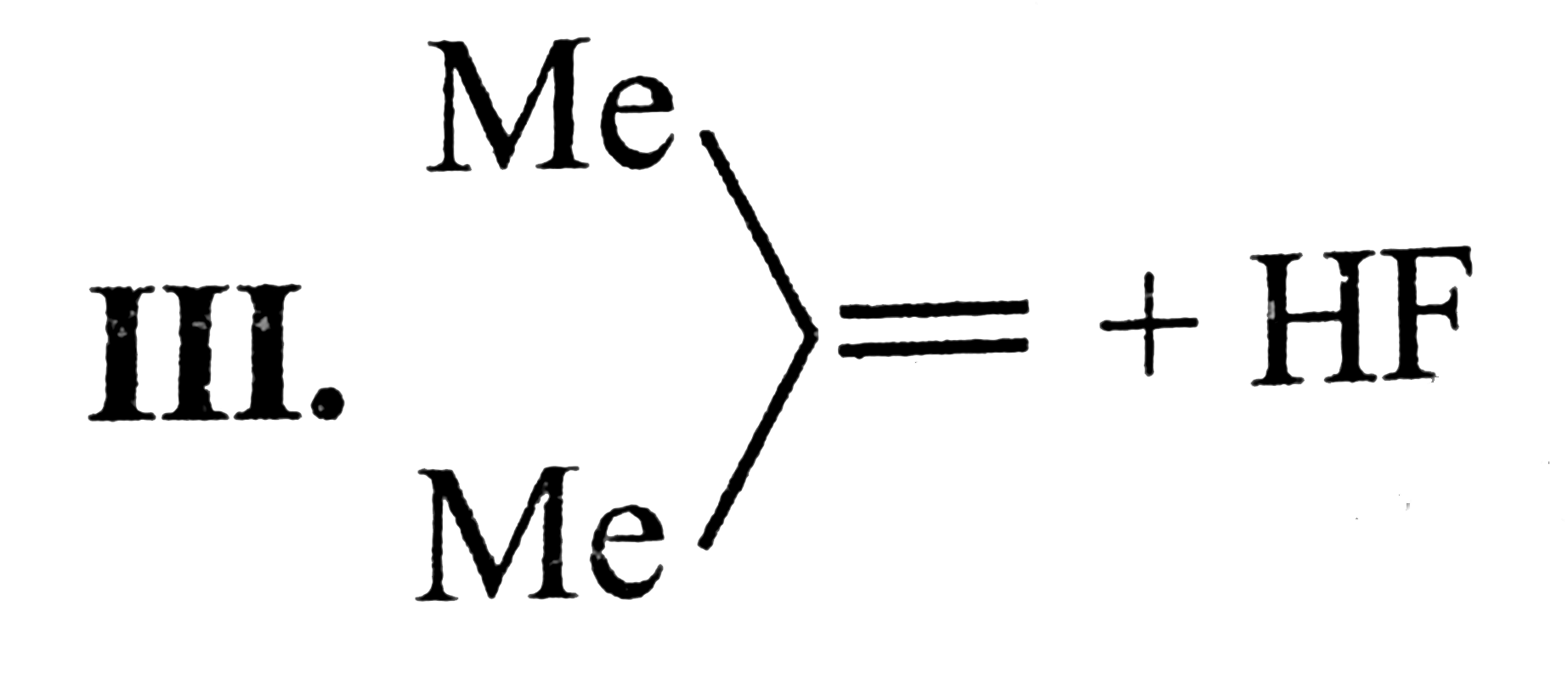
| 4. |
Br^(-) can be converted to Br_(2) by using |
|
Answer» `Cl_(2)`<BR>CONC. `HCl` |
|
| 5. |
B.pt. and m.pt of inert gases are: |
|
Answer» Low |
|
| 6. |
Boyle's law may be expressed as : |
|
Answer» `((DP)/(DV))_T= K/V` |
|
| 7. |
Boyle's law is applicable in : |
|
Answer» ISOBARIC process |
|
| 8. |
Boyle's law according to kinetic equation can be expressed as : |
|
Answer» PV = KT |
|
| 9. |
overset(NaBH_(4))(leftarrow) PhCH=CH-CHOunderset(2. H_(3)O^(+))overset(1. LAH, ether)(rarr)(A) The products (A) and (B) are: |
|
Answer»
|
|
| 10. |
Bottles containing C_(6)H_(5)I and C_(6)H_(5)CH_(2)I lost their original labels. They were labelled as A and B for testing. A and B were separately taken in test tubes and boiled with NaoH solution. The end solution in eaach tube was made acidic with dilute HNO_(3) in each tube was made acidic with dilute HNO_(3) and some AgNO_(3) solution was added. substance B gave a yellow precipitate. which one of the following statements is true for this experiment? |
|
Answer» Additionn of `HNO_(3)` was unnecessary `C_(6)H_(5)I underset("Boil")overset(NaOH)to"No reaction" underset((ii)AgNO_(3))overset((i)"Dil. "HNO_(3))to "No yellow ppt. of AGI"` Tube B. `C_(6)H_(5)CH_(2)I underset(-C_(6)H_(5)CH_(2)OH)overset(NaOH,boil)to NaI underset((ii)AgNO_(3))overset((i)Dil.HNO_(3))to" AgI yellow ppt."` Thus, statement (b), i.e., A was `C_(6)H_(5)I` is correct. |
|
| 11. |
Bottles containing C_6H_5I and C_6H_5CH_2I lost their original labels. They were separately taken in test tubes and boiled with NaOH solution . The end solution in each tube was made acidic with dilute HNO_3 and some AgNO_3 solution added. Solution B gave an yellow precipitate. Which one of the following statement is true for the experiment ? |
|
Answer» ADDITION of ` HNO_3` was unnecesaary |
|
| 12. |
Bottles containing C_(6)H_(5)I and C_(6)H_(5)CH_(2)I lost their original labels. They were labelled A and B for testing. A and B were separately taken in test tubes and boiled with NaOH solution. The end solution in each tube was made acidic with dilute HNO_(3) and then some AgNO_(3) solution was added. Substance B give a yellow precipitate. which one of the following statement is true for this experiment |
|
Answer» A was `C_(6)H_(5)I` |
|
| 13. |
Bottles containing C_(6)H_(5)I "and" C_(6)H_(5)CH_(2)I lost their original labels . They were labelled A and B for testing . A and B were separately taken in test tubes and boiled with NaOH solution. The end solution in each tube was made acidic with dilute HNO_(3) and then some AgNO_(3) solution was added. Substance B give a yellow precipitate Which one of the following statements is true for this experiment ? |
|
Answer» A was `C_(6)H_(5)I` |
|
| 14. |
Bottles containing C_(6)H_(5)I and C_(6)H_(5)CH_(2)I lost their original labels. They were labelled A and B for testing. A and B were separately taken in test tubes and boiled with NaOH solution. The end solution in each tube was made acidic with dilute HNO_(3) and then some AgNO_(3) solution was added. Substance B gave a yellow precipitate. Which one of the following statements is true for this experiment? |
|
Answer» `A and C_(6)H_(5)CH_(2)I` `C_(6)H_(5)CH_(2)Ioverset(NaOH)(to)C_(6)H_(5)CH_(2)ONaoverset(HNO_(3)"/"H^(+))(to)C_(6)H_(5)CH_(2)OHoverset(AgNO_(3))(to)` yellow ppt. Since benzyl iodide GIVES yellow ppt. hence this is COMPOUNDS B and A was phenyliodide `(C_(6)H_(5)I)` |
|
| 15. |
Bottle of PCl_5 is kept stoppered because it: |
|
Answer» Explodes |
|
| 16. |
Both the C_(beta)-H and C_alpha-X bonds are breaking in the transition state of E2 reactions.The rate of E2 reactions is of second order.The rate shows primary isotopic (dueterium) effect. i.e. if C_beta-H is replaced by C_beta-D , the rate of reaction decreases sharply. The rate is also corelated with nucleofugality i.e. the ability of leaving group to leave.With a better nucleofuge, the rate of reaction increases.This is called he element effect. The element effect is also observed in E1cB reactions in which the second step is rate determining and elimination of first order w.r.t conjugate base is observed.For E1cB reaction K_H//K_D=1, therefore proton abstraction is not involved in the rate determing step In D_2O the incorporation of Deuterium at C_beta-H in the In E1 reaction only nucleofuge departs in slow step and a carbocation intermediate is formed. Observe the given reaction, In this reaction K_H//K_D=1 What is not true about this reaction |
|
Answer»
|
|
| 17. |
Both the C_(beta)-H and C_alpha-X bonds are breaking in the transition state of E2 reactions.The rate of E2 reactions is of second order.The rate shows primary isotopic (dueterium) effect. i.e. if C_beta-H is replaced by C_beta-D , the rate of reaction decreases sharply. The rate is also corelated with nucleofugality i.e. the ability of leaving group to leave.With a better nucleofuge, the rate of reaction increases.This is called he element effect. The element effect is also observed in E1cB reactions in which the second step is rate determining and elimination of first order w.r.t conjugate base is observed.For E1cB reaction K_H//K_D=1, therefore proton abstraction is not involved in the rate determing step In D_2O the incorporation of Deuterium at C_beta-H in the In E1 reaction only nucleofuge departs in slow step and a carbocation intermediate is formed. For the given compounds I and II the rate of elimination by EtO^(Theta)//EtOH shows K_H//K_D=7.1 What is the about this reaction |
|
Answer» Both `C_(beta)-H` and `C_alpha-Br` bonds are BREAKING SIMULTANEOUSLY in transition state |
|
| 18. |
Both the adsorption and absorption can take place on a surface. What is the term used for this phenomenon ? |
| Answer» SOLUTION :SORPTION | |
| 19. |
Both temporary and permanent hardness in water are removed by : |
|
Answer» Boiling |
|
| 20. |
Both temporary and permanent hardness are removed on boilingwater with : |
|
Answer» `CA(OH)_2` |
|
| 21. |
Both t-butyl and (-SO_(3)H) groups are used as a blocking group in certainsynthesis of organic compounds. Whichof the following statements are correct? |
|
Answer» `t-` Butyl group is easily introduced by any of the varitions of the Friedel-Crafts alkylation reacton. |
|
| 22. |
Both sucrose and lactose possess the same molecular formula, but sucrose is a non-reducing sugar and lactose is a reducing sugar. Why? |
| Answer» Solution :In sucrose, HEMIACETAL HYDROXYL groups of GLUCOSE and fructose are involved in the GLYCOSIDIC LINKAGE. Hence sucrose is a non-reducing sugar. In lactose, hemiacetal hydroxy groups of galactose involved in the glycosidic linkage but of glucose not involved in glycosidic linkage. Hence lactose is a reducing sugar. | |
| 23. |
Both PH_(3) and NH_(3) are Lewis bases, but basic strength of PH_(3) is less than that of NH_(3). Explain. |
| Answer» Solution :N. atom of `NH_(3)` or .P. atom of `PH_(3)` has a lone pair of ELECTRONS availablefor donation. Hence `NH_(3)` and `PH_(3)` are Lewis bases. The electron pair DENSITY on a larger .P. atom is less than that on smaller .N. atom.Hence `PH_(3)` is a WEAKER BASE. | |
| 24. |
Both paraldehyde and methaldehyde have which type of structures |
| Answer» SOLUTION :CYCLIC STRUCTURE | |
| 25. |
Both ozone and hydrogen peroxide act as oxidants as well as reductants. What main differences are noticed in their reactions? |
Answer» SOLUTION :
|
|
| 26. |
Both O_(2) and F_(2) stabilize high oxidation states but the ability of oxygen to stabilize the higher oxidation state exceeds than that of flrorine. Account for this observation. |
| Answer» Solution :Compounds in the higher OXIDATION states are more covalent than in lower oxidation states. SINCE `O^(2-)` ion has larger ionic size (140 pm) than `F^(-)` ion (136 pm), therefore, any ELEMENT in a higher oxidation state can polarize `O^(2-)` ion more easily than `F^(-)` ion. As a result, oxides are more covalent than fluorides in the higher oxidation states and hence more stable than fluorides. | |
| 27. |
Both N(SiH_(3))_(3) and NH(SiH_(3))_(2) compounds have trigonal planar skeleton. Incorrect statement about both compounds is : |
|
Answer» `SiNSi` bond ANGLE in `NH(SiH_(3))_(2)gtSiNSi` bond angle in `N(SiH_(3))_(3))` `to` strength of back bonding in `NH(SiH_(3))_(2)` is higher than in `N(SiH_(3))_(2)` hence N-Si bond length in `NH(SiH_(3))_(2)` is LESS than that of in `N(SiH_(3))_(2)`. |
|
| 28. |
Both NO and NO_(2) have odd number of electrons. NO is colourless, but NO_(2) is coloured. Why? |
| Answer» SOLUTION :In `NO_(2)` molecule, colour is expained BASED on the presence of UNPAIRED electron, which can be EXCITED easily by the absorption of visible light. In NO molecule, the odd electron is also involved in bonding between two bonded atoms, the excitationof which can be possible only in ultraviolet region. Thus NO is colourless. | |
| 29. |
Both [Ni(CO)_(4)] and [Ni(CN)_(4)]^(2-) are diamagnetic. The hybridization of nickel in these complexes, respectively, are : |
|
Answer» `sp^(3), sp^(3)` |
|
| 30. |
Both [Ni(CO)_(4)] and [Ni(CN)_(4)]^(2-) are diamagnetic. The hybridisations of nickel in these complexes respectively are : |
|
Answer» `sp^(3), sp^(3)` |
|
| 31. |
Both [Ni(CO)_4] and [Ni(CN)_4]^(2-) , are diamagnetic. The hybridizations of nickel in these respectively, are |
|
Answer» `sp^3,sp^3` |
|
| 32. |
Both [Ni(CO)_(4)] and [Ni(CN)_(4)]^(2-) are diamagnetic. The hybridisation of nickel in these complexes, respectively are : |
|
Answer» `SP^(3),sp^(3)` |
|
| 33. |
Both methane and ethane may by obtained by one step reaction from |
|
Answer» METHYL IODIDE |
|
| 34. |
Both methane and ethane may be obtained in one step reaction from: |
|
Answer» `CH_3COOHa` |
|
| 35. |
Bothmethaneandethanemay beobtainedby a suitableonestepreactionfrom : |
|
Answer» `CH_(3)I` |
|
| 36. |
Both methaneandethanemaybeobtainedby one step reacton form : |
|
Answer» `CH_(3)I` |
|
| 37. |
Both ionic and covalent bonds are present in : |
|
Answer» `CH_4` |
|
| 38. |
Both geometrical and optical isomerisms are shown by |
|
Answer» `[Pt(NH_(3))_(2)Cl_(2)]` |
|
| 39. |
Both double salt as well as complexes are formed by combination of two or more stable compounds in stoichiometric ratio.However, they differ in the fact that double salt dissociate into simple ions completely when dissolved in water but in complex salt, complex ions doesn't dissociate into ions. Which of the following correct about alums ? |
|
Answer» Alums are double salt. |
|
| 40. |
Both double salt as well as complexes are formed by combination of two or more stable compounds in stoichiometric ratio.However, they differ in the fact that double salt dissociate into simple ions completely when dissolved in water but in complex salt, complex ions doesn't dissociate into ions. Which of the following statements is correct for complex formed by combination of one mole of PtCl_(4) and four mole NH_(3)? |
|
Answer» It can show geometrical isomerism `[Ma_(4)b_(2)]` can show G.I. |
|
| 41. |
Both DNA and RNA have two major purine bases…………..and……………… . |
| Answer» SOLUTION :ADENINE , GUANINE | |
| 42. |
Both Cr_(2)O_(7)^(2-) and MnO_(4)^(-) solutions can be used to titrate Fe^(2+) in acidic medium. Suppose you have (0.1 M solution of each). For a given sample of Fe^(2+) solution. If a given titration requires -7.5 mL of 0.1 m Cr_(2)O_(7)^(2-) o solution, how many mL of 0.1 M MnO_(4), would have been if it had been used instead. |
Answer» SOLUTION :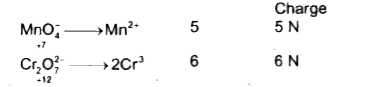
|
|
| 43. |
Both Cu and Zn have completelyfilled 3d atomicorbitals. Cu is considered as transition elements but Zn is not. Explain. |
| Answer» Solution :This is because Cu is ONE of the oxidation STATES viz. `+2` has incompletely filled 3d SUBSHELL `(3d^(9))` while Zn has completelyfilled`3d^(10)` only. | |
| 44. |
Both copper carbonate and copper hydroxide are present in :- |
|
Answer» malachite |
|
| 45. |
Both compartments in the above diagram are larege and contain ideal gas. The initial conditions are mentioned in the diagram. Select the correct statement(s). |
|
Answer» `DeltaSgt0ifT_(A)gtT_(B)` `(dU_(A))/(T_(A))+(dU_(B))/(T_(B))=(dU_(A))/(T_(A))(dU_(A))/(T_(B))=dU_(A)((1)/(T_(A))-(1)/(T_(B)))` |
|
| 46. |
Both Co^(3+) and Pt^(4+) have a coordination number of six. Which of the following pairs of complexes will show approximately the sameelectrical conductance for their 0.001 M aqueous solutions? |
|
Answer» `CoCl_(3).4NH_(3)` and`PtCl_(4).4NH_(3)` This PAIR of complexes will show approximately same electrical coductance for their 0.001 M aqueous solution s `underset([Co(NH_(3))_(6)]^(3+)+3Cl^(-))underset(DARR "in solution")([Co(NH_(3))_(6)]Cl_(3))""underset([Ptcl(NH_(3))_(5)]^(3+)+3Cl^(-))underset(darr"in solution")([PtCl(NH_(3))_(5)]Cl_(3))` As the number of IONIC species is solution due to both the complexes are EQUA,, therefore their equimolar solutions will show approximately same conductance. |
|
| 47. |
Both coke and lime stone are used in smelting of iron ore. Why? |
|
Answer» SOLUTION :Cokeacts as a fueland reducingagent, by forming carbon monoxide. Lime STONE decomposes to givequick lime. Limeacts as a flux and REMOVES acidicimpuritiesas slag. `CAO+ SiO_(2) to CaSiO_(3)` |
|
| 48. |
Both Co^(3+) and Pt^(4+) have a co-ordination number of six, which of the following pair of complexes will show approximately the same electrical conductance for their 0.001M aqueous solution ? |
|
Answer» `CoCl_(3).4NH_(3)" and " PtCl_(4).4NH_(3)` `PtCl_(4)*5NH_(3)rarr[PT(NH_(3))_(5)Cl]Cl_(3)` Both have 4 ions in their aq. Solution |
|
| 49. |
Both Co^(3+) and Pt^(4+) have a coordination number of six. Which of the following pair of complexes will show approximately the same electrical conductance for their 0.001 M aqueous solutions ? |
|
Answer» `CoCl_(3). 4 NH_(3) and PtCl_(4). 4NH_(3)` `PtCl_(4).5NH_(3)=[Pt(NH_(3))_(5)Cl]Cl_(3)rarrunderset("4 ions")ubrace([Pt(NH_(3))_(5)Cl]^(3+)+3Cl^(-))` Hence, they will SHOW same electrical conductance. |
|