Saved Bookmarks
This section includes 7 InterviewSolutions, each offering curated multiple-choice questions to sharpen your Current Affairs knowledge and support exam preparation. Choose a topic below to get started.
| 1. |
Aniline is basic in nature. Justify this statement. |
|
Answer» Solution :The lone PAIR of electrons on nitrogen atom in ANILINE makes it base. Aniline reacts with mineral acids to FORM salt. `underset("Aniline")(C_(6)H_(5)-overset(..)(N)H_(2))+HClhArr underset("Anilinium chloride")(C_(6)H_(5)overset(+)(N)H_(3)CL^(-))` |
|
| 2. |
Aniline is a weaker base than cyclohexylamine. Explain. |
|
Answer» |
|
| 3. |
Aniline is a stronger base than benzyl amine. |
| Answer» SOLUTION :ANILINE is a WEAKER BASE than BENZYLAMINE. | |
| 4. |
Aniline is a weaker base than benzyl amine. |
| Answer» SOLUTION :ANILINE is a WEAKER BASE than BENZYLAMINE. | |
| 6. |
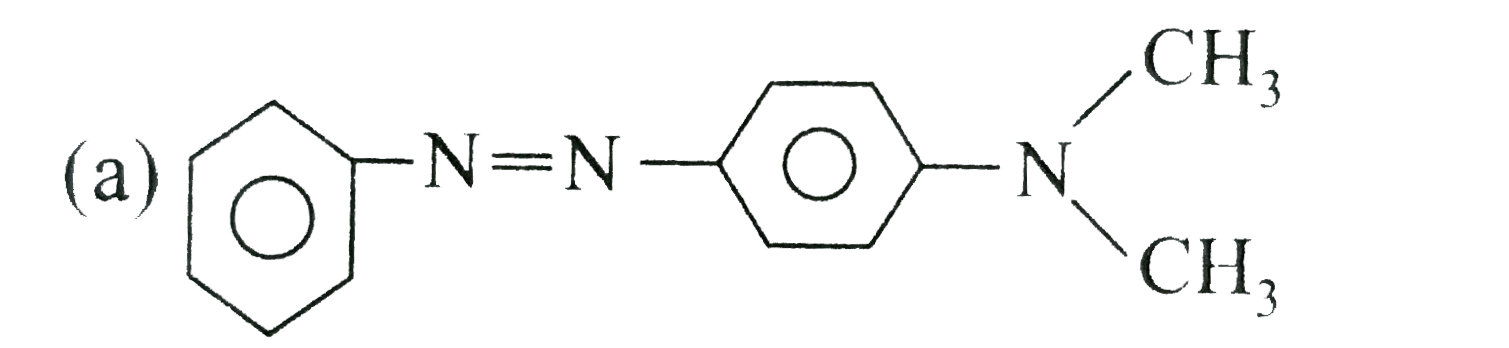
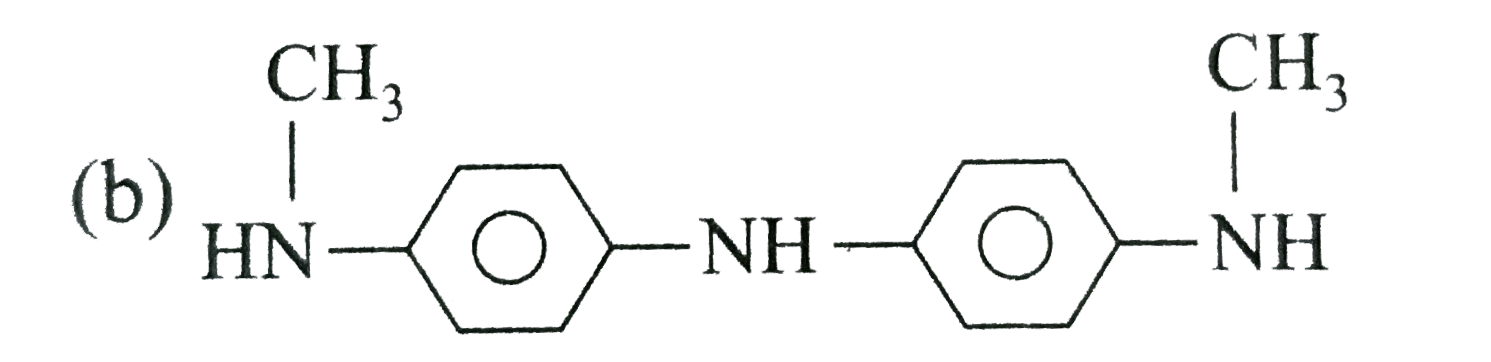
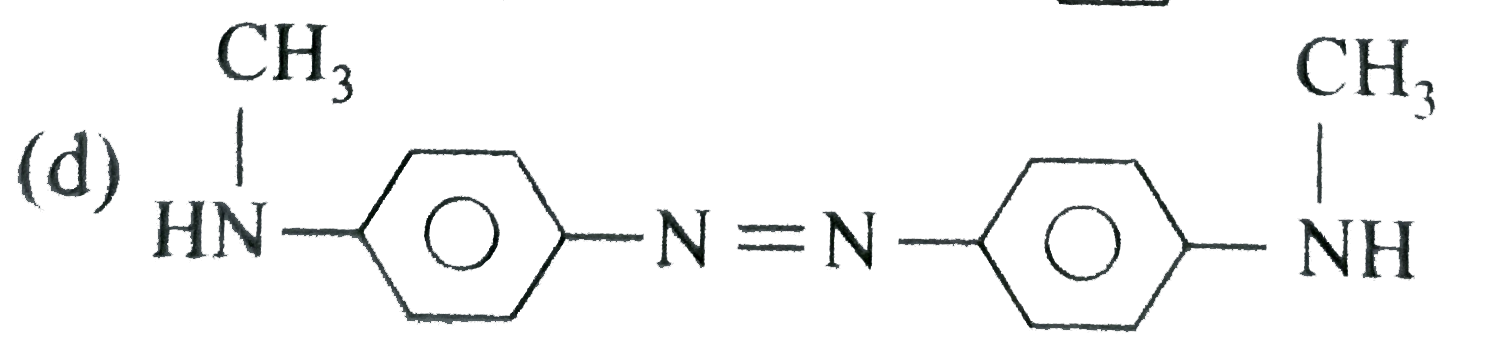
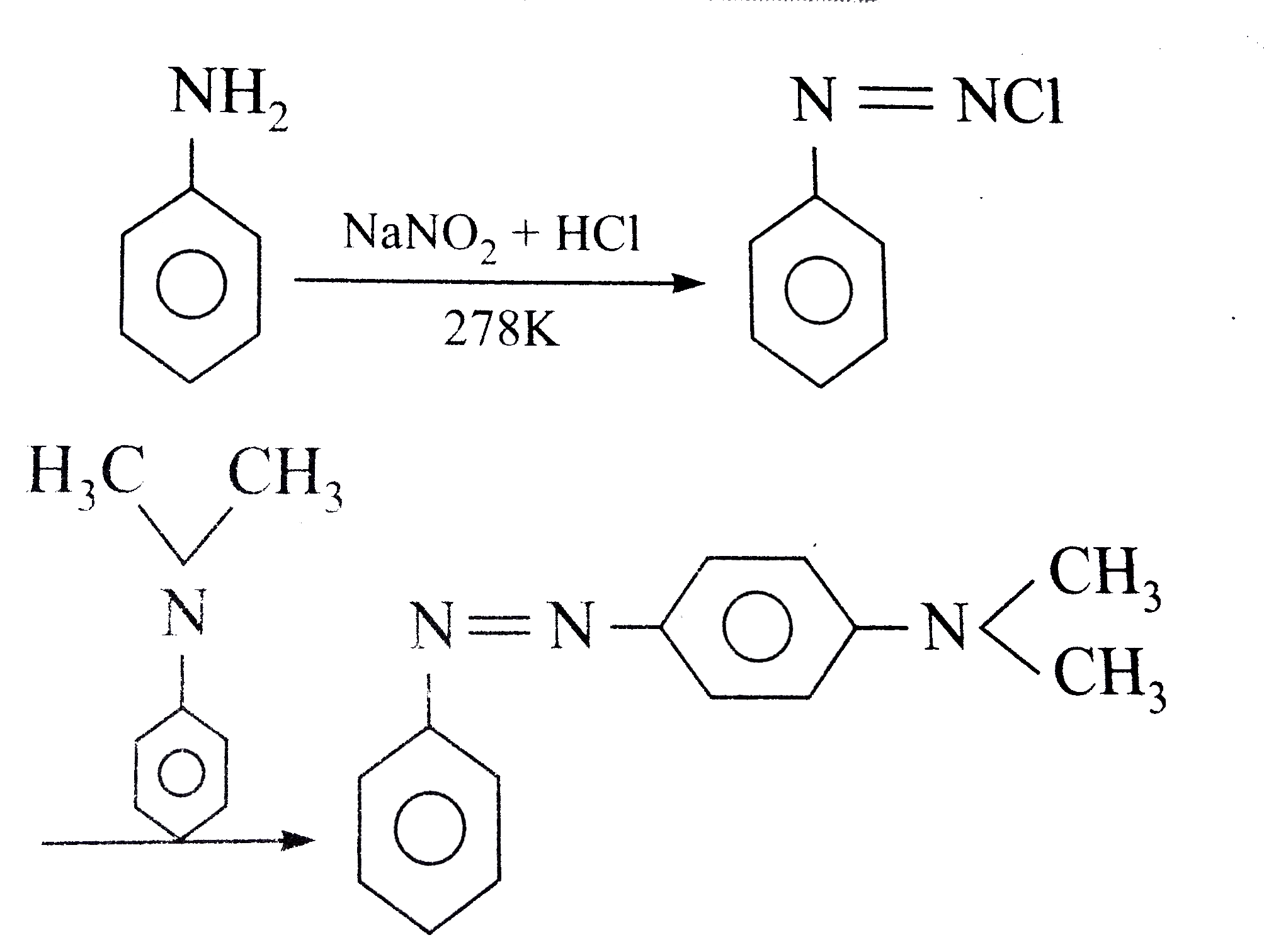
Aniline in a set of the following reactions yielded a coloured compound Y: |
|
Answer»
|
|
| 7. |
Aniline is soluble in |
|
Answer» more basic than ammonia |
|
| 8. |
Aniline in a set of reactions yielded a product |
|
Answer» `C_(6)H_(5)CH_(2)NH_(2)` 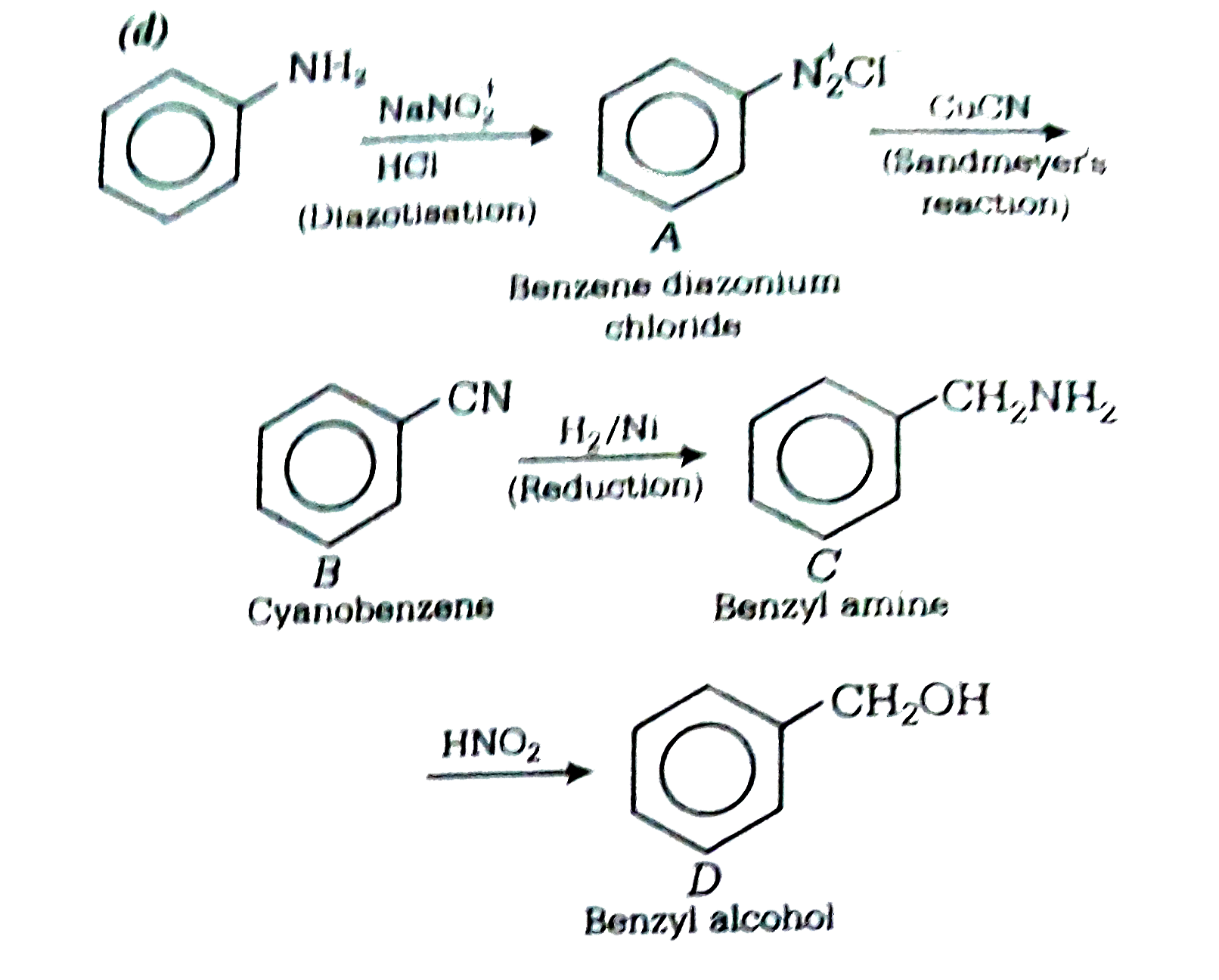
|
|
| 9. |
Aniline hydrogen sulphate on heating with sulphuric acid at 453-473 K produces |
|
Answer» BENZENE SULPHURIC acid |
|
| 10. |
Aniline in a set o reactions yield a product D The structure of the product D would be |
|
Answer» `C_(6)H_(5)CH_(2)OH` |
|
| 11. |
Anilinehave higher B.Pthan correspendingalkane or ethers due to |
|
Answer» RESONACE stabilizationof benzenering |
|
| 12. |
Aniline gives meta derivative as major product with |
|
Answer» `CH_3COCl//"PYRIDINE"` |
|
| 13. |
Aniline gets coloured on standing in air for a long time. Why? Or Why does aniline turn blackish brown in on open air. |
| Answer» Solution :Due to strong electron-donating effect (+R-effect) of the `NH_(2)` group, the electron density ono the benzene ring increases. As a result, aniline is easily oxidised on standing in AIR for a long time to FORM coloured blackish BROWN products. | |
| 14. |
Aniline gets coloured on standing in air for a long time. Why? |
| Answer» Solution :Due to strong electron DONATING EFFECT(+R effect) Of `NH_(2)` group, the electron density on the BENZENE RING increases. As a result ANILINE is easily oxidised on standing in air for a long time to form coloured products. | |
| 15. |
Anilinedonotreactswith |
|
Answer» `Br_(2) ` + water |
|
| 16. |
Aniline doesn't react with |
| Answer» Answer :B | |
| 17. |
Aniline does not undergo friedel-crafts reaction. Why? |
| Answer» Solution :ANILINE being BASIC combines with the Lewis acid catalyst `AlCl_3` used in Friedel-Crafts REACTION and forms salt. So Friedel-Crafts reaction does not OCCUR. | |
| 18. |
Why aniline does not undergo Friedel - Crafts reaction ? |
| Answer» SOLUTION :Aniline forms salts with Friedel - Crafts catalyst `AlCl_(3)`. In this salt .N. ATOM acquires POSITIVE charge and acts as strong deactivating GROUP. Hence, the reactivity is decreased. | |
| 19. |
Aniline differs from ethyl amine in : |
|
Answer» BASIC NATURE |
|
| 20. |
Aniline can be separated from phenol using |
|
Answer» `Na_(2)CO_(3)` |
|
| 21. |
Aniline cannot be prepared by Gabriel phthalimide synthesis. |
| Answer» Solution :In Gabriel phthalimide synthesis of aniline, POTASSIUM phthalimide REQUIRES the treatment with CHLOROBENZENE or bromo-benzene. Sincearyl halides do not undergo NUCLEOPHILIC substitution reaction, chlorobenzene or BROMOBENZENE does not react with potassium phthalimide to give N-phenylphthalimide and hence aniline cannot be prepared by Gabriel phthalimide synthesis. | |
| 22. |
" Aniline + benzoylchloride "overset(NaOH)(to) C_6H_5-NH-COC_6H_5 this reaction is known as |
|
Answer» Friedal - CRAFT's REACTION |
|
| 23. |
Aniline + benzoylchloride overset(NaOH)(to)C_(6)H_(5)-NH-COC_(6)H_(5) this reaction is known as…………………. |
|
Answer» Friedel-crafts reaction |
|
| 24. |
Aniline can be converted into Benzene by |
|
Answer» DIAZOTIZATION |
|
| 25. |
Aniline + Benzene diazonium chloride to X. Identify X. |
| Answer» Solution :yellow dye | |
| 26. |
Aniline at low temperature. |
|
Answer» Solution :Aniline is dissolved in dilute hydrochloric acid, well COOLED solution of sodium nitrite in water is added at `0-5^(@)`. Benzene diazonium chloride is OBTAINED. This is called diazotisation REACTION. `NaNO_2+HCl toHNO_2+NaCl` `C_6H_5N.H_2+O.N.OH+H.Cloverset(0-5^(@)C)toC_6H_5-N=N-Cl+2H_2O` |
|
| 27. |
Aniline and ethylamine resembles in: |
|
Answer» Solubility |
|
| 28. |
Anilin is heatedwith conc H_(2)SO_(4)gives |
|
Answer» o-amino benzenesulphonic ACID |
|
| 29. |
Anilie is treated with a mixture of NaNO_(2) and H_(3)PO_(2), the product formed is |
|
Answer» Aniline diazonium hypophosphite `C_(6)H_(5)NH_(2) overset(NaNO_(2)//H_(3)PO_(2))rarr C_(6)H_(5) N_(2)^(+) H_(2) PO_(2)^(-) UNDERSET(-H_(3)PO_(3))overset(H_(2)O //H_(3)PO_(2))rarr C_(6)H_(6) + N_(2)` |
|
| 31. |
Anhydrous MgCl_(2) can be prepared by heating MgCl_(2)*6H_(2)O : |
|
Answer» 1. in a CURRENT of DRY HCl |
|
| 32. |
Anhydrous mercurous chloride can be prepared by: |
|
Answer» the reduction of `HgCl_(2)` with `SnCl_(2)` solution |
|
| 33. |
Anhydrous magnesium chloride can be prepared by heating MgCl_(2).6H_(2)O |
|
Answer» with CONCENTRATED HCL |
|
| 34. |
Anhydrous magnesium chloride can be prepared by heating MgCl_2.6H_2O |
|
Answer» In a CURRENT of DRY HCL gas |
|
| 35. |
Anhydrous FeSO_4 is: |
|
Answer» WHITE |
|
| 37. |
Anhydrous copper sulphate is colourless, but hydrated copper sulphate is blue. Explain ? |
| Answer» Solution :In ANHYDROUS copper sulphate, the splitting is very LESS. It absorbs energyin infrared REGION.It is colourless. In hydrated copper sulphate, water molecules are present in the COORDINATION sphere. The splitting of d-orbitals is reasonably increased. If it absorbs energy in visible region of light.Hence it is exhibit COLOUR. | |
| 38. |
Anhydrous calcium chloride is often used as a dessicant. In the presence of excess of CaCl_(2), the amount of the water taken up is governed by K_(p) = 6.4 x× 10^(85) for the following reaction at room temperature, CaCl_(2)(s) + 6H_(2)O(g)hArrCaCl_(2).6H_(2)O(s). What is the equilibrium vapour pressure of water in a closed vessel that contains CaCl_(2)(s) ? |
|
Answer» |
|
| 39. |
Anhydrous CaCl_(2) is not recommended as a drying agent for alcohols and amines. |
| Answer» Solution :Alcohols and amines combine with anhyd. `CaCl_(2)` to form complexes. For example, with `C_(2)H_(5)OH`, it GIVES a complex of MOLECULAR formula. `CaCl_(2).3C_(2)H_(5)OH` | |
| 40. |
Anhydrous CaCl_(2) is used as drying agent because it |
|
Answer» ADSORB and ABSORBS WATER molecules |
|
| 41. |
Anhydrous CaCl_2 can be used for drying |
| Answer» Solution :Anhydrous `CaCl_2` cannot be used for DRYING alcohols, ammonia and `H_2S` (SEE A-level information). | |
| 42. |
Anhydrous aluminium chloride is a……………. Substance. |
|
Answer» |
|
| 43. |
Anhydrous aluminium chloride fumes in air because of : |
|
Answer» HYDRATION |
|
| 44. |
Anhydrous aluminium chloride exists as: |
|
Answer» monomer |
|
| 45. |
Anhydrous AlCl_(3) is used as a catalyst in the friedel-crafts reaction because it is |
|
Answer» Electron rich `CH_3Cl+AlCl_3 to underset"Electrophile"(CH_3^(+))+AlCl_4^-` |
|
| 46. |
The catalyst used in Friedel-Crafts reaction is : |
|
Answer» ELECTRON rich |
|
| 47. |
Anhydrous AlCl_(3) is used in Firedel-Craft reaction because it is |
|
Answer» ELECTRON RICH |
|
| 48. |
Anhydrous AlCl_3is covalent. From the data given below, predict whether it would remain covalent or become ionic in aqueous solution. (Ionization energy for Al = 5137 kJ "mole"^(-1), Delta H_("hydration")for Al^(3+) = -4665 kJ "mole"^(-1) , Delta H_("hydration") for Cl^(-) = -381 kJ "mole"^(-1)). |
| Answer» Solution : TOTAL ENERGY evolved due to hydration = -4665 - 36-381) = -5808 kJ/mole. As this RELEASED energy is greater than ionization energy (5137 kJ/mole) of AL, `AlCl_3`can be ionic in aqueous solution. | |
| 49. |
Anhydrous AlCl_(3) is covalent . From the data given below predict whether it would remain as a molecule or converts into ions in aqueous solution . [L.E. for Al Cl_(3) = 5173 kJ/mol] DeltaH hydration for Al^(3+) = -4665 kJ/mol, Delta H_("hydra") for Cl^(-) = -381 kJ/mol . |
|
Answer» |
|
| 50. |
Anhydrous AlCl_(3) is covalent. From the data given below : Lattice energy = 5137 kJ/mol DeltaH hydration for Al^(+3) = –4665 kJ/mol DeltaH hydration for Cl^(-) = -381 kJ/mol Correct statement is :- |
|
Answer» The solution will consist of `AL^(+3) & CL^(-)` `DeltaH`hydration for `Cl^(-) = -381` kJ/mol In `AlCl_(3) to 3Cl^(-)` so, `DeltaH` hydrationfor `3Cl^(-) = -381 xx 3 = -843` Total hydration enthalpy `=-4665+ -843 = -5508` Lattice energy = 5137 Hydration energy is more than lattice energy |
|