Saved Bookmarks
This section includes 7 InterviewSolutions, each offering curated multiple-choice questions to sharpen your Current Affairs knowledge and support exam preparation. Choose a topic below to get started.
| 1. |
Lactic acid, CH_3CH(OH)COOH molecule shows: |
|
Answer» GEOMETRICAL isomerism |
|
| 2. |
Lactic acid and extracted from muscles is : |
|
Answer» Laevorotatory |
|
| 3. |
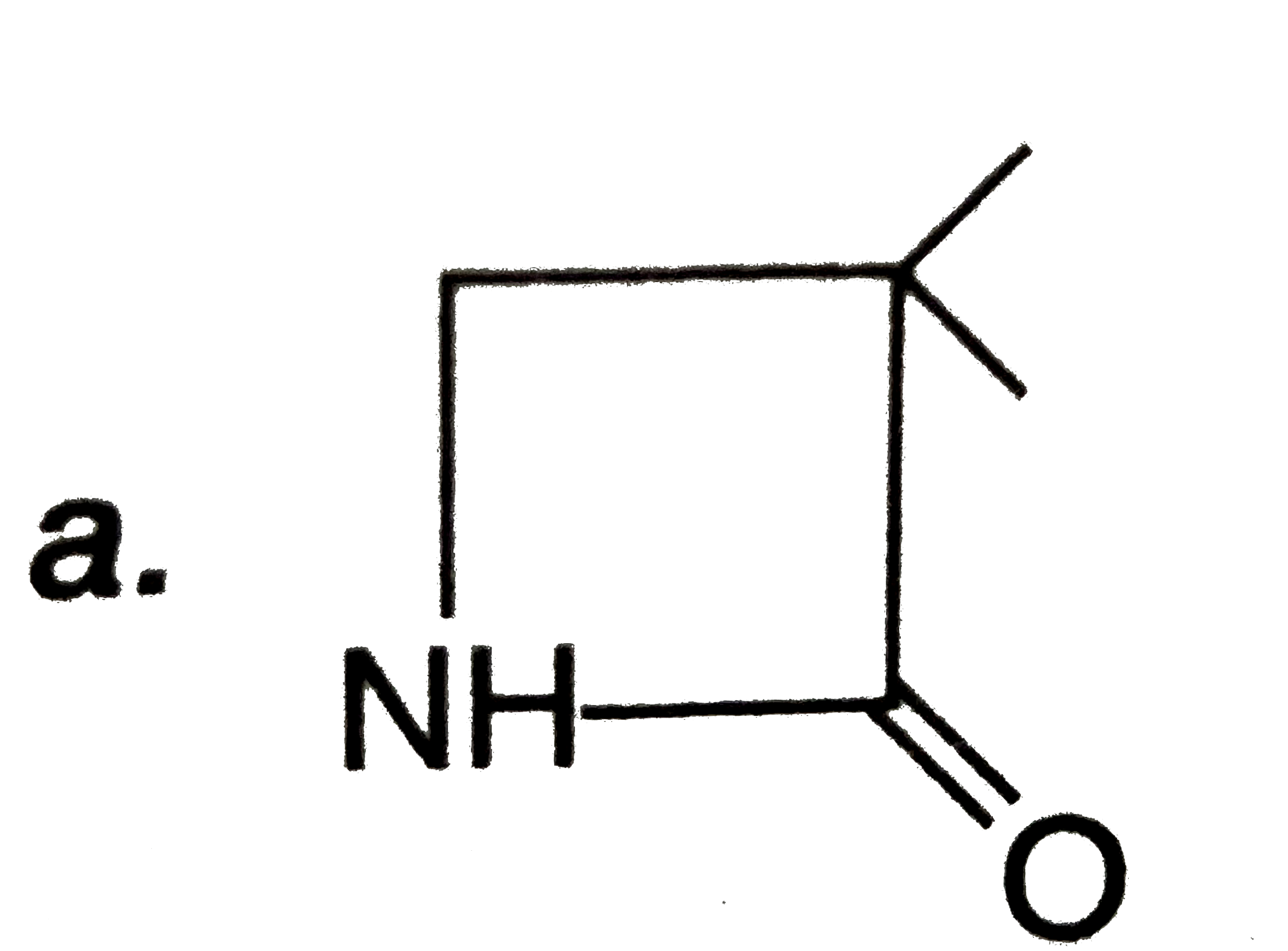
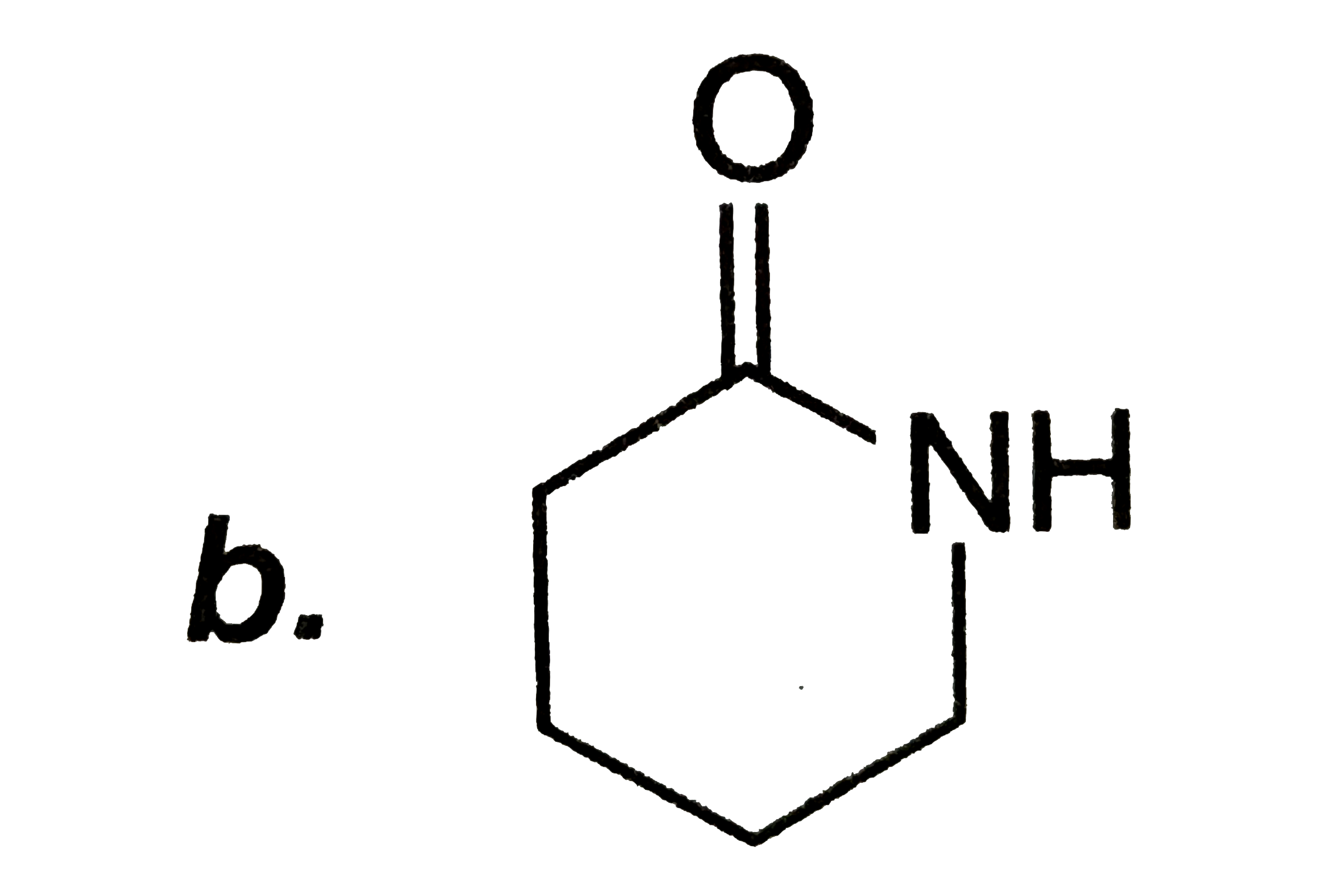
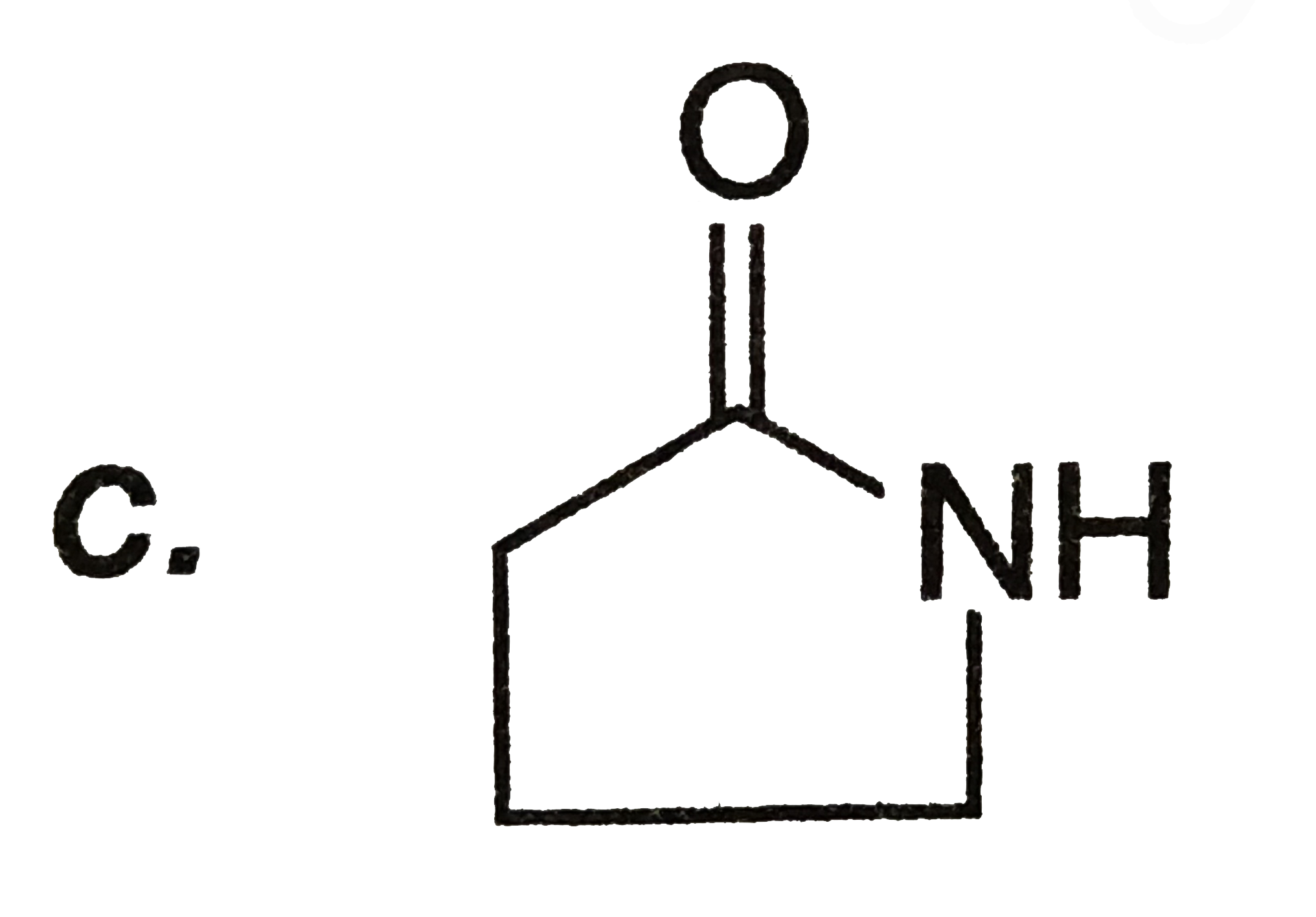
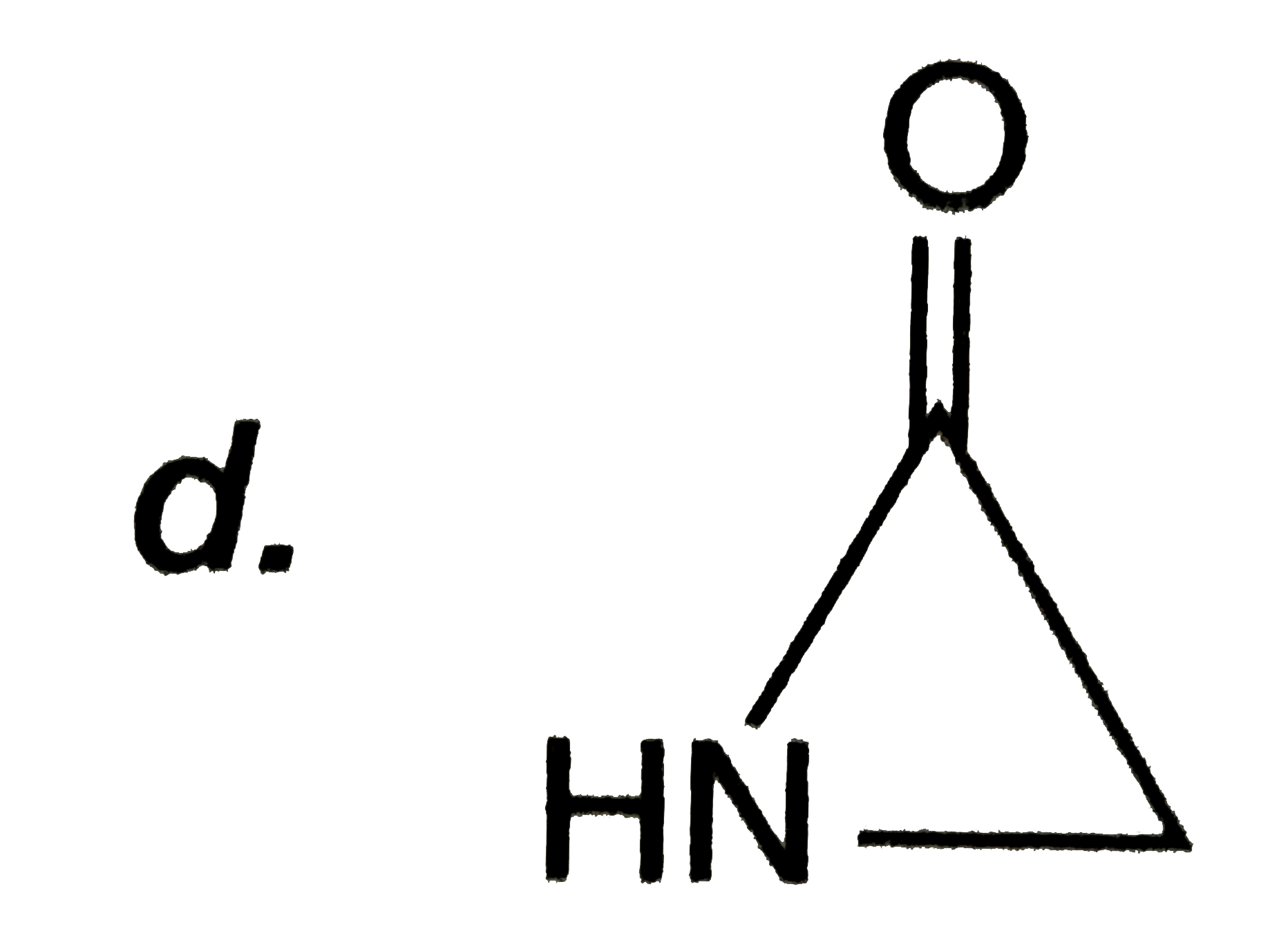
Lactam from which nylon-4 is synthesised is |
|
Answer»
 (LACTAM ) is USED in the SYNTHESIS of nylon-4 (LACTAM ) is USED in the SYNTHESIS of nylon-4
|
|
| 4. |
Lactic acid which extracted from muscles is : |
|
Answer» Laevorotatory |
|
| 5. |
Lactase enzyme hydrolyses the lactose intoitsconstituent as …………. . |
|
Answer» GLUCOSE , FRUCTOSE |
|
| 6. |
Lacrymator or tear gas is: |
|
Answer» `C_6H_5COCl` |
|
| 7. |
Lack of vit-P causes |
|
Answer» beri-beri |
|
| 8. |
Lack of vitamin B_1 causes scurvy.(True/False) |
|
Answer» |
|
| 9. |
Labourer.s working with phosphorus suffer from a diseses in which bones decay. It is known as: |
|
Answer» Arthritis |
|
| 10. |
Laboratory preparation of Nitro ethane from ethyl bromide follows……………….. Mechanism. |
|
Answer» |
|
| 11. |
Laboratory method for the preperation of diborane involves the oxidation of |
|
Answer» SODIUM BOROHYDRIDE with iodine |
|
| 12. |
Laboratory method for the preparation of acetyl chloride is |
|
Answer» `CH_(3)COOH+SOCl_(2)toCH_(3)COCL` `CH_(3)COOH+SOCl_(2)toCH_(3)COCl+HCl uarr+SO_(2)uarr` |
|
| 13. |
Label the hydrophilic and hydrophobic parts in the following compounds. (i) CH_(3)(CH_(2))_(10)CH_(2)OSoverset(-)(O_(2))overset(+)Na (ii) CH_(3)(CH_(2))_(15)overset(+)N(CH_(3))_(3)overset(-)Br (iii) CH_(3)(CH_(2))_(16)COO(CH_(2)CH_(2)O)_(n)CH_(2)CH_(2)OH |
Answer» SOLUTION :
|
|
| 14. |
Label the hydrophilic and hydrophobic parts in the following compounds : (i) CH_(3)(CH_(2))_(10)CH_(2)OSO_(3)^(-)Na^(+) (ii) CH_(3)(CH_(2))_(15)-overset(+)N(CH_(3))_(3)Br^(-) (iii) CH_(3)(CH_(2))_(16)COO(CH_(2)CH_(2)O)_(n)CH_(2)CH_(2)OH |
|
Answer» Solution :(i) `underset("HYDROPHOBIC part")ubrace(CH_(3)(CH_(2))_(10))-underset("Hydrophilic part")ubrace(OSO_(3)^(-)Na^(+))` (II) `underset("Hydrophobic part")ubrace(CH_(3)(CH_(2))_(15))-underset("Hydrophilic part")ubrace(overset(+)N(CH_(3))Br^(-))` (III) `underset("Hydrophobic part")(ubrace(CH_(3)(CH_(2))_(6)))-underset("Hydrophilic part")ubrace(COO(CH_(2)CH_(2)O)_(n)CH_(2)CH_(2)OH)` |
|
| 15. |
Label the hydrophillic and hydrophobic parts in the following compounds: (a) CH_(3)(CH_(2))_(10)CH_(2)OSO_(3)""^(-)Na^(+) (b) CH_3 (CH_2)_(15) N^(+) (CH_3)_2 Br^(-) (c) CH_3 (CH_2)_(16) COO (CH_2 CH_2 O)_n CH_2 CH_2 OH |
|
Answer» SOLUTION :(a) `underset("Hydrophobic part")(CH_3 (CH_2)_(10)) underset("HYDROPHILIC part")(CH_2- OSO_3 NA)` (B) `underset("Hydrophobic part")(CH_3 (CH_2)_(15))- underset("Hydrophilic part")(N^(+) (CH_3)_3 Br^(-))` (c) `underset("Hydrophobic part")(CH_3 (CH_2)_(16)) - underset("Hydrophilic part")(COO (CH_2 CH_2 O)_n CH_2 CH_2 OH)` |
|
| 16. |
Label the sterogenic center in each biologically active compound as R orS. |
|
Answer» |
|
| 17. |
Label the hydrophilic and hydrophobic parts in the following compounds. (a)CH_3(CH_2)_10CH_2OSO_3^(-)Na^+ , (b)CH_3(CH_2)_15-overset+N(CH_3)_3Br^- , (c ) CH_3(CH_2)_16COO(CH_2CH_2O)_n CH_2CH_2OH |
|
Answer» Solution :(a)`ubrace(CH_3(CH_2)_10CH_2)_"Hydrophobic"-ubrace(OSO_3^(-)Na^(+))_"Hydrophilic PART"` (b)`ubrace(CH_3(CH_2)_15)_"Hydrophobic part"-ubrace(overset+N(CH_3)_3Br^-)_"Hydrophilic part"` (c )`ubrace(CH_3(CH_2)_16)_"Hydrophobic part"-ubrace(COO(CH_2CH_2O)_nCH_2CH_2OH)_"Hydrophilic ACID"` |
|
| 18. |
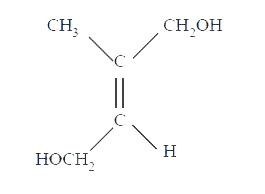
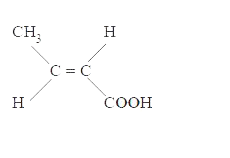
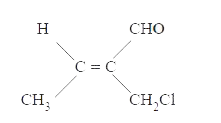
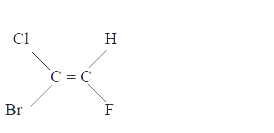
Label the following as, E, Z isomers. |
|
Answer»
|
|
| 19. |
(a) Complete the following chemical equations : (i) MnO_(4)^(-) (aq) + S_(2)O_(3)^(2-) (aq) + H_(2)O(l) to (ii)Cr_(2)O_(7)^(2-)(aq)+Fe^(2+) (aq) + H^(+) (aq) to (b) Explain the following observatons : (i) La^(3+) (Z = 57) and Lu^(3+) (Z = 71) do not show any colour in solutions. (ii) Among the divalent cations in the first series of transition elements, manganese exhibits the maximum paramagnetism. (iii) Cu^(+) ion is not known in aqueous solutions. |
| Answer» SOLUTION :Configurationof `La^(3+) is 4F^(0)` and that of `Lu^(3+) is 4f^(14)` . Due to the absence of partially FILLED f-orbitals, `La^(3+)` and `Lu^(3+)` do not SHOW any colour in solution. | |
| 20. |
Label each stereogenbic center as R or S. |
|
Answer» `(##GRB_CHM_ORG_HP_C02_E01_313_A02##)` (G) S `(##GRB_CHM_ORG_HP_C02_E01_313_A03##)` |
|
| 21. |
La^(3+)(Z=57) and Lu^(3+)(Z=71) do not show any colour in solutions. |
| Answer» Solution :CONFIGURATIONOF `La^(3+) is 4f^(0)` and that of `LU^(3+) is 4f^(14)` . Due to the ABSENCE of partially filled f-orbitals, `La^(3+)` and `Lu^(3+)` do not show any colour in solution. | |
| 22. |
La (lanthanum) having atomic number 57 is a member of : |
|
Answer» s-block elements |
|
| 23. |
La^(3+) and Lu^(3+) ions exhibit ________ property. |
| Answer» SOLUTION :DIAMAGNETIC | |
| 25. |
l high temperature the amount of sodium formed in the Castner process decreases due to |
|
Answer» Sodium metal HIGH densit |
|
| 26. |
Kwashiorkor is caused by the deficiency of- |
|
Answer» vitamins |
|
| 27. |
K_(w) of H_(2)O at 373 K is 1 xx 10^(-12). Identify which of the following is/are correct |
|
Answer» `pK_(w)` of `H_(2)O` is 12 `RARR K_(w) = [H^(+)][OH^(-)] = 10^(-12)` `[H^(+)] = [OH^(-)] rArr` `[H^(+)]^(2) = 10^(-12), [H^(+)] = 10^(-6), pH = -log [H^(+)] = -log 10^(-6) = 6` `H_(2)O` is neutral because `[H^(+)] = [OH^(-)]` at 373 K even when pH = 6 (d) Is not correct at 373 K. Water cannot become acidic. |
|
| 28. |
Kwashiorkar is caused by the deficiency of: |
|
Answer» Vitamins |
|
| 29. |
K_w=1 times 10^-14 at 25^@C Justify that statement. |
|
Answer» Solution :(i) Experimentally found that the concentration of `H_3O^+` in pure water is `1 times 10^-7` at `25^@C`. (ii) SINCE the dissociation of water PRODUCES equal number of `H_3O^+ and OH^-`, the concentration of `OH^-` is also equal to `1 times 10^-7` at `25^@C`. (ii) `therefore` The IONIC PRODUCT of water at `25^@C` is `K_w=[H_3O^+][OH^-]` `=[1 times 10^-7][1 times 10^-7]` `K_w=[1 times 10^-14]` |
|
| 30. |
K_w represents |
|
Answer» IONIC PRODUCT CONSTANT of water |
|
| 31. |
What are the possible products. |
| Answer» SOLUTION :` (##KSV_CHM_ORG_P2_C15_E01_007_S01.png" WIDTH="80%">. | |
| 32. |
NaNO_(2) +Dil. HCI. What are the possible products? |
| Answer» SOLUTION :` (##KSV_CHM_ORG_P2_C15_E01_006_S01.png" WIDTH="80%">, | |
| 33. |
K_(sp) value of Al(OH)_(3) and Zn(OH)_(2) are 8.5 xx 10^(-23) and 1.8 xx 10^(-14) respectively. If NH_(4)OH is added in a solution of Al^(3+) and Zn^(2+), which will precipitate earlier |
| Answer» Solution :Solubility of `Al(OH)_(3)` is lesser than `Zn(OH)_(2)`. | |
| 34. |
K_(sp) of an electrolyte AB is 1 xx 10^(-10).[A^(+)] = 10^(-5) m, which concentration of B^(-) will not give precipitate of AB |
|
Answer» `5 XX 10^(-6)` |
|
| 35. |
K_(sp) of Al(OH)_3 is 1 times10^-15 At what pH does 1.0 times 10^-3 M Al^(3+) precipitate on the addition of buffer of NH_4Cl and NH_4OH solution? |
|
Answer» Solution :`Al(OH)_3 LEFTRIGHTARROW Al^(3+)(aq)+3OH^- (aq)` `K_(sp)=[Al^(3+)][OH^-]^3` `Al(OH)_3` PRECIPITATES when `[Al^(3+)][OH]^3 gtK_(sp)` `(1 times10^-3)[OH^-]^3gt1 times10^-15` `[OH]^3 GT 1 times 10^-12` `[OH] gt1 times10^-4M` `[OH^-]=1 times10^-4M` `pOH=-log_10[OH^-]=-LOG( 1 times 10^-4)=4` `pH=14-4=10` Thus `Al(OH)_3` precipitates at a pH of 10 |
|
| 36. |
K_(sp)of AgCl is 1.8 times 10^-10. Calculate molar solubility in 1M AgNO_3 |
|
Answer» Solution :`AGCL(s) leftrightarrow Ag^+(aq)+Cl^-(aq)` X= SOLUBILITY of AgCl in 1 M `AgNO_3` `AgNO_3(s) leftrightarrow Ag^+(aq)+NO_3^- (aq)` `[Ag^+]=x+1 approx 1M (because x lt lt 1)` `[Cl^-]=x` `K_(SP)=[Ag^+][Cl^-]` `1.8 times 10^-10 =(1) (x)` `x=1.8 times 10^-10 M` |
|
| 37. |
K_(sp) of AgCl at 25^(@)C is 1.782 xx10^(-10). At 35^(@)C, K_(sp) is 4.159xx10^(10). What are DeltaH^(0) and DeltaS^(0) for the reaction : AgCl(s)=Ag^(+)(aq)+Cl^(-)(aq) ? |
|
Answer» |
|
| 38. |
K_(sp) of AI(OH)_3 is 1xx10^(-15) M. At what pH does 1.0xx10^(-3) M AI^(3+)precipitate on the addition of buffer of NH_4 CI and NH_4 OH solution. |
|
Answer» Solution :`AI(OH)_3 hArr AI+_((aq))^(3+)+3OH_((aq))^(-)` `[K_(sp)=pAI^(3+)][OH^-]^3` `AI(OH)_3` precipitates when `[AI^(3+)][OH^(-)]^3 GT K_(sp)` `[1xx10^(-3)][OH^(-)]^3 gt 1xx10^(-15)` `[OH]^3 gt 1xx10^(-12)` `[OH^-] gt 1xx10^(-4) M` `[OH^-]=1xx10^(-4) M` `POH=-log_(10)[OH^-]` `=-LOG[1xx10^(-4)]=4` `PH=14-4=10` Thus, `AI(OH)_3` precipitates at a `pH of 10.` |
|
| 39. |
K_sp of AgCl at 18^@C is 1.8 xx 10^-10. If Ag^+ of solution is 4 xx 10^-3 mol/litre. The Cl^- that must exceed before AgCl is precipitated would be: |
|
Answer» `4.5xx10^(-8)` mol/lit |
|
| 40. |
K_(sp) of Ag_2CrO_4 is 1.1 times 10^-12. What is solubility of Ag_2CrO_4 in 0.1 M K_2CrO_4. |
|
Answer» Solution :`Ag_2CrO_4 leftrightarrow 2Ag^+ +CrO_4^(2-)` x 2X x x is the solubility of `Ag_2CrO_4` in 0.1 M `K_2CrO_4` `K_2CrO_4 leftrightarrow 2K^+ + CrO_4^(2-)` 0.1 M 0.2 M 0.1 M `[Ag^+]=2x` `[CrO_4^(2-)]=(x+0.1) APPROX 0.1 therefore x lt lt 0.1` `K_(sp)=[Ag^+]^2 [CrO_4^(2-)]` `1.1 TIMES 10^-12=(2x)^2 (0.1)` `1.1 times 10^-12=0.4x^2` `x^2=(1.1 times10^-12)/0.4` `x=sqrt((1.1 times10^-12)/0.4)` `x=sqrt(2.75 times10^-12)` `x=1.65 times 10^-6 M` |
|
| 41. |
K_(sp) of AgCI is1.8xx10^(-10). Calculate molar solubility in 1M AgNO_3. |
|
Answer» SOLUTION :`AgCI_((s))HARR Ag_((aq))^(+)+CI_((aq))^(-)` `x="solubility of in " 1M AgNO_3` `AgNO_(3(aq)) hArr underset(1M)(Ag_((aq))^(+))+underset(1M)(NO_(3(aq))^-)` `[AG^+]=x+1 cong 1M (because x ltlt 1)` `[CI^-]=x` `K_(sp)=[Ag^+][CI^-]` `1.8xx10^(-10)=(1)(x)` `x=1.8xx10^(-10)M`. |
|
| 42. |
K_(sp) of Ag_2 CrO_4 is 1.1xx10^(-12). What is solubility of Ag_2 CrO_4 in ox.1M K_2 CrO_4. |
|
Answer» Solution :`Ag_2 CrO_4 hArr 2AG^(+)+CrO_(4)^(2-)` x is the solubility of `Ag_2 CrO_4` in `0.1 M K_2 CrO_4` `UNDERSET(0.1M)(K_2 CrO_4) hArr underset(0.2 M)( 2K^+)+underset(0.1 M)(CrO_(4)^(2-))` `[Ag^+]=2x` `[CrO_(4)^(2-)]=(x+0.1)=0.1""because xlt LT 0.1` `K_(sp)=[Ag^(+)^(2)[CrO_(4)^(2-)]` `1.1xx10^(-12)=(2x)^2(0.1)` `1.1xx10^(-12)=0.4x^2` `x^2=(1.1xx10^(-12))/(0.4)` `x=sqrt((1.1xx10^(-12))/(0.4))` `x=sqrt(2.75xx10^(-12))` `x=1.65xx10^-5M`. |
|
| 43. |
K_(sp) for sodium chloride is 36 mol^(2)//"litre"^(2). The solubility of sodium chloride is |
|
Answer» Solution :`{:(NaCl,hArr,NA^(+),+,Cl^(-)),(,,S,,S):}` `K_(sp) = S^(2), S = sqrt(K_(sp)) = sqrt(36) = 6`. |
|
| 44. |
K_sp for sodium chloride is 36 mol^2/liter^2. The solubility of sodium chloride is : |
|
Answer» 1/36 M |
|
| 45. |
K_(sp) for sodium chloride is 36 "mol"^(2)//"litre"^(2)". The solubility of sodium chloride is |
| Answer» Answer :A | |
| 46. |
K_(sp) for Cr(OH)_(3) is 2.7 xx 10^(-31). What is its solubility in moles/litre |
|
Answer» `1 XX 10^(-8)` `K_(sp) = x.(3x)^(3) = 27 x^(4)` `x = 4sqrt((K_(sp))/(27)) , x = 4sqrt((2.7 xx 10^(-31))/(27))` `x = 1 xx 10^(-8)` mole/litre. |
|
| 47. |
K_(sp) for Cr(OH)_3 is 2.7 times 10^-3. What is the solubility in moles/litre? |
|
Answer» `1 TIMES 10^-8` x 3x `K_(SP)=x.(3x)^3=27x^4` `therefore x=4sqrt(K_(sp)/27)=4sqrt((2.7 times 10^-31)/27)` `therefore x=1 times 10^-8` |
|
| 48. |
K_(sp) = [A]^3 [B]^2 for the salt where A and B are the cation and anion as the case may be stands true for |
|
Answer» `As_2S_3` |
|
| 49. |
K_sp = 1.2 xx 10^-5 of M_2SO_4 (M^+ is monovalent metal ion) at 298K find the maximum concentration of M^+ ions that could be attaiined in a saturated solution of this solid at 298 K. |
|
Answer» `3.46xx10^(-3)` M |
|