Saved Bookmarks
This section includes 7 InterviewSolutions, each offering curated multiple-choice questions to sharpen your Current Affairs knowledge and support exam preparation. Choose a topic below to get started.
| 1. |
Isobutyl bromide may be obtained from isobutylene and HBr in the presence of ________. |
|
Answer» peroxide |
|
| 2. |
Isobutyl alcohol cannot be obtained by the reaction between : |
|
Answer» `C_(2)H_(5)MgBr` and `CH_(3)CHO` |
|
| 3. |
Isobutene overset(HBr)underset("peroxide")rarrAoverset(KCN)rarrBoverset(dil. H_2SO_4)rarrC+ inorganic salt D C and D are |
|
Answer» `Me_2CHCH_2COOH,(NH_4)_2SO_4` 
|
|
| 4. |
Karl Ziegler reported that alkenes react with N-bromosuccinimide (NBS) in presence of light to give products resulting from substitution of hydrogen by bromine at the allylic position i.e., the position next to the double bond. Let us consider the halogenation of cyclohexane. Energy level diagram for allylic vinylic and alkylic free redicals is given below: Which of the following sequences is correct about C-H bond energy ? |
|
Answer» (C-H)VINYLIC`GT`(C-H) Alkylic `gt` (C-H) ALLYLIC |
|
| 5. |
Isobars have same numbers of |
|
Answer» protons |
|
| 6. |
K_(a_(1)), K_(a_(2)) and K_(a_(3)) are the respective ionisation constants for the following reactions.H_(2)S hArr H^(+)+HS^(-)HS^(-)hArr H^(+)+S^(2-)H_(2)S hArr 2H^(+)+S^(2-)The correct relationship between K_(a_(1)), K_(a_(2)) and K_(a_(3)) is |
|
Answer» `K_(a_(3))=K_(a_(1))XX K_(a_(2))` `=([H^(+)][HS^(-)])/([H_(2)S])xx([H^(+)][S^(2-)])/([HS^(-)])=K_(a_(1))xx K_(a_(2))` |
|
| 7. |
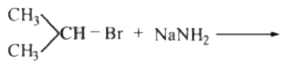
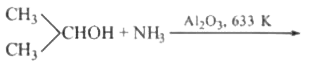
Iso-propylamine caimot be obtained by |
|
Answer»
(B) `(CH_(3))_(2)COoverset(NH_(3).Delta)underset(-H_(2)O)(rarr)(CH_(3))_(2)C=NHoverset(H_(2)//Ni)underset((CH_(3))_(2)CHNH_(2))(rarr)` (c ) `(CH_(3))_(2)CH-Broverset(NaNH_(2))underset(-HBr)(rarr)CH_(3)-CH=CH_(2)` `(CH_(3))_(2)CHOH+NH_(3)overset(Al_(2)O_(3),633K)underset(-H_(2)O)(rarr)(CH_(3))_(2)CHNH_(2)` Since `NH_(2)^(-)` is a strong base it prefers to abstract a proton to fonn an alkene RATHER than BRINGING about substitution reaction. Therefore, reaction ( c) cannot give iso-propylamine. |
|
| 8. |
K_(a)1 for butyricacidis 2xx10^(-5) .Calculate pH in 0.2M aqueoussolution butrae |
|
Answer» SOLUTION :`{:(NaBu,+,H_(2)O,hArr,NaOH,+,BuH),(1,,,,0,,0),((1-h),,,,h,,h):}` ` [OH^(-)] = Ch = C sqrt((Kh)/C)= sqrt (K_(n)C) = sqrt((K_(W)C)/(K_(a)))` ` sqrt((10^(-14)xx6.02 )/(2xx10^(-5))) = sqrt(10^(-19)) = 10^(-5)` `[H^(+)]= 10^(-9)` ` :. pH = 9 ` |
|
| 9. |
Iso propyl alcohol is obtained by the reaction of the following |
|
Answer» Acetone with Clemmenson's REDUCING AGENT |
|
| 10. |
Iso-octane is mixed to the petrol |
|
Answer» To PRECIPITATE inorganic substances |
|
| 11. |
Iso-octane is added to petrol: |
|
Answer» To PRECIPITATE inorganic material |
|
| 12. |
Isopropylbenzene on air oxidation in the presence of dilute acid gives |
|
Answer» `C_(6)H_(5) COOH` |
|
| 13. |
Iso-octaneis addedto petrol : |
|
Answer» toprecipitateinorganicmaterial |
|
| 14. |
Iso-butyl bromide reacts with aq. KOH gives |
|
Answer» iso-butyl alcohol `CH_(3)- OVERSET(CH_(3)) overset(|)(CH)-CH_(2)-Broverset( "heterolysis") to underset(1^(@)"carbo-cation")(CH_(3)- overset(CH_(3)) overset(|)C-)CH_(3) overset("rearrangment")to underset(3^(@)"carbo-cation") (CH_(3)-overset(CH_(3)) overset(|)(C^(o+))-C-CH_(3))overset(OH^(-)) to underset("t-butyl alcohol") underset(OH) underset(|) overset(H_(3)) overset(|)(CH_(3)-C-CH_(3))` |
|
| 15. |
________is widely used as a solvent for the preparation of grignard reagents. |
| Answer» SOLUTION :DIETHYL ETHER. | |
| 16. |
……………………………..is used to product lubricating oils in motors and machinery. |
|
Answer» |
|
| 17. |
...............is used to preparesemiconductorgradesilicon or germanium. |
|
Answer» |
|
| 18. |
Ka value of phenol is |
|
Answer» More than CARBOXYLIC acid |
|
| 19. |
………….is used in welding purpose. |
| Answer» SOLUTION :OXYACETYLENE | |
| 20. |
........................is used in the polymerisation of ethane as a complex catalyst |
|
Answer» |
|
| 21. |
…………..is used in the match boxes. |
| Answer» SOLUTION :RED PHOSPHOROUS | |
| 23. |
………………..is used in the manufacture of transparent soap. printing ink and stamp pad ink. |
| Answer» SOLUTION :GLYCEROL | |
| 24. |
K_a of phenol is equal to that of ethanol. |
|
Answer» True |
|
| 25. |
K_(a) of H_(2)O_(2) is of the order of |
|
Answer» `10^(-12)` |
|
| 26. |
K_(a) for the acid HA is 1xx10^(-6). The value of K for the reaction A^(-)+H_(3)O^(+)hArr HA+H_(2)Ois:- |
|
Answer» `1XX10^(-6)` |
|
| 28. |
K_a for HCN is 5 xx 10^-10 at 25^@C. For maintaining a constant pH of 9. Find the volume of 5 M KCN solution required to be added to 10 mL of 2 M HCN solution. |
|
Answer» 4 ml |
|
| 30. |
Ka for H_(3)BO_(3) "is" 5.8xx10^(-10) what buffer component ratio [NaH_(2)BO_(3)(aq.)]//[H_(3)BO_(3)(aq.)] would be needed to make a buffer solution of pH=10. |
|
Answer» 10 `[H^(+)]=Kaxx([H_(3)BO_(3)])/([NaH_(2)BO_(3)])` `10^(-10)=5.8xx10^(-10)XX([H_(3)BO_(3)])/([NaH_(2)BO_(3)])` |
|
| 32. |
K_(a) for CH_(3)COOH at 25^(@)C is 1.754xx10^(-5). At 50^(@)C, K_(a) is 1.633xx10^(-5) what are DeltaH^(0) and DeltaS^(0) for the ionisation of CH_(3)COOH ? |
|
Answer» SOLUTION :`(DELTAG^(@))_(298)=-2.303RTlogK` `=-2.303xx8.314xx298xxlog(1.754xx10^(-5))` `=27194J` `(DeltaG^(@))_(298)=-2.303xx8.314xx323xxlog(1.633xx10^(-5))` `=29605J` `DeltaG^(@)=DeltaH^(@)-TDeltaS^(@)` `29605=DeltaH^(@)-323DeltaS^(@)` `:.DeltaH^(@)=-1.55kJ//mol` `DeltaS^(@)=-96.44J//molK` |
|
| 34. |
K_(a) for butyric acid is 2.0 xx 10^(-5). Calculate pH and hydroxyl ion concentration in 0.2 M aqueous in 0.2 M aqueous solution of sodium butyrate |
|
Answer» `:. [OH^(-)] = C.hCsqrt((K_(h))/(C)) = sqrt(K_(h).C) = sqrt((K_(w).C)/(K_(a)))` `[OH^(-)] = (10^(-14) xx 0.2)/(2 xx 10^(-5)) = sqrt(10^(-10)) = 10^(-5)` `:. pOH = -log[OH^(-)] = 5` and so pH = 14 - 5 = 9 |
|
| 36. |
K_(6)[(CN)_(5) Co-O-O-Co(CN)_(5)]overset("oxidised")to (X) K_(5)[(CN)_(5)Co-O-O-Co(CN)_(5)] (Y) In both the complexes Co have t_(2g)""^(6)e_(g)""^(0) configuration. The bond energy of (O-O)in X and Y is: |
|
Answer» bond ENERGY of `(O-O)` in `Ylt` bond energy of `(O-O)` in X. |
|
| 38. |
K_(a) and K_(a) are the "Ind and ind ionization constants of maleic acid whereas K_(a_(1)) andK_(a_(1))are those of fumaric acid, then choose the correct options among the following: |
|
Answer» `pK_(a_(1))gtpK_(a_(1))` |
|
| 40. |
K_(4)[Fe(CN)_(6)]+M^(x+)(aq.)to underset("Coloured precipitate")(M_(4)[Fe(CN)_(6)]_(x)darr) Which of the following cation does not respond to the above reaction? |
|
Answer» `CU^(2+)(aq.)` |
|
| 42. |
K_(4)[Fe(CN)_(6)] is usedto test Cu^(2+),Fe^(2+),Zn^(2+),Cd^(2+) |
|
Answer» `2Cu^(2+)+ K_(4)[Fe(CN)_(6)] rarr underset(chocolate coloured )(Cu_(2)[Fe(Cn)_(6)]) + 4K^(Theta)` `Fe^(2+) + K_(6) [Fe(CN)_(6)) rarr underset(blue)(KFe^(III)[Fe^(II)(CN)_(6)]) + 3K^(oplus)` |
|
| 43. |
...................is used for making magnetic recording tapes. |
|
Answer» |
|
| 45. |
K_(4)[Fe(CN)_(6)] is used in the identification of: |
|
Answer» `FE^(2+)` ions `2Cu^(2+)+K_(4)[Fe(CN)_(6)]toCu_(2)[Fe(CN)_(6)]darr+` reddish BROWN `2K_(2)SO_(4)` |
|
| 46. |
____is used as cataylst in the manufacture of H_2SO_4 acid by contact process. |
|
Answer» `V_2O_5` |
|
| 47. |
___is used as catalyst by Ostwald process for manufacture of nitric acid. |
| Answer» SOLUTION :PLATINUM | |
| 48. |
K_(4)[Fe(CN)_(6)] is slightly yellow coloured due to : |
|
Answer» charge transfer |
|