

Saved Bookmarks
This section includes 7 InterviewSolutions, each offering curated multiple-choice questions to sharpen your Current Affairs knowledge and support exam preparation. Choose a topic below to get started.
| 1. |
K_(4)[Fe(CN)_(6)] is not used for the detection of |
|
Answer» `Fe^(2+)` IONS `4Fe^(3+)+3[Fe(CN)_(6)]^(4-)RARR UNDERSET("blue")(Fe_(4)[Fe(CN)_(6)]_(3)darr)` `Zn^(2+)+[Fe(CN)_(6)]^(4-)rarr underset("bluish white ppt")(Zn_(2)[Fe(CN)_(6)darr)` |
|
| 2. |
...........is used as antitumor drug in cancer treatment |
|
Answer» |
|
| 5. |
............is used as a chelating ligand for the separation of lanthanides, in sofetning of hard water and also in removing.............poisoning. |
|
Answer» |
|
| 6. |
Is there any coloured oxide of hitrogen ? |
| Answer» Solution :The known OXIDES of N are `N_(2)O`,NO,`NO_(2)`,`N_(2)O_(3)`,`N_(2)O_(3)`,`N_(2)O_(4)`,and `N_(2)O_(5)`.Amongs these `NO_(2)`is brown gas and `N_(2)O_(3)` is blue colour LIQUID | |
| 8. |
K_(4)[Fe(CN)_(6)] can beusedto detectoneormoreout of Fe^(2+),Fe^(3+),Zn^(2+),Cu^(2+),Cd^(2+) |
|
Answer» `Fe^(2+),Fe^(3+)` |
|
| 9. |
K_4[Fe(CN)_6] can be used to detect one or more out of Fe^(2+),Fe^(3+),Zn^(2+),Ca^(2+): |
|
Answer» `Fe^(2+),Fe^(3+)` only `Fe^(3+)+[Fe(CN)_6]^(4-)toFe_4[Fe(CN)_6]_3`(PRUSSIAN blue PRECIPITATE or solution) `Zn^(2+)+2K^(+)[Fe(CN)_6]^(4-)`(excess)`toK_2Zn_3[Fe(CN)_6]_2darr`(bluish -white/white) `Ca^(2+)+2K^(+)[Fe(CN)_6]^(4-)toK_2Ca[Fe(CN)_6]darr`(white) `Cu^(+)+2K^(+)+[Fe(CN)_6]^(4-)toCu_2[Fe(CN)_6]darr` [CHOCOLATE brown] |
|
| 10. |
Is the reaction, 2Al +3Fe^(2+)rarr2Al^(3+) +3Fe possible? |
|
Answer» No , because STANDARD oxidation POTENTIAL of `AIltFe` |
|
| 13. |
K_(4)[Fe(CN)_(6)] can be used to detect |
|
Answer» `Fe^(+2)` |
|
| 14. |
K_4 [Fe(CN)_6] can be used to detect one or more out of Fe^(2+), Fe^(3+), Zn^(2+), Cu^(2+), Cd^(2+) |
|
Answer» `Fe^(2+),Fe^(3+)` `2Cu(NO_(3))_(2) + K_(4)[Fe(CN)_(6)] to underset("(Reddish brown)")(Cu_(2)[Fe(CN)_(6)])+4KNO_(3)` `2CD(NO_(3))_(2)+K_(4)[Fe(CN)_(6)] to underset("(BLUISH white)")(Cd_(2)[Fe(CN)_(6)])+4KNO_(3)` |
|
| 15. |
Is the name potassium tris(oxalato) aluminium(III) for the complex [K_(3)Al(C_(2)O_(4))_(3)] correct? |
| Answer» SOLUTION :No, it is wrong. The correct name of the complex is : POTASSIUM trioxalatoaluminate (III). | |
| 16. |
K_3[Fe(CN)_6] is used in the detection of Fe^(2+) ion with which is gives a deep blue colour. This colour is due to the formation of |
|
Answer» `K_2Fe(FE(CN)_6]` |
|
| 18. |
Is the law of constant composition true for all types of compounds ? Explain why or not. |
| Answer» Solution :No, law of constnt COMPOSITION is not true for all TYPES of compounds. It is true only for the compounds obtained from one isotope. For example. For example, CARBON exists in two common isotopes, `.^(12)C and .^(14)C`. When it forms `CO_(2)` from `.^(12)C`, the ratio of masses is `12:32=3:8` but from `.^(14)C`, the ratio will be `14:32=7:16` which is not same as in the first case. | |
| 19. |
Is the following sugar, D- sugar or L-sugar? |
Answer» SOLUTION :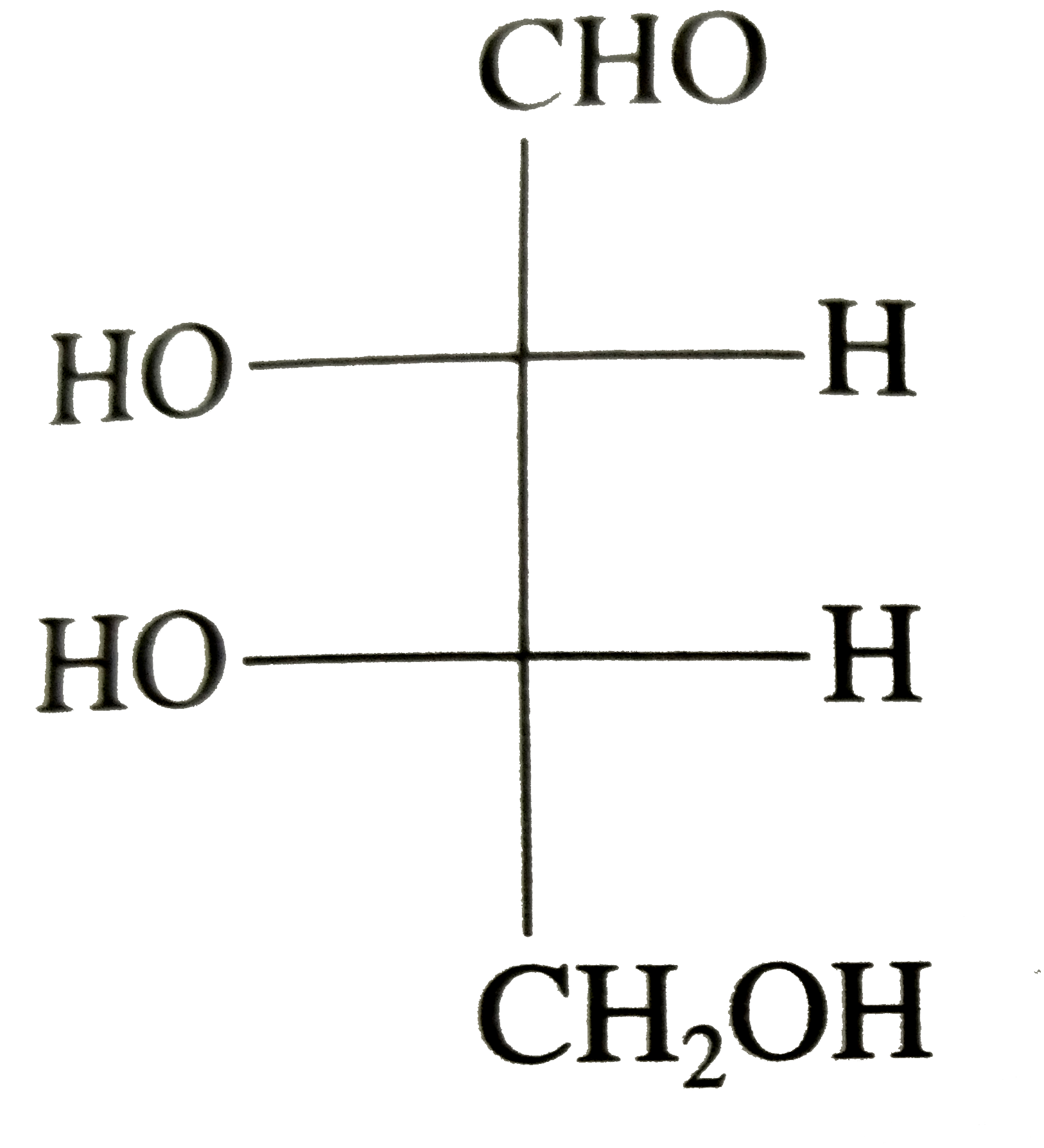
|
|
| 20. |
Is thefollowingsugar , D - sugar orL - sugar ? |
Answer» SOLUTION :
|
|
| 21. |
K_3[Co(NO_2)_6] is : |
|
Answer» FISCHER's salt |
|
| 22. |
K_(3)CoF_(6) is a high spin complex. The state of hybridisation of Co in this complex is |
|
Answer» `d^(2)SP^(3)` |
|
| 23. |
K_3[CoF_6] is high spin complex. What is the hybrid state of Co atom in this complex? |
|
Answer» `sp^3d` |
|
| 24. |
K_3[CoF_6] is high spin complex. What is the hybrid state of Co atom in this complex: |
|
Answer» `sp^3d` |
|
| 25. |
Is the conductivity of ionic solids due to the presence of ions ? |
|
Answer» |
|
| 26. |
_____is the alkane having negative octane number. |
|
Answer» N-hexane |
|
| 27. |
K_3[A1(C_2O_4)_3] is called: |
|
Answer» POTASSIUM alumino oxalate |
|
| 28. |
is subjected to hydroboration oxidation of the resulting structure is |
|
Answer» CIS |
|
| 29. |
K_(3) Co(NO_(2))_(6) is known as |
|
Answer» Fischer's SALT |
|
| 30. |
is subjected to E_(1) reaction, the expeceted product is: |
|
Answer»

|
|
| 31. |
If S_1 be the specific charge of cathode rays and S_2 be that of positive rays then |
| Answer» Answer :A | |
| 32. |
K_(2)SO_(4) solution mixed with Cr_(2)(SO_(4))_(3) solution in 1:1 molar ratio gives the test of Cr^(3+) ion but CuSO_(4) solution mixed with aqueous ammonia in 1:4 molar ratio does not give the test of Cu^(2+) ion. Explain why ? |
|
Answer» Solution :`K_(2)SO_(4).Cr_(2)(SO_(4))_(3) overset(aq)iff2K^(+)(aq)+2Cr^(3+)(aq)+4SO_(4)^(2-)` So chrome alum is double SALT. It when dissolved in water gives its constituent IONS. Hence it gives the test of `K^(+),Cr^(3+) and SO_(4)^(2-)` ions. `CuSO_(4).4NH_(3)[CU(NH_(3))_(4)SO_(4) overset(aq)iff[Cu(NH_(3))_(4)]^(2+)(aq)+SO_(4)^(2-)(aq)` As copper (II) is present in coordination SPHERE it will not given the test of `Cu^(2+)` ion. |
|
| 33. |
Is ranitidine an antacid or antihistamine? Can it be used for both purposes ? |
| Answer» Solution :Ranitidine is an ANTIHISTAMINE. Ranitidine can ALSO be used as an ANTACID because of the PRESENCE of -NH- group in its molecule. | |
| 34. |
K_2SO_4 . Al_2 (SO_4)_3. 24 H_2O is |
|
Answer» a COMPLEX salt |
|
| 36. |
K_(2)[PtCl_(6)] is ionized to three ions when dissolved in water . Will it give white precipitate with AgNO_(3) solution ? |
|
Answer» SOLUTION :No, because all `Cl^(-)` are in coordination sphere and are non-ionizable. `K_(2)[PtCl_(6)] iff 2K^(+) +[PtCl_(6)]^(2-)` |
|
| 37. |
K_(2)PtCl_(6) is a well known compound whereas corresponding Ni compound is not known. State a reason for it. |
| Answer» SOLUTION :This is because `PT^(4+)` is more stablethan `Ni^(4+)` as the sum of FOUR IONIZATION enthalpied of Pt is less than that of Ni. | |
| 38. |
K_(2)[Ni(CN)_(4)] underset(NH_(3))overset("K in liq.")to"X' Regarding this reaction correct statement is/are: |
|
Answer» X' is `K_(4)[NI(CN)_(4)]` |
|
| 39. |
……………..isproduced during digestion of starch by the enzyme alpha -amylase |
| Answer» SOLUTION :MALTOSE | |
| 40. |
K_2MaO_4 is formed when : |
|
Answer» `Cl_2` is passed into `KMnO_4` solution |
|
| 41. |
……………….is produced by passing chlorine gas through dry slaked lime. |
| Answer» SOLUTION :BLEACHING POWDER | |
| 42. |
K_(2)HgI_(4) is 50% ionised in aqueous solution. Which of following are correct ? |
|
Answer» n = 7 `alpha=(i-1)/(n-1),0.5=(i-1)/(3-1)rArr i=2` `therefore` (b) and (c ) are correct while (a) and (d) are not correct. |
|
| 43. |
Is PH of solution changed in Kolbe's electolysis. |
| Answer» SOLUTION :The concentration of `NAOH` solution increased so `PH` of solution is increased with TIME. | |
| 44. |
K_(2)Hgl_(4) is 50% ionized in aqueous solution. Which of the following are correct ? |
|
Answer» n=7 |
|
| 45. |
................is obtained when yellow phosphorus is heated with an aqueous solution of NaOH in an inert atmosphere. |
| Answer» SOLUTION :`PH_(3)` | |
| 47. |
...............is obtained by polymerization of .................and is used for making non -stick utensils. |
|
Answer» |
|
| 48. |
K_(2)CrO_(4) is____________in colour but K_(2)Cr_(2)O_(7) is______________. |
| Answer» SOLUTION :YELLOW, ORANGE | |
| 49. |
K_(2)Cr_(2)O_(7) react with hydrazins to form product. The oxidation state of Cr in the product will be :- |
| Answer» Answer :B | |
| 50. |
K_2Cr_2O_7is NOT used in ____________. |
|
Answer» dyeing |
|


