Saved Bookmarks
This section includes 7 InterviewSolutions, each offering curated multiple-choice questions to sharpen your Current Affairs knowledge and support exam preparation. Choose a topic below to get started.
| 1. |
Industrial name for H_2S_2O_7 is |
|
Answer» Pyrosulphuric acid |
|
| 2. |
Industrial name for H_2 S_2 O_7 is |
|
Answer» Pyrosulphuric acid |
|
| 3. |
Industrial alcohol mixed with petrol and benzene is : |
|
Answer» ABSOLUTE alcohol |
|
| 4. |
Indirect addition of water molecule to alkene, during the preparation of alcohol in laboratory is takes place in presence of which reagent ? |
|
Answer» `BH_(3)` |
|
| 5. |
Indigo shows cis-trans isomerism. Which is the stable form of Indigo |
|
Answer» EITHER cis or TRANS |
|
| 6. |
Iodine has highest oxidation number in the compound : |
|
Answer» `KIO_4` |
|
| 7. |
Indigo is a/an |
|
Answer» ORGANIC dye |
|
| 9. |
Indigestible carbohydrate, whichis also a constituent of our diet, is |
|
Answer» Cellulose |
|
| 10. |
Indigestion, uncler are caused due to excess of |
|
Answer» `H^(2)SO_(4)` |
|
| 11. |
Indicator electrode is |
|
Answer» SHE |
|
| 12. |
Indicator electrode is : |
|
Answer» SHE |
|
| 13. |
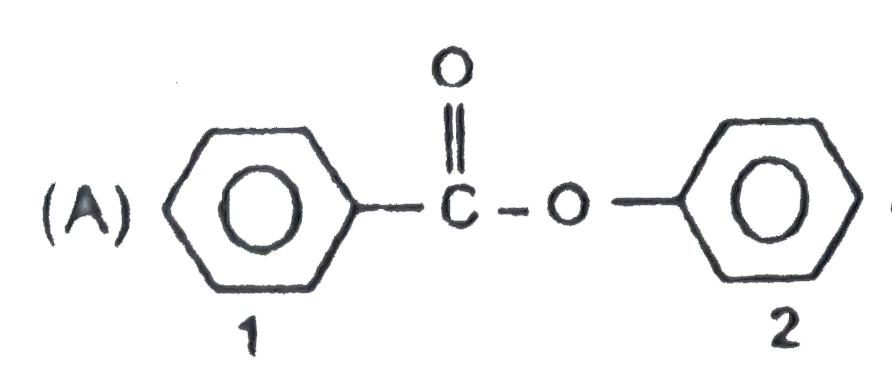
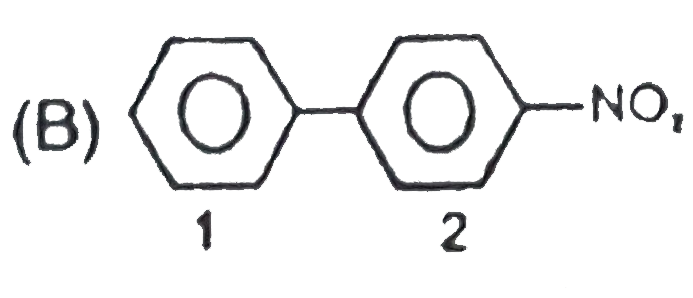
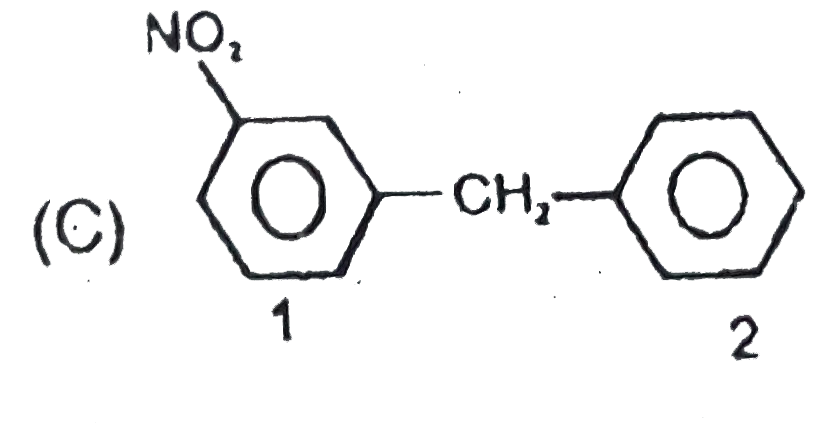
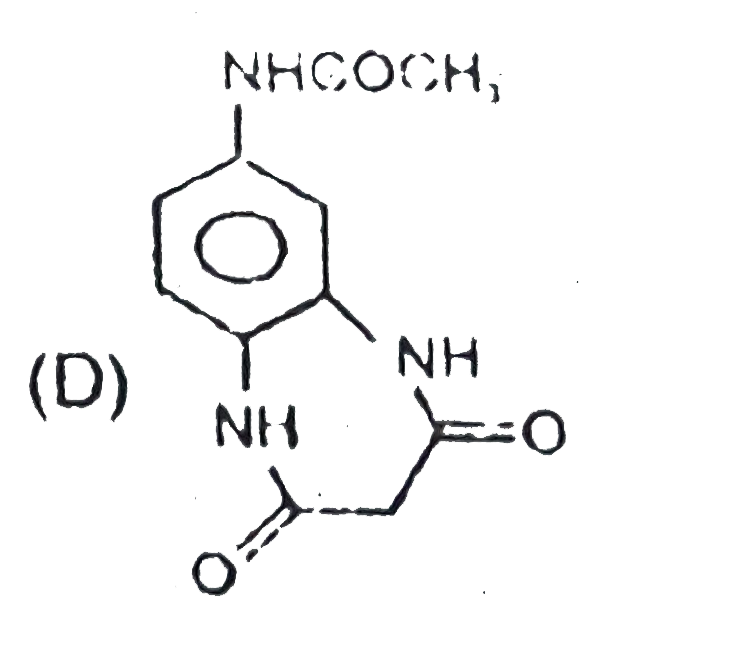
Indicates the most probable sites for ArSE reactions. |
|
Answer» <P> (B)p-at ring -1 (C )p - at ring -2 (D) o-wrt `NHCOCH_3` |
|
| 14. |
Indicate wrong electron-migration : |
|
Answer» |
|
| 15. |
Indicate which of the following is correct |
|
Answer» Increasing the concentration of nucleophile favors an `SN^(1)` reaction over `SN^(2)` reaction |
|
| 16. |
Indicate whether each of the following compound is 'E' or 'Z'. |
|
Answer» |
|
| 17. |
Indicate whether each of the following pairs are identical, or? |
|
Answer» `{:(I,II,III),("enantiomers","deastereomers","enantiomers"):}` 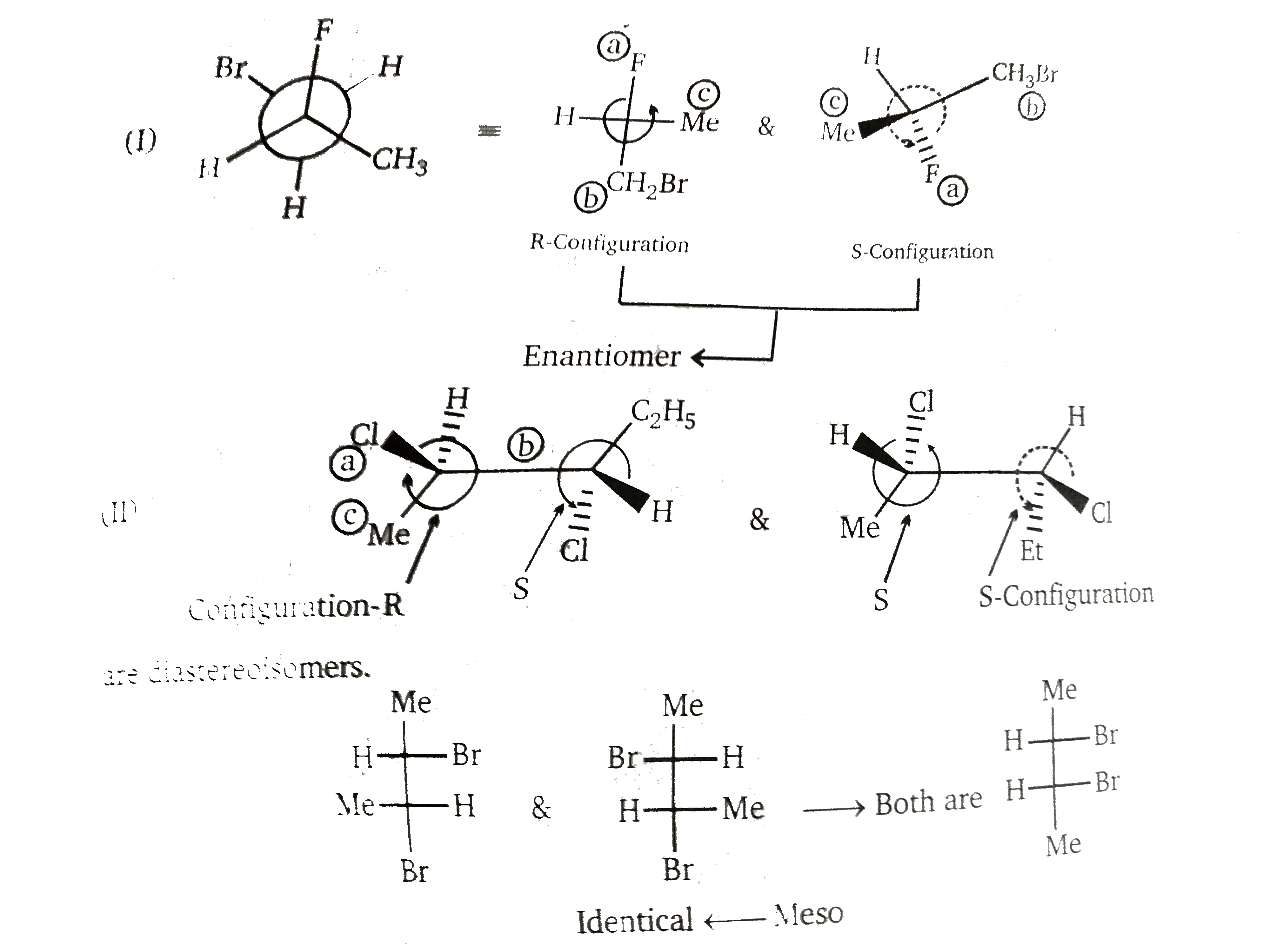
|
|
| 18. |
Indicate the wrongly named compound |
|
Answer» `underset("(4-methyl-1-pentanal)")(CH_(3)-underset(CH_(3))underset(|)(C)H-CH_(2)-CH_(2)-CHO)` |
|
| 19. |
Indicate the wrong statement :- |
|
Answer» Generally a sigma BOND has free ROTATION along the axis |
|
| 20. |
Indicate the types of isomerism exhibited by the following complexes : (i) [Co(NH_3)_5(NO_2)]^(2+) (ii) [Co(en)_3]Cl_3 (en= ethylene diamine) (iii) [Pt(NH_3)_2Cl_2] |
|
Answer» SOLUTION :Linkage isomerism is the EXISTENCE of co-ordination compounds HAT have the same composition differing with the connectivity of metal to a ligand. (ii) 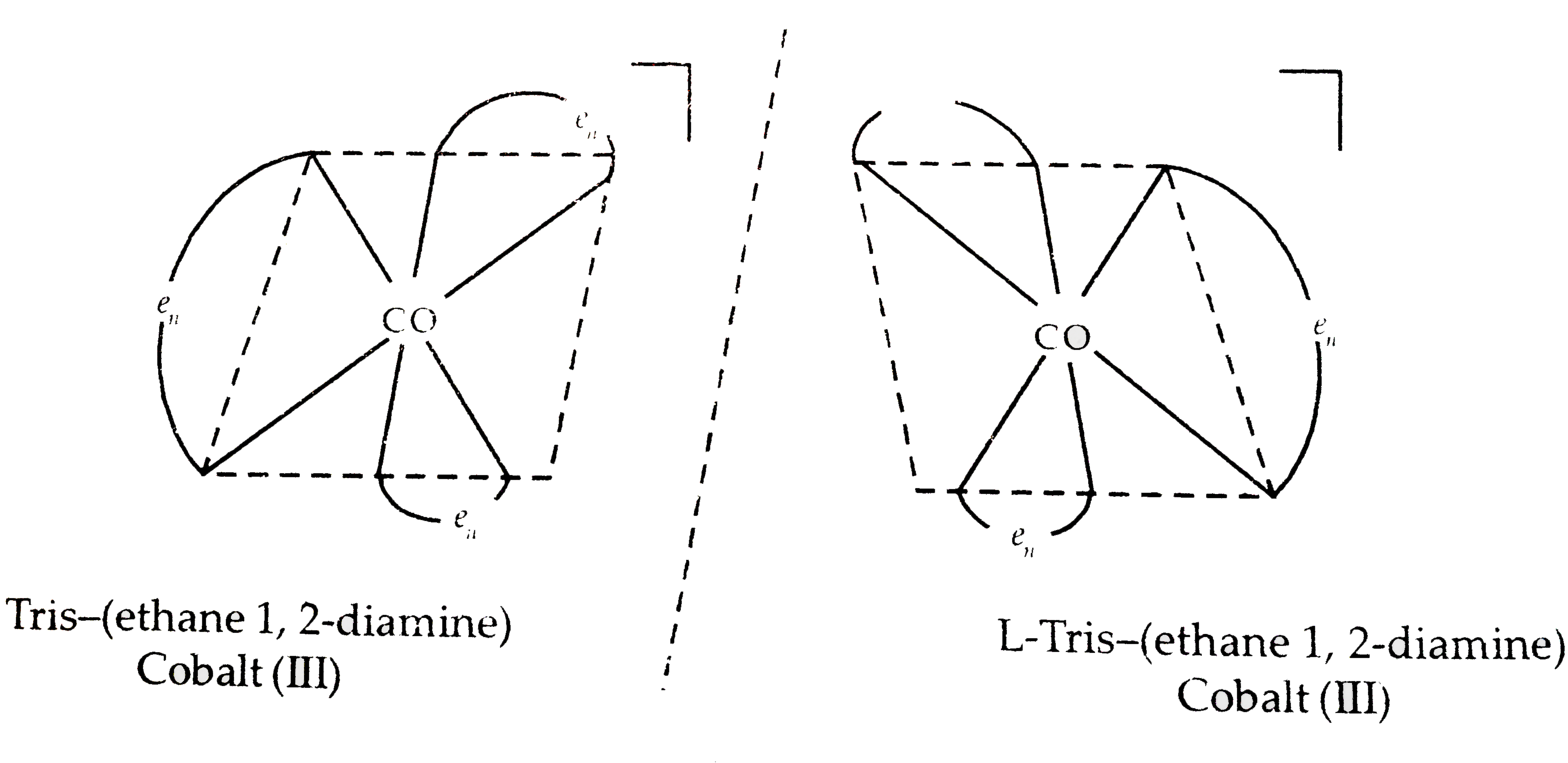 (iii) Geometrical Isomerism : This TYPE of isomerism arises in heteroleptic COMPELXES due to different possible geometric arrangements of the ligands. 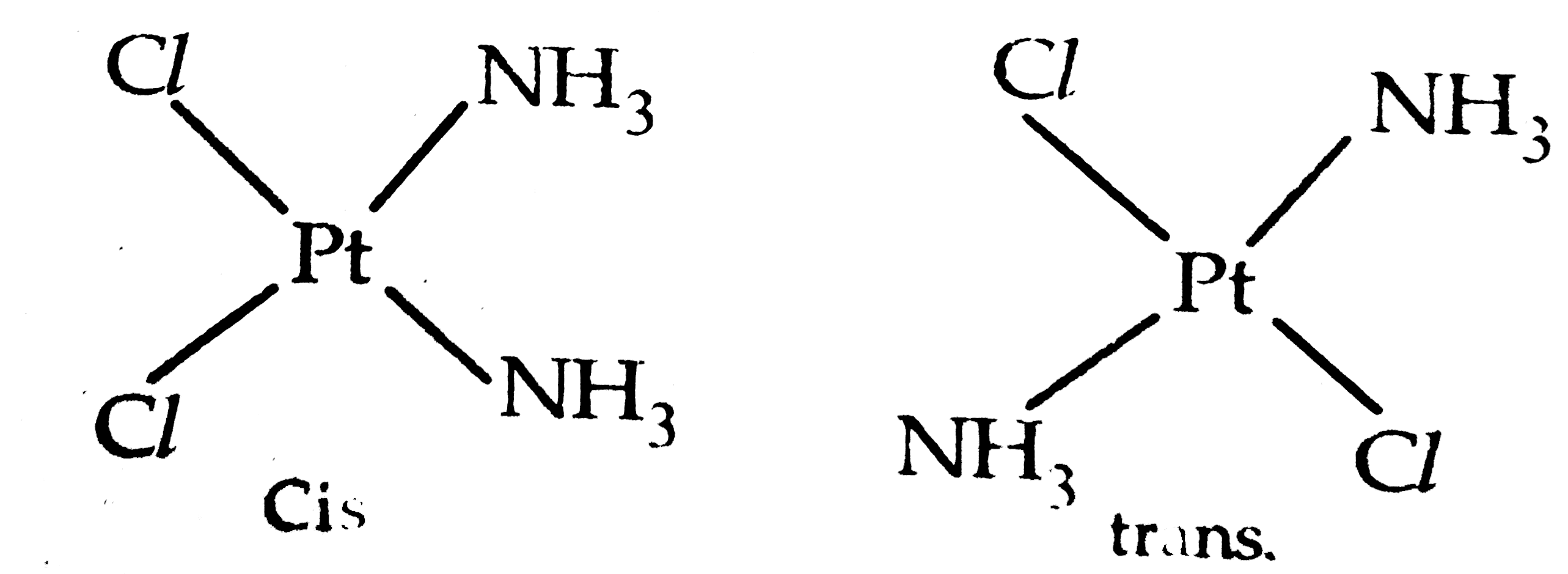
|
|
| 21. |
Indicate the uses of Benzoic acid. |
|
Answer» SOLUTION :Benzoic acid is used (i) as FOOD preservative either in the pure form or in the form of sodium BENZOATE (ii) in MEDICINE as an urinary antiseptic (iii) for MANUFACTURE of dyes |
|
| 22. |
Indicate the types of isomerism exhibited by the following complexes and draw the structures of these isomers : (i) K[Cr(H_(2)O)_(2)(C_(2)O_(4))_(2)] (ii) [Co(en)_(3)]Cl_(3) (iii) [Co(NH_(3))_(5)(NO_(2))](NO_(3))_(2) (iv) [Pt(NH_(3))(H_(2)O)Cl_(2)] |
Answer» Solution : (ii) Both OPTICAL isomers EXIST (iii) Ionization isomers : `[Co(NH_(3))_(5)(NO_(2))](NO_(3))_(2),[Co(NH_(3))_(5)(NO_(3))](NO_(2))(NO_(3))` Linkage isomers : `[Co(NH_(3))_(5)(NO_(2))](NO_(3))_(2),[Co(NH_(3))_(5)(ONO)](NO_(3))_(2)` (iv)  Octahedral COMPLEXES of the TYPE `[MA_(5)B]` do not show geometrical and optical isomerism. |
|
| 23. |
Indicate the types of isomerism exhibited by the following complexes and draw the structures of these isomers (i) K[Cr(H_(2)O)_(2)(C_(2)O_(4))_(2)] (ii) [Co(NH_(3))_(5)(NO_(2))](NO_(3))_(2) (iii) [Pt(NH_(3))(H_(2)O) CI_(2)] |
Answer» Solution : Both geometrical isomers (cis and trans),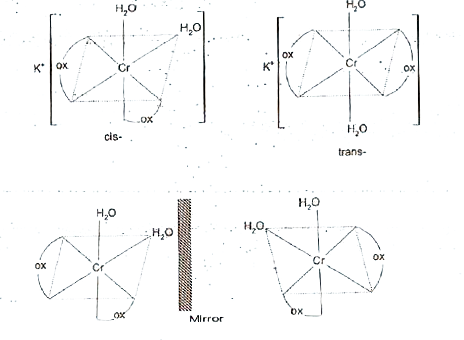 (ii). IONIZATION isomers`[CO(NH_(3))_(5)](NO_(2)] (NO_(3))_(2) [CO(NH_(3))_(5)(NO_(3))] (NO_(2)) (NO_(3))` . LINKAGE isomers `[VO(NH_(3))_(5)(NO_(2))] (NO_(3))_(2), [CO(NH_(3))_(5)(ONO)] (NO_(3))_(2)(NO_(3))2` (iii) Geometrical isomers (cis and trans)` ` (##FIITJEEE_CHE_MB_05_C02_SLV_026_S02.png" width="80%"> |
|
| 24. |
Indicate the types of isomerism exhibited by the following complexes and draw the structrues for these isomers : (i) K[Cr(H_2O)_(2)(C_2O_4)_(2)] "" (ii) [CO(en)_(3)]Cl_3 "" (iii) [Pt(NH_3)(H_2O)Cl_2] |
Answer» SOLUTION :
|
|
| 25. |
Indicate the types of isomerism exhibited by the following complexes and draw the structures for these isomers : [Co(NH_(3))_(5)(NO_(2))](NO_(3))_(2) |
|
Answer» Solution :Ionisation isomers of the COMPOUND are given below : `[Co(NH_(3))_(5)(NO_(2))](NO_(3))_(2),[Co(NH_(3))_(5)(NO_(3))](NO_(2))(NO_(3))` Linkage isomers of the compound are SHOWN below : `(Co(NH_(3))_(5)(NO_(2))](NO_(3))_(2), [Co(NH_(3))_(5)(ONO)](NO_(3))_(2)` OCTAHEDRAL complexes of the TYPE `[MA_(5)B]` do not show geometrical and optical ISOMERISM. |
|
| 26. |
Indicate the types of isomerism exhibited by the following complexes and draw the structures for these isomers : K[Cr(H_(2)O)_(2)(C_(2)O_(4))_(2)] |
Answer» Solution :It exhibits geometrical as well as optical isomerism. Geometrical ISOMERS are given below : 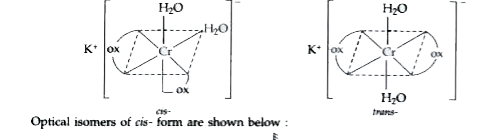 Optical isomers of CIS- form are SHOWN below : 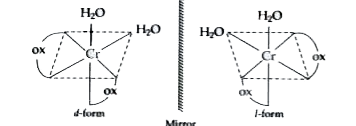
|
|
| 27. |
Indicate the types of isomerism exhibited by the following complexes and draw the structures for these isomers : [Co(en)_(3)]Cl_(3) |
Answer» SOLUTION : Both OPTICAL ISOMERS EXIST 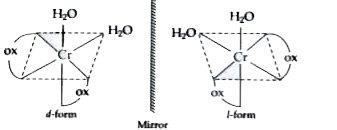
|
|
| 28. |
Indicate the types of isomerism exhibited by the following complexes and draw the structures for these isomers : (i) K[Cr(H_(2)O)_(2)(C_(2)O_(4))_(2)] (ii) [CO(en)_(3)]Cl_(3) (iii)[CO(NH_(3))_(5)(NO_(2))](NO_(3))_(2) (iv) [Pt(NH_(3))(H_(2)O)Cl_(2)] |
Answer» Solution :`(i)` Both geometrical (cis,trans) and optical ISOMER for cis-form.  `(ii)` Two optical isomers can EXIST.  `(III)` Linkage isomers `[Co(NH_(3))_(5)ONO](NO_(3))_(2)` and `[Co(NH_(3))_(5)NO_(2)](NO_(3))_(2)`. `(iv)` Geometrical isomerism. 
|
|
| 29. |
Indicate the types of isomerism exhibited by the following complexes and draw the structures for these isomers : [Pt(NH_(3))(H_(2)O)Cl_(2)] |
Answer» SOLUTION :It EXISTS as a PAIR of GEOMETRICAL ISOMERS : 
|
|
| 30. |
Indicate the types of isomerism exhibited by the following complexes and draw the structures for these isomers: (i). K[Cr(H_2O)_2C_2O_3)_2] (ii). [Co(en)_3]Cl_3 (iii). [Co(NH_3)_5(NO_2)](NO_3)_2 (iv). Pt[(NH_3)(H_2O)Cl_2] |
|
Answer» Solution :(i). `K[Cr(H_2O)_2(C_2O_4)_2]` is of `[M(AA)_2b_2]^(n+-)` type it SHOWS both geometrical isomers (cis and TRANS) (ii). `[Co(EN)_3Cl_3` is of `[M(AA)_3]^(n+-)` type it shows optical isomers (d- and l-) of cis. (iii). There are 2 ionisation and 2 linkage isomers. Compounds of `[Ma_5b]^(n+-)` type NEITHER shows geometrical nor optical isomers. Ionisation isomers: `[Co(NH_3)_5(NO_2)](NO_3)_2` `[Co(NH_3)_5(NO_3)](NO_3)(NO_2)` Linkage isomers: `[Co(NH_3)_5(NO_2)](NO_3)_2,[Co(NH_3)_5(ONO)](NO_3)_2` (iv). `Pt[(NH_3)(H_2O)Cl_2]` is of `[Ma_2Bc]^(n+-)` type It shows geometrical isomers (cis and trans) |
|
| 31. |
Indicate the type of isomerisms exhibited by the complex [Co(NH_3)_5 (NO_2)] (NO_3)_2 (At. No. Co = 27). |
|
Answer» Solution :Linkage and CO-ordination isomerism. A pair of OPTICAL isomers 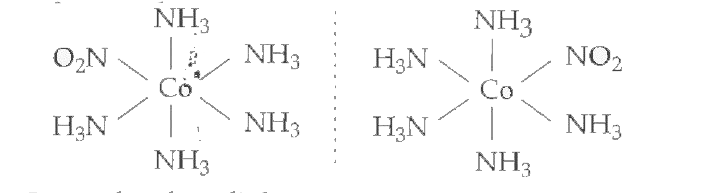 It can ALSO show linkage isomerism. `[Co (NH_3)_5 (NO_2) ](NO_3)_2 and [Co(NH_3)_5 (ONO)] (NO_3)_2` It can also show IONIZATION isomerism `[Co(NH_3)_5 (NO_2)] (NO_3)_2 and [Co(NH_3)_5 (NO_3)] (NO_3) (NO_2)` |
|
| 32. |
Indicate the type of isomerism exhibited by the following complexe and draw the structures for this isomer.[Pt(NH_3)(H_2O)Cl_2] |
Answer» SOLUTION :
|
|
| 33. |
Indicate the type of isomerism exhibited by the following complexes and draw the structures for these isomers.[Co(en)_3]Cl_3 |
Answer» SOLUTION :
|
|
| 34. |
Indicate the type of isomerism exhibited by the following complexes and draw the structures for these isomers.K[Cr(H_2O)_2(C_2O_4)_2] |
| Answer» Solution :it can show both GEOMETRICAL and OPTICAL isomerism it exist in CIS and trans forms.the cis ISOMER shows optical isomerism. | |
| 35. |
Indicatethetemperatureatwhichcarboncan beusedasa reducing agen forFeO. |
| Answer» Solution :At1073 or above , thestandardfree energyofformation`( Delta_ FG^(@) ) ` of COfrom C ismuchbelowthe standardfreeenergyofformation` (Delta_ f G ^(@)) `of FeO.Therefore, above1073 K, carboncanreduce FeOto FE. | |
| 36. |
Indicate the steps in the preparation of: (i) K_(2)Cr_(2)O_(7) from chromite ore. (ii) KMnO_(4) from pyrolusite ore. |
|
Answer» Solution :(i) `4FeCr_(2)O_(4) + 8Na_(2)CO_(3) + 7O_(2) RARR 8Na_(2) CrO_(4) + 2Fe_(2)O_(3) + 8CO_(2)` `2Na_(2)CrO_(4) + 2H^(+) rarr Na_(2)Cr_(2)O_(7) + 2Na^(+) + 2H_(2)O` `Na_(2)Cr_(2)O_(7) + 2KCl rarr K_(2)Cr_(2)O_(7) + 2NaCl` (ii) `2MnO_(2) + 4KOH + O_(2) overset(Delta)rarr 2K_(2)MnO_(4) + 2H_(2)O` `3MnO_(4)^(2-) + 4H^(+) rarr 2MnO_(4)^(-) + MnO_(2) + 2H_(2)O` |
|
| 37. |
Indicatethe reactivity of vinylic allylic andaliphatichydrogen in cyclhexene. |
Answer» SOLUTION :
|
|
| 38. |
Indicate the principle behind the method used for the refining of Nickel. |
|
Answer» Solution :Nickel is heated in a stream of carbon monoxide forming a volatile complex, nickel tetracarbonyl `NI +4CO overset(330-350K) (to) Ni(CO)_(4)` The carbonyl is heated to a HIGHER TEMPERATURE to give BACK the pure metal. `Ni (CO)_(4) overset(450-470 K)(to) Ni +4CO`. |
|
| 39. |
Indicatethe principlebehindthemethodused from refiningof zinc ? |
|
Answer» SOLUTION :Zinc is refinedbyelectrolyticrefiningwhich is basedupon teprincipleofoxidation-reduction. In thismethod,the impure metalis madethe anode whilethecathodeconsists of astrip ofpure zinc metal. Theseelectrodesare suspendedin an electrolyticbathcontaininga solutionof`Zn SO_ 4`acidifiedwithdil. ` H_ 2 SO_ 4`.Whenelectriccurrent is passed , zincmetalionsfrom theelectrolyte solutionare deposited atthe cathodein formof pure metalwhile an equivalentamount of zinc metaldissolvefrom the anodeand goes into theelectrolyte solution as zinc metalions, i.e., Anode:` Zn (s)toZn^(2 +)(aq)+2 e ^(-) ` CATHODE :` Zn^( 2 +)(aq) toZn (s) ` Theimpurities ofless BASIC metals such as iron, cadmium, arsenicand antimonyusually associated withinpure zinc, HOWEVER, settledownunder the anodeas anode mud. |
|
| 40. |
Indicate the principle behind the method used for the refining of zinc. |
| Answer» Solution :Zinc is a low boiling metal. It can be refined by DISTILLATION. At its boiling POINT, the VAPOURS of zinc are formed which are condensed to OBTAIN pure zinc. Impurities are left in the distillation flask. | |
| 41. |
Indicate the possible type of isomerism for the following complexex and draw their isomers (i) [Co(en)_(3)][Cr(CN)_(6)] (ii) [Co(NH_(3))_(5)(NO_(2))]^(2+) (iii) [Pt(NH_(3))_(3)(NO_(2))]Cl |
|
Answer» Solution :`(i) [Co(en)_(3)][Cr(CN)_(6)]`-EXHIBITS COORDINATION isomerism `(a) [Co(en)_(3)][Cr(CN)_(6)]` `(b) [Cr(en)_(3)][Co(CN)_(6)]`  `(ii) Co(NH_(3))_(5)(NO_(2))]^(2+)`-Exhibits LINKAGE isomerism `(a) Co(NH_(3))_(5)(NO_(2))]^(2+)`-N attached `(b) Co(NH_(3))_(5)(ONO_(2))]^(2+)`- O attached  `(iii) [PT(NH_(3))_(3)(NO_(2))]Cl`- Exhibits ionisation isomerism `(a) [Pt(NH_(3))_(3)(NO)_(2)]Cl` `(b) [Pt(NH_(3))_(3)(Cl)]NO_(2)` 
|
|
| 42. |
Indicate the organic structure for the product expected when 2-methyl propene is heated with acetyl chloride in presence of anhydrous zinc chloride |
|
Answer» `CH_3-underset(CL)underset|overset(CH_3)overset|C-CH_2-CO-CH_3` |
|
| 43. |
Indicate the organic structure for product expected when 2-methyl propene is heated with acetyl chloride in presence of anhydrous ZnCl_2. |
|
Answer» |
|
| 44. |
Indicate the incorrect statement , |
|
Answer» Diethyl ether is USED a anaesthetic |
|
| 45. |
Indicate the incorrect statement ? |
|
Answer» diethyl ether is used as anaesthetic `C_6H_5-OVERSET(+)overset(|)underset(H)underset(|)(O)-CH_2CH_3overset(Delta)toC_6H_5OH+CH_3CH_2I` |
|
| 46. |
Indicate the hydbridisation and Magnetic nature of Ni(CO)_4 |
|
Answer» `dsp^2` , DIAMAGNETIC |
|
| 47. |
Indicate the correct stetement : |
|
Answer» `C_2H_5N^+H_3OH^-` is ACIDIC |
|
| 48. |
Indicate the correct statements : |
|
Answer» Conductivity cells have cell constant values Independent of the solution filled into the cell `K=Gsigma " " lambda_(M)=(1000K)/M,lambda_(N)=(1000K)/N` On dilution `Gdarr K darr Mdarr Ndarr lambda_Muarr, lambda_N uarr` |
|
| 49. |
Indicate the correct statement for chain growth polymers |
|
Answer» These POLYMERS are made by the addition of monomers Hence CHOICE (c) is also correct. All chain growth polymerization take place in one step and not in multiple steps. Hence choice (a),(B) and (c) are correct while choice (d) is incorrect. |
|