Saved Bookmarks
This section includes 7 InterviewSolutions, each offering curated multiple-choice questions to sharpen your Current Affairs knowledge and support exam preparation. Choose a topic below to get started.
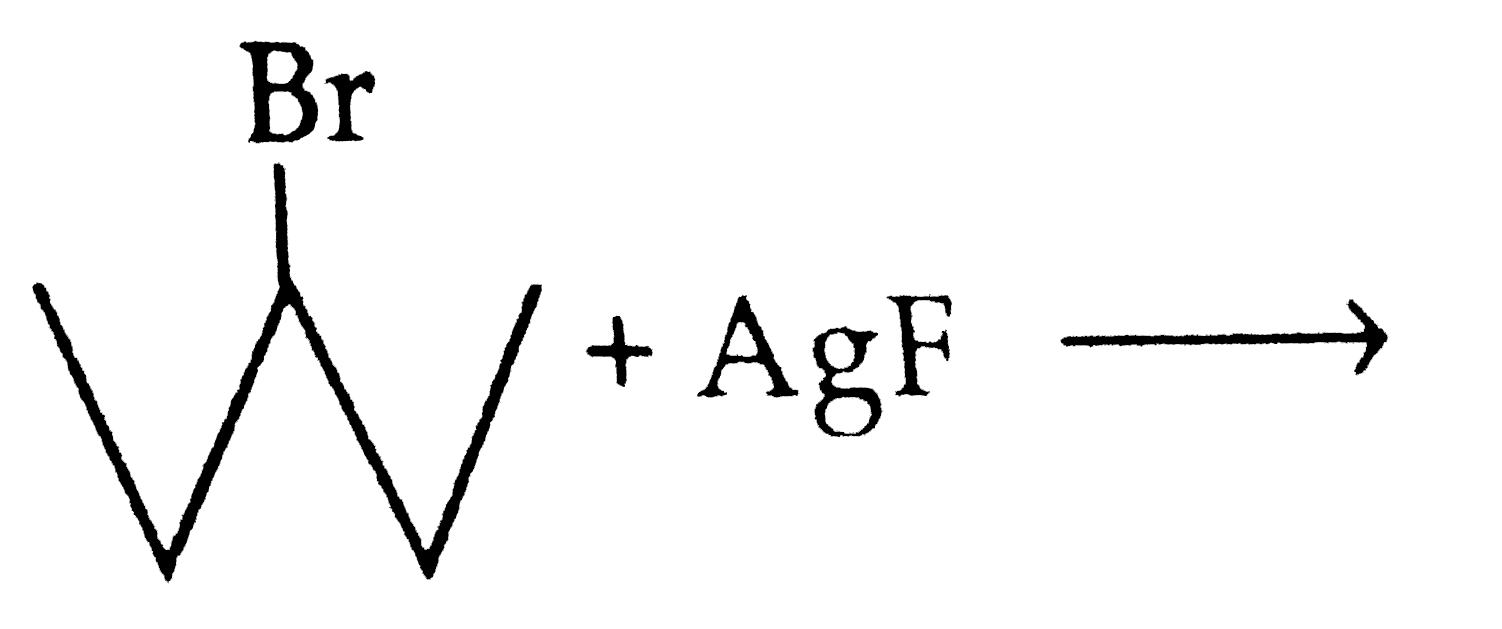
| 1. |
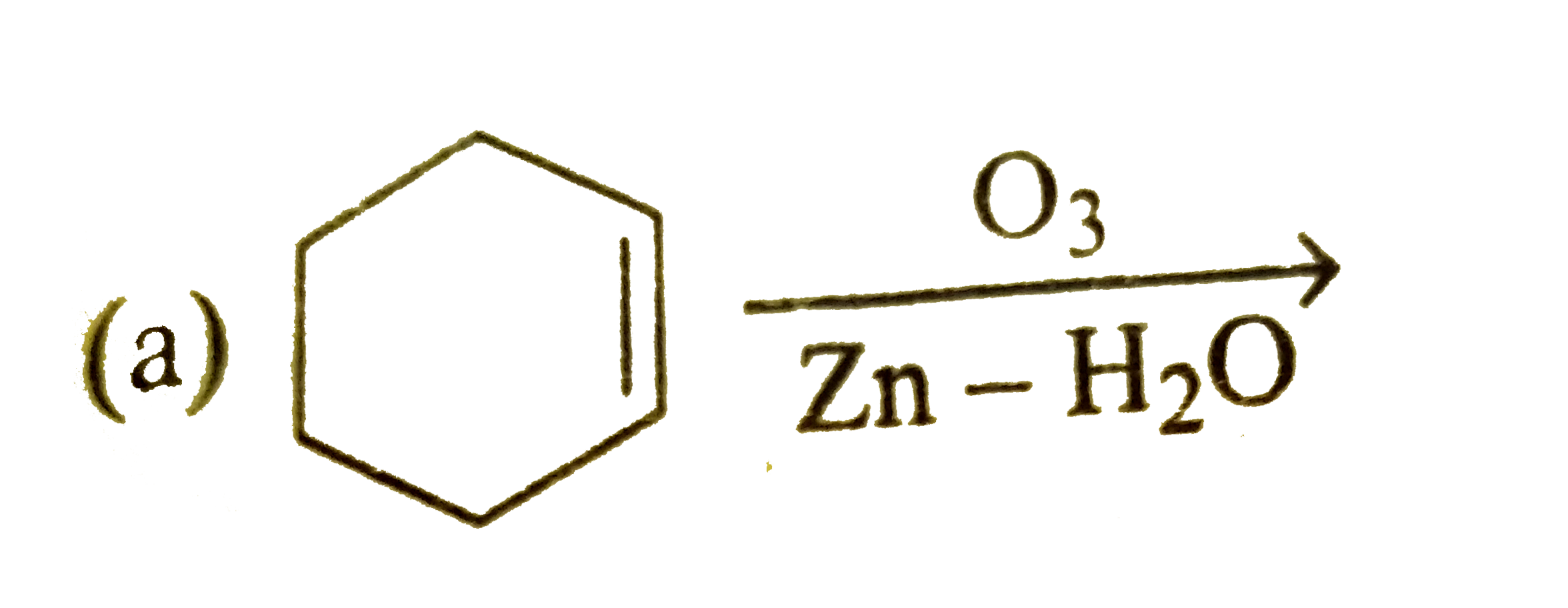
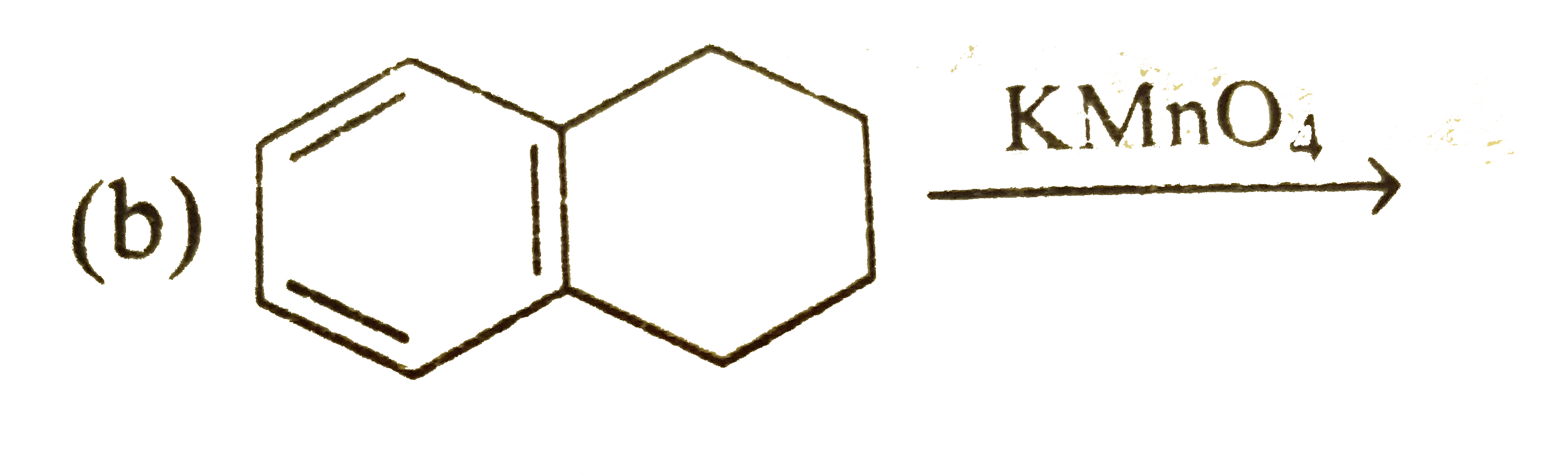
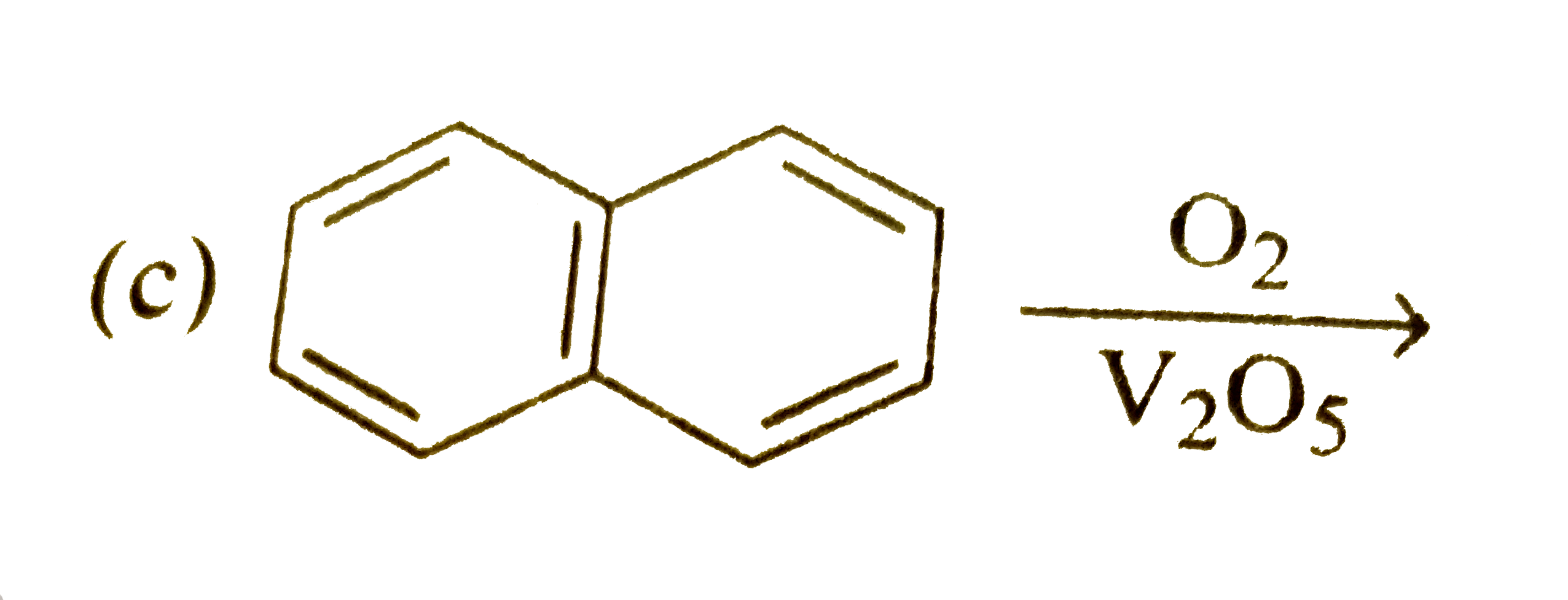
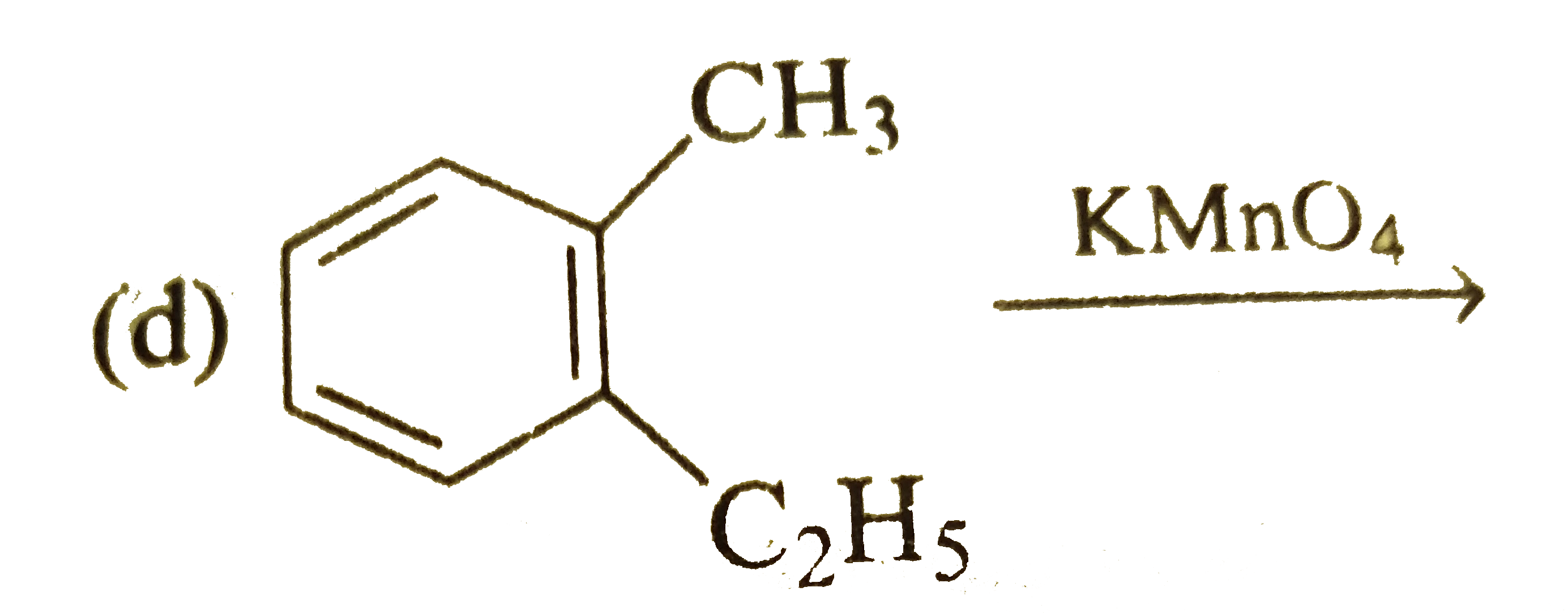
In which of the following reaction saytzeff alkene is major product. |
|
Answer»
 bulk base (or) substracts bulky (or) bad leaving groups contains Halfmanns elimination is major |
|
| 2. |
In which of the following both are nonpolar - |
|
Answer» `XeF_(4),O_(3)` |
|
| 3. |
In which of the following C-X bond has highest bond dissociation enthalpy |
|
Answer» `CH_2 = CH - CL`  hence has HIGHEST bond dissociation energy hence has HIGHEST bond dissociation energy
|
|
| 4. |
In which of the following reaction, the equilibrium is shifted to the right by increasing temperature ? |
|
Answer» `N_(2)(g)+3H_(2)(g)HARR 2NH_(3)(g), DELTA H =-ve` |
|
| 5. |
In which of the following bond angle order between bonds around underlined atom is CORRECT |
|
Answer» `UL(O)Cl_(2) lt H_(2)ul(O)` |
|
| 6. |
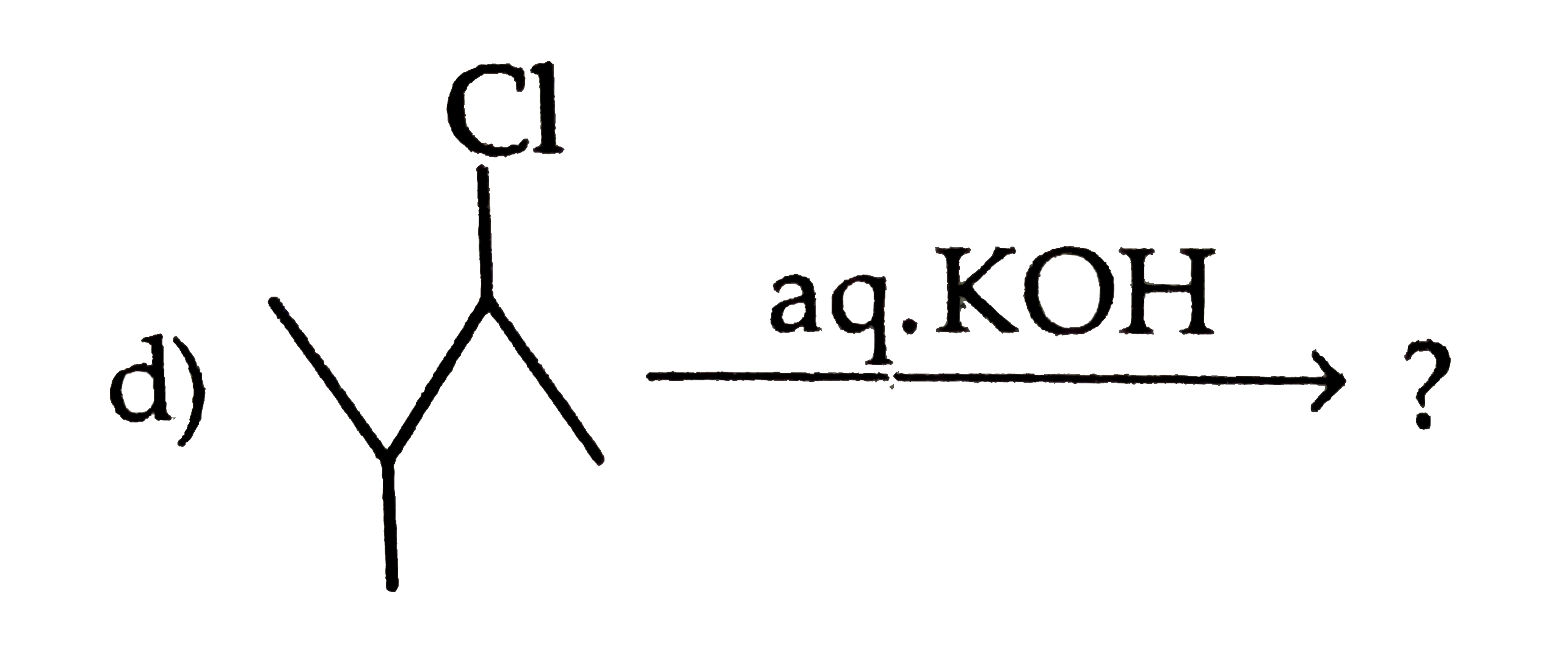
In which of the following reaction, regioselectivity can be observed . |
|
Answer» `CH_(3)-underset(H)underset(|)overset(CH_(3))overset(|)C-CH_(2) -CI overset(alc.KOH//DELTA)RARR` `CH_(3) -CH=underset(CH_(3))underset(|)(C) - CH_(3) + H_(2)C=CH-CH_(2) -CH_(3)` . |
|
| 7. |
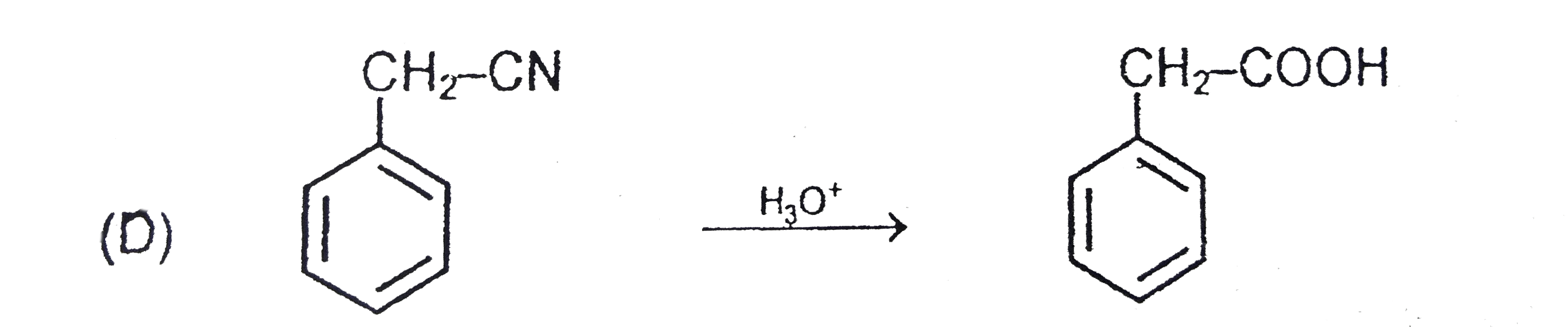
In which of the following reaction, reactants and products are correctly matched? |
|
Answer»
|
|
| 8. |
In which of the following bond angles on sp^3- hybridised are not contracted due to lone pair of electron : |
|
Answer» `OF_2` |
|
| 10. |
In which of the following reaction product obtained has less number of carbon atom than reactants? 1. acid hydrolysis of alpha-nitroalkene2.oxidation of aldehydes 3.oxidation of ketones 4. oxidation of 3^(@) alkyl amine |
|
Answer» 2,3 |
|
| 11. |
In which of the following bond angle changes around 'O' due to back bonding |
| Answer» Answer :A | |
| 12. |
In which of the following reaction, product are not correctly matched ? |
|
Answer» `underset((aq.))(HNO_(3)) +P_(4)O_(10(s)) to N_(2)O_(3)` |
|
| 13. |
In which of the following bond angle can not be explained by Valence Bond Theory? |
|
Answer» `H_(2)O` |
|
| 14. |
In which of the following reaction product is t-butyl methyl ether |
|
Answer» `C_2H_5-OH+C_2H_5-OH overset("CONC." H_2SO_4)to ` |
|
| 15. |
In which of the following Bleaching powder is not used |
|
Answer» For BLEACHING paper pulp |
|
| 16. |
In which of the following reaction, pressure has no effect on equilibrium ? |
|
Answer» `N_(2)O_(4)(G)hArr 2NO_(2)(g)` |
|
| 17. |
In which of the following atom possesses highest oxidation state? |
|
Answer» `(n-1) d^(3)NS^(2)` |
|
| 18. |
In which of the following reaction, phenol or sodium phenoxide is NOT formed ? |
|
Answer» `C_6H_5SO_3Na + 2NAOH underset(573K) overset("fused")to` |
|
| 20. |
In which of the following arrangements, the order is not correct according to the property indicated against it? |
|
Answer» Increasing size: `AL^(3+) lt Mg^(2+) lt Na^(+) lt F^(-)` |
|
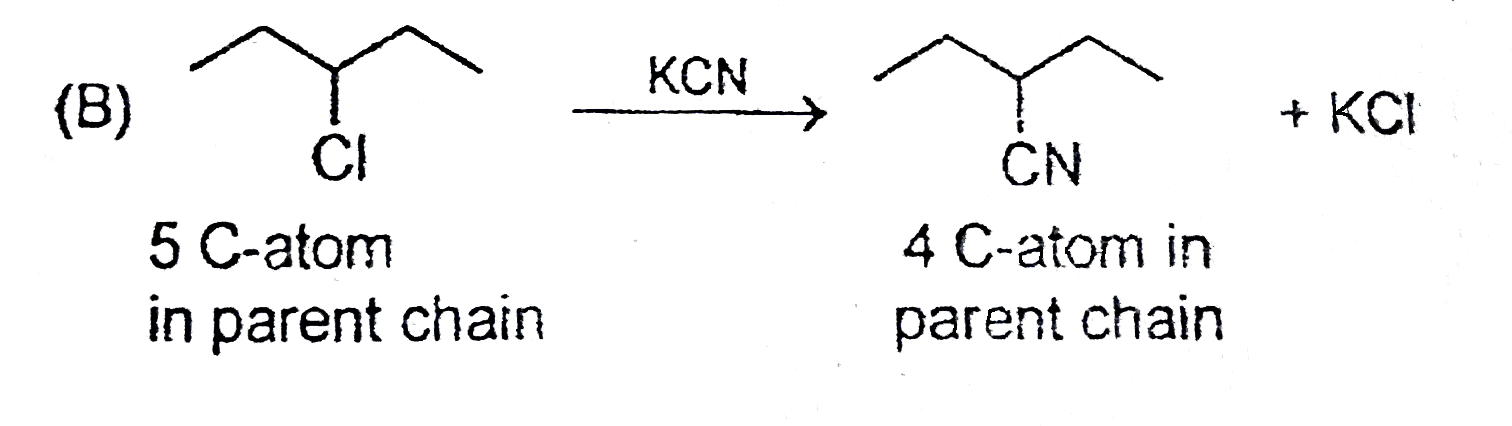
| 21. |
In which of the following reaction, number of carbon stoms in parent chain of reactants are same as number of carbon atoms of parant chain in product ? |
|
Answer»
|
|
| 22. |
In which of the following arrangements, the given sequence is not strictly according to the property indicated against it ? |
|
Answer» `HF lt HCl lt HBr lt HI` : increasing acid strength |
|
| 23. |
In which of the following reaction oxidation of iron is not possible ? |
|
Answer» Recation in which rusting of iron plates. In this reaction oxidation state of iron does not CHANGE but it remain constant. So oxidation of Fe does not possible. In all rest OPTIONS, Fe(0) get converted into `Fe^(2+)`. i.e., oxidation of Fe into `Fe^(2+)` occurs. |
|
| 24. |
In which of the following arrangements the given sequence is not strictly according to the property indicated against it ? |
|
Answer» `HFltHClltHBrltHI`:increasing acidic STRENGTH |
|
| 25. |
In which of the following reaction, phenol or sodium phenoxide is not formed |
|
Answer» `C_(6)H_(5)N_(2)Cl+` alco. `KOH to ` |
|
| 26. |
In which of the following arrangement, the order is/are according to the property indicated against it ? |
|
Answer» Decreasing boiling point : `SbH_3 gt NH_3 gt AsH_3 gt PH_3` (B)Number of unpaired electron are 5,4,3 & 2 respectively. Paramagnetic character `prop` Number of unpaired electrons. ( C)Degree of hydration `prop 1/("SIZE of CATION ")` Bigger hydrated ion moves slowly. (D)Bond order is directly proportional to the bond energy. Bond order of `N_2 =3, N_2^(+)=2.5, N_2^(2-)=2` But `N_2^-` has more electrons in antibonding MO's and thus `N_2^+` is more stable than `N_2^-`. |
|
| 27. |
In which of the following reaction N_(2) is not obtained? |
|
Answer» `NH_(4)Cl +NaNO_(2) overset(DELTA)to ` |
|
| 28. |
In which of the following aqueous solutions H_(2) and O_(2) are not liberated at cathode and anode respectively on electrolysis using inert electrodes? |
|
Answer» `H_(2)SO_(4)` solutions |
|
| 29. |
In which of the following reaction K_(p)gtK_(c) |
|
Answer» `N_(2)+3H_(2)hArr2NH_(3)` By `K_(p) =K_(c)(RT)^(DELTAN)` |
|
| 30. |
In which of the following aqueous solutions, the degree of dissociation of water is maximum? |
|
Answer» `NH_(4)CL` solution |
|
| 31. |
In which of the following reaction K_p and K_c are equal : |
|
Answer» `N_2(G) + 3H_2(g) HARR 2NH_3(g)` |
|
| 32. |
In which of the following amines , the first has lower pk_(b) value than the second |
|
Answer» ANILINE, m-nitroaniline |
|
| 33. |
In which of the following reaction is DeltaS positive ? |
|
Answer» `H_(2)O(l) to H_(2)O(s)` |
|
| 34. |
In which of the following amines, intermolecular hydrogen bond does not exist |
|
Answer»
|
|
| 35. |
In which of the following reaction is benzoic acid the major product ? |
|
Answer» `C_(6)H_(5)CH_(2)OHoverset(1.KMnO_(4).oversetΘOH)underset(2.H_(3)O^(OPLUS))RARR` |
|
| 36. |
In which of the following all electronic effects namely inductive, mesomeric and hyperconjugative effects are present? |
|
Answer»
|
|
| 37. |
In which of the following all are disaccharides? |
|
Answer» MALTOSE, SUCROSE, LACTOSE |
|
| 38. |
In which of the following reaction H_2O_2 acts as reducing agent : |
|
Answer» `FeCl_3+ 2HCL + H_2O_2 to FeCl_3 + 2H_2O` |
|
| 40. |
In which of the following acid, the maximum number of hydrogen atoms are joined directly with phosphorous ? |
|
Answer» PHOSPHOROUS ACID 
|
|
| 41. |
In which of the following reaction H_(2)O_(2) is acting as a reducing agent |
|
Answer» a,b |
|
| 42. |
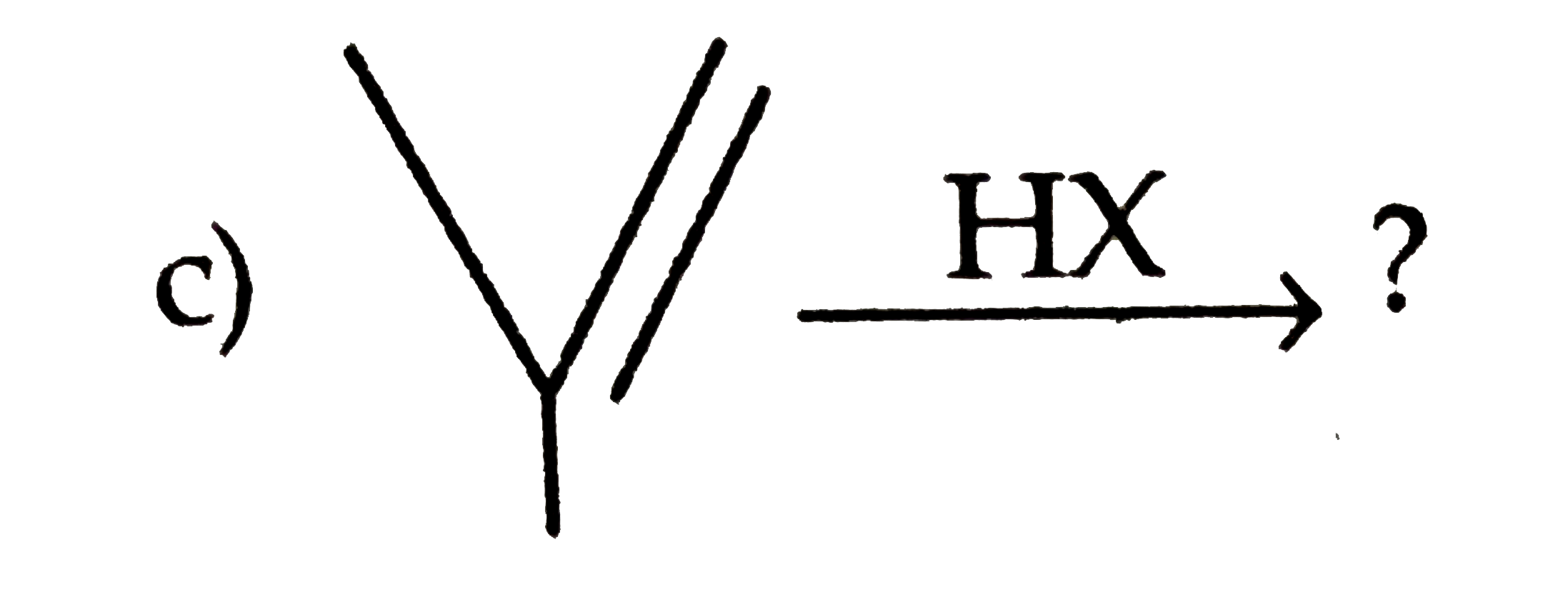
In which of the following, addition of HBr does not takes place against markownikoff's rule or Anti-Markownikoff addition of HBr is not observed for |
|
Answer» Propene Anti-Markownikoff's RULE is not APPLICABLE of symmetrical alkenes |
|
| 43. |
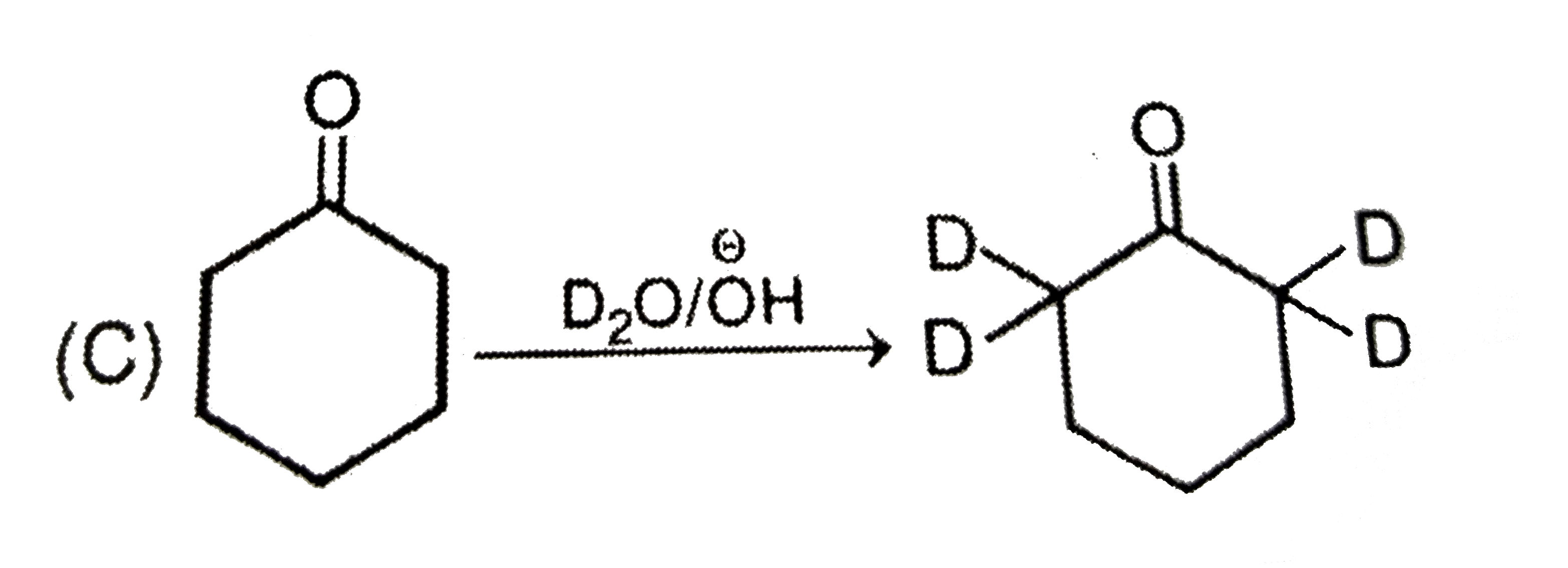
In which of the following reaction deuterium exchange is not observed ? |
|
Answer» `CH_(3)-UNDERSET(O)underset(||)(C)-CH_(2)-CH_(3) overset(D_(2)O //overset(Theta)(O)H)underset("excess")toCD_(3)underset(O)underset(||)(C)-CD_(2)-CH_(3)` |
|
| 44. |
Inwhichof the following1^(st)is more basicis 2^(nd) |
|
Answer»
|
|
| 45. |
In which of the following reaction cyanide will be obtained as a major product ? |
|
Answer» `Ph-overset(O)overset("||")("C")-CH_(3)overset((i) LiAlH_(4))underset((ii) H_(3)O^(+))rarr` |
|
| 46. |
In which of the following 10ns has the metal atom EAN as 36: |
|
Answer» `[FE(CN)_6]^(4-)` |
|
| 48. |
In which of the following reaction an optically active product is formed? |
|
Answer» `CH_(3)ONa++C_(2)CH_(5)CL to ` |
|
| 49. |
In which of the compounds the oxidation state of hydrogen is -1? |
|
Answer» `H_2O` |
|
| 50. |
In which of the following reactins heterogenous catalysis is involved ? (i) 2SO_(2) (g) + O_(2) (g) overset(NO (g))to2SO_(3) (g) (ii) 2SO_(2) (g) overset(P (s)) to 2SO_(3) (g) (iii) N _(2)(g) + 3H_(2) (g) overset(Fe (s))to 2NH_(3) (g) (iv) CH_(3) COOCH_(3) (l) + H _(2) O (l) overset(HCl(l))to CH_(3) COOH (aq) + CH_(3) OH (aq) |
|
Answer» `(II),(III)` |
|