Saved Bookmarks
This section includes 7 InterviewSolutions, each offering curated multiple-choice questions to sharpen your Current Affairs knowledge and support exam preparation. Choose a topic below to get started.
| 1. |
In which of the following reactions heterogeneous catalysis is involved? (i) 2SO_2(g) + O_2(g) overset(NO(g))to 2SO_3(g) (ii) 2SO_2 (g) + O_2(g) overset(Pt(s))to 2SO_3(g) (iii) N_2(g) + 3H_2(g) overset(Fe(s))to 2NH_3(g) (iv) CH_3COOCH_3(l) + H_2O(g) overset(HCl(l))to CH_3COOH(aq) + CH_3OH (aq) options-a). (i), (iii) b) (ii), (iii), (iv)c)(i), (ii), (iii)d)(iv) |
|
Answer» (i), (III) |
|
| 2. |
In which of the following chlorine is least reactive |
|
Answer» ETHYL CHLORIDE |
|
| 3. |
In which of the following reactions heterogeneous catalysis is involved? (i) 2SO_2(g) + O_2(g) overset(NO(g))to 2SO_3(g) (ii) 2SO_2 (g) + O_2(g) overset(Pt(s))to 2SO_3(g) (iii) N_2(g) + 3H_2(g) overset(Fe(s))to 2NH_3(g) (iv) CH_3COOCH_3(l) + H_2O(g) overset(HCl(l))to CH_3COOH(aq) + CH_3OH (aq) |
|
Answer» (i), (III) |
|
| 4. |
In which of the following, cationic is present- |
|
Answer» `IF_(7)` |
|
| 5. |
in which of the following reactions, H_2O_2 is acting as a reducing agent? |
|
Answer» `PBS + 4H_2O_2rarr PbSO_4+ 4H_2O` |
|
| 6. |
In which of the following changes,Delta H is always negative : |
|
Answer» enthalpy of SOLUTION |
|
| 7. |
In Which of the following reactions H_(2)O_(2) acts as a reducing agent |
|
Answer» `PbO_(2)(s) +H_(2)O_(2)(AQ) to PbO (s) +H_(2)O(l) +O_(2)(g) ` `PbO_(2(s)) +H_(2)O_(2(aq)) to PbO_((s)) +H_(2)O_((l))+O_(2(g))` |
|
| 8. |
In which of the following cases will a violet colouration be observed? |
|
Answer» An alkaline solution of sodiumnitroprusside is treated with a solution of `Na_(2)S` |
|
| 9. |
In which of the following cases, the reaction is spontaneous at all temperatures ? |
|
Answer» `Delta H gt 0, DeltaG gt 0` |
|
| 10. |
In which of the following reactions, H_(2)O_(2) acts as a reducing agent? |
|
Answer» `HOCl + H_(2)O_(2) OVERSET(H^(+)) to H_(3)O^(+) + Cl^(-) + O_(2)`  OXIDATION number of oxygen increases from `-1` to 0. Hence, `H_(2)O_(2)` acts are reducing agent. Decreases in `ON^(-)` (reduction) |
|
| 11. |
In which of the following cases, the strength of back bonding is maximum |
|
Answer» `: C Cl_(2)` |
|
| 12. |
In which of the following reactions does NH_(3) act as a acid? |
|
Answer» `NH_(3)+H^(+)rarrNH_(4)` |
|
| 13. |
In which of the following cases, the element is oxidised into its highest oxidation state when it reacted with ozone under moist condition. |
|
Answer» S |
|
| 14. |
In which of the following reactions does the heat change represent the heat of formation of water |
|
Answer» `2H_(2)(g)+O_(2)(g)rarr2H_(2)O(l),DeltaH=-116 kcal` |
|
| 15. |
In which of the following cases, the complex ion formed will migrate towards the anode under the electric field? |
|
Answer» Excess of aqueous KCN ADDED to `CdSO_(4)` b. `CuSo_(4)+4NH_(3)to[Cu(NH_(3))_(4)[SO_(4)`, "Complex ion": [Cu(NH_(3))_(4)]^(2+)` c. `AgBr+2Na_(2)S_(2)O_(3)toNa_(3)[Ag(S_(2)O_(3))_(2)]+NaBr, "Complex ion" : [Ag(S_(2)O_(3))_(2)]^(3-)` d.`AgNO_(3)+2KCNtoK[Ag(CN)_(2)]+KNO_(3),"Complex ion": [AgCN)_(2)]^(-)` |
|
| 16. |
In which of the following reactions give only primary amine |
|
Answer» `RCN overset(H_(2)-NI)to` |
|
| 17. |
In which of the following cases the covalent character and the mpt order are same :- |
|
Answer» `BeCl_(2), CaCl_(2), BaCl_(2)` |
|
| 18. |
In which of the following reactions does the amine behaves as an acid ? |
|
Answer» `(C_(2)H_(5))_(2)NH+H_(2)PtCl_(6)` |
|
| 19. |
In which of the following cases, rate of disappearance of any reactant at a given instant equals to rate of appearance of any product |
|
Answer» `H_(2)+F_(2) to 2HF` |
|
| 20. |
In which of the following cases, Na is not obtained at the cathode during electrolysis, fused NaCl, fused NaOH, aq. NaOH and why ? |
|
Answer» |
|
| 21. |
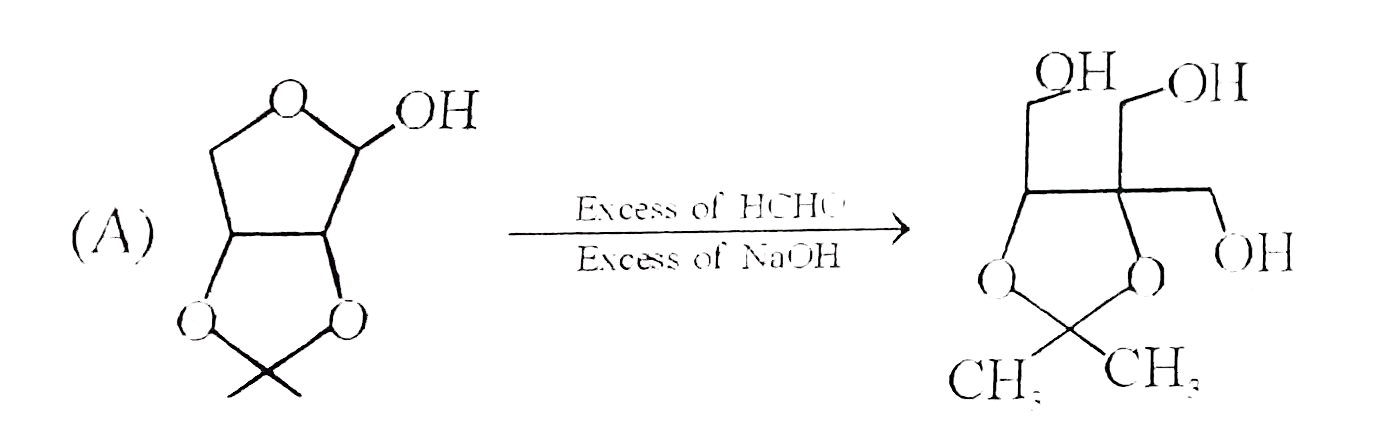
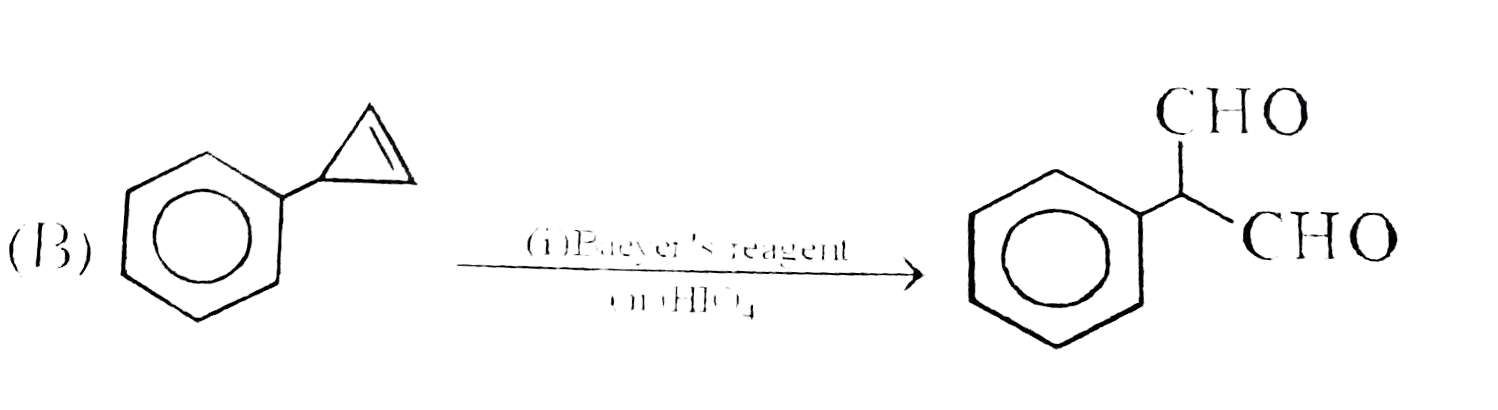
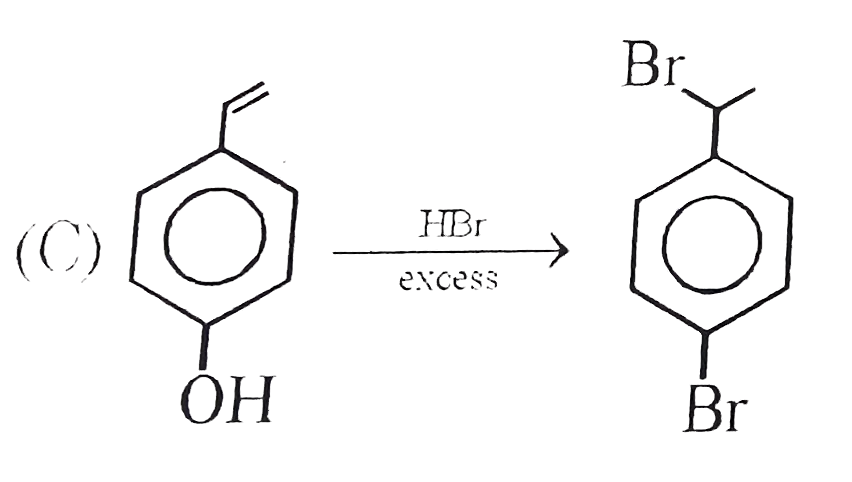
In which of the following reactions correct major product is mentioned ? |
|
Answer»
|
|
| 22. |
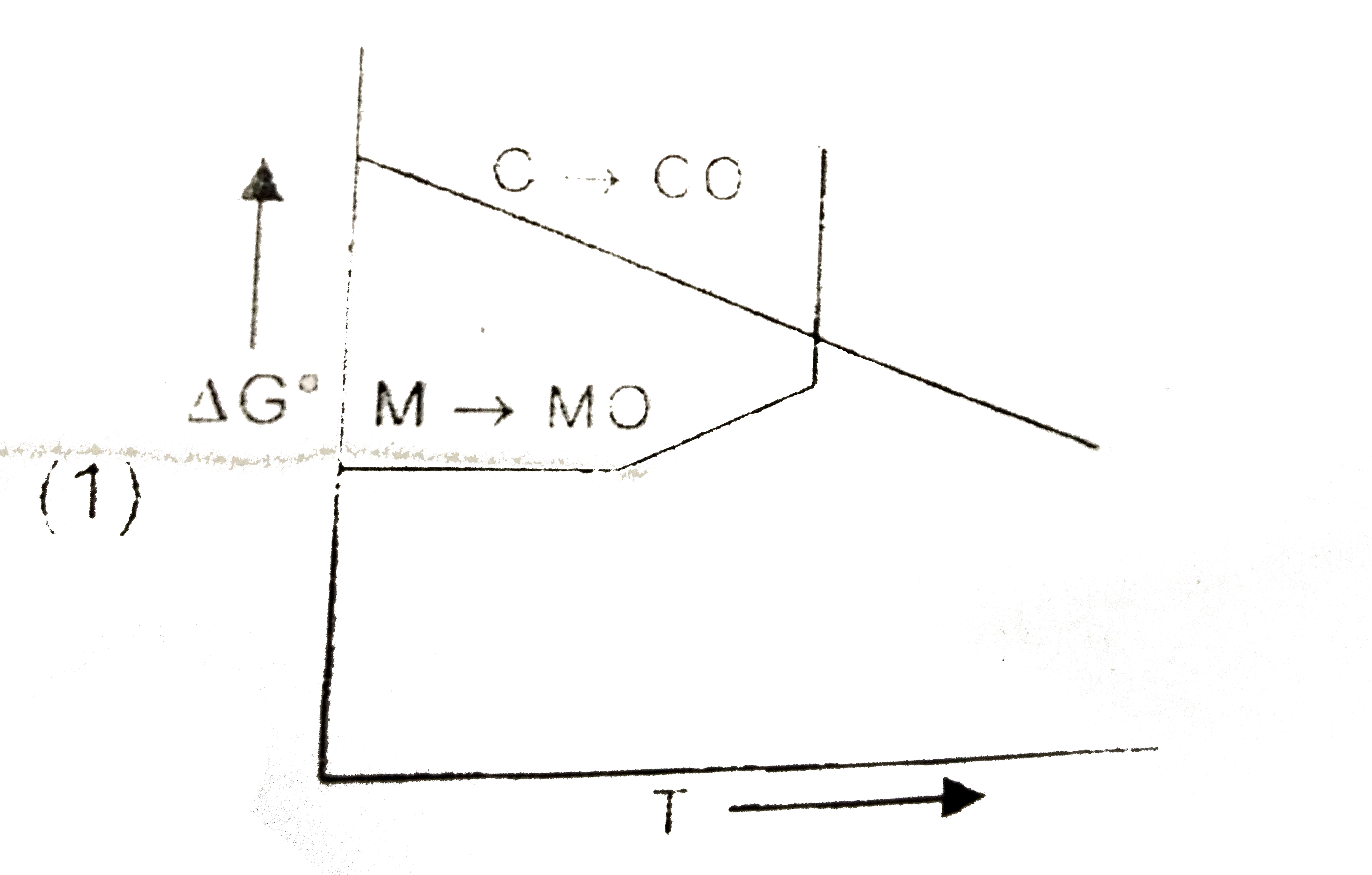
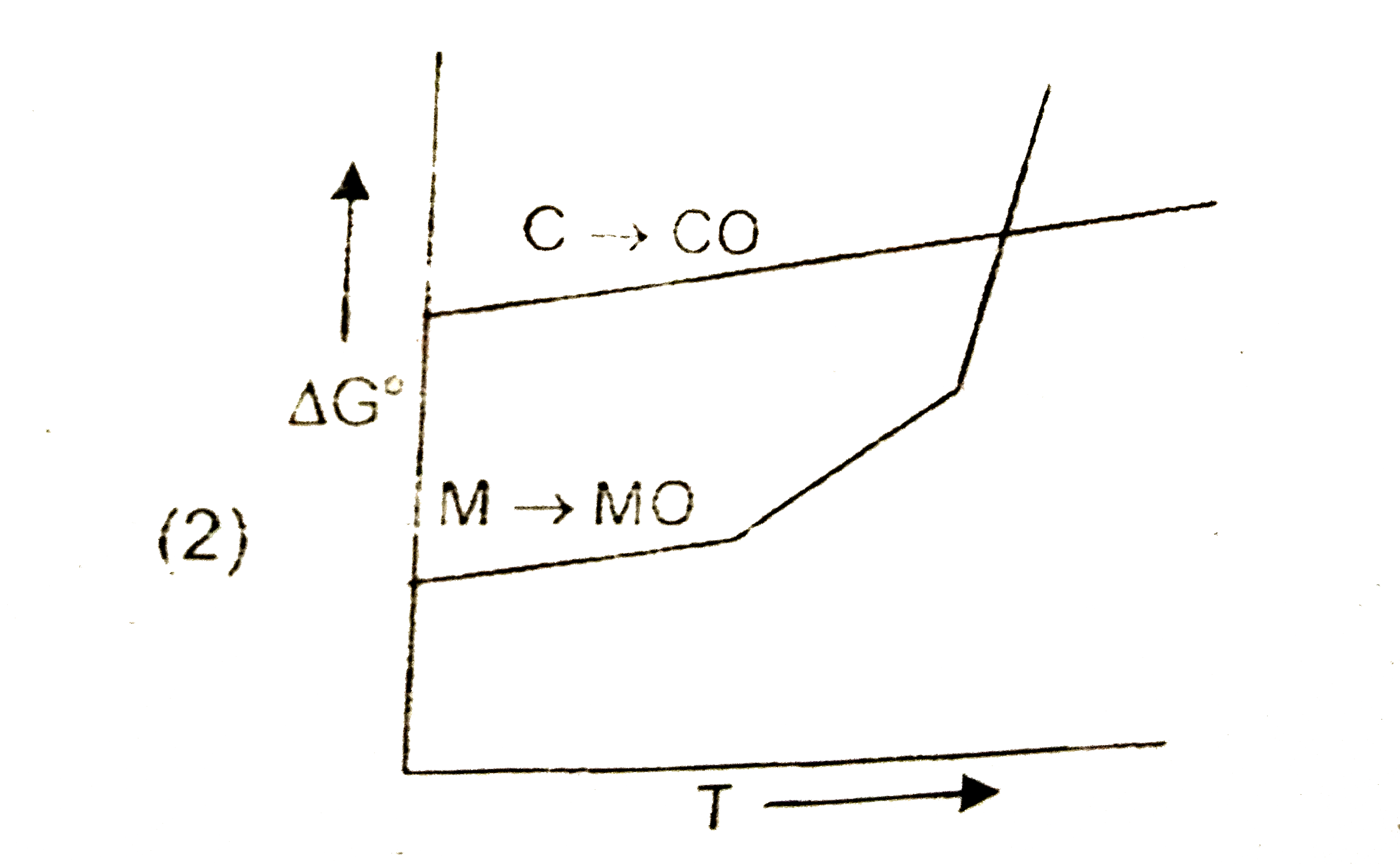
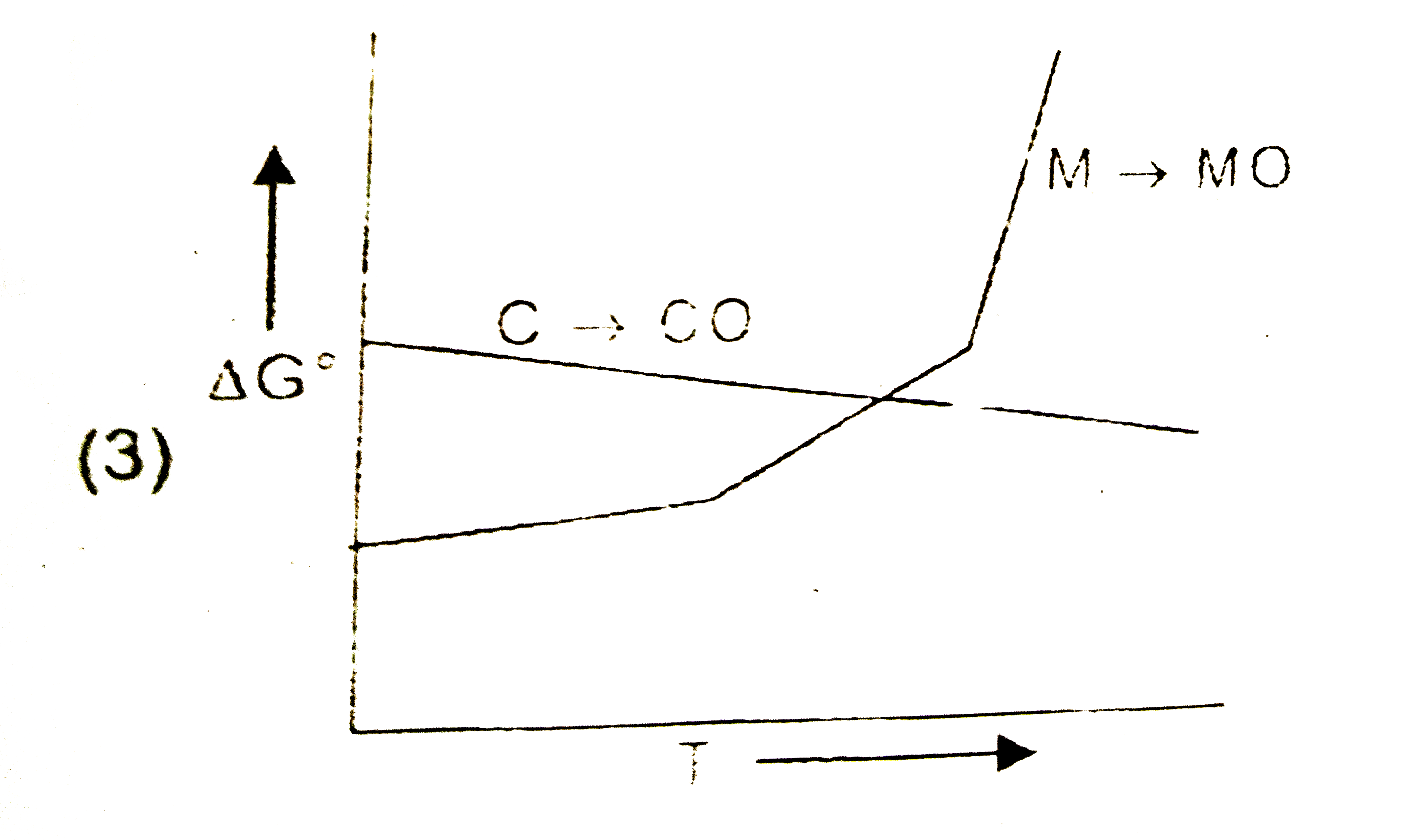
In which of the following cases metal obtained by carbon reduction is in liquid state? |
|
Answer»
|
|
| 24. |
In which of the following reactions cone. H_2SO_4 is used as an oxidising reagent ? |
|
Answer» `CaF_(2) + H_(2)SO_(4) to CaSO_(4) + 2HF` `H_(2)SO_(4) to H_(2)O + SO_(2) + [O]` `Cu + [O] to CuO` `CuO + H_(2)SO_(4) to CuSO_(4) + H_(2)O` |
|
| 25. |
In which of the following cases is the reaction spontaneous at all temperatures? |
|
Answer» `DELTAH GT 0, DELTAS gt 0` |
|
| 26. |
In which of the following reactions, conc. H_(2)SO_(4) is used as an oxidising reagent ? |
|
Answer» `CaF_(2) + H_(2)SO_(4) rarr CaSO_(4) + 2HF` In these two REACTIONS, `H_(2)SO_(4)` acts as an oxidising agent. |
|
| 27. |
In which of the following cases, does the reaction go farthest to completion : |
| Answer» Answer :A | |
| 28. |
In which case (E_("cell")-E_("cell")^(@)) is zero |
|
Answer» `CU|Cu^(2+)(0.01 M)||Ag^(+)(0.1 M)|Ag` (a) `E_(cell)=E_(cell)^(@)-(2.303" RT")/(2F)"log"([Cu^(2+)])/([Ag^(+)]^(2))` `E_(cell)-E_(cell)^(@)=(2.303" RT")/(2F)"log"(0.01)/((0.1)^(2))` `E_(cell)-E_(cell)^(@)=0` (b) `E_(cell)-E_(cell)^(@)=-(2.303" RT")/(2F)"log"([H^(+)]^(2))/([Zn^(2+)])` `E_(cell)-E_(cell)^(@)=-(2.303" RT")/(2F)"log"((1xx10^(-1))^(2))/((0.01))=0` (C ) `E_(cell)-E_(cell)^(@)=-(2.303" RT")/(2F)"log"([H^(+)]^(2))/([Zn^(2+)])` `=-(2.3030" RT")/(2F)"log"((1xx10^(-1))^(2))/(1)ne 0` (d) `E_(cell)-E_(cell)^(@)=-(2.303" RT")/(2F)"log"([H^(+)]^(2))/([Zn^(2+)])` `=-(2.303" RT")/(2F)"log"((0.1)^(2))/((0.01))ne0` |
|
| 29. |
In which of the following reactions, chlorine acts as an oxidizing agent ? I : CH_(3)CH_(2)OH + Cl_(2) to CH_(3)CHO + 2HCl II: CH_(3)CHO+ Cl_(2) to C CI_(3)CHO + HCI III : CH_(3) +Cl_(2) overset(hv)to CH_(3)Cl + HCI The correct answer is : |
| Answer» Answer :D | |
| 30. |
In which of the following reactions benzaldehyde is the final major products (i) Ph-CH_(3)+CrO_(3)+(CH_(3)CO)_(2) O overset(273-283K)to overset(H_(3)O^(+))underset(Delta)to (ii) Ph-CH_(3)-overset(Cl_2)underset(hv)to Ph-CHCl_(2) overset(H_(2)O)underset(100^(@)C)to (iii) C_(6)H_(6) overset(CO+HCl)underset(AlCl_(3))to (iv) Ph-COCl+(CH_(3))_(2)Cd to |
|
Answer» I and ii only (ii) `Ph-CH_(3) overset(Cl_(2))underset(HV)toPh-CHCl_(2) overset(H_(2)O)underset(100^(@)C)toPh-CHO` `(iii) C_(6)H_(6) overset(CO+HCl)underset(AlCl_(3))toPH-CHO` `(iv) Ph-COCl+(CH_(3))_(2)CD to Ph-CO-CH_(3)` |
|
| 31. |
In which of the following cases C-C bond length will be highest? (I) In N_(2)F_(4), d-orbitalsare contracted by electronegative flourine atoms, but d-orbitals contraction is not possible by H-atoms in N_(2)H_(4) (II) The N-N bond energy in N_(2)F_(4) is more than N-N bond energy in N_(2)H_(4) (III) The N-N bond lengthin N_(2)F_(4) is more than that of in N_(2)F_(4) (IV) The N-N bond length in N_(2)F_(4) is less than that of in N_(2)H_(4) choose the correct codes: |
|
Answer» I, II and III 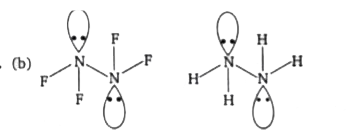 It can be explained on the basis of Bent's Rule . In `N_(2)F_(4)`, N-N bond has more s-character hence bond length decrease. While in `N_(2)H_(4), N-N` bond has less s-character (i.e., more p-character), hence bond LENGTHS. |
|
| 32. |
In whichof the following reactions carbon-carbon bond formation takes place ? |
|
Answer» Cannizaro |
|
| 33. |
In which of the following cases, DeltaGlt 0 at all temperatures ? |
|
Answer» `DeltaH=0, DELTAS=0` |
|
| 34. |
In which of the following cases C-C bond length will be highest? |
|
Answer» `CH_(3)-CF_(3)` |
|
| 35. |
In which of the following reactions both the oxidised and reduced forms of the same compound are obtained ? |
|
Answer» ROSENMUND reduction |
|
| 36. |
In which of the following cases entropy decreases? |
|
Answer» SOLID CHANGING to liquid |
|
| 37. |
In which of the following reactions an otically active single product is formed ? |
|
Answer»
|
|
| 38. |
In which of the following case, the forms of amino acid and pH is (are) correctly matched ? |
|
Answer» `{:("ALANINE :pH=3 , "H_(3) overset(+)(N)-C-COO^(-)),("|"),(""CH_(3)):}` |
|
| 39. |
In which of the following reactions after 100% completion, the colligative property of the final solution is increased by "greater than 40% " than that of initial solution ? (Note : All salts alpha=1 except Hg (CN)_(2). Precipitates removed,Ignore trace ions, Ignorevolume changes, No limiting reagent ) |
|
Answer» `underset ((aq))(AgNO_(3))+underset(("added"))(NACL)rarr AgCl darr+underset((aq))(NaNO_(3))` |
|
| 40. |
In which of the following cases a gas is more compressible than the ideal gas? |
|
Answer» `pbarVgtRT` |
|
| 41. |
In which of the following reactions, addition does not occur according to Markovnikov's rule? |
|
Answer» `CH_3 CH = CH_2 + HCl overset(ROOR) (to)` |
|
| 42. |
In which of the following case, equlibrium constant decreases with increase of temperture |
|
Answer» When the reaction is EXOTHERMIC |
|
| 43. |
In which of the following reactions a brown coloured gas is evolved ? |
|
Answer» `KBr (s) + " dil." H_(2)SO_(4) to` |
|
| 44. |
In which of the following case entropy decreases: |
|
Answer» SOLID CHANGING to liquid |
|
| 45. |
In which of the following reactions 1-bromopentane is converted into l-aminopentane only |
|
Answer» Treatment with AMMONIA followed by NaOH 
|
|
| 46. |
In which of the following case, does the reaction go farthest to completion ? |
|
Answer» `K = 10^(10)` |
|
| 47. |
In which of the following reaction, the formation of product is favoured by increase in pressure? |
|
Answer» `CO_2(g)ltimplies 2CO(g)+O_2(g)` |
|
| 48. |
In which of the following carbonyls, the bond length of CO is the highest ? |
| Answer» Answer :D | |
| 49. |
In which of the following reaction t-butylbenzene is formed: |
|
Answer» Benzene + iso-butyl chloride, `AlCl_(3)` |
|