Saved Bookmarks
This section includes 7 InterviewSolutions, each offering curated multiple-choice questions to sharpen your Current Affairs knowledge and support exam preparation. Choose a topic below to get started.
| 1. |
In which of the compounds, the oxidation state of hydrogen is -1 |
|
Answer» `H_2O` |
|
| 2. |
In which of the following reaction 3^(@) alcohol will be obtained as a product ? |
|
Answer» MGBR(EXCESS)+`H-overset(O)overset(||)C-Clrarrunderset(H^(+))RARR` |
|
| 3. |
In which of the compounds given below is there more than one kind of hybridisation (sp,sp^(2),sp^(3)) for carbon ? (i) CH_(3)CH_(2)CH_(2)CH_(3) (ii) CH_(3)-CH=CH-CH_(3) (iii) CH_(2)=CH-CH_(2)-CH_(3) (iv) H-C-=C-H. |
|
Answer» (ii) (ii) `CH_(3)-CH=CH-CH_(3)"("sp^(3)" and "sp^(2)" C atoms)"` (iii) `CH_(2)=CH-CH_(2)(sp^(2) " and "sp^(3)" C atoms")` (iv) `HC-=C-H" (all sp C atoms)"` Correct answer (D) : (ii) and (iii) |
|
| 4. |
In which of the following reaction alcohol is not formed- |
|
Answer» `R-CH=CH_(2)+H_(2)OUNDERSET("high pr".)OVERSET(H^(+))to` |
|
| 5. |
In which of the following properties may enantiomers differ? |
|
Answer» Refractive index |
|
| 6. |
In which of the above reactions does the rate fo SN^(2) reactionsdecreases with an increases in solvent polarity? |
|
Answer» `(I)` |
|
| 7. |
In which of thc following pairs are both the ions coloured in aqueous solution ? (At no: Sc=21, Ti=22, Ni=28, Cu=29, Co=27) |
|
Answer» `Ni^(2+),Cu^(+)` |
|
| 8. |
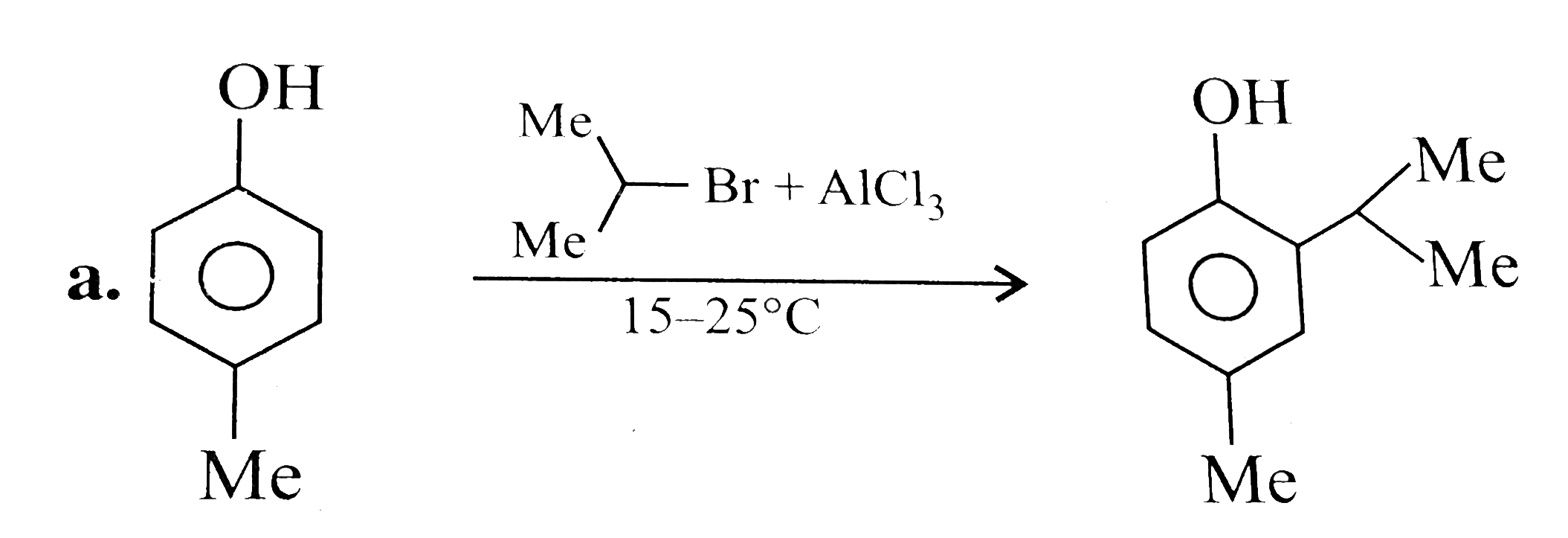
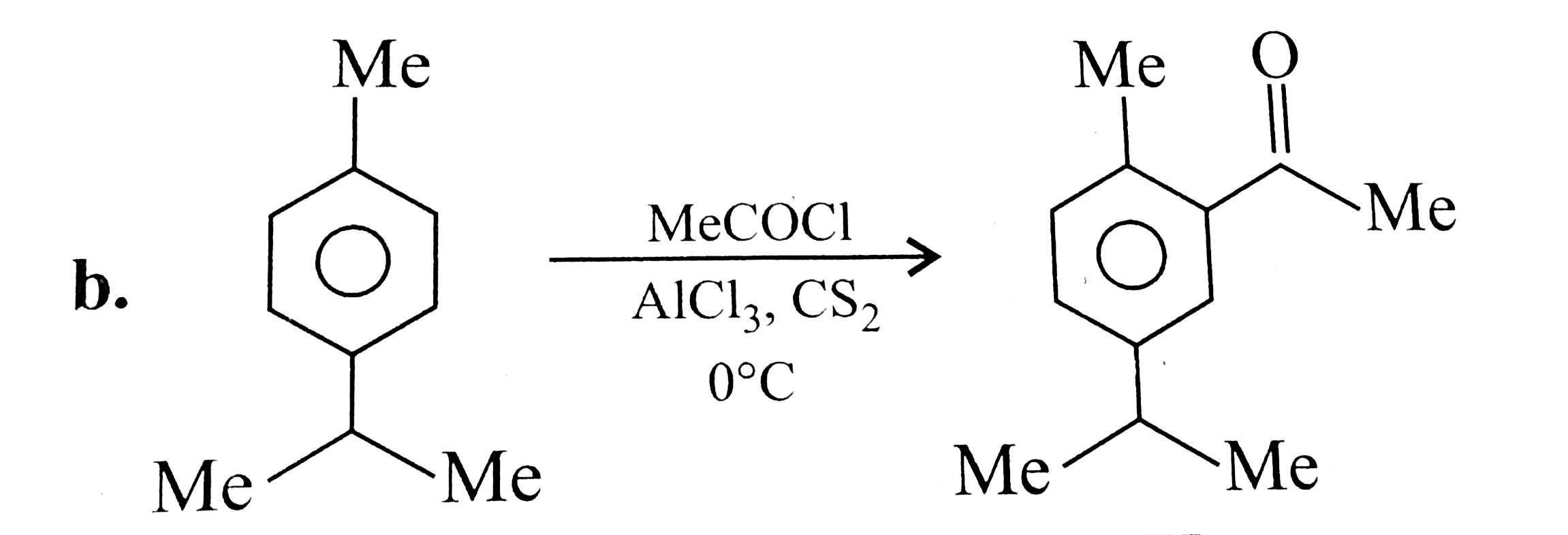
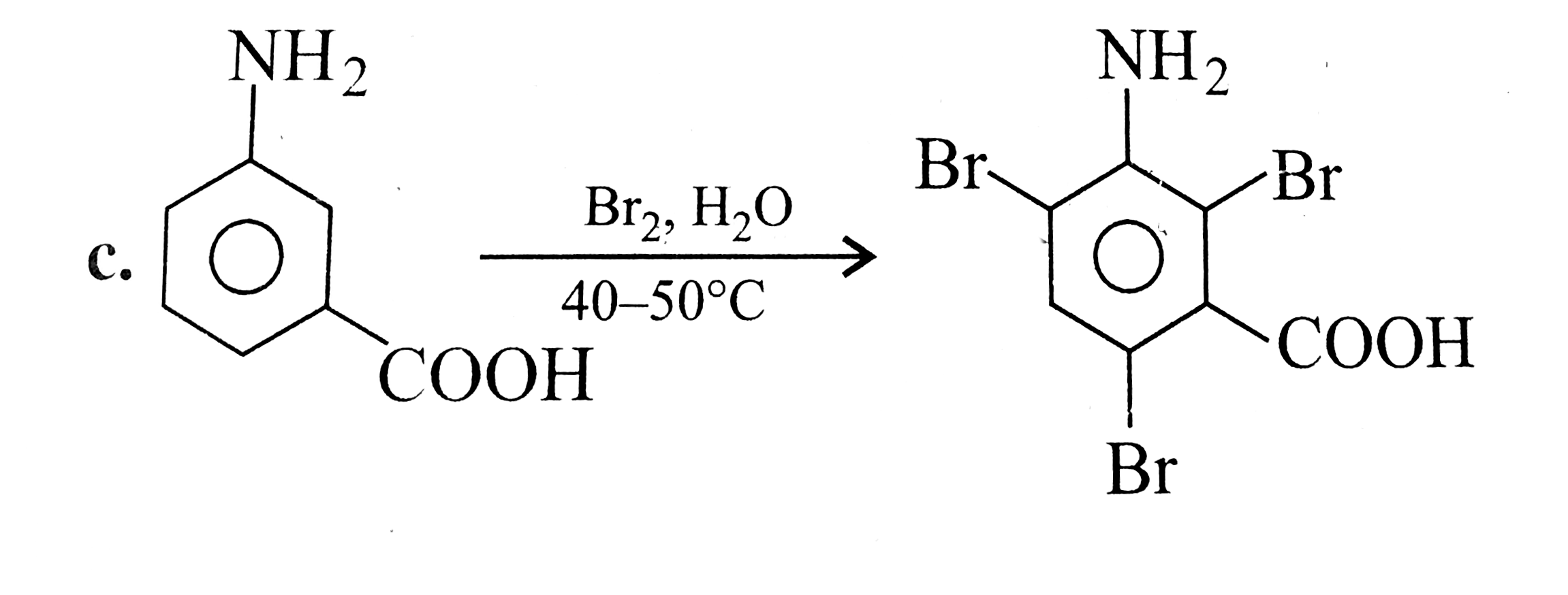
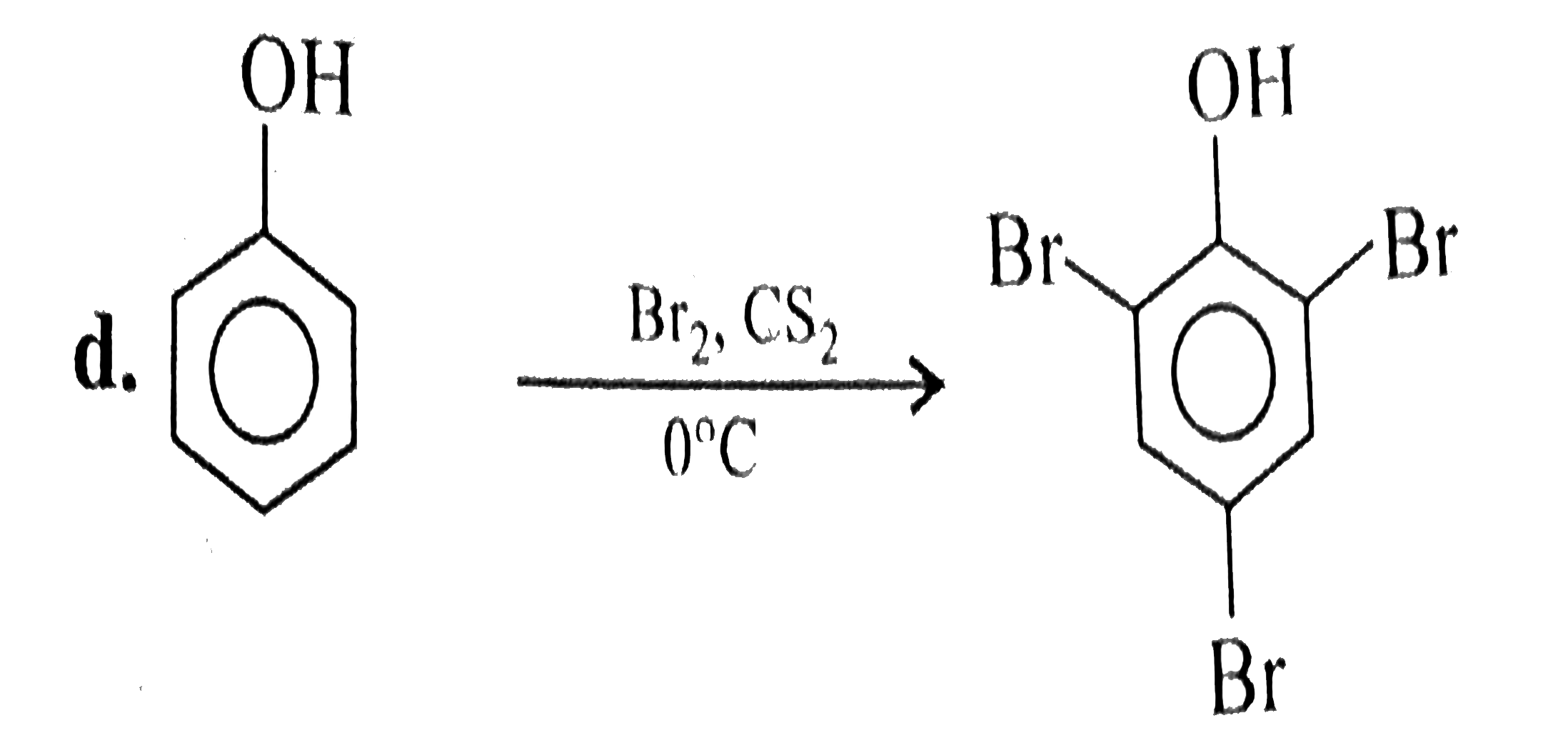
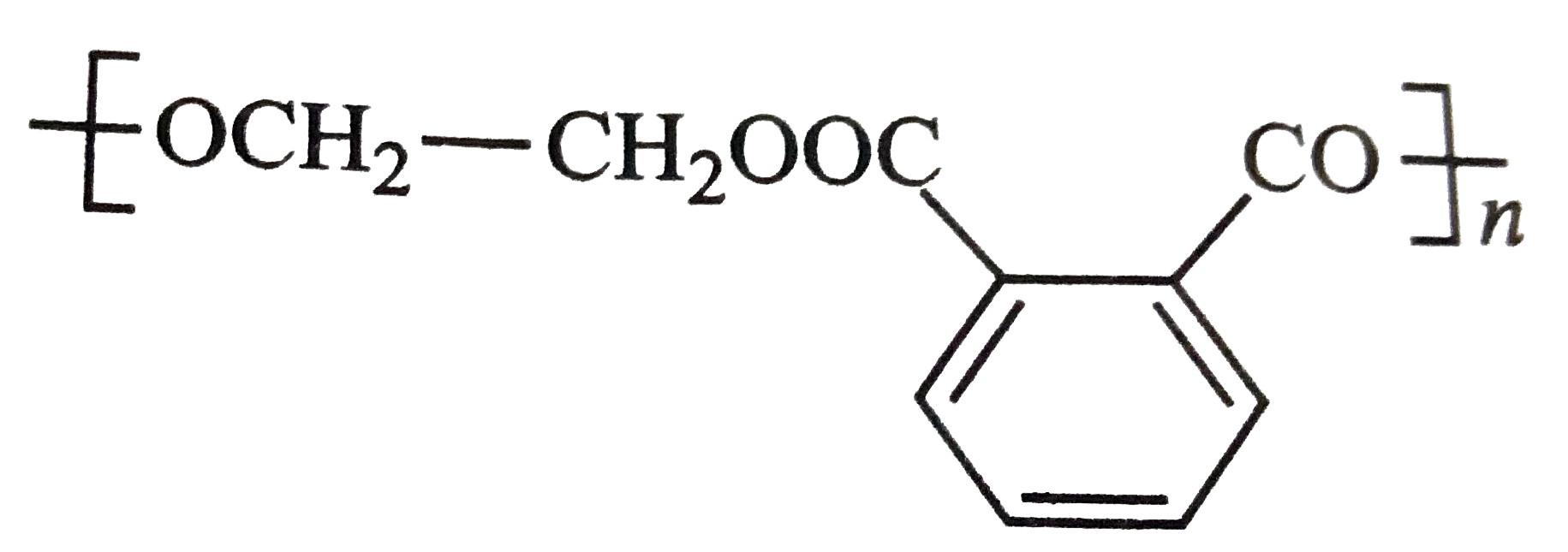
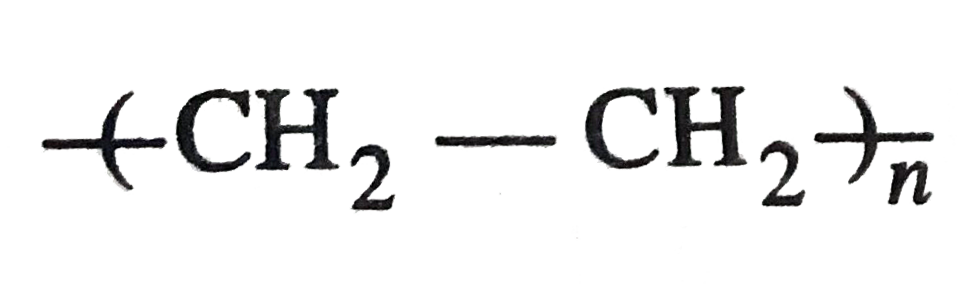
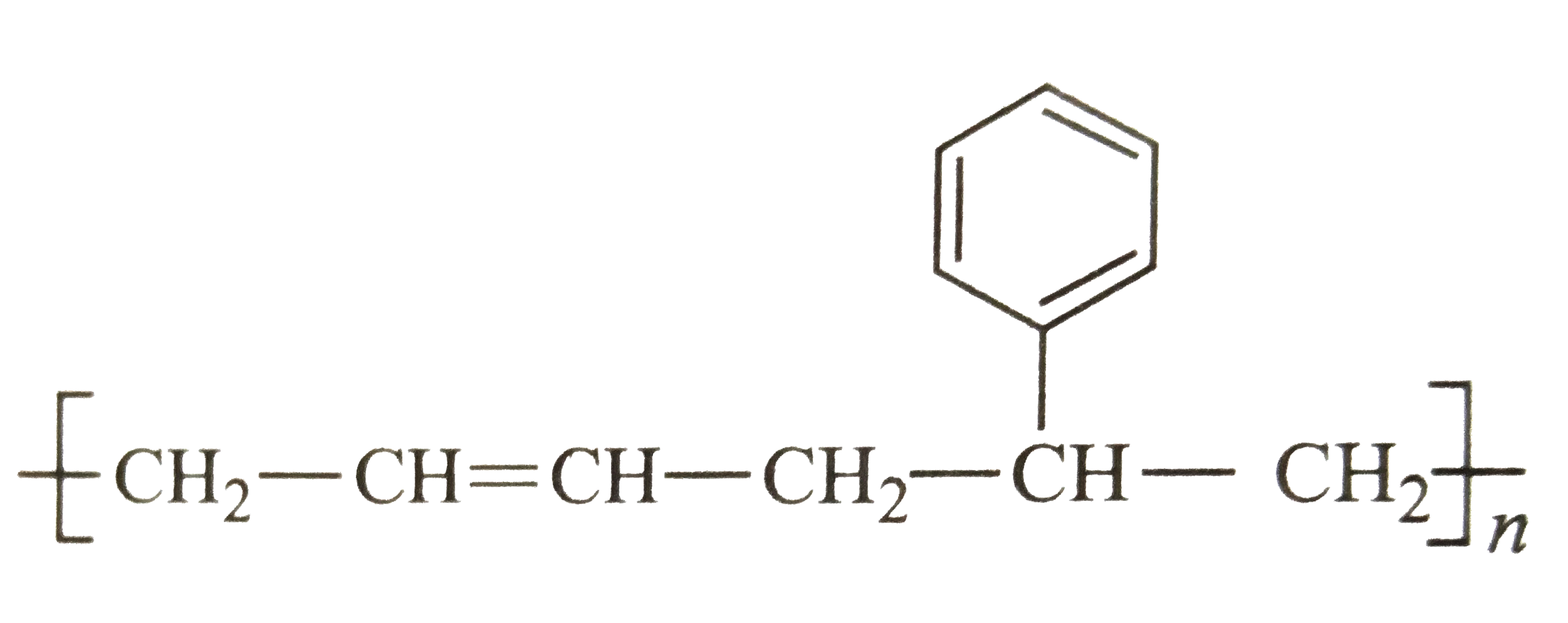
In which of following reactions, electrophilic aromatic substitution take place on left hand side phenyl ring? |
|
Answer»
|
|
| 9. |
In which of the following processes, the bond order has increased and paramagnetic character has changed to diamagnetic ? |
|
Answer» `NO to NO^(+)` `NOrarrNO^(+)B.O rArr 2.5 rarr3"Paramagnetic "rarr"DIAMAGNETIC"` `{:(N_(2)rarrN_(2)^(+)"B.O."rArr3rarr2.5),(O_(2)rarrO_(2)^(2-)"B.O."2rarr1):}]B.O.darr` `O_(2)rarrO_(2)^(+)"B.O."2rarr2.5"Paramagnetic"rarr"Paramagnetic"` `"So,"NOrarrNO^(+)` is CORRECT answer |
|
| 10. |
In which of following, NH_(3) is not used? |
|
Answer» NESSLER's REAGNET |
|
| 11. |
In which of the following products are in the molte state |
|
Answer» Calcination |
|
| 12. |
In which of following sets the carbohydrates are reducing sugar |
|
Answer» glucose , FRUCTOSE , SUCROSE , |
|
| 13. |
In which of the following processes, fused sodium hydroxide is electrolysed at 330^(@)C temperature for extraction of sodium |
|
Answer» Castner's process |
|
| 14. |
In which of following is incorrect |
|
Answer» Q-2-iv |
|
| 15. |
In which of the following processes, electrical energy is converted to chemical energy? |
|
Answer» PURIFICATION of metals |
|
| 16. |
In which of the following process(es) hybridisation of underlined atom does not change? |
|
Answer» `ul(N)H_(3)+BF_(3)rarrH_(3)N.BF_(3)` |
|
| 17. |
In which of following first is more acidic than second |
|
Answer» <P>`N_(2)O_(3) gt N_(2)O_(5)` |
|
| 18. |
In which of the following processes is autocatalysis involved? |
|
Answer» Oxidation of `FeSO_(4)` with acidified `KMnO_(4)` In this reaction, MnSO4 acts as an autocatalyst. |
|
| 19. |
In which of following compound a ppi - dpi bonding is present |
|
Answer» TRISILYLAMINE |
|
| 20. |
In which of the following processes nitorgen is oxidised ? |
|
Answer» `NH_4^+ rarrN_2` |
|
| 21. |
In which of the following coordination entities the magnitude of Delta_(0) (CFSE In octahedral field) will be maximum (at. no. Co=27)? |
|
Answer» `[Co(CN)_(6)]^(3-)` |
|
| 22. |
In which of the following process, weaking of covalent bond take place :- |
|
Answer» Boiling of `H_(2)O` |
|
| 23. |
In which of following ces calcination process is not appliable |
|
Answer» `CaCO_(3)` |
|
| 24. |
In which of the following processes, calcium silicate slag is formed. Extraction of |
|
Answer» Tin from casierile |
|
| 25. |
In which o the following bond angle around the central atom is maximum ? |
|
Answer» `NH_3` |
|
| 26. |
In which of the following process energy is liberated ? |
|
Answer» `O^(-) + e to O^(2-)` |
|
| 27. |
In which molecule does the chlorine have the most positive partial charge? |
|
Answer» `HCl` 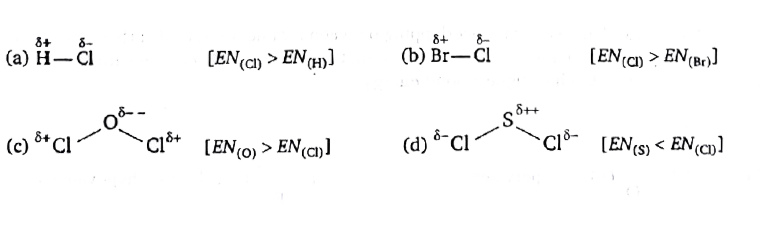
|
|
| 28. |
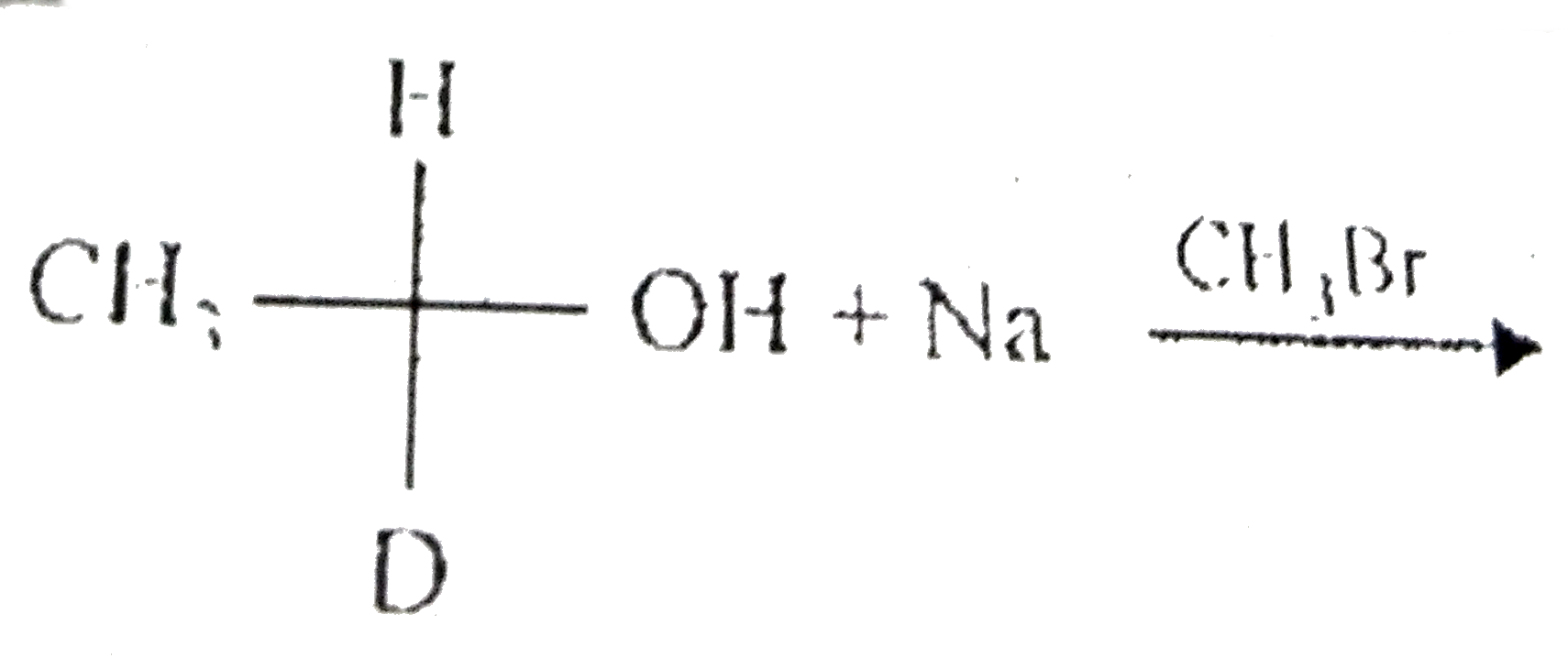
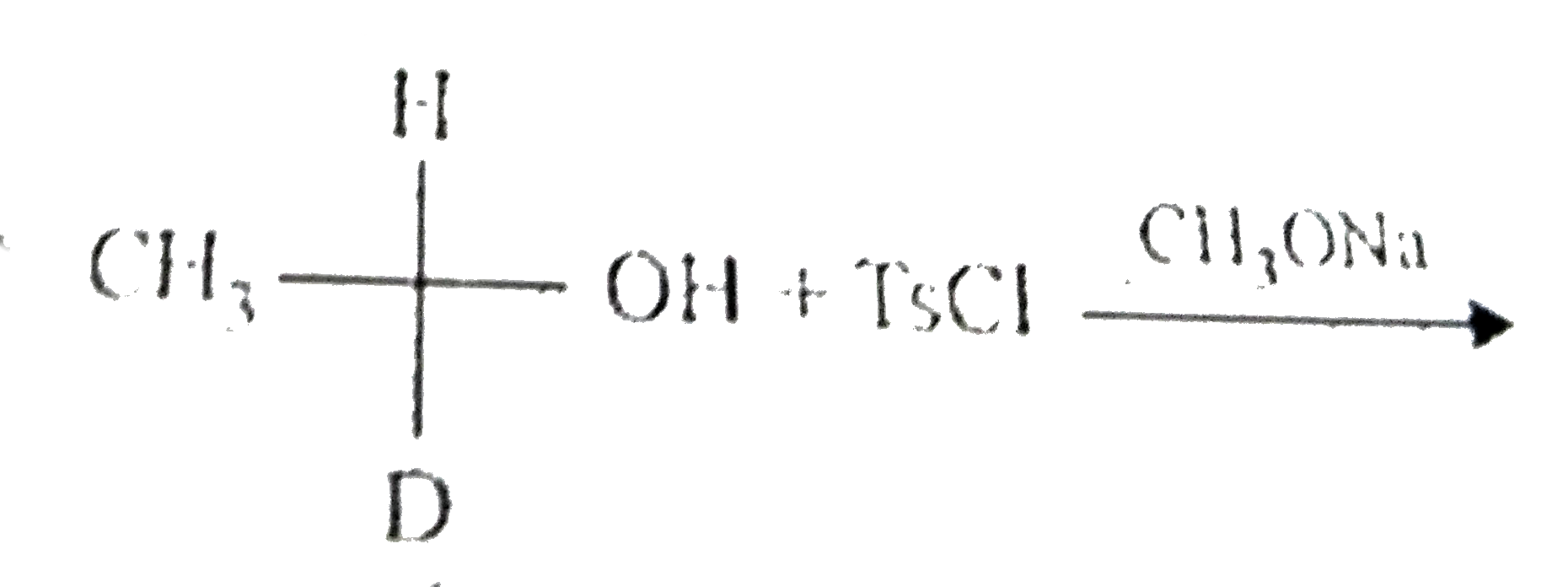
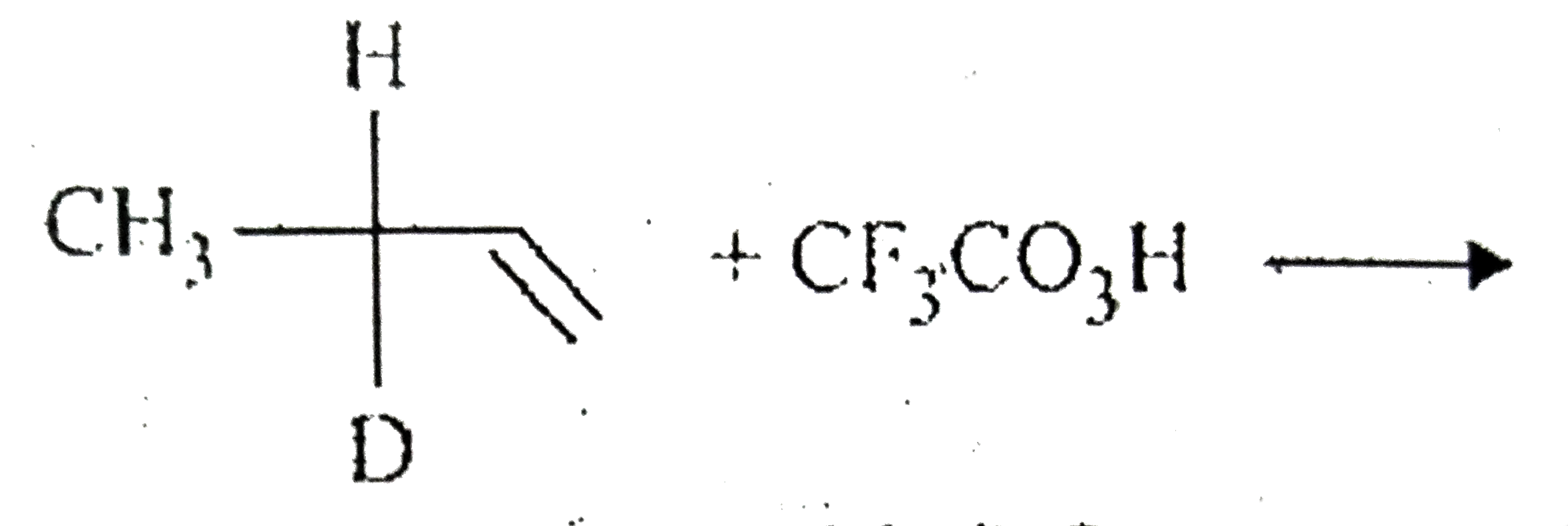
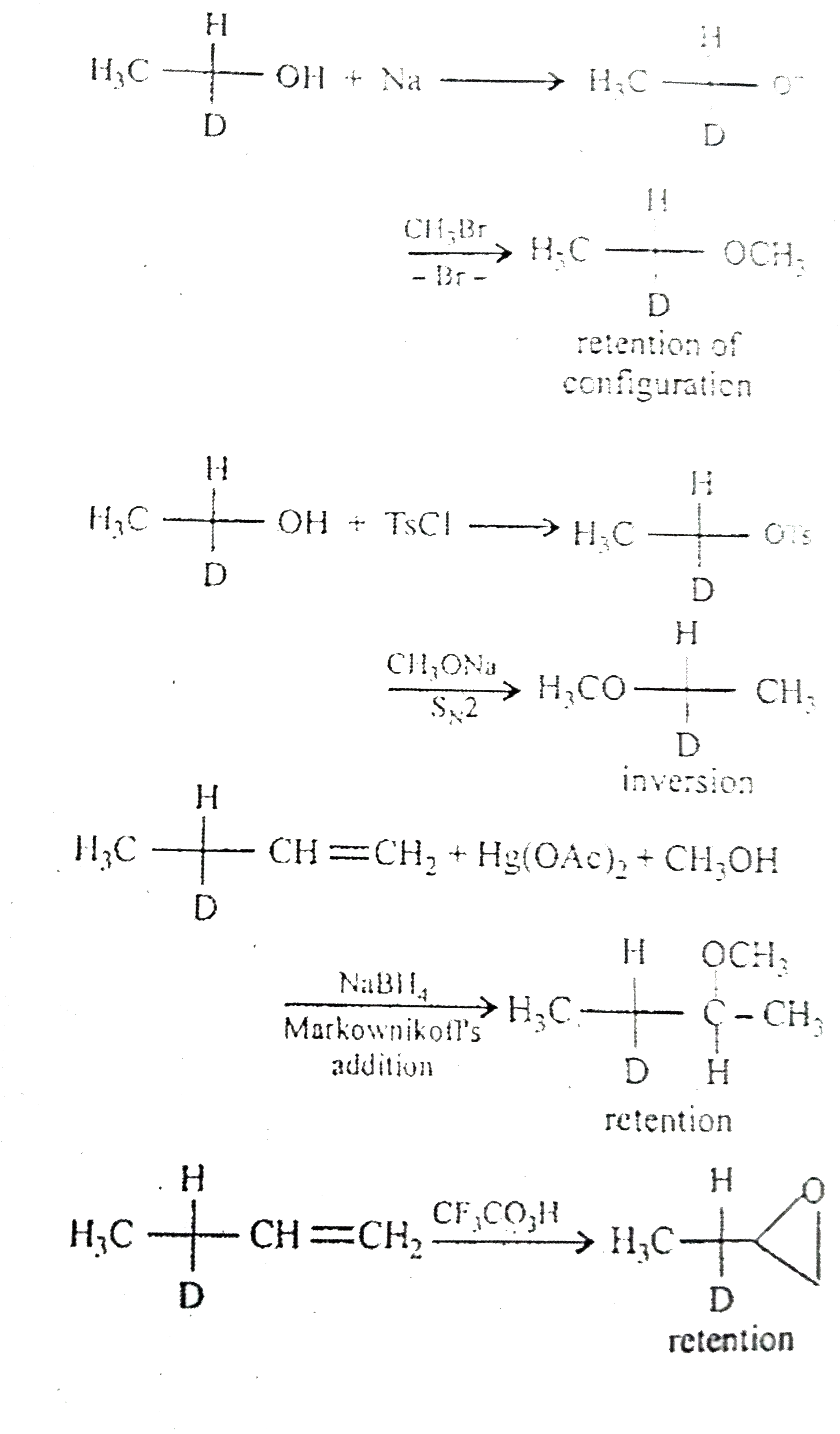
In whichof the following preparations of ether. The configuration about chiral centre is not reatined ? |
|
Answer»
|
|
| 29. |
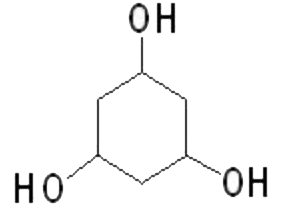
In which molecule, cleavage by HIO_(4) is not observed? |
|
Answer»
|
|
| 30. |
In which mode of expression, the concentration of solution remains independent of temperature ? |
|
Answer» Molarity |
|
| 31. |
In which of the following porcentage of carboni inimum |
| Answer» Answer :A | |
| 32. |
which of the following mode of expressing the concentration is independent of temperature? |
|
Answer» Molarity |
|
| 33. |
In which of the following process acetone is one of the final products ? |
|
Answer» Ozonolysis of ETHYNE |
|
| 34. |
In which mode of expression the concentration of solution remains independent of temperature ?? |
|
Answer» Normality |
|
| 35. |
In which of the following process, a maximum increase in entropy is observed? |
|
Answer» Melting of ice |
|
| 36. |
In which metal vessels aqueous CuSO_(4) solution can be store ? E_(Cu^(2+)//Cu)^(@)=0.34V E_(Fe//Fe^(2))^(@)=0.44V, E_(Al//Al^(3+))^(@)=1.66V E_(Ni//Ni^(2+))^(@)=0.25V,E_(Ag^(+)//Ag)^(@)=0.80V |
|
Answer» Ag `E_(Al|Al^(3+))^(Theta)=1.66V and E_(Al^(3+)|Al)^(Theta)=-1.66V` So, in Al VESSELS, `Cu^(2+)` of `CuSO_(4)` is REACTED. `2Al_((S))+3Cu^(2+) to 2Al^(3+)+3Cu_((S))` So reaction of `CuSO_(4)` is occurred with Al vessels so `CuSO_(4)` solution can.t be STORE in Al. |
|
| 37. |
In which lathanide contraction is seen? |
|
Answer» Gd |
|
| 38. |
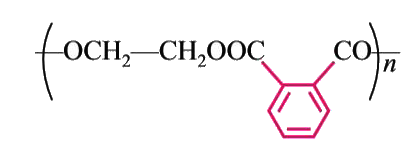
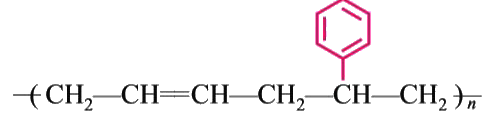
In which of the following polymers ethylene glycol is one of the monomer units? |
|
Answer»
|
|
| 39. |
In which kind of solids dipole-dipole forces are present? |
|
Answer» POLAR MOLECULAR Solids |
|
| 40. |
In which is chlorine not used: |
|
Answer» As germicide |
|
| 41. |
In which iron has the lowest oxidation state ? |
| Answer» Answer :A | |
| 42. |
In which of the following polymers ethylene gylcol is one of the monomer units? |
|
Answer»
|
|
| 43. |
In which hybridisation, resulting all orbitals are NOT equivalent- |
|
Answer» `sp^(3)` |
|
| 44. |
In which following statement are correct. (a) Anhydrous hydrogen fluroide is a liquid at ordianry temperature while other halogen acid are gases. (b) Lead acetate does not form any precipitate with HF acid but other halogen acid from precipitates. (c) HF is heated with a mixture of MnO_2 and H_2SO_4, no gas is evolved but In case of HCI, HBr and HI acids evolved gases. (d) HF is not oxidised by strong oxidising agent but other halogen acid are oxidised. |
| Answer» Answer :A::C::D | |
| 45. |
In which fo the following reactions is the correct major product formed? |
|
Answer» <P> |
|
| 46. |
In which of the following polymers ethylene glycol is one of the monomer units ? |
|
Answer»

|
|
| 47. |
In which of the following polymers , ethylene glycol is one of the monomer units ? |
|
Answer»
|
|
| 48. |
In which of the following polymers ethylene glycol is one of the monomer units- |
|
Answer»
|
|
| 49. |
In which form of complex, the plationum is dissolved in aqua regia ? |
|
Answer» `[Pt(NO_(3))_(2)Cl_(2)]` |
|
| 50. |
In which ofthe following polymerisation newbonds are formed by the elimination of small molecules ? |
|
Answer» CONDENSATION |
|