Saved Bookmarks
This section includes 7 InterviewSolutions, each offering curated multiple-choice questions to sharpen your Current Affairs knowledge and support exam preparation. Choose a topic below to get started.
| 1. |
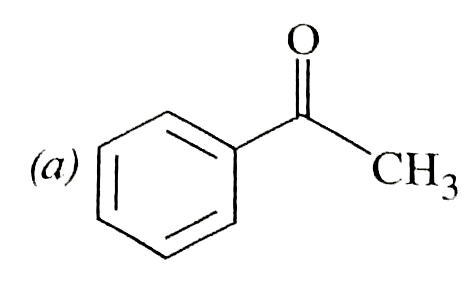
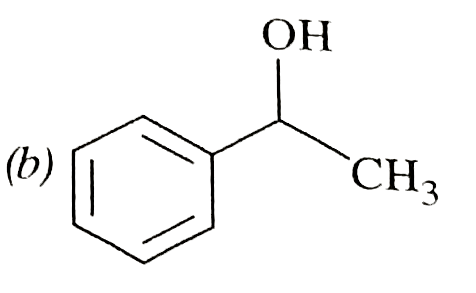
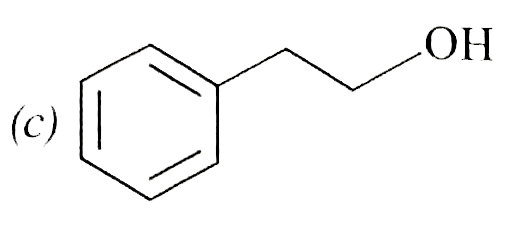
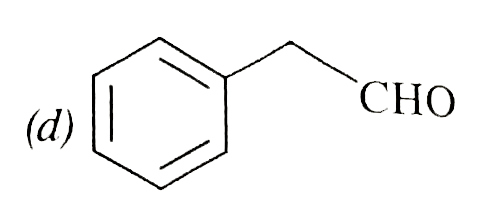
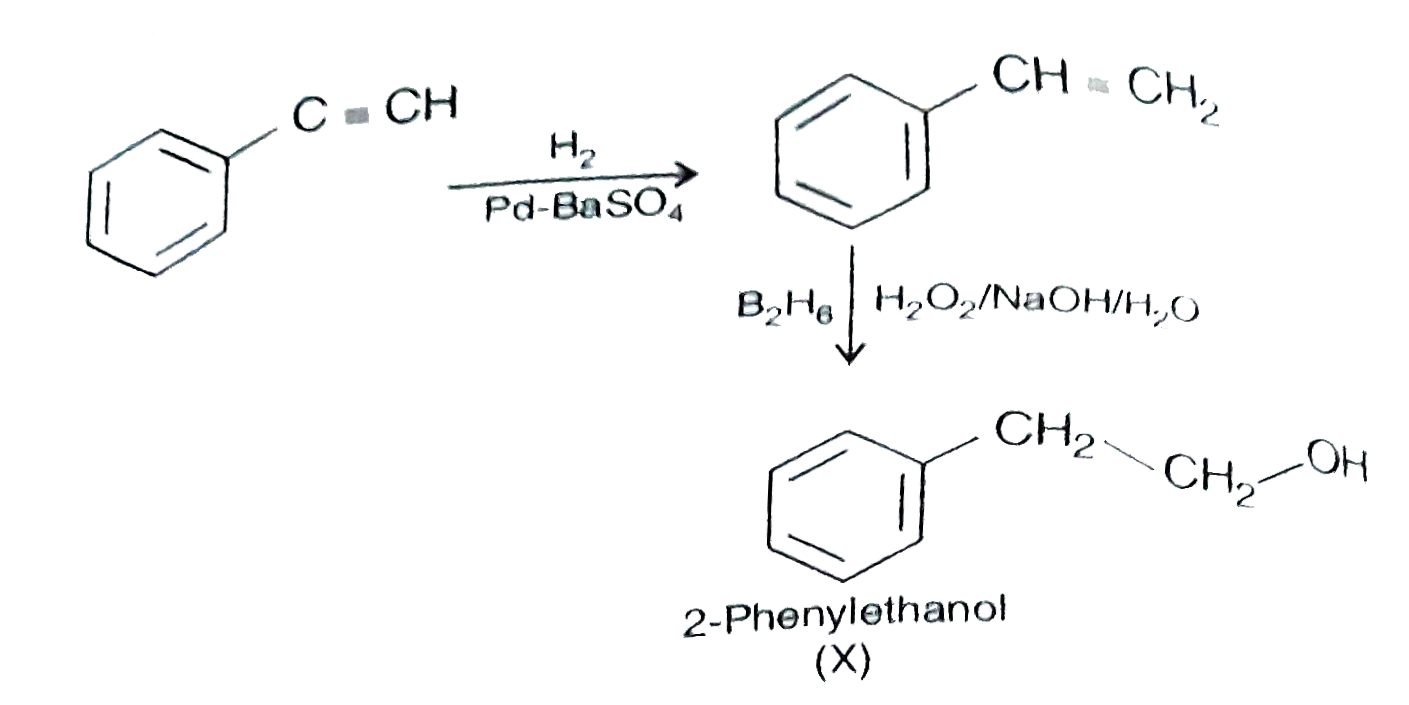
In the following Compound X is |
|
Answer»
|
|
| 2. |
In the following compound - Which of the following is correct order of acidic strength ? |
|
Answer» `c gt b gt a gt b` CARBOXYLIC acid group `gt` PHENOLIC group `gt 1^(@)` Aliphatic alcohol group `gt 2^(@)` alphatic alcohol group |
|
| 3. |
In the following compound, the number of 'sp' hybridized carbon is CH_(2) = C = CH - underset(CN)underset(|) (CH) - C equiv CH |
|
Answer» 2 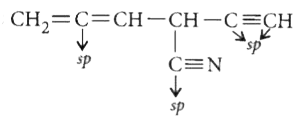
|
|
| 4. |
In the halogen group chlorine is a gas bromine is a liquid and iodine exists as solid crystals Then the next halogen astatine (AT) would be |
|
Answer» SOLID at ROOM temperture |
|
| 5. |
In the following compound, The favourable site/s for protonation is/are: |
| Answer» Answer :A | |
| 6. |
In the following compound - The degree of unsaturation (DBE) in the given compound is : |
|
Answer» 9 |
|
| 7. |
In the following complexes : (P) NiSO_(4)+KCN(Xs) to complex 'I' (Q) FeCl_(3)+KCN(Xs) to complex 'II' (R )FeSO_(4)+KCN(Xs) to complex 'III' (S) CuSO_(4)+KCN(Xs) to Complex 'IV' Correct order of stability of complexes is : |
|
Answer» `PgtQgtRgtS` `underset(R to K_(4)[overset(+2)(Fe)(CN)_(6)]d^(2)SP^(3)` S to `K_(3) [Cu(CN)_(4)]sp^(3)` (Also, lower O.Sgt of C.A.) |
|
| 8. |
In the Haber's process, metallic oxides catalyse reaction between gaseous nitrogen and hydrogen to yield ammonia whose volume (STP) relative to the total volume of the reactants taken (STP) would be |
|
Answer» one-fourth VOLUME of `NH_3`is half to that of TOTAL volume of the REACTANTS. |
|
| 9. |
In the following complete reduction Ph COCOPh overset("LiAlH"_(4))(rarr) product, thenumber of possible stereoisomers in the product is |
|
Answer» 1 The number of possible stereoisomers in the PRODUCT is 3. 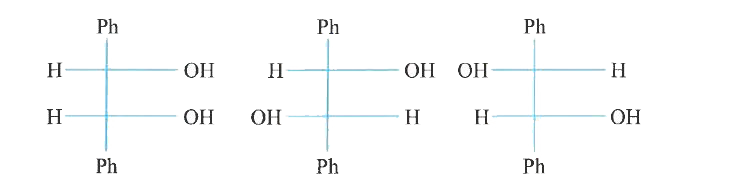
|
|
| 10. |
In the following "colourless"//"white" sulphides "is"//"are" CdS, PbS, HgS, CuS, FeS, ZnS, NiS, Bi_(2)S_(3) |
|
Answer» CdS, PBS, HgS, CuS, FES, ZNS, NiS, `Bi_(2)S_(3)` |
|
| 11. |
In the Hall.s proces for extraction of Al, the ore is fused with : |
|
Answer» `NaHCO_3` |
|
| 12. |
In the following chemical equations : CaC_(2)+A to X +Ca(OD)_(2) "" SO_(3)+D_(2)O to Y"" Al_(4)C_(3) + A to 3Z + 4Al(OD)_(3) Identify A, X, Y and Z respectvely. |
|
Answer» `D_(2)O, D_(2)SO_(4), CD_(4), C_(2)D_(2)` `SO_(3)+D_(2)Orarrr underset((Y))(D_(2)SO_(4))` `Al_(4)C_(3)+underset((A))(12D_(2)O)rarr underset((Z))(3CD_(4))+4Al(OD)_(3)` |
|
| 13. |
In the reaction 2Br^(-) + X_(2) rarr Br_(2) + 2X^(-) , X_(2) is |
|
Answer» `Cl_(2)`<BR>`Br_(2)` |
|
| 14. |
In the following cations number of ions are given by the Borax Bead Test Na^(+), Ca^(+2), Al^(+3), Cr^(+3), Zn^(+2), Fe^(+2), Mg^(+2), Ba^(+2), K^(+), Li^(+) |
|
Answer» |
|
| 15. |
In the Haber 's process of ammonia manufacture: N_(2) (g)+3H_(2) (g) to 2NH_(3) (g), triangleH_(298K)^(@)=-92.2kJ If N_(2) (g), H_(2) (g) and NH_(3) (g)" have "C_(p) (JK^(-1) mol^(-1)) values 29.1, 28.8 and 35.1 respectively then if C_p is independent of temperature, the reaction at 100^@C as compared to that of 25^@C will be |
|
Answer» More ENDOTHERMIC |
|
| 16. |
In the following change, 3 Fe + 4H_(2)O = Fe_(2)O_(4) + 4H_(2) If the atomic weight of iron is 56, then is equivalent weight will be |
|
Answer» 84 |
|
| 17. |
In the following carbon reduction process: 2Fe_(2)O_(3)+3c overset(Delta)to 4Fe+gas3X ZnO+C overset(Delta)to Zn+gas Y Note: C stands for carbon. Which of the following option is/are correct regardin X and Y? |
|
Answer» X is NEUTRAL oxide and Y is ACIDIC oxide. |
|
| 19. |
In the following C_(2)H_(5)-overset(H)overset(|)C=ONH_(2)OH to Aoverset(Na//C_(2)H_(5)OH)underset(Delta)to B the compound 'B' is : |
|
Answer» propan-l-amine |
|
| 20. |
In the Haber proces metallic oxides catalyses reaction betweengaseous nitrogen and hydrogen to yield ammonia whose volume (STP) relative to the total volume of reactants (STP) should be |
|
Answer» Three-fourth |
|
| 21. |
In the following carbocation, H//CH_(3) that is most likely to migrate to the positively charged carbon is : ""^(1)CH_(3)-""^(2)underset(OH)underset(|)overset(H)overset(|)(C)-""^(3)underset(H)underset(|)overset(+)(C)-""^(4)underset(CH_(3))underset(|)overset(H)overset(|)(C)-""^(5)CH_(3) |
|
Answer» `CH_(3)` at `C-4` |
|
| 22. |
In the Haber’s process of synthesis of NH_3 |
|
Answer» Mo acts as a CATALYST and FE as a PROMOTER |
|
| 23. |
In the following carbocation , H//CH_3 that is most likely to migrate to the positively charged carbon is -H-underset(H)underset(|)overset(H)overset(|1)(C )-underset(HO)underset(|)overset(H)overset(|2)(C )-underset(H)underset(|)overset(o+)(C )-underset(H)underset(|)overset(H)overset(|4)(C )-overset(5)(C )H_3 |
|
Answer» `CH_3` at `C - 4` |
|
| 24. |
In the group III radicals, in place of NH_(4)Cl which of the following can be used |
|
Answer» `NH_(4)NO_(3)` |
|
| 25. |
In the following atom 1Cl "" 2 F ""3 Br ""4 I The order of leving group ability is |
|
Answer» `4 GT 3 gt 2 gt 1` `OVERSET(OH^(-)) to CH_(2)-underset(OH) underset(|)(CH)-CH_(2)-Cl` |
|
| 26. |
In the firsttransition series, the maximum number of oxidation state is shown by "…..............." |
|
Answer» |
|
| 27. |
In the graph shown below A-B, B-C , C-D are parts of the carnot cycle operating on an ideal gas.Consider only the path from State 1 to State 2 . W denotes the work in the path. Equations and plots in the table have standard notations gamma is the ratio of heat capacities at constant pressure and constant volume. The moles of the gas is 'n'. For which of the following options dQ_(irrev(sys))/T gt dQ_(rev(sys))/T |
|
Answer» (I)(iv)(Q) |
|
| 29. |
In the graph shown below A-B, B-C , C-D are parts of the carnot cycle operating on an ideal gas.Consider only the path from State 1 to State 2 . W denotes the work in the path. Equations and plots in the table have standard notations gamma is the ratio of heat capacities at constant pressure and constant volume. The moles of the gas is 'n'. For which of the following options dQ_(rev_(sys))/T=0 and dQ_(rev(sys))/T=0 it taken irreversibly |
|
Answer» (I)(iv)(Q) Hence CORRECT OPTION is (I)(iv)(Q) |
|
| 30. |
In the first order ,the concentration of the reactant is reduced to 25% in one four.The half life period of the reaction is…. |
|
Answer» 2hr |
|
| 31. |
In the first transition series, the divalent compound having maximum magnetic moment is : |
| Answer» ANSWER :A | |
| 32. |
In the graph shown below A-B, B-C , C-D are parts of the carnot cycle operating on an ideal gas.Consider only the path from State 1 to State 2 . W denotes the work in the path. Equations and plots in the table have standard notations gamma is the ratio of heat capacities at constant pressure and constant volume. The moles of the gas is 'n'. For which of the following options dQ_(rev(sys))/T gt 0 and simultaneously dQ_(irrev(sys))/T gt 0 If taken irreversibly |
|
Answer» (I)(iv)(Q) Hence the CORRECT option is (IV)(i)(p) |
|
| 33. |
In the first transition series, the differentiating electrons enters: |
|
Answer» 5d-orbital |
|
| 34. |
In the graphical representation for the reaction: A to B there are two types of regions. What do these regions specify? |
| Answer» SOLUTION :the region (I) represent the kinetic region indicating the progress of the reaction I the FORWARD and also in the BACKWARD directions. The region (ii) DEPICTS the equilibrium region. | |
| 35. |
In the first order reaction 10% of the reaction is completed in 10 hours. The percentage of the reaction completed in 20 hours is |
| Answer» Answer :B | |
| 36. |
In the first order decomposition of A: A rarr 2B + 3C Concentration of A decrease from initial concentration 0.8 M to 0.2 M in 13.86 min. then rate of appearance of B (in M/sec.) at 13.86 sec. is : |
|
Answer» `0.1` |
|
| 37. |
In the graph showing Maxwell,Boltzman distribution of energy……. |
|
Answer» area under the curve must not CHANGE with increase in temperature  GRAPH (i) in this graph temperature increase but the area of curve does not change whether the curve does not change whether the curve is changed .(ii)It is clear from the graph as the temperature increases the graph shift towards right side and become BROADEN. |
|
| 38. |
In the final answer of the expression ((29.2 -20.2)(1.79 xx 10^5))/(1.37)the number of significant figures is : |
|
Answer» 1 The answer should have 2 significant figures because LEAST PRECISE TERM (9.0) has 2 significant figures |
|
| 39. |
In the graph showing Maxwell Boltzman distribution of energy, ________. |
|
Answer» area under the curve must not change with increase in TEMPERATURE |
|
| 40. |
In the graph showing Maxwell Boltzman distribution of energy, ……………… . |
|
Answer» area under the curve MUST not change with increase in temperature |
|
| 41. |
In the fermentalion of sugar molasses, the precentage of ethanol formed is : |
| Answer» ANSWER :A | |
| 42. |
In the extraction ofsilverfrom argentite ore. The ore is treated with dil. solution of NaCN in water in the presence of Y, whereby the following reaction takes place : Ag_(2)X+4NaCN+2Y to 2Na[Ag(CN)_(2)]+Na_(2)XO_(4). X and Y in this reaction are respectively: |
|
Answer» Sb ANS S |
|
| 43. |
In the graph of , if we use the term fluid for either a gas or a liquid, then which of the following can be true statement(s)? |
|
Answer» Liquid can be viewed as a very dense gas |
|
| 44. |
In the extraction of zinc which gas is burnt in the jackets surrounding the retorts |
|
Answer» WATER gas |
|
| 45. |
In the graph showing Maxwell, Boltzamann distribution of energy ___________ |
|
Answer» AREA under the curve must not change with INCREASE in temperature. |
|
| 46. |
In the extraction of sodium by Down's process, cathode and anode are respectively |
|
Answer» COPPER and Nickel |
|
| 47. |
In the extraction of which of the following metal's amalgamation process is used? |
| Answer» Solution :For the EXTRACTION of Ag and Au amalganation PROCESS can be USED | |
| 48. |
In the extraction of which of the following metals is used for amalgamation? |
|
Answer» Ag |
|
| 49. |
In the 'glycolipids', the two sugars known to occure are glucose and |
|
Answer» fructose |
|