Saved Bookmarks
This section includes 7 InterviewSolutions, each offering curated multiple-choice questions to sharpen your Current Affairs knowledge and support exam preparation. Choose a topic below to get started.
| 1. |
In the electrolysis of aqueous sodium chloride solution, which of the half cell reaction will occur at anode ? |
|
Answer» `Cl_((aq))^(-)to(1)/(2)Cl_(2)+e^(-),"" E_(cell)^(@)=1.36" volts"` |
|
| 2. |
In the following, the element with the highest ionisation energy is |
|
Answer» `[Ne]3s^(2)3P^(1)` |
|
| 3. |
In the electrolysis of aq. CuSO_(4) solution with Pt electrodes, using 1 F of electricity, which of the following processes shall occur? |
|
Answer» 1 eq. of CU is deposited at the cathode |
|
| 4. |
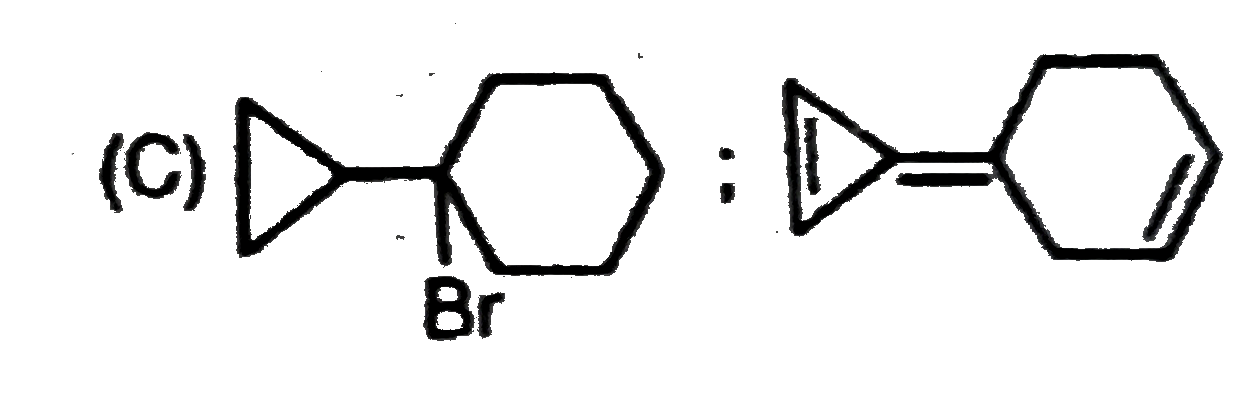
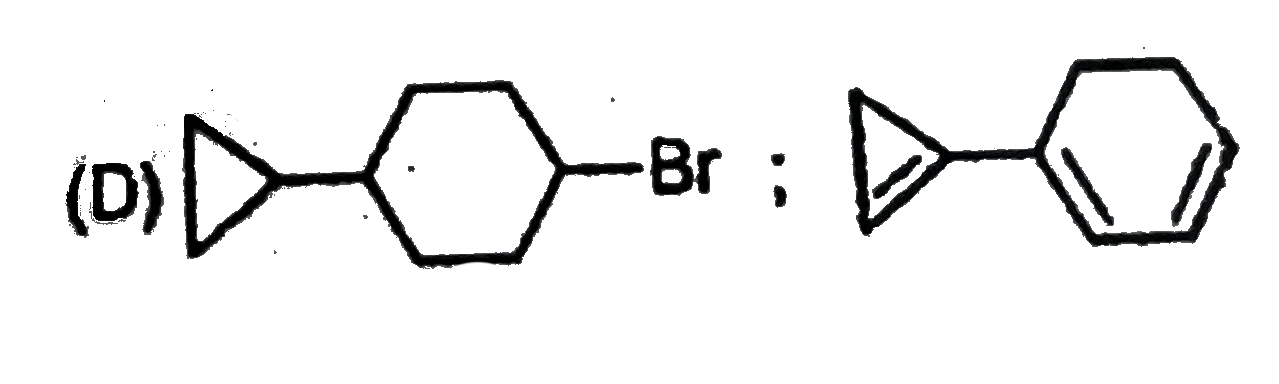
In the following structure,the double bonds are marked as I, II, III and IV Geometrical isomerism is not possible at site (s): |
|
Answer» I |
|
| 5. |
In the electrolysis of an aqueous solution of a salt, the pH in the space near one of the electrodes increased. A solution of which of the following salts was electrolysed ? |
| Answer» Answer :C | |
| 6. |
In the electrolysis of aqueous NaCl solution, Cl_(2) is produced at the anode and not O_(2). This is due to____shown by water for oxidation to O_(2). |
| Answer» SOLUTION :OVERVOLTAGE | |
| 7. |
In the electrolysis of an aqueous solution of NaF , the product obtained at the cathode and anode respectively are |
|
Answer» `Na, F_(2)` |
|
| 8. |
In the electrolysis of an aqueous Cr_(2)(SO_(4))_(3) solution using a current of 2 amp, the mass of cathode is increased by 8 g. How long was electrolysis conducted ? |
|
Answer» |
|
| 9. |
In the following statement, which combination of true (T) and false (F) options in correct? (A). Ionic mobility is highest of I^(-) in water as compared to other halides. (B). IF_(5) is square pyramidal and IF_(7) is pentangonal bipyramidal in shape (C). Reactivity order is F_(2)ltCl_(2)ltBr_(2)ltI_(2) (D). Oxidising power order is F_(2)ltCl_(2)ltBr_(2)ltI_(2) |
|
Answer» TFTF |
|
| 10. |
In the electrolysis of alumina, cryolite is added to alumina to |
|
Answer» higher the m.p. of alumina |
|
| 11. |
In the electrolysis of alumina cryolite is added to: |
|
Answer» lower the melting POINT of ALUMINA |
|
| 12. |
In the following, strongest acid is |
|
Answer» `CH_3CH_2COOH` |
|
| 13. |
In the following strcuture anomeric carbon is |
|
Answer» 1 |
|
| 14. |
In the following sets reactants which two sets best exhibits the amphoteric character of Al_(2)O_(3)*xH_(2)O? Set 1: Al_(2)O_(3)*xH_(2)O and OH^(-) Set 2: Al_(2)O_(3)*xH_(2)O and H_(2)O (aq) Set 3:Al_(2)O_(3)*xH_(2)O and H^(+)(aq) Set 4:Al_(2)O_(3)*xH_(2)O and NH_(3)(aq) |
|
Answer» 1 and 2 `Al_(2)O_(3)*xH_(2)O+2NaOH to NaAlO_(2)+H_(2)O` `Al_(2)O_(3)*xH_(2)O+HCl to AlCl_(3)+H_(2)O` |
|
| 15. |
In the electrolysis of alumina, cryolite is added to : |
|
Answer» Lower the melting POINT of alumina |
|
| 16. |
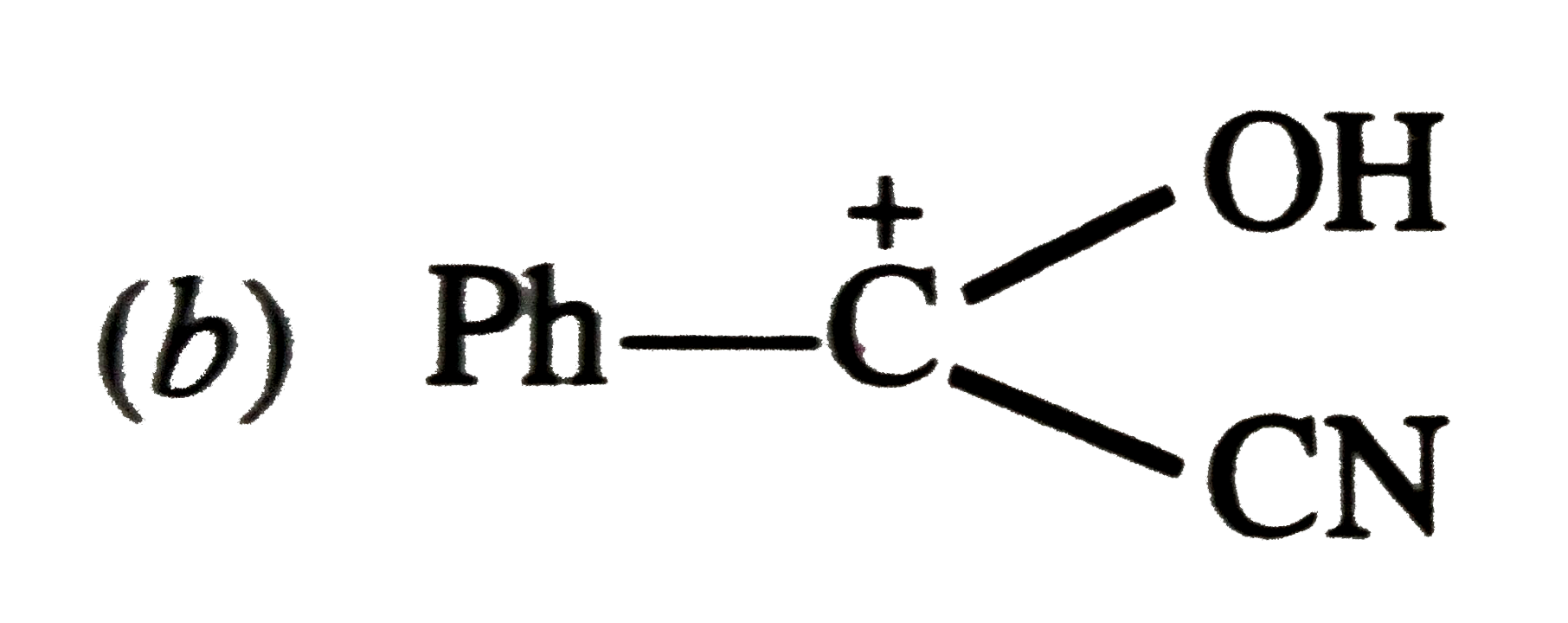
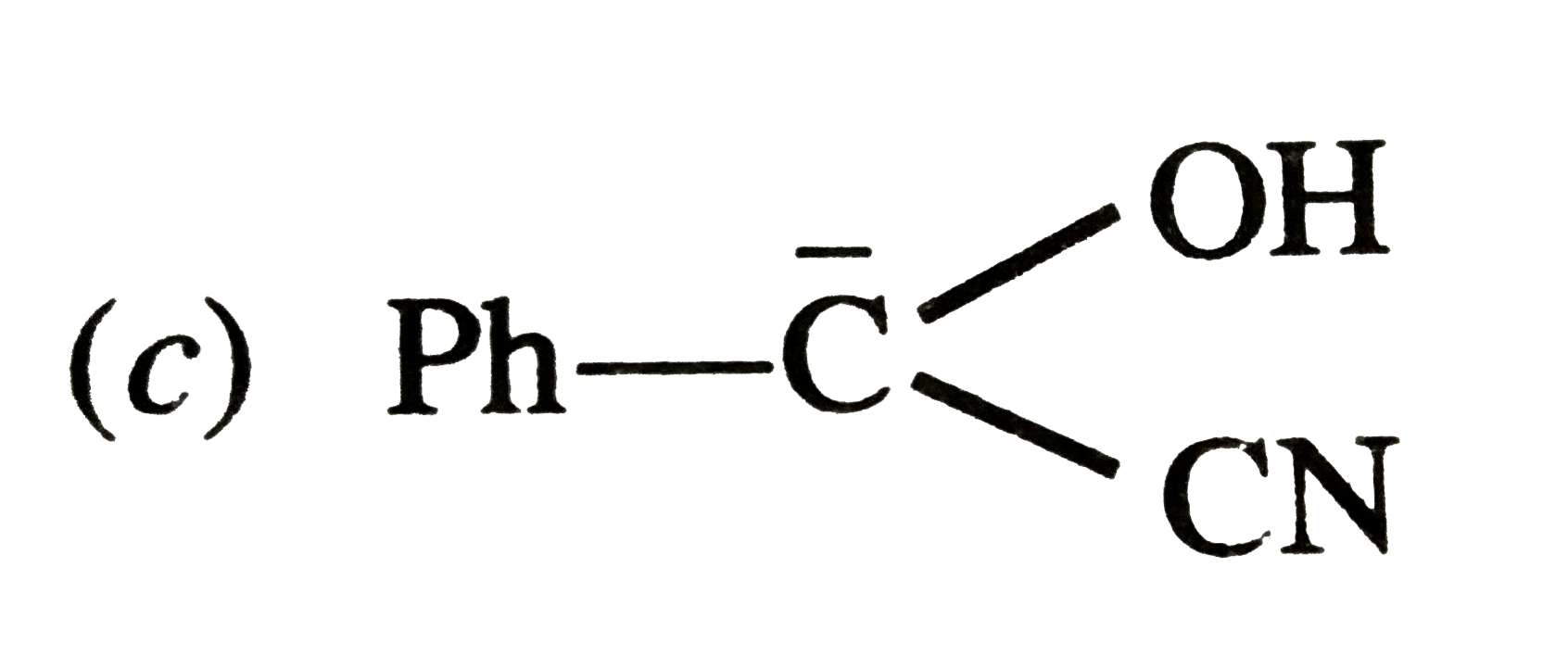
In the following species, the one which is likely to be the intermediate during benzoin condensation of benzaldehyde, is |
|
Answer» `Ph-Coverset((+))(-=)O` 
|
|
| 17. |
In the electrolysis of alumina , cryolite and CaF_(2) areadded to |
|
Answer» increase the emf of CELL |
|
| 18. |
In the following species, the one which is likely to be intermediate during benzoic condensation of benzaldehyde, is |
|
Answer» `Ph-C-=overset(+)(O)` 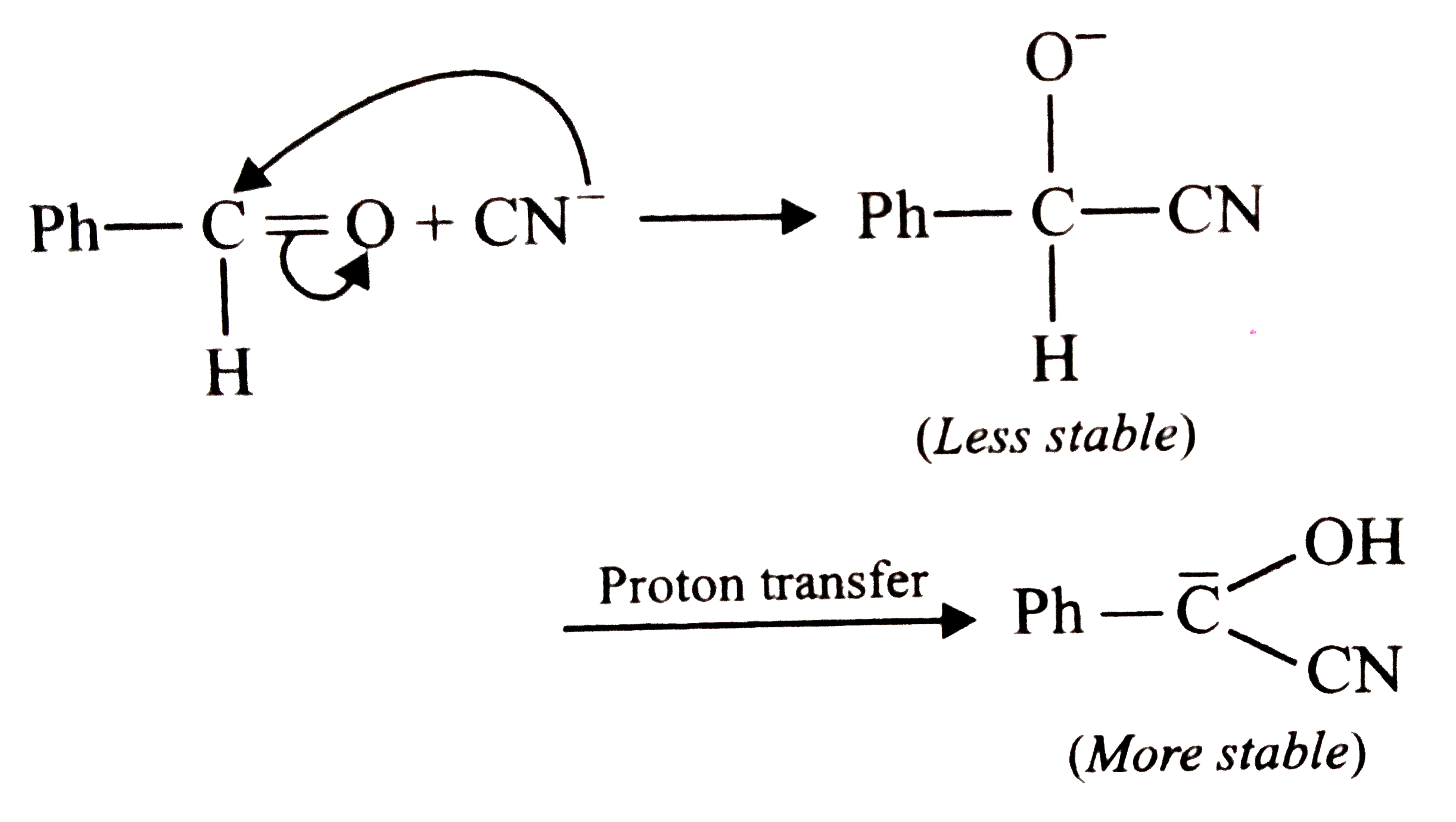
|
|
| 19. |
In the electrolysis of alkaline water , a total of mass 1 mole of gases is volved . The amount of water decomposed is |
|
Answer» 1 mole SUPPOSE `H_(2)O` decomposed = x moles . Then `H_(2) = x , O_(2) = (1)/(2) x , i.e., x + (1)/(2) x = 1` or `(3)/(2) x = 1 or x = (2)/(3)` |
|
| 20. |
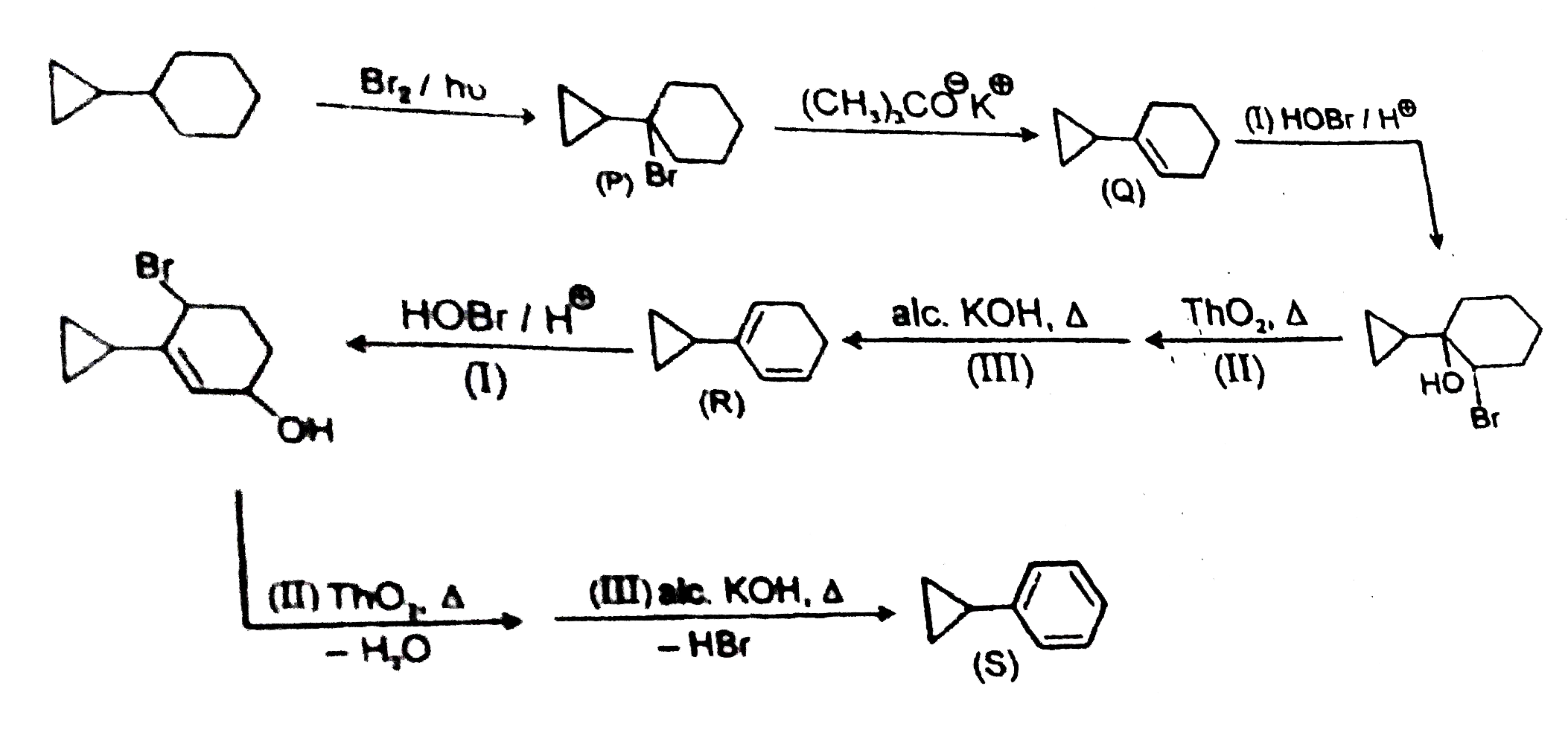
In the following series of reactions the major productsP and S are respectively. |
|
Answer»
|
|
| 21. |
In the electrolysis of alkaline water, a total of 1 mole of gases in evolved. The amount of water decomposed in |
|
Answer» 1 mole 1 mole of water gives on electrolysis `(3)/(2)` moles of gases `THEREFORE ` To PRODUCE 1 mole of gases water electrolysed `=(2)/(3)` mol |
|
| 22. |
In the following sets of compounds, the one which contains only medicinal compounds is: |
|
Answer» Dodecyl benzene, lauryl alcohol |
|
| 23. |
In the electrolysis of acidulated water, it is desired to obtain hydrogen at the rate of 1 cc per second at NTP condition. What should be the current passed? |
|
Answer» Solution :`2H^(+)+2E^(-)toH_(2)` Thus, 1 mole of `H_(2)` i.e., 22400 cc at NTP requires 2F=`2xx96500`coulombs `therefore`1cc at NTP requires `=(2xx96500)/(22400)xx1=8.616C` As `Q=Ixxt""thereforeI=(Q)/(t)=(8.616)/(1s)=8.616`ampere |
|
| 24. |
In the electrolysis of acidulated water, it is desired to obtain 1.12 cc of hydrogen per second uner S.T.P. condition. The current to be passed is |
|
Answer» A) 9.65 A `:.` No. of EQUIVALENTS of hydrogen `=(1.12xx2)/(22400)=10^(-4)` No. of Faradays required `=10^(-4)` `:.` Current to be passed in 1 sec. `=96500xx10^(-4)` `=9.65A` |
|
| 25. |
In the following series of chemical reactions identify Z C_(3)H_(7)OH underset(160-180^(@)C)overset(Conc. H_(2)SO_(4))to X overset(Br_(2))to Y underset(Alc. KOH)overset("Excess of ") to Z |
|
Answer» `CH_(3)-UNDERSET(NH_(3))underset(|)CH-underset(NH_(2))underset(|)CH_(2)` |
|
| 26. |
In the electrolysis of acidulated water, it is desired to obtain 1.12 cc of hydrogen per second under S.T.P. condition. The current to be passed is |
|
Answer» 9.65A `THEREFORE` No. of equivalents of hydrogen`=(1.12xx2)/(22400)=10^(-4)` No. of FARADAYS REQUIRED`=10^(-4)` `therefore`Current to be passed in 1 sec. `=96500xx10^-4` `=9.65`A |
|
| 27. |
In the following sequential transformation, considering only the major products formed in each step, what is the correct statement with respect to product 'Y' is? |
|
Answer» It GIVES a positive TOLLEN's test and is a FUNCTIONAL isomer of 'X' |
|
| 28. |
In the electrolysis of acidified water, it is desired to obtained 1.12 cc of hydrogen per second under STP condition. The current that should be passed is: |
|
Answer» `9.65` A |
|
| 29. |
In the following sequences of reactions. 'A' overset("Reaction")to'B' overset(HNO_(2))toCH_(3)CH_(2)OH The compound 'A' is: |
|
Answer» PROPANE NITRILE |
|
| 30. |
In the electrolysis of a metal oxide, name a substance that helps to lower the melting point and to increase the conductivity. |
| Answer» SOLUTION :CRYOLITE | |
| 31. |
In the following sequences of reaction CH_(3)Broverset(KCN)toAoverset(H_(3)O^(+))toBunderset(ether)overset(LiAlH_(4))toC The end product (C) is. |
|
Answer» acetone  . .
|
|
| 32. |
Identify (Z) in the series. C_(3)H_(7)OH underset(443K)overset("conc."H_(2)SO_(4))(rarr)(X)overset(Br_(2))(rarr)(Y) underset("alc. KOH")overset("Excess of ")(rarr)(Z) |
|
Answer» `CH_3-UNDERSET(NH_2) underset(|)CH-underset(NH_2)underset(|)CH_2` |
|
| 33. |
In the electrolyses of CuSO_4 the reaction Cu^(2+)+2^(@-)rarr Cu , Takes place at : |
|
Answer» Anode |
|
| 34. |
In the following sequence the product D is, CH-= CH overset(HBr)rarr A overset(HBr)rarr B overset(KOHalc)rarr Coverset(NaNH_2)rarr D |
|
Answer» Ethanol |
|
| 35. |
In the electrodeposition of Ag , the silver ions are |
|
Answer» REDUCED to ANODE |
|
| 36. |
In the electro-deposition of Ag, the silver ions are : |
|
Answer» REDUCED at anode |
|
| 37. |
In the electrochemical cell Zn|ZnSO_(4)(0.01M)||CuSO_(4)(1.0M)|Cu, the emf of this Daniel cell is E_(1). When the concentration of ZnSO_(4) is changed to 1.0M and that of CuSO_(4) changed to 0.01M, the emf changes to E_(2). From the followings, which one is the relationship between E_(1) and E_(2) (given,(RT)/(F)=0.059) |
|
Answer» `E_(1) lt E_(2)` `Zn|ZnSO_(4)(0.01M)||CuSO_(4)(1M)|Cu` Cell reaction `toZn+Cu^(+2)toZn^(+2)+Cu` `E_(1)=E^(o)-(0.059)/(2)"log"(Zn^(+2))/(Cu^(+2))` `E_(1)=E^(o)-(0.059)/(2)"log"(0.01)/(1)` `=E^(o)-(0.059)/(2)"log"(1)/(100)`. . . .(i) Fore cell `Zn|ZnSO_(4)(1M)||CuSO_($)(0.01M)|Cu` `E_(2)=E^(o)-(0.059)/(2)"log"(1)/(0.01)` `=E^(o)-(0.059)/(2)log100` . . . . .ltBrgt `E_(1)gt E_(2)` |
|
| 38. |
In the following sequence the product ( C) is :CH_3CHOoverset(H_2)underset(Pd)rarr(A)overset(Na)rarr(B)overset(CH_3l)rarr(C) |
|
Answer» ALCOHOL |
|
| 39. |
In the electrochemical cell: Z|ZnSO_(4)(0.01M)||CuSO_(4)(1.0M)|Cu, the e.m.f. this daniel cell is E_(1). When the concentration of ZnSO_(4) is changed to 1.0 M and that of CuSO_(4) is changed to 0.01 M, the e.m.f. changes to E_(2). from the following, which one is the relationship between E_(1) and E_(2)? (Given, (RT)/(F)=0.059) |
|
Answer» `E_(1)=E_(2)` `Zn+CuSO_(4)toZnSO_(4)+CU,n=2` `E=E_(cell)^(@)-(2.303RT)/(2F)"log"([ZnSO_(4)])/([CuSO_(4)])` In 1 st CASE, `E_(1)=E_(cell)^(@)-(2.303RT)/(2F)"log"(0.01)/(1)` In 2nd case, `E_(2)=E_(cell)^(@)-(2.303RT)/(2F)"log"(1)/(0.01)` Evidently, `E_(1)gtE_(2)`. |
|
| 40. |
In the following sequence of reactions, Zoversett(PCl_(5))to X overset("Alc. KOH")to Y underset((ii)" "H_(2)O", boil")overset((i)" conc. "H_(2)SO_(4))to Z is |
|
Answer» `CH_(3)CH_(2)CH_(2)OH` `underset((Z))(CH_(3)CHOHCH_(3))overset(PCl_(5))to underset((X))(CH_(3)CHClCH_(3))underset(-HCL)overset("Alc. KOH")to underset((Y))(CH_(3)CH=CH_(2)) underset((ii)" "H_(3)O^(+))overset((i)" conc. "H_(2)SO_(4))to underset((Z))(CH_(3)CHOHCH_(3))` |
|
| 41. |
In the electrochemical cell : Zn|ZnSO_4 (0.01M)|CuSO_4 (1.0 M)|Cu, the emf of this Daniel cell is E_1. When the concentration of ZnSO_4, is changed to 1.0 M and that CuSO_4 changed to 0.01M, the emf changes to E_2. From the following , which one is the relationship between E_1 and E_2 ? |
|
Answer» `E_1 LT E_2` `E_1 = E_("cell")^(@) - (0.0591)/(2) "log" (10^(-2))/(1) "" Zn (S) to Zn^(2+)(aq) + 2e^(-)` `E_1 = E_("cell")^(@) + 0.0591 ………..(1) "" Cu^(2+)(aq) + 2e^(-) to Cu(s)` `E_2 = E_("cell")^(@) - (0.0591)/(2) log 1/(10^(-2)) "" Zn(s) + Cu^(2+)(aq) to Zn^(2+)(aq) +Cu(s)` `E_2 = E_("cell")^(@) - 0.0591 .............(2)` `:. E_1 > E_2`. |
|
| 42. |
In the electrochemical cell- Zn|ZnSO_(4)(0.01M)||CuSO_(4)(1.0M)|Cu, the emf of this Daniel cell is E_(1). When the concentration ofZnSO_(4) is changed to 1.0M and that of CuSO_(4) changed to 0.01M, the emf changes to E_(2). From the following , which one is the relationship between E_(1) and E_(2) ? (Given , (RT)/(F) = 0.059) |
|
Answer» `E_(1) =E_(2)` |
|
| 43. |
In the following sequence the compound (D) is , (##MBD_HKR_CHE_XII_P02_C12_E07_425_Q01##) |
|
Answer» ACETIC anhydride |
|
| 44. |
In the following sequence of reactions, what is D? |
|
Answer» PRIMARY amine |
|
| 45. |
The emf of a Daniell cell at 298 K is E_(1) Zn|ZnSO_(4)(0.01 M)||CuSO_(4)(1.0M)|Cu When the concentration of ZNSO_(4) is 1.0 M and that of CuSO_(4) is 0.01 M, the emf changed to E_(2). What is the relationship between E_(1) and E_(2) ? |
|
Answer» `E_1ltE_2` |
|
| 46. |
In the following sequence of reactions, what is D ? |
|
Answer» Primary amine |
|
| 47. |
In the electrochemical cell: Znabs(ZnSO_(4)(0.01M))abs(CuSO_(4)(1.0M))Cu, the emf of this Daniel cell is E_(1). When the concentration of ZNSO_(4) is changed to 1.0 M and that CuSO_(4) changed to 0.01M, the emf changes to E_(2). From the followings, which one is the relationship between E_(1) " and "E_(2)? |
|
Answer» `E_(1) LT E_(2)` |
|
| 48. |
In the following sequence of reactions Tolueneoverset(KMnO_4)to A overset(SOCl_2)to B underset(BaSO_4)overset(H_2//Pd)to C The product C is |
|
Answer» `C_6H_5COOH` 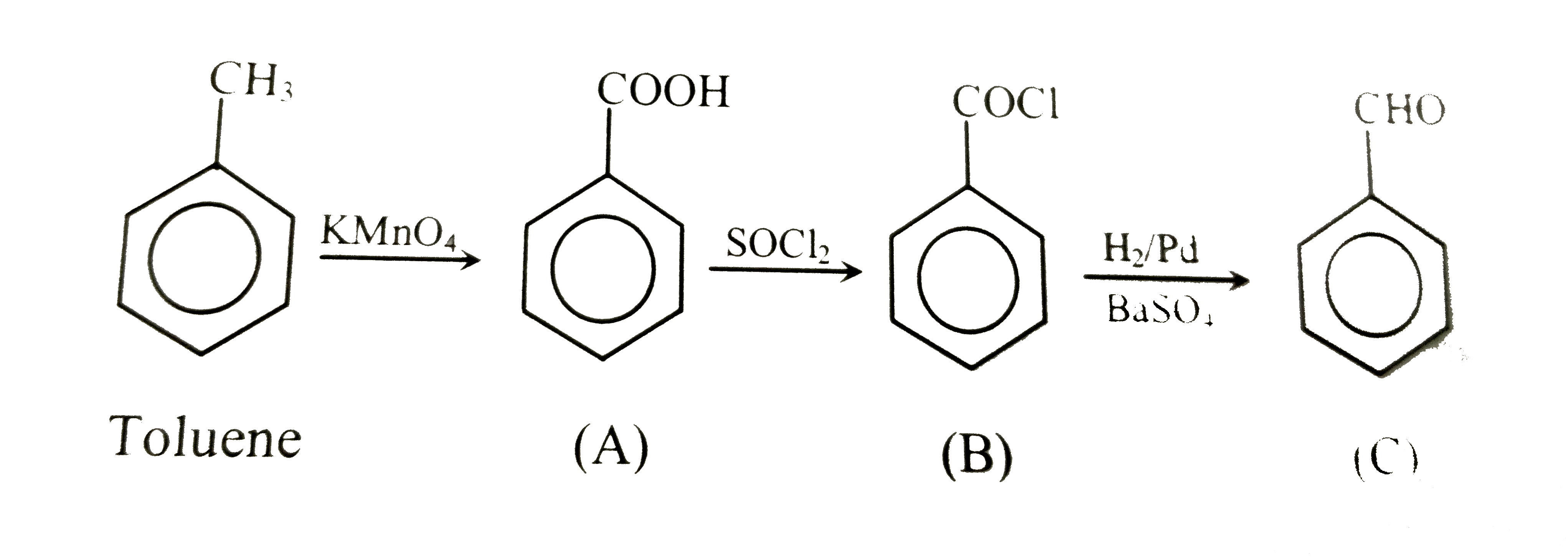
|
|
| 49. |
In the eextraction of copper from its sulphide ore, th metal is finally obtained by the reduction of cuprous oxide with |
|
Answer» Copperf (1) SULPHIDE `(CU_(2) S)` |
|
| 50. |
In the electro refining process, the impure metal is made of |
|
Answer» Anode |
|