Saved Bookmarks
This section includes 7 InterviewSolutions, each offering curated multiple-choice questions to sharpen your Current Affairs knowledge and support exam preparation. Choose a topic below to get started.
| 1. |
In the formation of metal carbonyls, which orbitals are involved in the overlap ? |
|
Answer» Solution :(i) Filled bonding `pi_(2p)` orbital of CO with empty metal d-orbital RESULTING in `SIGMA`-bond between metal atom and carbon atom of CO. (II) Filled metal d-orbital with empty antibonding `pi_(2p)*` orbital of CO resulting in additional `PI`-bond between the metal and same CO MOLECULE (back bonding). |
|
| 2. |
In the electrolytic purification of copper some gold is found in the |
|
Answer» Cathode |
|
| 3. |
In the electrorefining of copper, some gold is deposited as : |
|
Answer» Cathode |
|
| 4. |
In the formation of intersitital compounds by transition metals, identify the correct statements |
|
Answer» Melting points of interstial carbides are more than those of respective pure metals |
|
| 5. |
In the formation of N_2^+ from N_2, the electron is lost from: |
|
Answer» A `SIGMA`- ORBITAL |
|
| 6. |
In the formation of HBr from H_2 & Br_2following mechanism is observed. (A)Br_2hArr2Br. Equilibrium step (B)H_2+Br.toHBr+H. slow step ( C)H.+Br_2toHBr+Br. Fast step Calculate the rate of reaction, if concentration of hydrogen is twice that of bromine and the rate constant is equal to one rutherford.Concentration of bromine is 1M. |
|
Answer» `2xx10^6` DPS RATE =`K[H_2]^1[Br_2]^(1//2)` Rate = `10^6[2]^1[1]^(1//2)=2xx10^6` dps |
|
| 7. |
In the electrolytic process for the extraction of aluminium the electrolyte is : |
|
Answer» `Al (OH)_3` in `NaOH` solution |
|
| 8. |
In the formation of ether, one of the compound is alcohol another is |
| Answer» Answer :B | |
| 9. |
In the electrolytic process for the extraction of aluminium, the electrolyte is : |
|
Answer» `AL(OH)_(3)` in NaOH solution |
|
| 10. |
In the electrolytic method of obtaining aluminium from purified bauxite, cryolite is added to the charge in order to |
|
Answer» minimise the heat LOSS due to radiation (ii) The fusion temperature of pure alumina is about `2000^(@)C` and at this temperature when the electrolysis is carried of FUSED mass, the metal formed EVAPORATES as the boiling point of aluminium is `1800^(@)C`.The above difficulties are overcome by using a mixture of alumina, cryolite and fluorspar. |
|
| 11. |
In the formation of Compounds bromine undergoes sp^(3)d^(2) hybridisation in |
|
Answer» Ground state |
|
| 12. |
In the formation of Al_2O_3 large amount of heat is evolved. This property is used in : |
|
Answer» Deoxidation |
|
| 13. |
In the electrolytic cell , flow of electrons is from |
|
Answer» cathode to ANODE in solution |
|
| 14. |
In the form of dichromate , Cr(VI) is a strong oxidising agent in acidic medium but Mo(VI) in MoO_(3) andW(VI) in WO_(3) are not because "…...............". |
|
Answer» Cr(VI) is more stable than Mo(VI) and W (VI) |
|
| 15. |
In the electrolytic cell, flow of electrons is from |
|
Answer» Cathode to anode in solution |
|
| 16. |
In the electrolytic cell flow of electronsis form |
|
Answer» cathodeto anode in solution |
|
| 17. |
In the electrolytic cell, flow of electrons is from: |
|
Answer» cathode to anode in solution |
|
| 18. |
In the electrolytic cell electrons flow from: |
|
Answer» CATHODE to ANODE in solution. |
|
| 19. |
In the electrolysis of which solution, OH^- ions are discharged in preference to CI^- ions: |
|
Answer» DILUTE NaCI |
|
| 20. |
In the form of dichromate, Cr(VI) is a strong oxidising agent in acidic medium but Mo(VI) in MoO_(3) and W(VI) in WO_(3) are not because - |
|
Answer» Cr(VI) is more stable than Mo(VI) and W(VI). |
|
| 21. |
In the electrolysis of which solution, OH^(-) ion are discharged in preference to Cl^(-) ions? |
|
Answer» Dilute NaCl Anode: `2OH^(-)toH_(2)O+(1)/(2)O_(2)+2e^(-)` Cathode: `2H^(+)+2e^(-)toH_(2)` |
|
| 22. |
In the form of dichromate, Cr(VI) is a strong oxidising agent in acidic medium but Mo(VI) in MoO_(3) and W(VI) and WO_(3) are not because______. (i) Cr (VI) is more stable than Mo(VI) and W (VI).(ii) Mo (Yl) and W(VT) are more stable ll1an Cr(Vl).(ili) Higher oxidation states of heavier members of group-6of transition series are more stable.(iv) Lower oxidation states of heavier members of group-6of transition series are more stable. |
|
Answer» (i) and (II) |
|
| 23. |
In the electrolysis of water, one faraday of electrical energy would evolve |
|
Answer» ONE mole of OXYGEN gas |
|
| 24. |
In the folowing reaction, we start with 2 mol of N_(2) and 5 mol of H_(2) exerting a total pressure of 7 atm, at a given temperature in a closed vessel. When 50 % of N_(2) is converted into NH_(3) N_(2)+ 3H_(2) rarr 2NH_(3) Partial pressure of NH_(3) is: |
|
Answer» 2.8 ATM |
|
| 25. |
In the electrolysis of H_(2)SO_(4), 9.72 litres and 2.35 litres of H_(2) and O_(2) were liberated. Number of equivalent of persulphuric acid (H_(2)S_(2)O_(8)) produced is |
|
Answer» 0.448 `2H_(2)O rarr 2H_(2) + O_(2)` |
|
| 26. |
In the form of dichromate, Cr(VI) is a strong oxidising agent in acidic medium but Mo (VI) in MoO_(3) and W(VI) in WO_(3) are not because…. |
|
Answer» Cr(VI) is more stable than MO(VI) and W(VI) |
|
| 27. |
In the electrolysis of NaCl when Pt electrode is taken then H_(2), is liberated at cathode while with Hg cathode sodium amalgam is formed, this is because: |
|
Answer» Hg is more inert than PT |
|
| 28. |
In the fopllowingreaction, identifythecompound / rteactioncondition represented by A and B PbS overset("Heat in air") to A + PbS overset(B) to Pb + SO_(2) |
|
Answer» Solution :`PbS OVERSET("Heat in air")(to) PbO + PbS` `PbO + PbSoverset("Heat in the OBSENCE of air")(to) Pb + SO_(2)` |
|
| 29. |
In the electrolysisof H_(2)SO_(4) , 0.2 gram of hydrogen is produced, hence the weight of another substance produce is |
|
Answer» 1.6 gram `therefore W_("oxygen") =0.2xx(16)/(2) =1.6` |
|
| 30. |
In the followingreactions (a) 6NH_(3)+3Cl_(2)to6NH_(4)Cl+'x'NH_(3)+3Cl_(2)to'y'+3HCl xand y respectively are : |
|
Answer» `HCL and N_(2)` |
|
| 31. |
In the electrolysis of H_(2)SO_(4) 0.2 gram hydrogen is produced, hence the weight of another substance produced is |
|
Answer» 1.6 gram `H_(2)O HARR H^(+)+OH^(-)` At anode `"" 2OH^(-) to H_(2)O+[O]+2e^(-)` At CATHODE `"" 2H^(+)+2e^(-) to 2[H]` `THEREFORE W+[O]:W+2[H^(+)] therefore 16:2 therefore 8:1` |
|
| 32. |
In the electrolysis of CuSO_(4) , the reaction Cu^(2+) + 2 e^(-) to Cu , takes place at |
|
Answer» anode |
|
| 33. |
In the following which is the strongest acid? |
|
Answer» `CH_3 OH` |
|
| 34. |
In the electrolysis of dilute H_(2)SO_(4) using platinum electrode |
|
Answer» `H_(2)` isliberated at CATHODE |
|
| 35. |
In the following which is not glyceride |
|
Answer» Fats |
|
| 36. |
In the following which is not coloured ? |
|
Answer» `FeCl_(3)` |
|
| 37. |
In the electrolysis of H_(2)O, 11.2 litres of H_(2) was liberated at cathode at NTP. How much O_(2) will be liberated at anode under the same conditions ? |
|
Answer» 11.2 litres |
|
| 38. |
In the electrolysis of CuCl_(2) solution (aq) with Cu electrodes, the weight of cathode increased by 3.2 g. In the anode, |
|
Answer» 0.05 mole of `Cu^(2+)` will go into the solution |
|
| 39. |
In the electrolysis of CuCI_2 solution using Cu electrodes the mass of cathode increases by 3.18 g. What happened at the other electrode: |
|
Answer» `0.05` mble of `CU^(+2)` IONS passed into SOLUTION |
|
| 40. |
In the electrolysis of aqueous solution of CuSO_4 using copper electrodes , the process tha takes place at the anode is |
|
Answer» `CutoCu^(2+)+2e^(-)` (anode) In the electrolysis of aq.. `CuSO_(4)`, as the CURRENT flows, copper from anode dissolves while PURE copper is deposited on cathode. |
|
| 41. |
In the following unbalanced reaction A^(2+)+B^(3+)toA^(4+)+B The total number of e^(-) transferred during reaction is:- |
|
Answer» 2 `3e^(-)+B^(3+)toBxx2` TOTAL no. of `e^(-)` transferred=6 . |
|
| 42. |
In the following, thermosetting polymer is : |
|
Answer» BAKELITE |
|
| 43. |
In the following the number metal sulphides are not dissolve in yellow ammonium polysulphide. Hg^(+2), Pb^(+2), Bi^(+3), Cu^(+2), As^(+3), Sn^(+2) Sb^(+5) |
|
Answer» |
|
| 44. |
In the electrolysis of aqueous sodium chloride solution which of the half-cell reaction will occur at anode ? |
|
Answer» `Na_((aq))^(+)+e^(-) to Na_((S)),E_(cell)^(THETA)=-2.71V` |
|
| 45. |
In the electrolysis of aqueous sodium chloride solution which of the half cell reaction will occur at anode? |
|
Answer» `Na^(+)(aq)+e^(-)toNa(s),E_(Cell)^(Theta)=-2.71V` |
|
| 46. |
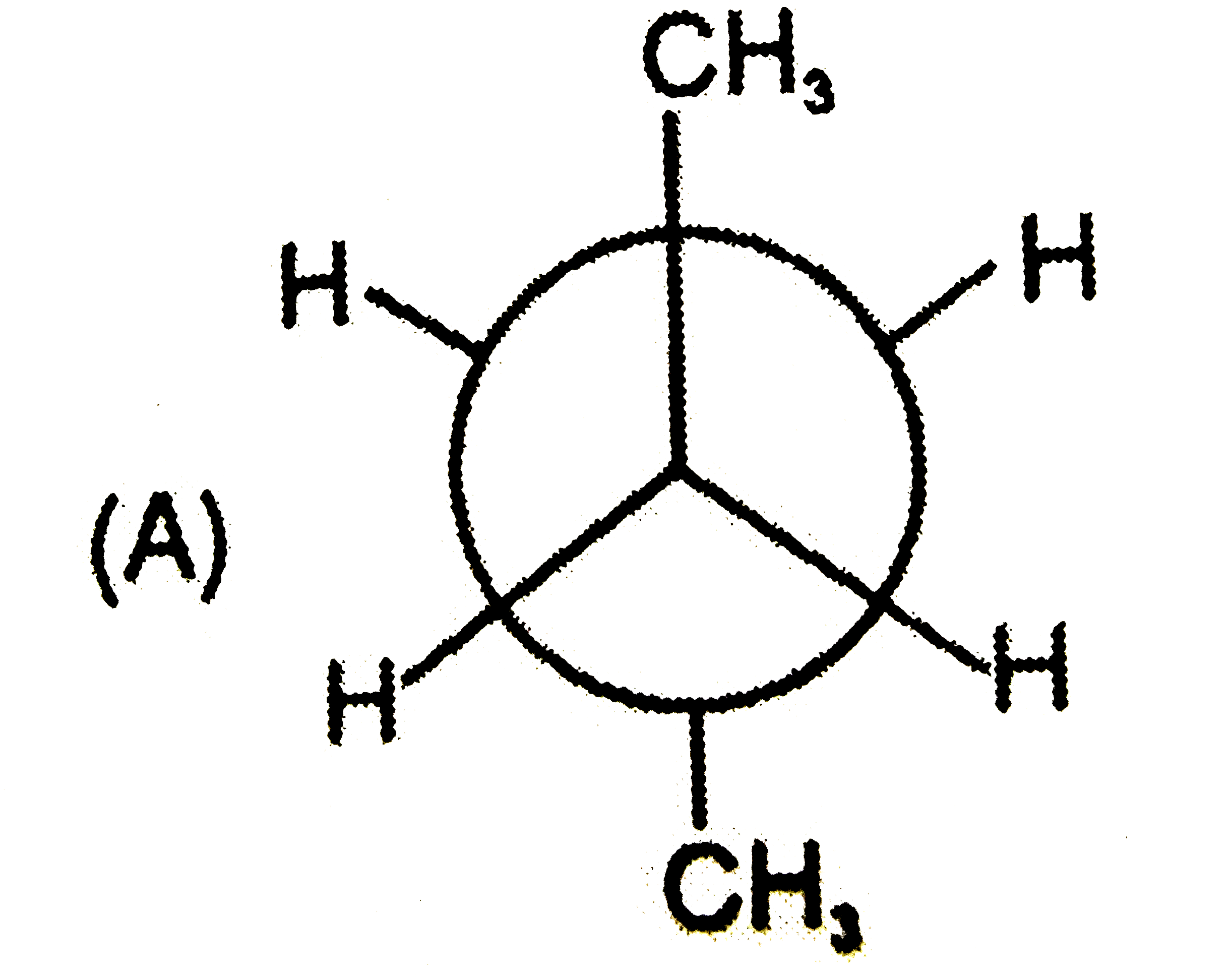
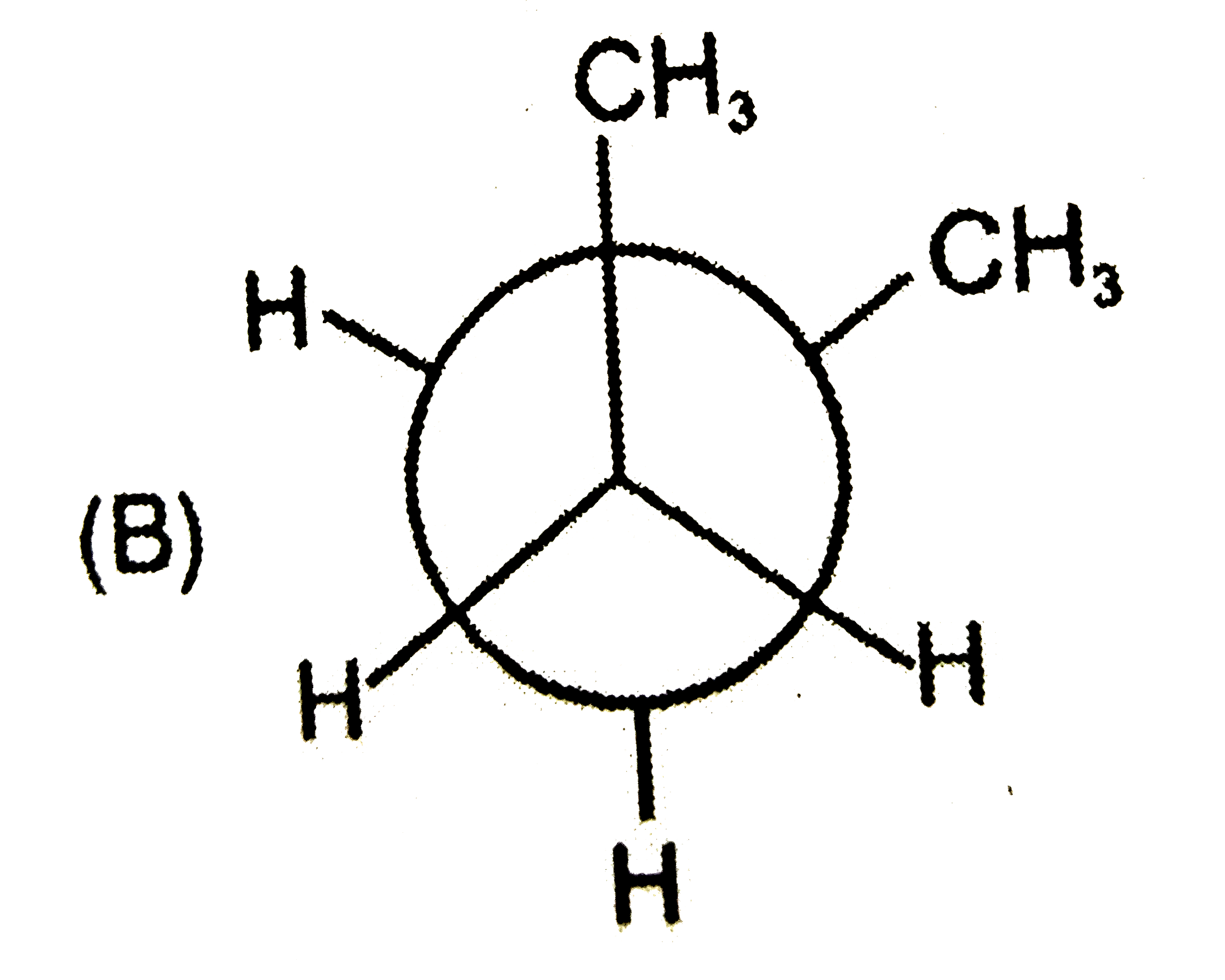
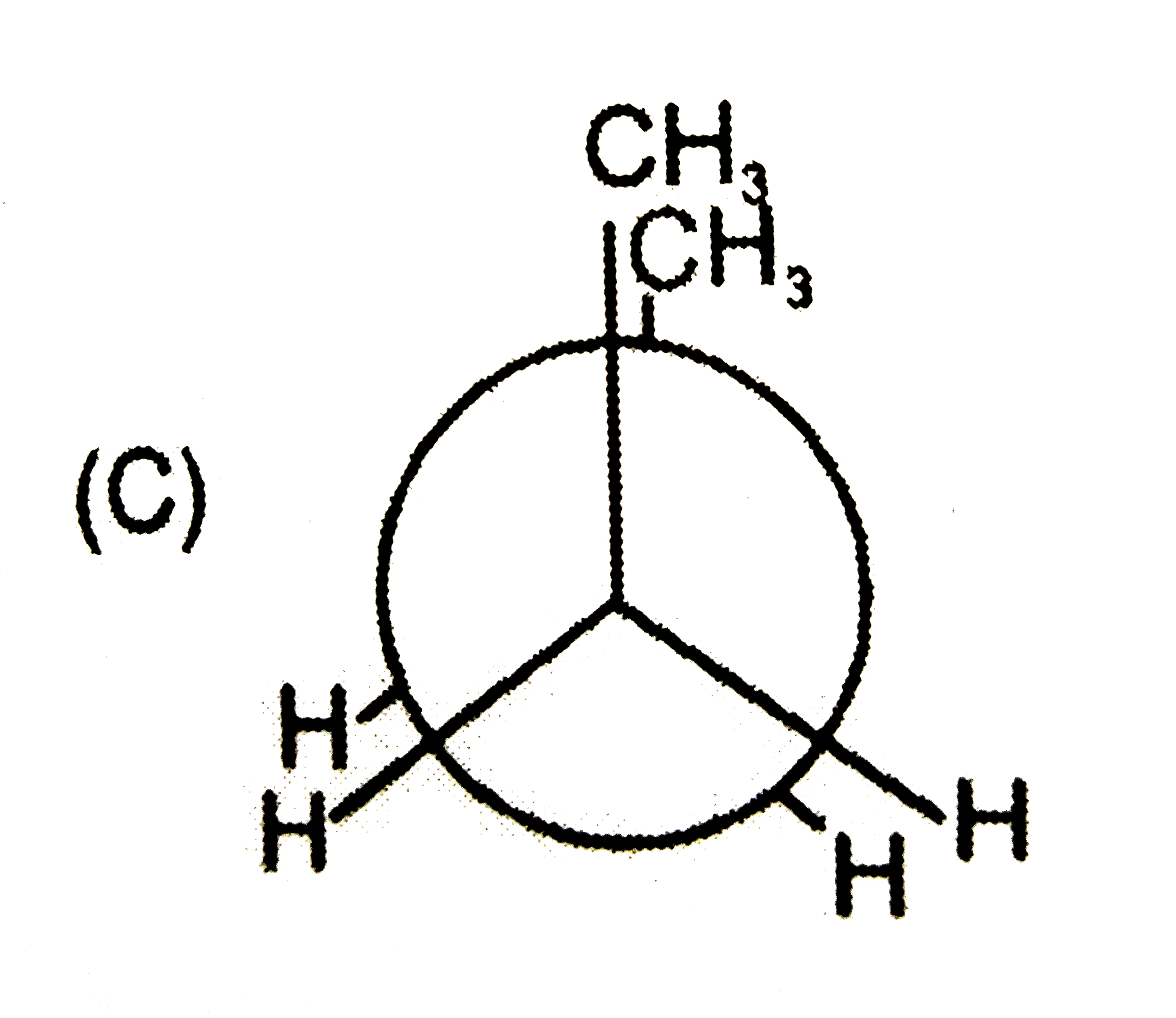
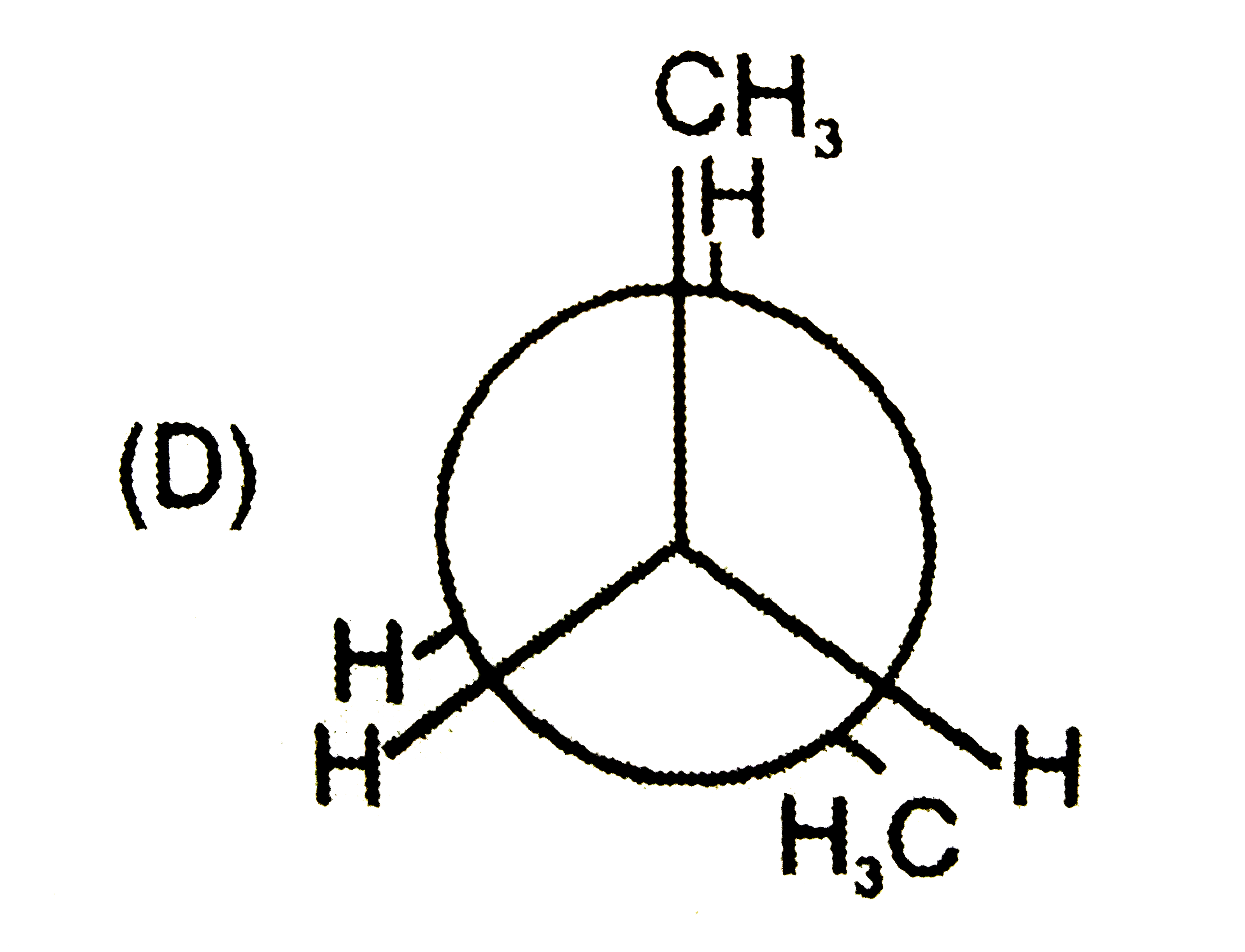
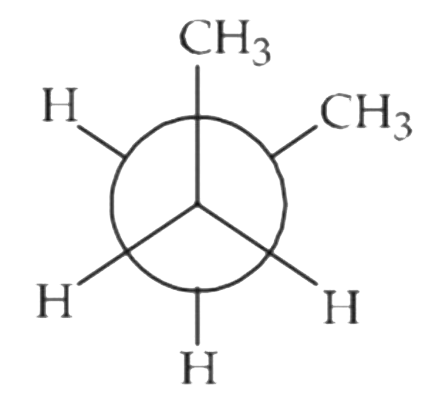
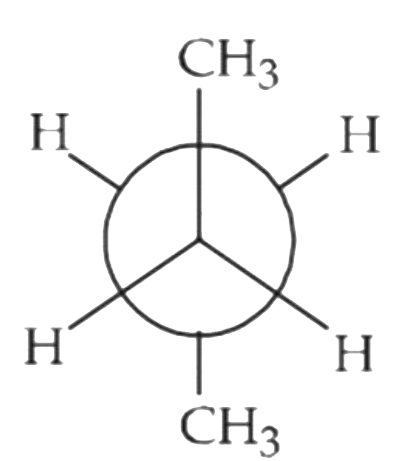
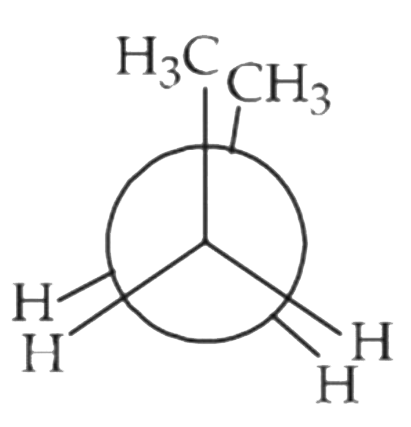
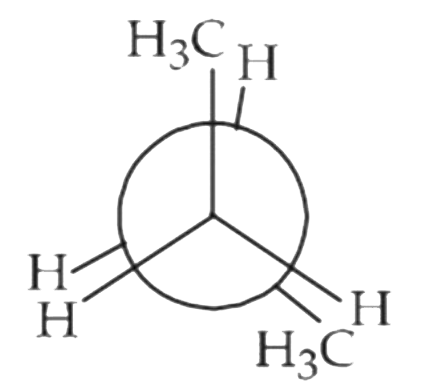
In the following the most stable conformation of n-butane is : |
|
Answer»
|
|
| 48. |
In the electrolysis of aqueous sodium chloride solution, which of the half cell reactions will occur at anode? |
|
Answer» `CI_(aq) to (1)/(2)CI_(2)+ e^(-), E_("cell")^(0)= 1.36 "VOLTS"` `Cl_(aq) to (1)/(2) Cl_(2(g))+e^(-)` , `E_("cell")^(o)=1.36 V` ...(i) `2H_(2)O_(l) to O_(2(g))+4H_(aq)^(+)+4e^(-)`, `E_("cell")^(o)=1.23 V` ...(II) The reaction at anode with lower value of `E^(o)` is preferred and therefore, water should get oxidised in preference to `Cl_(aq)^(-)`. However on account of overpotential of oxygen, reaction (i) is preferred. Thus, Cathode: `H_(2)O_(l)+e^(-) to (1)/(2) H_(2(g))+OH_(aq)^(-)` Anode: `Cl_(aq)^(-) TI (1)/(2)Cl_(2(g))+e^(-)` |
|
| 49. |
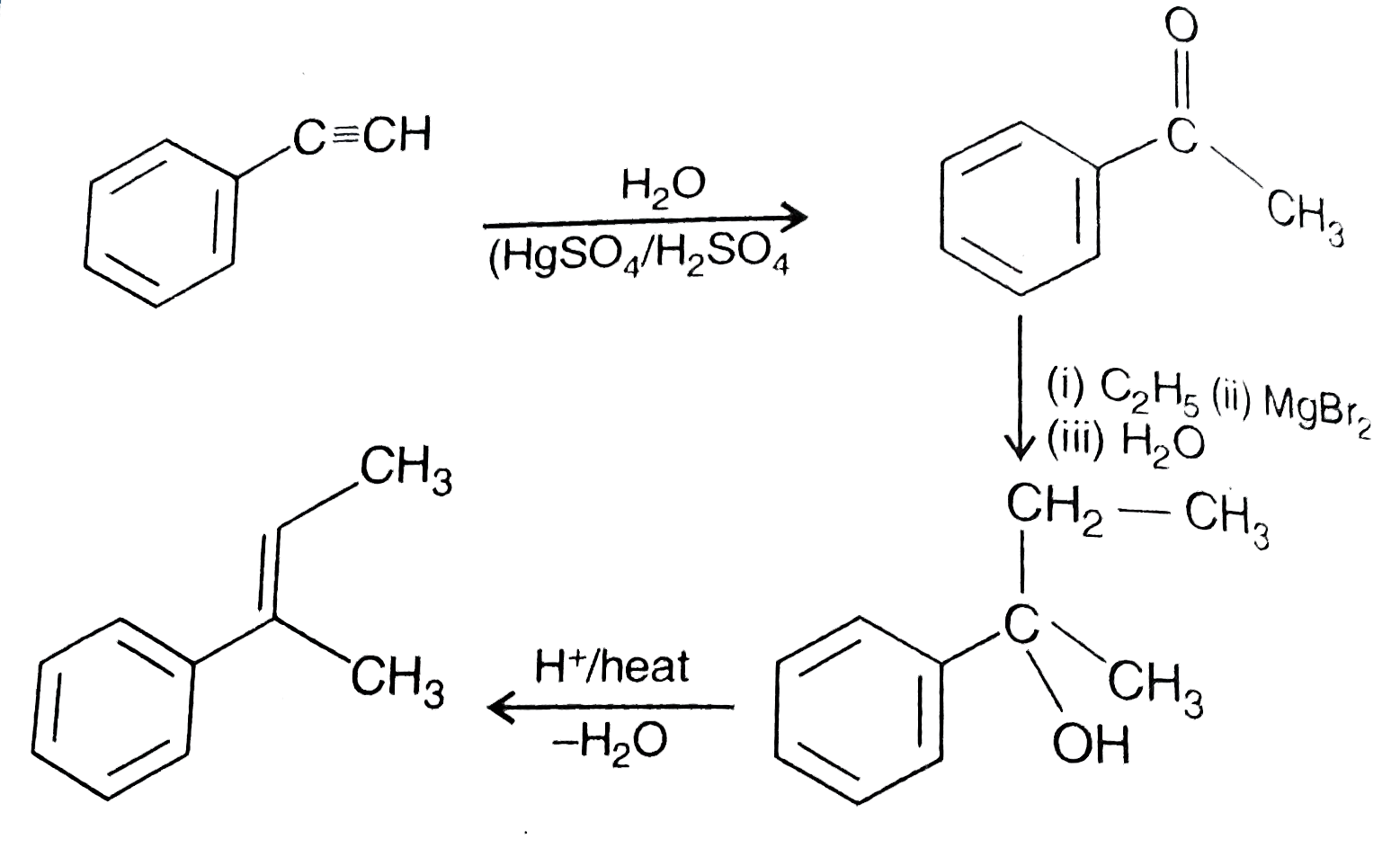
In the following The major compound Y is |
|
Answer»
|
|