Saved Bookmarks
This section includes 7 InterviewSolutions, each offering curated multiple-choice questions to sharpen your Current Affairs knowledge and support exam preparation. Choose a topic below to get started.
| 1. |
Find the incorrect pair? |
|
Answer» `HNO_3,H_2SO_4` |
|
| 2. |
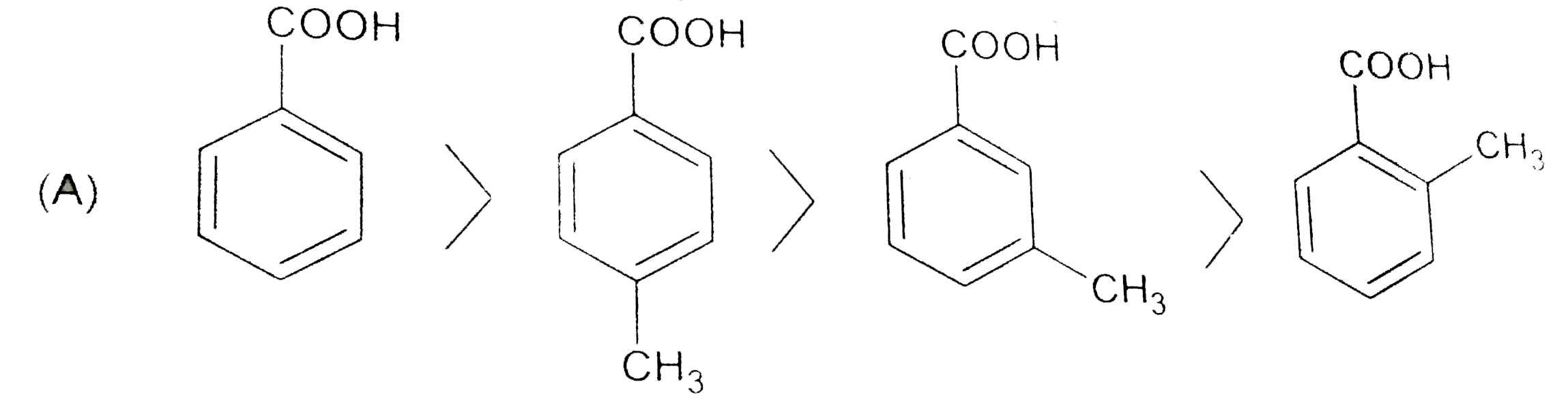
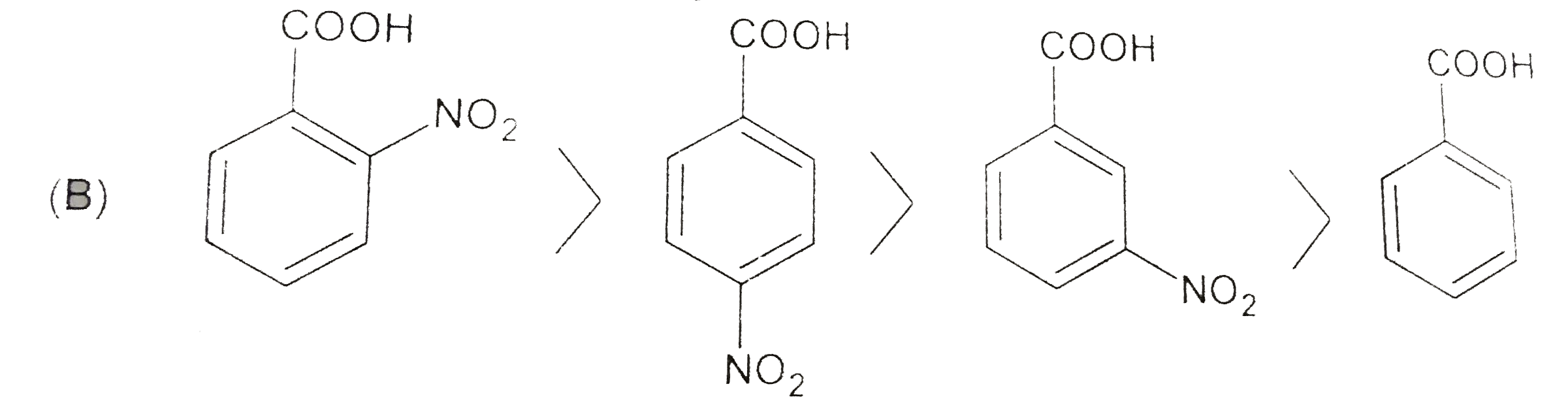
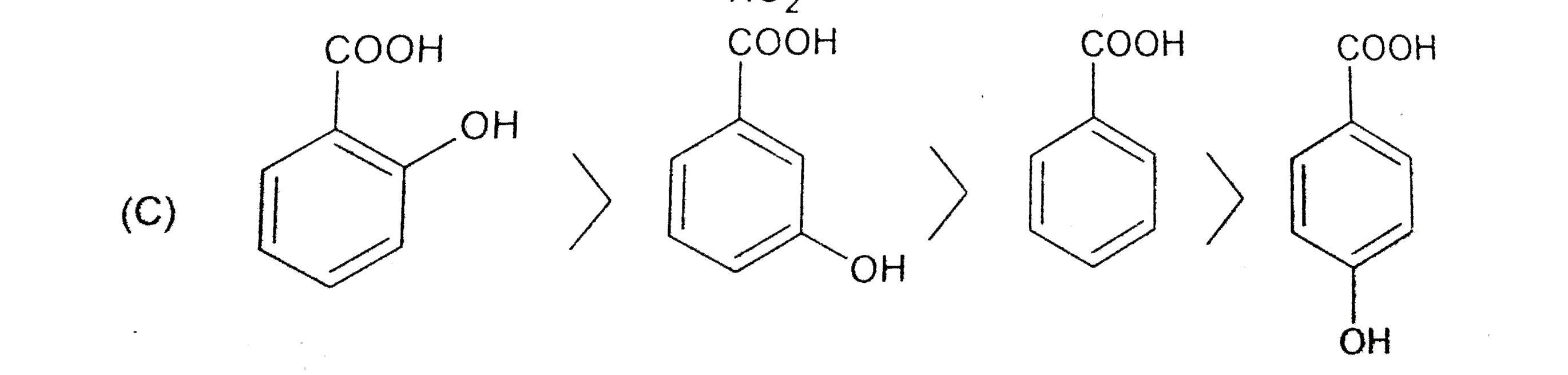
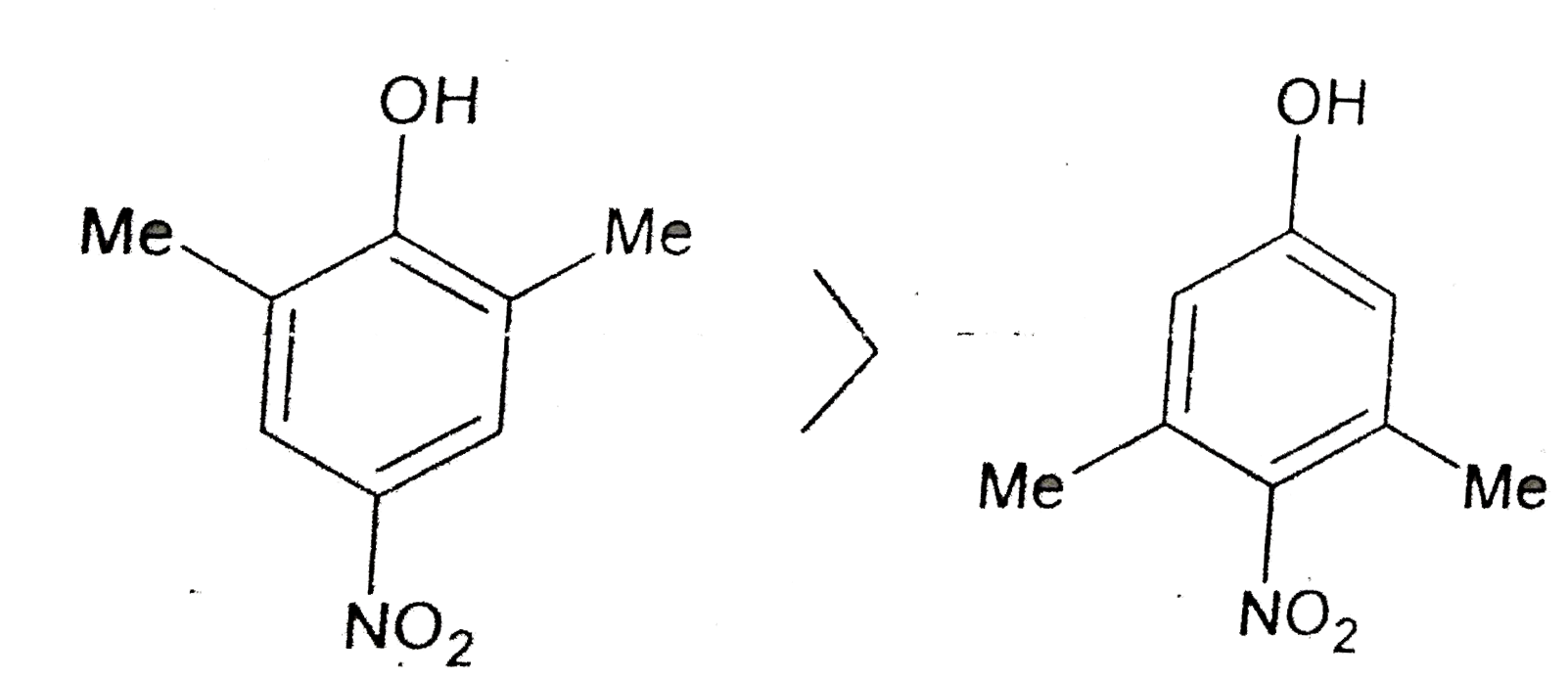
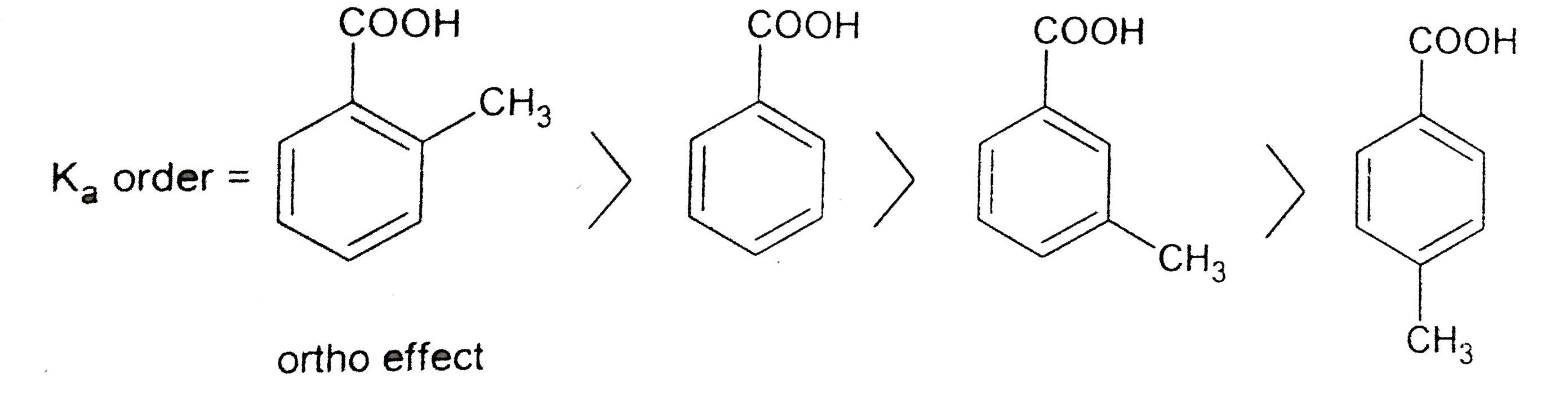
find the incorrect order of acidic strength of following. |
|
Answer»
|
|
| 3. |
Find the identify of compound [N] in the following reaction sequences: H=C-Na+CH_(3)CH_(2)CH_(2)CH_(2)Br to [A], underset(1"mole")[A]underset(1"mole")((Cl_(2)) to [B] |
|
Answer» cis-1,2-dichlorobutane |
|
| 4. |
Find the incorrect match. |
|
Answer» FINE dust of ALUMINIUM - Paints and Lacquers |
|
| 5. |
Find the incorrect match |
|
Answer» `Al_(2)Cl_(6)` : 3c-4e BOND is PRESENT |
|
| 6. |
Find the incorrect match :- |
|
Answer» `Al_(2)Cl_(6)` : 3C-4e BOND is PRESENT |
|
| 7. |
Find the heat change in the reaction : NH_(3)(g)+HCl(g)rarr NH_(4)Cl(s) from the following data {:(NH_(3)(g)+aq rarr NH_(3)(aq)",",Delta H=-8.4"K. Cal."),(HCl(g)+aq rarr HCl (aq)",",Delta H=-17.3"K. Cal."),(NH_(3)(aq)+HCl(aq)rarrNH_(4)Cl(aq)",",Delta H=-12.5 "K. Cals."),(NH_(4)Cl(s)+aq rarr NH_(4)Cl(aq)",",Delta H=+3.9 "K.Cal."):} |
|
Answer» `-42.1` DESIRED EQUATION= EQ(i) + eq(ii) + eq(iii) - eq(iv) `Delta H=(-8.4)+(-17.3)+(-12.5)-(3.9)` `Delta H =-42.1 KCal` |
|
| 8. |
Find the final product 'E' CH_(2)OH-CH=CH_(2)overset((i)OsO_(4))underset((ii)NaSO_(3)H)rarr(A)overset(KHSO_(4))rarr (B) overset(Zn-Hg//"conc. HCl")rarr (C ) overset(NBS//hv)underset(C Cl_(4))rarr (D ) overset((CH_(3))_(2)"CuLi")rarr (E ) |
|
Answer» But - 2 - ene |
|
| 9. |
The formal charges on the three oxygen atoms in O_(3) molecule are |
Answer»  CENTRAL ATOM MARKED as `1=6-2-3=+1 THEREFORE` FORMAL charge = 1 |
|
| 10. |
Find the equilibrium constant for the reaction, In^(2+)+Cu^(2+) rarr In^(3+)+Cu^(+), at 298 K Given: E_(Cu^(2+)//Cu^(+))^(@) = 0.15 V , E_(In^(3+)//In^(+))^(@) = -0.42 V and E_(In^(2+)//In^(+))^(@) = -0.40V |
|
Answer» Solution :`CU^(2+) + e RARR Cu^(+) E_(1)^(@) = 0.15 V`...(1) `In^(3+) + 2e rarr In^(+) E_(2)^(@) = -0.42 V` ...(2) `In^(2+) + 2e rarr In^(+) E_(3)^(@) = -0.40 V` ...(3) By eqs. `(2)` and (3), a third half cell reaction can be GIVEN as `In^(3) ++ e rarr In^(2+)` `1 xx F xx E_(4)^(@) = E_(2)^(@) xx 2 F - e_(3)^(@) xx 1 xx F` or `E_(4)^(@) = 2 xx (-0.42) - (-0.40) xx 1 = -0.44 V` For two half reactions, the NET redox change as asked is `Cu^(2+) + In^(+) rarr Cu^(+) + In^(3+)` `E_(cell)^(@) = E_(1_(RP_(Cu^(2+)//Cu^(+)))^(@)) + E_(4OP_(IN^(2+)//IN^(3+)))^(@)` `[E_(OP_(In^(2+)//In^(3+))) = -E_(RP)^(@) = + 0.44]` `= 0.15 + 0.44 = 0.59V` Also, `E_(cell)^(@) = (0.059)/(1)logK_(c)` `0.59 = (0.059)/(1)logK_(c)` `:. K_(c) = 10^(10)` |
|
| 11. |
find the entropy change when 2 moles of ideal gas at 27 ^(@)C temperature is expanded reversiby from 2 Lto 20 L . |
| Answer» Solution :`DeltaS=2.303nR LOG((V_(2))/V_(1))= 2.303xx2xx2xxlog(20/2)=9.2` | |
| 12. |
Find the enthalpy of S-S bond from the following data. {:((i),C_(2)H_(5)-S-C_(2)H_(5) (g),Delta_(f)H^(@)=-147.2" kJ/mol"),((ii),C_(2)H_(5)-S-S-C_(2)H_(5)(g),Delta_(f)H^(@)=-201.9" kJ/mol"),((iii),S(g),Delta_(f)H^(@)=222.8" kJ/mol"):} |
|
Answer» `Delta H = B.E.` of `S - S` BOND `= - 201.9 - [222.8 - 147.2] = - 277.5` |
|
| 13. |
Find the enthalpy of S – S bond from thedata. S (g) = Delta H_(f)^(@) = 222.8 kJ /mol |
| Answer» SOLUTION :227.5 kJ/mol | |
| 14. |
Find the enthalpy of S – S bond from thedata. C_(2) H_(5)- S - S - C_(2) H_(5) (g) Delta H_(f)^(@) = -201.9 kJ/mol |
| Answer» SOLUTION :227.5 kJ/mol | |
| 15. |
Find the enthalpy of dissociation of H_2C_2O_4 from the given data: Enthalpy of neutralisation of strong acid and strong base is -13.7 kcal mol^(-1) and that of oxalic acid by a strong base is -25 kcal mol^(-1) |
|
Answer» `-11.3 KCAL MOL^(-1)` |
|
| 16. |
Find the EAN value of cetral atom of ferrocene [Fe(pi-C_(5)H_(5))_(2)] |
|
Answer» |
|
| 17. |
Find the e.m.f. of the following cell at 18^(@)C taking the degree of dissocution of 0.2 N AgNO_(3) and 0.05 AgNO_(3) solution as 0.75 and 0.95 respectively. Ag|0.2N AgNO_(3)||0.05 AgNO_(3)|Ag |
|
Answer» |
|
| 18. |
Find the end product in the given reaction. CH_3CONH_3overset(Br_2KOH)rarrXunderset(Delta)(CHCl_3//KOH) " Y"overset(LiAlH_4)rarrZ |
|
Answer» `CH_3CH_2NH_2` |
|
| 19. |
Find the empirical formula of chromium oxide containing 68.4% of chromium. (Cr=52, O=16) |
|
Answer» Solution :Let the weight of chromium oxide be 100g. `THEREFORE` Weight of chromium= 68.4gand weight of oxygen =31.6g `{:(therefore "moles of chromium"=(68.4)/(52)=1.32),("and moles of oxygen"=(31.6)/(16)=1.98):}}` Relative NUMBER of moles of Cr and O atoms `= ("moles of Cr")/("moles of O")= (1.32)/(1.98)= (132)/(198) = (2 xx 66)/(3 xx 66)= (2)/(3)` (by inspection only). The empirical formula is `Cr_(2)O_(3)`. |
|
| 20. |
Find the distance between two Po atoms that lie along a body diagonal, given that a = 0.336 nm. |
|
Answer» Solution :The coordinates of the two atoms are (0, 0, 0) and (1, 1, 1) respectively. THUS, `L = 0.336 [(1-0)^(2) + (1-0)^(2) + (1-0)^(2)]^(1/2)`……….(Eqn.2) =0.582 NM |
|
| 21. |
Find the distance between the body-centred atom and one corner atom in sodium, a = 0.424 nm. |
|
Answer» Solution :The atom at the centre of the cube is SUPPOSED to touch the two nearest corner atoms. The longest diagonal at which all these three atoms LIE will be of LENGTH 4r.`therefore` distance between the centre atom and the corner atom=2r `=2 xx (sqrt(3)a)/4 = (2 xx sqrt(3) xx 0.424)/4 NM = 0.367 nm` |
|
| 22. |
Find the difference in the EAN value, if the NO ligand is considered as netural and if NO ligand is considered as positive ligand in [Fe(H_(2)O)_(5)NO]SO_(4) complex |
|
Answer» If NO is POSITIVE then oxidation state of Fe will be +1 So EAN VALUE will be same. |
|
| 23. |
Find the difference in EAN of the complexes : [Ti(sigma-C_(5)H_(5))_(2)(pi-C_(5)H_(5))_(2)]" and "[Cr(C_(6)H_(6))_(2)] |
|
Answer» 2 `=22-4+2xx2+6xx2=34]` ENA`implies [Cr(C_(6)H_(6))_(2)]=24+6xx2=36` |
|
| 24. |
Find the difference in the EAN of the complexes [Fe(CN)_(6)]^(3-)" and "[CuCl_(2)]^(-) |
|
Answer» |
|
| 25. |
Find the degree of dissociation of HF in 1 M aqueous solution. The value of K for the ionic equilibrium HF=H^(+)+F^(-) is 7.2xx10^(-4). |
|
Answer» Solution :HF dissociates in water to form `H^(+)` and `F^(-)` ions. On reaching the equilibrium we have `HF HARR H^(+)+F^(-)` Thus one mole of HF taken initially dissociates to yield 1 mole of `H^(+)` and 1 mole of `F^(-)`. If x be the degree of DISSOCIATION, the concentration TERMS at equilibrium are : `[HF]=(1-x)"mol/L"` `[F^(-)]=xmol//L` `[H^(+)]=x mol//L` Substituting these values in the equilibrium expression, we have `K=7.2xx10^(-4)=([H^(+)][F^(-)])/([HF])=((x)/(x))/((1-x))` If x is very small COMPARED to 1, we can write : `7.2xx10^(-4)=(x^(2))/(1.00)` `thereforex=(7.2xx10^(-4))^(1//2)` Thus the degree of dissociation of HF in 1 M solution is `2.7xx10^(-2)` |
|
| 26. |
Find the critical constant ( P_(c ) , V_(c )and T_(c )) in terms of A and B, also find compressibility factor ( z) for the following equation of state. PV= RT-( A)/( V ) + ( 2B) /( V^(2)) where && and B are constant, P =pressure and V=molar volume. |
|
Answer» |
|
| 27. |
Find the de Broglie wavelength of the electron in the first orbit. |
| Answer» SOLUTION :`3.3 XX 10^(-10) m` | |
| 28. |
Find the correct option in which both ligands form same number of rings with central metal ion: |
|
Answer» `Ox^(2),Cl^(-)` |
|
| 29. |
Find the composition of an acidicbuffer mixture made up of HAAND naA of total molarity 0.29 having ph 4.4 and K_a = 1.8xx 10^(-5) in terms of concentration of salt and acid respectively: |
|
Answer» 0.09 M and 0.20 M |
|
| 30. |
Find the correct match out of following : |
|
Answer» `[Co(NH_(3))_(4)(H_(2)O)Cl]Cl_(2)=" Tetraammineaquachloridocobalt(III) chloride "` |
|
| 31. |
Find the charge of 48 g of Mg^(2+) ions in coulombs |
|
Answer» `2.4 XX 10^(23)C` |
|
| 32. |
Find the change of EAN values when the complex (A) is changing into (B) {:(Na_(2)[Fe(CN)_(5)NO]+Na_(2)S to Na_(4)[Fe(CN)_(5)NOS]),(""(A)"" (B)):} |
|
Answer» |
|
| 34. |
Find the charge in coulombs on 1 g-ion of N^(3-) |
|
Answer» SOLUTION :CHARGE on one ion of `N^(3-)=3xx1.6xx10^(-19)`coulombs One g-ion`=6.02xx10^(23)`ions `therefore`charge on 1 g-ion of `N^(3-)=3xx1.6xx10^(-19)xx6.02xx10^(23)` `=2.89xx10^(5)`coulombs |
|
| 35. |
Find the charge in coulombs required to convert 0.2 mole VO_(3)^(2-) into VO_(4)^(3-) |
|
Answer» `1.93 xx 10^(4)` `= 19300 = 1.93 xx 10^(4)` coulombs . |
|
| 36. |
Find the bond enthalpy (in kJ/mol) of one "three centre two electron bond" in B_(2)H_(6) {B-H-B rarr 2B(g)+H(g)} from the given data. {:(DeltaH_(f)^(@) [BH_(3)(g)]=100" kJ/mole",,DeltaH_(f)^(@) [B_(2)H_(6)(g)]=36" kJ/mole"),(DeltaH_("atm")[B(s)]=565" kJ/mole",,DeltaH_("atm")=[H_(2)(g)]=218" kJ/mole"):} |
Answer» SOLUTION :
|
|
| 37. |
Find the change in magnetic moment when [Ni(H_(2)O)_(6)]^(2+) is converted into [Ni(NH_(3))_(6)]^(2+) |
|
Answer» |
|
| 38. |
Find the change in oxidation numbers in the following conversion : Cr in K_(2)CrO_(4) rarr K_(2)Cr_(2)O_(7) |
|
Answer» |
|
| 39. |
Find the bond energy of S-S bond from the following data: {:(C_(2)H_(5)-S-C_(2)H_(5)(g),,,,Delta_(f)H^(@)=-147KJmol^(-1)),(C_(2)H_(5)-S-S-C_(2)H_(5)(g),,,,Delta_(f)H^(@)=-201KJmol^(-1)),(S(g),,,,Delta_(f)H^(@)=222 KJ mol^(-1)):} |
|
Answer» Solution :Given that (i) `4C(s)+5H_(2)(g)+S(s)rarrC_(2)H_(5)-S-C_(2)H_(5)(g)""Delta_(F)H^(@)= -147KJ mol^(-1)` (ii) `4C(s)+5H_(2)(g)+2S(s)rarrC_(2)H_(5)-S-S-C_(2)H_(5)(g)""Delta_(r )H^(@)-201 KJ mol^(-1)` Substracting Eq.(i) from Eq.(ii), we get `C_(2)H_(5)-S-C_(2)H_(5)(g)+S(s)rarrC_(2)H_(5)-S-S-C_(2)H_(5)(g)"" Delta_(r )H^(@)=-54KJmol^(-1)` ADDING to this, the following equation `S(g)rarrS(s)""Delta_(r )H^(@)=-222 KJ mol^(-1)` we get `C_(2)H_(5)-S-C_(2)H_(5)(g)+S(g)rarrC_(2)H_(5)-S-S-C_(2)H_(5)(g)""Delta_(r )H^(@)= -276 KJ mol^(-1)` In the least equation `276 KJ` of heat evolved because of the `S-S` bond formation. Hence, the bond enthalpy of `S-S` is `276 KJ mol^(-1)` Method-2 Diagrammatically, we may represent the above calculation as follows: According to Hess's LAW `Delta_(r )H^(@)=` "Enthalpy INVOLVED in bond breaking `Delta_(vap)H^(@)(s)`-Enthalpy involved in bond making `Delta_(r )H^(@)=(2DeltaH_(C-c)+10DeltaH_(C-H)+2DeltaH_(c-s)+Delta_(vap)H(S)]+(-2DeltaH_(c-c)-10DeltaH_(C-H)-2DeltaH_(c-s)-DeltaH_(s-s)]` `Delta_(vap)H^(@)(S)-DeltaH_(s-s)` or `DeltaH_(s-s)=Delta_(vap)H^(@)(S)-DeltaH^(@)` `=Delta_(vap)H^(@)(S)-[Delta_(r )H^(@)(C_(2)H_(5)-S-S-C_(2)H_(5)]=Delta_(f)H^(@)(C_(2)H_(5)-S-C_(2)H_(5))]` `=[222-{-201-(-174)}]KJmol^(-1)=276KJ mol^(-1)` |
|
| 40. |
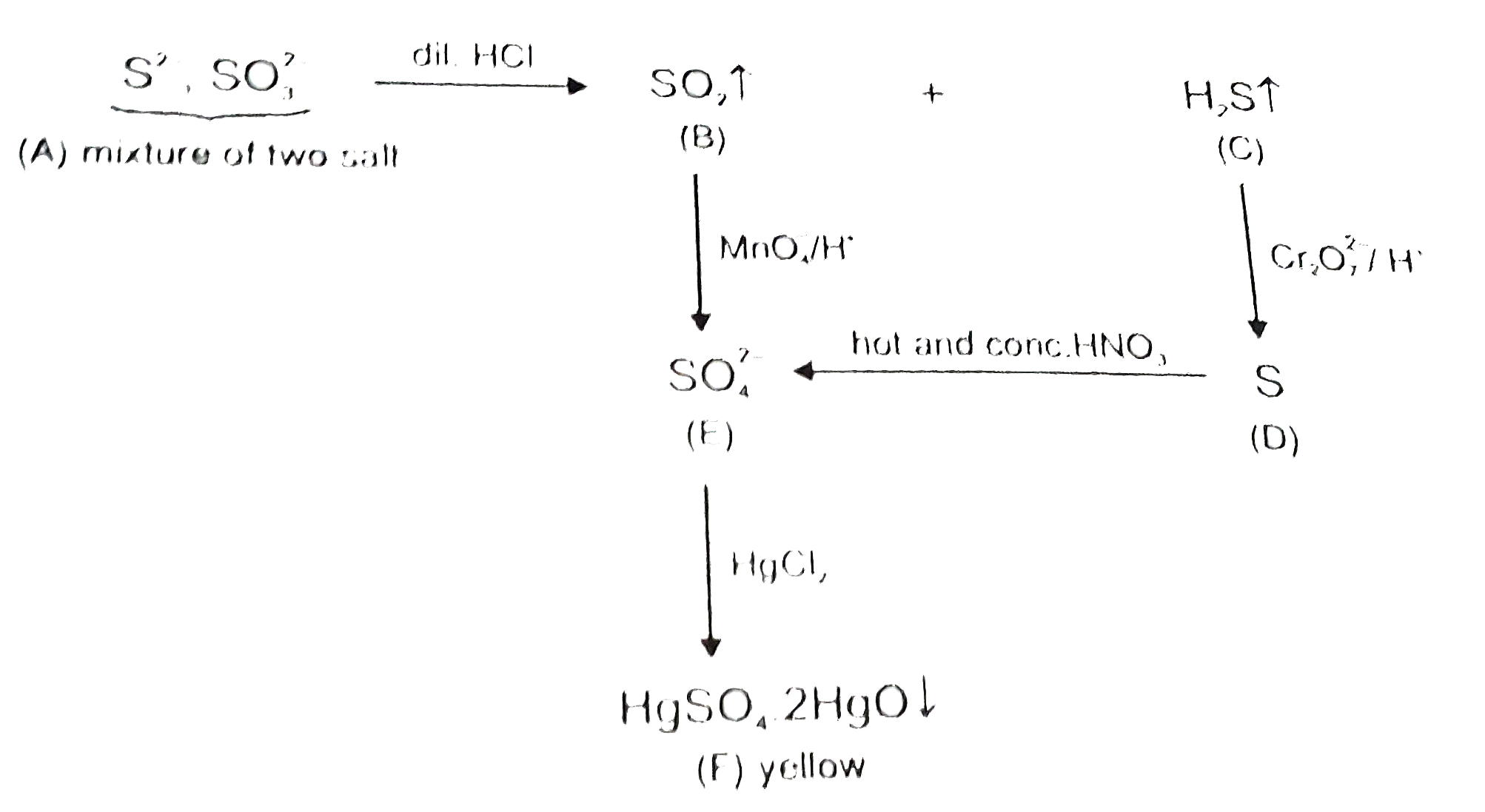
Find the anion (s) |
|
Answer» `SO_(3)^(2-)` 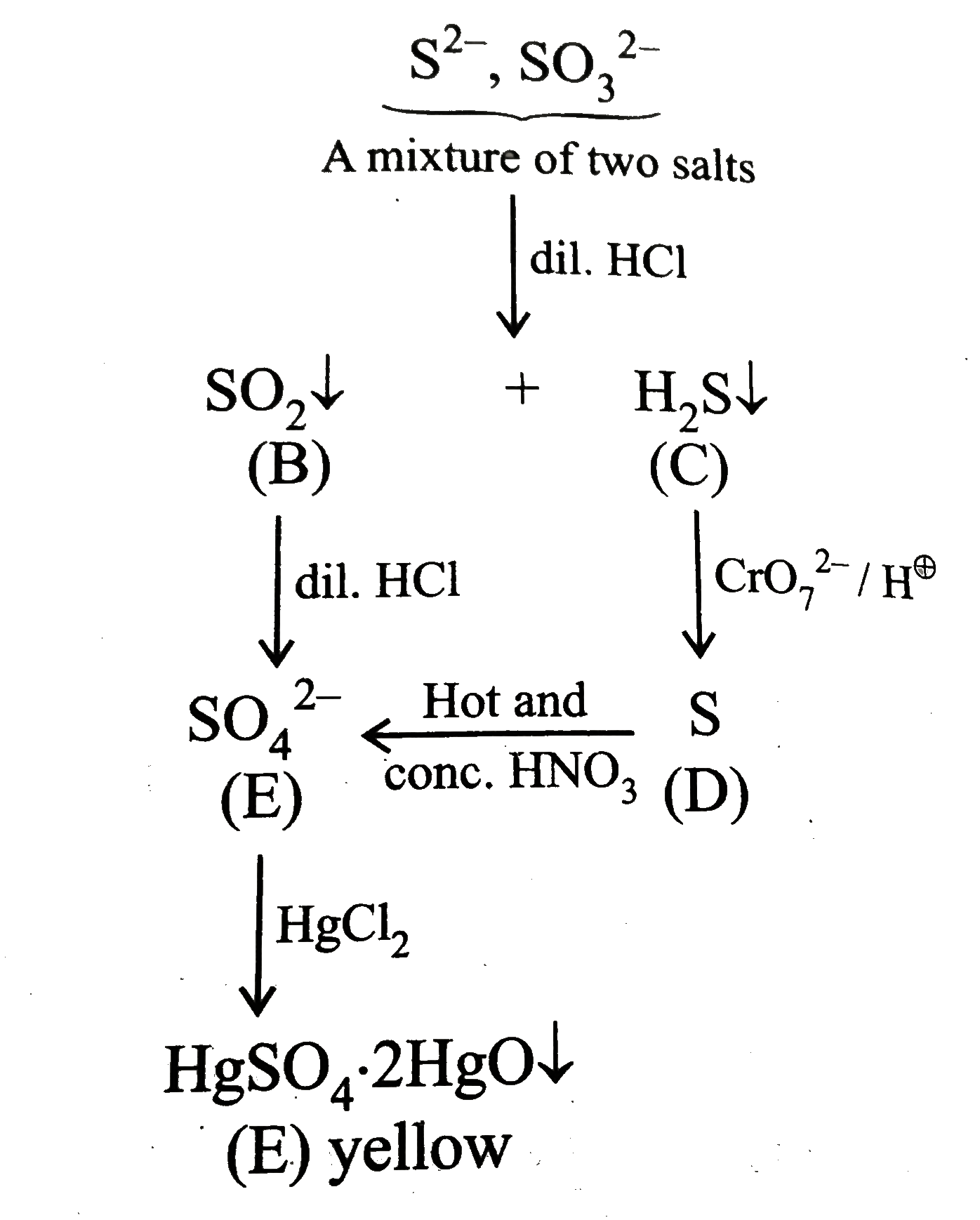
|
|
| 42. |
Find the amount of time expressed in units of t_(1//2)at which A//A_0= 0.125. |
|
Answer» SOLUTION :`N = 2^(-n) N_0 , n`= no. of `t_(1//2)` 3 |
|
| 43. |
Find the age of an ancient Egyptian wooden article (in years) from the given information. (i) Activity of 1g of carbon obtained from ancient wooden article =7 counts/min/g (ii) Activity of 1 g carbon obtained from fresh wooden sample =15.4 counts per min/g (iii) Precentage increases in level of C^(14) due to nuclear explosions in past 100 years is 10% (iv) t_(1//2) of ._(6)^(14)C=5770 years |
|
Answer» `5.770xx10^(3)` |
|
| 44. |
Find sum of stereoisomer of the following compound. |
|
Answer» (B) `2^(5) rArr32` (c ) `a=2^(n-1)=2^(8-1)=2^(7)=128 , m=2^((n//2-1))=2^((8//2-1))=2^((4-1))=2^(3)=8` (d) `2^(9)=512` Summing up all stereoisomer: `underset((a))32+underset((b))32+(128+8)+underset((d))512=712` |
|
| 45. |
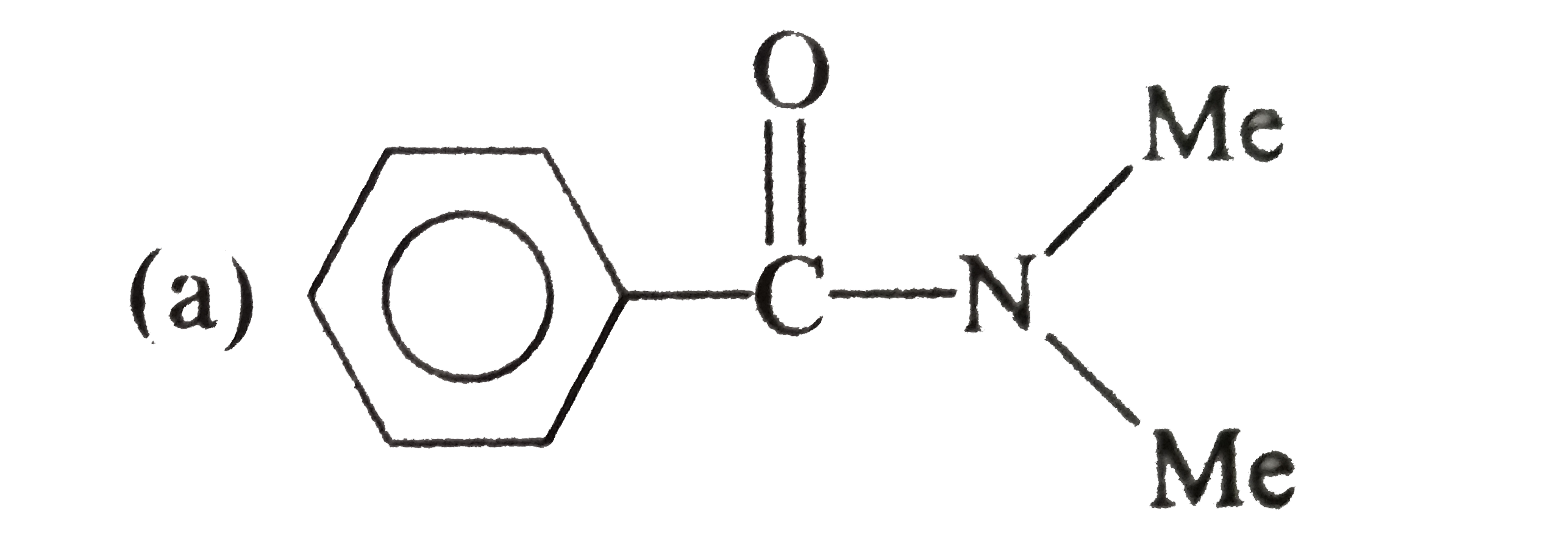
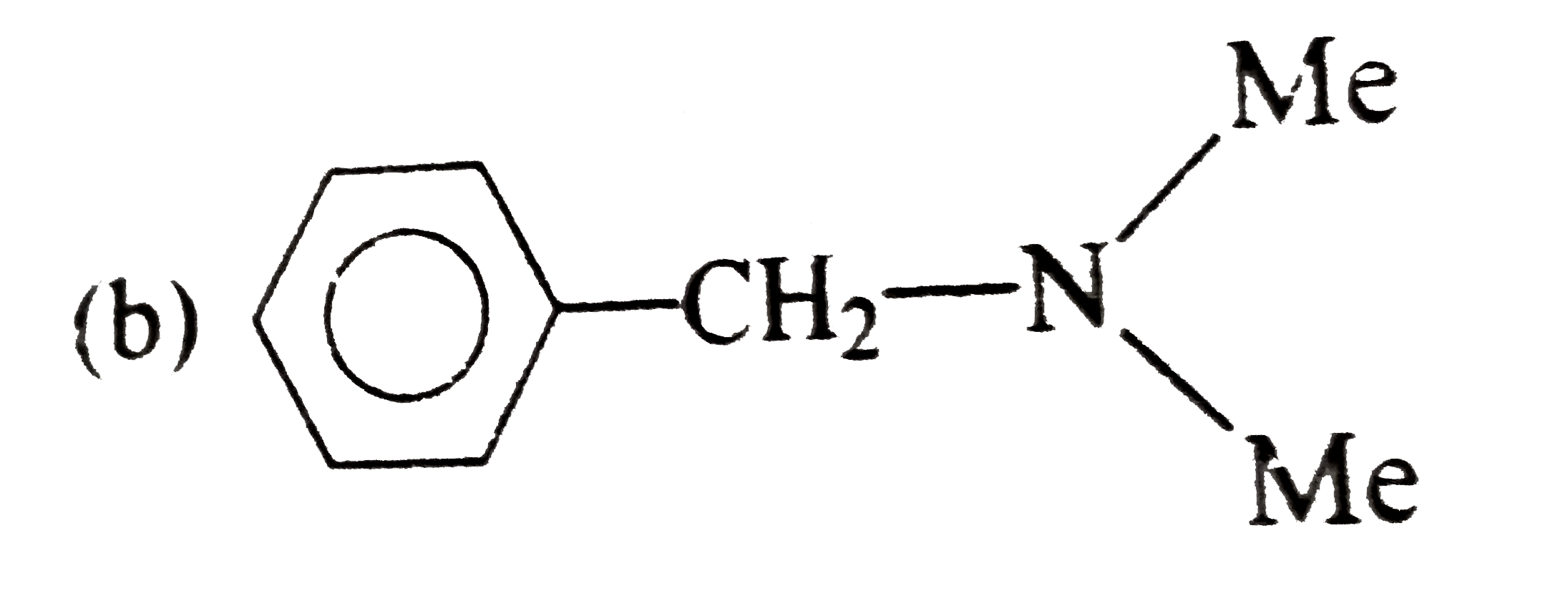
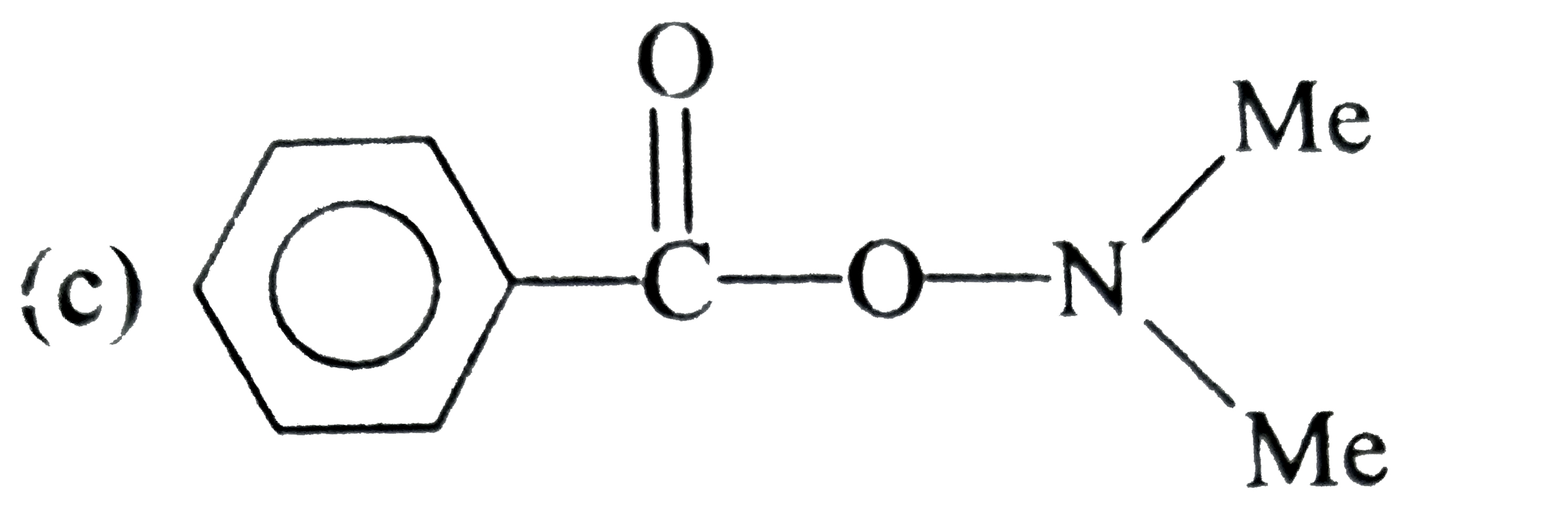
Find structure of compound B: |
|
Answer»
|
|
| 46. |
Find plane of symmerty, centre of symmerty and axis of symmetry (if possible) in the following molecules. |
|
Answer» (III) POS, AOS present and COS absent.(iv) POS, COS present and AOS present. (v) POS present and COS, AOS absent.(vi) POS, COS and AOS absent. Compound `(##RES_CHM_SIM_E01_014_A01##)` has a single chiral CENTRE which has no plane of symmetry. |
|
| 48. |
Find pK if K is the overall complex dissociation equilibrium constant for [Cu(NH_(3))_(4)]^(2+) ion, given that beta_(4) for this complex is 2.0xx10^(13) : |
|
Answer» 13.3 `pk=-log K=13+log 2=13.3` |
|
| 49. |
Find pH of solution prepared by mixing 100ml, 0.1M Na_(3),PO_(4), and 200m/, 0.1M HCI. P^(k_(a1)),P^(k_(a2))& P^(k_(a3))"of " H_(3)PO_(4) are 3,7 & 10 respectively ) |
|
Answer» |
|