Saved Bookmarks
This section includes 7 InterviewSolutions, each offering curated multiple-choice questions to sharpen your Current Affairs knowledge and support exam preparation. Choose a topic below to get started.
| 1. |
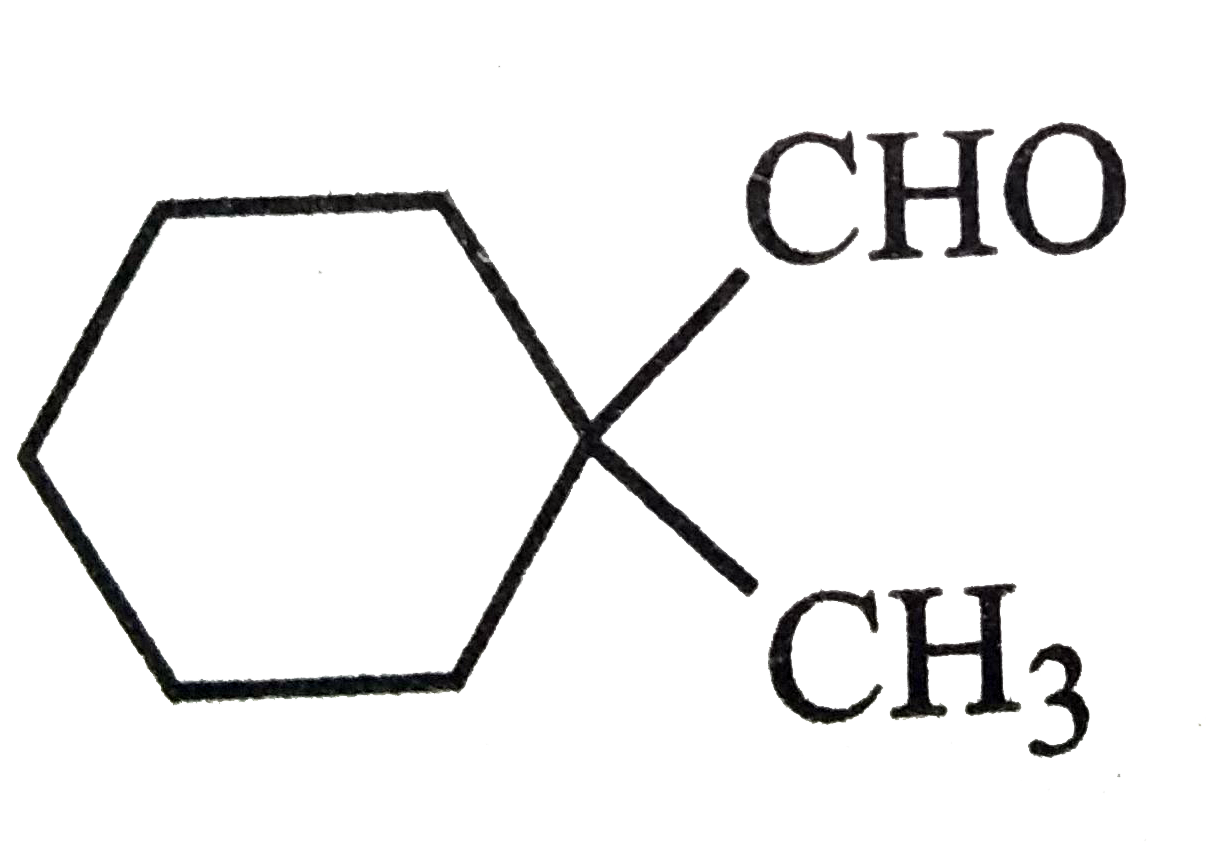
cannot undergoes claisen condensation. |
|
Answer» |
|
| 2. |
________cannot be prepared by Gabriel phthalimide reaction. |
| Answer» Solution :AROMATIC `1^(@)C` AMINES (i.e. aniline) | |
| 3. |
Cannizzaro's reaction is shown by aldehydes containing _____. |
| Answer» SOLUTION :`PROP`-HYDROGEN ATOM | |
| 4. |
Cannizzaro.s reaction is possible with: |
|
Answer» Ketones |
|
| 5. |
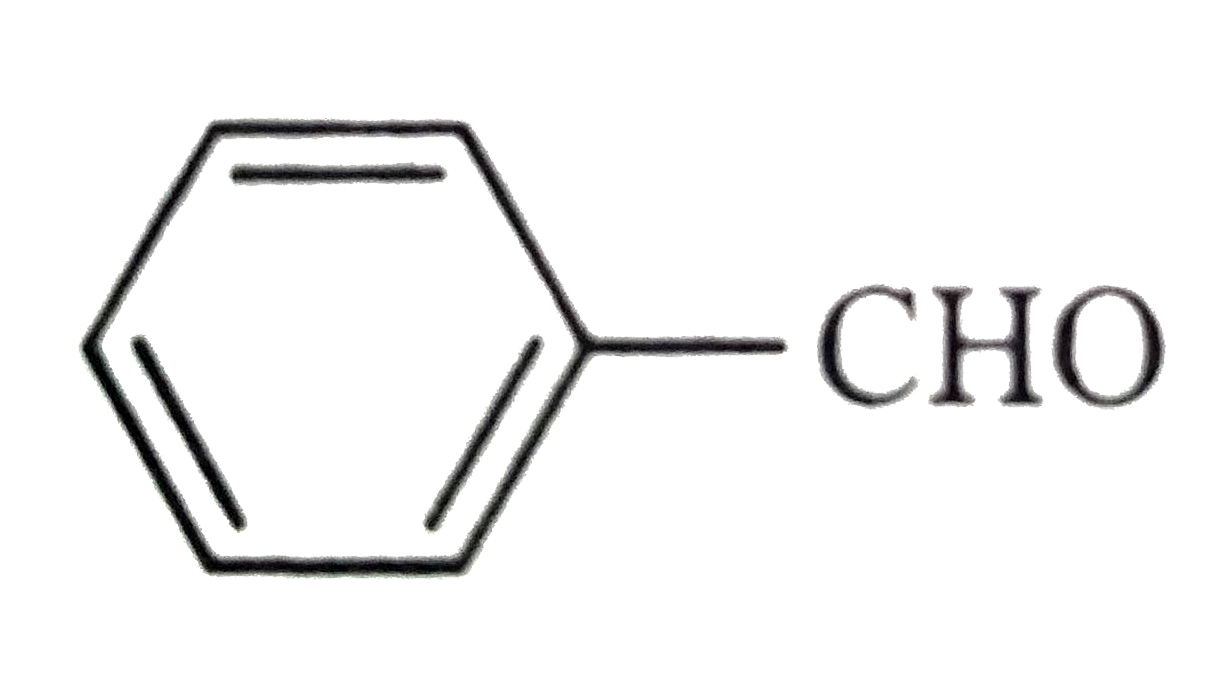
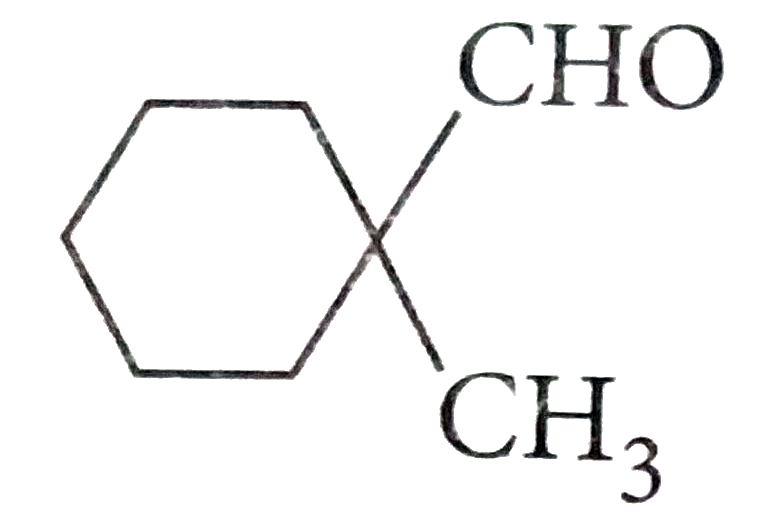
Cannizzaro's reaction is not given by_____ |
|
Answer»
|
|
| 7. |
Cannizzaro's reaction is given by _____(C_6H_5CH_2CH_3,CH_3COCH_3,C_2H_5COCH_3,C_6H_5CHO) |
|
Answer» |
|
| 8. |
Cannizzaro.s reaction is an example of auto oxidation. |
|
Answer» It is a typical reaction of aliphatic aldehyde. |
|
| 9. |
Cannizzaro’s reaction is given by _____ |
|
Answer» |
|
| 10. |
Cannizzaro's reaction is an example of auto oxidation |
|
Answer» It is a reaction ANSWERED by only aldehydes containing `ALPHA` - hydrogen |
|
| 11. |
Cannizzaro.s reaction involves: |
|
Answer» CONVERSION of ALDEHYDE into ACID only |
|
| 12. |
Cannizzaro reaction is shown by aldehydes containing what type hydrogen. |
|
Answer» ALPHA H |
|
| 13. |
Cannizzaro reaction is not given by |
|
Answer» methanal |
|
| 14. |
Cannizzaro reaction is given by aldehydes which do not have_____. |
| Answer» SOLUTION :`ALPHA`-HYDROGENS. | |
| 15. |
Cannizzaro reaction is given by ____________. |
|
Answer» `CH_3-CH_2-CHO` |
|
| 16. |
Cannizzaro reaction is given by |
|
Answer» `HCHO` |
|
| 17. |
Cannizzaro reaction is an example of |
|
Answer» DISPROPORTIONATION reaction |
|
| 19. |
Cannizzaro reaction involves |
|
Answer» OXIDATION of aldehydes |
|
| 20. |
Canning means____. |
|
Answer» freeze PRESERVATION |
|
| 21. |
Cane sugar reacts with concentrated HNO_3 to give: |
|
Answer» `CO_2` and `H_2O` |
|
| 22. |
Cane sugar reacts with conc. HNO_3 to give: |
|
Answer» OXALIC ACID |
|
| 23. |
Cane sugar reacts with conc. HNO_3 to give : |
|
Answer» `NO_2 and H_2O` |
|
| 24. |
Cane sugar on hydrolysis yields: |
|
Answer» GLUCOSE and maltose |
|
| 25. |
Cane sugar is made of : |
|
Answer» 5 membered GLUCOSE ring and 5 membered FRUCTOSE ring |
|
| 26. |
Cane sugar is converted into a mixture of glucose and fructose by |
|
Answer» aq.KOH |
|
| 27. |
Candles contain a mixture of: |
|
Answer» BEES WAX and paraffin wax |
|
| 28. |
Candles contain a mixture of : |
|
Answer» BEES wax and paraffin wax |
|
| 30. |
Cancerntrated HNO_(3) used in the laboratory is usually 69% by mass of HNO_(3). The density of HNO_(3). The density of HNO_(3) solution is 1.41 g cm^(3). Find The molarity. |
|
Answer» `"Volume of solution"=(100 g)//(1.41" g CM"^(-3))=70.92 cm^(3)=0.07092 dm^(3)` `"Molar mass of "HNO_(3)=1 +14 +3xx16=63" g mol"^(-1)` `"Molarity of solution (M)"=("Mass of"HON_(3)//"Molar mass")/("Volume of solution in dm"^(3))=((69g)//(63" g mol"^(-1)))/((0.07092" dm"^(3)))` `=15.44" mol dm"^(-3)=15.44 M`. |
|
| 31. |
Can you use soaps and synthetic detergents to check the hardness of water ? |
| Answer» Solution :SOAPS give insoluble precipitate of calcium and magnisium soaps in HARD WATER WHEREAS DETERGENTS do not give precipitate . Therefore, soaps, but not detergents can be used to check the hardness of water. | |
| 32. |
Can you stroe copper sulphate solution in a zine pot? |
|
Answer» Solution :Zine is more reactive than copper. Hence, it DISPLACES copper from copper sulphate solution as follows `Zn(s) + CuSO_(4)(AQ) to Zn SO_4(aq) + CU (s)` So, we cannot store copper sulphate solution in a zinc POT. |
|
| 33. |
Can you store copper sulphate solutions in a zinc pot ? |
|
Answer» SOLUTION :`E_(Zn^(2+)//Zn)^(@) = -0.76 V, E_(Cu^(2+)//Cu)^(@) = 0.34` V To check whether ZINC reacts with `CuSO_4` solution, we SHALL see whether the following reaction takes place or not: `Zn(s) + CuSO_(4)(aq) to ZnSO_(4)(aq) + Cu(s)` The cell may be represented as: `Zn| Zn^(2+) || Cu^(2+) | Cu` `E_("cell")^(@) = E_(Cu^(2+)//Cu)^(@) -E_(Zn^(2+)//Zn)^(@) = 0.34 V -(-0.76 V) = 1.10 V` As `E_("cell")^(@)` is positive, the reaction takes place and we cannot store COPPER sulphate solution in zinc pot. |
|
| 34. |
Can you store copper sulphate solution in a zinc pot? |
|
Answer» Solution :Zinc is more reactive than COPPER. Hence, it displaes copper from copper sulphate solution as follows: `Zn(s)+CuSO_(4)(AQ)toZnSO_(4)(aq)+Cu(s)` Thus, zinc reacts with `CuSO_(4)` solution. Hence, we cannot store copper sulphate solution in a zinc POT. Alternatively, `E_(Zn^(2+),Zn)^(@)=-0.76,E_(Cu^(2+),Cu)^(@)=0.34V` To check WHETHER zinc reacts with `CuSO_(4)` solution i.e., whether the following reaction takes place or not `Zn(s)+CuSO_(4)(aq)toZnSO_(4)(aq)+Cu(s)`, Find the EMF of this cell reaction. the cell MAY be represented as `Zn|Zn^(2+)||Cu^(2+)|Cu` `E_(cell)^(@)=E_(Cu^(2+),Cu)^(@)-E_(Zn^(2+),Zn)^(@)=0.34V-(-0.76V)=1.10V` As `E_(cell)^(@)` is positive, the reaction takes place and we cannot store. |
|
| 35. |
Can you store copper sulphate solution in a zinc pot ? |
|
Answer» SOLUTION :* ZINC is more reactive than COPPER. Therefore, zinc can displace copper from its salt solution. If copper sulphate solution is STORED in a zinc pot, then zinc will displace copper from the copper sulphate solution. `Zn_((S))+Cu_((aq))^(2+)toZn_((aq))^(2+) +Cu_((S))`. |
|
| 36. |
Can we use sodium bicarbonate in place of sodium carbonate in preparing an extract for detection of anions? |
| Answer» Solution :No. Metal BICARBONATES FORMED by double DECOMPOSITION will remain in solution. | |
| 37. |
Can we use nucelophiles such as NH_3, CH_3O^(-) for the Nucleophilic substitution of alcohols |
|
Answer» Solution :Increasing order of nucelophilicity, `N_3 lt - OH^(o+) lt CH_3 O^(Θ-)` Higher electron DENSITY will increase the nucelophilicity. Regatively charged SPECIES are almost always more nucelophiles than NEUTRAL species. `RO^(Θ)`has an alkyl group attached, allowing a GREATER AMOUNT of polar1zability. This means oxygen.s lone pairs will be more readily available to reach in `RO^(Θ)` than in `OH^(Θ)`.Hence `CH_3O^(-)` is the better nucelophile for the nucleophilic substitutionof alcohols. `NH_3` cannot act as nucelophile for the nucleophilic substitution of alcohols. |
|
| 38. |
Can we use nucleophiles such as NH_(3),CH_(3)O for the Nucleophilic substitution of alcohols. |
|
Answer» Solution :Increasing order of nucelophilicity, `NH_(3) lt -OH^(o+)lt CH_(3)O^(Θ-)` Higher electron density will increase the nucelophilicity. Negatively chrged species are almost ALWAYS more nucelophiles than neutral species. `RO^(Θ) ` has an alkyl group ATTACHED, allowing a greater amount of polarizability. This means oxygen.s lone pairs will be more readily available to REACH in `RO^(Θ)` than in `OH^(Θ)`. Hence `CH_(3)O^(-)` is the BETTER nucelophile for the nucleophilic substitution of alcohols. `NH_(3)` cannot act as nucelophile for the nucleophilic substitution of alcohols. |
|
| 39. |
Can we use NaCla and NaOH in place of Na_(4)Cl and NH_(4)OH in the group III cation precipitation. |
| Answer» SOLUTION :No, `NAOH` is a STRONG base and highly ionised, even in the presence of `NaCl,[OH^(ɵ)]` will be LARGE enough to precipitate `ZN(OH)_(2),Mg(OH)_(2)` etc. | |
| 40. |
Can we use NaCO_(3) in place of (NH_(4))_(2)CO_(3) in group V? |
| Answer» Solution :No. `(NH_(4))_(2)CO_(3)` is a WEAK electrolyte and its ionisation is suppressed by the presence of `NH_(4)Cl.Na_(2)CO_(3)` is a strong electrolyte and in its solution `[CO_(3)^(2-)]` is pretty high to precipitate EVEN `MgCO_(3)` in the group. V. | |
| 41. |
Can we store copper sulphate in iron vessel? Why? |
| Answer» SOLUTION :No, because IRON is more REACTIVE than COPPER. | |
| 42. |
Can we store ferrous sulphate solution in a vessel made of zinc ? |
|
Answer» SOLUTION :FERROUS SULPHATE cannot be stored in zinc vessel because the reduction potential of zinc (-0.76 V) is less than that of iron (-0.44 V). Therefore, zinc will react with ferrous sulphate solution and the solution of ferrous sulphate cannot be stored in zinc vessel. `Zn+FeSO_(4)toZnSO_(4)+FE` |
|
| 43. |
Can we prepare aniline by Gabriel phthalimide reaction? Comment. Or Aromatic primary amines cannot be prepared by Gabreil phthalimide reaction. Explain. |
| Answer» Solution :Aromatic primary amines, i.e., ANILINE cannot be PREPARED by Gabriel phtalimide reaction. The reason being that preparation of aniline by Gabriel phthalimide reaction required the treatment of POT. Phthalimide with `C_(6)H_(5)CL` or `C_(6)H_(5)Br`. SINCE aryl halides do not undergo nucleophilic substitution under ordinary laboratory conditions, therefore, `C_(6)H_(5)Cl` or `C_(5)H_(5)Br` does not react with pot. phthalimide to give N-phenylphthalimide and hence aniline cannot be prepared by this method. | |
| 44. |
Can we prepare aniline by Gabriel phthalimide reaction? |
| Answer» SOLUTION :Aniline cannot be prepared by Gabriel phthalimide REACTION because it requires the treatment of potassium phthalimide with `C_(6)H_(5)CL` or `C_(6)H_(5)BR`. Since aryl halides donot undergo nucleophilic substitution reactions under ordinary conditions, therefore, the reaction does not occur. Hence, aniline cannot be prepared by this method. | |
| 45. |
Can we perform the charcoal cavity test without the addition of fusion mixture (Na_(2)CO_(3) and K_(2)CO_(3)) with the carbonate of metals? |
| Answer» SOLUTION :Yes, we can directly perform the charcoal cavity test WITHOUT the addition of fusion mixture because the latter simply converts the substances into CARBONATES in fused state. Carbonates of METALS on heating in the charcoal cavity are reduced to metallic state. | |
| 46. |
Can we dry ethanol by anhydrous CaCl_(2)? |
| Answer» Solution :No. Because `CaCl_(2)` combines with ethanol forming `CaCl_(2).4C_(2)H_(5)OH`. | |
| 47. |
Can we determine A for weak electrolyte graphically? |
| Answer» SOLUTION :No, it is not POSSIBLE because the dissociation of weak ELECTROLYTE is never complete. | |
| 48. |
Can we add NH_(4)OH first and NH_(4)Cl later in the analysis of group III cations? |
| Answer» Solution :No, the functions of `NH_(4)Cl` is to SUPPRESS ionisation of `NH_(4)OH,Mn(OH)_(2)` etc, in case `NH_(4)OH` is addd first these hydroxides will be IMMEDIATELY precipitated addition of `NH_(4)Cl` afterwards will be of no use. | |
| 49. |
Can the solution be acidified with HNO_(3) in group II before passing H_(2)S gas? |
| Answer» SOLUTION :NO, `HNO_(3)` being oxidising in nature OXIDISES `H_(2)S` GAS to form colloidal SULPHUR which makes the analysis complicated. | |
| 50. |
Can torch battery be recharged ? Give reason. |
|
Answer» |
|