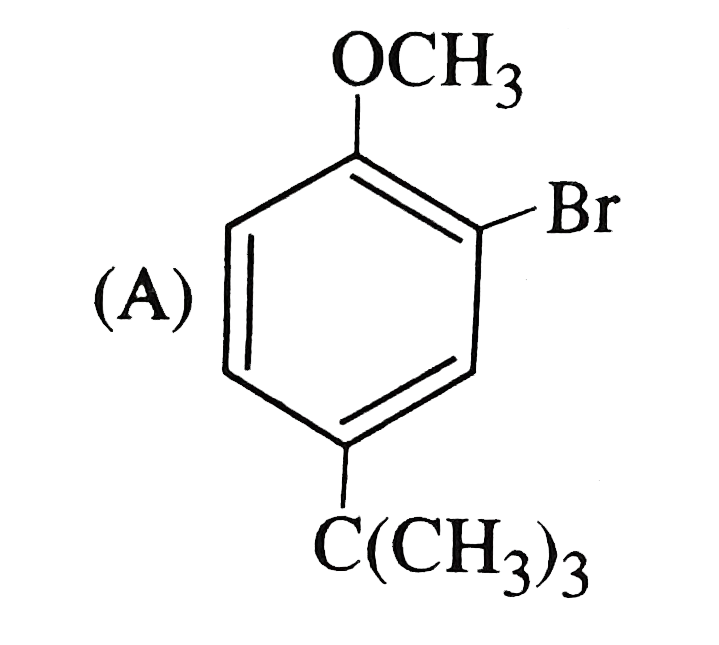
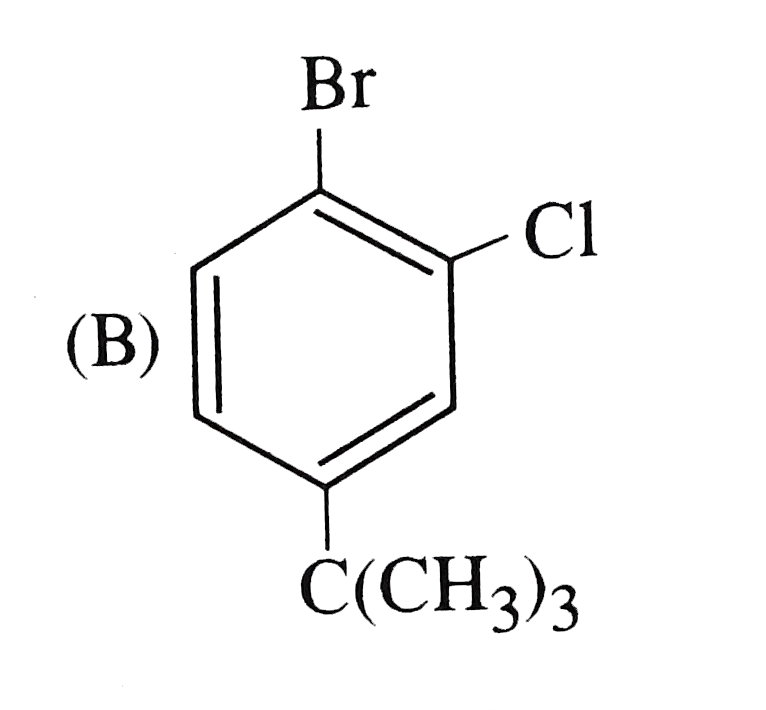
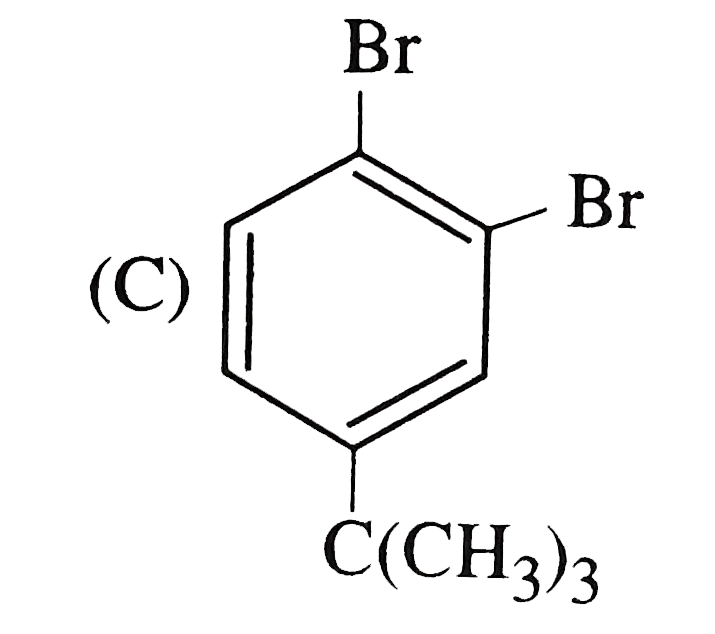
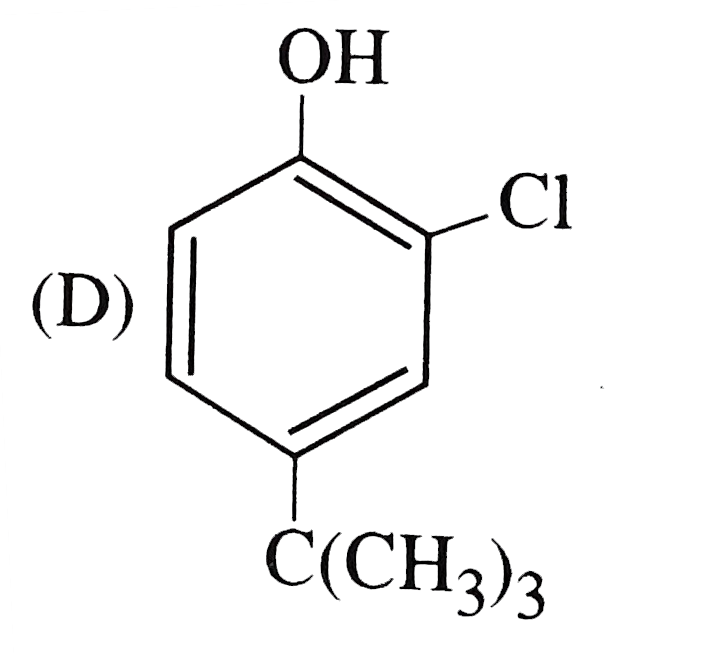
Saved Bookmarks
This section includes 7 InterviewSolutions, each offering curated multiple-choice questions to sharpen your Current Affairs knowledge and support exam preparation. Choose a topic below to get started.
| 1. |
Answer the following questions briefly: (i). What is the actual reducing agent of haematite in blast furnace? (ii). Zinc, not copper is used for the recovery of metallic silver from the complex [Ag(CN)_2]^(ɵ), explain. (iii). Why is chalcocite roasted and not calcinated during the recovery of copper? |
|
Answer» Solution :(i). For iron, first by calcination and roasting the ferrous oxide is oxidised to FERRIC. Then in blast furnace, Smelting is done where it is reduced to iron. `4FeO+O_2to2Fe_2O_3` `Fe_2O_3+COto2Fe_3O_4+CO_2` `Fe_2O_3+COto2FeO+CO_2` `FeO+COtoFe+CO_2` Carbon monoxide is the actual reducing AGENT of haematite in blast furnace. (ii). Zinc is more reducing and CHEAPER than copper. (iii). Chalcocite is a sulphide ore of copper therefore it must be ROASTED in the presence of air to get oxide. |
|
| 2. |
Answer the following questions briefly: (i) What are reducing sugars? (ii) What is meant by denaturation of a protein? (iii) How is oxygen replenished in our atmosphere? |
|
Answer» Solution :Reducing sugar: All those carbohydrates which reduce Fehling.s solution and Tollens. reagent are referred to as reducing sugars. All monosaccharides whether aldose or ketose are reducing sugars. (ii) Denaturation of a protein: When `2^(@) and 3^(@)` structure of a protein is destroyed due to the physical changes like temperature, change in pH, it is called denaturation of a protein. Example: COAGULATION of egg white on boiling. (iii) We take oxygen ATMOSPHERE and RELEASE `CO_(2)`. Plants take up `CO_(2) and H_(2)O` from the atmosphere to prepare their food in the presence of sunlight and release `O_(2)`, THUS `O_(2)` is replenished in atmosphere. |
|
| 3. |
Answer the following question with regard to specific resistance. What is the unit of resistivity? |
| Answer» SOLUTION :OHMMETRE. | |
| 4. |
Answer the following question with regard to specific resistance. What is the reciprocal of specific resistance? How is it denoted. |
| Answer» Solution :RECIPROCAL is specific RESISTANCE `1/rho` is specific conductance or CONDUCTIVITY denoted by `KAPPA` (Kappa). | |
| 5. |
Answer the following question with regard to specific resistance. How is specific resistance represented? |
| Answer» SOLUTION :SPECIFIC RESISTANCE is DENOTED by `RHO` (rho). | |
| 6. |
Answer the following question with regard to specific resistance. What does specific resistance depend on? |
| Answer» Solution :SPECIFIC RESISTANCE DEPENDS on the nature of the electrolyte. | |
| 7. |
Answer the following question : Why is it that nitrogen exists as gas whereas phosphorus exists as a solid ? |
| Answer» Solution :Due to strong `p pi - p pi ` BONDING, NITROGEN forms a TRIPLE bond giving `N_2` molecules. PHOSPHORUS does not form pa-pa bonding, it rather forms P-P bonding giving `P_4` moecules. `N_2` being smaller in size is a GAS, `P_4` being larger is a solid. | |
| 8. |
Answer the followingquestion briefly : (i)Whatare reducingsugare ? (ii) Whatis meant by denaturation of a protein ? (iii) Howis oxygenreplenished in ouratmosphers ? |
|
Answer» SOLUTION :(i) Reducing sugar : All thosecarbohydrateswhichreduce Fehling.s solution and Tollen.sreagentare referredtoas reducingsugar. All monosaccharides whetheraldose or ketose are reducingsugars. (ii)Denaturationof a protein : When `2^(@)` and `3^(@)` structureofa protein isdestroyed DUE tothephysical CHAGES liketemperature, changein pH, it is calleddenaturationof a protein . Example Coagulationof egg whiteon boiling . (iii ) We takeoxygenfromatmosphere and release`CO_(2)`. Plants take up `CO_(2)`and `H_(2)O` fromtheatmosphere to preparetheir FOODIN the presenceof sunlinghtand release`O_(2)`, thus`O_(2)`is replenishedin atmosphere. |
|
| 9. |
Answer the following on the basis of modern periodic table. (I) Group no. of elements with the valence shell ground state electron configuration ns^(2)np^(5) (II) Group no. of the elements with the valence shell ground state electron configuratio ns^(2)np^(3) (III) Group no. of the elements that have only three unpaired p electron in ground state (V) ground 3A elements. |
|
Answer» |
|
| 10. |
Answer the following: (i) Why 100 % pure acetic acid is named glacial acetic acid? (ii) What is vinegar and how is it made? Why the C-O in RCOOH is less reactive towards nucleophiles than in aldehydes and ketones? |
|
Answer» Solution :(i)The melting point of pure anhydrous acetic acid is `17^(@)`C. It is solid below this temperature and looks like 'icy', i.e.,, glacial. (ii) Vinegar is 5% aqueous solution of acetic acid. It is formed by fermentation of sugars and starch. Ethanol is the intermediate product. (III) Due to resonance, there is considerable contribution of the resonance form, 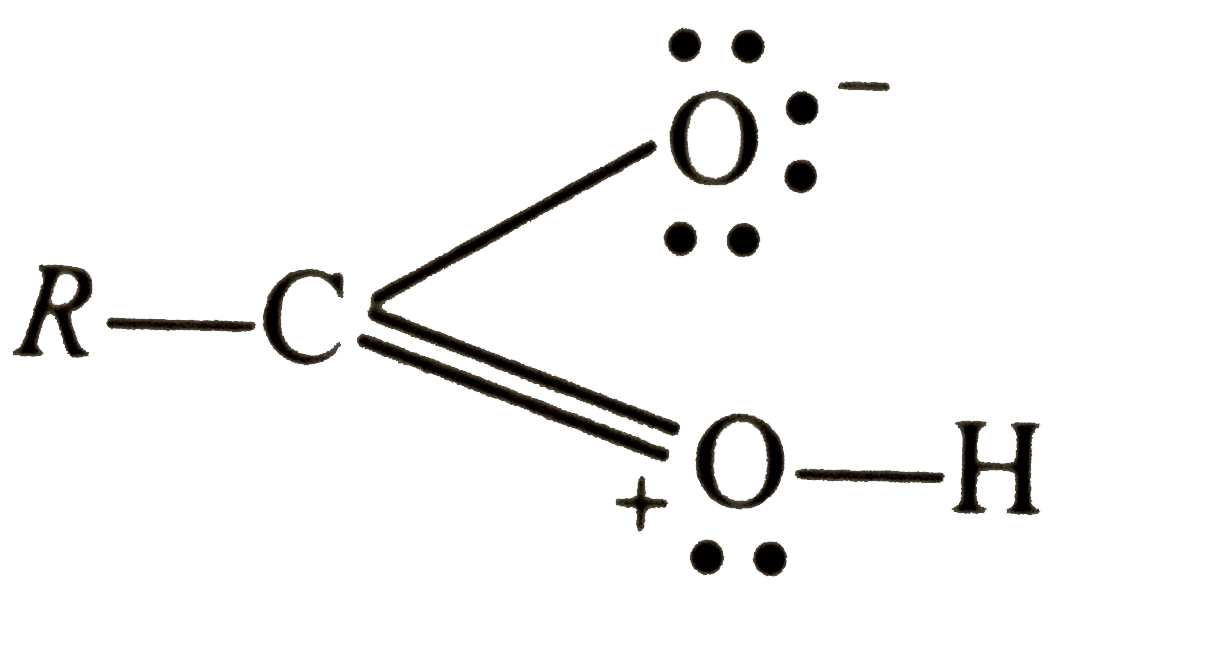 to the hybrid form, ie, there is some SINGLE bond CHARACTER in C-O bond which makes it somewhat longer than in aldehydes. to the hybrid form, ie, there is some SINGLE bond CHARACTER in C-O bond which makes it somewhat longer than in aldehydes. (iv) In RCOOH, there is less positive charge on carbon atom of the C=O group. Thus, this carbon is less electrophilic in RCOOH in comparison to aldehydes and KETONES and so is less REACTIVE towards nucleophiles. |
|
| 11. |
Answer the following : (i) Write the names of monomers used in the preparation of Nylon-6, 8 |
| Answer» SOLUTION :Monomers : Hexamethylene diamine, `NH_(2)-(CH_(2))_(6)-NH_(2)` and Hexamethylene dicarboxylic acid, `HOOC (CH_(2))_(6)-COOH. ` | |
| 12. |
Answer the following: (i) What would be the molecular formula for a straight chain hydrocarbon having 8 carbon atoms with (a) all C-C single bonds. (b) One C-C double bond. © One C-C triple bond? (ii) What is the structural unit that is added to one normal alkane in order to form the next member in the homologous series? (iii) What is the minimum number of carbon atoms in, (a) a branched alkane. (b) cycle-alkane? (iv) Name the isoradical that does not have a corresponding isolkane (v) What system of nomenclature of organic compounds are universally accepted? |
|
Answer» (iv) ISOPROPYL `(CH_(3))_(2)CH-(V) IUPAC` |
|
| 13. |
Answer the following: (i) What is the synthetic utility of the reaction RMgX or Rli with ethylene oxide ? (ii) How is di-tert-butyl ether synethsised ? (iii) What product is formed when, HOCH_(2)CH_(2)CH_(2)OH is heated with conc. H_(2)SO_(4) ? (iv) Thefollowing reaction gives two product. Write the structures of the products . (CH_(3))_(2)CH-O-CH_(3)underset(Delta)overset("HI(excess)")(rarr) (v) What would be major product in the following reaction ? CH_(3)-underset(CH_(3))underset(|)overset(CH_(3))overset(|)(C)-CH_(2)Brunderset(Delta)overset(C_(2)H_(5)ONa//C_(2)H_(5)OH)(rarr) (vi) Sodium metal can be used for dryingdiethyl ether but not ethanol. (vii) What products are obtained when : (viii) Di tert-butyl ether cannot be obtained by Williamson's synthesis. (ix)A mixture of ethyl alcohol and n-propyl alcohol on treatment with conc. H_(2)SO_(4) gives a mixture of three ethers. (x) Ethers can be cleaved only by acids and not by bases. (xi) Predict the product of the follwowing reaction : (xii) The following is not an appropriate reaction for the preparation of tert-butyl ethyl ether. CH_(3)-underset(CH_(3))underset(|)overset(CH_(3))overset(|)(C)-Cl+NaOC_(2)H_(5)rarr CH_(3)-underset(CH_(3))underset(|)overset(CH_(3))overset(|)(C)-C_(2)H_(5) (a) What would be the major product of this reaction ? (b) Write a suitable reaction for the preparation of tert-butyl ethylether. (xiii) How is 1-propoxypropane synthesized from propan-1-ol? Write mechanism of this reaction. |
|
Answer» Solution :(i) It is a good method for extending R group of organometallic by `-CH_(2)CH_(2)OH` is one step. (ii) `2Me_(3)C-Cloverset(Ag_(2)CO_(3))(rarr)Me_(3)C-O -CMe_(3)` (iii) Tetrahydrofuran is formed 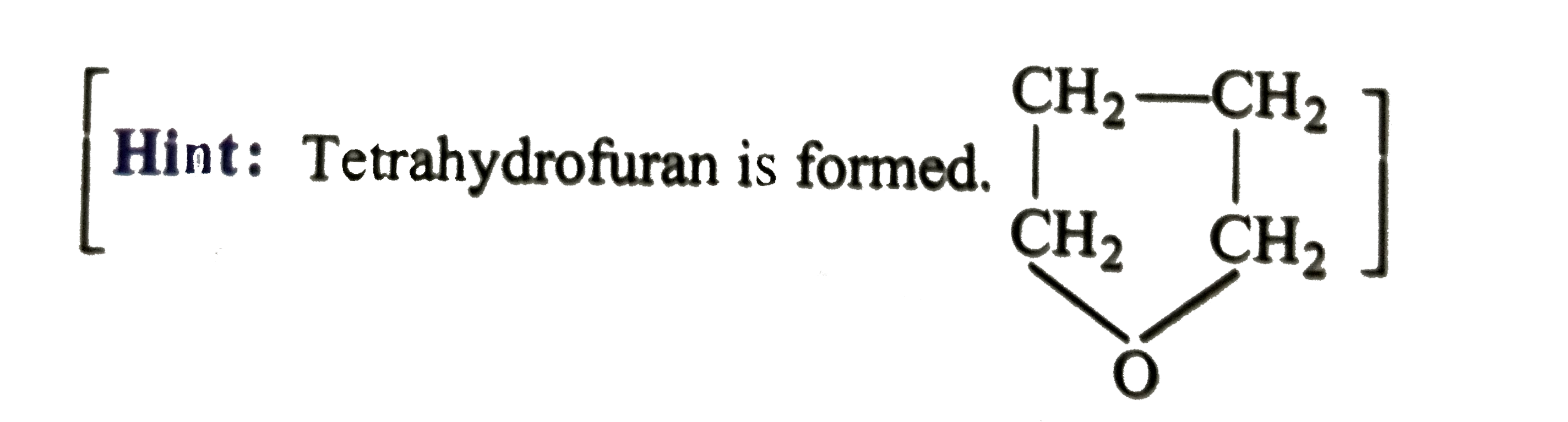 (iv) The two products obtained are `(CH_(3))_(2)CH-I` and `CH_(3)I`. Inthe presence of excess of HI, the initially formed alcohol is also converted to iodide. (v) The product is 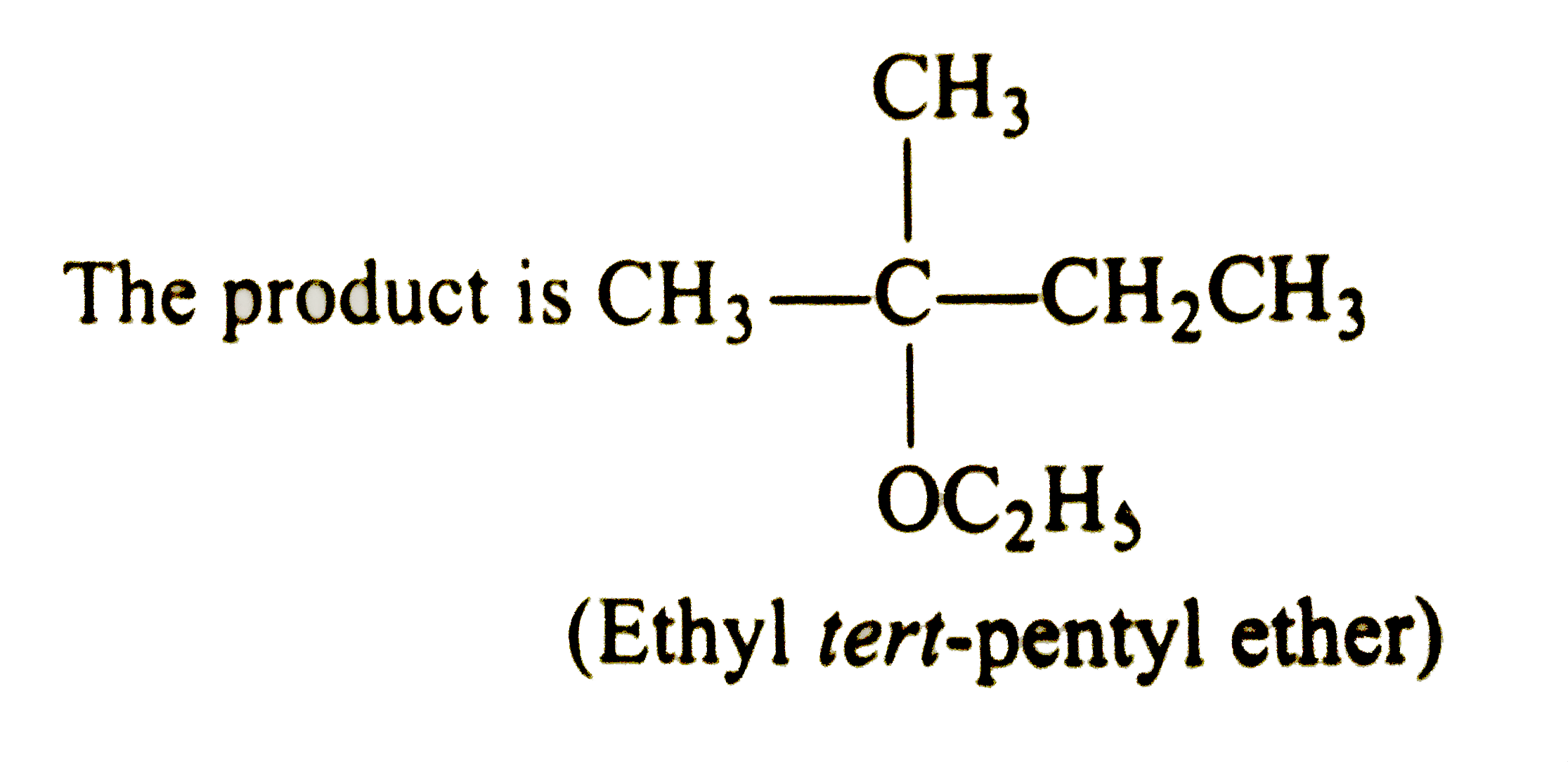 as the reaction proceeds via `S_(N^(1))` mechanism with rearrangement of neopentyl carbocation to tert-pentyl carbocatin . (vi) Sodium metal reacts with ethanol to form sodium ethoxide. On the contrary, ethers do not have replaceable hydrogen atom and therefore, do not react with sodium. 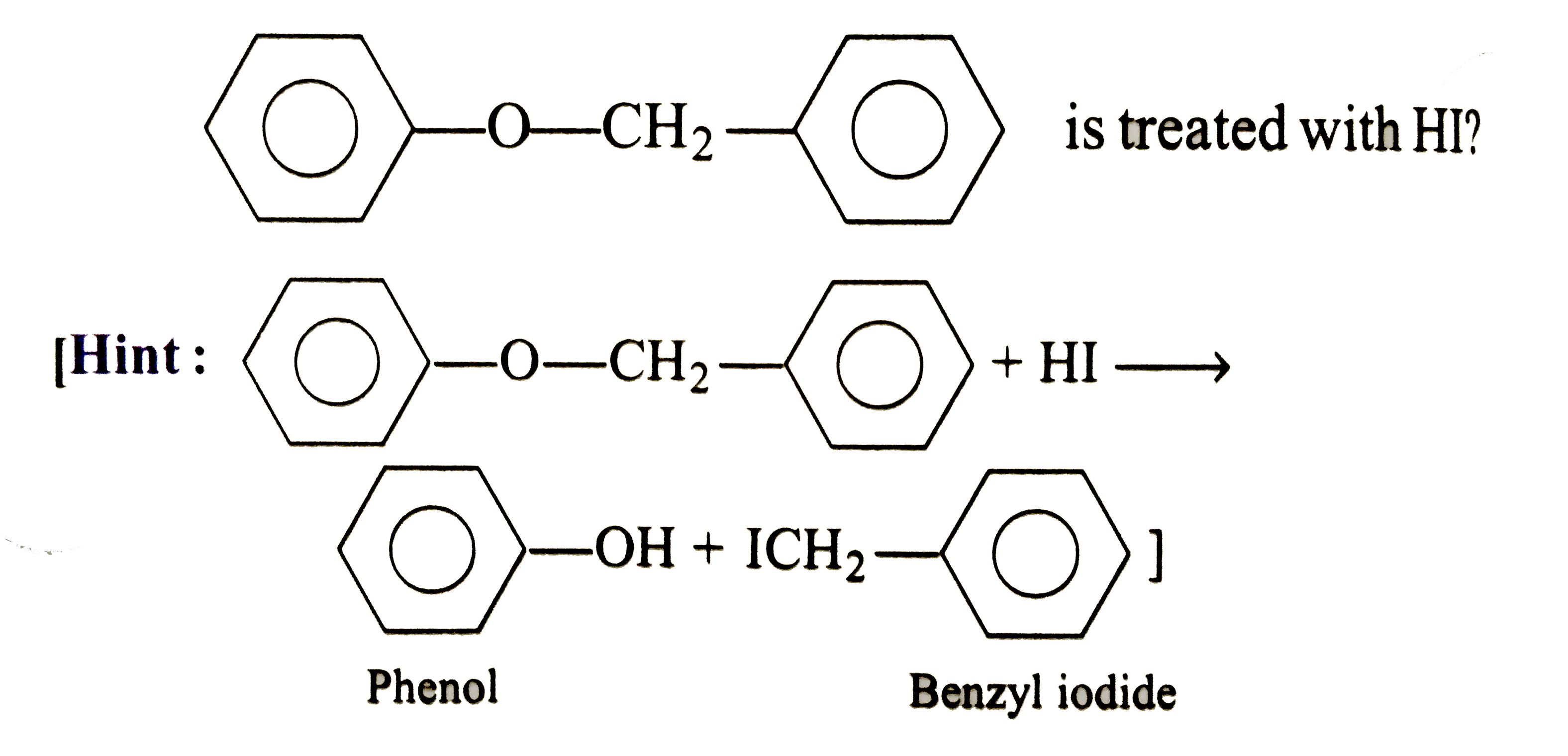 (VIII) To prepare di-tert-butyl ether, the reagents to be used are tert-butyl bromide and sodium tert-butoxide. Since, the TERTIARY bromide `(3^(@))` prefers to undergo ELIMINATION ( RATHER than substitution ) , therefore , the major product obtained is isobutylene and not di-tert-butyl ether. `underset("tert-Butyl bromide"(3^(@)))(CH_(3)-underset(CH_(3))underset(|)overset(CH_(3))overset(|)(C)-Br)+underset("Sodium tert-butoxide")(overset(+)(N)aoverset(-)(O)-underset(CH_(3))underset(|)overset(CH_(3))overset(|)(C)-CH_(3))overset((-NaBr))(rarr)underset("Isobutylene")(CH_(3)-overset(CH_(3))overset(|)(C)=CH_(2))+CH_(3)-underset(CH_(3))underset(|)overset(CH_(3))overset(|)(C)-OH` (ix) The `1^(@)` alcohols, i.e., ethyl alcohol and n-propyl alcohol (both ) yilds equally stable carbocation s and each one of which can be attacked either by ethyl or n-propyl alcohol to give a mixture of three ethers. `underset("Ethyl alcohol")(CH_(3)CH_(2)OH)+underset("n-propyl alcohol")(CH_(3)CH_(2)CH_(2)OH)underset(("conc."))overset(H_(2)SO_(4))(rarr)underset("Diethyl ether")((CH_(3)CH_(2))_(2)O) +underset("Ethyl-n-propyl ether")(CH_(3)CH_(2)O-CH_(2)CH_(2)CH_(3))+underset("Di-n-propyl ether")((CH_(3)CH_(2)CH_(2))_(2)O)` (x) The `C-underset(..)overset(..)(O)-C`bond in ethers is very strong. The addition of acid formsprotonated ether which is attacked by nucleophiles `(Br^(-)` or `I^(-))`on the LESS hindered alkyl groups to bring the cleavage of ethers to form alkyl halide and an alcohol. `CH_(3)CH_(2)-underset(..)overset(..)(O)-CH_(3)+H^(+)rarr underset("Protonated ether")(CH_(3)CH_(2)-underset(H)underset(|)overset(+)overset(..)(O)-CH_(3))overset(Br^(-))(rarr)CH_(3)Br+CH_(3)CH_(2)OH` Ethersthemselves are Lewis bases and are not attacked by strong bases. (xi)As the nitro group is highly deactivating in nature , it willmake the cleavage of C-F bond very easy, i.e., `F^(-)` ions can be replaced by `-overset(-)(O)CH_(3)`ion 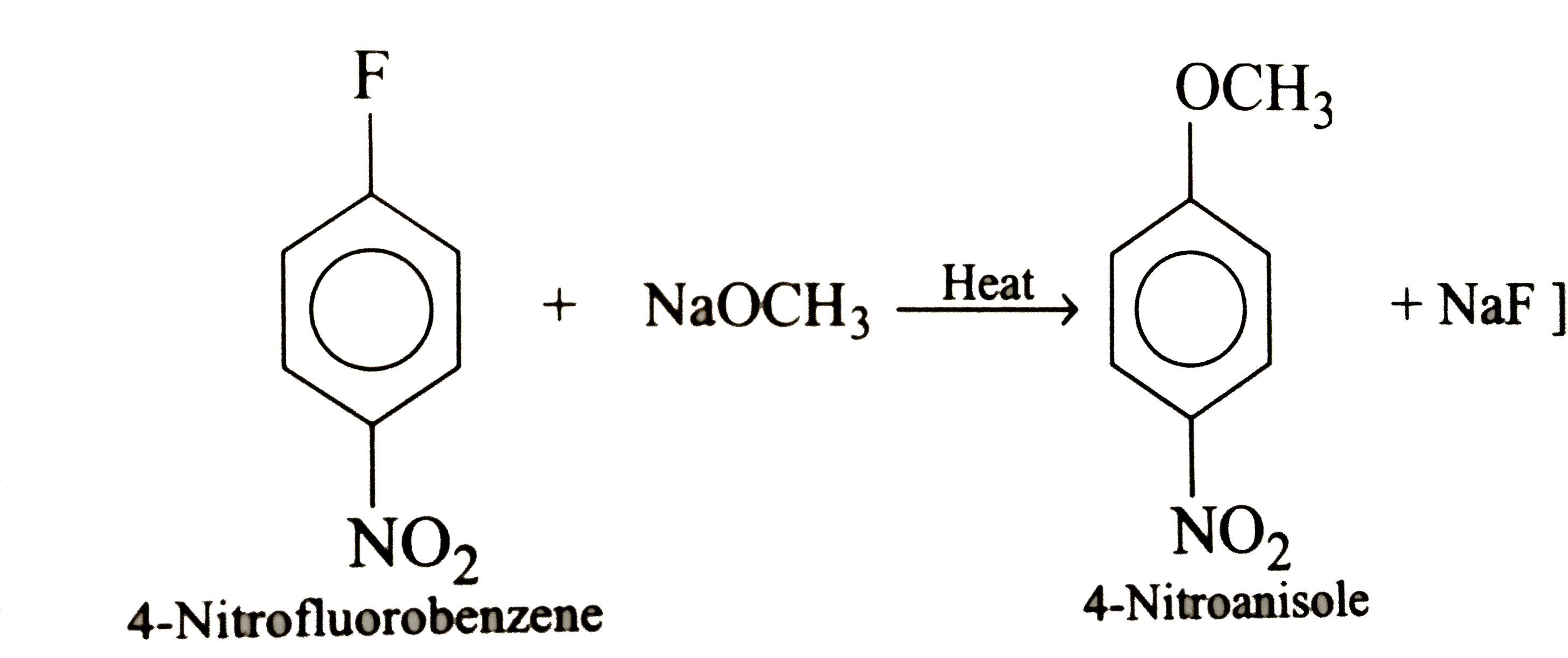 (xii) (a) The major product of the given reaction is 2-methylprop-1-ene. It is because sodium ethoxide is a strong nucleophile as well as strong base. Thus, elimination predominates over substitution reaction. (b) `underset("Sod. tert-butoxide")(CH_(3)-underset(CH_(3))underset(|)overset(CH_(3))overset(|)(C)-overset(-)(O)Na^(+))+underset("Ethyl chloride")(ClCH_(2)CH_(3))rarr underset("tert-Butyl ethyl ether")(CH_(3)-underset(CH_(3))underset(|)overset(CH_(3))overset(|)(C)-O CH_(2)CH_(3))` (xiii) 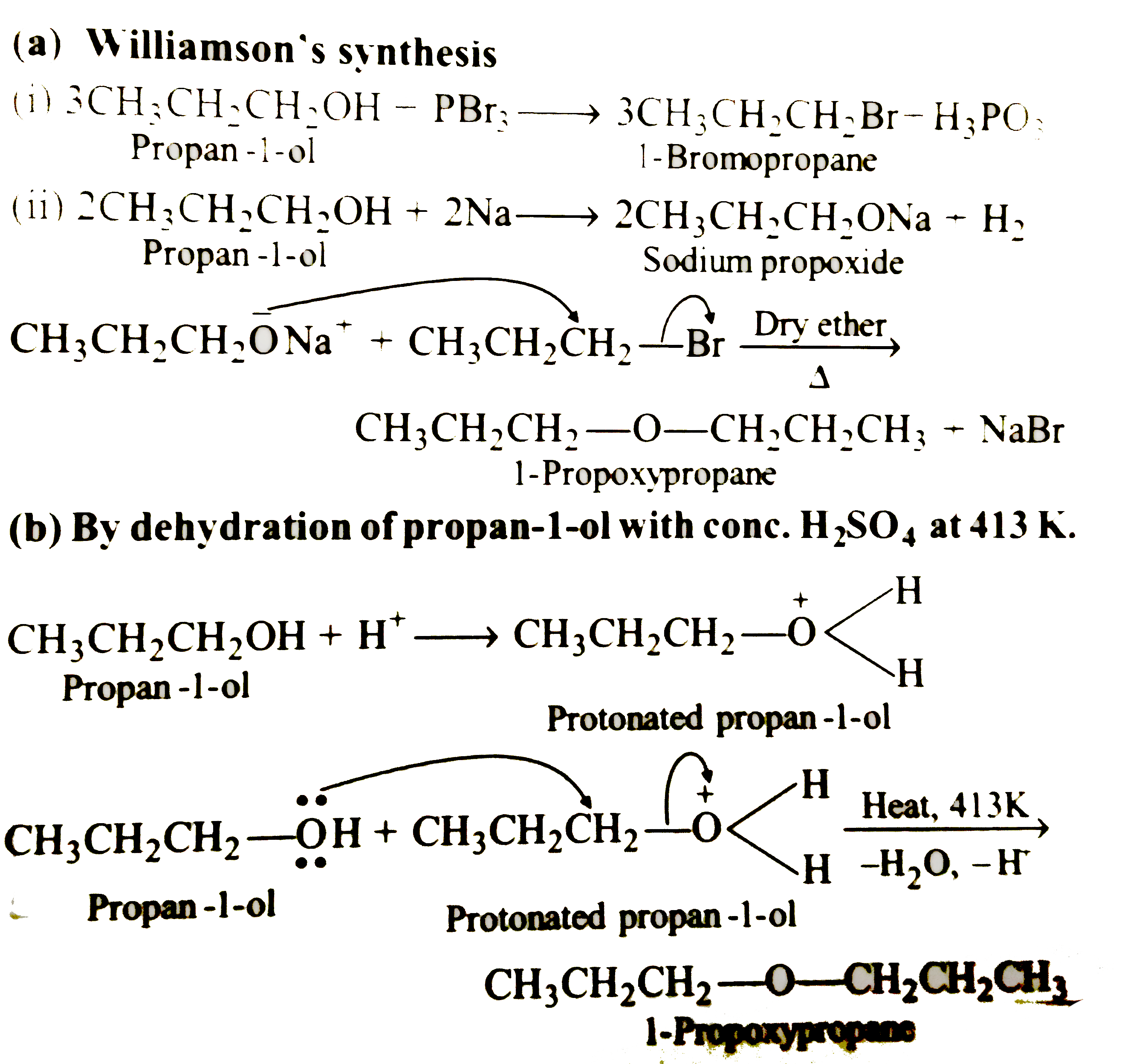
|
|
| 14. |
Answer the following : (i) Phenol is more acidic than ethyl alcohol. (ii) Phenol is an acid but does not react with NaHCO_(3). (iii) Althoughphenoxide ion has more number of resonating structures than benzoate ino, benzoic acid is stronger acid than phenol . Why ?(iv) Name the phenol with molecular formula C_(7)H_(8)O which on treatment with Br_(2) water readily gives a precipitate of C_(7)h_(5)OBr_(3). (v) Unlike phenol, 2,4-dinitrophenol and 2,4,6-trinitrophenol are soluble in aqueous sodium carbonate solution. (vi) Phenol has higher boiling than toluence. although they have almostthe same molecular mass. (vii)Ortho nitro phenol is steam volatile while para nitro phenol is not. (viii) In Kolbe's reaction, insteadof phenol, phenoxide ion is treated with CO_(2). (ix) Nucleophilic substitution reactions are not very common in phenols. (x) The dipole moment of phenol is smaller than that of methanol. |
Answer» SOLUTION :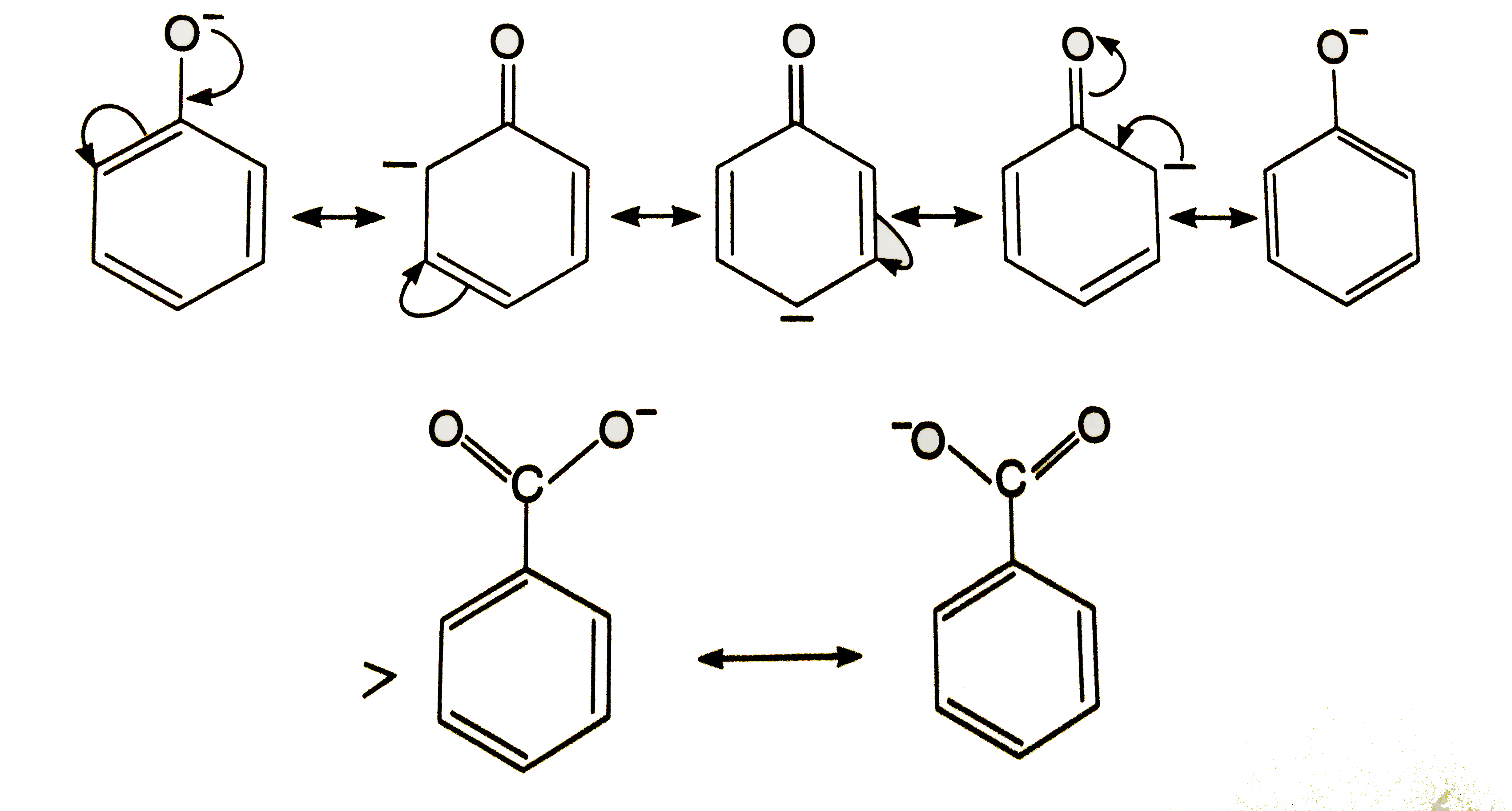
|
|
| 15. |
Answer the following : (i) Haloalkanes easily dissolve in organic solvents, why? (ii) What is known as a racemic mixture ? Give an example. (iii) Of the two bromoderivatives, C_(6)H_(5)CH(CH_(3))Br " and " C_(6)H_(5)CH(C_(6)H_(5))Br, which one is more reactive in S_(N)1substitution reaction and why? |
|
Answer» Solution :(i) Haloalkanes easily dissolve in organic solvents. This is because the interaction between the haloalkane and the organic solvent is almost similar to that between the molecules of the haloalkane and between the molecules of the organic solvent. Therefore, the molecules of the haloalkane gradually move into the molecules of the organic solvent. (ii) A mixture of equal AMOUNTS dextro and laevo forms of the same compound is called racemic mixture. Here the optical rotation of one form is balanced by the rotation of the other form so that the mixture shows no net rotation. EXAMPLE: `(pm)` butan-2-ol (iii) The two compounds to be compared are: `underset(I)underset(CH_(3))underset(|)(C_(6)H_(5)CH - Br) ""underset (II) underset (C_(6)H_(5))underset(|) (C_(6)H_(5)CH - Br)` The carbocation obtained from II is more stabilised through resonance compared to that obtained from I. Therefore, `C_(6)H_(5)CH(C_(6)H_(5))Br`is more reactive in `S_(N)1`SUBSTITUTION. |
|
| 16. |
Answer the following : Effect the adding catalyst on activation energy and Gibb's energy (Delta G). |
| Answer» Solution :CATALYST lowers the activation energy and changes the PATH of the REACTION and thus increases the rate of the reaction. A catalyst does not alter GIBB's energy of a reaction. | |
| 17. |
Answer the following : Draw the structures of geometrical isomers of [Co(NH_(3))_(4)Cl_(2)]^(+) |
Answer» SOLUTION :STRUCTURES of GEOMETRICAL ISOMERS are GIVEN below : 
|
|
| 19. |
Answer the following : Differentiate between a bidentate ligand and a monodentate ligand. |
| Answer» Solution :Bidentate ligand has TWO DONOR ATOMS and can form two bonds whereas monodentate ligand has only one donor atom and can form only one BOND with the METAL ion. | |
| 21. |
Answer the following based on the above Compound A is ? |
|
Answer»
|
|
| 22. |
Answerthe following: (a)Howmanymoleculesofoxygenwould berequiredforthecompletecombustionof onemoleculefo butane ? (b) How manychainisomersarepossiblein C_(5)H_(12) ? ( c)whatis theoctanenumberof 2,2,4 - trimathylpentane ? (d)what is theoctanenumberof n- hexane ? (f)Namethe two methodsusedforthesynthesisof petrol . (g)whatis theflashpointfixedin india ? (h)whatis thenameof theprocessin whichnormal alkanesareconvertedintotheirbranchedchainisomersin thepresenceof aluminiumchoride andHcl? |
| Answer» Solution :(a)13/2 oxygenmolecule ,(b)three , ( C)100, (D) ZERO,( E)CRACKING, (F) (i) bergiusmethod,(ii) Fischer-tropsch process, (g)317K , (h) ISOMERISATION . | |
| 23. |
Answer Questions by approximately matching the information given in the three columns of the following table. The CORRECT combination is: |
| Answer» Answer :D | |
| 24. |
Answer Questions by approximately matching the information given in the three columns of the following table. The INCORRECT combination is: |
|
Answer» (II), `(ii)`, Q |
|
| 25. |
Answer Questions by approximately matching the information given in the three columns of the following table. The CORRECT combination is: |
| Answer» Answer :C | |
| 26. |
AnswerQ 1,2and 3byappropriatelymatchingthe informationgivenin the columnsof the following table. Which of the followingis CORRECT for NH_(4)Cl ? |
| Answer» Answer :A | |
| 27. |
AnswerQ 1,2and 3byappropriatelymatchingthe informationgivenin the columnsof the following table. The INCORRECTcombination is : |
|
Answer» (II) (III) (S) |
|
| 28. |
AnswerQ 1,2and 3byappropriatelymatchingthe informationgivenin the columnsof the following table. TheCORRECTcombination is: |
|
Answer» (I) (ii) (P) |
|
| 29. |
Anorganic compound A on treatment with ainmnoniacal silver nitrate gives metallic silver and produces a yellow crystalline precipitate of molecular formula C_(9)H_(10)N_(4)O_(4), on treatment with Brady's reagent. Give the structure of the organic compound A. |
|
Answer» `CH_(3)CHO` 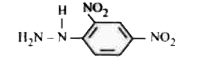 The COMPOUND is an aldehyde as it gives Tollens. test. So, the crystalline PRODUCT is  So, the compound A is `underset("(Propionaldehyde)")(H_(3)C-CH_(2)-CHO)`. |
|
| 30. |
Anomer of glucose is |
|
Answer» six membered FIVE carbon atoms and ONE OXYGEN atom cyclic structure |
|
| 31. |
Anomalous behaviour of oxygen is due to: |
|
Answer» HIGHLY electronegativity |
|
| 32. |
Anomalous behaviour of oxygen in group 16 is due to |
|
Answer» combustible nature. |
|
| 33. |
Anomalous behaviour of nitrogen is due to: |
|
Answer» Small SIZE and HIGH electronegativity |
|
| 34. |
Anodic oxidation of ammonium hydrogen sulphate (NH_4HSO_4) produces ammonium persulphate.NH_4HSO_4 = NH_4SO_(4)^(-) + H^+2NH_4SO_4^(-) = (NH_4)_2S_2O_8 + 2e(at anode)2H^(+)+ 2e = H_2(at cathode)(NH_4)_2S_2O_8hydrolyses according to(NH_4)_2S_2O_8 + 2H_2O = 2NH_4HSO_4 + H_2O_2 . Current efficiency in electrolytic process is 60%. Calculate the amount of current required to produce 85 g of H_2O_2per hour if hydrolysis reaction has 100% efficiency. |
| Answer» SOLUTION :223.38 AMP | |
| 35. |
Anode: Zinc electrode Cathode: SHE Cell: Zinc electrode ||SHE E_(cell) = E_(H^(+)//H_(2)(g))-E_(Zn2+//Zn)^(@) 0.76V (at 298K experimentally) |
|
Answer» Solution :`E_(Zn2+//Zn)^(@) =- 0.76 V(SRP)` `E_(Zn//Zn2+(aq))^(@) = 0.76 V(SOP)` (B) Calomel Eolectrode: `Hg(l)//Hg_(2)CI_(2)(s)//CI^(-)(aq)` It is prepared by a `Pt` wire in contact with a paste of `Hg` and `Hg_(2)CI_(2)` present in a `KCI` solution. reaction `(1)/(2)Hg_(2)CI_(2)(s) +E^(-) RARR Hg(l) +CI^(-)`. `rArr E_(CI^(+)//Hg_(2)CI_(2)//Hg) = E_(H_(2)^(2)//Hg^(@)) +(0.059)/(2)log.(Ksp)/([CI]^(2)]`. Like all metal-insoluble salt-anion electrodes, calomel electrode works at nearly constant potential for singnificant time. |
|
| 36. |
Anode reaction of a fuel cell is:- |
|
Answer» `ZN(Hg)+2OH^(-)toZnO_((s))+H_(2)O+2E^(-)` |
|
| 37. |
Annealing of steel is the process of heating steel |
|
Answer» to BRIGHT red HOT and then cooling it slowly |
|
| 38. |
Annealing of glass is done to : |
|
Answer» MAKE it more brittle |
|
| 39. |
Annealing is a process in which |
|
Answer» STEEL is heated to bright RED and COOLED slowly |
|
| 40. |
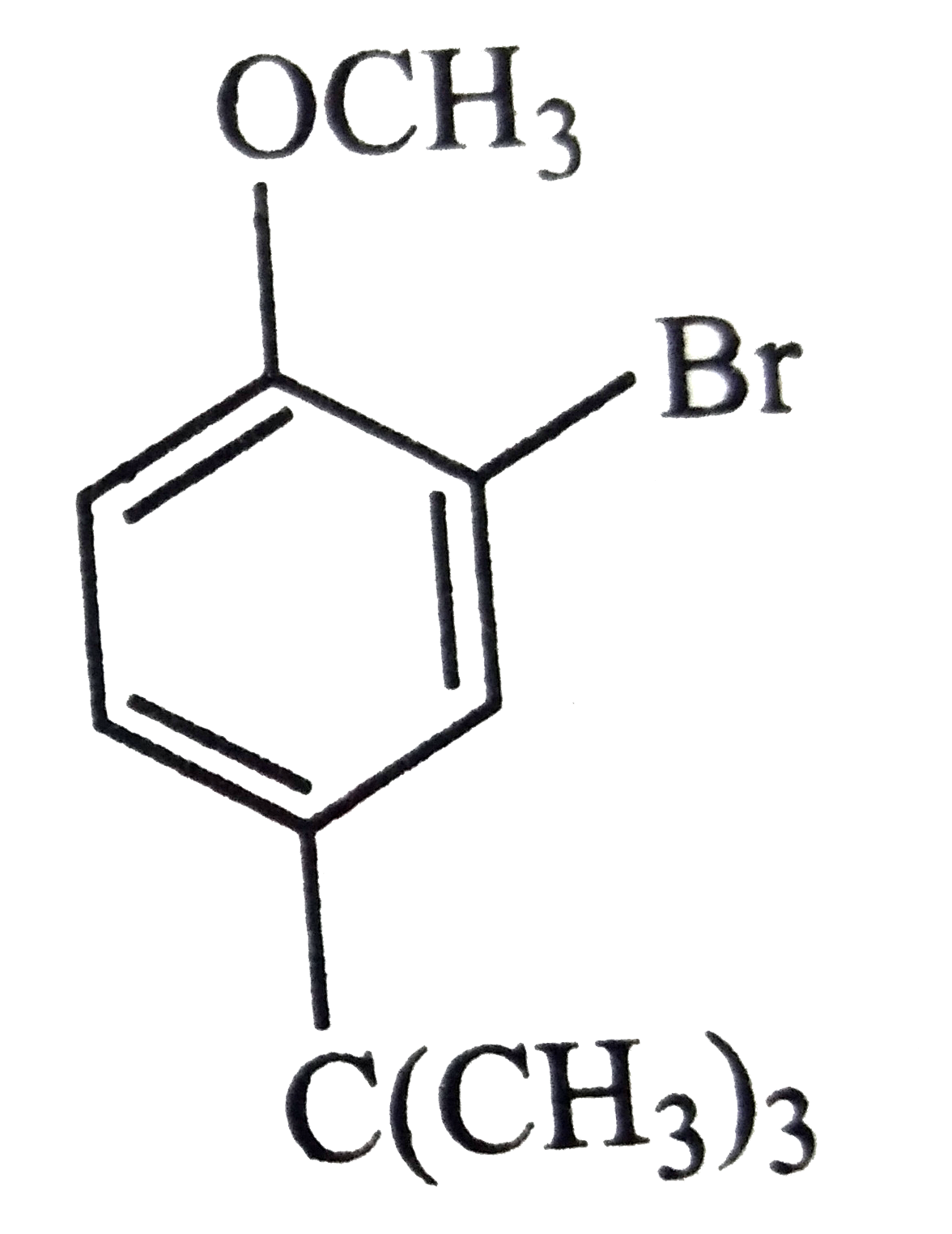
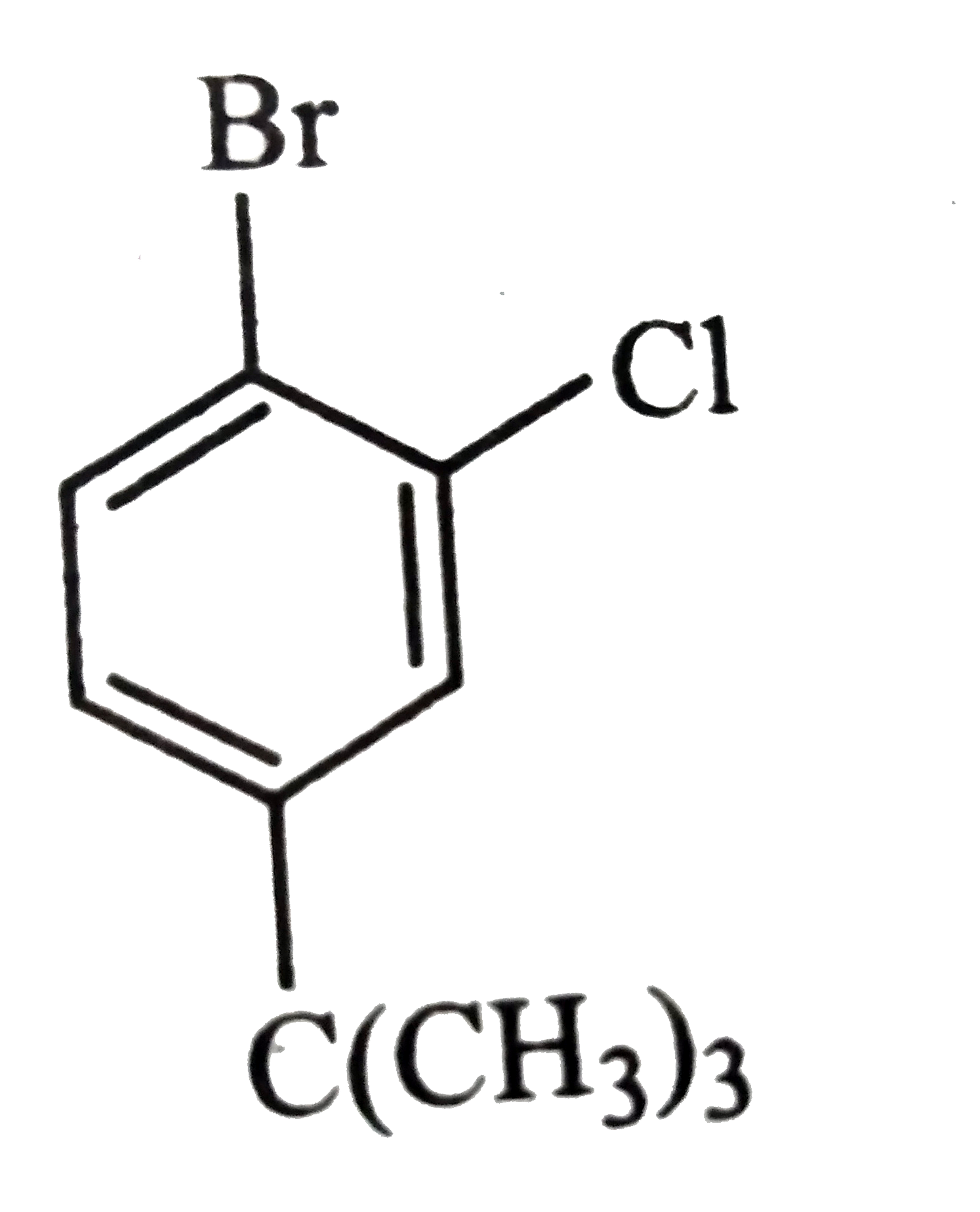
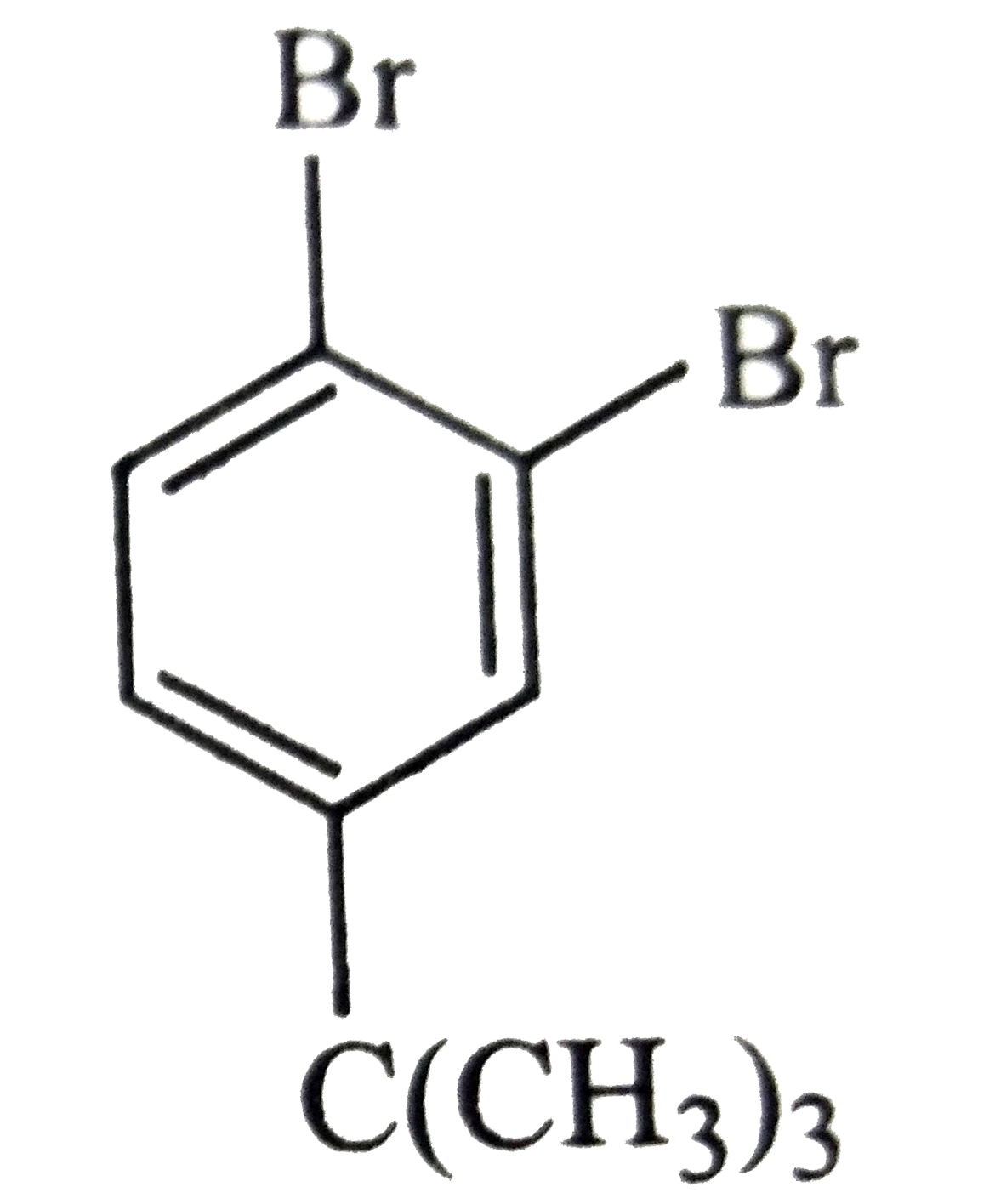
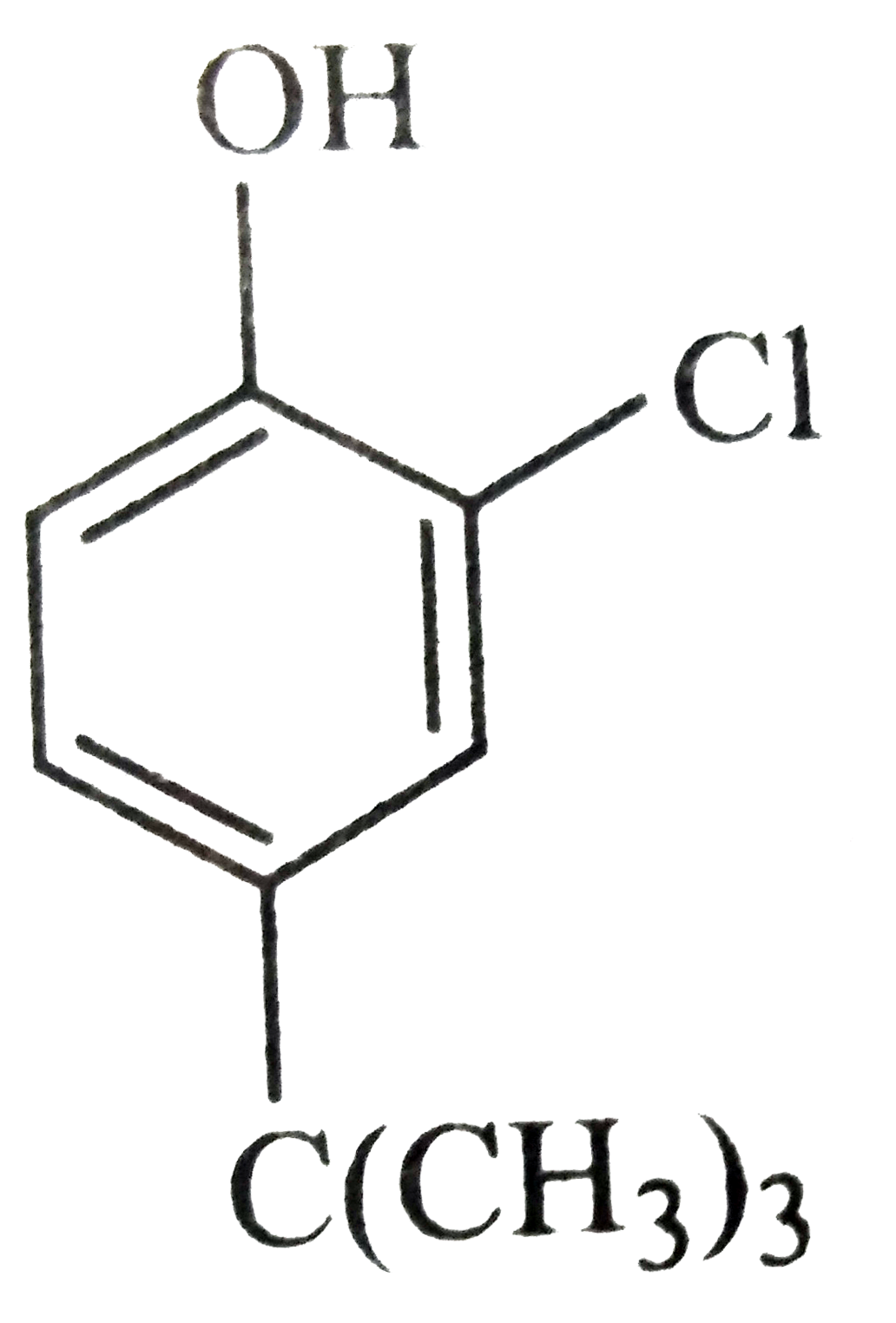
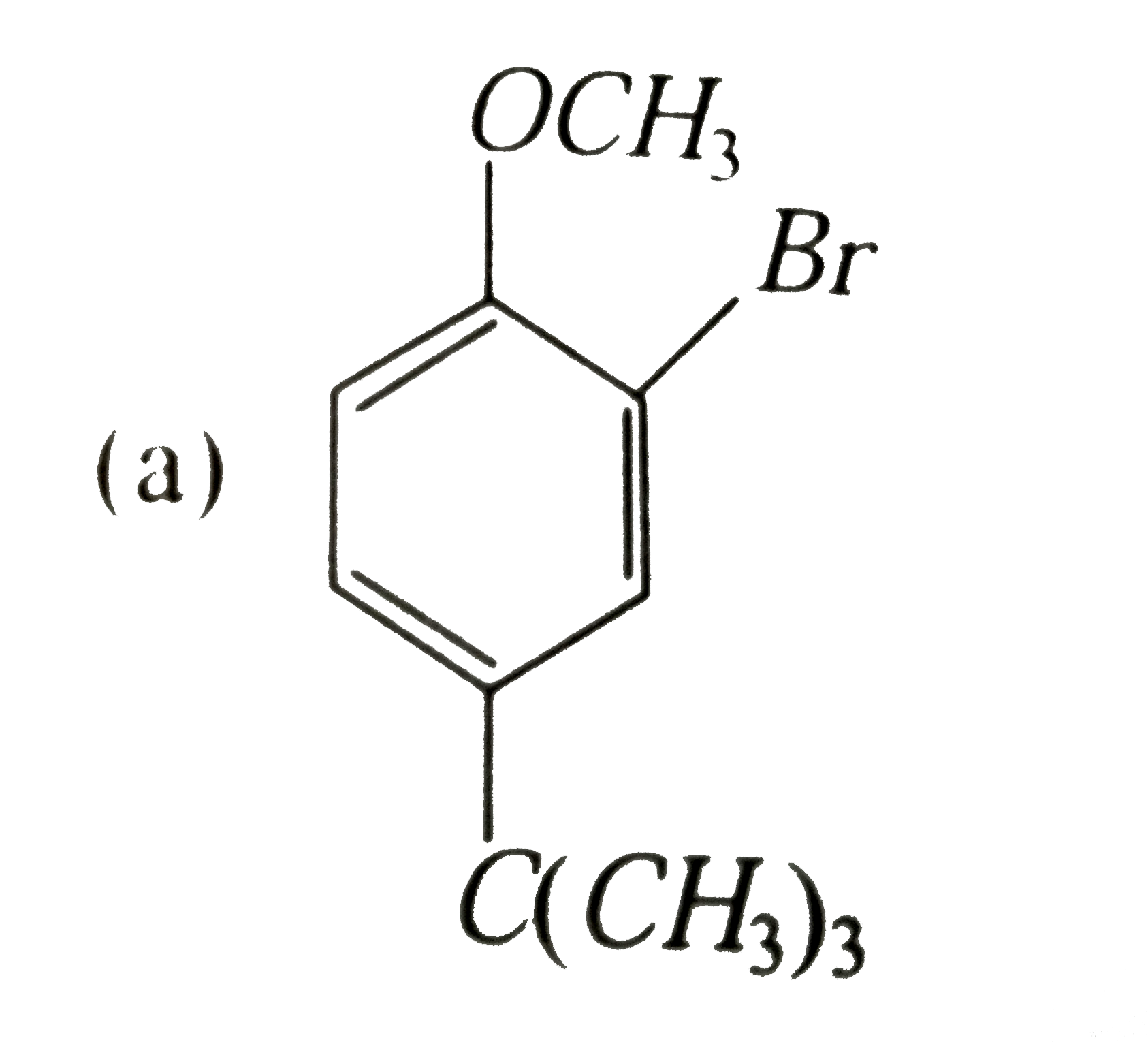
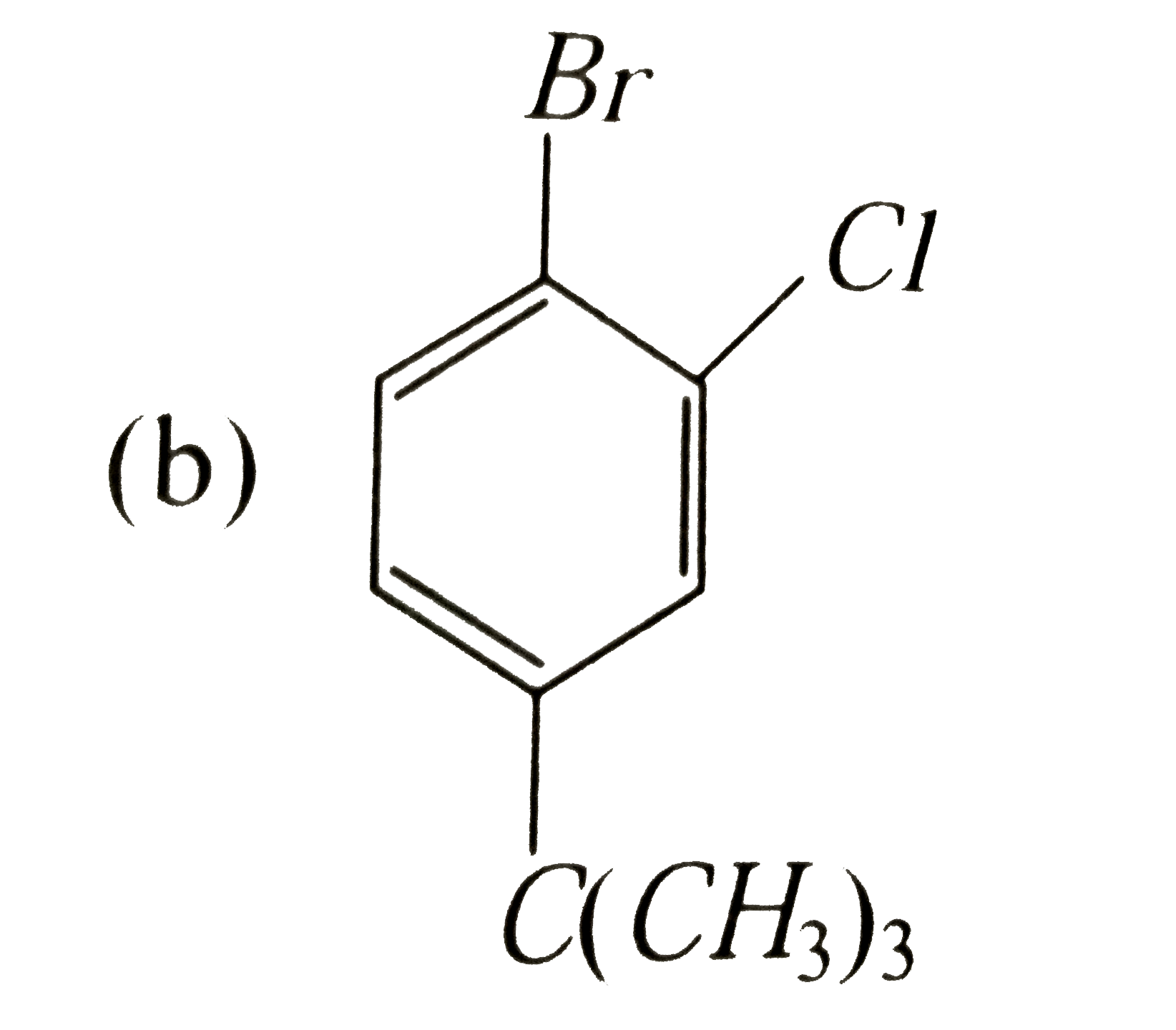
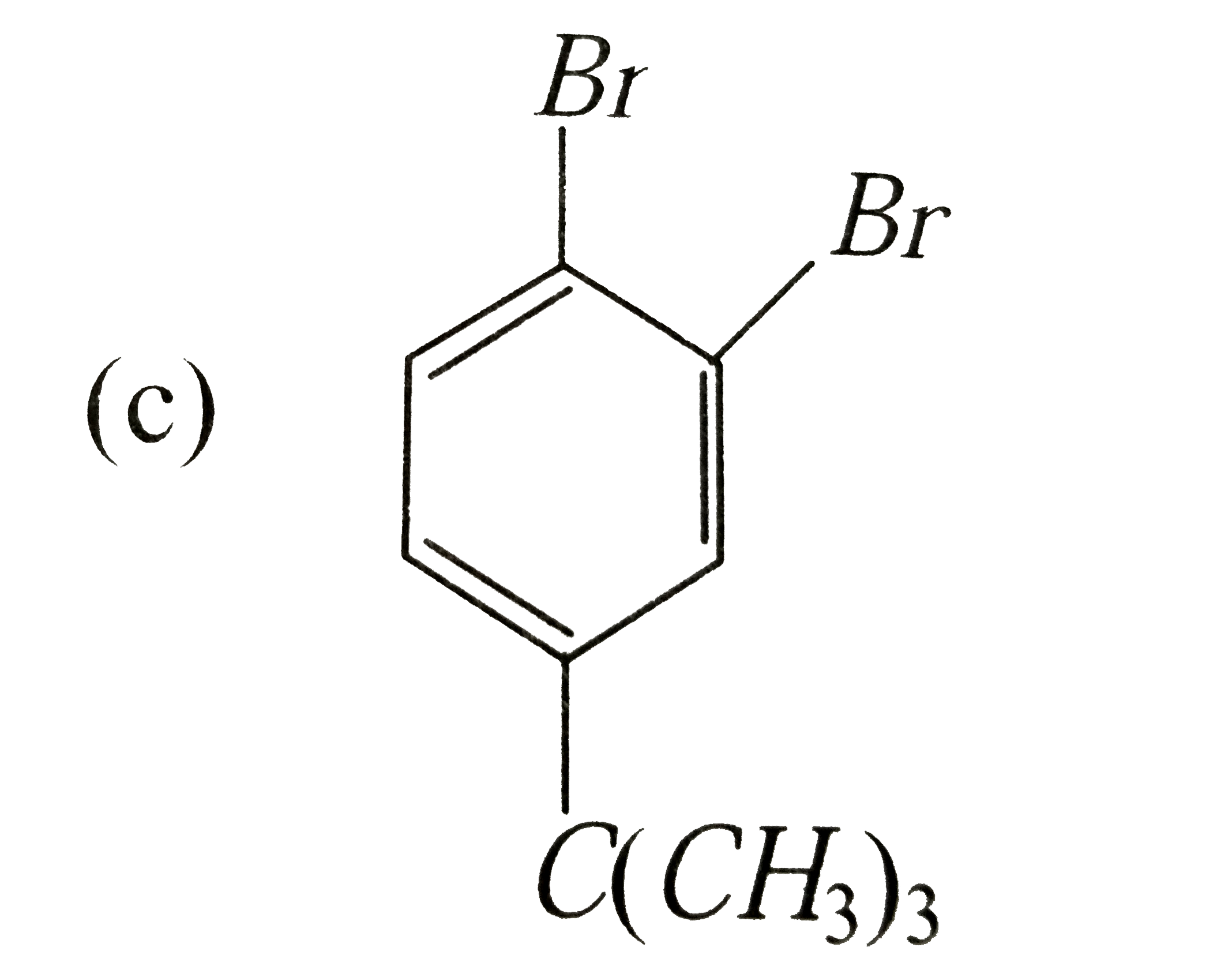
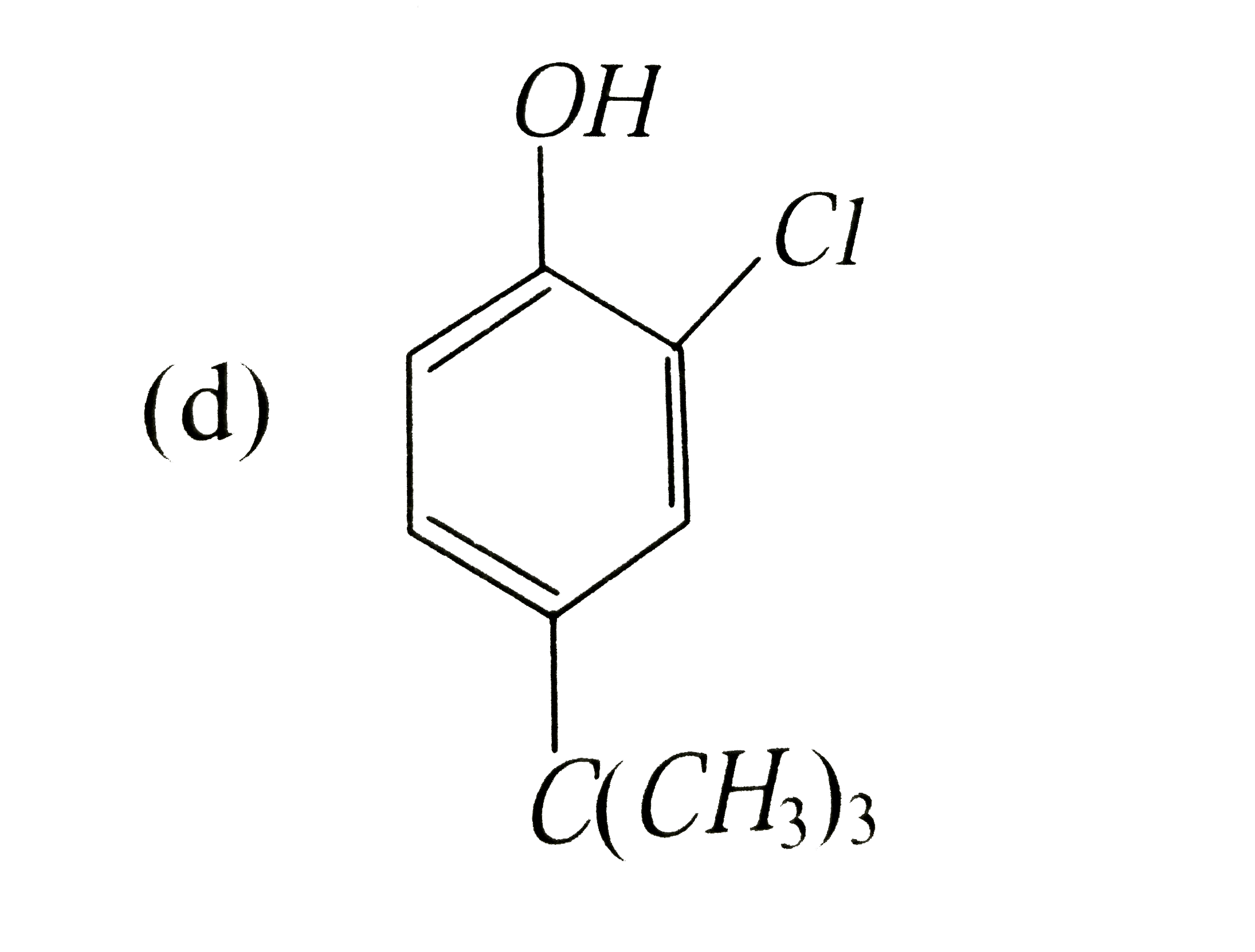
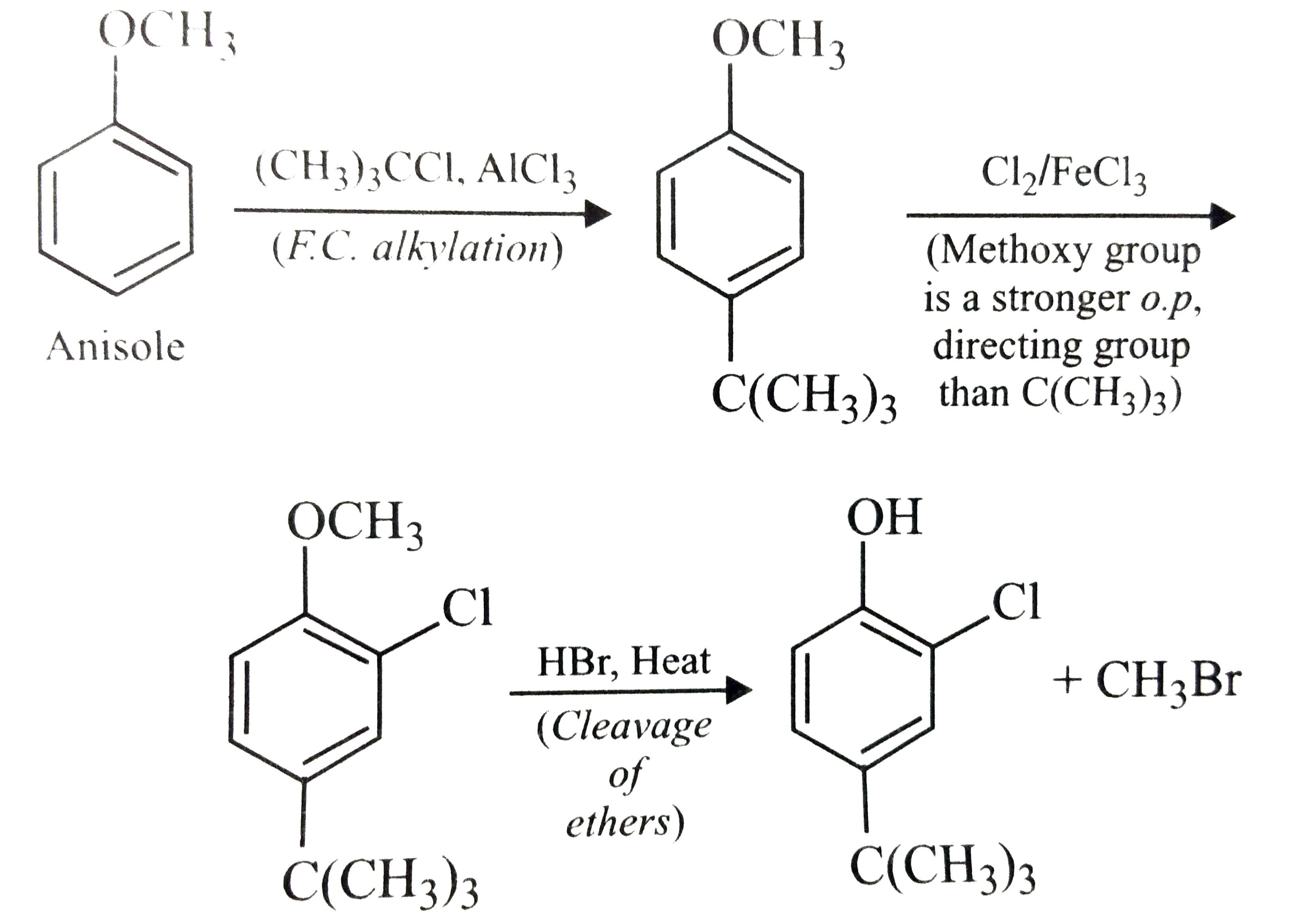
Anisoleunderset(AlCl_(3))overset((CH_(3))_(3)C Cl)to overset(Cl_(2)//FeCl_(3))tounderset("heat")overset(HBr)toX Product X in the above series of reactions is |
|
Answer»
|
|
| 41. |
Annealing is |
|
Answer» HEATING STEEL in nitrogen and cooling |
|
| 42. |
Anisotropy. |
| Answer» Solution :The ABILITY of CRYSTALLINE solids to CHANGE their PHYSICAL properties when measured in different DIRECTIONS is called anisotropy. | |
| 43. |
Anisole with HNO_3 and conc H_2SO_4gives |
|
Answer» Phenol |
|
| 44. |
Anisoleunderset(AlCl_(3))overset((Ch_(3))_(3)"CC"l)tooverset(Cl_(2)//FeCl_(3))to underset("heat")overset(HBr)to XThe product X in the above series of reaction is |
|
Answer»
|
|
| 45. |
Anisole with conc. HNO_3 and conc.H_2SO_4 gives |
|
Answer» PHENOL |
|
| 46. |
Anisole undergoes bromination with Br_2 in acetic acid in the absence of catalyst, the major product formed is ………………. . |
|
Answer» O- bromoanisole |
|
| 47. |
Anisole overset((CH_3)_(3)C CI)tooverset(CI_2//FeCI_(3))tooverset(HBr)underset("Heat")toX The product X in the above series of reaction is |
|
Answer»
|
|
| 48. |
Anisole reacts with methyl chloride in the presence of anhydrous AlCl_3 and CS_2 to give ………………… . |
|
Answer» 2-METHOXY TOLUENE |
|
| 49. |
Anisole reacts withBr_2 in the presence of CS_2 as solvent to give |
|
Answer» 2,4,6 -Tribromoanisole |
|