

Saved Bookmarks
| 1. |
Answer the following: (i) What is the synthetic utility of the reaction RMgX or Rli with ethylene oxide ? (ii) How is di-tert-butyl ether synethsised ? (iii) What product is formed when, HOCH_(2)CH_(2)CH_(2)OH is heated with conc. H_(2)SO_(4) ? (iv) Thefollowing reaction gives two product. Write the structures of the products . (CH_(3))_(2)CH-O-CH_(3)underset(Delta)overset("HI(excess)")(rarr) (v) What would be major product in the following reaction ? CH_(3)-underset(CH_(3))underset(|)overset(CH_(3))overset(|)(C)-CH_(2)Brunderset(Delta)overset(C_(2)H_(5)ONa//C_(2)H_(5)OH)(rarr) (vi) Sodium metal can be used for dryingdiethyl ether but not ethanol. (vii) What products are obtained when : (viii) Di tert-butyl ether cannot be obtained by Williamson's synthesis. (ix)A mixture of ethyl alcohol and n-propyl alcohol on treatment with conc. H_(2)SO_(4) gives a mixture of three ethers. (x) Ethers can be cleaved only by acids and not by bases. (xi) Predict the product of the follwowing reaction : (xii) The following is not an appropriate reaction for the preparation of tert-butyl ethyl ether. CH_(3)-underset(CH_(3))underset(|)overset(CH_(3))overset(|)(C)-Cl+NaOC_(2)H_(5)rarr CH_(3)-underset(CH_(3))underset(|)overset(CH_(3))overset(|)(C)-C_(2)H_(5) (a) What would be the major product of this reaction ? (b) Write a suitable reaction for the preparation of tert-butyl ethylether. (xiii) How is 1-propoxypropane synthesized from propan-1-ol? Write mechanism of this reaction. |
|
Answer» Solution :(i) It is a good method for extending R group of organometallic by `-CH_(2)CH_(2)OH` is one step. (ii) `2Me_(3)C-Cloverset(Ag_(2)CO_(3))(rarr)Me_(3)C-O -CMe_(3)` (iii) Tetrahydrofuran is formed 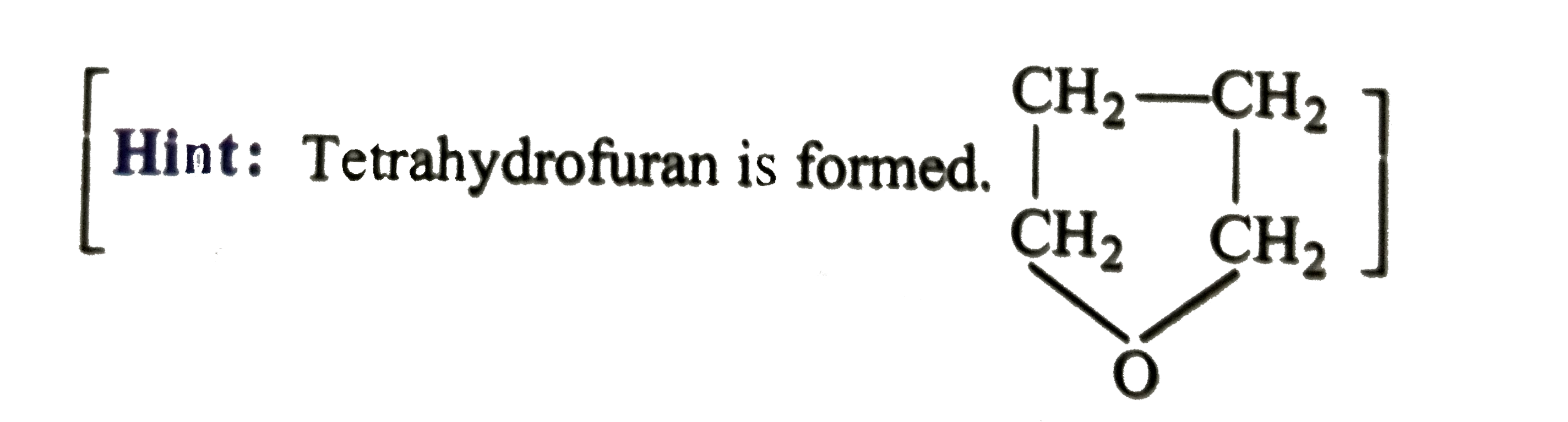 (iv) The two products obtained are `(CH_(3))_(2)CH-I` and `CH_(3)I`. Inthe presence of excess of HI, the initially formed alcohol is also converted to iodide. (v) The product is 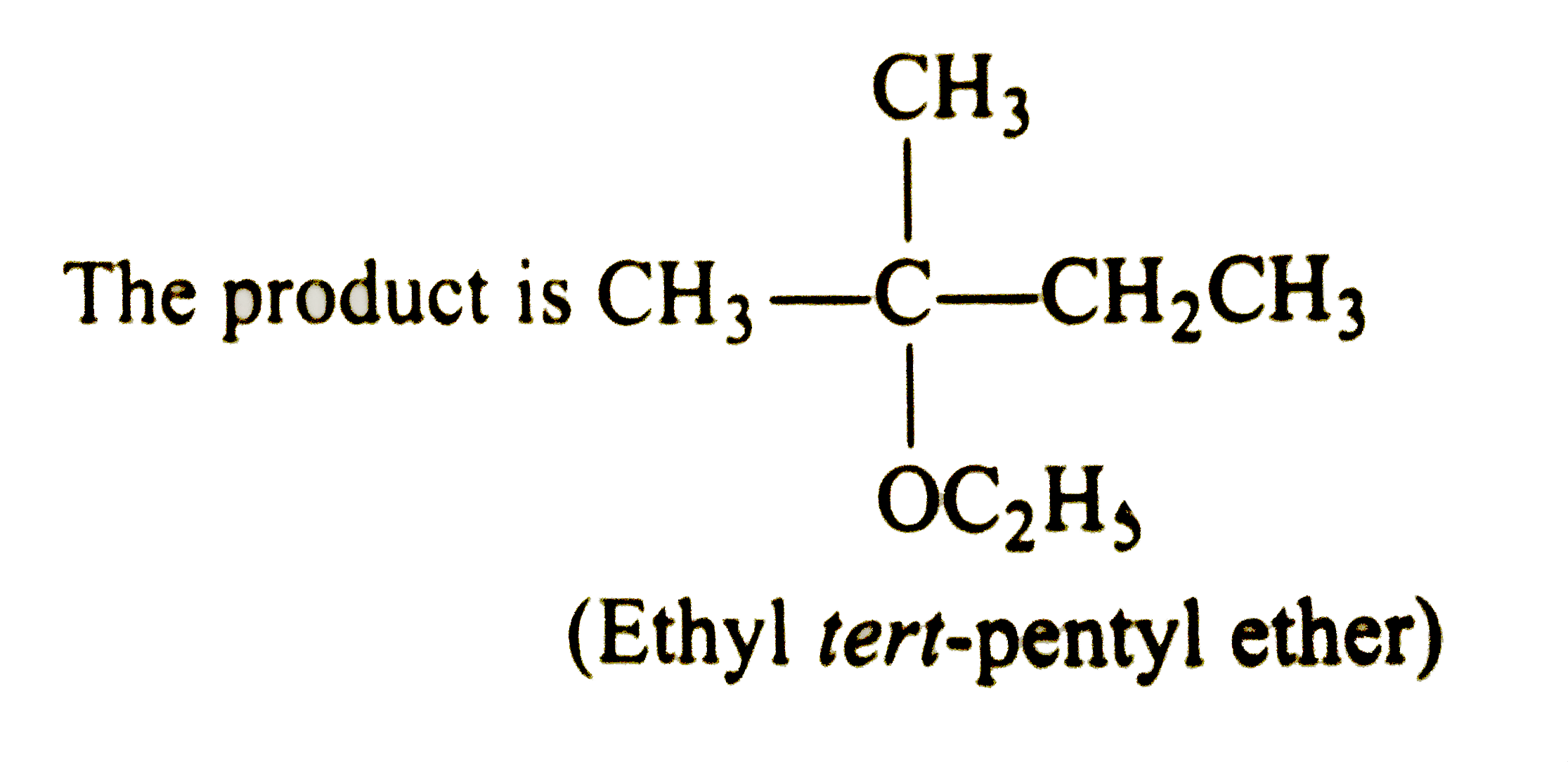 as the reaction proceeds via `S_(N^(1))` mechanism with rearrangement of neopentyl carbocation to tert-pentyl carbocatin . (vi) Sodium metal reacts with ethanol to form sodium ethoxide. On the contrary, ethers do not have replaceable hydrogen atom and therefore, do not react with sodium. 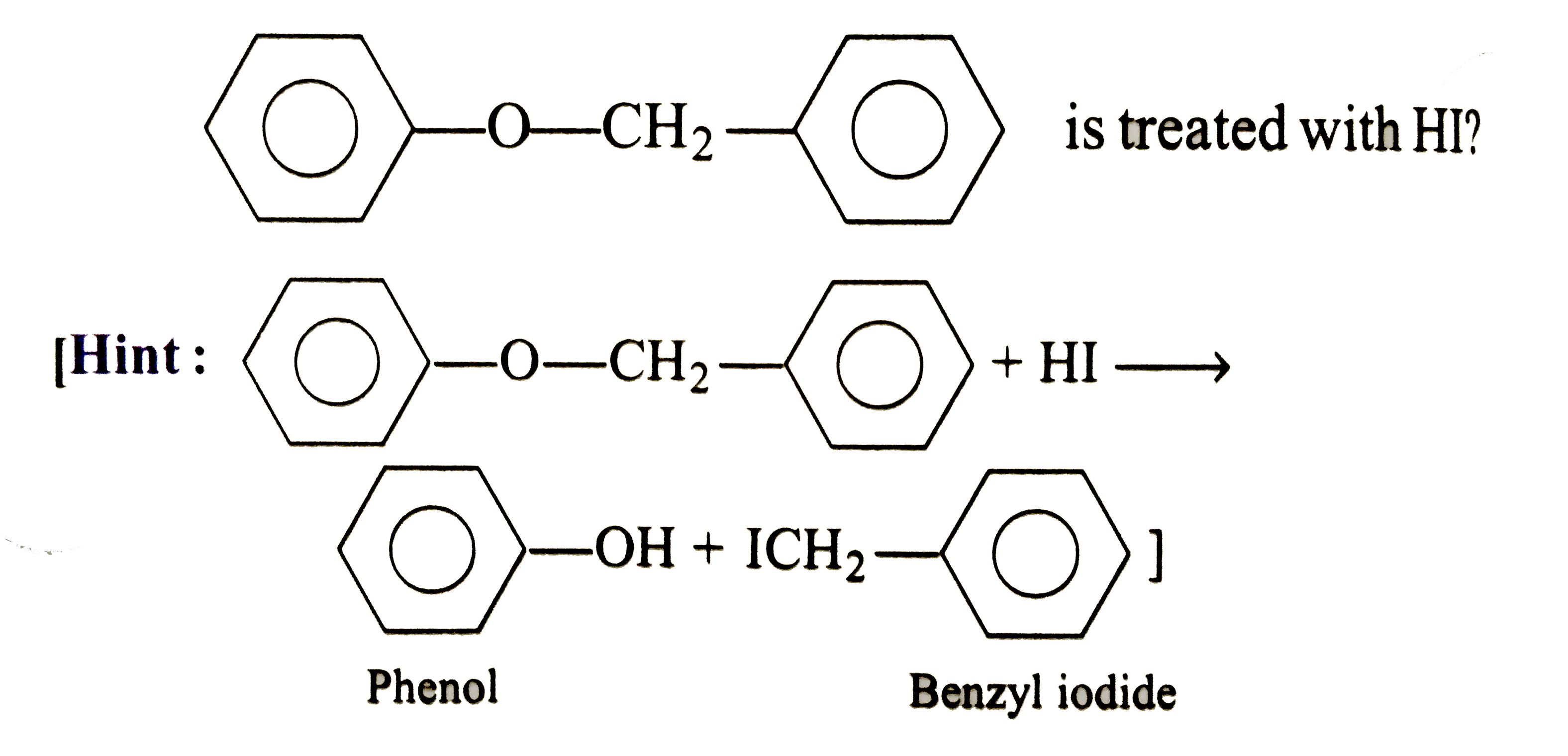 (VIII) To prepare di-tert-butyl ether, the reagents to be used are tert-butyl bromide and sodium tert-butoxide. Since, the TERTIARY bromide `(3^(@))` prefers to undergo ELIMINATION ( RATHER than substitution ) , therefore , the major product obtained is isobutylene and not di-tert-butyl ether. `underset("tert-Butyl bromide"(3^(@)))(CH_(3)-underset(CH_(3))underset(|)overset(CH_(3))overset(|)(C)-Br)+underset("Sodium tert-butoxide")(overset(+)(N)aoverset(-)(O)-underset(CH_(3))underset(|)overset(CH_(3))overset(|)(C)-CH_(3))overset((-NaBr))(rarr)underset("Isobutylene")(CH_(3)-overset(CH_(3))overset(|)(C)=CH_(2))+CH_(3)-underset(CH_(3))underset(|)overset(CH_(3))overset(|)(C)-OH` (ix) The `1^(@)` alcohols, i.e., ethyl alcohol and n-propyl alcohol (both ) yilds equally stable carbocation s and each one of which can be attacked either by ethyl or n-propyl alcohol to give a mixture of three ethers. `underset("Ethyl alcohol")(CH_(3)CH_(2)OH)+underset("n-propyl alcohol")(CH_(3)CH_(2)CH_(2)OH)underset(("conc."))overset(H_(2)SO_(4))(rarr)underset("Diethyl ether")((CH_(3)CH_(2))_(2)O) +underset("Ethyl-n-propyl ether")(CH_(3)CH_(2)O-CH_(2)CH_(2)CH_(3))+underset("Di-n-propyl ether")((CH_(3)CH_(2)CH_(2))_(2)O)` (x) The `C-underset(..)overset(..)(O)-C`bond in ethers is very strong. The addition of acid formsprotonated ether which is attacked by nucleophiles `(Br^(-)` or `I^(-))`on the LESS hindered alkyl groups to bring the cleavage of ethers to form alkyl halide and an alcohol. `CH_(3)CH_(2)-underset(..)overset(..)(O)-CH_(3)+H^(+)rarr underset("Protonated ether")(CH_(3)CH_(2)-underset(H)underset(|)overset(+)overset(..)(O)-CH_(3))overset(Br^(-))(rarr)CH_(3)Br+CH_(3)CH_(2)OH` Ethersthemselves are Lewis bases and are not attacked by strong bases. (xi)As the nitro group is highly deactivating in nature , it willmake the cleavage of C-F bond very easy, i.e., `F^(-)` ions can be replaced by `-overset(-)(O)CH_(3)`ion 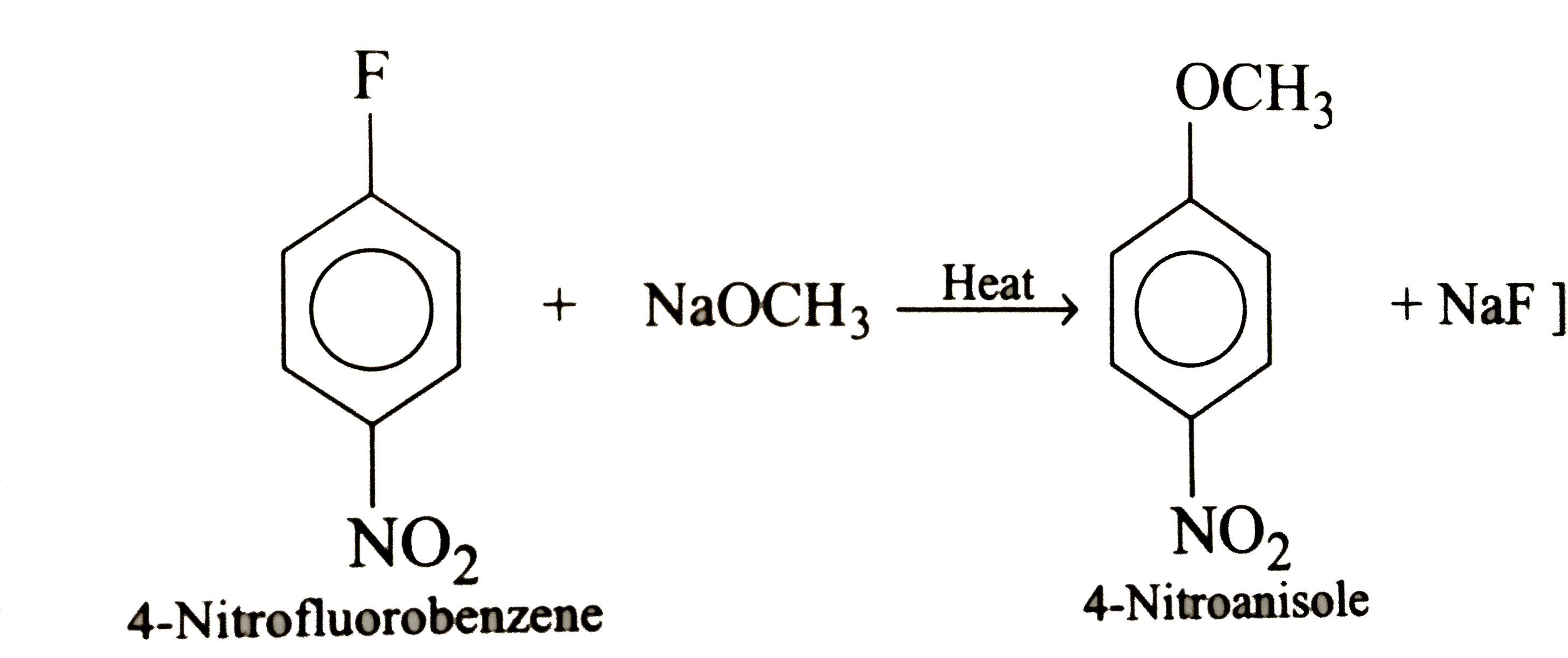 (xii) (a) The major product of the given reaction is 2-methylprop-1-ene. It is because sodium ethoxide is a strong nucleophile as well as strong base. Thus, elimination predominates over substitution reaction. (b) `underset("Sod. tert-butoxide")(CH_(3)-underset(CH_(3))underset(|)overset(CH_(3))overset(|)(C)-overset(-)(O)Na^(+))+underset("Ethyl chloride")(ClCH_(2)CH_(3))rarr underset("tert-Butyl ethyl ether")(CH_(3)-underset(CH_(3))underset(|)overset(CH_(3))overset(|)(C)-O CH_(2)CH_(3))` (xiii) 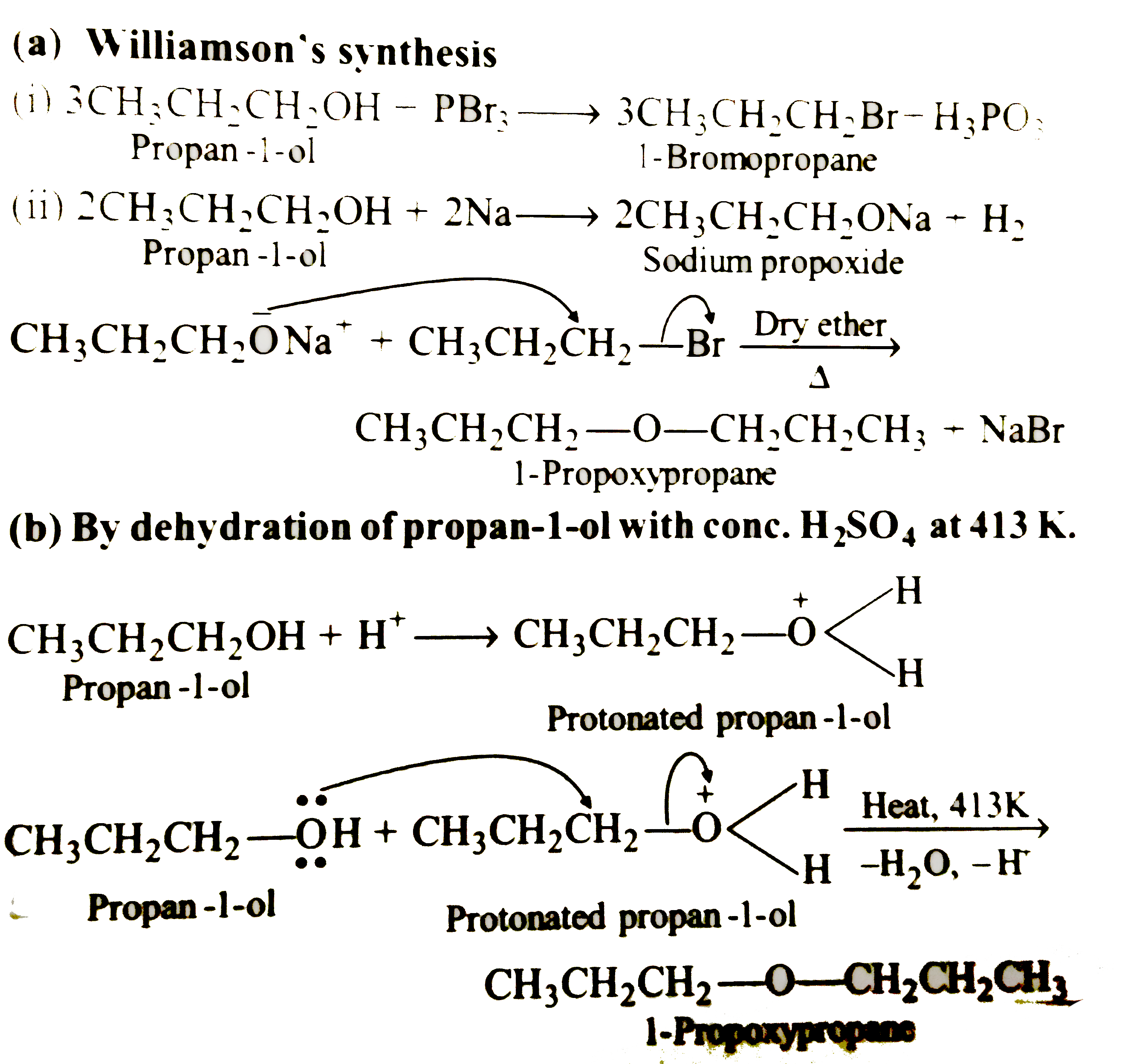
|
|