

Saved Bookmarks
This section includes InterviewSolutions, each offering curated multiple-choice questions to sharpen your knowledge and support exam preparation. Choose a topic below to get started.
| 18501. |
Question : Define conservation. What is the main aim of conservation. |
|
Answer» SOLUTION :1. Conservation: Conservation is defined as the management of the HUMAN use of the biosphere so that the GREATEST sustainable benefits could be obtained for the present generation, as well as its POTENTIAL to the needs of aspirations for the future generations, is maintained. 2. Aim of conservation: The MAIN aim of conservation is to preserve the quality of the environment and to ensure the continuous yield of useful material by establishing balance cycle of harvest and renewals. |
|
| 18502. |
Question : Define surrogacy. |
| Answer» SOLUTION :Surrogacy is a method of assisted REPRODUCTION or AGREEMENT whereby a woman agrees to CARRY a pregnancy for another person, who will become the newborn child.s parent after birth. Through In Vitro Fertilization (IVF), embryos are created in a lab and are transferred into the surrogate mother.s uterus. | |
| 18503. |
Question : Explain Commensalism with an example. |
|
Answer» SOLUTION :COMMENSALISM is species INTERACTION in which one species (the commensal) is benefitted WHEREAS the host is NEITHER benefitted nor affected. Eg: Sucker fish on Shark. |
|
| 18504. |
Question : Define sterilization. |
| Answer» Solution :STERILIZATION is the technique employed to GET rid of microbes such as bacteria and fungi in the CULTURE medium, vessels and EXPLANTS. | |
| 18505. |
Question : Define coacervates. |
| Answer» SOLUTION :COACERVATES were colloidal AGGREGATES of macromolecules suspended as droplets in SEA WATER on primitive earth. | |
| 18506. |
Question : Define stenohaline species. |
| Answer» SOLUTION :Species that tolerate NARROW range of SALINITY are CALLED STENOHALINE species. | |
| 18507. |
Question : Define co-dominance. How it is proved by using Gossypium species? |
| Answer» Solution :The phenomenon in which two alleles are both expressed in the heterozygous individual is known as condominance. The CODOMINANCE was demonstrated in PLANTS with the help of electrophoresis or chromatography for protein or flavonoid substance. Example : Gossypium hirusutum and Grosspium sturtianum , their `F_1` hybrid (amphiploid) was TESTED for seed proteins by electrophoresis. Both the PARENTS have different banding patterns for their seed proteins . In hybrids , additive banding pattern was noticed . Their hybrid shows the presence of both the TYPES of proteins similar to their parents. | |
| 18508. |
Question : Define 'Standing state’ with regard to ecosystem. |
| Answer» Solution :The total inorganic substances present in any ecosystem at a GIVEN TIME is called STANDING quality (or) standing STATE. | |
| 18509. |
Question : Define 'standing state'. |
| Answer» Solution :The amount of NUTRIENTS, such as CARBON, nitrogen, phosphorous, CALCIUM ETC, present in the soil at any given time. | |
| 18510. |
Question : Define Cistron? |
| Answer» Solution :Cistron is the structural unit of GENE which contains the genetic INFORMATION of a CHARACTER. | |
| 18511. |
Question : Define splicing. |
| Answer» SOLUTION :The PROCESS of removing INTRONS from HNRNA is called splicing. | |
| 18512. |
Question : Define chalazogamy and omithophily. |
| Answer» Solution :In chalazogamy, pollen tube ENTERS through chalaza of ovule WHEREAS in ORNITHOPHILY, pollination takes place by BIRDS. | |
| 18513. |
Question : Define standing state.. |
| Answer» Solution :The AMOUNT of nutrients, such as carbon, nitrogen, PHOSPHORUS , calcium, etc, present in the soil at any given time, is referred to as STANDING STATE. | |
| 18514. |
Question : Define carrying capacity |
| Answer» Solution :CARRYING capacity refers to the MAXIMUM NUMBER of ORGANISMS that a habitat can support. | |
| 18515. |
Question : Define BOD. |
| Answer» Solution :BOD refers to the amount of oxygen required to oxidize TOTAL organic MATTER by bacteria, PRESENT in one liter of water. | |
| 18516. |
Question : Define standing crop. |
| Answer» Solution :Each TROPHIC level has a certain mass of LIVING MATERIAL at a particular TIME called as standing crop. | |
| 18517. |
Question : Define spermatogenesis. |
| Answer» SOLUTION :FORMATION of SPERM in the seminiferous TUBULES of TESTES | |
| 18518. |
Question : Define bioventing . |
| Answer» SOLUTION :BIOVENTING is the PROCESS that increases that oxygen or AIR FLOW to accelerate the degradation of environmental polluatants .It is an exmaple of Bioremediation . | |
| 18519. |
Question : Define spermiogenesis and spermiation. |
| Answer» SOLUTION :The transformation of SPERMATID into sperm is called spermiogenesis. The RELEASE of sperm from the SEMINIFEROUS tubules is called spermiation | |
| 18520. |
Question : Define biotic potential. |
| Answer» SOLUTION :it is the maximum REPRODUCTIVE capacity of an organism under OPTIMUM ENVIRONMENTAL CONDITIONS | |
| 18521. |
Question : Define species extinction. What makes a species to become a species is considered extinct ? |
| Answer» Solution :A species is considered EXTINCT when none of its members are alive any anywhere inthe worl. Enviroment changes and population characteristics are the two MAJOR REASON for species extinction. | |
| 18522. |
Question : What is biotechnology ? |
| Answer» Solution :Biotechnology is defined as "any technological application that USES biological systems, LIVING organisms or DERIVATIVES thereof, to make or modify products or PROCESSES for specific use". | |
| 18523. |
Question :Define social forestry. |
| Answer» Solution :SOCIAL FORESTRY REFERS to the management of forests and afforestation on barren lands with the purpose of HELPING the environmental, social and rural DEVELOPMENT and benefits. | |
| 18524. |
Question : Define biopiracy ? Give its examples . |
|
Answer» Solution :Biopiracy can be defined as the manipulation of intellectual property rights laws by corporations to gain exclusive CONTROL over nationalgenetic resources, without GIVIN adequate recognition or remuneration to the original possessors of thorse resources . (ii) Examples of biopiracy include recent patents granted by the U . S. PATENT and Trademarks Office of American companies on turmeric, ' neem' and , most motably, ' basmati' rice . All three products are indigenous to the Indo-Pak SUBCONTINENT . |
|
| 18525. |
Question : What is soil profile? Explain the characters of different soil horizons. |
| Answer» Solution :SOIL is commonly stratified into horizons at DIFFERENT depth. These layers DIFFER in their physical, chemical and biological PROPERTIES. This succession of super-imposed horizons is called soil profile. | |
| 18526. |
Question : Define self sustainability. |
| Answer» Solution :The maintenance of ECOLOGY done naturally is CALLED self stability means any system MAINTAINS structure and arrangement by its independent efforts then it is called self stability BASED ecology | |
| 18527. |
Question : Define Biopiracy ? |
| Answer» Solution :BIOPIRACY can be defined as the manipulation of INTELLECTUAL property rights laws by corporations to GAIN exclusive control ver national genetic resorce , without GIVING ADEQUATE recognition or remuneration to the original possessors of those resources. | |
| 18528. |
Question : Define Senescent phase |
| Answer» Solution :Senescent phase: The end of the REPRODUCTIVE phase marks the beginning of the senescent phase. It is marked by reduced metabolic ACTIVITIES and always LEADS to death. | |
| 18529. |
Question : Define Semen. |
| Answer» Solution :Semen or seminal fluid is a milky white fluid which CONTAINS SPERMS and the seminal plasma, which is SECRETED from the seminal VESICLES, prostate GLAND and the bulbourethral glands. | |
| 18530. |
Question :Define biopatent. |
| Answer» Solution :Biopatents are the EXCLUSIVE rights granted to the inventors or their assignee for the modification or usage of living organisms, their PRODUCTS and technologies that make use of the GENETIC material for PUBLIC services as food and MEDICINES. | |
| 18531. |
Question : Define scion and stock. Add a note on advantages of grafting. |
|
Answer» Solution :1. Scion : The part of the plant, usually a piece of young stem which is inserted into a rooted stock to produce a graft is called scion. 2. Stock : A plant rooted in the soil on which the scion is inserted for grafting is called stock. 3. Advsntsges of grafting : (1) Grafting promotes the physical and physiological UNION of two different PLANTS for economic advantage. (2) Grafting is a quicker method of REPRODUCTION. (3) Flowers and fruits that are PRODUCED on scion are superior in quality. (4) Grafting is EASIER and less expensive method of multiplication of plants. |
|
| 18532. |
Question : Definebiopatent . |
| Answer» SOLUTION :GOVERNMENT GRANT thepatents to BIOLOGICAL entites and PRODUCTS derviedform them. | |
| 18533. |
Question : Define Saltation. |
| Answer» Solution :The single STEP LARGE MUTATION that causes speciation according to Hugo DE Vries is called as saltation. Which was believed by DEVICES. | |
| 18534. |
Question : Define 'reproduction isolation ' and explain two types of reproductive isolation . |
|
Answer» Solution :I. Pre-zygotic ISOLATING mechanism : In Pre-zygotic isolating mechanism isolating mechanisms does not allow individuals to mate with each other at all: These are of the FALLOWING types : (i) Habitat ISOLATION : Habitat isolation is the phenomenon in which members of a population living in the same region occupy different habitats. Hence the potential mates do not interbreed among themselves. (ii) Seasonal isolation: In seasonal isolation, members of a population share the same region but attain sexual maturity at the different times of the year. They thus remain isolated reproductively preventing interbreeding among themselves. (iii) Ethological isolation : Ethological isolation is seen when members of two populations have different mating behaviours. (iv) Mechanical isolation: M echanical isolation is seen when the members of two populations have differences in the structure of reproductive organs. II. Post-zygotic isolating mechanisms: In post-zygotic isolating mechanisms, the two individuals can mate but the result of mating is not favourable. Thus the populations remain isolated without the actual genetic EXCHANGE. These mechanisms are divided into the following categories : (i) Gamete mortality : In gamete mortality there is death of gametes. Sperm transfer may take place but the egg is not fertilized due to gamete mortality. (ii) Zygote mortality : In zygote mortality, the zygote is formed but it fails to thrive. Though the egg is fertilized the zygote does not survive. (iii) Hybrid sterility: In this isolation, there is the formation of hybrid as the gametes or zygotes do not die but the hybrid farmed is sterile. Sterile hybrid cannot contribute genetically to further GENERATIONS. |
|
| 18535. |
Question : Define Biomagnification. |
| Answer» SOLUTION :The process of accumulation of certain pollutants in TISSUES of organisms with increased concentration ALONG the FOOD chain. | |
| 18536. |
Question : Define Reproductive phase |
| Answer» Solution :Reproductive PHASE: It BEGINS where the juvenile phase ENDS. In this phase an organism is able to REPRODUCE. | |
| 18537. |
Question : Definebiomagnification. |
| Answer» Solution :The process of INCREASE in concentration of the TOXICANT at successive TROPHIC level can be considered as Biomagnification. | |
| 18538. |
Question : Define reproductive health. |
| Answer» Solution :ACCORDING to WHO, reproductive health MEANS a TOTAL well-being in all aspects of reproduction i.e., physical, EMOTIONAL, behavioural and SOCIAL. | |
| 18539. |
Question : Define reforestation |
| Answer» SOLUTION :REFORESTATION is the planting of TREES or (forest) in a BARREN LAND where the forest had existed. | |
| 18540. |
Question :Define reforestation |
| Answer» Solution :Reforestations is the process of restoring a FOREST that once existed but was removed at some POINT of time in the past/Growing PLANTS in DEFORESTED AREA. | |
| 18541. |
Question : Define biological species. |
| Answer» Solution :It is a sexually interbreeding or potentially interbreeding group of INDIVIDUALS that do not exchange GENES with any other group of individuals DUE to reproductive isolation. | |
| 18542. |
Question : Define r-DNA techonology. Give the basic steps in r DNAtechnology and give any three' examples of the therapeutic products proeduced by r - DNA technology . |
|
Answer» Solution :1. Male GAMETOPHYTE PRODUCES two male gametes in angiosperms, out of them one unites with thefemale gamete and the other unites with the secondary nucleus. 2. It is CALLED double fertilisation as both gametes take part in fertilisation and fertilisation occurs twice. 3. During double fertilisation, pollen tube with two male gametes and tube nucleus enters the embryo sac on reaching the ovule, through micropylar end. 4. After this, the tip of pollen tube bursts and two male gametes are discharged. 5. Out of these two male gametes one unites with egg of female and the other unites with secondarynucleus of the embryo sac, forming triploid or triple fusion nucleus, called the primary endosperm nucleus. 6. The other male gamete fuses with the egg nucleus causing fertilisation, resulting in the· formation of a diploid zygote or diploid oospore. This is called syngamy. 7. The process involving the fusion of haploid nucleus of male gamete with the diploid secondary nucleus to form a triploid primary endosperm nucleus is called triple fusion. Significance of double fertilisation : 1. Syngamy results in formation of zygote which gives rise to the embryo.2. Double fertilisation results in the formation of triploid endosperm which ensures better nourishment of the developing embryo.JIJ Seeds are VIABLE with high percentage of germination.4. Double fertilisation brings about the recombi- nation of characters. 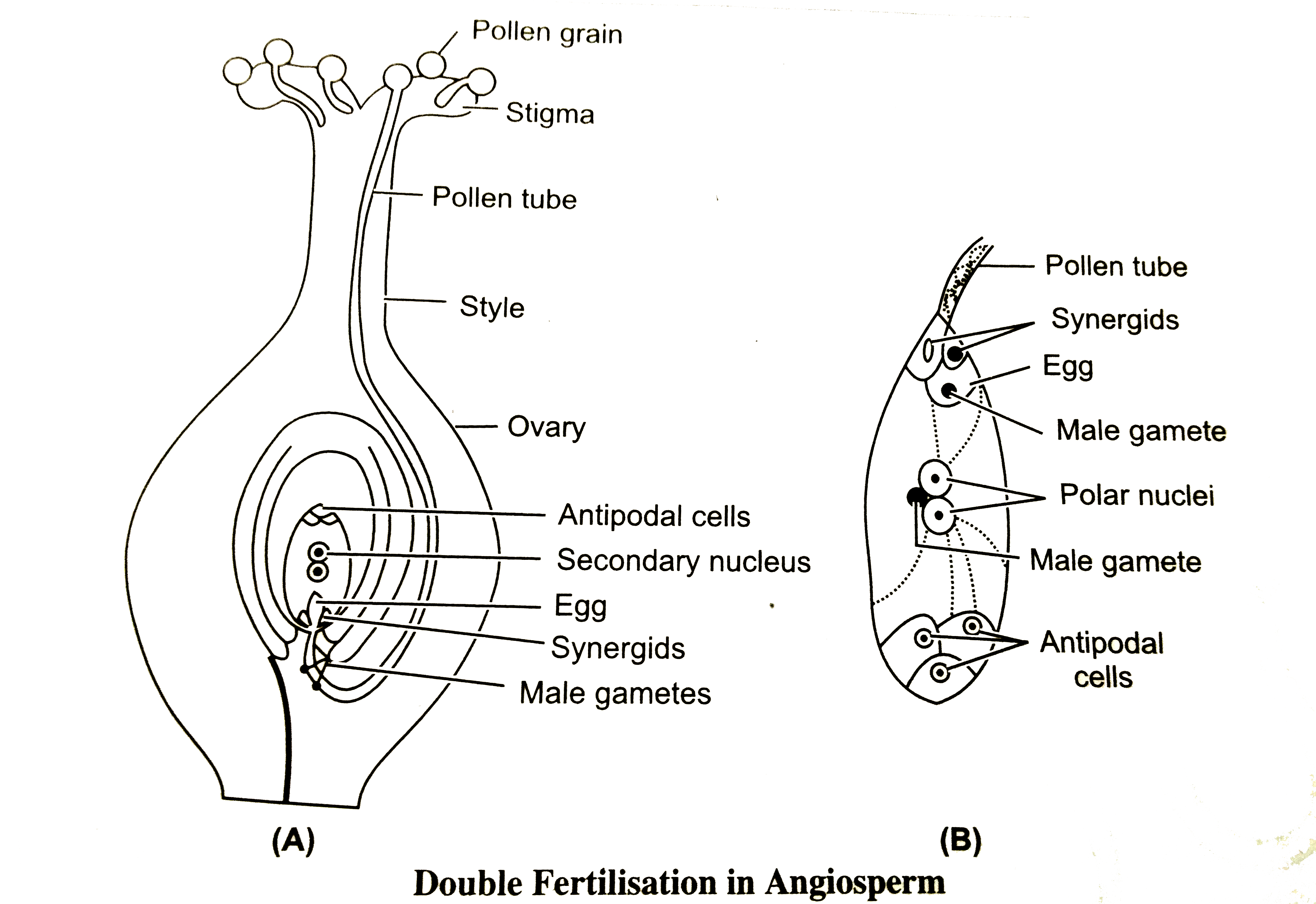
|
|
| 18543. |
Question : Define biodiversity Write any two types of biodiversity. |
|
Answer» Solution :Enormous diversity of LIFE on Earth/Rich variety of living organisms on Earth/The combined diversity at all the levels of biological ORGANISATION. (i) Genetic diversity (II) Genetic diversity (III) Ecological diversity. |
|
| 18544. |
Question : Define biodiversity. |
| Answer» Solution :Biodiversity as the variability among living organisms from all sources, INCLUDING TERRESTRIAL, marine and other aquatic ecosystems and the ECOLOGICAL complexes of which they are a part This includes diversity within species, between species and ecosystems of a REGION. | |
| 18545. |
Question : Define receptors. Enlist different types of receptors. |
|
Answer» Solution :1. Receptors : Receptors are specialized cells, tissues or ORGANS present in the body which receive different stimuli. 2. Types of receptors : (1) Receptors are of two types, VIZ. exteroceptors and INTEROCEPTORS. (2) Exteroceptors receive stimuli directly from the· external environment. They are somatic in nature. (3) Interoceptors are located inside the. body and are visceral in nature. They respond to internal changes in the body. (4) The various types of exteroceptors and interoceptors, their location and functions have been summarized in the given table : 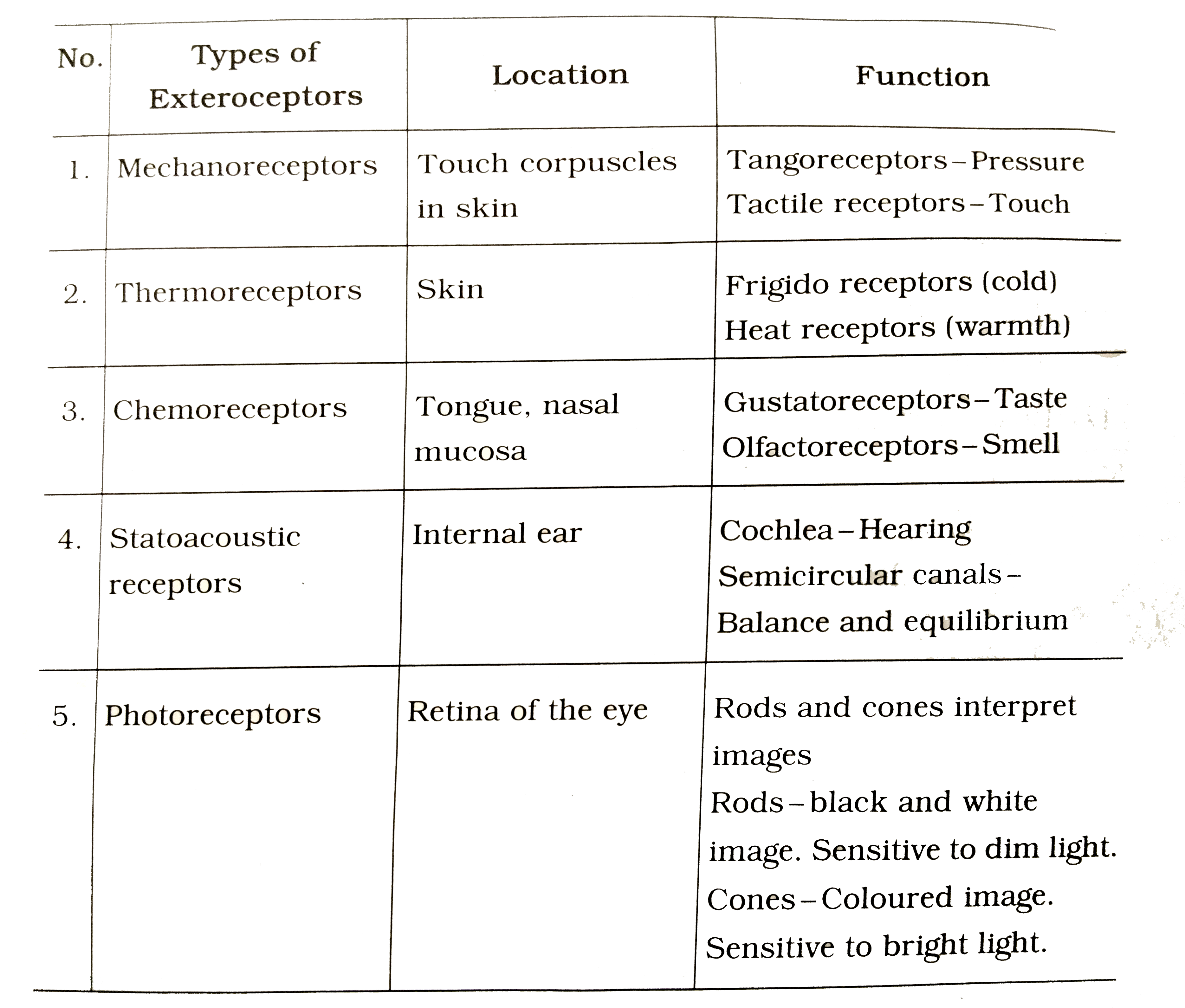
|
|
| 18546. |
Question : Define Pseudoheterosis. |
|
Answer» SOLUTION :Superiority of progeny over parents in vegetative growth but not in yield and adaptation. Progenies are usually STERILE or poorly FERTILE. |
|
| 18547. |
Question : Define predation |
| Answer» Solution :PREDATION is the interspecific interaction, one of which is benefitted by capturing, killing and EATING the other species. The species which is benefitted is CALLED predator and the one which is killed is called PREY | |
| 18548. |
Question : Define bio remediation and its types. |
| Answer» Solution :The use of naturally OCCURRING or genetically engineered microorganisms to reduce or DEGRADE pollutants is called bioremediation Bioremediation is less expensive and more sustainable than other remediations AVAILABLE . Itis grouped into in situ bioremediation (treatment of contaminated soil or WATER in the site ) and ex situ bioremediation (treatment of contaminated soil or water that is REMOVED from the site and treated). | |
| 18549. |
Question : Define primary production. |
| Answer» Solution :Primary production is defined as the amount of biomass or organic matter produced per unit area over a TIME PERIOD by PLANTS during photosynthesis. | |
| 18550. |
Question : Define Biochemical Oxygen Demand (BOD). |
| Answer» SOLUTION :It is the amount of oxygen required for oxidising all organic matter present in one LITRE of water by the AEROBIC MICROBES. | |